A Nippon Sangoku Locations: The Yamato Arc and the Scenic Beauty of Western Japan
A travel guide to the real-world locations of Yamato, the western-Japan nation in the manga and anime Nippon Sangoku. It tours the actual spots in Ehime, Osaka, Fukui, and Aichi that became settings in the story, with the scenes they inspired, what to see on site, and how to reach them from abroad.
Yamato, the fictional country in Nippon Sangoku. This guide walks through the real pilgrimage sites within its borders, the actual Japanese places that became settings in the series. It runs from Ehime, where the story opens, on to Osaka, drawn as the capital, and out to Fukui, the stage of its fiercest battles.
The world and storyline of the series itself are covered in a separate article.
Where Is Yamato in Nippon Sangoku?
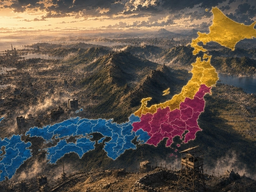
Roughly speaking, Yamato governs the land west of Aichi Prefecture. That consists of the Kansai region, the Chūgoku region, Shikoku, and Kyūshū. It covers most of western Japan apart from Okinawa, with Aichi and Mie tacked on as its eastern edge. Laid over a real map, it is easiest to picture the western half of Japan as a single country in the story.
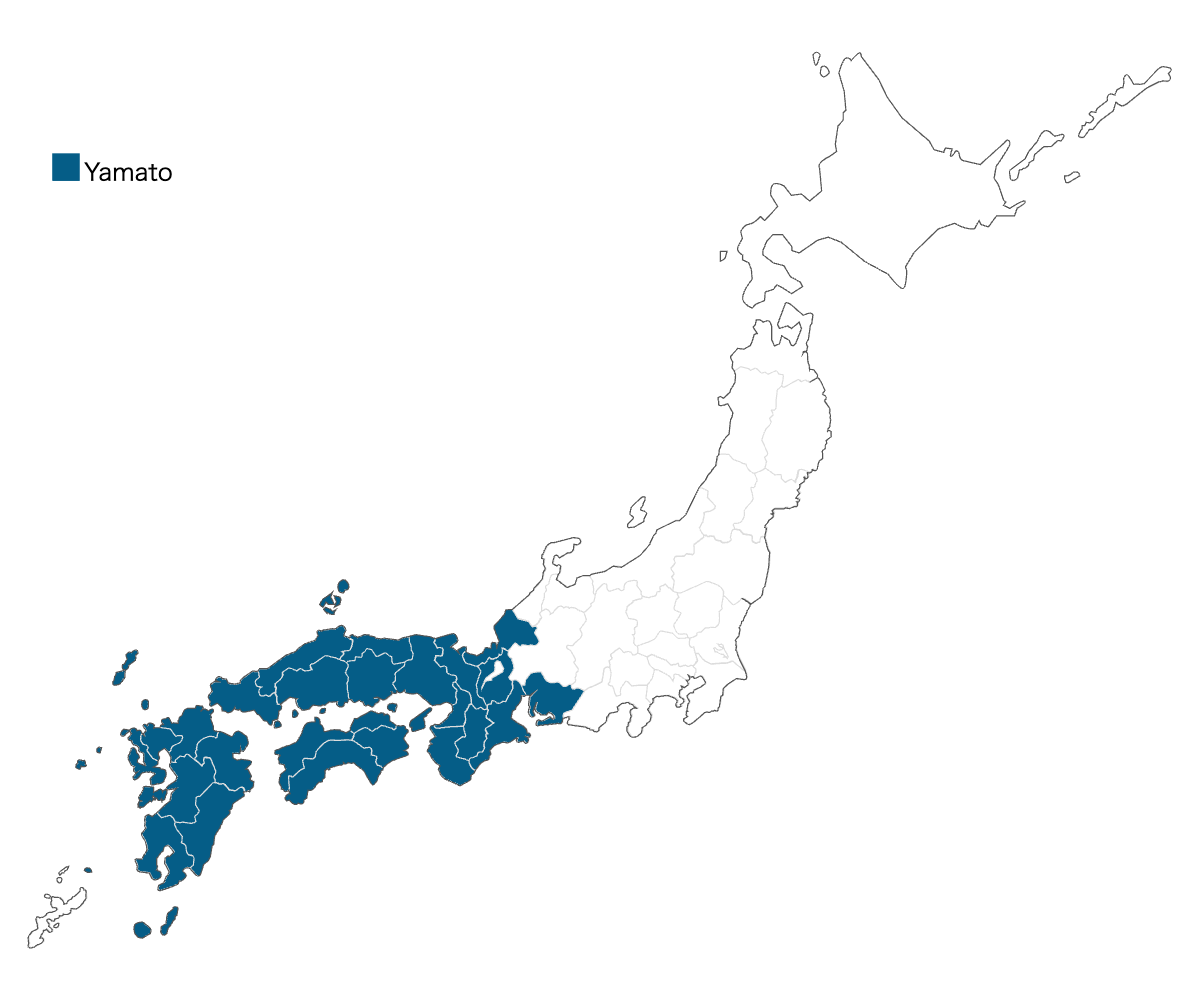
Map of Yamato's territory. The white space on the right is Lake Biwa in Shiga Prefecture.
Its capital is Osaka-to, the Osaka Metropolis. The population is around 4.6 million in year 60 of the Yamato calendar and keeps climbing over the following years. The country is a monarchy, with the Yamato Emperor portrayed as the symbol of the nation.
Pilgrimage Through Yamato: Anime in Real Life Locations
Here are the real Japanese places that match Yamato as it appears in the series.
Shikokuchūō, Ehime Prefecture
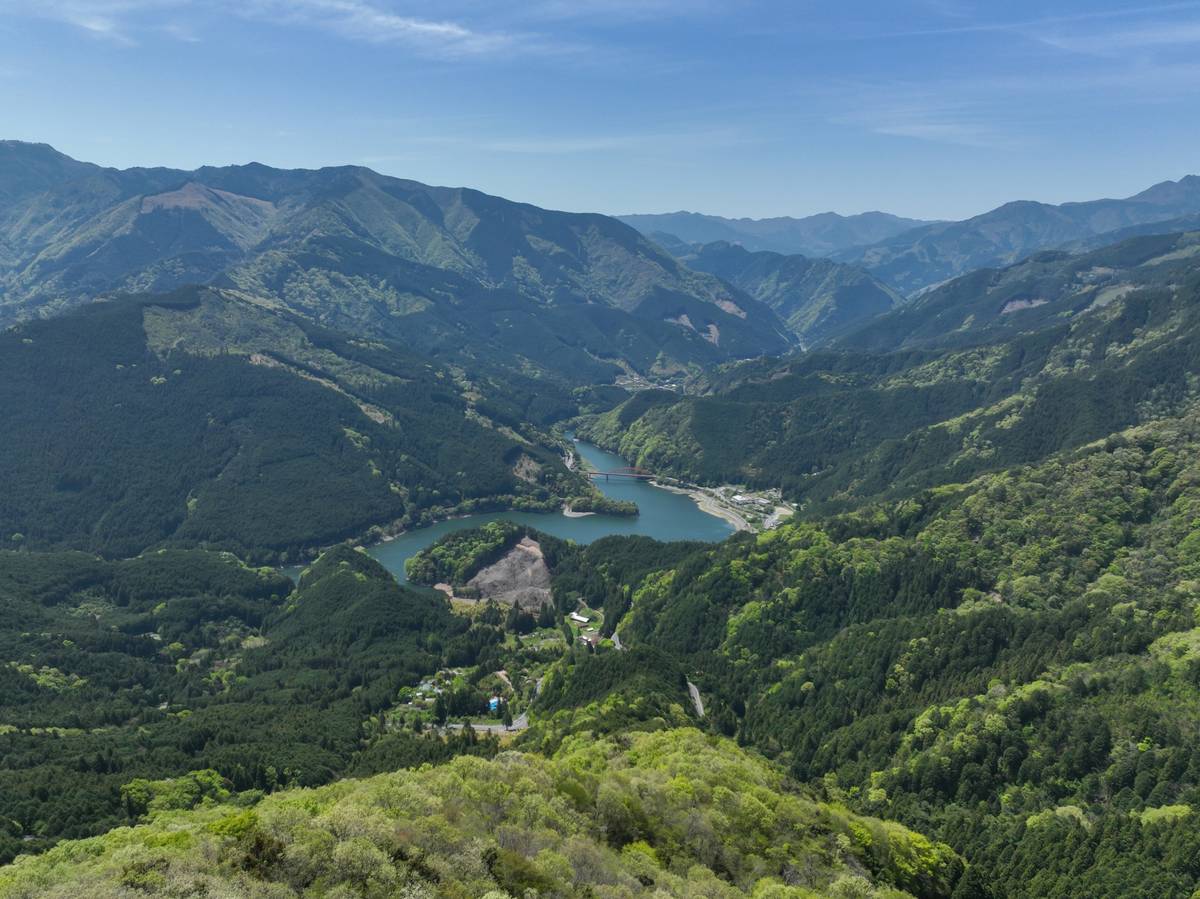
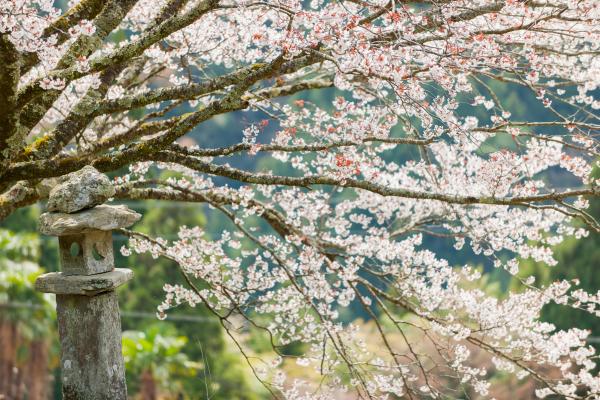
The protagonist, Aoteru Misumi, lives in Shikokuchūō in Ehime Prefecture, and this is where the story begins. It is also the hometown of the author, Ikka Matsuki, and the official account of the series has confirmed that this city is the setting for the opening stretch of the story.
The city is known for its paper industry as well. Its shipments of paper products have ranked first in Japan for more than twenty years, and it produces roughly seventy percent of the country's calligraphy paper.
In the series, Aoteru serves as a shinōkan, an official in charge of agriculture. The real Shikokuchūō is busy not only with farming but with manufacturing too.
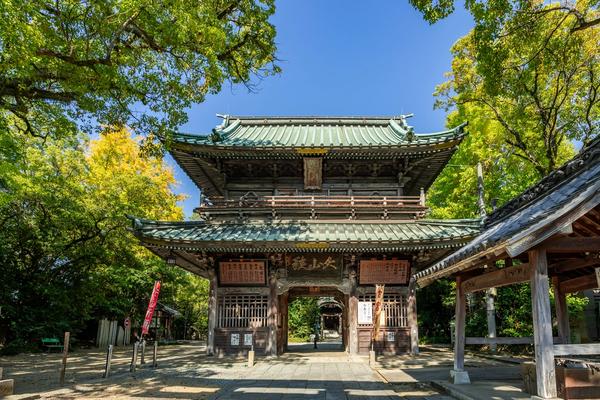
Mishima Shrine (Zuishinmon Gate)
The wedding of Aoteru and Saki in the first chapter. Fans say the gate shown there is modeled on the Zuishinmon gate of Mishima Shrine.
The real Zuishinmon gate of Mishima Shrine was built in 1821, late in the Edo period. This impressive two-story gate was designated a municipal cultural property in 1962. Beyond the gate stands the shrine’s main hall, visible straight ahead. The site is located about a 10-minute walk from Iyo-Mishima Station on the JR Yosan Line.
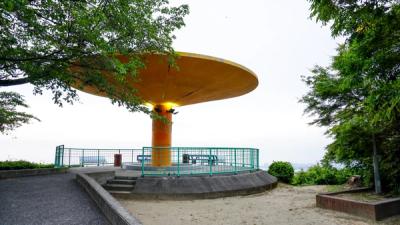
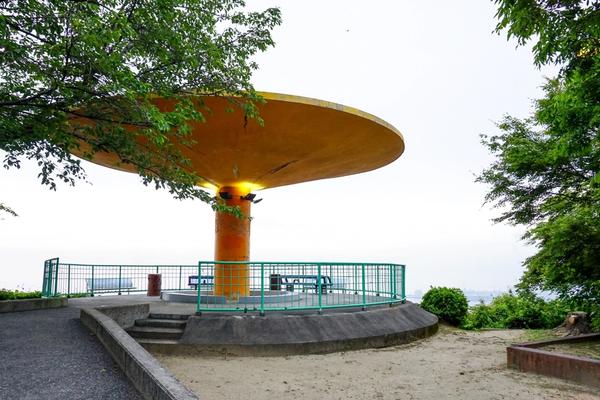
Gujō Observation Deck
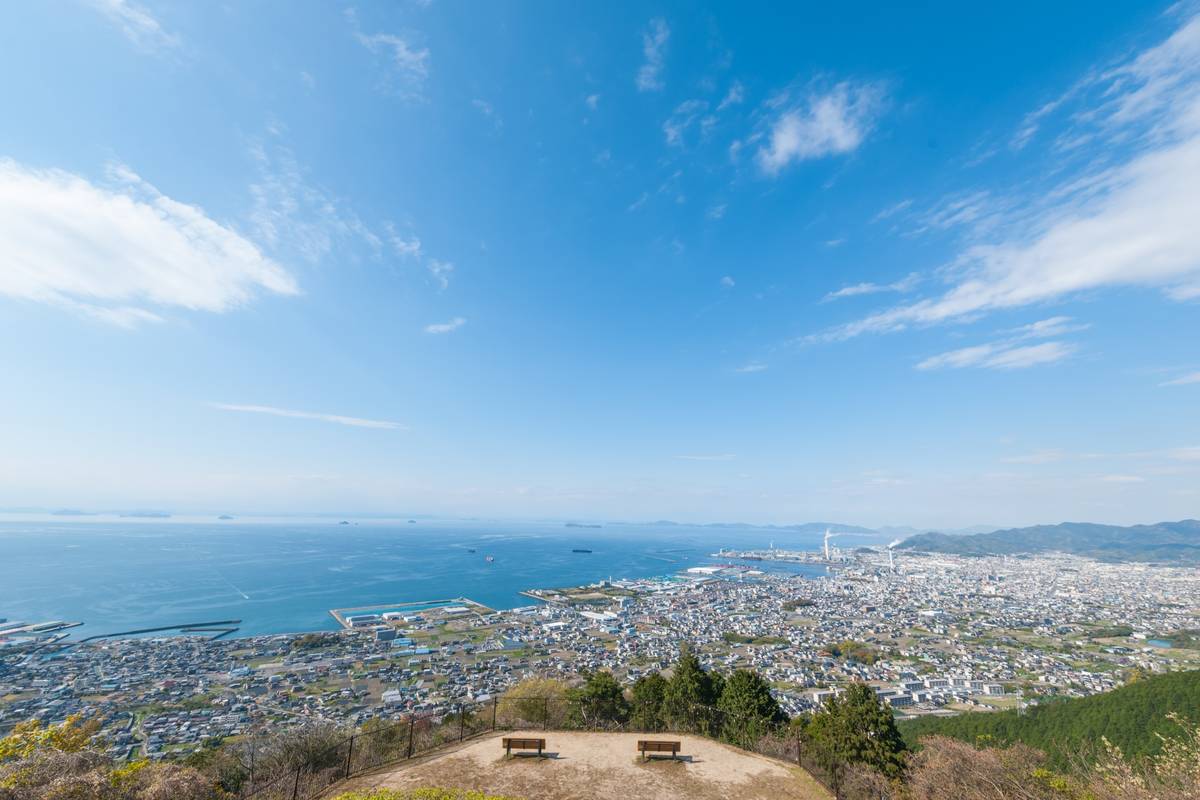
The view that appears as Aoteru and Saki talk together early in the story.
The Gujō Observation Deck looks down over the city and the Seto Inland Sea and is recognized as a Japan Night View Heritage site. After dark, the lights of the city stretch along the coast and fill the whole view. It sits up a mountain and is hard to reach by public transport alone, so taking a taxi from the foot of the hill is a good option.
Suiha Highland Observatory
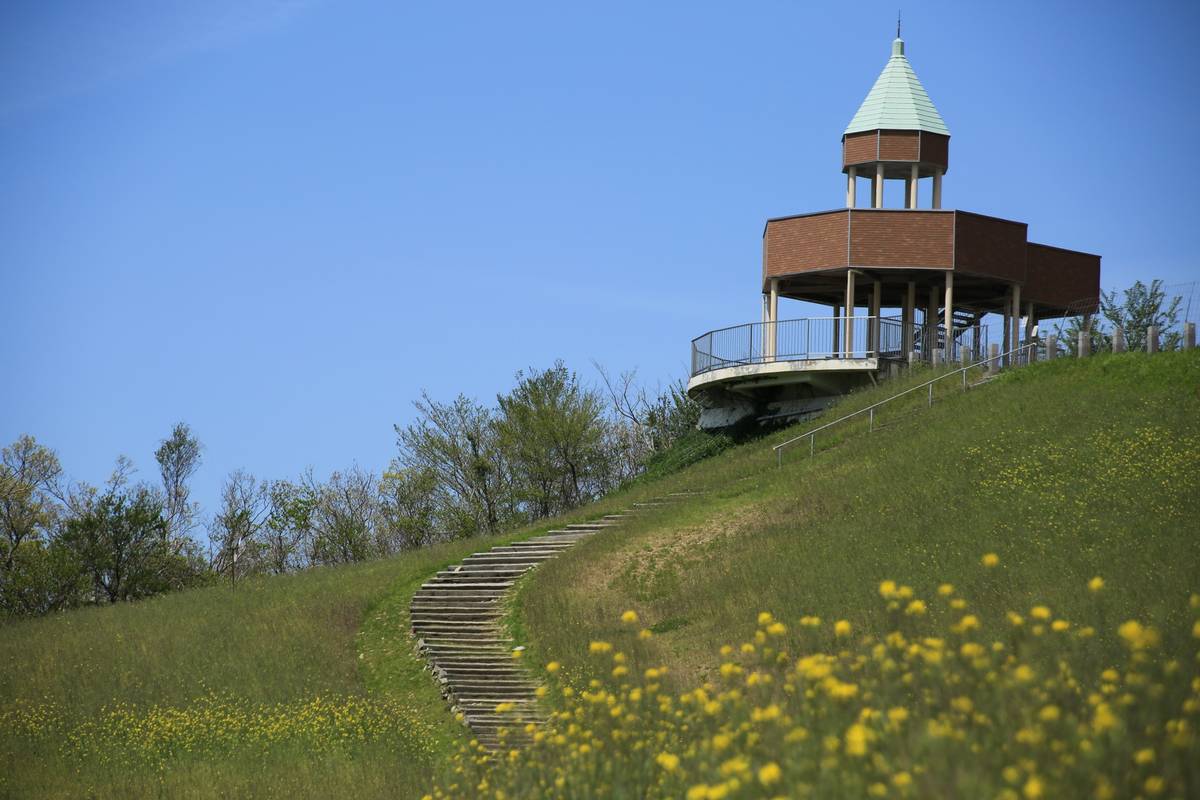
A place that captures the kind of scenery seen in the cut just before the two first meet in episode one.
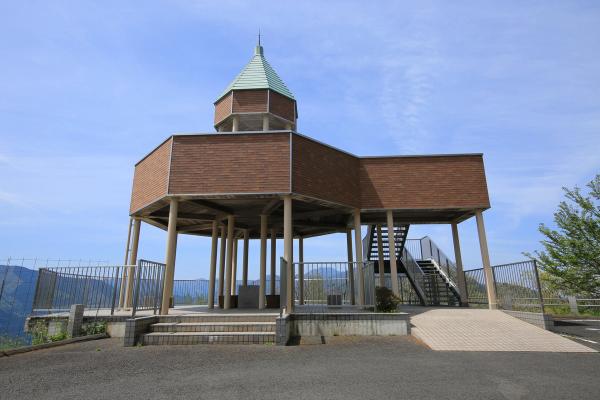
Located at an elevation of around 890 meters (2,920 feet), Suiha Highlands offers sweeping views of both the Seto Inland Sea and the surrounding mountain ranges. In spring, the slopes are covered with rapeseed blossoms and cherry blossoms, while in autumn they burst into color with cosmos flowers. As the highlands are situated in the mountains, access is best by car or taxi.
Around Iyo-Mishima Station
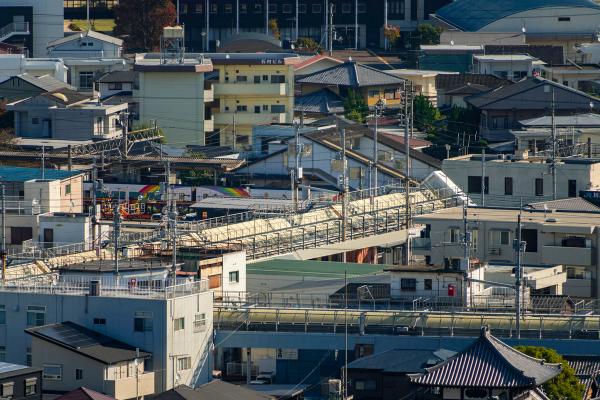
The area around this station carries the same atmosphere as the episode one scene where officials pile tax upon tax on the townspeople.
Iyo-Mishima Station, on the JR Yosan Line, is a handy base for exploring the town. Coming from overseas, the nearest airports are Takamatsu and Matsuyama. A limousine bus from Takamatsu Airport reaches Iyo-Mishima Station in about an hour and a half. From Matsuyama Airport it is roughly two hours via JR Matsuyama Station on the Yosan Line. The limited express Shiokaze from Okayama gets you there in around an hour and twenty minutes, which makes the Honshū-side route convenient too.
Sankaku-ji Temple
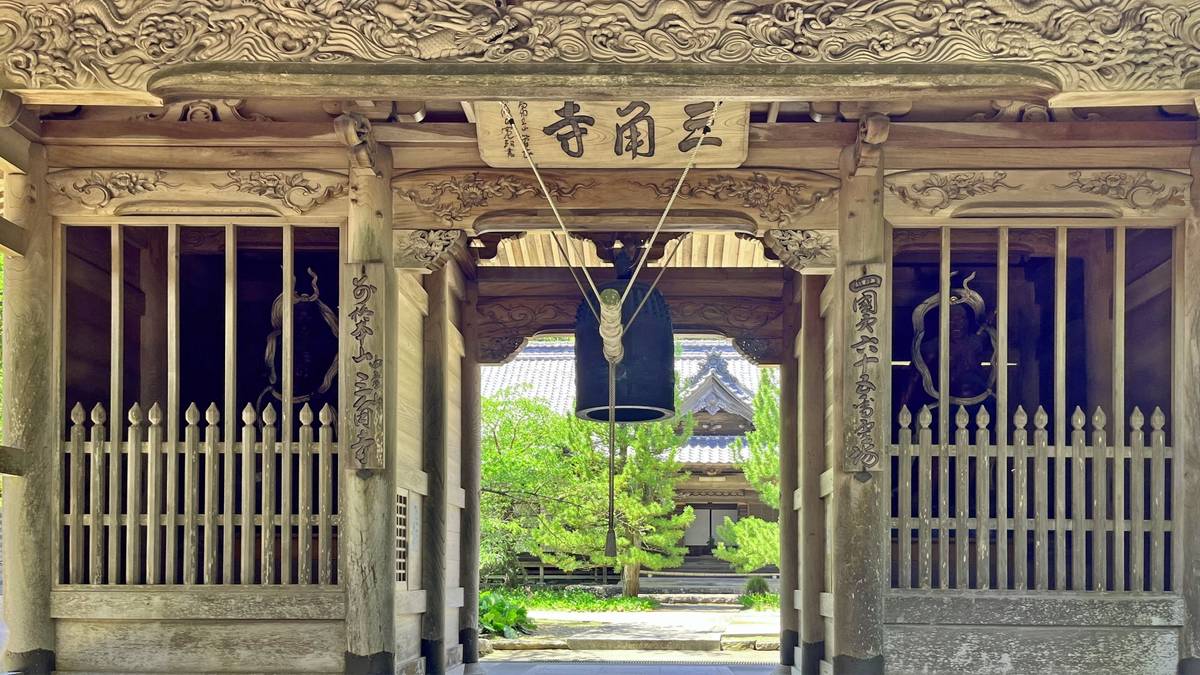
A temple sharing the same kanji as the family name of the protagonist, Aoteru Misumi (三角). It does not appear as an actual location in the series, but it most likely served as a hint behind his name.
If he's your oshi, it's worth a visit.
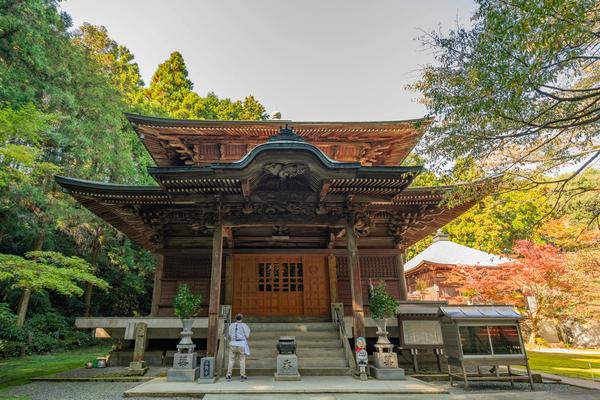
Osaka (Osaka-to), the Tower Rising Over Yamato's Capital
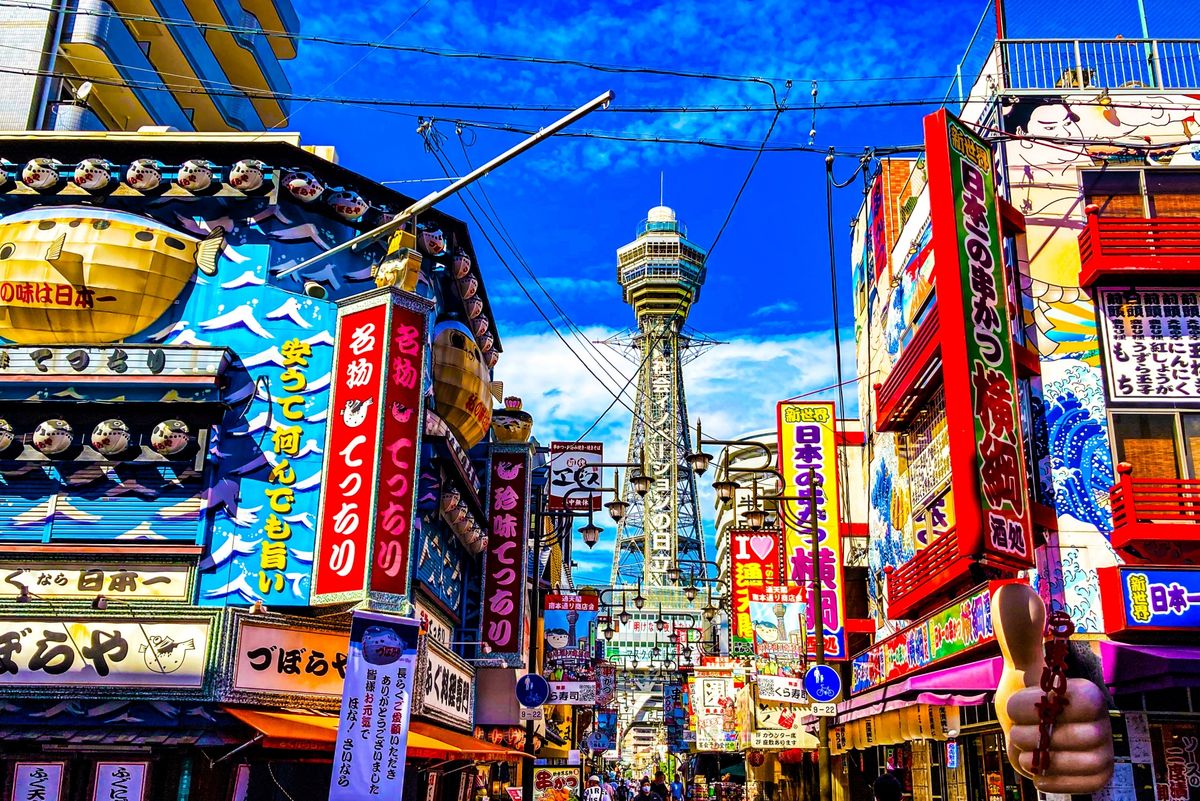
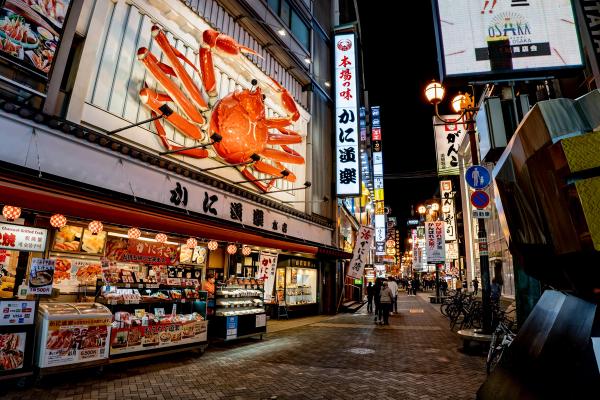
From the middle of the story the setting moves to Osaka. The real Osaka is drawn in the story as Osaka-to, the capital of Yamato. One landmark in particular, the tower rising over the Shinsekai district, returns again and again in pivotal scenes.
Osaka
Loading map...
Tsūtenkaku Tower
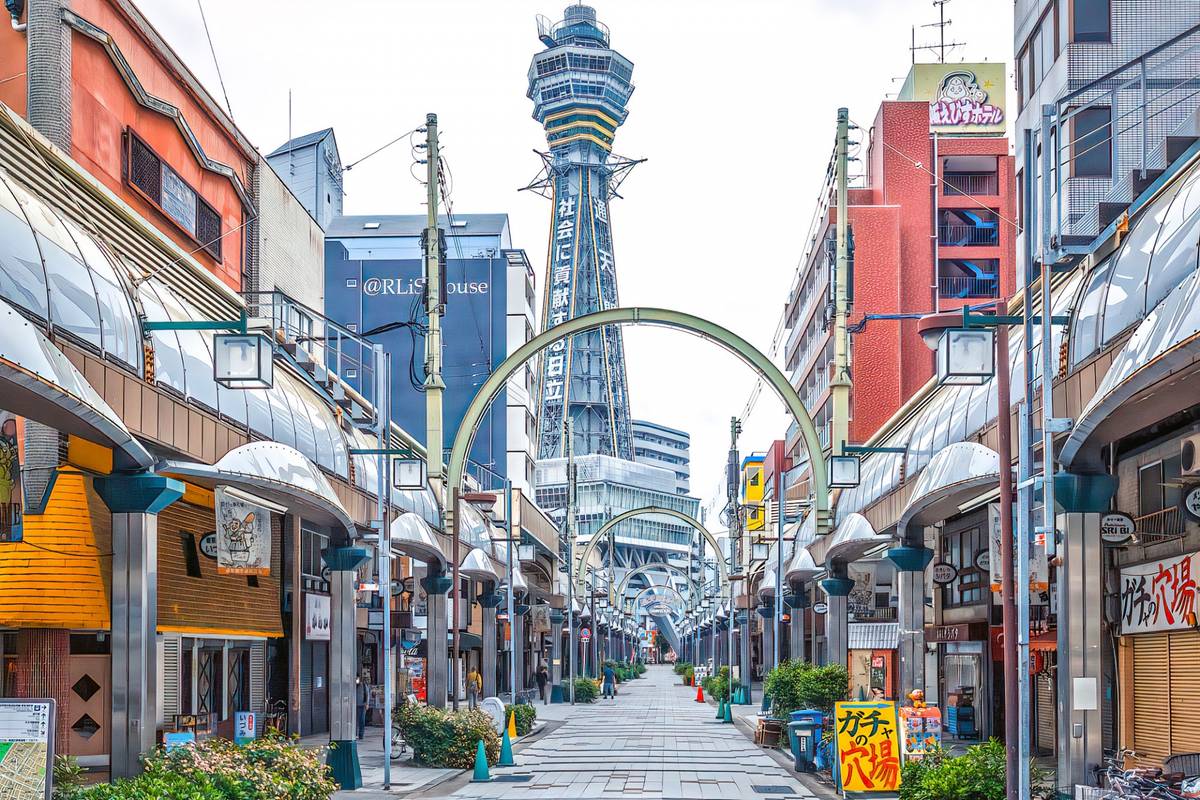
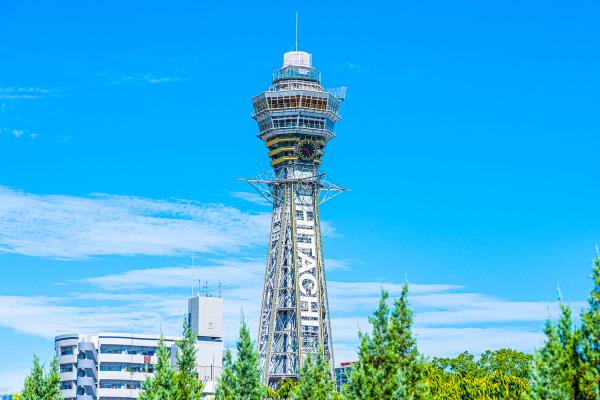
In the series the tower hosts the Tōryūmon, an examination for drawing talented people into the ranks of officials. Drawn as a gathering point for those aiming to join the elite, it fits the lively presence of the real Tsūtenkaku well.
The real Tsūtenkaku is a 108-meter tower in Naniwa Ward, Osaka. The one standing today is the second; it was completed in 1956.
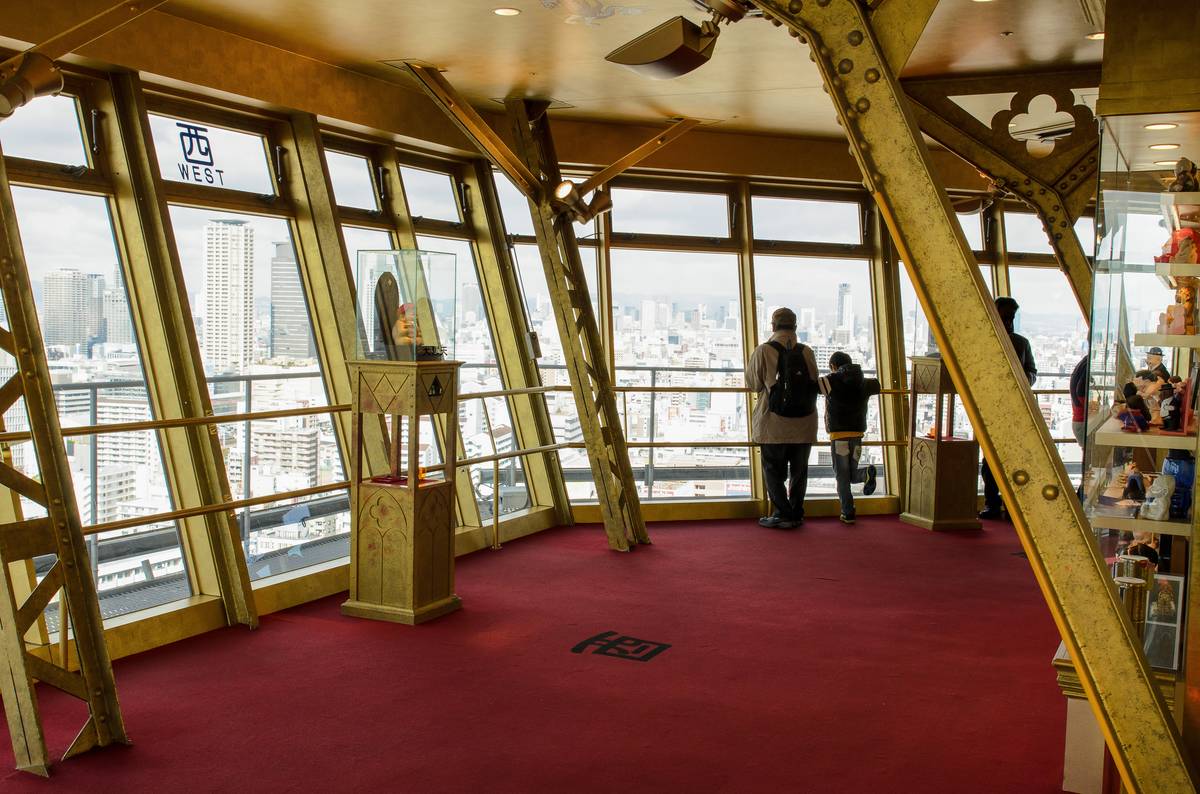
The observation floors on levels four and five give a sweeping view of the city, with admission at 1,200 yen for adults, and you can step out onto the open-air deck above. In the basement is a free floor called Tsūtenkaku Wakuwaku Land, which doubles as the venue for the official collaboration described later. Getting there is simple. It is about a three-minute walk from Ebisuchō Station on the Osaka Metro Sakaisuji Line, and from Kansai International Airport the JR Kankū Rapid reaches Shin-Imamiya Station in around 45 minutes, leaving a six-minute walk to the tower.
Universal Studios Japan
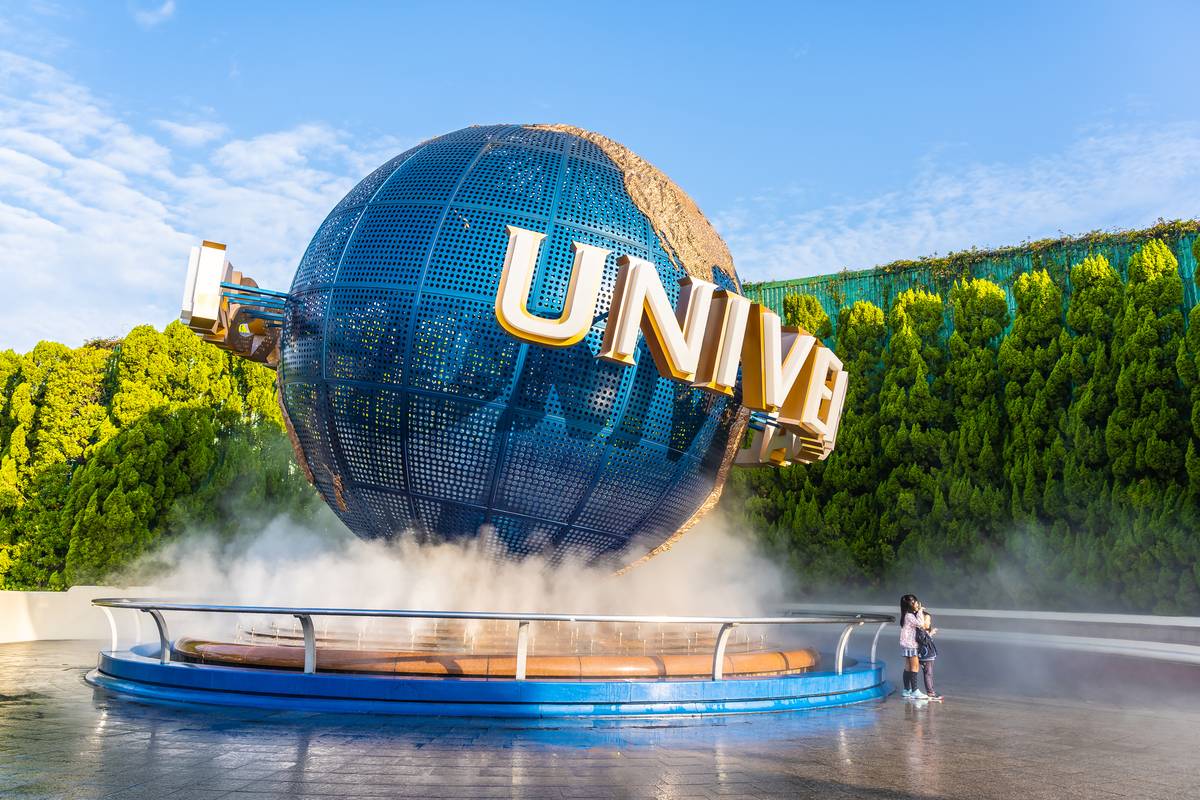
In episode two the name comes up in a conversation about waiting times. It is a moment where the real Osaka peeks through between scenes of the story.
Universal Studios Japan is in Konohana Ward, Osaka, right outside Universal City Station on the JR Yumesaki Line.
Nagashino in Aichi, Where History and Fiction Overlap
Aichi sits at the eastern edge of Yamato's territory. Episode two depicts the Battle of Nagashino, where Yamato clashes with Buō, along with the surprise attack led by Mitsuhide Ryumon. The story even puts in the actual Shin-Tōmei Expressway, turning a modern highway into a battlefield, making for a very unique scene.
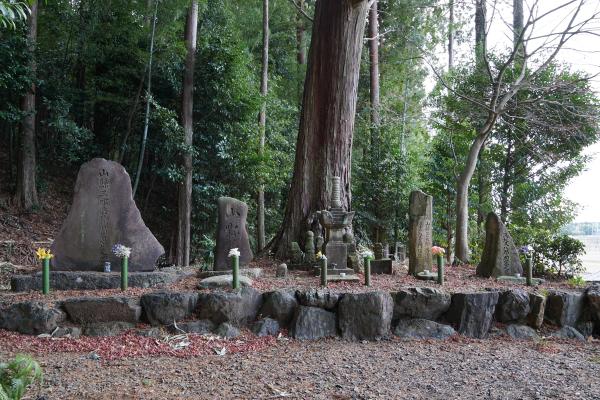
Ryumon's Surprise Attack Was Carried Out in Shizuoka Prefecture
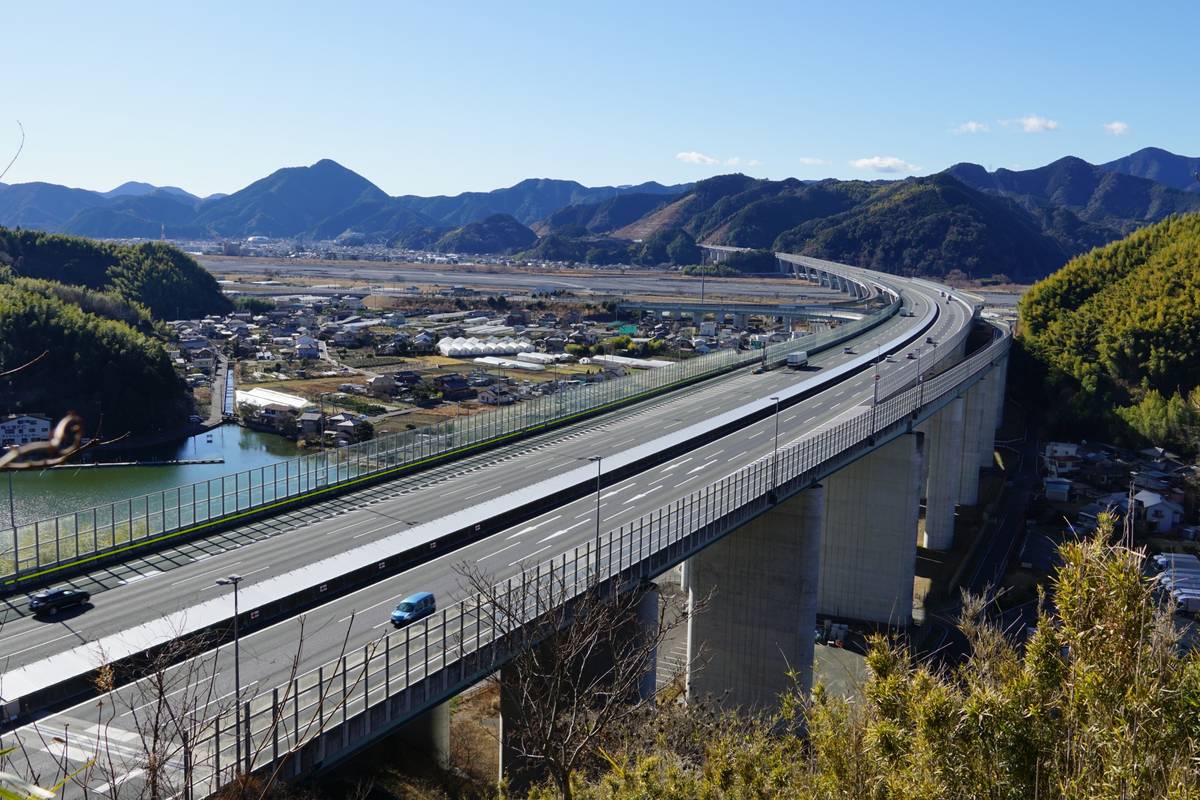
The Shin-Tōmei Expressway is a major highway that runs across several prefectures.
Historically, the Battle of Nagashino was fought in Aichi, and the name in the series most likely comes from the fact that Buō pushed into Aichi as well. Ryumon's decisive surprise attack at the Battle of Nagashino took place around Shizuoka Prefecture, after he pressed east along the Shin-Tōmei Expressway into Buō territory.
Fukui Prefecture (Fukui District, Kinki Province), the Front Line Against Seii
Fukui is where Yamato collides head-on with Seii, the country to the north. In the series it is the main battlefield of the arc known as the Seii Western Campaign, where many iconic scenes appear. Fukui also has plenty to offer travelers, so you can enjoy the pilgrimage and the sightseeing at once.
Fukui Prefectural Dinosaur Museum (Kuzuryū Castle in The Series)
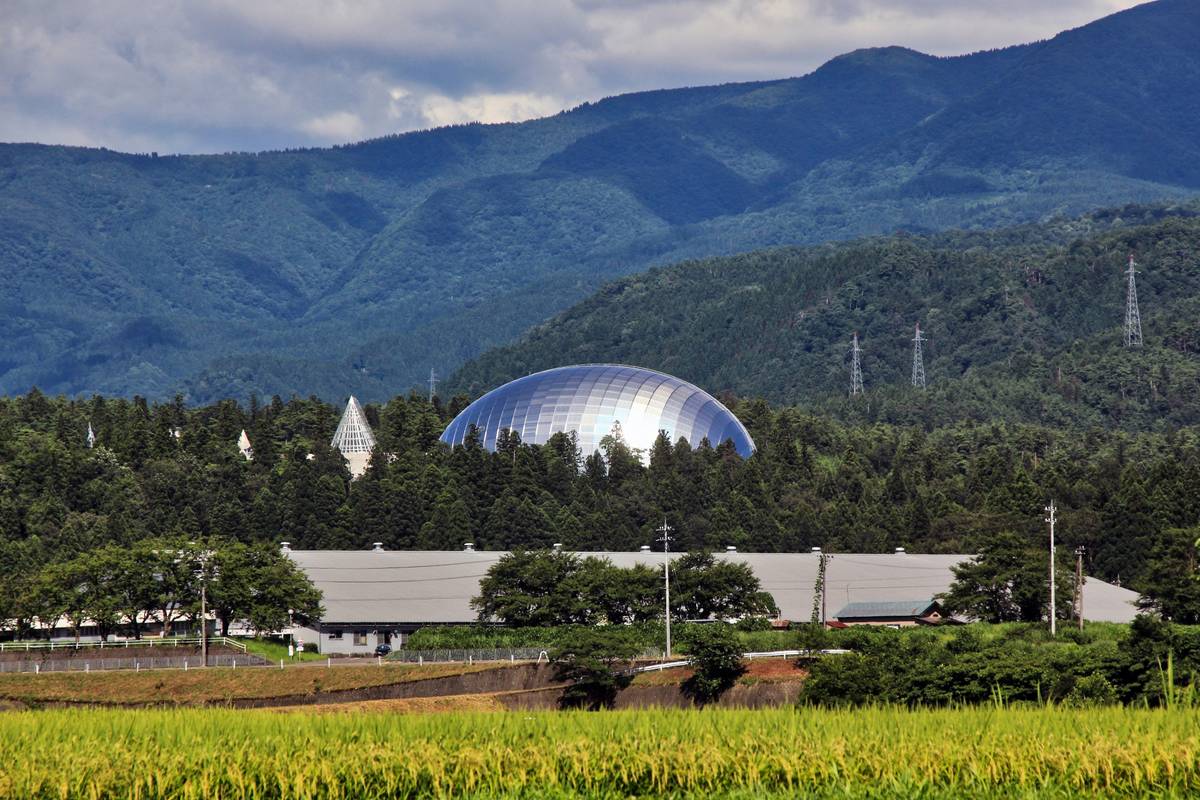
Fans take it as the model for Kuzuryū Castle, Yamato's front-line stronghold. It is where the story is set into motion, full of dramatic moments.
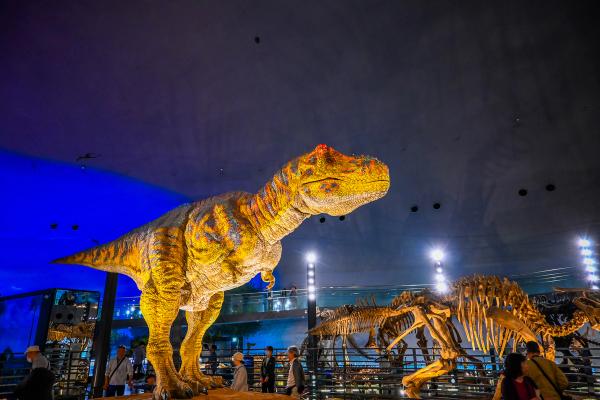
The real museum is in Katsuyama, a silver dome-shaped building. It reopened in 2023 with its exhibits greatly expanded, and admission is 1,000 yen for general visitors. With full dinosaur skeletons lined up across the halls, it makes for a full day out even for those who do not know the series. From JR Fukui Station, take the Echizen Railway to Katsuyama Station and continue by bus.
Fukui Prefectural Office (Fukui Castle Ruins)
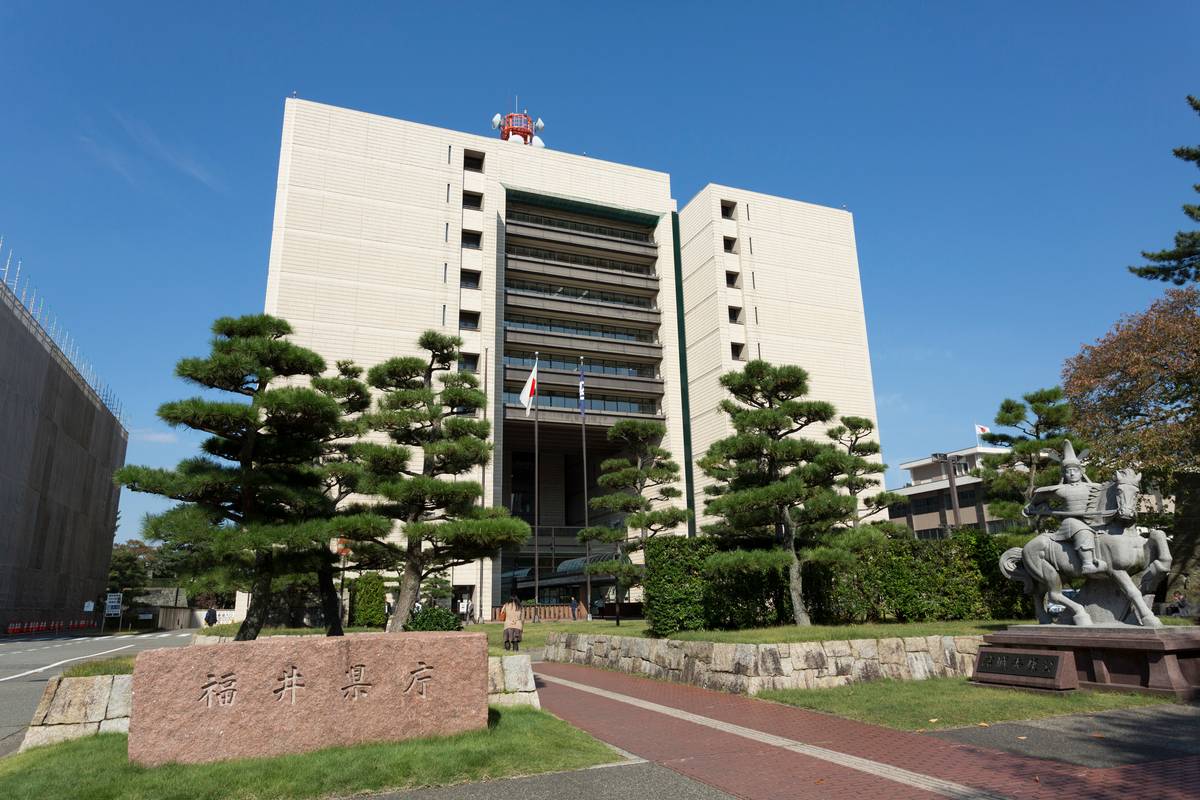
It is considered the model for Fukui Reihoku Castle in the series, appearing as the castle where General Ryumon and his men make camp.
On the real Fukui Castle ruins now stands the Fukui Prefectural Office. The very fact that the old castle grounds have become the seat of the prefectural government makes for an intriguing sight. You can visit the reconstructed Orōka Bridge and Yamazato-guchi Gate for free, about a five-minute walk from JR Fukui Station.
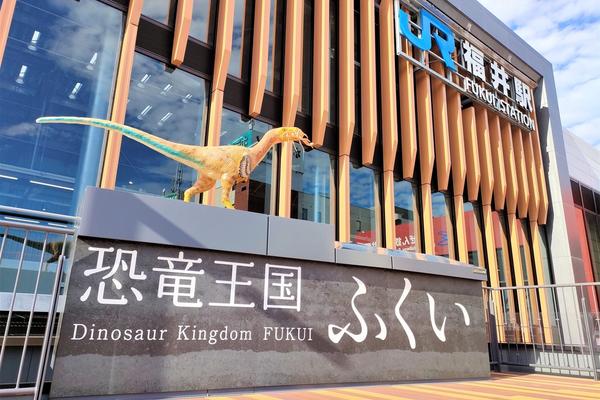
Fukui Station West Exit, the Dinosaur Plaza
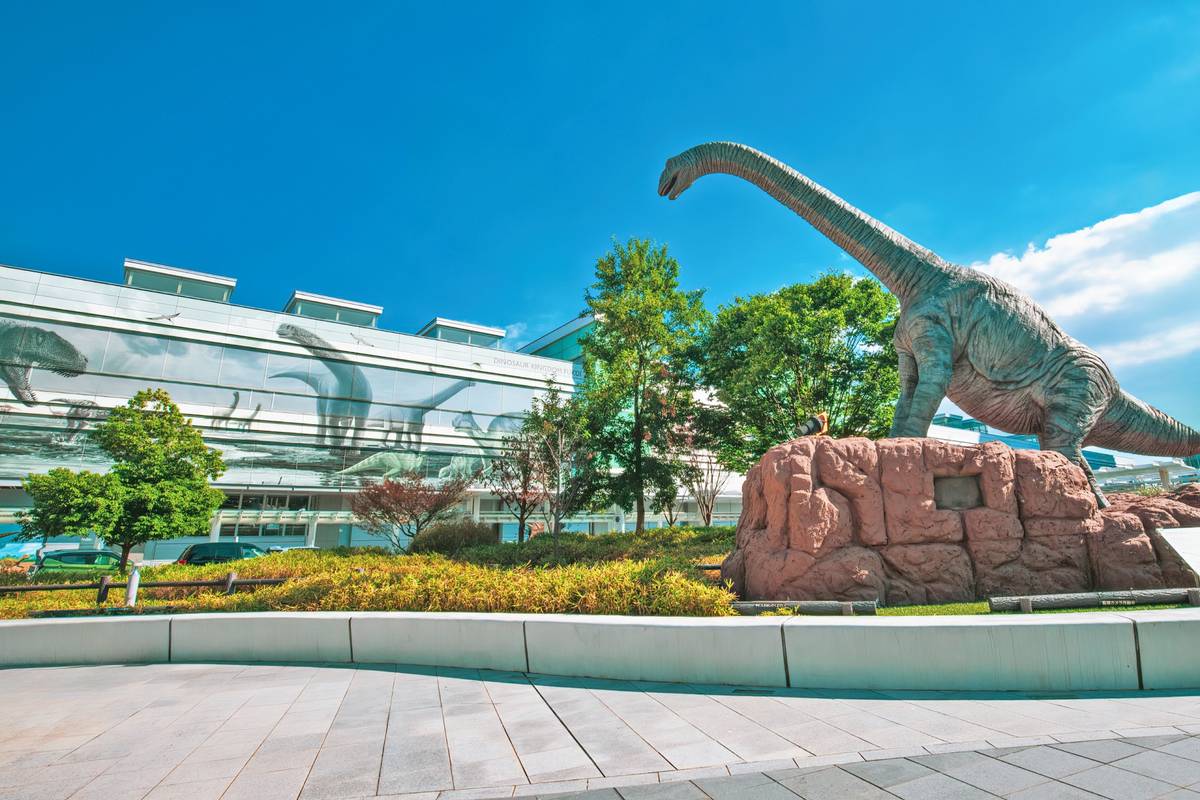
It appears in episodes 10 and 15, when Tonotsugu Taira and his party pass through.
Three moving dinosaur monuments stand at the west exit of Fukui Station. This is a nod to Fukui's fame as a source of dinosaur fossils, greeting you the moment you step out. This station makes a convenient base for getting around the rest of Fukui.
Loading map...
Kuzuryū Bridge
This is said to be the stage for the famous scene where Mitsuhide Ryumon stands alone before the river. In the series the river marks the border, Yamato to the south and Seii to the north, and a tense standoff plays out there.
The real Kuzuryū Bridge spans the Kuzuryū River in Fukui City. Since the bridge has no pedestrian walkway, getting onto it for photos may be difficult. Even so, its distinctive design is instantly recognizable from a distance, making it easy to identify as the structure that appears in the series.
Loading map...
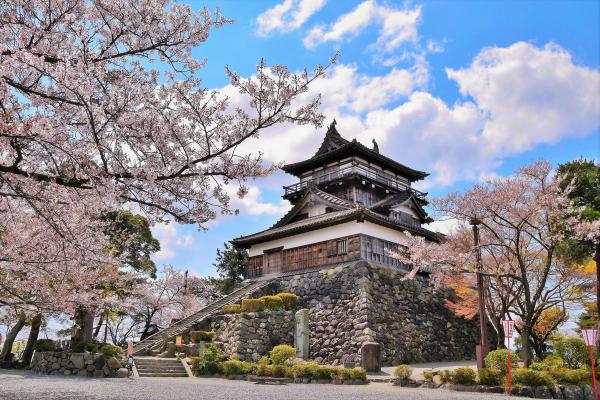
Maruoka Castle
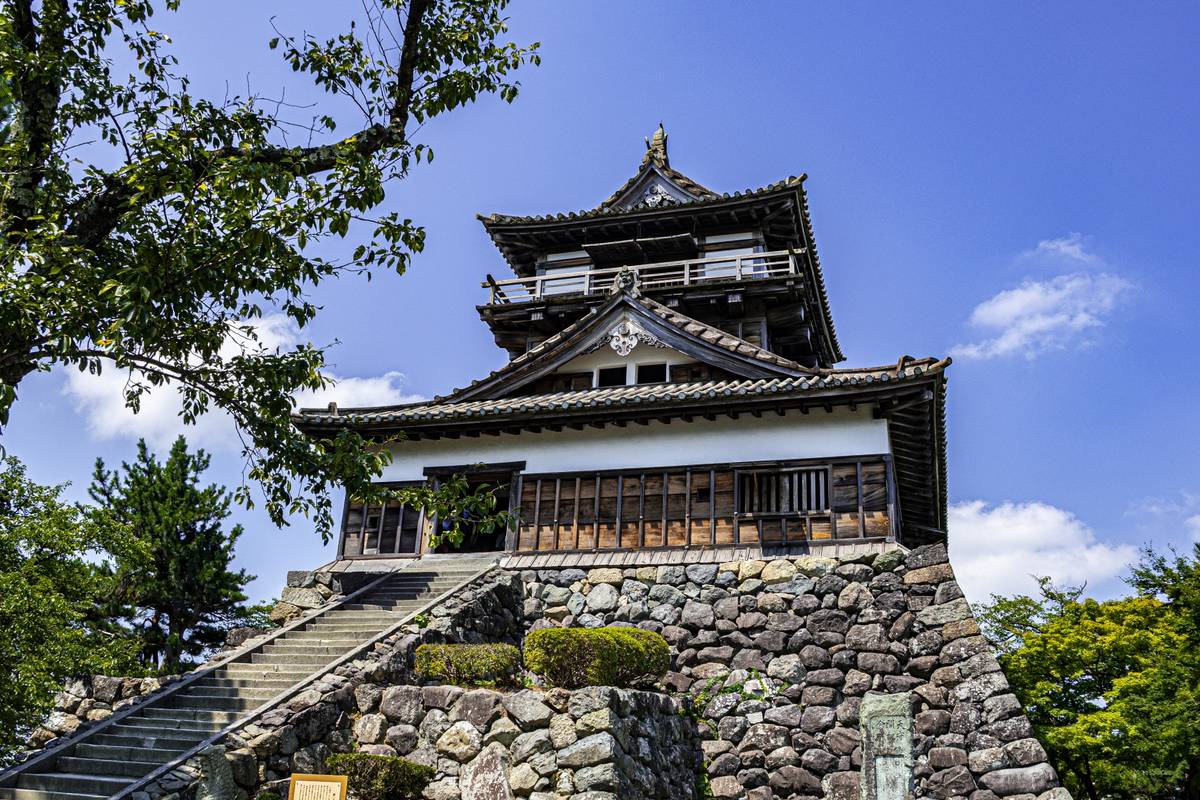
In the series it is drawn as a castle under the control of Seii.
The real Maruoka Castle is in Sakai City, one of only twelve original castle keeps left in Japan and a nationally designated Important Cultural Property. Specialists are split over when it was built, between an older view placing it in the Sengoku period (Warring States) and recent surveys pointing to the Kan'ei era of the Edo period.
Admission is 450 yen, and is about a 50-minute bus ride from Fukui Station. The keep is occasionally closed for repair work, so it is worth checking the official site before you go.
Seidai-ji Temple (the Echizen Great Buddha)
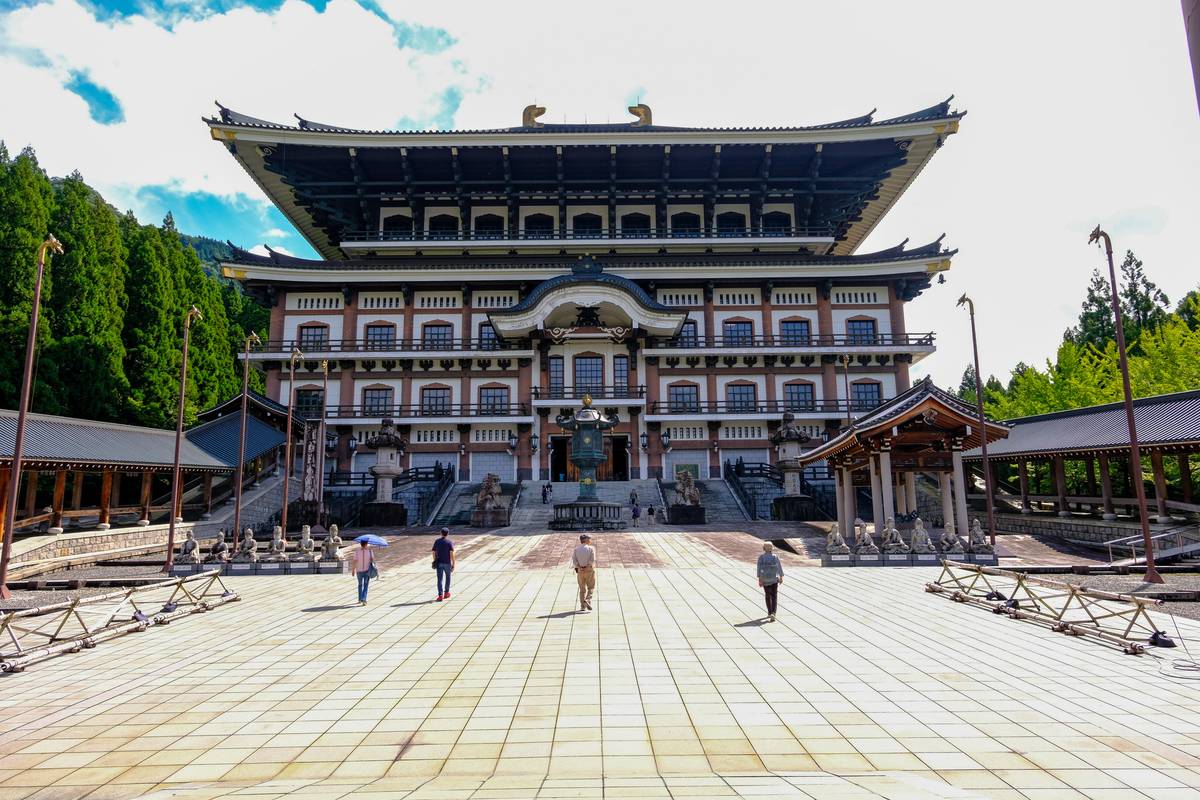
It is said to be the setting where the Seii army gathers before the decisive battle.
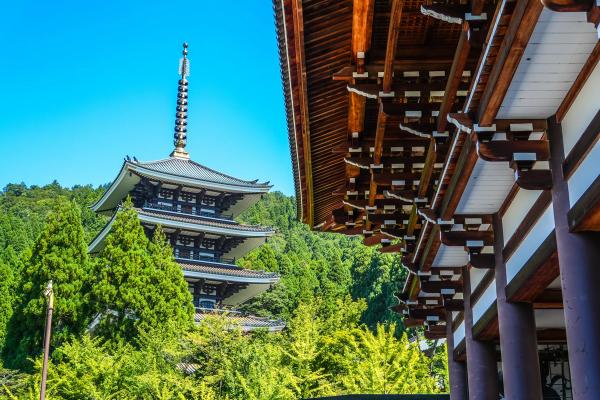
At Seidai-ji in Katsuyama sits a 17-meter Buddha known as the Echizen Great Buddha. Larger than the Great Buddhas of Nara and Kamakura, it was built in 1987 by a businessman from the area. Admission is 500 yen. The sight of the great Buddha and a five-story pagoda rising over the broad temple grounds is quite overwhelming the first time you see it.
The Ota District of Echizen Town
The Ota district is where the final battle of the Western Campaign takes place. The statue of Nobunaga that stands here even shows up in the background of the scenes.
This is said to be the homeland of the Oda Nobunaga clan, with Tsurugi Shrine, where the clan once served as priests, and a statue of Nobunaga. Alongside Nagashino, this is one of the highlights for fans interested in seeing a place where the battles of the series overlap with real historical battlefields from the Sengoku period under the same place name.
Fukui has become easy to reach now that the Hokuriku Shinkansen was extended to Tsuruga in 2024. Starting from Osaka, the capital of Yamato, it is about two and a half hours to Fukui Station by limited express and Shinkansen combined. From Tokyo Station, the Hokuriku Shinkansen runs directly there in as little as two hours and 51 minutes. It is an easy place to fold into a single route through Yamato together with the Osaka spots.
Hyōgo Prefecture
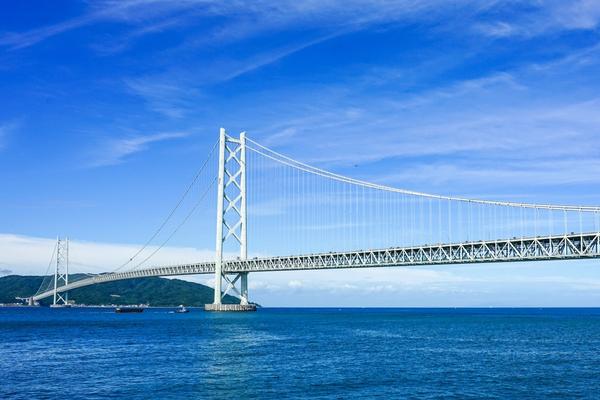
Mitsuhide Ryumon hails from Hyōgo District, and as a young man he is said to have hunted down bandits as the kenshi, or district governor, of Ikuno.
It does not turn up as a place where the characters roam in the series, but it is a fine option for a trip that lets you feel where Ryumon came from.
Hyogo
Loading map...
Wakayama Prefecture
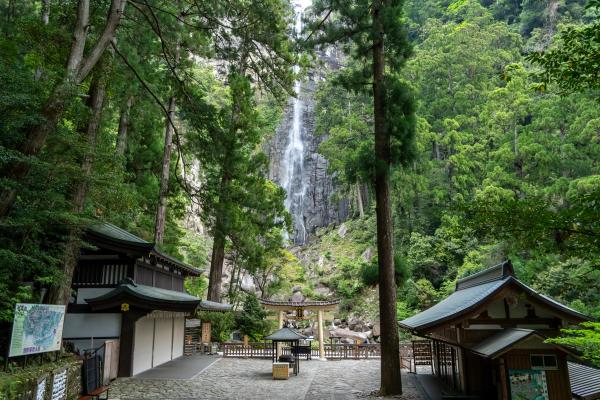
Yoshitsune Asama, nicknamed Tsune-chan, who travels alongside the protagonist Aoteru Misumi, comes from Wakayama District.
He belongs to a distinguished family that helped found Yamato. Depending on where the story turns next, there is every chance a future arc will pull his homeland into the mix.
Wakayama
Loading map...
Nippon Sangoku: Yamato’s Pilgrimages Route
Nippon Sangoku Yamato Pilgrimage: Ehime, Osaka & Fukui
This route follows the Yamato arc of Nippon Sangoku across all three of its real-world regions, in the order the story travels: Shikokuchūō in Ehime, where it opens; Osaka, drawn as the capital; and Fukui, the front line of its fiercest battles. The regions are far apart — Shikoku, Kansai and Hokuriku — so treat it as a multi-day itinerary, and note that several spots need a car, taxi, or long bus ride.
Loading map...

The base for the Shikokuchūō sites, on the JR Yosan Line. The limited express Shiokaze from Okayama gets here in about 1 hour 20 minutes, and the streets around the station recall the episode-one scene of officials piling on tax after tax.

About a 10-minute walk from Iyo-Mishima Station. Its Zuishinmon gate, built in 1821, is the fan-identified model for the wedding gate in the first chapter.

The temple whose name shares the kanji of the hero, Aoteru Misumi (三角) — most likely the hint behind his surname. It isn't a depicted setting, but if he's your oshi, it's worth the trip.

An 890-meter highland with sweeping views of sea and mountains — rapeseed and cherry blossom in spring, cosmos in autumn — echoing the cut just before the two first meet. Best reached by car or taxi.

A Japan Night View Heritage spot looking over the city and the Seto Inland Sea — the view where Aoteru and Saki talk early in the story. It sits up a mountain, so a taxi from the base is the easy way up.

About a 3-minute walk from Ebisuchō Station on the Osaka Metro Sakaisuji Line; from Kansai Airport it's around 45 minutes to Shin-Imamiya, then 6 minutes on foot. The 108-meter tower is the story's Tōryūmon exam venue (observation floors ¥1,200) and hosted the official 2026 collaboration.

Right outside Universal City Station on the JR Yumesaki Line. Not a depicted setting — the name simply comes up in an episode-two chat about waiting times, a glimpse of the real Osaka between scenes.

The hub for getting around Fukui, with three moving dinosaur monuments at the west exit. It appears in episodes 10 and 15 as Tonotsugu Taira's party passes through, and the Hokuriku Shinkansen now reaches it from Tokyo in as little as 2 hours 51 minutes.

About a 5-minute walk from Fukui Station, on the Fukui Castle ruins — the model for Fukui Reihoku Castle, where General Ryūmon makes camp. The reconstructed Orōka Bridge and Yamazato-guchi Gate are free to visit.
Spanning the Kuzuryū River in Fukui City, this is said to be where Mitsuhide Ryūmon makes his lone stand at the river dividing Yamato and Seii. There's no pedestrian walkway, so it's best taken in — and photographed — from a distance.

About a 50-minute bus ride from Fukui Station, in Sakai City. One of only twelve original castle keeps left in Japan; in the series it's a castle held by Seii. Admission is ¥450 — check the official site first, as the keep sometimes closes for repairs.

In Katsuyama — from Fukui Station, take the Echizen Railway to Katsuyama Station, then a bus. Fans read this silver-domed museum (expanded and reopened in 2023, admission ¥1,000) as Kuzuryū Castle, Yamato's front-line stronghold where the story is set in motion.

Also in Katsuyama, near the Dinosaur Museum. Home to the 17-meter Echizen Great Buddha — larger than the Great Buddhas of Nara and Kamakura, built in 1987 (admission ¥500). It's said to be where the Seii army masses before the decisive battle.
FAQ
Published Last Updated
Related Articles
Explore more articles on similar topics and deepen your knowledge of Japan.


Related Titles
Everything we have on this title: real life locations, stories, and where to get it.