The appeal of Nagashino lies in the memory of the battle and the quiet, wooded countryside that surrounds it. A short walk from the castle ruins brings you to a view over the spot where the Toyokawa, known here as the Kansagawa, meets the Urekawa. Every May the town fills with the Nobori Matsuri, a banner festival held to comfort the spirits of those who died in the battle. As you follow the history, you also start to see how people live across this hilly stretch of country known as Okumikawa.
The Battle of Nagashino, 1575
The Battle of Nagashino took place on the 21st day of the fifth month of 1575 by the old lunar calendar, in the third year of the Tenshō era. An allied force of around 38,000 under Oda Nobunaga and Tokugawa Ieyasu, who had rushed to relieve the besieged Nagashino Castle, met the 15,000 troops of Takeda Katsuyori at Shitaragahara, a plain about four kilometers west of the castle. The allies built lines of wooden anti-cavalry palisades along the Rengogawa River and stationed large numbers of gunners behind them. The Takeda charged on horseback again and again, but the palisades and disciplined volley fire held them off and inflicted heavy losses, and the fighting was decided in about eight hours. Many of Katsuyori's senior retainers fell here, among them Yamagata Masakage and Baba Nobuharu, two of the celebrated generals remembered as the Four Guardians of the Takeda. The defeat sent the Takeda clan into a rapid decline.
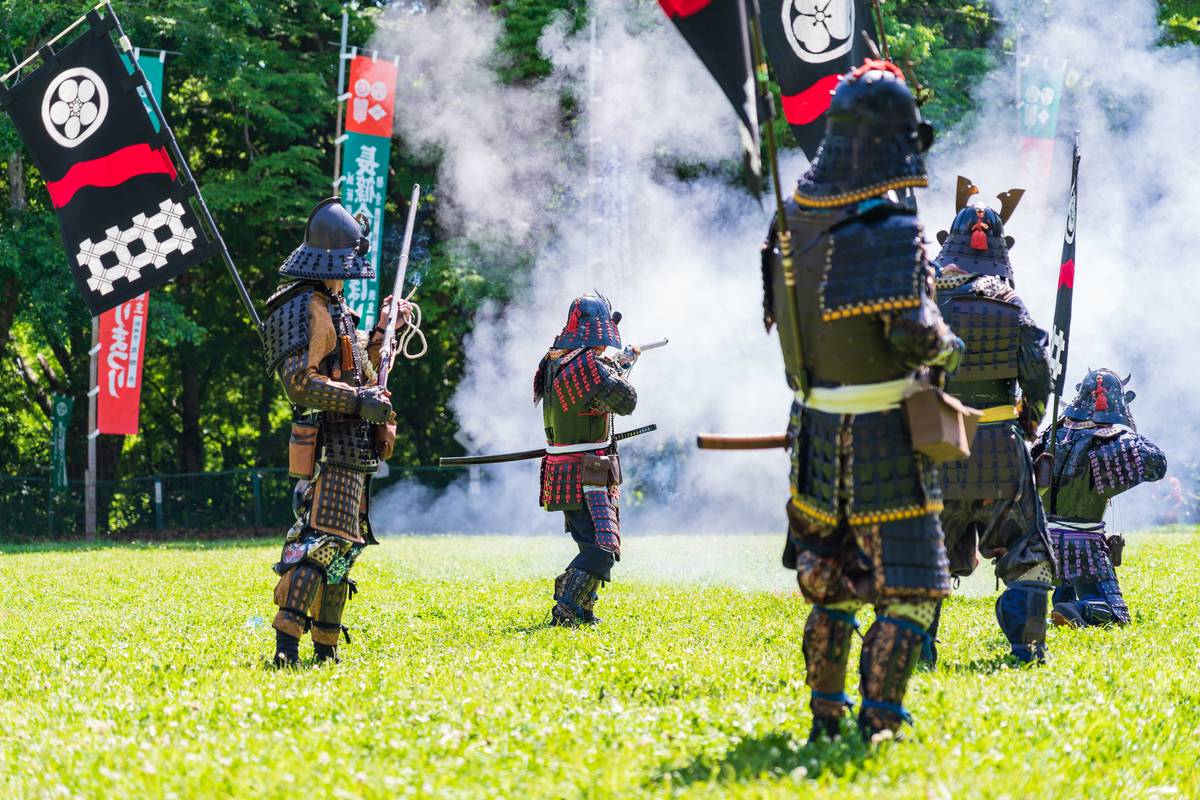
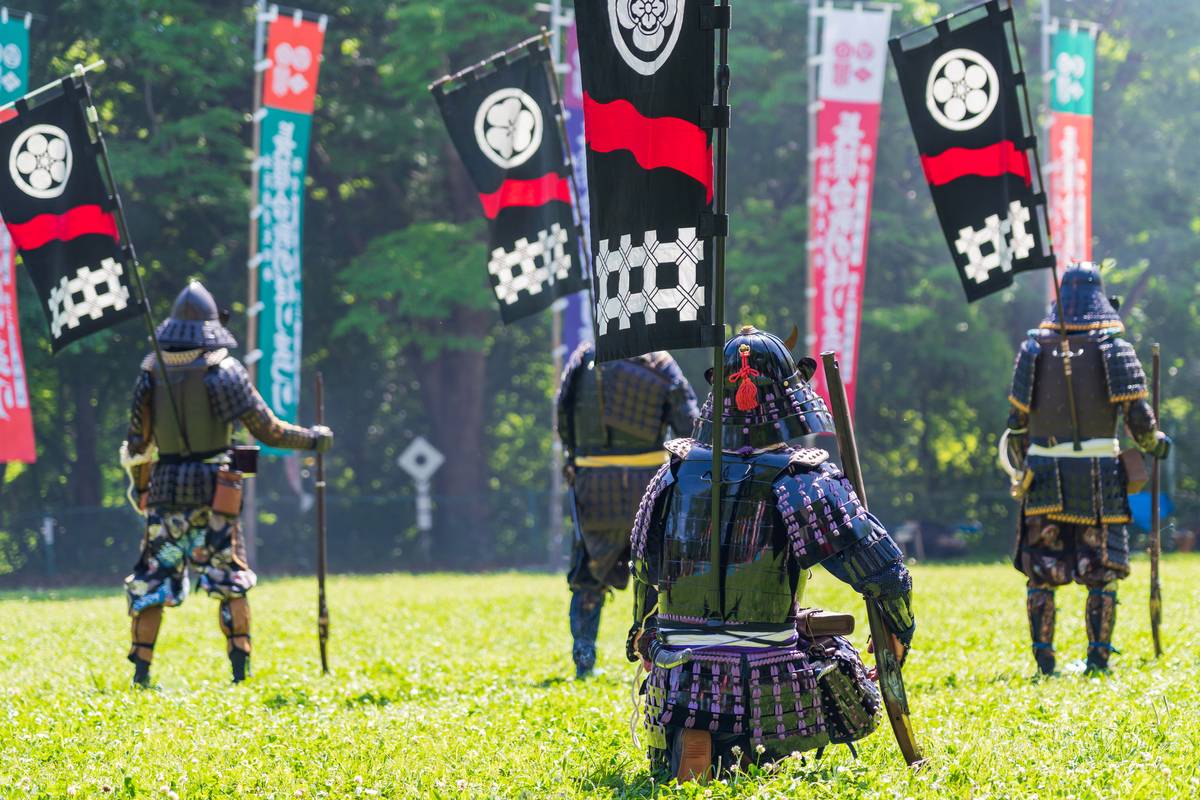
A reenactment event with performers dressed as period soldiers carrying matchlock guns.
One famous story holds that Nobunaga split 3,000 gunners into three ranks that fired in rotation, a tactic known as the "three-rank volley." Yet the earliest primary chronicle, the Shinchō Kōki, makes no mention of it, and the story first appears in the Hōan Shinchō-ki, written in the early Edo period. Because matchlock guns took time to reload, truly continuous fire would have been difficult, and recent research sees the victory as resting instead on concentrating a large number of guns in one place and firing in disciplined waves from behind the protection of the palisades.
Around the Castle Ruins and Museums
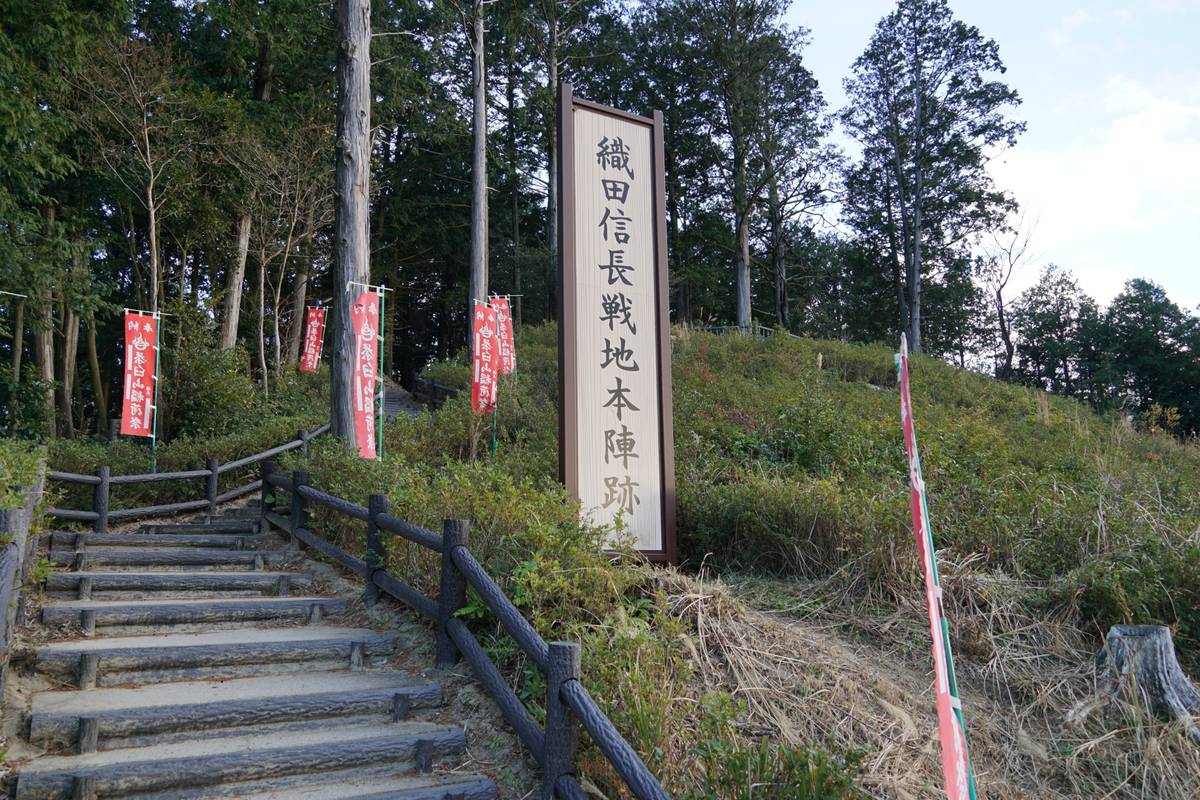
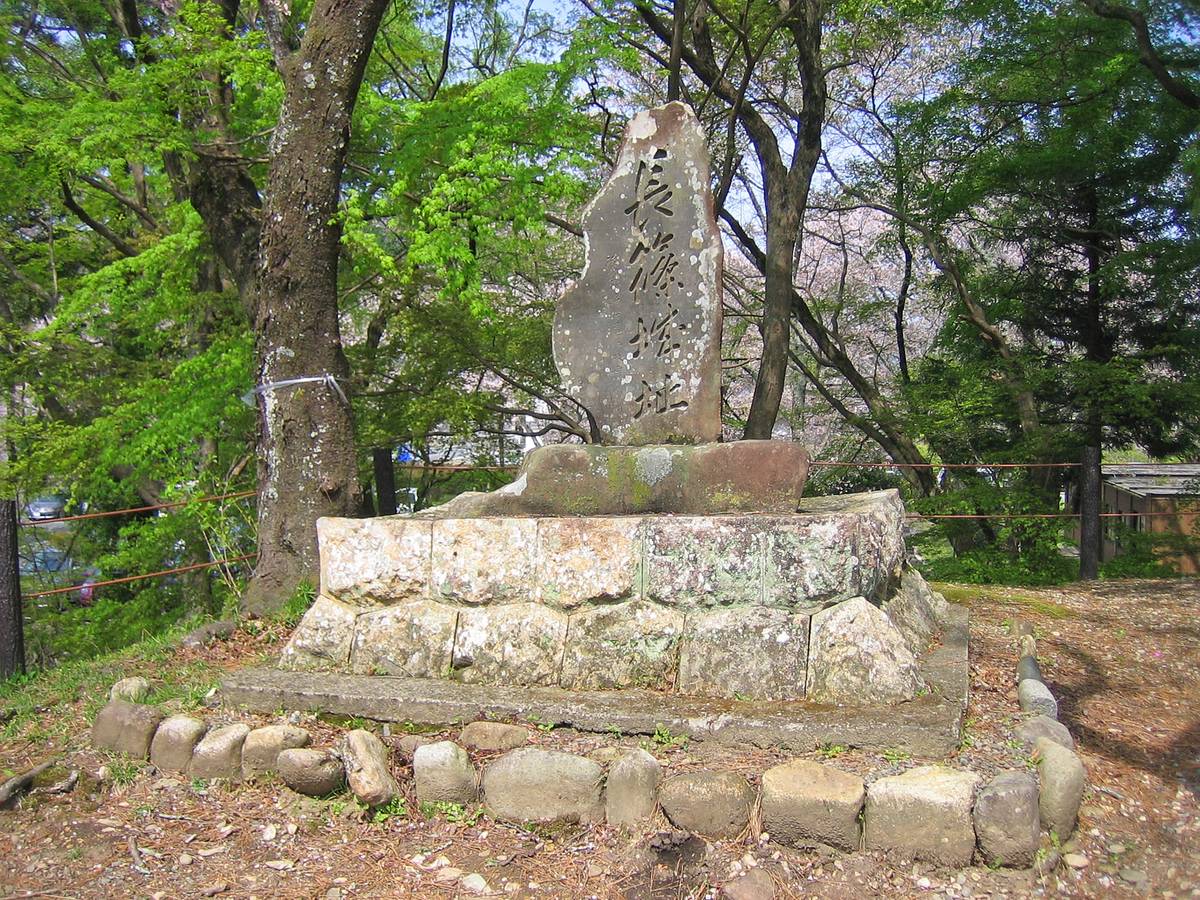
The Nagashino Castle site today is a National Historic Site and counts among Japan's 100 Famous Castles, a list of notable historic castles drawn up in 2006. Parts of the inner bailey, the earthen ramparts, and the dry moats survive, and you can still feel the shape of the land where the cliff juts out toward the river junction. The neighboring Nagashino Castle Historic Preservation Hall keeps around 200 items on permanent display, including relics and documents tied to the battle and a painting of the crucifixion of Sune'emon.
Shitaragahara Historical Museum
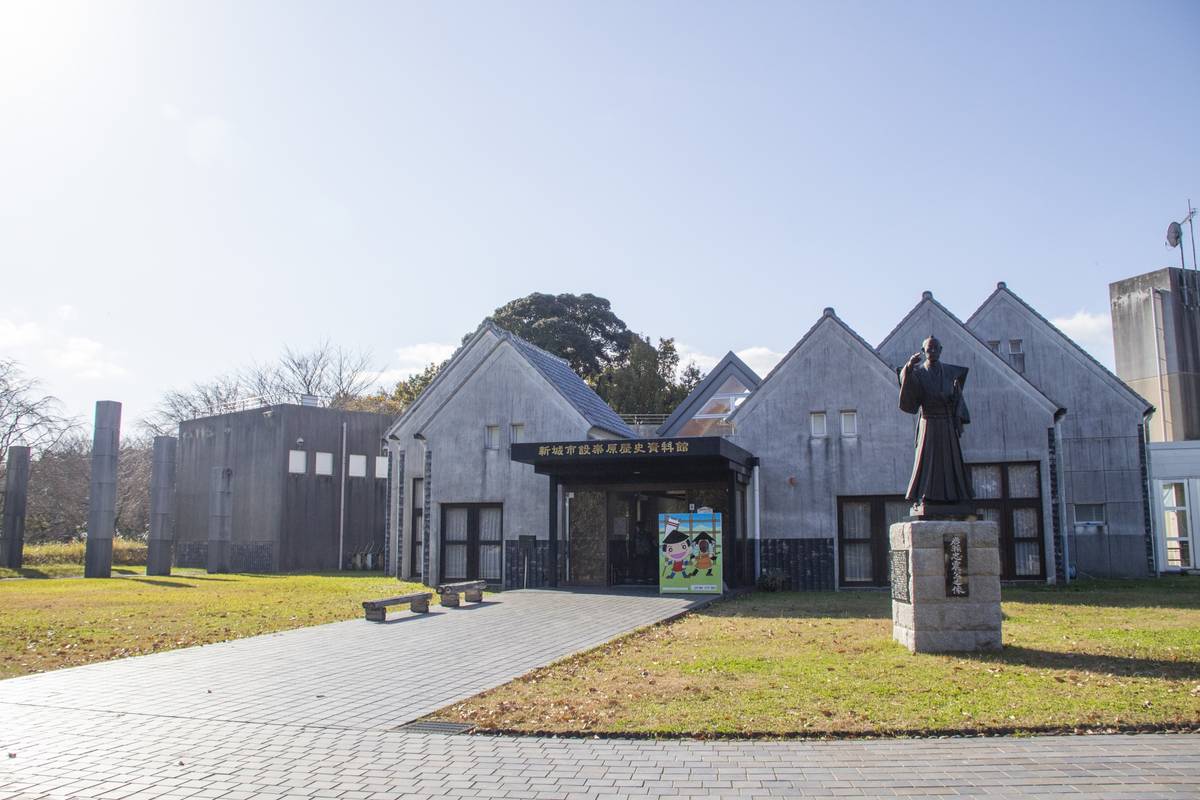
A little farther away, on the ground where the decisive fighting took place at Shitaragahara, stands the Shitaragahara Historical Museum. Its displays center on how matchlock guns changed from their first arrival in Japan up to the Battle of Nagashino, and a section of the wooden palisades has been rebuilt along the Rengogawa. Visiting the castle ruins and Shitaragahara together lets you trace the course of that single day of battle alongside the lay of the land.
The Nobori Matsuri and Life in Okumikawa
A scene from the Nobori Matsuri.
Every year on May 5, the Nagashino Kassen Nobori Matsuri, the Nagashino Battle Banner Festival, takes place at and around the castle ruins. Held to comfort the fallen soldiers of both armies, it fills the grounds with thousands of tall banners dyed with the family crests of the warlords, while matchlock shooting demonstrations and a procession of marchers in full armor bring the old castle site to life.
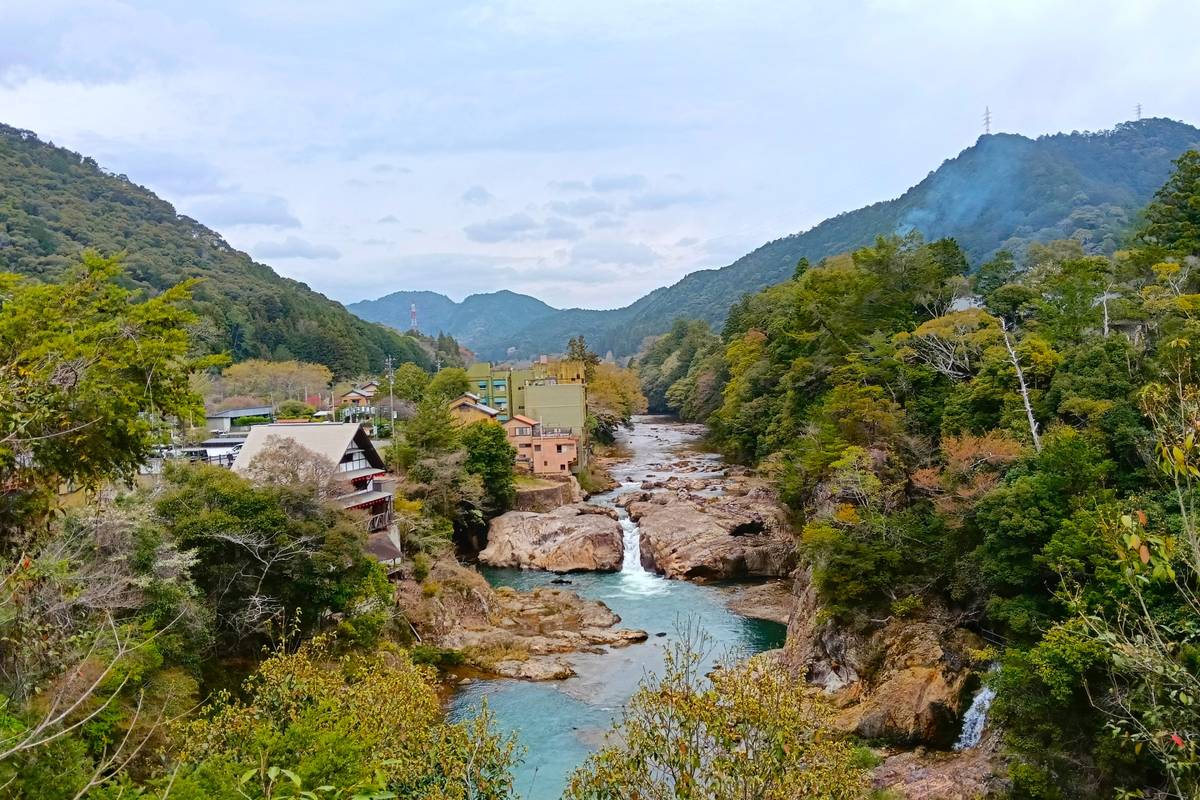
The northern part of Shinshiro, the area that includes Nagashino, is the hilly country that people in Aichi call Okumikawa. The valleys of the Kansagawa and Urekawa, Yuya Onsen, and Mount Hōraiji all lie close by, and a quiet landscape of wooded hills spreads out without a break from the scenes of the Sengoku story. Walk just a short way along the river from the castle ruins and you sense a slower, everyday rhythm of life, quite apart from the dramatic tale of the battle.
The Siege of Nagashino Castle and Torii Sune'emon
Nagashino Castle was a mountain stronghold built in 1508 by Suganuma Motonari, a natural fortress that made the most of the cliffs at the meeting point of the Toyokawa and Urekawa rivers. In 1575 it was held for the Tokugawa side by Okudaira Sadamasa, later known as Nobumasa, who shut himself inside with a mere 500 men against Takeda Katsuyori's 15,000. When fire arrows from the Takeda burned down the castle's granary during the siege, the Okudaira garrison decided to call for reinforcements from Tokugawa Ieyasu, who was at Okazaki. The man sent to carry that message was a foot soldier named Torii Sune'emon.
Sune'emon ran to Okazaki, secured a firm promise that relief was on its way, and started back, only to be captured by Takeda troops on his return to the castle. Katsuyori ordered him to shout toward the castle that no help was coming and that the defenders should surrender. Pretending to agree, Sune'emon was led close to the walls, and at the final moment he called out instead that reinforcements would arrive in two or three days and that the garrison should hold on until then. He was crucified for it, as the story goes. Far from breaking, the defenders' spirits rose, and they held out the two days until the relief force arrived.