Naniwa
浪速区
Things to Do in and Around Naniwa
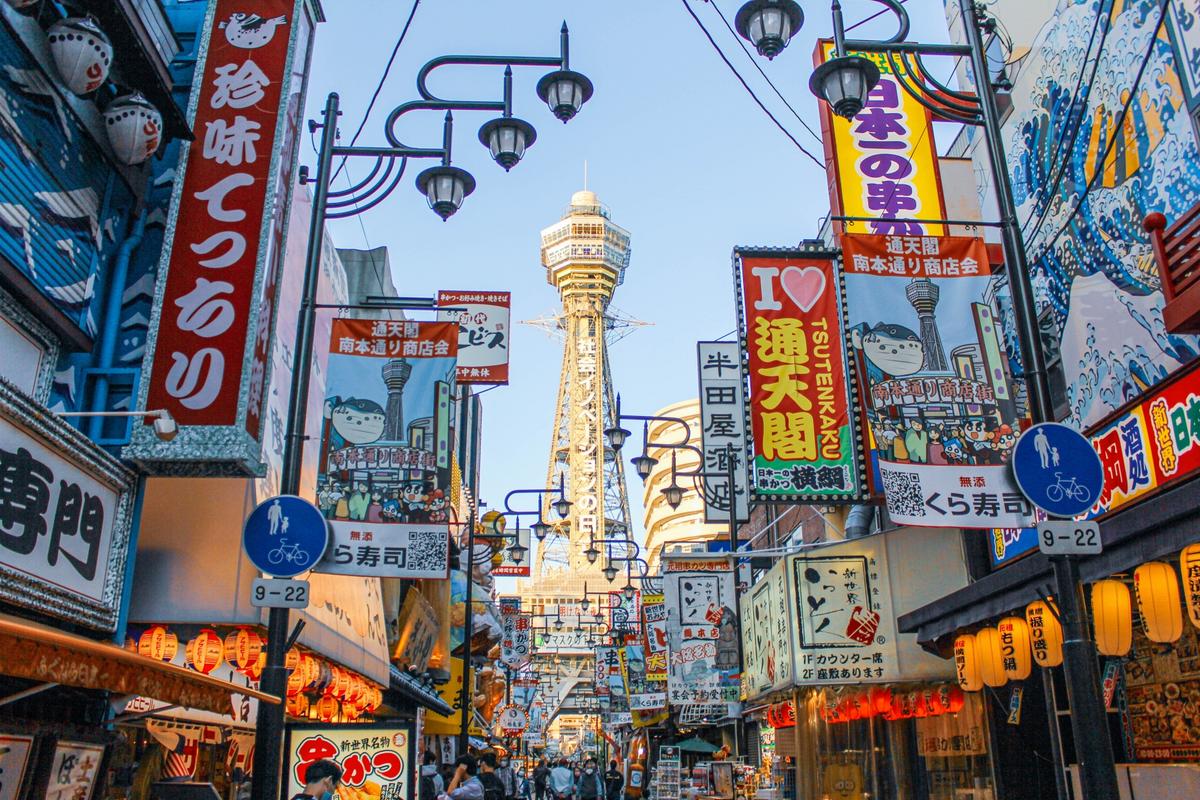
Naniwa Ward measures just 4.39 square kilometers, making it the smallest of Osaka's 24 wards. The kushikatsu and retro scenery of Shinsekai, the electronics shops and anime stores of Nipponbashi, and the business-luck prayers at Imamiya Ebisu Shrine are popular sights packed within walking distance of one another. JR Namba Station and the subway's Namba Station serve as the gateway on the western side of the ward, with Shinsekai and Tsutenkaku Tower about one kilometer away. A compact ward where you can walk to all the main attractions in a single day.
Places to visit in Naniwa
Where is Naniwa?
Naniwa Ward sits in the south-central part of Osaka City, bordered by Chuo Ward to the north, Tennoji Ward to the east, Nishinari Ward to the south, and Nishi Ward to the west. It is surrounded on all four sides by the city's major tourist districts. The ward covers about 4.39 square kilometers, the smallest of Osaka's 24 wards, with a population of about 80,000 as of 2025.
The southeastern edge of the ward holds Shinsekai with Tsutenkaku Tower, the northern side takes in part of the Namba entertainment area, and the western side serves as a transport hub centered on JR Namba Station and OCAT. Nipponbashi-suji Shopping Street and the electronics district of Den Den Town just south of it also fit inside the ward. Being able to walk between Shinsekai, Nipponbashi, and Namba is what defines Naniwa geographically.


Getting Around
The gateway to Naniwa Ward is JR Namba Station and Nankai Namba Station. From Kansai International Airport, the Nankai Railway reaches Namba Station in about 34 minutes by Limited Express Rapi:t or about 44 minutes by Airport Express. From Itami Airport, a limousine bus runs directly to OCAT, connected to JR Namba Station, in about 25 to 30 minutes. From Shin-Osaka Station, the Osaka Metro Midosuji Line takes about 13 minutes to Namba Station.
Once inside the ward, the subway and walking are your main options. The Midosuji, Yotsubashi, Sennichimae, and Sakaisuji lines of the Osaka Metro all run through Naniwa, with stations such as Namba, Daikokucho, Ebisucho, and Ashiharabashi giving access to each part of the ward. From Ebisucho Station, the closest stop to Tsutenkaku Tower, to Nipponbashi Station is about a 10-minute walk, and Nipponbashi to Namba is one subway stop away. With the sights close to each other, walking through the streetscape is a nice way to get around.
Loading map...
About Naniwa
The pleasure of walking Naniwa Ward comes from having all the main sights within walking distance of one another. Shinsekai centered on Tsutenkaku Tower, Nipponbashi the anime and electronics district, Imamiya Ebisu Shrine famed for business prosperity, and Namba Yasaka Shrine where a giant lion's mouth has been turned into a stage. They all sit one subway stop or a 10 to 20 minute walk apart, so half a day is enough to walk through the main spots.
Tsutenkaku and Shinsekai: Osaka's Icon and a Retro Entertainment District
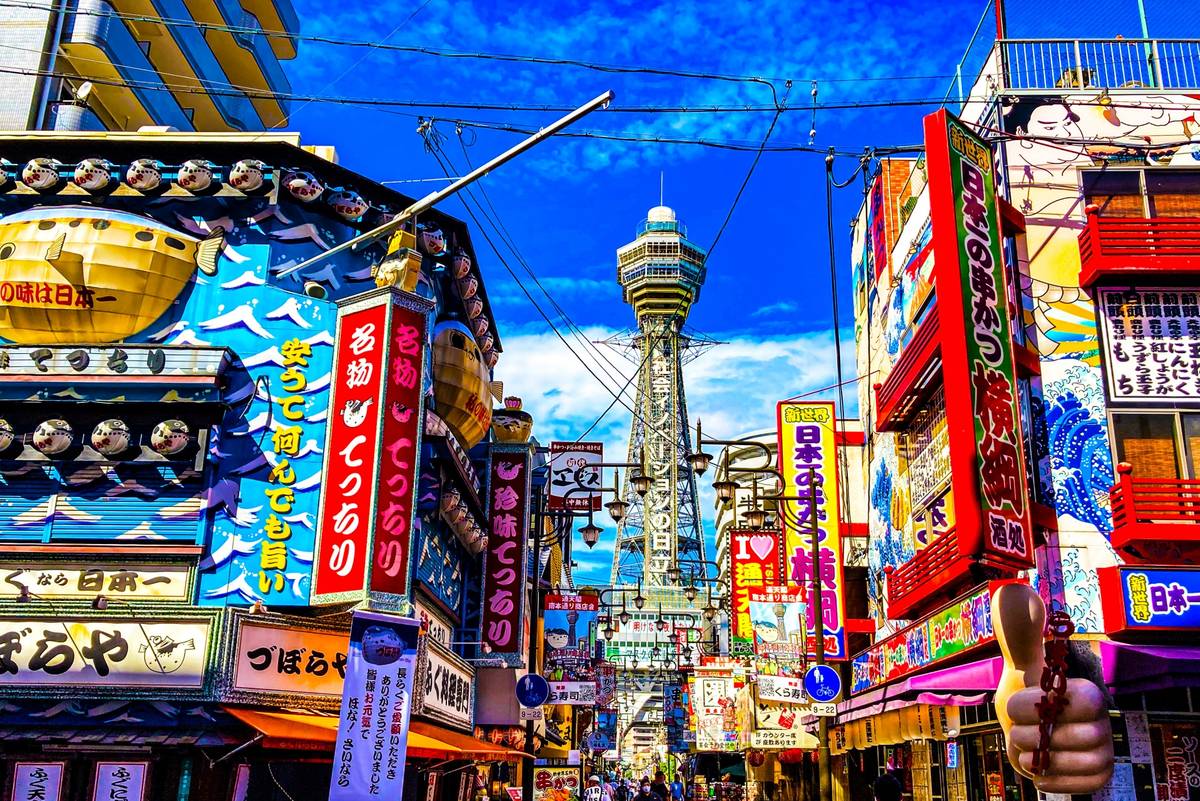
Tsutenkaku Tower rising above Shinsekai
Tsutenkaku Tower rises in the southeast of Naniwa Ward, at the center of Shinsekai. The original tower, built in 1912, was dismantled in 1943 due to fire damage and wartime metal donations. The current tower is the second generation, rebuilt in 1956 and standing 108 meters tall. From the observation deck you can see across the Osaka Plain, with the streets of Shinsekai radiating outward at your feet.
Shinsekai was developed in 1912 as an entertainment district modeled on parts of Paris and on New York's Coney Island. At the time, with Tsutenkaku Tower and the Luna Park amusement park at its center, it was the liveliest spot in Osaka. Today the alley known as Janjan Yokocho is packed with kushikatsu restaurants, standing bars, and shogi clubs, and the area remains popular as a tourist district that keeps the atmosphere of a Shōwa-era pleasure quarter.
Nipponbashi Den Den Town: A District of Anime and Electronics
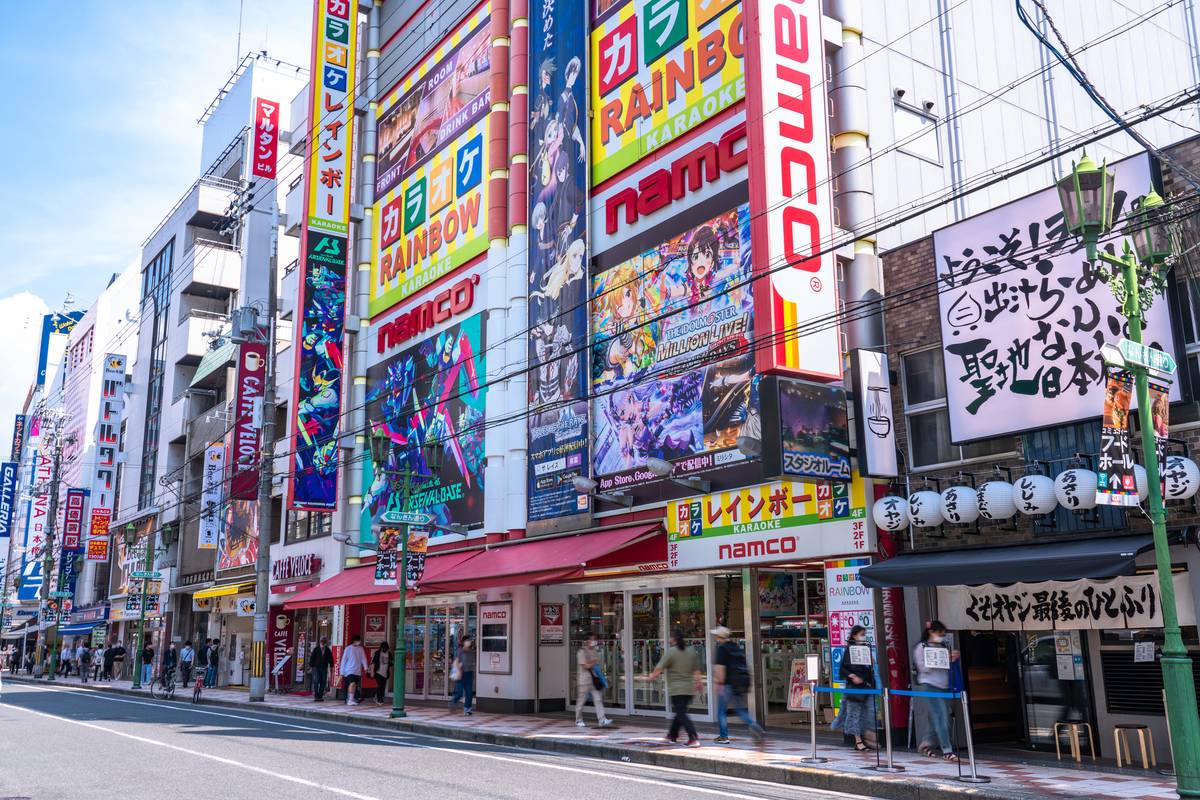
Stretching along Sakaisuji Avenue from Nipponbashi Station to Ebisucho Station is Nipponbashi Den Den Town. Long known as a district of secondhand tools and used books, it grew into an electronics district after the war as shops dealing in home appliances and electronic parts gathered here. Since the 2000s it has been known as a center of otaku culture comparable to Tokyo's Akihabara.
Anime goods shops, figure specialty stores, used game stores, and maid cafes line the streets, while electronics chains and model shops still keep their doors open. Every March, Nipponbashi Street Festa is held, turning Sakaisuji Avenue into a pedestrian zone packed with cosplayers and onlookers.
Imamiya Ebisu Shrine: Osaka's Ebisu Festival of Business Prosperity
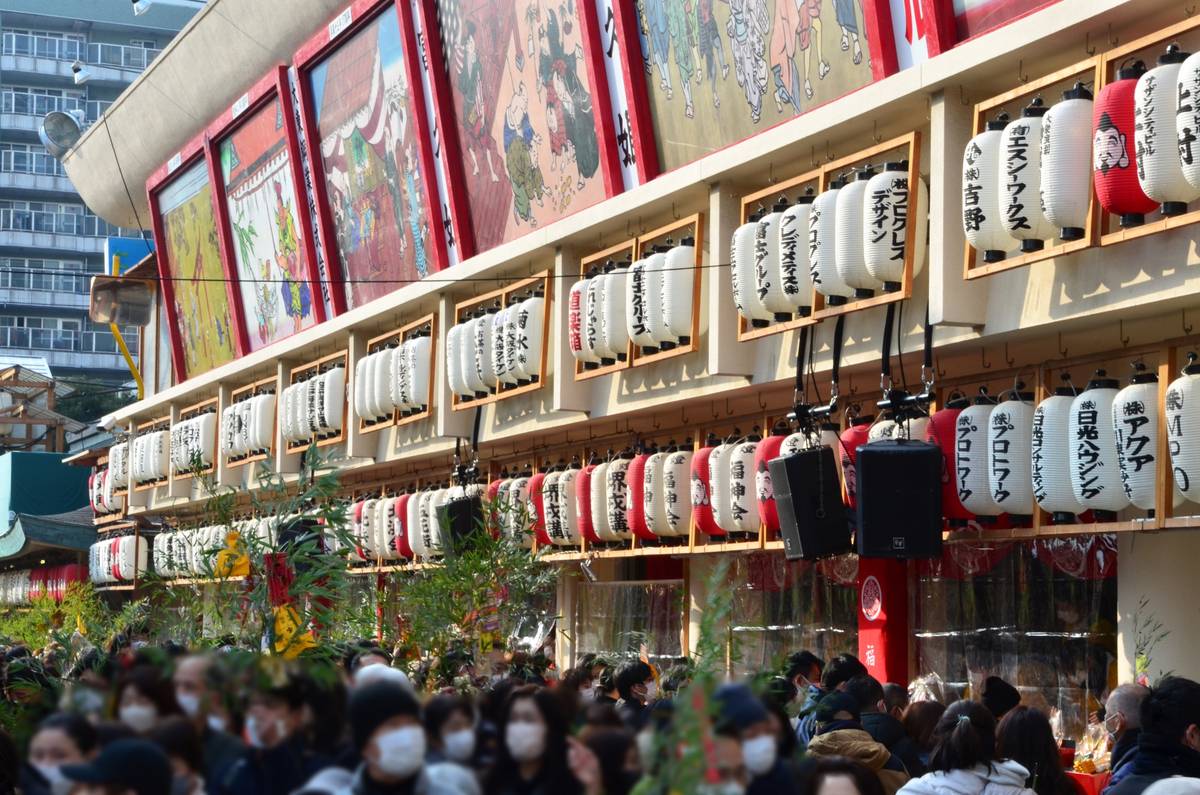
Imamiya Ebisu Shrine enshrines Ebisu-sama, the deity of business prosperity, and has long been affectionately called "Ebessan" by locals. Its founding is traced to the reign of Empress Suiko, when Prince Shōtoku is said to have enshrined the deity here as the western guardian of Shitennōji Temple.
The three-day festival from January 9 to 11, known as Tōka Ebisu, represents Osaka's first days of the new year. About one million worshippers visit during the festival, and the grounds fill with people receiving "fukusasa" lucky bamboo branches from the shrine's "fuku-musume" maidens. The chant "Shobai-hanjo de sasa motte koi" (Bring some bamboo for business prosperity) echoes through the precincts, making this one of the annual events that symbolize Osaka as a merchants' city.
Namba Yasaka Shrine: An Old Shrine Known for Its Giant Lion Hall
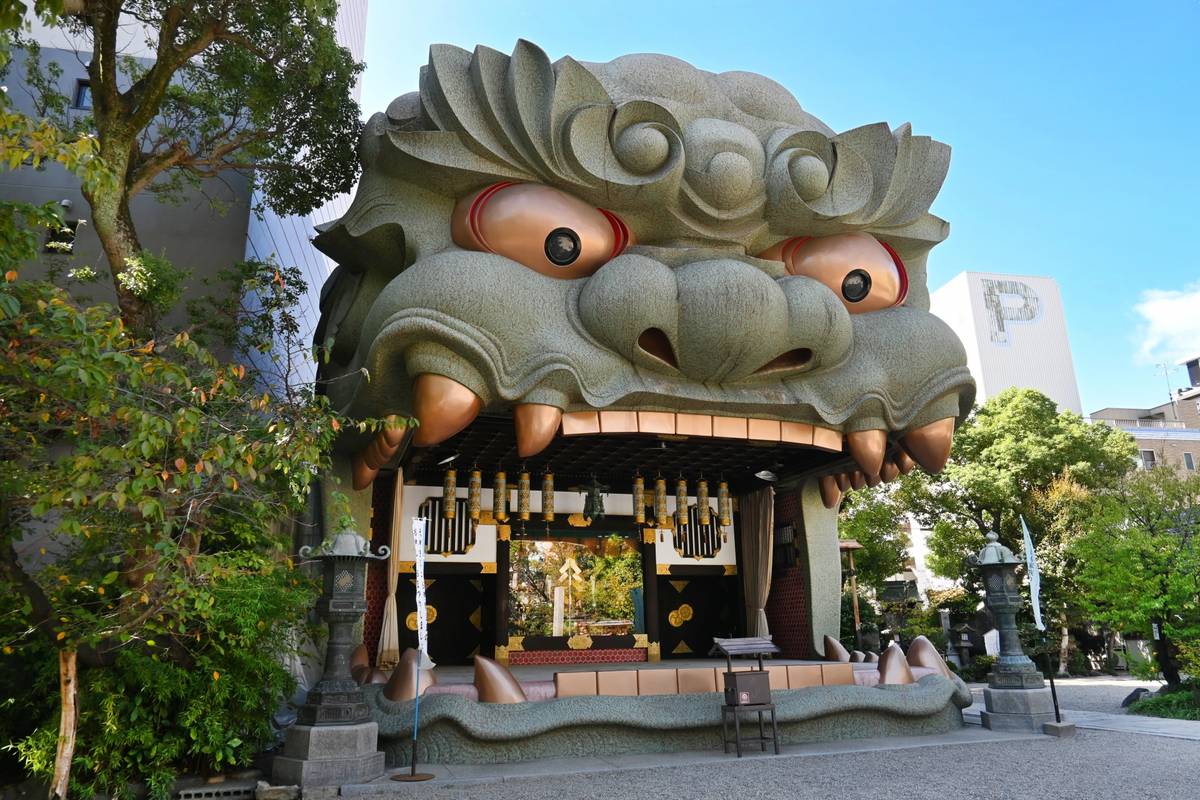
Namba Yasaka Shrine sits in the northwestern part of Naniwa Ward, about a seven-minute walk west of Namba. Step inside the precincts and you find a giant lion hall about 12 meters tall standing right in front of you. Shaped like a lion's head with the votive hall built inside, it has an unusual design that was rebuilt in 1974. After spreading through social media, it has become a popular photo spot among international visitors.
The lion is said to swallow evil spirits and bring victory and good fortune. The main shrine enshrines Susano-o-no-Mikoto and Emperor Nintoku, and the "Tsunahiki Shinji" rope-pulling ritual held on the third Sunday of January each year was designated as Osaka City's first intangible folk cultural property in 2001. The shrine itself is old, with its name appearing in Heian-period records, marking it as one of Naniwa's historic shrines.