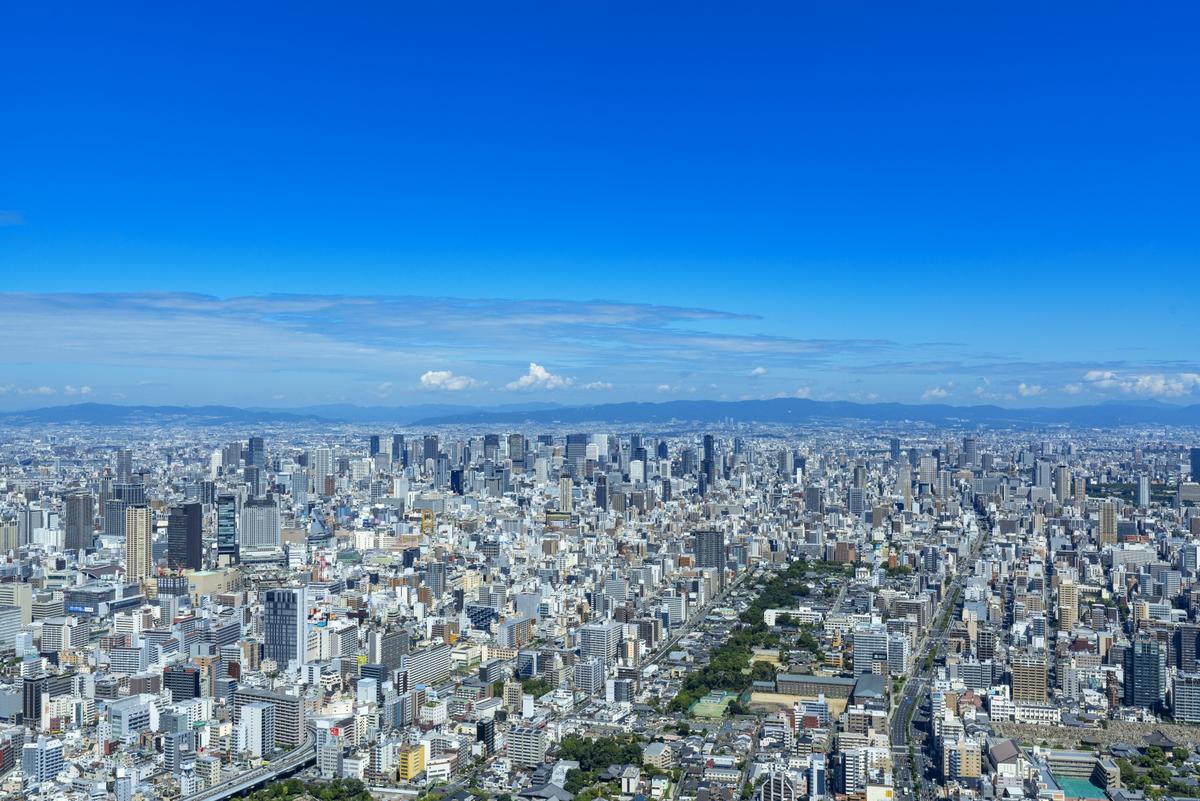
Konohana
此花区
Things to Do in and Around Konohana
Konohana is the westernmost of Osaka City's 24 wards, made up of a narrow strip of land between the Yodo River and the Aji River together with the man-made islands of Maishima and Yumeshima floating in the bay. Long a port and industrial district, it began to take on a new face as a bayside destination with the opening of Universal Studios Japan in 2001. In 2025 the Osaka-Kansai Expo was held on Yumeshima, the Osaka Metro Chūō Line was extended to the island, and the ward is once again opening up to travelers from around the world.
Places to visit in Konohana
Where is Konohana?
Konohana sits at the western edge of Osaka City, one of the city's 24 wards. To the north across the Yodo River is Nishi-Yodogawa Ward, and to the south across the Aji River are Minato Ward and Nishi Ward. Fukushima Ward shares a land border to the east, and to the west the ward opens onto Osaka Bay. Konohana covers 19.30 square kilometers, the second-largest area among Osaka City's wards, and most of that land was created through reclamation.
On the mainland side, working-class neighborhoods and factories extend out from Osaka Station. On the seaward side stretch the two man-made islands of Maishima and Yumeshima. Yumeshima was originally built as a disposal site for industrial waste, and with the 2025 Osaka-Kansai Expo as the catalyst, the island is being reshaped into a place for tourism and culture. As of April 2025, the ward's population was around 64,000, mid-sized for a ward of Osaka City.


Getting Around
Konohana's main gateway is Nishikujō Station. The JR Osaka Loop Line reaches it from Osaka Station in about six minutes, and the Hanshin Namba Line connects from Ōsaka Namba in about eight minutes, both without a transfer. Switch at Nishikujō to the JR Sakurajima Line (Yumesaki Line), and Universal City Station is roughly five minutes farther, with the terminus at Sakurajima Station about seven minutes away. USJ and the Sakurajima district are linked in a straight line.
Access to Maishima and Yumeshima changed dramatically in 2025. The Osaka Metro Chūō Line was extended to Yumeshima Station that January, putting the island within a single subway ride of central Osaka areas like Honmachi and Morinomiya. To reach Maishima, local buses run from in front of Sakurajima Station to its sports and leisure facilities. From the airport, the JR Kansai-Airport Rapid Service brings you from Kansai International Airport to Nishikujō in about 60 minutes. From Itami Airport, the trip takes roughly 50 minutes by combining the Osaka Monorail with the Hankyū and JR lines.
Loading map...
About Konohana
Konohana's highlights are concentrated along its waterfront. From Nishikujō, where the air of an old port town still lingers, out to Sakurajima where Universal Studios Japan rises, places with very different characters line up within a short ride on JR or the subway.
Plums, Not Cherries, Behind the Ward's Name
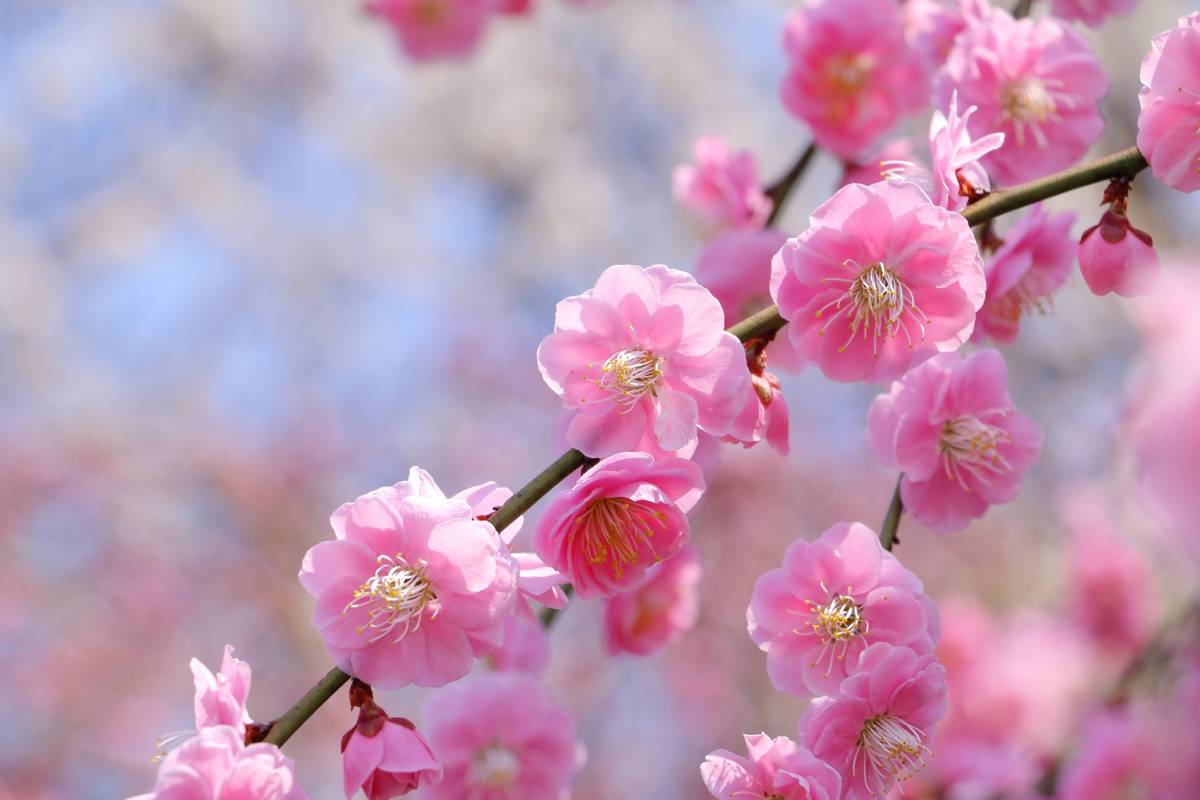
The name Konohana was chosen in 1925, the 14th year of the Taishō era. It draws on the classical poem "Naniwazu ni sakuya kono hana, fuyugomori, ima wa harube to sakuya kono hana," said to have been composed by Wani, a scholar who came from Baekje in the fifth century, in praise of Emperor Nintoku. The flower in the poem is not cherry but plum, blossoms that push through the long winter to announce the arrival of spring as a symbol of good fortune.
The same poem gave the neighboring Naniwa Ward its name in the same year. A stone monument inscribed with the verse still stands in front of the ward office.
USJ and Yumeshima Along the Bay
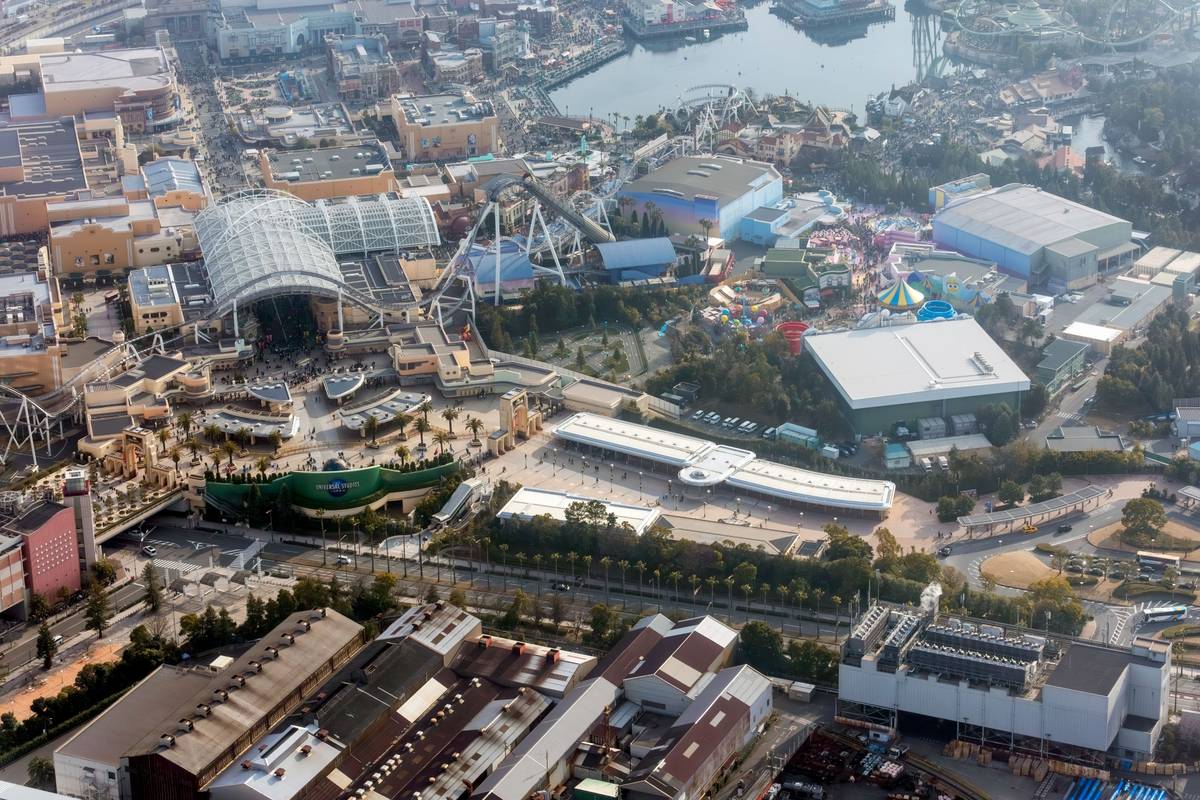
Around Universal Studios Japan
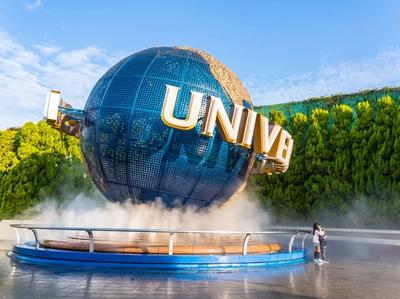
The seaward side of Konohana was, from before the war, an industrial belt. As heavy chemical industry declined in the 1980s, the sites were redeveloped, and theme parks and leisure facilities took their place. Universal Studios Japan, which opened on reclaimed land in Sakurajima in 2001, is the most visible symbol of that shift.
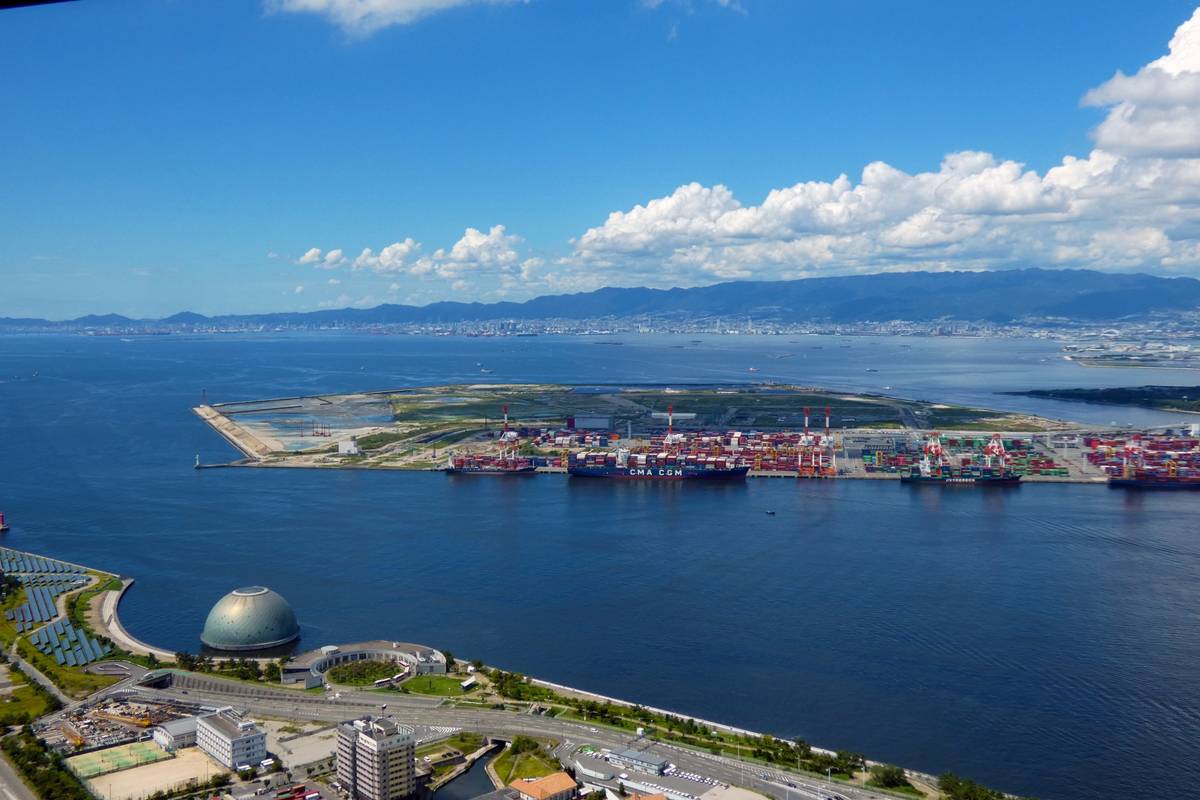
A view of Yumeshima
Two man-made islands lie in Osaka Bay, Maishima and Yumeshima. Yumeshima hosted the Osaka-Kansai Expo from April through October 2025, drawing many visitors from Japan and abroad over the six months. After the closing, the site is being redeveloped as a new hub for international tourism and cultural exchange. Timed with the opening of the Expo, in January 2025 the Osaka Metro Chūō Line was extended to Yumeshima Station, putting the island a single subway ride from central Osaka.
Maishima, an Island of Sports and Bold Architecture
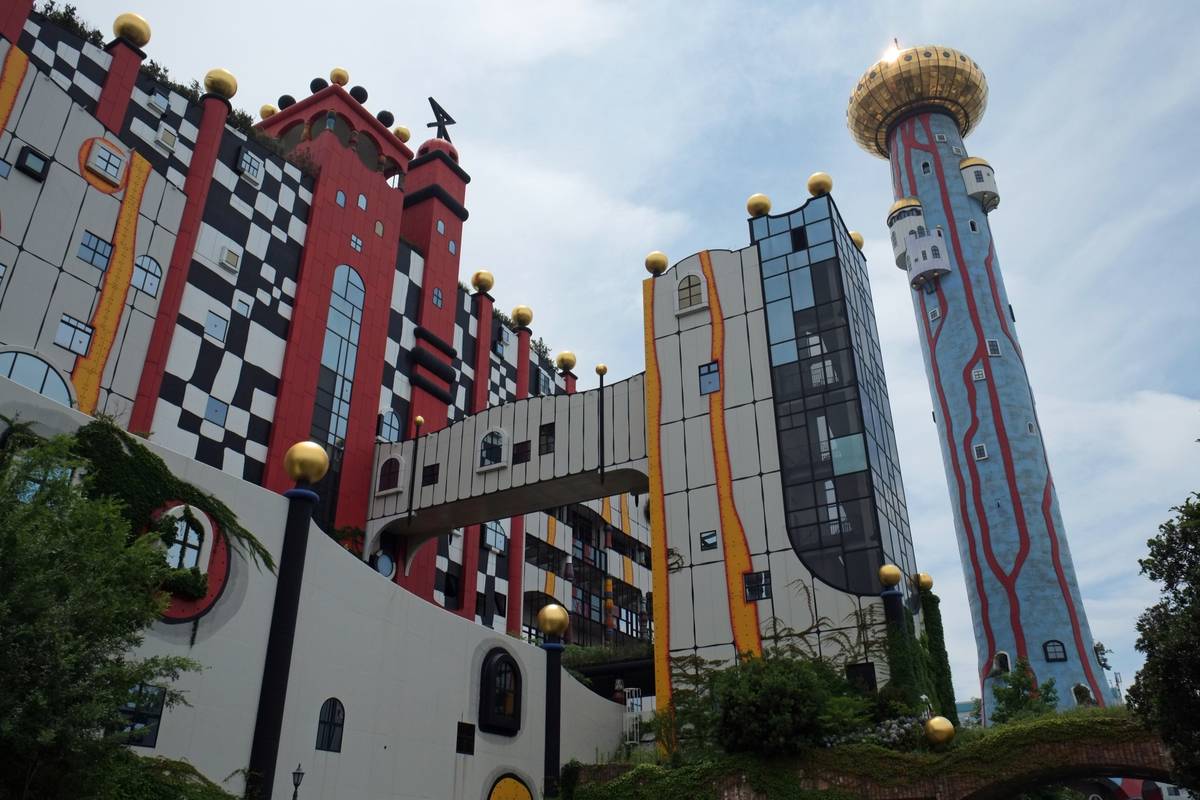
Maishima Waste Treatment Plant
Maishima is a man-made island of roughly 220 hectares, with logistics and environmental facilities on its eastern side and sports venues on its western side. The baseball stadium and indoor arena have hosted everything from amateur tournaments to team training camps and concerts. Large barbecue grounds and campsites line the shore as well.
What stands out most is the work of Austrian architect Friedensreich Hundertwasser. He designed both the Maishima Waste Treatment Plant and the Maishima Sludge Center. A gold dome, red and yellow stripes, irregular round windows. The look is closer to a fairy-tale castle or theme park than a working factory, and even seen only from the bridge, it leaves a strong impression.
Nishikujō and the Sakurajima Line, Konohana's Front Door
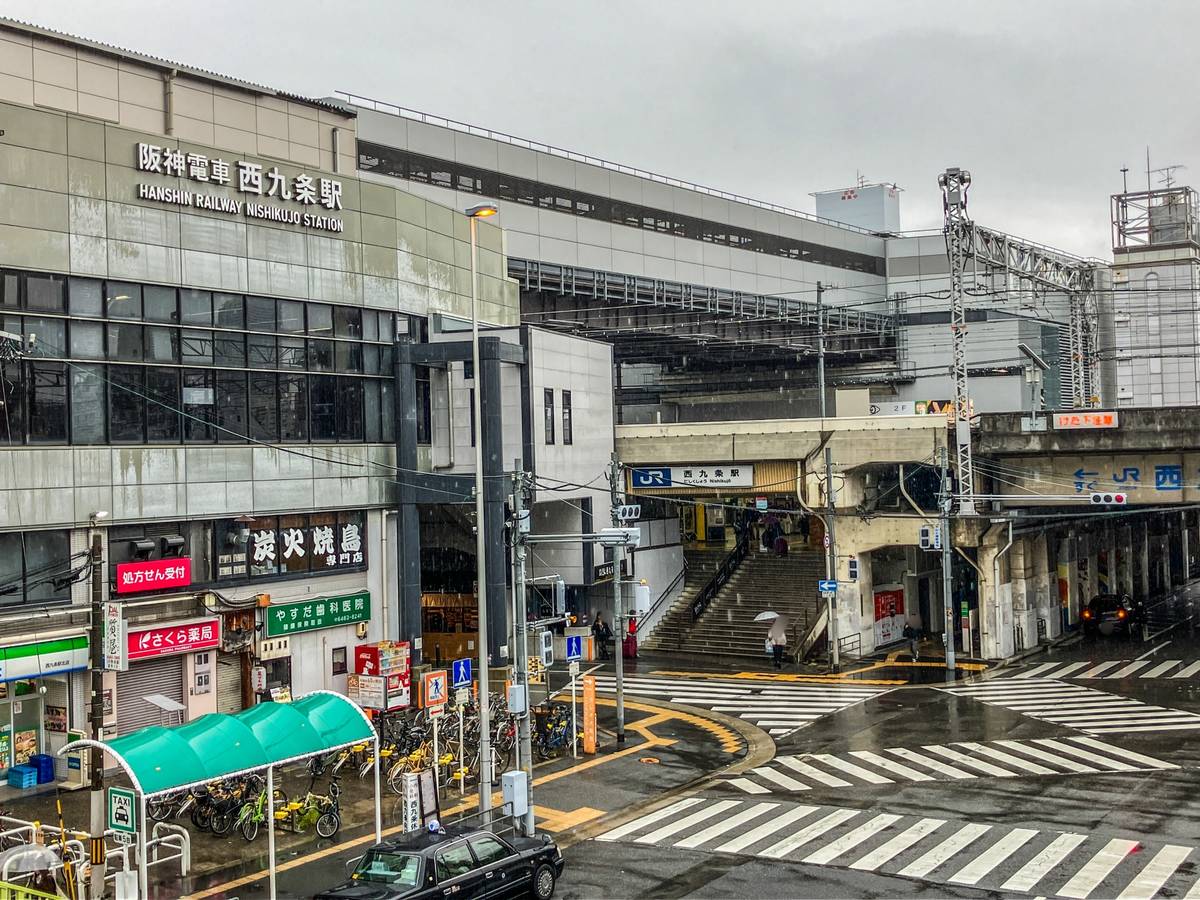
Nishikujō Station
The hub of transit in Konohana is Nishikujō Station. The JR Osaka Loop Line, the JR Sakurajima Line (also known as the Yumesaki Line), and the Hanshin Namba Line all meet here, linking Kobe, central Osaka, and Nara with Sakurajima, where USJ stands, all from a single station. From Osaka Station, the Loop Line reaches Nishikujō in about six minutes, and another five minutes on the Sakurajima Line takes you to Universal City Station.
From Sakurajima Station, the end of the Sakurajima Line, a ferry called the Captain Line crosses the Aji River to Tenpōzan in Minato Ward. The short route links the Osaka Aquarium Kaiyūkan with USJ and gives passengers a view of the Osaka bay area from the water.