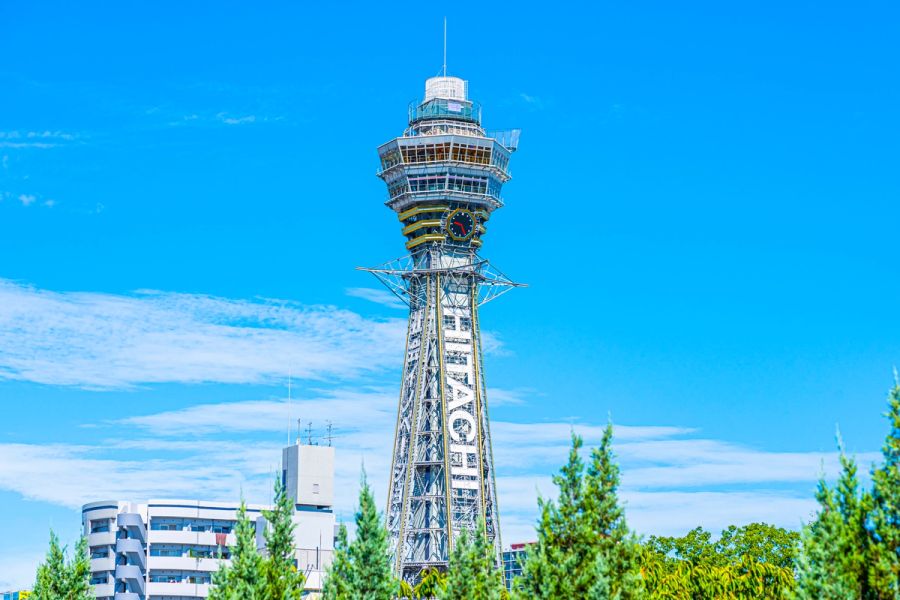
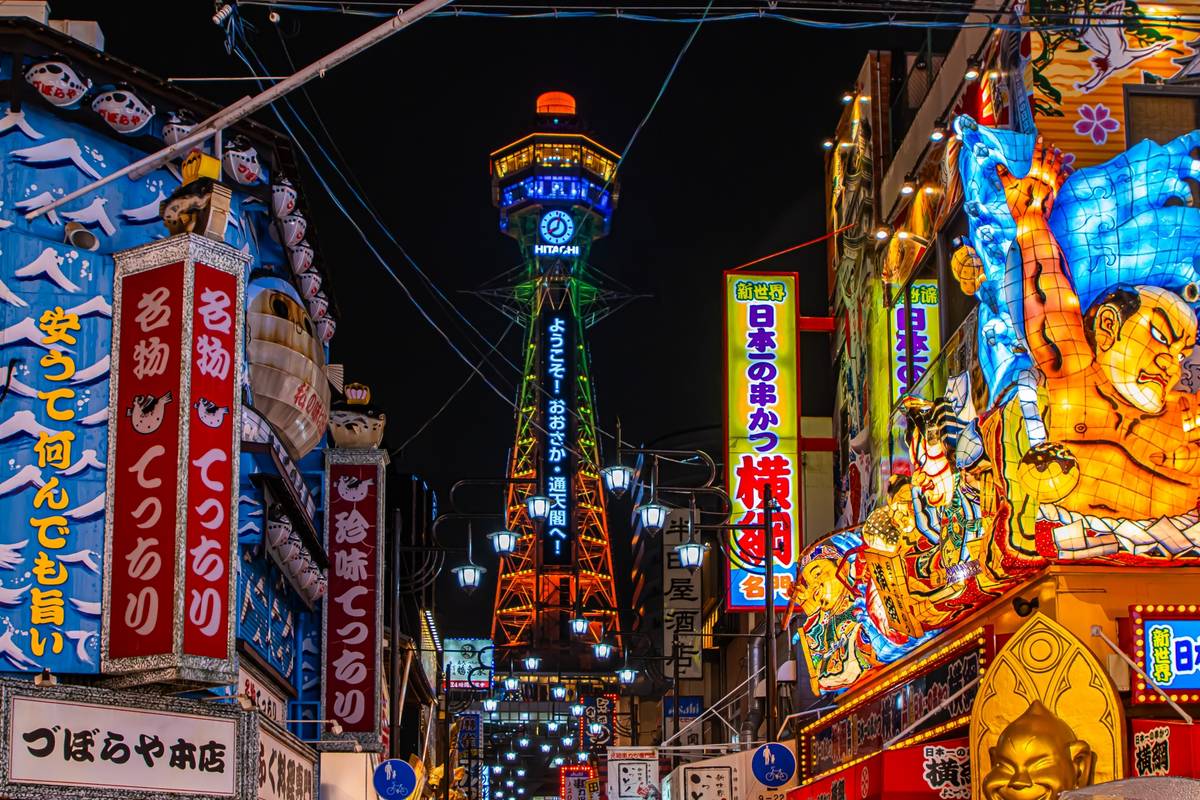
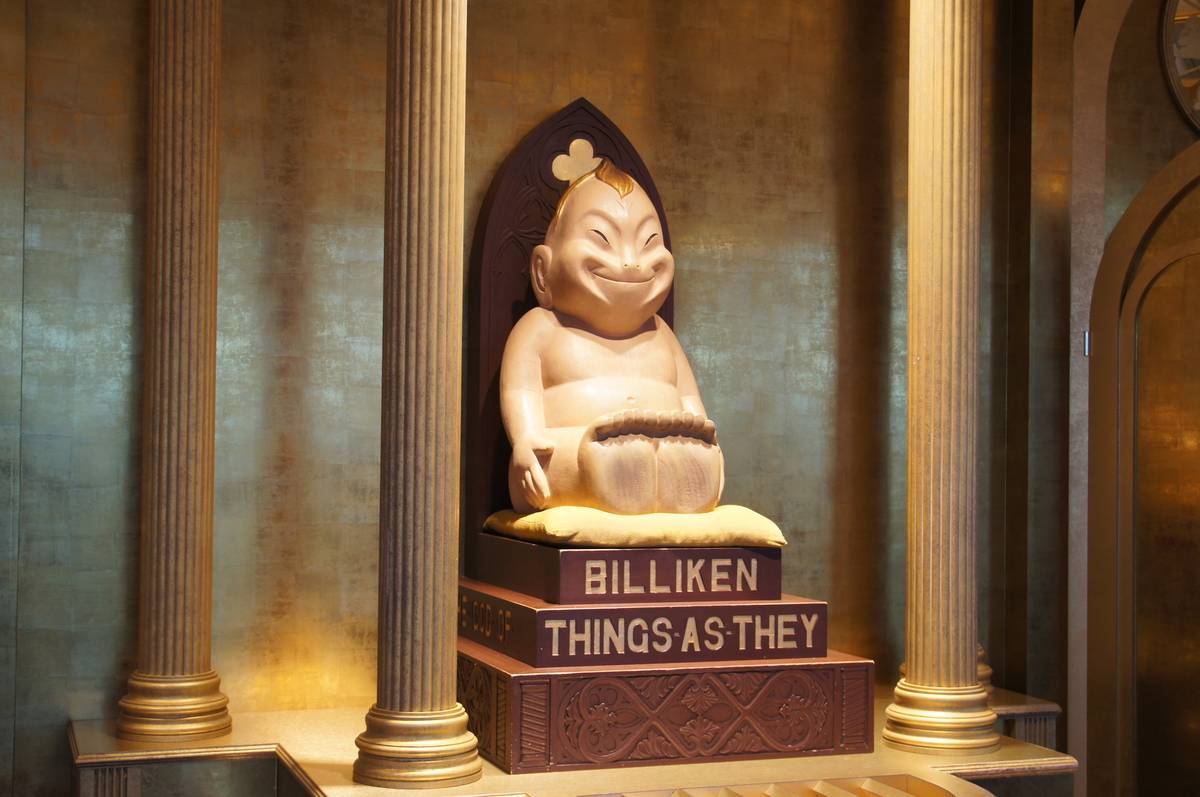
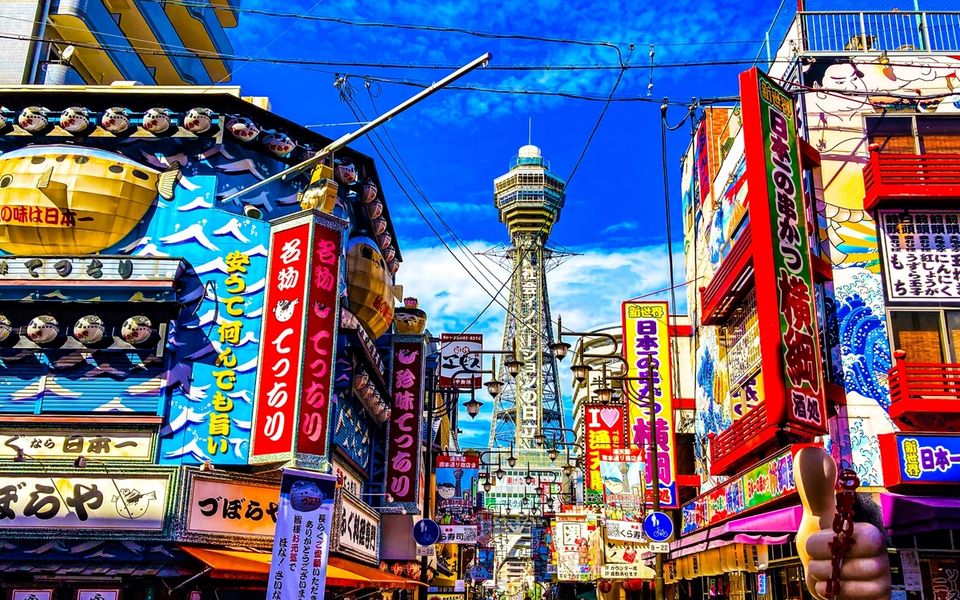
An observation tower standing in the Shinsekai district of Osaka's Naniwa Ward. The structure itself is 100 meters tall, or 108 meters including the lightning rod. With its neon-lit crown and the lucky god Billiken seated on the fifth floor, Tsutenkaku has long been one of Osaka's most beloved symbols.
Admission and Hours
Observation deck tickets are ¥1,500 for adults and ¥800 for children (general and outdoor decks as a set)
Open from 9:00 to 21:45, with last admission at 21:15
Open year-round
A Symbol of Shinsekai
The first Tsutenkaku opened in 1912, the 45th year of the Meiji era. Its design borrowed from both the Eiffel Tower and the Arc de Triomphe in Paris, and it stood 75 meters tall. Right next door, Japan's first full-scale amusement park, Luna Park, opened on the same day, turning Shinsekai into one of the liveliest entertainment districts of the era.
The first tower was damaged in a 1943 fire and later dismantled to provide metal for the war effort. The current tower opened in 1956, designed by Tachū Naitō, the architect behind Tokyo Tower and the Sapporo TV Tower. At the top of the 100-meter structure, a Hitachi neon sign displays the day's weather forecast.
The star of the observation deck is Billiken, the lucky god long beloved in Shinsekai. The figure was designed in 1908 by American artist Florence Pretz and quickly became a worldwide craze in the early 20th century. In Japan, the tradition began at Billiken-dō, a small shrine inside the Luna Park that opened in 1912. According to local lore, rubbing the soles of his feet makes wishes come true.
Observation Decks and Attractions
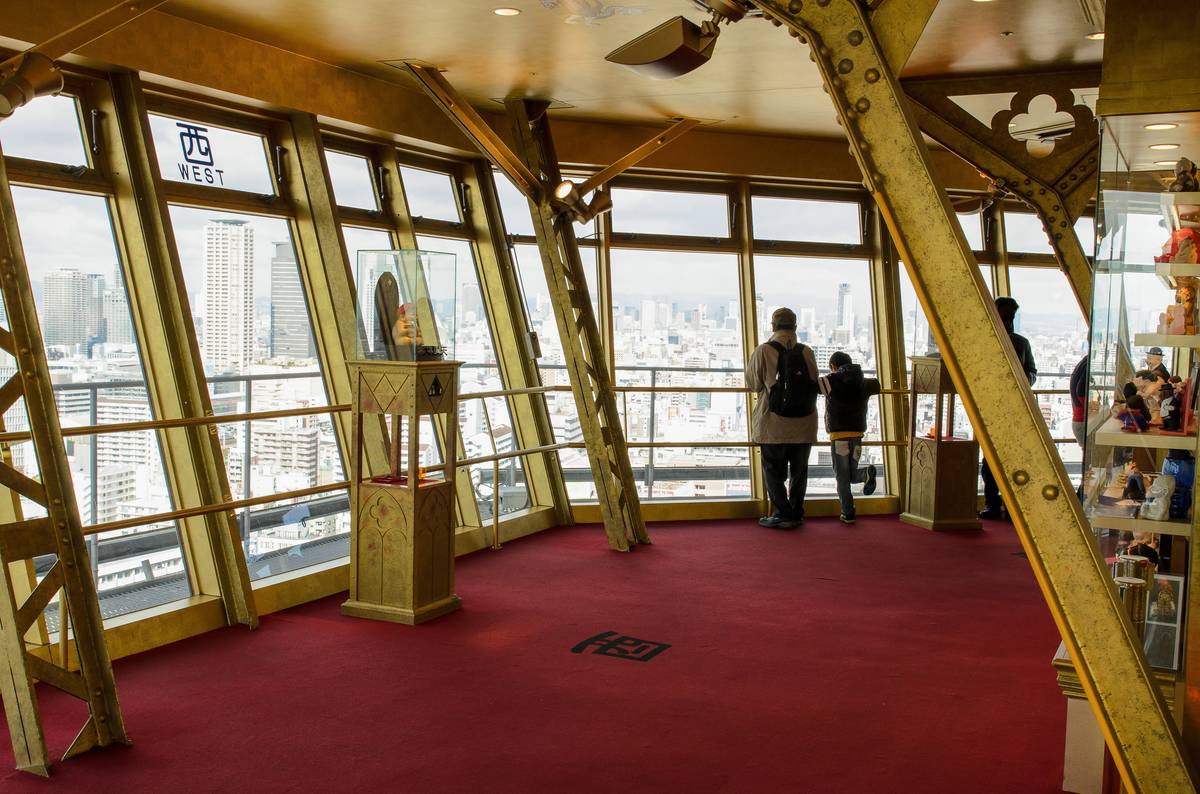
The heart of the tour is the Golden Observation Deck, located 87.5 meters above the ground. Modeled after Toyotomi Hideyoshi's famous golden tea room, the floor is wrapped in gold on every side, with a Billiken statue placed at its center. One level up, the open-air Tenbo Paradise offers a 360-degree view of Osaka from 94.5 meters above ground.
For something more active, there's the TOWER SLIDER, which opened in 2022. Starting from the third floor, you spiral one and a half times around the outside of the elevator shaft before exiting at basement level one. The 60-meter slide takes about 10 seconds. In July 2024, a new attraction called Dive&Walk was added, bringing thrills to go with the views.
After sunset, the tower is illuminated in seasonal colors that change month by month. The neon at the top also signals the next day's weather through color patterns, making the view from Shinsekai's alleys one of the area's classic nighttime sights.
Getting There
The closest station is Ebisuchō on the Osaka Metro Sakaisuji Line. The tower is about a 3-minute walk from Exit 3. From Dōbutsuen-mae Station on the Midōsuji Line (Exit 1) or JR Shin-Imamiya Station (Tsutenkaku Exit), it is roughly a 6-minute walk in either case. If you also want to soak in the atmosphere of Shinsekai and Janjan Yokochō, the routes from Dōbutsuen-mae or Shin-Imamiya naturally lead you through the area's shopping streets.
Tsutenkaku in Anime
Tsutenkaku has been a familiar backdrop in anime for decades.
Detective Conan
One of the most internationally known examples is Detective Conan. In the third theatrical film, The Last Wizard of the Century (1999), the phantom thief Kaitō Kid sends a heist notice naming Tsutenkaku as the site of his next crime. The tower also appears repeatedly in the Osaka-set episodes of the TV series, where it serves as a familiar landmark in the home turf of Heiji Hattori.
Nippon Sangoku
In Nippon Sangoku, a fictional war manga by Ikka Matsuki, Tsutenkaku appears as one of the story's settings. The series takes place in a near-future Japan where civilization has collapsed and the country has split into three nations. The largest of them, Yamato, holds Osaka as its capital and rules western Japan, with Shinsekai and Tsutenkaku at the heart of its territory.
Kinnikuman
Kinnikuman is another work with deep ties to Shinsekai. Its creators, the duo who write under the pen name Yudetamago, are both from Osaka. One of them was born in Naniwa Ward, and his father was involved in the construction of Tsutenkaku itself. When Shinsekai celebrated its 100th anniversary in 2011, Kinnikuman was chosen as the official mascot, and statues and manhole covers featuring the characters can still be found throughout the surrounding shopping streets.