Aichi
愛知県
Start here
What to know about Aichi
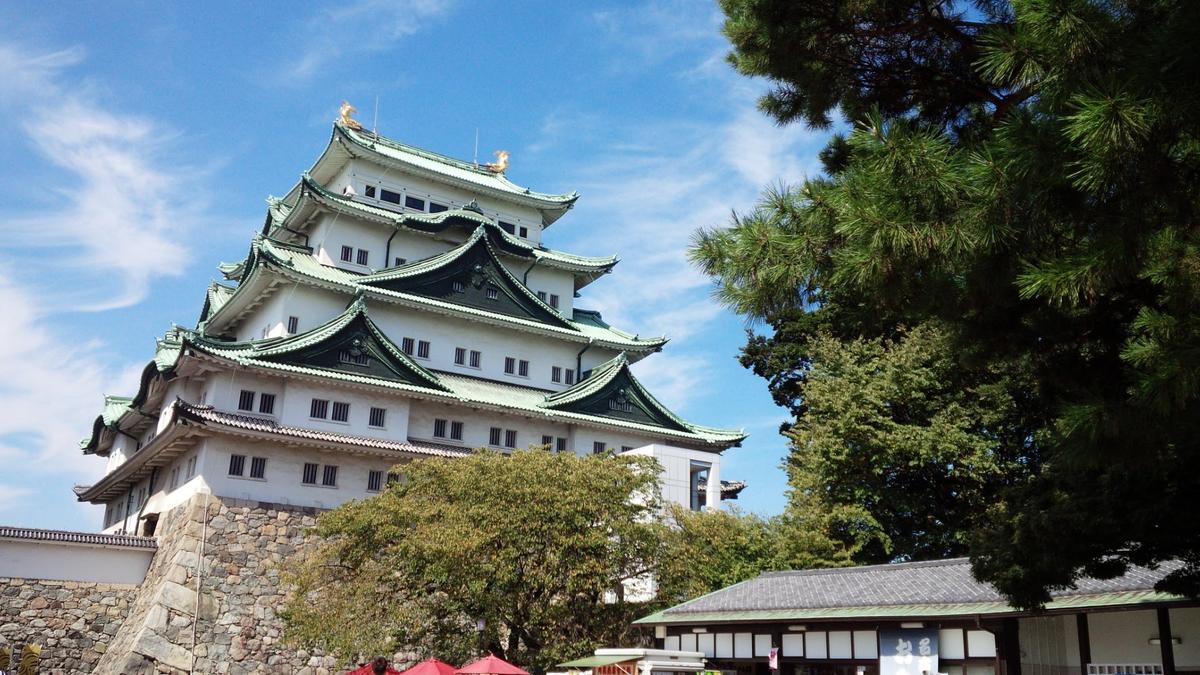
Aichi Prefecture gave rise to the three great warlords of the Sengoku period: Oda Nobunaga, Toyotomi Hideyoshi, and Tokugawa Ieyasu. The tradition of monozukuri, the art and spirit of making things, lives on here today, and together with the distinctive "Nagoya meshi" food culture, the region projects a character all its own.
Nagoya Castle
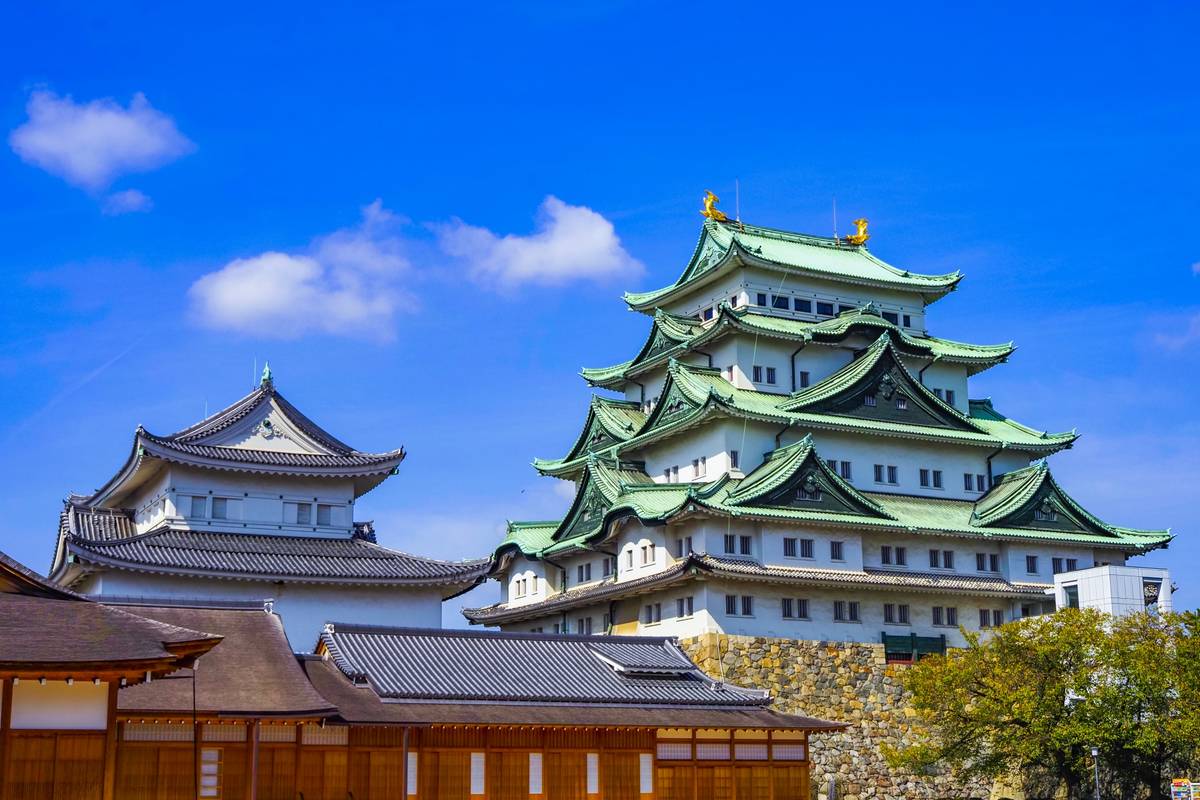
Nagoya Castle was built in 1612 on the orders of Tokugawa Ieyasu, and its tower crowned with a pair of golden shachihoko, mythical dolphin-like creatures, stands as the symbol of Nagoya. The castle was constructed through tenka-bushin, a system in which powerful lords from western Japan were commanded to contribute to the building effort. As the seat of the Owari Tokugawa clan, it remained the political and cultural heart of the region until the end of the Edo period. Air raids during World War II destroyed the main tower and the Honmaru Palace, but the palace was fully restored in 2018. Inside, lavish wall paintings by artists of the Kanō school have been recreated in rooms built entirely of Japanese cypress.
The moats and stone walls encircling the castle date back to its original construction, and the sheer scale of the stonework is well worth seeing, including the massive "Kiyomasa Stone," attributed to the feudal lord Katō Kiyomasa. In spring, roughly 1,000 cherry trees transform the castle grounds into one of Nagoya's finest hanami spots. Combined with a stroll through the adjacent Meijō Park, it is a chance to enjoy an expansive green retreat right in the heart of the city.
Inuyama Castle and Its Castle Town
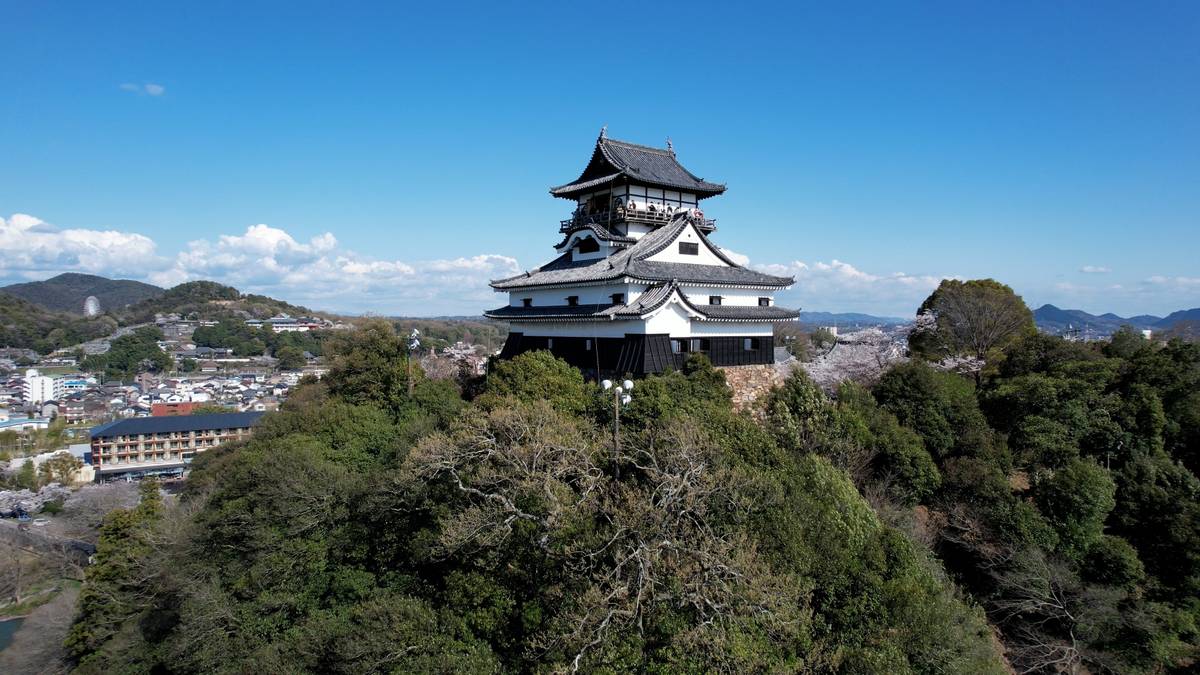
Inuyama Castle is believed to have been built in 1537 and is one of only five castles in Japan designated as a National Treasure for their surviving original towers. Perched on a low hill beside the Kiso River, its topmost floor commands a sweeping view of the river and the Nōbi Plain beyond. The wooden tower, preserved in its original form since the castle's founding, is a rare and tangible link to the Sengoku era. Until 2004, it was also the only castle in Japan still privately owned, held by the Naruse family.
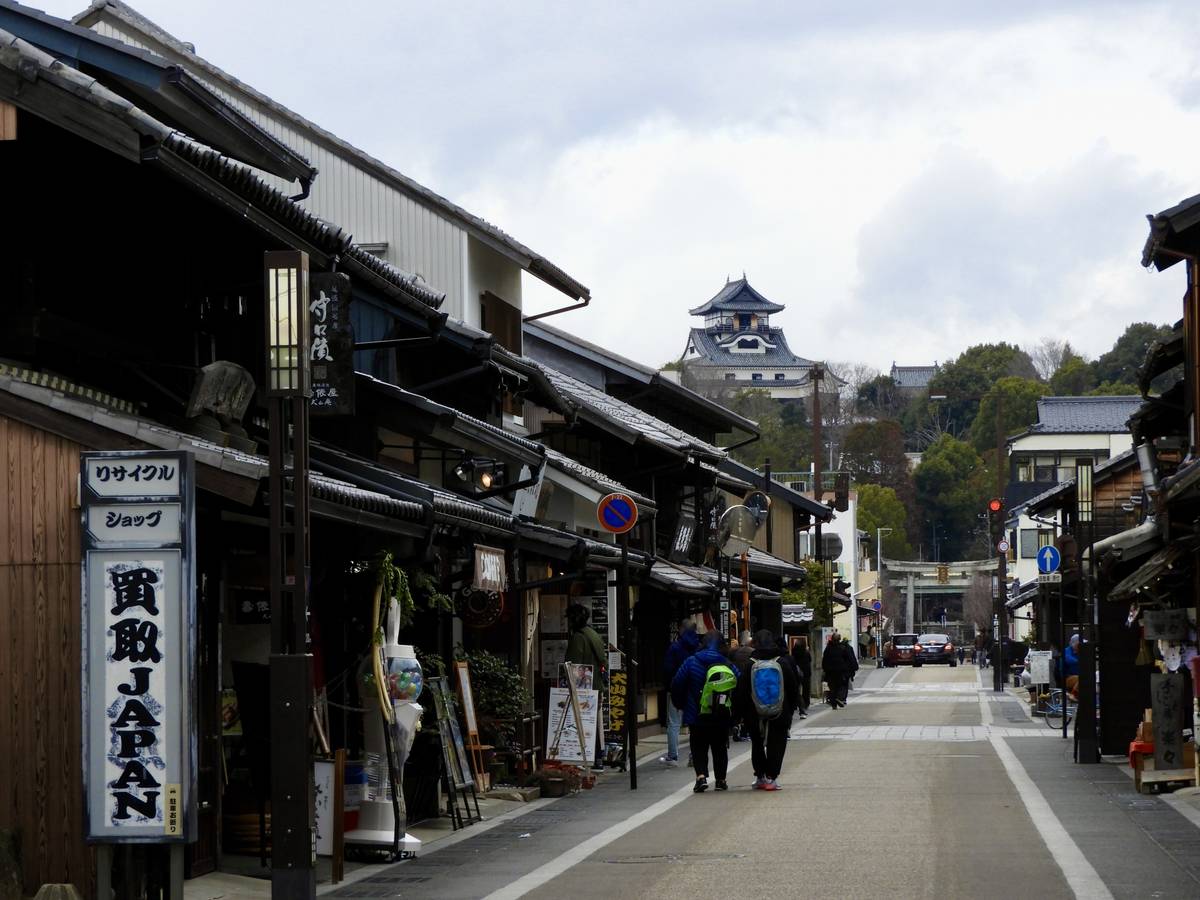
The castle town retains its Edo-period street layout, and the old buildings now house a lively mix of food stalls and cafés. Every April, the Inuyama Festival sees thirteen towering yama floats, each standing about 8 meters tall, paraded through the narrow lanes below the castle while karakuri mechanical puppets perform atop them. At night, all the floats are lit with 365 paper lanterns, and the sight of them gliding beneath the cherry blossoms is nothing short of magical. The float procession of the Inuyama Festival was inscribed on the UNESCO Intangible Cultural Heritage list in 2016.
Atsuta Shrine
Atsuta Shrine (Atsuta Jingū) enshrines the Kusanagi no Tsurugi, one of the three Imperial Regalia of Japan, and is said to have a history spanning more than 1,900 years. Regarded as second only to Ise Grand Shrine in prestige, it draws approximately 6.5 million visitors each year. The vast grounds are blanketed in greenery, including camphor trees over a thousand years old, creating a stillness that feels worlds away from its location near downtown Nagoya.
The shrine is also known as the place where Oda Nobunaga prayed for victory before the Battle of Okehazama. The Nobunaga Wall (Nobunaga-bei), a stretch of earthen wall he donated in gratitude after his triumph, still stands on the grounds. The treasure hall houses some 6,000 votive offerings, including swords and numerous items designated as National Treasures or Important Cultural Properties. After paying your respects, stopping by the Miya Kishimen restaurant inside the grounds to try Nagoya's signature flat udon noodles is a well-loved tradition.
Arimatsu
Arimatsu, in Nagoya's Midori Ward, is a town built on tie-dyeing along the old Tōkaidō highway. Arimatsu shibori began in 1608 with the encouragement of the Owari domain and gained fame as a souvenir among travelers passing through on the Tōkaidō, eventually growing into Japan's leading center for tie-dyed textiles. Grand merchant townhouses of the shibori wholesalers line the former highway, their lattice doors and earthen-walled storehouses testifying to the prosperity of earlier times. In 2019, the townscape was designated as a nationally Important Preservation District for Groups of Traditional Buildings.
Arimatsu shibori encompasses more than 100 different techniques, and the sheer variety of patterns that emerge from different ways of binding the cloth is its greatest appeal. Workshops and shops in town offer hands-on shibori experiences where you can create a handkerchief or tenugui towel with your own one-of-a-kind pattern. The annual Arimatsu Shibori Festival held each June fills the old Tōkaidō with rows of stalls selling shibori products at prices lower than usual, drawing large and enthusiastic crowds. It is a lesser-known gem near Nagoya where you can see, touch, and try a living traditional craft up close.
Where to go
Places to visit in Aichi
Curated spots and experiences across Aichi.
Shrines & Temples
2 places-

Shogakuzan Enpukuji Temple
Shōgakuzan Enpukuji is a Tendai-school temple in Kasugai City, Aichi Prefecture. Said to have been founded in 723, it enshrines the Eleven-Faced Kannon Bodhisattva as its principal image.
-

Atsuta Jingu
Atsuta Shrine in Nagoya's Atsuta Ward enshrines the Kusanagi Sword, one of Japan's Three Sacred Treasures. Founded around 1,900 years ago, the shrine preserves Oda Nobunaga's earthen wall and a 1,000-year-old camphor tree.
Shopping
1 place


Location
Where is Aichi?
Aichi Prefecture sits in the southwestern part of the Chūbu region, with its southern coast facing Ise Bay and Mikawa Bay. The prefectural capital is Nagoya, and as of the October 2020 national census the population was approximately 7.54 million, making it the fourth most populous in Japan after Tokyo, Kanagawa, and Osaka. The Nōbi Plain, fed by the Kiso and Shōnai rivers, stretches across the northwest, while the eastern side rises into the hills of the Mikawa Highlands. To the south, the Chita and Atsumi peninsulas jut out as if cradling Ise Bay and Mikawa Bay between them.
The climate falls under the Pacific side pattern, bringing hot, humid summers that rank among the most sweltering in the country. Winters see plenty of sunshine and stay relatively mild, though temperatures can drop sharply when the ibuki-oroshi, a seasonal northwest wind, sweeps in. Annual rainfall is comparatively low overall, but concentrated downpours arrive during the rainy season and the autumn typhoon months.
Loading map...
Access
Getting to Aichi
Chūbu Centrair International Airport is a sea-based airport built on an artificial island in Ise Bay, serving numerous domestic and international routes. The Mū Sky limited express on the Meitetsu line connects the airport to central Nagoya in about 28 minutes.
Nagoya Station on the Tōkaidō Shinkansen is roughly 1 hour and 40 minutes from Tokyo and about 50 minutes from Shin-Osaka by Nozomi service, making it easy to reach from either direction. The station is a major terminal where JR conventional lines, Meitetsu, Kintetsu, and the subway converge, serving as a transfer hub for destinations throughout the prefecture and neighboring areas.
Highway bus services connect Nagoya with Tokyo, Osaka, Kyoto, Kanazawa, and many other cities. Overnight buses are also widely available, offering a more affordable alternative to the shinkansen.
Within Nagoya, the subway network covers all the major areas, making it the most convenient way to get around the city center. Key attractions like Nagoya Castle and Atsuta Shrine (Atsuta Jingū) are accessible by subway. For Inuyama, take the Meitetsu Inuyama Line. The Chita Peninsula is served by the Meitetsu Tokoname and Kōwa lines. To reach Toyota City, the Meitetsu Toyota Line and the Aichi Loop Railway are available.
Local pride
Specialty Products
Aichi Prefecture is Japan's largest industrial powerhouse, having held the top spot nationwide for manufactured goods shipment value for over forty consecutive years. A vast range of industries cluster here, from the automotive sector at the apex to aerospace, machine tools, and ceramics. At the same time, the prefecture ranks near the top of the country in agricultural output, with cabbage, butterbur, and shiso production among the highest in Japan. Greenhouse flower cultivation thrives on the Atsumi Peninsula, and shipments of chrysanthemums and roses are among the largest in the nation.
In the realm of food, the prefecture has developed its own culinary identity collectively known as "Nagoya meshi," characterized by bold, richly flavored dishes. Traditional crafts are equally diverse, spanning ceramics such as Seto-yaki and Tokoname-yaki, the tie-dyed textiles of Arimatsu-Narumi shibori, and Owari cloisonné, some with histories stretching back over a thousand years.
Food
Crafts & Others
Through the ages
History of Aichi
Aichi Prefecture was once divided into two provinces, Owari and Mikawa, and from this land emerged three warlords who shaped the course of Japanese history. Oda Nobunaga hailed from Owari. Toyotomi Hideyoshi was born in Nakamura, near the border of Owari and Mikawa (present-day Nakamura Ward in Nagoya). And Tokugawa Ieyasu came from Mikawa. The fact that all three great unifiers of the Sengoku period originated from this region speaks to how central Owari and Mikawa were to the politics and military affairs of their era.
Nobunaga defeated Imagawa Yoshimoto at the Battle of Okehazama in 1560, forging a path toward the unification of Japan. Hideyoshi rose from Nobunaga's retainer to ruler of the land, and Ieyasu went on to establish the Edo shogunate after the Battle of Sekigahara in 1600. Ieyasu ordered the construction of Nagoya Castle, and the Owari Tokugawa clan governed the region as the foremost of the three senior Tokugawa branch families until the end of the Edo period. Situated at the crossroads of the Tōkaidō and Nakasendō highways, Nagoya grew from a castle town into a thriving commercial city.
From the Meiji era onward, Aichi transformed into an industrial prefecture, with the textile industry as its springboard. The growth of the automotive industry was especially striking, and the area around Toyota City became one of Japan's premier manufacturing hubs. The Port of Nagoya rose to claim the highest trade value of any port in the country, and the region is also recognized as a center for the aerospace industry. The tradition of craftsmanship traces an unbroken line from Edo-period ceramics and tie-dyeing techniques all the way to today's high-tech industries.
Reading
Stories from Aichi
Articles, guides and travelogs about Aichi.
Continue exploring
Discover other areas and hidden gems across Chubu Region.