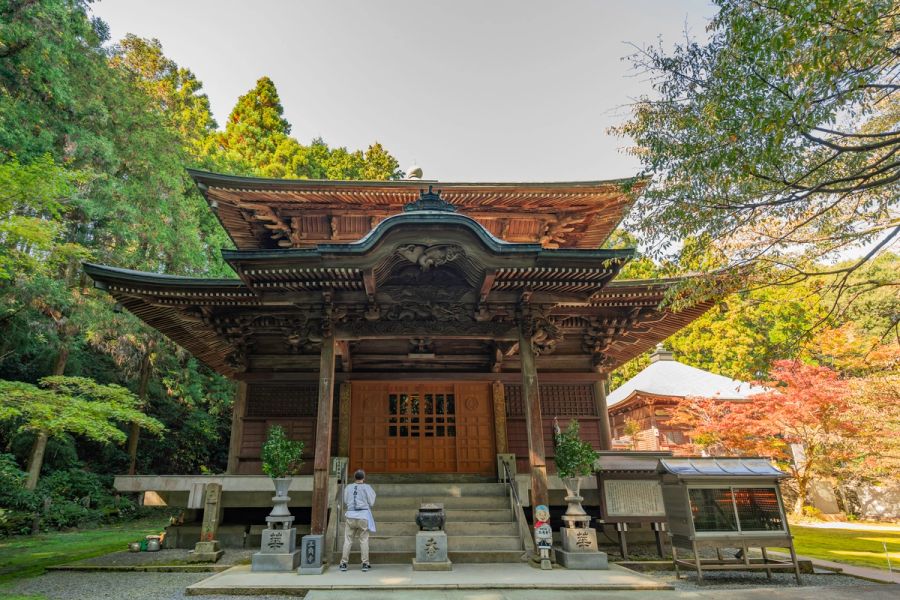
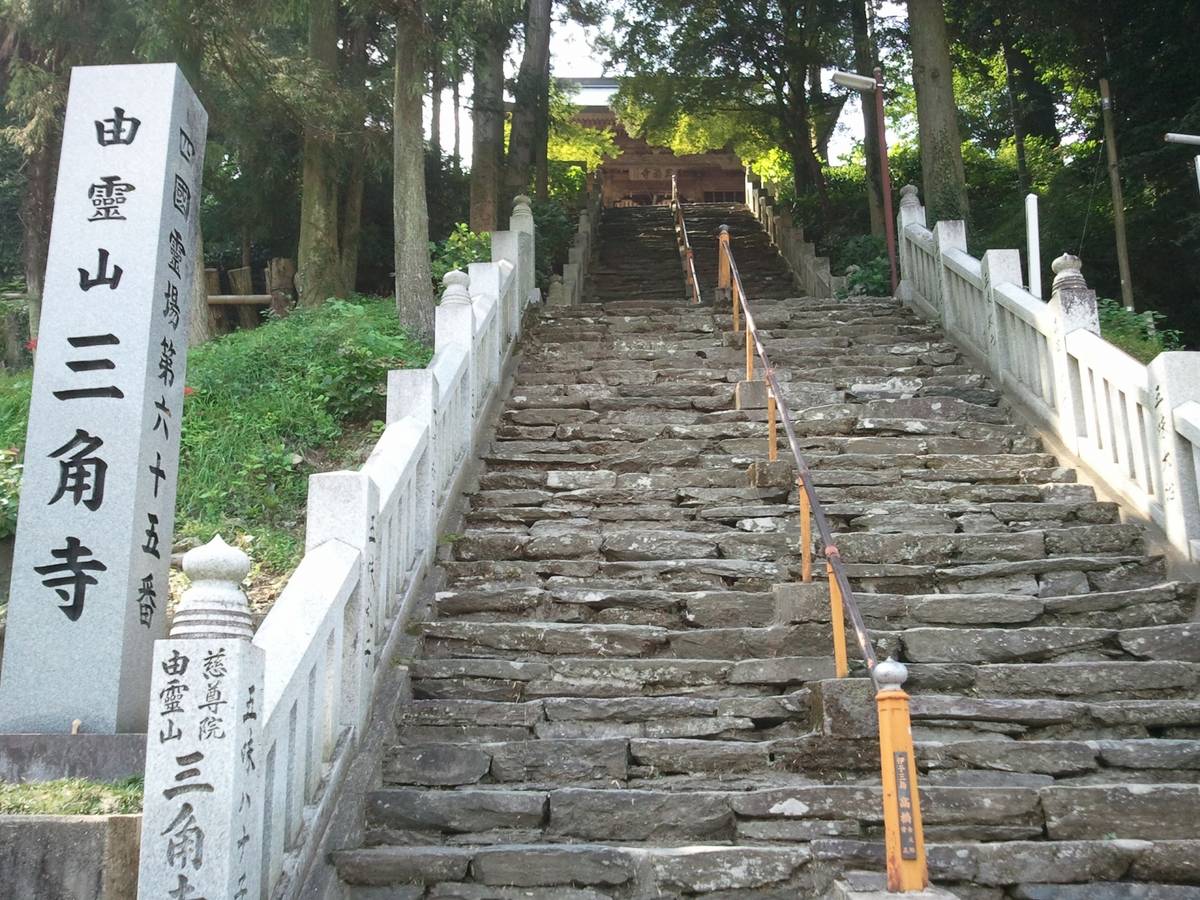
A temple of the Kōyasan Shingon school set in the mountains of Shikokuchūō, Ehime Prefecture, and the 65th sacred site of the Shikoku 88-temple pilgrimage. Its full name is Yūreizan Jisonin Sankaku-ji, and its principal image is an Eleven-Headed Kannon. As the last of the pilgrimage temples in the old province of Iyo, its main hall sits high up, reached by climbing a steep stone stairway.
Visiting Information
Founded by Gyōki, with Legends of Kōbō Daishi
According to temple tradition, it was founded by Gyōki during the Tenpyō era at the behest of Emperor Shōmu. Later, in 815, Kōbō Daishi visited, carved the principal Eleven-Headed Kannon image, and also enshrined a statue of Fudō Myōō. He is said to have built a triangular goma altar and prayed for the peace of the nation for 21 days, and this is the origin of the temple's name.
The Triangular Pond in the Grounds
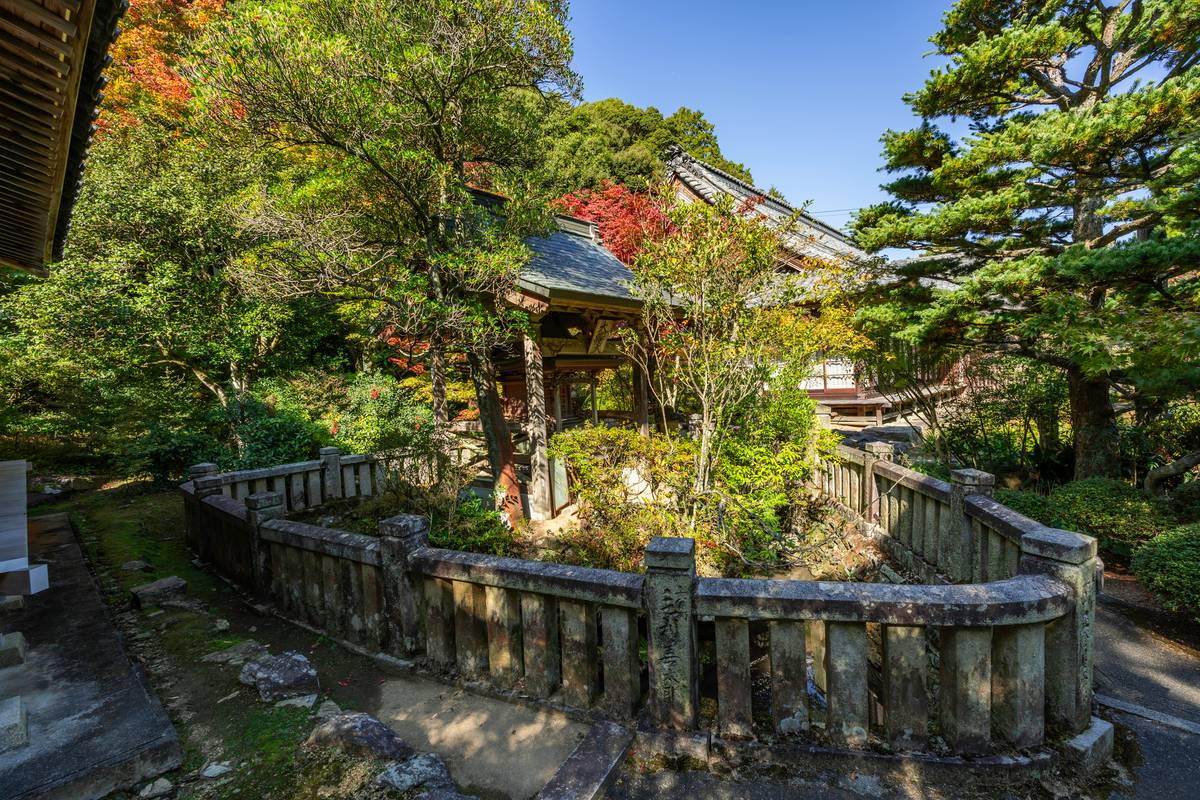
A triangular pond, said to be a remnant of the goma altar, still remains in the grounds. Benzaiten is enshrined at the pond, and the Yakushi hall, the main hall, and the Daishi hall on the hill stand nearby. The temple burned in the fires of war from the Chōsokabe army during the Tenshō era, and the current main hall was rebuilt in 1849.
The Approach Through the Bell Gate
From the parking area, a steep stone stairway climbs upward, and at the top a bell gate hung with a temple bell greets you. By custom, you ring the bell once before entering the grounds. The quiet approach, cradled by the mountains, is considered one of the more memorable stretches of the pilgrimage route.
The Mountain Cherries in Kobayashi Issa's Haiku
In front of the main hall stands a stone monument inscribed with a haiku by the poet Kobayashi Issa. When Issa visited the temple in 1795, he was so taken by the beauty of the mountain cherry blossoms that he composed the verse, “This is what made the climb worthwhile, these mountain cherries.” In spring, the cherry blossoms of his verse color the approach and the grounds.
Getting There
By car, it is about 20 minutes from the Mishima-Kawanoe Interchange on the Matsuyama Expressway, and from the parking area you climb the stone stairway to worship. For pilgrims traveling on foot, the route comes over a mountain pass near the border with Kagawa Prefecture.