What Does Gachiakuta Mean? It's Appeal and Why It's So Popular
Gachiakuta combines gachi, slang meaning "for real," with akuta (芥), an old word for trash. We look at its appeal and why it is so popular. That includes the title's meaning and pronunciation, Kei Urana and Hideyoshi Andou's art and graffiti, the nuances of the kanji in terms like Jinki (Vital Instruments) and Naraku (the Pit), the tsukumogami tradition along with the ceremonies held to lay old objects to rest.
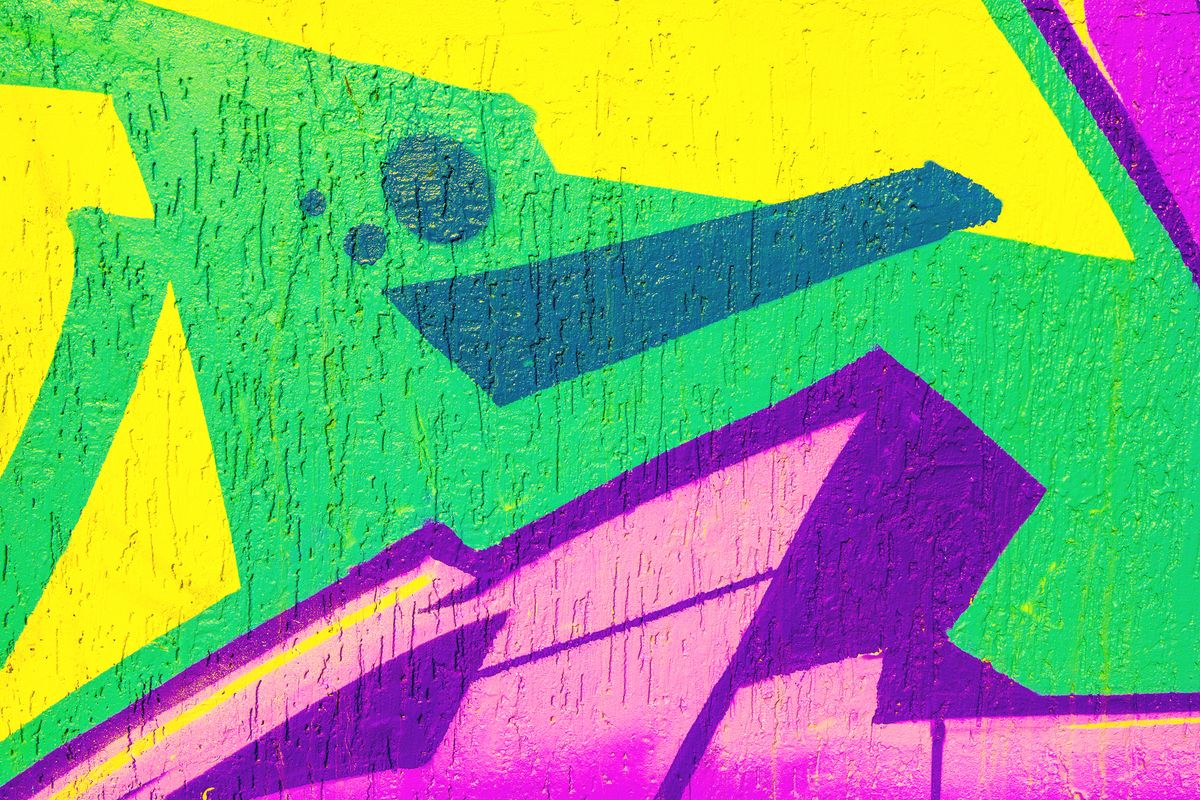
Gachiakuta is a battle action manga set in a world buried in trash, where Rudo, a boy who was abandoned by his parents, fights by drawing out the power that dwells in objects. Bold linework, clothes and tattoos drawn down to the finest detail, and graffiti that seems ready to leap off the page give it a presence that can overwhelm you at first glance.
For overseas fans, learning about the Japanese practice of holding memorial services for objects may add another layer to how they read the series.
What Does Gachiakuta Mean?
Gachiakuta is a coined word made by combining gachi (ガチ) and akuta (芥).
- Gachi: slang, especially among young people, meaning "in earnest," "serious," or "the real thing." It is close to the English words "serious," "real," and "legit."
- Akuta (芥): trash, dust, or anything of no use. It is an old-fashioned, literary word that rarely comes up in everyday conversation.
The English renderings "Legit Trash" and "Real Trash" are very accurate in meaning. But while gachi is modern youth slang, akuta is a little old-fashioned, and few people use it in everyday conversation.
That gap between the two words gives the series both its roughness and its unsettling mood.
How to Pronounce Gachiakuta and How It Is Romanized
Broken into its katakana characters, ガチアクタ becomes ガ・チ・ア・ク・タ (ga-chi-a-ku-ta), and in Japanese it is pronounced in five beats, or morae.
For English speakers, gah-chee-ah-koo-tah comes close. Rather than stressing some syllables, as in "GACH-ee-AK-ta," give all five sounds roughly the same length, and it will sound more like Japanese.
In romanized form it looks like a single word, but splitting it into gachi + akuta makes the meaning easier to grasp.
Kei Urana and Hideyoshi Andou, the Creators of Gachiakuta
From Assistant on Fire Force to a Serialized Debut
On Gachiakuta, creator Kei Urana draws the manga, while Hideyoshi Andou handles the graffiti design.
Urana is from Hiroshima Prefecture. She won newcomer awards with the one-shots Nokase in 2018 and Shikido in 2019, and worked as an assistant on Fire Force, the signature work of Atsushi Ohkubo. Then, in February 2022, she made her long-awaited serialized debut with Gachiakuta.
Urana has long been a big fan of Ohkubo's Soul Eater. She cites the existence of Soul Eater and Fire Force as one of the reasons she brought her work to Kodansha's Weekly Shōnen Magazine (from an official K MANGA interview).
A Manga Artist and a Graffiti Designer Working in Tandem
A defining feature of Gachiakuta is that the graffiti design is not just background decoration but a key element that shapes the world of the story. That is why Hideyoshi Andou, who handles the graffiti exclusively, is officially credited alongside creator Kei Urana.
The partnership began after the series was approved for serialization, when Urana was drawing the opening color pages for Chapter 1. She asked Andou, a friend, to create graffiti and add it to the art, and from there the two developed the distinctive style the series has today.
Urana's distinctive characters and weighty story, together with Andou's cool graffiti, give the series a bold street feel all its own.
Winner of the 50th Kodansha Manga Awards in 2026
On May 11, 2026, Gachiakuta won the Shōnen category at the 50th Kodansha Manga Awards. Kodansha's official announcement lists Kei Urana and Hideyoshi Andou together, with Andou credited for graffiti design.
The award can be read as wide recognition that, beyond the story and the beauty of the art, the two creators' bold, high-level fusion of manga and graffiti is a major part of the series' appeal.
The Appeal of Gachiakuta's Detailed, Dynamic Art
Kei Urana's characters are memorable for their thick outlines and piercing eyes. Layered outfits, etched-in scars, grime on fabric: every detail is meticulously drawn.
Hideyoshi Andou's graffiti, by contrast, is dynamic and bold, with a force and energy that seem ready to burst out of the panel borders.
Character art calculated down to the last detail, and dynamic graffiti that at first glance looks improvised. The clash of these two very different techniques gives a unique intensity to a ruined world piled high with scrap and man-made debris.
In an interview, Urana said, "I wanted to create a great manga with trash as the core concept."
The trash theme carries over into the design of the Trash Beasts (斑獣, hanjū) too. They incorporate scrap such as cars, motorcycles, and road signs to match their habitats, with stronger beasts made to look heavier. Because the theme and the art style are so tightly bound together, the world of Gachiakuta is overwhelmingly convincing.
Graffiti in Japan: Art and the Law
Japan has a street art culture too. But painting on buildings or other property without permission can lead to criminal charges such as damaging a building or damaging property. Shibuya City, for example, states plainly that unauthorized graffiti is a crime under Articles 260 and 261 of the Penal Code and the city's own ordinance, and runs campaigns to raise awareness.
On the other hand, there are also murals that public authorities and local governments have formally commissioned from artists. Under Shibuya City's graffiti-prevention art project, impressive works have been painted on sites such as the retaining wall on Fire-dōri, the Naka-Shibuya Underpass, and the underpass at Shin-Yashiki (see Shibuya City's anti-graffiti project). These works were made with official permission, and the walls are not places where travelers are free to draw whatever they like.
Even when the materials and lettering look similar, unauthorized graffiti and officially commissioned murals mean completely different things. Street art can also be a symbol of freedom and defiance, so how to interpret it is up to each viewer's own values.
What the Series' Terms Convey in Japanese
The English translation lets you enjoy the story perfectly well, but each kanji character carries a meaning of its own. Read in Japanese, even a short name can call up rich images of the characters and the world.
- 人器 (jinki): Officially Vital Instrument in English. It combines 人 (person) and 器 (vessel or tool). More than a weapon, the name suggests a deep bond between people and their tools.
- 斑獣 (hanjū): Officially Trash Beast in English. 斑 means mottled, or a jumble of different things mixed together, an image that brings to mind a beast formed from all kinds of waste.
- 奈落 (naraku): Officially the Pit in English. It means hell, or rock bottom. In traditional Japanese theaters, the space beneath the stage is also called naraku.
- 族民 (zokumin): Officially tribesfolk in English. It lumps people together and has an exclusionary ring, clearly setting them apart as outsiders.
On the official English sites and elsewhere, 人器 is translated as Vital Instrument, 斑獣 as Trash Beast, and 族民 as tribesfolk (from the TV anime's official English character page). All are excellent translations that fit the series, but English alone cannot fully carry the subtle nuances that come to mind the instant you see the kanji.
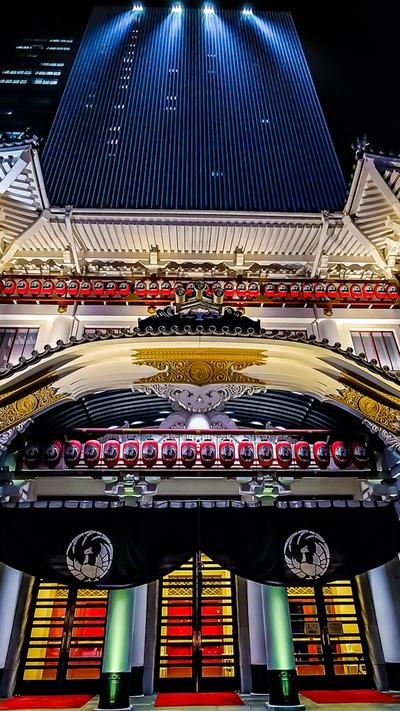
Naraku in particular is a word with layers of meaning. It began as a Buddhist term from the Sanskrit naraka, meaning hell or rock bottom. In theaters for traditional Japanese performing arts such as kabuki, the underground space beneath the main stage and the hanamichi walkway is also called naraku. This space houses the machinery for the revolving stage and the stage lifts.
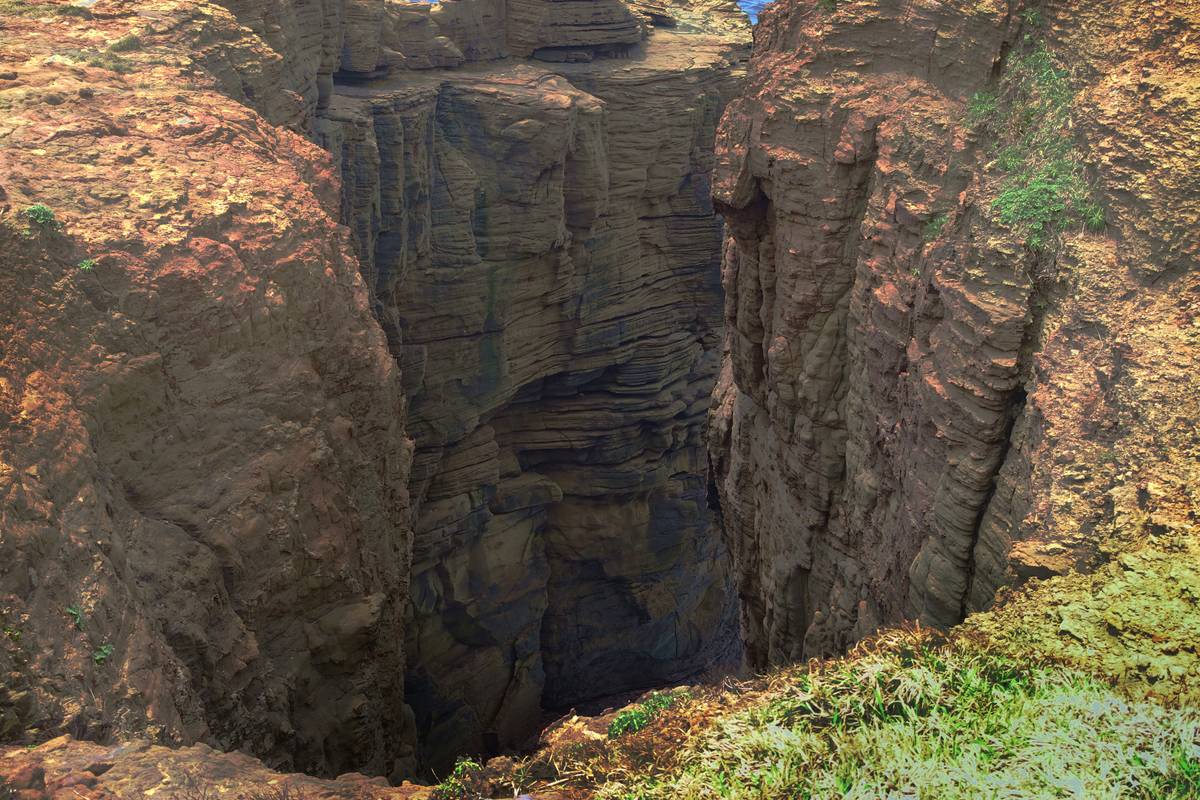
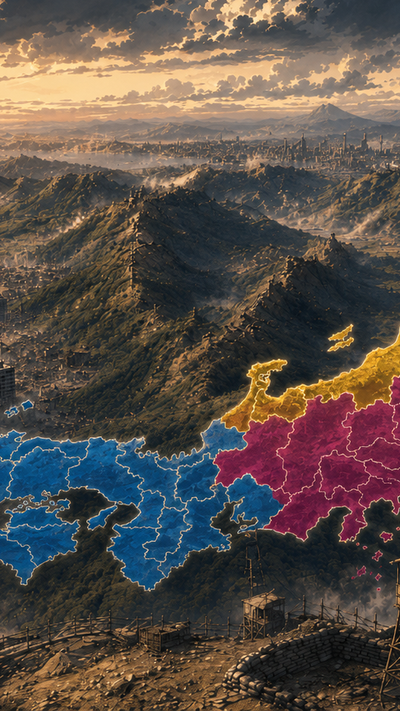
If the Pit were real, it might look something like this… / Jagatani
Rudo, the protagonist, is thrown down from the world above into a place called naraku. Because of that name, Japanese readers can layer several images at once: hell, the bottom of society, and the space under a stage. That depth comes from the original word, and the Pit alone cannot fully express it. It is not clear whether the creator chose the name with the theater term in mind, but in Japanese the name can be enjoyed from several angles.
Vital Instruments, Tsukumogami, and the Japanese Idea That Objects Have Souls
Vital Instruments, the core of Gachiakuta, are objects that were used with care and filled with someone's strong feelings, and a power dwells in them that awakens. Many Japanese readers will likely be reminded of traditional legends of tsukumogami (付喪神).
The Vital Instruments of the story are not the same thing as traditional tsukumogami. Still, you can find a deep common theme: both treat objects not as disposable tools but as things that hold the time spent with people and the strong feelings put into them.
In interviews, creator Kei Urana has talked about how deeply sad she was as a child when a pen she cherished broke. She has also described a keychain an acquaintance gave her when she was young, one she was especially attached to and always kept with her. Personal experiences like these clearly form the basis of her work.
That said, there has been no explicit statement that Vital Instruments are directly modeled on tsukumogami. This is only a parallel in Japanese culture that we suggest as a way to read the series more deeply, and we find it fascinating.
Traditional Memorial Services for Objects, Still Held in Japan Today
Japan has traditional ceremonies in which tools that have served their purpose are not simply thrown out but given a memorial service with gratitude. They are not official Gachiakuta events, but they are a chance to experience the Japanese culture of cherishing the tools people use.
Hari Kuyō-e at Sensoji Temple (Taitō Ward, Tokyo)
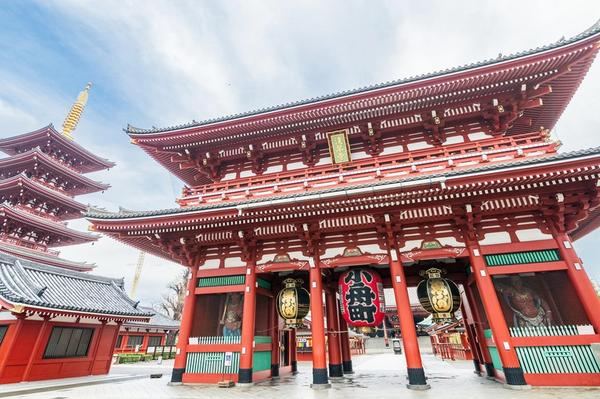
Hari kuyō, the memorial service for needles, is a ceremony in which broken or rusted sewing needles are stuck into soft tofu or konnyaku jelly. People thank the needles for their work and pray for better sewing skills. At Awashimadō, a hall at Sensoji Temple in Tokyo, the ceremony is held every February 8, and on February 8, 2026, the service was solemnly performed from 11:00 (from the Sensoji Temple official website).
- Location: Awashimadō, Sensoji Temple (2-3-1 Asakusa, Taitō Ward, Tokyo)
- Nearest stations: About a five-minute walk from the Asakusa stations on the Tokyo Metro Ginza Line, the Toei Asakusa Line, the Tōbu Line, and the Tsukuba Express
- When: February 8 every year (the service time may change, so check the official website beforehand)
- Fee: Free to visit (check with the temple in advance on how to offer needles and what is accepted)
Ningyo Kansha-sai at Meiji Jingu (Shibuya Ward, Tokyo)
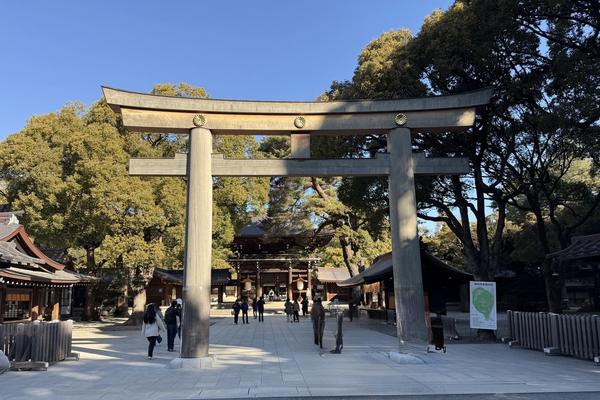
Ningyo Kansha-sai, the Festival to Thank Dolls, is a once-a-year event where people give thanks to dolls and stuffed toys they have cherished for years, have them purified, and leave them with the shrine. In 2026 it is scheduled for October 4, from 9:30 to 15:00. The offering (hatsuhoryō) starts at 3,000 yen for roughly the amount that fits in a 45-liter bag (glass cases and batteries are not accepted; from the festival's official website and reception guide).
- Location: In front of the Main Shrine, Meiji Jingu (1-1 Yoyogi Kamizono-chō, Shibuya Ward, Tokyo)
- Nearest stations: JR Harajuku Station, Meiji-jingumae (Harajuku) Station on the Tokyo Metro, and others (inside the grounds, it is about a ten-minute walk from the entrance torii to the Main Shrine)
- Scheduled: Sunday, October 4, 2026, 9:30 to 15:00 (held rain or shine)
- Offering: From 3,000 yen per armful (about one 45-liter bag)
- Note: Dolls cannot be dropped off in advance. Bring them directly to the reception tent in front of the Main Shrine on the day of the event (dolls cannot be returned once handed over)
These are not entertainment events for tourists but solemn Shinto rites and Buddhist services held at shrines and temples. If you watch or take part, follow proper etiquette and be considerate of the people who come to lay their items to rest.
GACHIAKUTA the Stage and Japan's 2.5D Theater Culture
GACHIAKUTA the Stage was performed in Tokyo and Kyoto in 2026. The original schedule called for fifteen performances at Shinagawa Prince Hotel Stellar Ball from May 22 to 31 and five at ROHM Theatre Kyoto South Hall from June 5 to 7 (all seats reserved, 13,500 yen). The production was directed by Go Ueki, with a script by Watashi Omu and music direction by KEN THE 390 (from the official TV anime announcement).
In Japan, live stage productions based on manga, anime, and games are called 2.5D theater, or 2.5D musicals. Beyond faithfully recreating costumes and hairstyles, a major feature of the genre is how it brings characters' poses, signature attacks, and the speed unique to manga to life through lighting, sound, and the actors' physical performance.

The live run has ended, but a Blu-ray of the final Tokyo performance is scheduled for release in winter 2027 (11,000 yen; regular preorders are accepted until 23:59 on October 31, 2026).
Where to Buy Official Gachiakuta Merch in Japan
Gachiakuta is serialized in Kodansha's Weekly Shōnen Magazine. Rather than JUMP SHOP, which carries Shueisha titles, your best bet is a major anime store such as animate.
For new merchandise, go to animate; for secondhand items and limited goods from past releases, Lashinbang and SURUGA-YA are the main places to look. Stock differs from store to store, so search not only by the series title but also by character names such as Rudo (ルド) and Enjin (エンジン).
Ikebukuro: A Fan Hub with New and Secondhand Shops Close Together
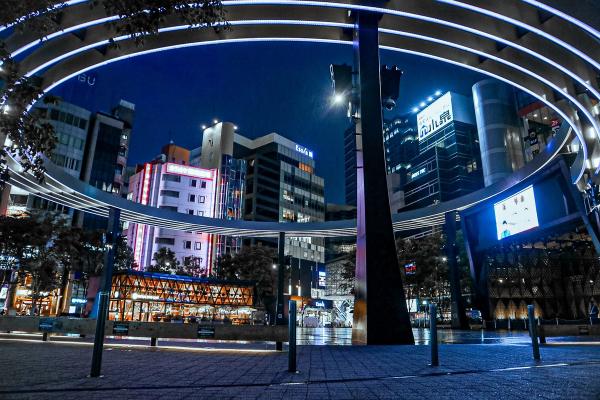
- animate Ikebukuro Flagship Store: The first place to visit for new manga volumes, the latest anime goods, and preorders (1-20-7 Higashi-Ikebukuro, Toshima Ward, Tokyo; about a five-minute walk from the East Exit of Ikebukuro Station; open 10:00 to 21:00).
- Lashinbang's Ikebukuro stores: A wide range of secondhand and hard-to-find goods, including pin-back buttons, acrylic stands, trading cards, and posters. The sales floors are split across several buildings, so check the store guide for which genre is where before you make the rounds.
With so many shops clustered together, Ikebukuro is also an ideal area for anyone touring anime shops in Japan for the first time.
Akihabara: Figures and a Wide Range of Hobby Shops in One Place
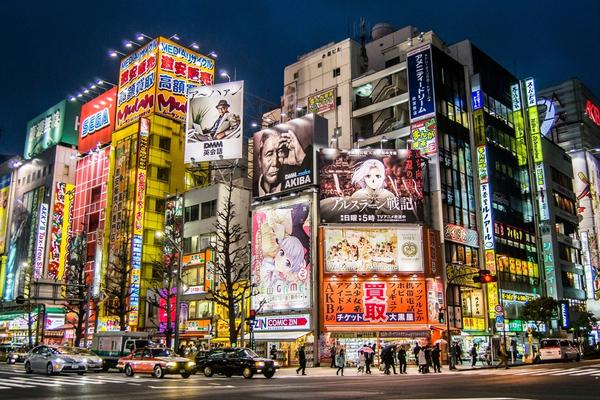
In Akihabara, you will spot shop after shop just by walking around. You can dig up everything from figures of all kinds to niche character merchandise.
That said, it is not unusual for popular items such as figures to sell out at the preorder stage or to be unavailable until a restock. If you have a specific item in mind, it is wise to look up the product name and when it is due out on animate Online Shop or similar sites before heading to the stores.
Ikebukuro tends to have more shops aimed at women, while Akihabara has more that appeal to everyone.
Season 2 of the Gachiakuta Anime
The first season of the Gachiakuta TV anime began airing on July 6, 2025, ran for twenty-four episodes across two consecutive cours, and wrapped up on December 21 to an enthusiastic reception. The animation was produced by Bones Film.
Right after the final episode aired, a second season was suddenly announced, and in July 2026 early footage premiered at Anime Expo and at the Comic Exhibition in Taipei. A First Look PV using that footage is now officially available.
As of September 16, 2026, no specific premiere date for the second season has been announced. Keep an eye out for further official news.
A survival action RPG, GACHIAKUTA: BREAKOUT, is also in development (due out in 2027 on PS5, Xbox Series X|S, and Steam).
Going from the Anime to the Manga? Start with Volume 11
As of September 28, 2026, all twenty-four episodes of the first season are available to stream on Prime Video in Japan. Prime members there can watch at no extra cost.
In the first season's finale, Episode 24, a mural in Canvas Town, the city of graffiti, leads to part of a major secret about Rudo, the protagonist, coming to light.
The first season's finale covers the story up to Chapter 87 of the original manga. If you cannot wait to see what happens next, we recommend starting with Volume 11 of Gachiakuta, which contains Chapter 88.
FAQ
Published Last Updated
Related Articles
Explore more articles on similar topics and deepen your knowledge of Japan.

Related Titles
Everything we have on this title: real life locations, stories, and where to get it.