Sensoji Temple
浅草寺
About Sensoji Temple
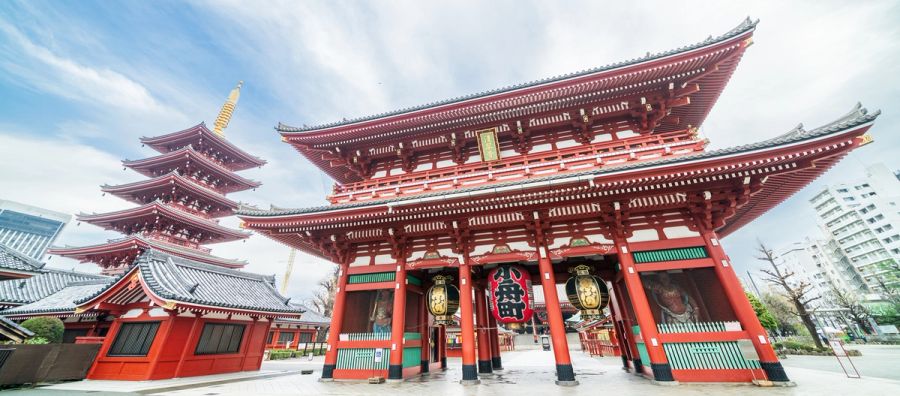
Sensoji Temple, in Asakusa, Taitō Ward, Tokyo, is the head temple of the Shō Kannon sect of Buddhism. Said to have been founded in 628, it is considered the oldest temple in Tokyo. From the Kaminarimon Gate, the temple's outer gate, walk along the Nakamise shopping street and through the Hōzōmon Gate, and the Main Hall stands directly ahead.
Four lines each have an Asakusa Station within a five-minute walk of the temple: the Tōbu Skytree Line, the Tokyo Metro Ginza Line, the Toei Asakusa Line, and the Tsukuba Express. Sensoji Temple has no parking lot of its own.
It Began with a Kannon Statue Caught in a Fishing Net
According to tradition, on March 18, 628, the brothers Hinokuma no Hamanari and Takenari were fishing in the Sumida River when a Buddhist statue got caught in their net. Haji no Nakatomo, the local headman, recognized it as Shō Kanzeon Bosatsu, or Kannon, the bodhisattva of compassion, and turned his own home into a temple to venerate it. That was the beginning of Sensoji Temple.
In 645, the monk Shōkai built a hall for Kannon and made the principal image a hibutsu, a hidden Buddha never shown to the public. The image is still kept inside its shrine cabinet, and not even the head priest is allowed to view it.
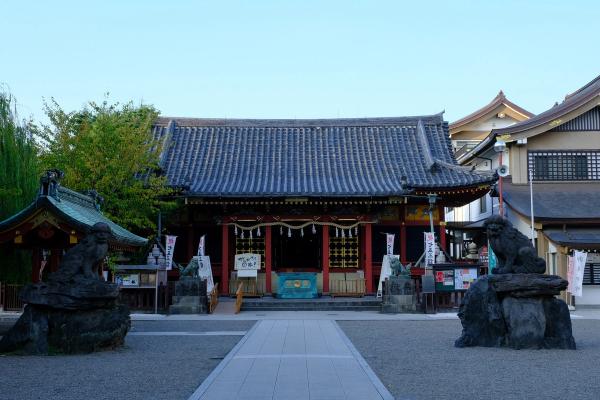
The three men connected with the statue's discovery are enshrined at Asakusa Shrine, which stands next to the Main Hall. The temple and the shrine were inseparable until the Meiji government ordered Shinto and Buddhism to be separated. In the Edo period, even the shrine's Sanja Matsuri, held each May, was called the Kannon Festival.
Highlights from the Kaminarimon Gate to the Main Hall
Kaminarimon Gate
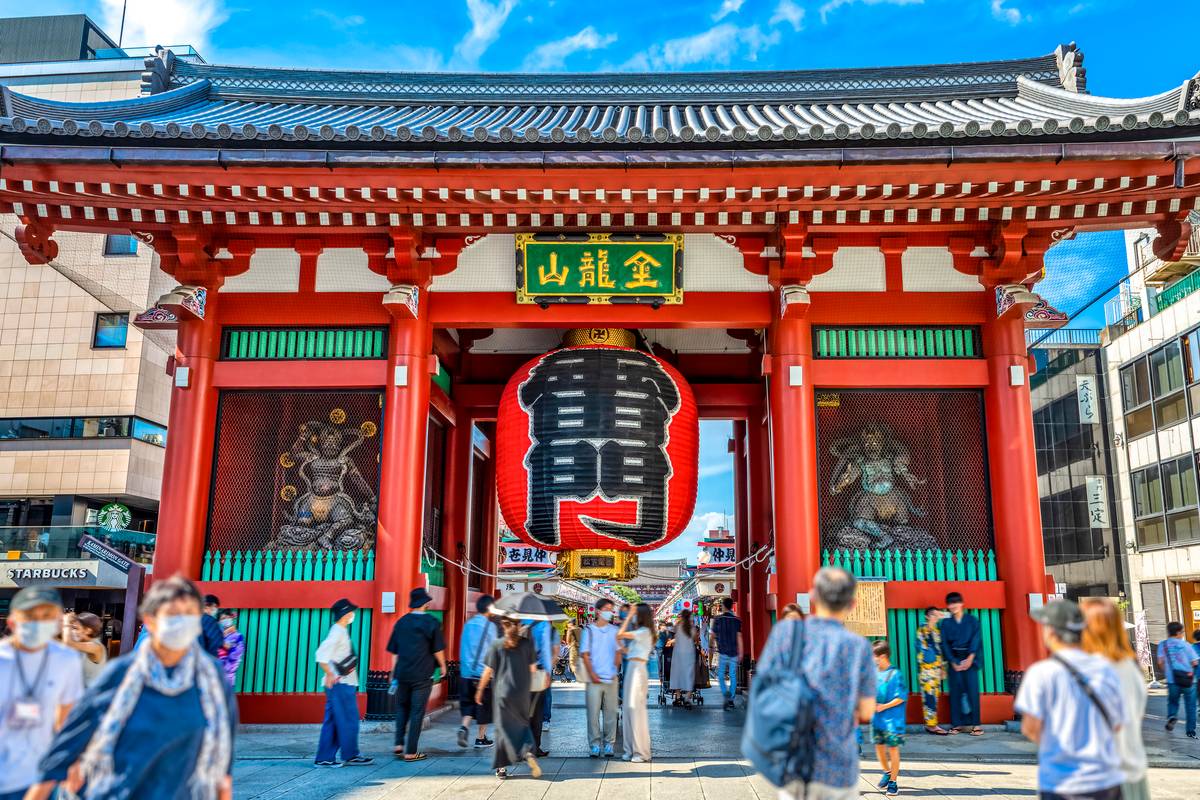
The gate's formal name is Fūraijinmon, the Gate of the Wind God and Thunder God. Statues of the two gods stand on either side, and a giant lantern hangs in the center. The lantern is 3.9 meters tall and weighs about 700 kilograms.
The current gate was rebuilt in 1960 with a donation from Kōnosuke Matsushita, then president of Matsushita Electric Industrial (now Panasonic). The rebuilding came 95 years after the previous gate burned down at the end of the Edo period.
Nakamise
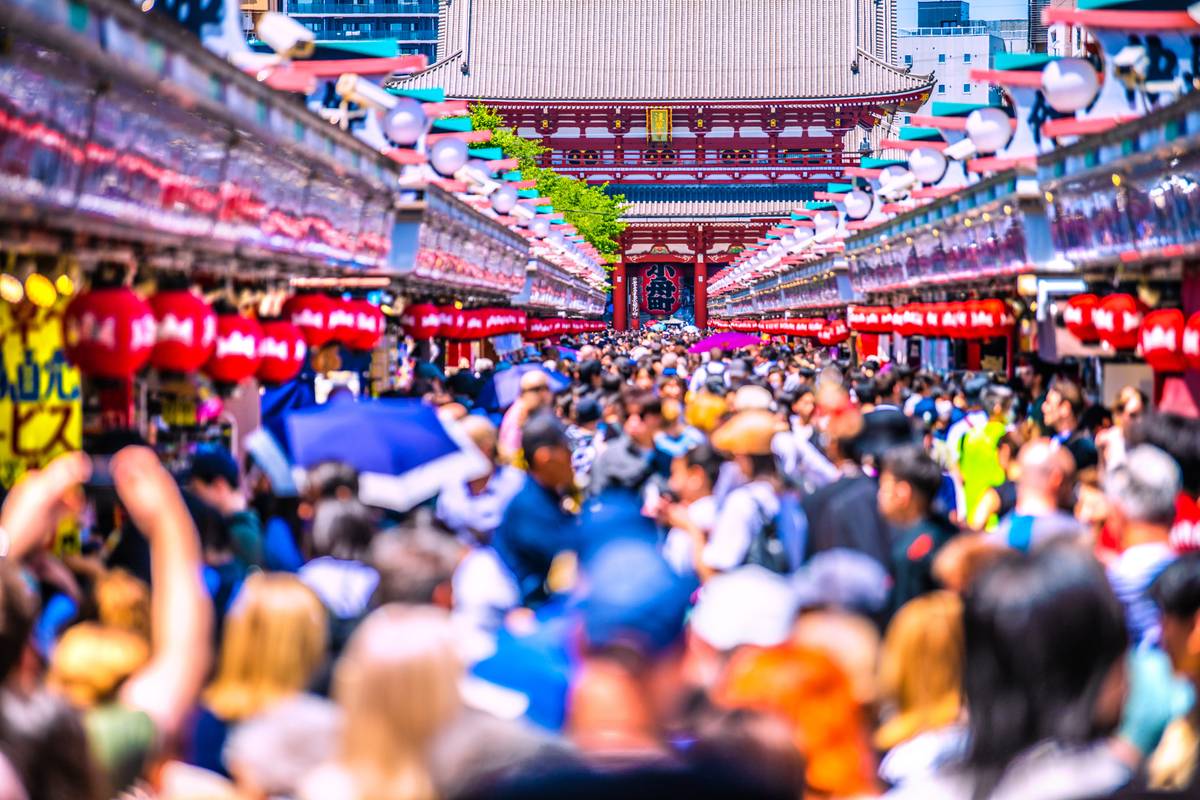
Nakamise is a shopping street about 250 meters long, running from the Kaminarimon Gate to the Hōzōmon Gate, with vermilion-painted shops lining both sides of the approach. There are 87 shops in all, 52 on the east side and 35 on the west.
It dates back to the Edo period. The street is said to have started when local residents who took on the job of cleaning the temple grounds were given permission to set up shops.
Hōzōmon Gate
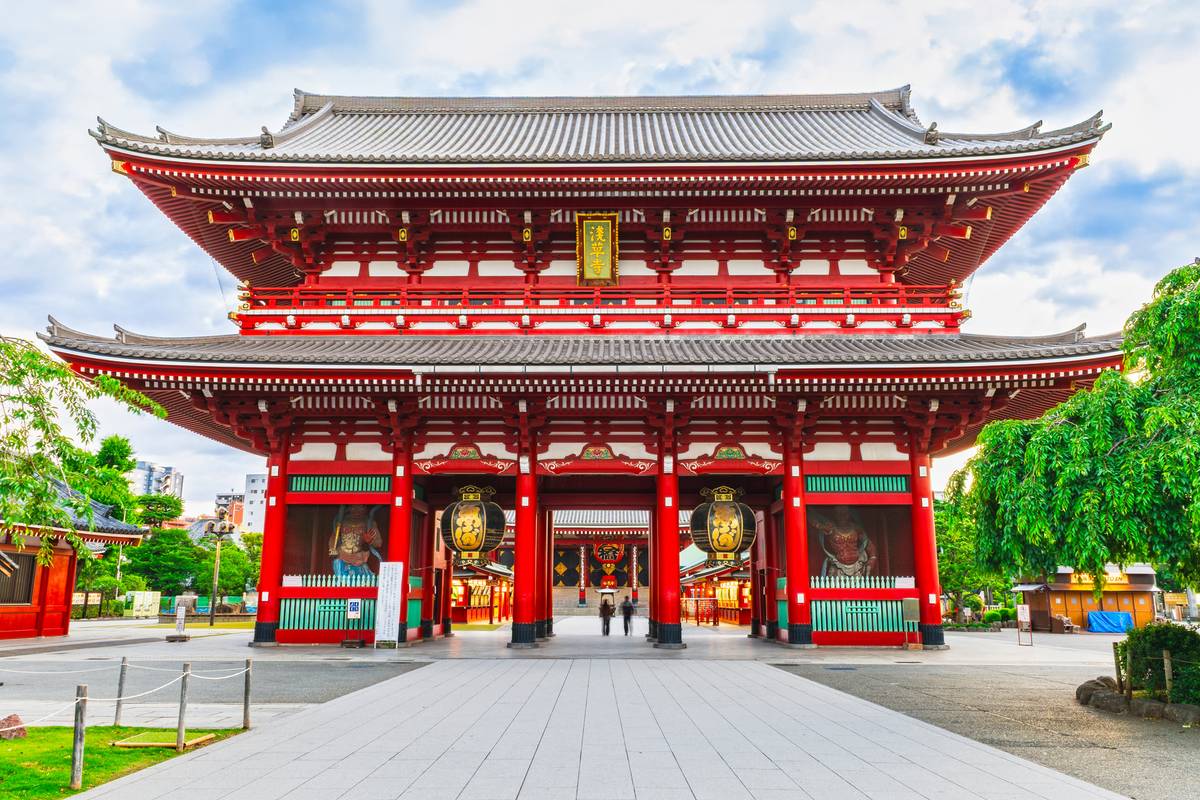
Past Nakamise stands the Hōzōmon Gate, rebuilt in 1964. Its second floor houses temple treasures, including a Yuan-dynasty edition of the Buddhist scriptures that is a nationally designated Important Cultural Property.
Hanging on the gate are giant straw sandals (ōwaraji) donated by volunteers from Murayama in Yamagata Prefecture. They are 4.5 meters tall and weigh 500 kilograms, and making them took 2,500 kilograms of straw.
Main Hall
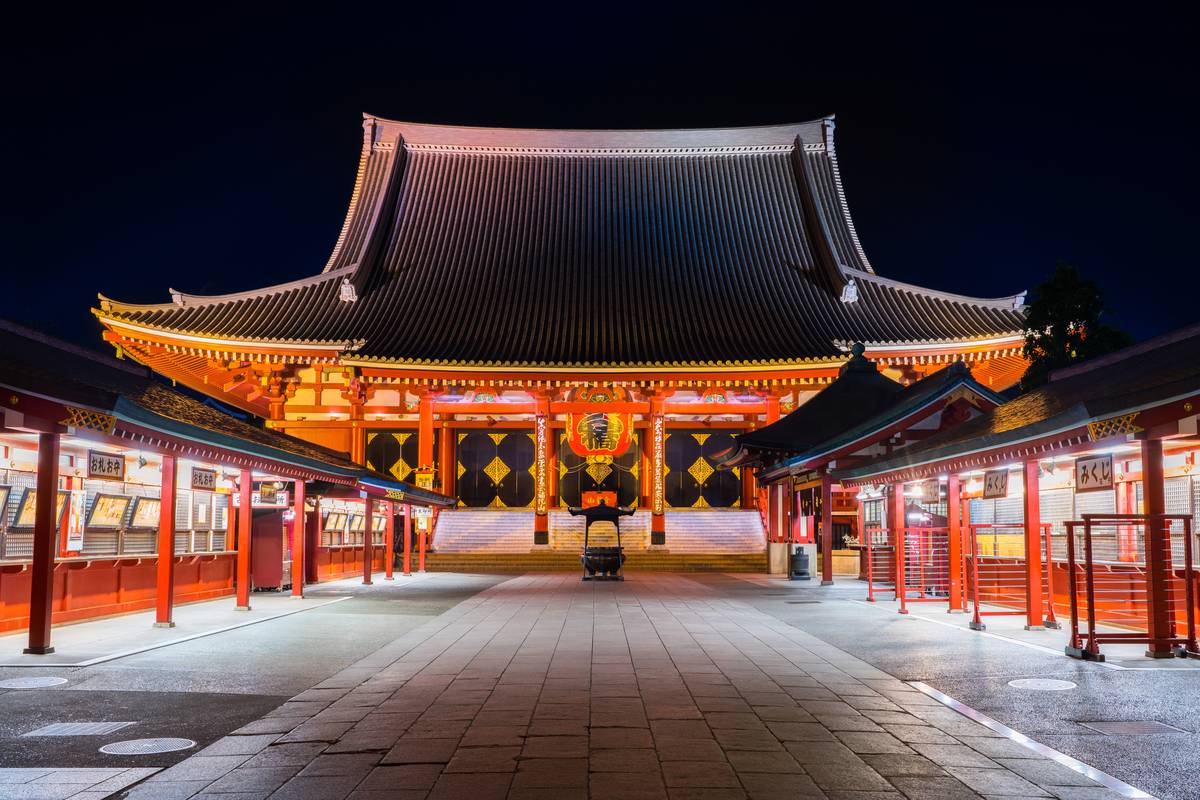
The Main Hall at night
The Main Hall, also called the Kannon Hall, enshrines the principal image of Shō Kanzeon Bosatsu and was rebuilt in 1958. On its ceiling are Kawabata Ryūshi's Ryū no Zu (Dragon) and two works by Dōmoto Inshō, Tennin no Zu (Celestial Beings) and Sange no Zu (Scattering Flowers).
Five-Story Pagoda
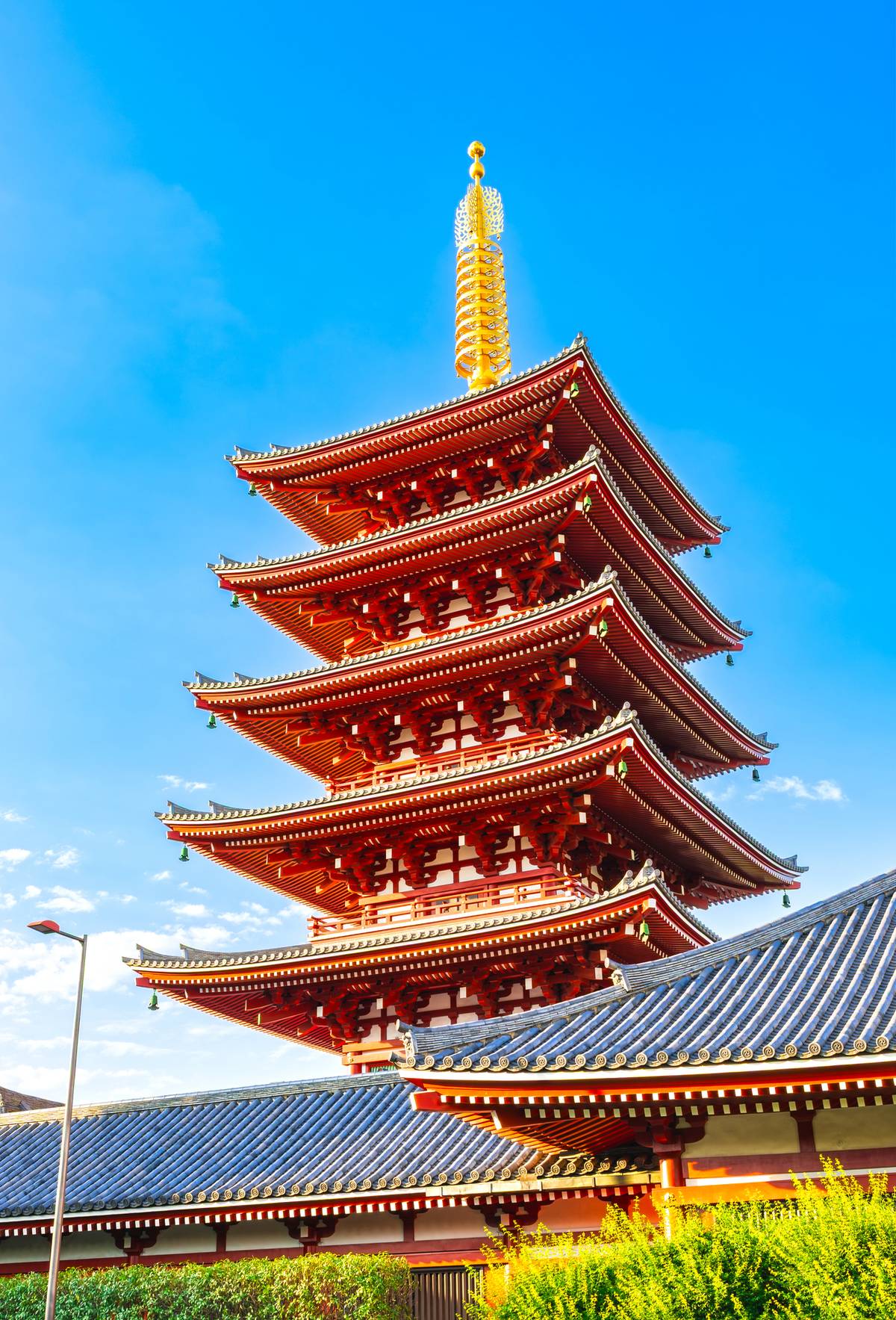
The Five-Story Pagoda, rebuilt in 1973, rises about 53 meters above the ground. Its top level holds busshari, relics of the Buddha, received from Isurumuniya Temple in Sri Lanka.
Awashimadō and the Needle Memorial Service on February 8
Awashimadō, on the temple grounds, is a hall dedicated to the protection of women. It was built in the Genroku era (1688 to 1704) to enshrine Awashima Myōjin, a deity invited from Kada in Wakayama Prefecture.
At Hari Kuyō-e, the needle memorial service held every February 8, people stick broken or rusted needles into soft tofu or konnyaku jelly, thanking the needles and praying for better sewing skills. The service begins at 11:00.
Omikuji Fortunes with a Reputation for Bad Luck
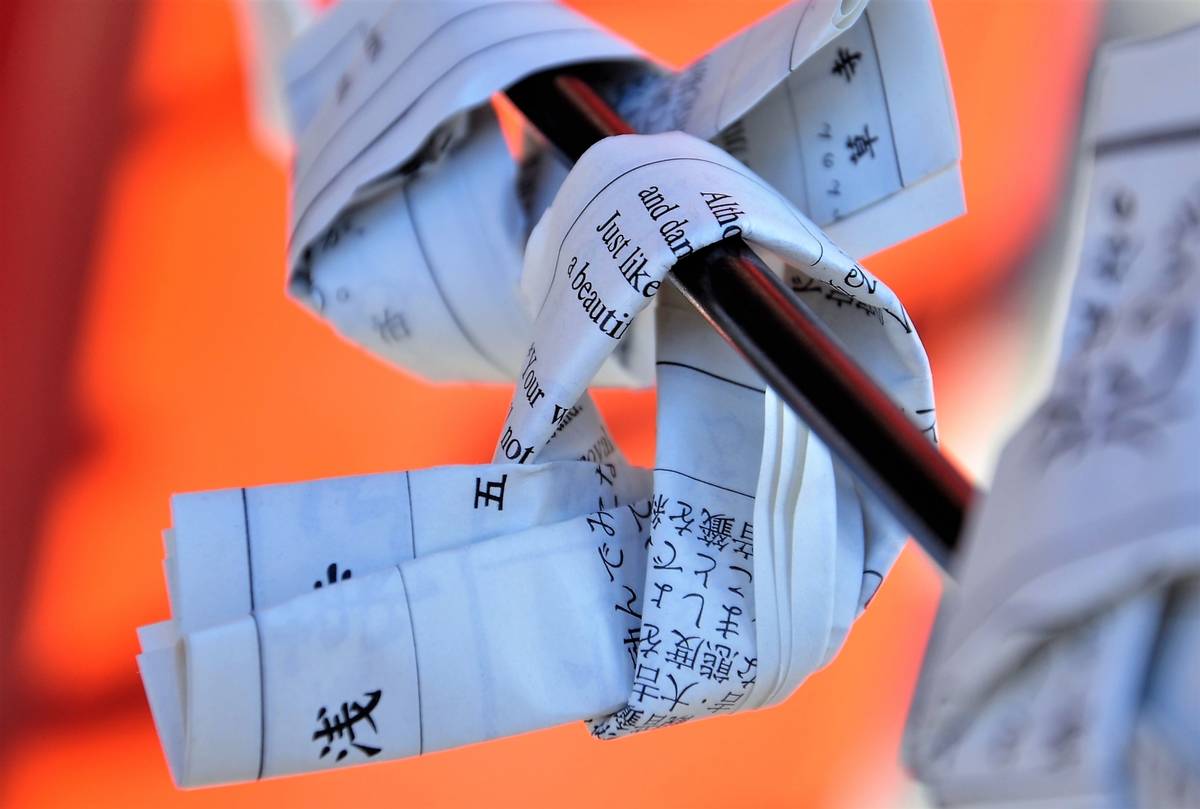
Sensoji Temple's omikuji have a reputation for often turning up bad luck, and the reputation is broadly true.
That is because these omikuji follow a traditional format called Kannon Hyakusen, handed down from ancient times, in which about 30 percent of the slips are reportedly bad luck. The likelier explanation is not that Sensoji Temple's omikuji contain extra bad fortunes, but that many other temples and shrines have lowered their share of bad luck over the years.
If you draw bad luck, the temple recommends tying the slip at the designated spot on the grounds to stay connected with Kannon.
Annual Events
Here are the main annual events and their dates:
- Setsubun-e: on Setsubun (early February)
- Hari Kuyō-e: February 8 (at Awashimadō)
- Shiman-rokusen-nichi and Hōzuki-ichi (Ground Cherry Market): July 9 and 10
- Hagoita-ichi (Battledore Fair): December 17 to 19
- Joya no Kane (New Year's Eve Bell Ringing): December 31 (at Bentenyama)
Visiting
The Main Hall is open from 6:00 to 17:00 (6:30 to 17:00 from October to March). There is no charge to visit.
Goshuin are given out at Yōgōdō Hall, on the west side of the Main Hall, from 8:00 to 16:30.
The temple is lit up every evening from sunset until around 23:00.
〒111-0032 2-chōme-3-1 Asakusa, Taito City, Tokyo
Loading map...
Open grounds with no fixed opening hours.
The Main Hall is open from 6:00 to 17:00 (6:30 to 17:00 from October to March).
Hours verified September 2026
Last Updated: