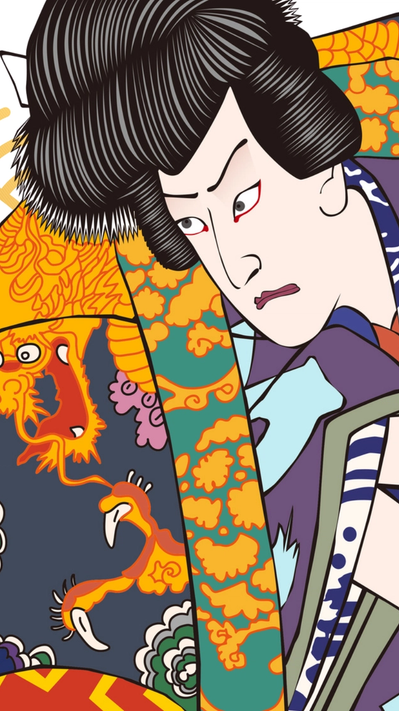
What is Shinsaku Kabuki?: ONE PIECE, NARUTO and Princess Mononoke on Stage
One Piece, Princess Mononoke, Touken Ranbu, Final Fantasy X... here's a full rundown of the new kabuki and Super Kabuki productions adapted from manga, anime, and games. We cover the highlights of the major shows and how to watch them through Cinema Kabuki, streaming, and DVD, explained clearly for anyone coming to this for the first time.
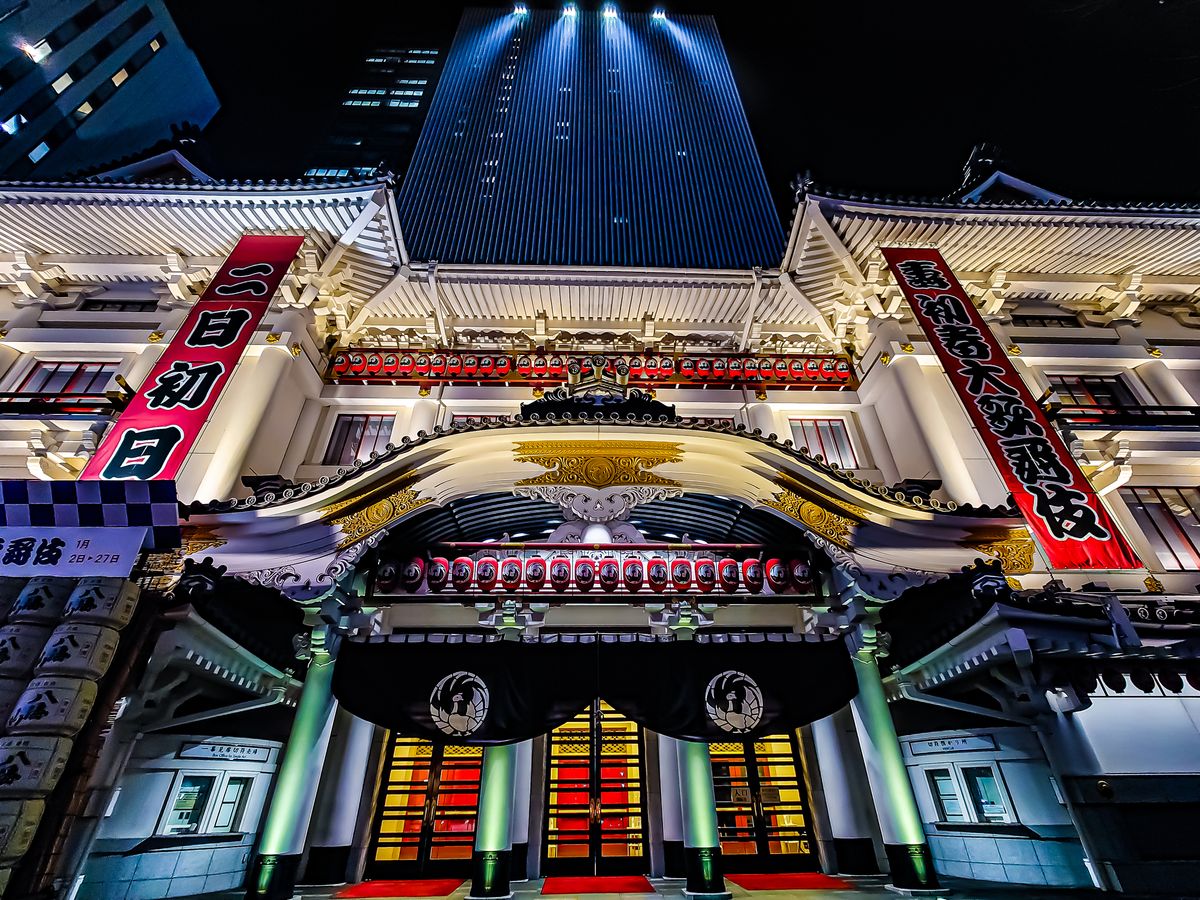
Kabuki, Japan's traditional performing art, keeps adding new work to its repertoire, and some of the most talked-about plays of recent years are adapted from hit manga, anime and games.
In Japan these productions are called shinsaku kabuki (new kabuki) or Super Kabuki. English-speaking fans sometimes call them 2.5D Kabuki, borrowing the term Japan uses for 2.5D stage shows: the plays and musicals adapted from anime, manga and games, which have a thriving scene of their own.
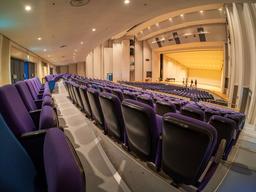
These plays draw longtime kabuki audiences, younger viewers who had never bought a ticket before, and fans overseas. This guide covers the main productions and how to watch them.
New Kabuki: Manga, Anime, and Game Adaptations Explained
Kabuki keeps producing shinsaku kabuki, new plays written in the modern era, alongside the classical repertoire it has handed down through the generations.
The titles drawing the most attention in recent years are the ones adapted from manga, anime and games.
The origin of all this can be traced back to Super Kabuki.
Super Kabuki
In 1986 Ichikawa Ennosuke III, who later succeeded to the name Ichikawa En'ō II, launched Super Kabuki, combining what classical kabuki and modern theatre each do well.
Built on the three S's of Story, Speed and Spectacle, it pairs large-scale storytelling with lavish costumes, elaborate sets and staging, and a newly written score.
The series opened with Yamato Takeru, drawn from Japanese mythology, and went on to stage works such as Shin Sangokushi, based on Chinese history, winning a broad following.
Ichikawa Ennosuke IV then led Super Kabuki II ONE PIECE, adapted from the Weekly Shonen Jump manga.
Since then, manga, anime and game adaptations have become a regular fixture of the kabuki calendar.
The Main Shinsaku Kabuki Productions
The productions below cover the manga, anime and game adaptations, plus a few related stage works.
Kabuki from Manga and Anime
Kabuki has adapted work by Tezuka Osamu, the artist Japan calls the god of manga, by Miyazaki Hayao of Studio Ghibli, and by leading Weekly Shonen Jump artists.
Super Kabuki II ONE PIECE
Adapted from Eiichiro Oda’s manga ONE PIECE, this production premiered in 2015. The adventures and battles of Luffy, the young pirate who means to become King of the Pirates, were staged with chūnori wire flying, projection mapping and other effects.
Ichikawa Ennosuke IV played Luffy and several other roles, and the rest of the principal cast doubled up in the same way, which became a talking point in itself. The showy, colourful visuals, restyled for kabuki, were equally well received. The production was later revived at Osaka Shochikuza and Hakataza, and released to cinemas as a Cinema Kabuki film.
Shinsaku Kabuki: NARUTO
Adapted from Kishimoto Masashi's NARUTO, this production premiered in 2018. Minosuke Bandō played Naruto Uzumaki and Hayato Nakamura played Sasuke Uchiha, and Wagakki Band, who play rock on traditional Japanese instruments, contributed songs to the production.
A separate 2.5D stage series, Live Spectacle NARUTO, also exists. That version had songs and dance, ran from 2015 to 2023, and carried the story through to its conclusion. It is not kabuki.
Shinsaku Kabuki: Rupan Sansei (Lupin III)
Built on Monkey Punch's Lupin III, familiar to most people through the anime, this production tells an original story. The first run moved the setting to the Azuchi-Momoyama period (1573 to 1603), with Lupin's crew at work in the civil wars of the day. The title 流白浪燦星 is read Rupan Sansei, the kanji chosen for their look and sense rather than their sound. 白浪 (shiranami) is the old kabuki word for thieves, which places Lupin in the same company as the classical repertoire's thief plays.
A second production, Rupan Sansei: Hekisui no Reijō, opened in March 2026 at Shinbashi Enbujo and moved on to Misonoza in Nagoya, with further runs at Minamiza in Kyoto in September 2026 and Hakataza in Fukuoka in February 2027. Its romantic storyline recalls Lupin III: The Castle of Cagliostro, the anime film Hayao Miyazaki directed. Footage of the first production was streamed with English subtitles to 28 countries and regions in 2024.
Shinsaku Kabuki: Shinsengumi
Osamu Tezuka's manga Shinsengumi was staged in the August 2022 programme at the Kabukiza. The Shinsengumi were the swordsmen who policed Kyoto for the shogunate in the 1860s. Tezuka's version mixes real historical figures with invented characters. It is a lesser-known title in his catalogue, and this was the first Tezuka work adapted for kabuki.
Shinsaku Kabuki: Nausicaä of the Valley of the Wind
This two-part production was adapted from Nausicaä of the Valley of the Wind, the manga by Hayao Miyazaki of Studio Ghibli. The 1984 anime film of the same name covers only the opening of the story; the kabuki version draws from all seven volumes and goes considerably deeper.
The scale of the storytelling drew praise, as did how closely Nausicaä and Princess Kushana matched the originals.
Super Kabuki: Princess Mononoke
The newest production opened at Shinbashi Enbujo in July 2026 and runs until 23 August 2026. It marks forty years since Super Kabuki began with Yamato Takeru in 1986, and takes its story from Studio Ghibli's Princess Mononoke. It stages coexistence between people and the natural world, and the question of what it means to be alive, on the grand scale that suits kabuki.
Kabuki from Video Games
Kabuki has also adapted console and mobile games.
Shinsaku Kabuki: FINAL FANTASY X
Square Enix's RPG FINAL FANTASY X reached the kabuki stage in 2023. The production restaged the game's key scenes and setting using kabuki's conventions, and made use of IHI Stage Around Tokyo, a theatre whose entire seating block rotated through 360 degrees to face stages arranged around it. The venue has since closed.
Kabuki: Touken Ranbu
Touken Ranbu ONLINE, the game that personifies famous Japanese swords as young men, reached kabuki in 2023 with Tsuki no Tsurugi Enishi no Kiri no Ha. A second production, Azuma Kagami Yuki no Midare, followed in 2025, with live and catch-up streaming on DMM TV.
Touken Ranbu also has 2.5D stage versions, both a straight play series and a musical series. Each brings different characters and a different story, so comparing the play, the musical and the kabuki can be a fun time.
Cho Kabuki, Starring Hatsune Miku
Cho Kabuki pairs the virtual singer Hatsune Miku with the kabuki actor Nakamura Shidō, and has a devoted following among otaku audiences.
Its signature work is Hanakurabe Senbonzakura, which layers the classical play Yoshitsune Senbon Zakura (Yoshitsune and the Thousand Cherry Trees) over Senbonzakura, the Vocaloid hit song by Kurousa-P. In December 2025 the series marked its tenth year with Sekai no Hana Musubu Koto no Ha at the Kabukiza.
How to View New Kabuki
Beyond the theatre itself, kabuki reaches cinemas and streaming services.
Cinema Kabuki
Cinema Kabuki screens filmed stage productions in cinemas, and manga and anime adaptations turn up in the line-up.
Many are re-edited into a shorter running time, which makes them an easier way in than a full stage programme. The line-up favours well-known and much-discussed productions, so it suits newcomers.
Cinema Kabuki's audio commentary is in Japanese only, and screenings in Japan have no English subtitles.
On-Demand Streaming
KABUKI ON DEMAND streams stage productions and talk programmes.
The catalogue is limited, but some titles carry English subtitles or English commentary.
Paid subscription services and Japanese satellite broadcasters also carry kabuki performances from time to time.
Overseas Screenings and Free Streaming, October and November 2026
Between October and November 2026, Cinema Kabuki screenings and hands-on workshops will be held in seven countries: the Philippines, Peru, Chile, Argentina, Brazil, Mexico and Egypt.
JFF Theater streams classical works only, but they are free to watch, with subtitles in nine languages including English. The kabuki line-up goes out to 119 countries across Southeast and South Asia, Latin America, the Middle East and Africa, and is not available in the United States, Canada, the United Kingdom, Australia or most of Europe.
Buying a DVD or Blu-ray
Some productions are sold on DVD and Blu-ray through outlets such as Shochiku Kabuki-ya Honpo. While a production is running, the same shop sells its merchandise, programme and bromide photographs, the publicity portraits of the actors. Check the region coding before you order: Japanese DVDs are region 2, which plays in the United Kingdom but not on a standard United States player, while Japanese Blu-rays are region A, which plays in the United States but not on a standard United Kingdom player.
Getting More Out of a Shinsaku Kabuki Performance
Three conventions turn up in almost every shinsaku kabuki production, and knowing them deepens what you see on stage.
- Mie: the actor stops moving and holds a fixed pose, a piece of stylised beauty found only in kabuki.
- Hanamichi: a walkway that runs out through the audience, used for entrances, exits and the biggest moments.
- Chūnori: the actor flies above the stage on a wire, what other theatre calls flying or wire work. It appears often in the Super Kabuki showings.
Our vocabulary guide covers the rest of the basics, including the onnagata who play the female roles. Japanese audiences find plenty of it difficult too, so there is no need to learn it all.

Earphone Guides
At the Kabukiza you can rent a guide that explains the story, the acting and kabuki's particular staging in real time, and an English captioning service is available as well. It is worth the money the first time. Not every theatre offers them, and most manga, anime and game adaptations run at Shinbashi Enbujo, which has no English earphone guide or captioning. The paid programme sold at that theatre does carry an English synopsis in its back pages. Check before you go.

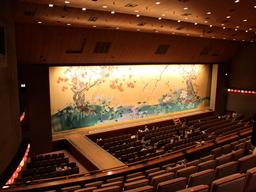
Most shinsaku kabuki is built with first-time audiences in mind, with dialogue pitched closer to modern Japanese. If you already know the source material you can follow the plot without the language, which makes these plays far more approachable than the classical repertoire.
Conclusion
From hit Shonen Jump manga to Ghibli films to beloved RPGs, New Kabuki productions based on manga, anime, and games keep on coming.
If something on the list catches your eye, an easy place to start is a streaming release or a Cinema Kabuki screening. Once you have a feel for the world of kabuki, actually going to the theater becomes that much more rewarding.
If it's your first time at a theater, take a look at the Tokyo theater guide above and the basic kabuki terms as well.
Published Last Updated
Related Articles
Explore more articles on similar topics and deepen your knowledge of Japan.