What Is a Character Shrine? How Otaku Show Their Unwavering Love for Their Oshi
A character shrine is a space where otaku gather merch of their oshi, the idol or character they support, in one place and display it. Learn how to make one, including choosing risers and fabric and the order for placing merch, and see which Japanese 100-yen shop products you can use, with prices.
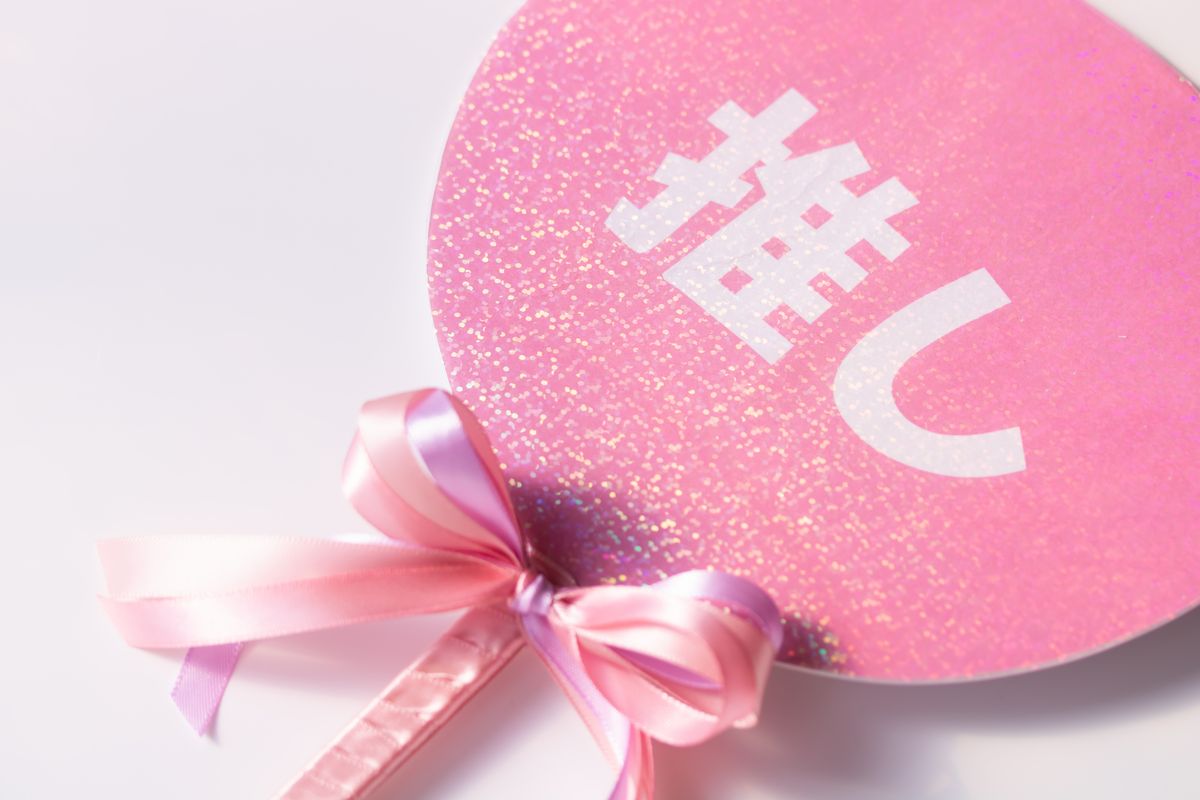
A character shrine is a display of merch for a favorite character or idol, gathered in one spot. Fans in Japan build one for a character's birthday or a series anniversary, or keep one up year-round in a corner of their room.
Here we show you how to make one, including how to choose risers and fabric and the order for placing merch. Products from Japan's 100yen shops that work for a shrine are listed too, with prices.
What Is a Character Shrine?
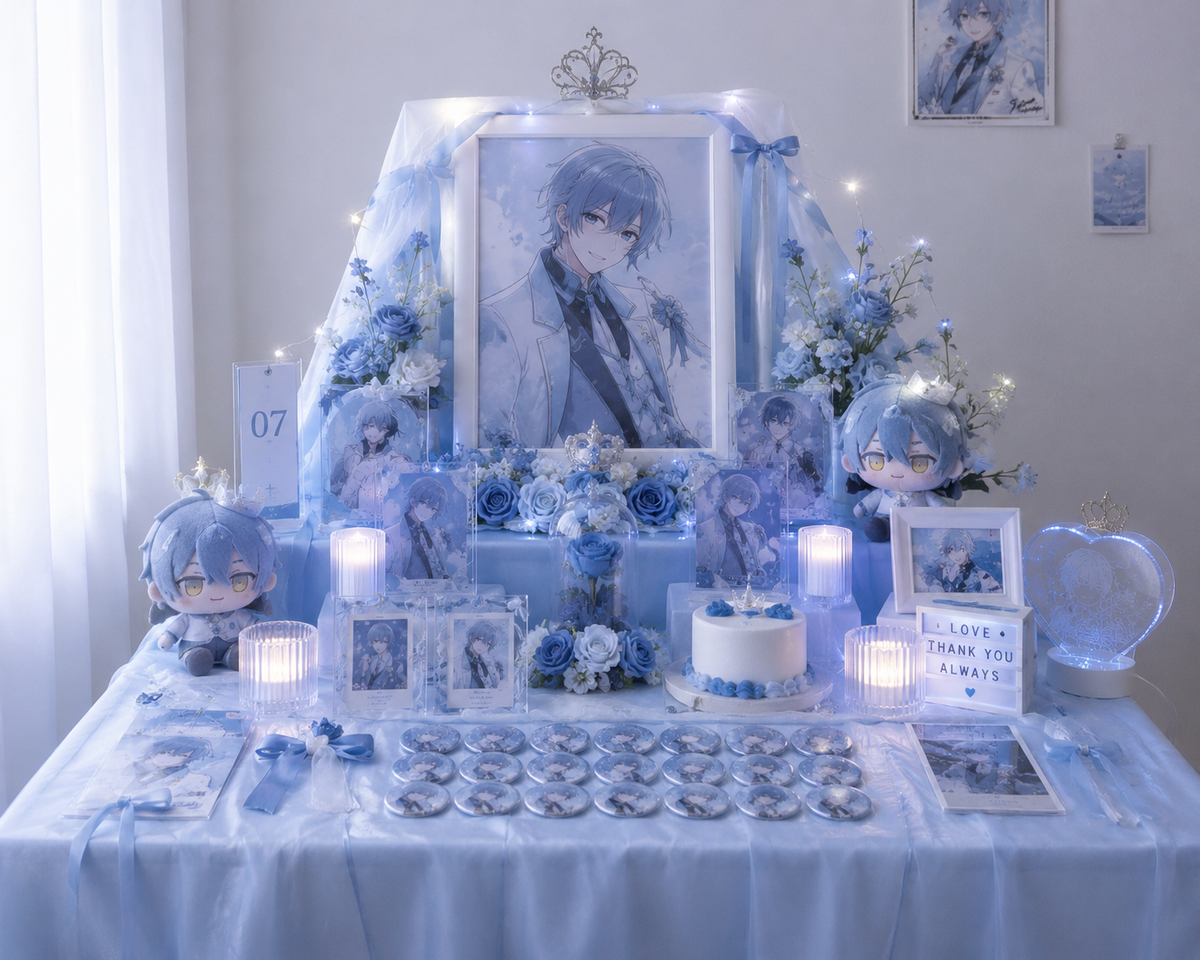
Illustrative image of a character shrine / AI Generated
In otaku circles, a character shrine is a single space where fans bring together and display merch of their oshi, the idol or character they support. The scale varies from fan to fan, and the striking visual impact also makes a shrine look great on social media.
Fans build one mainly to gather their collection in one place and to satisfy the urge to collect and the desire for recognition. Despite the Japanese name saidan, the word for an altar, it has almost no religious meaning.

When Do Fans Set Up a Character Shrine?
Shrines follow two patterns: those that stay up all the time and those that go up only for special occasions.
The Permanent Shrine
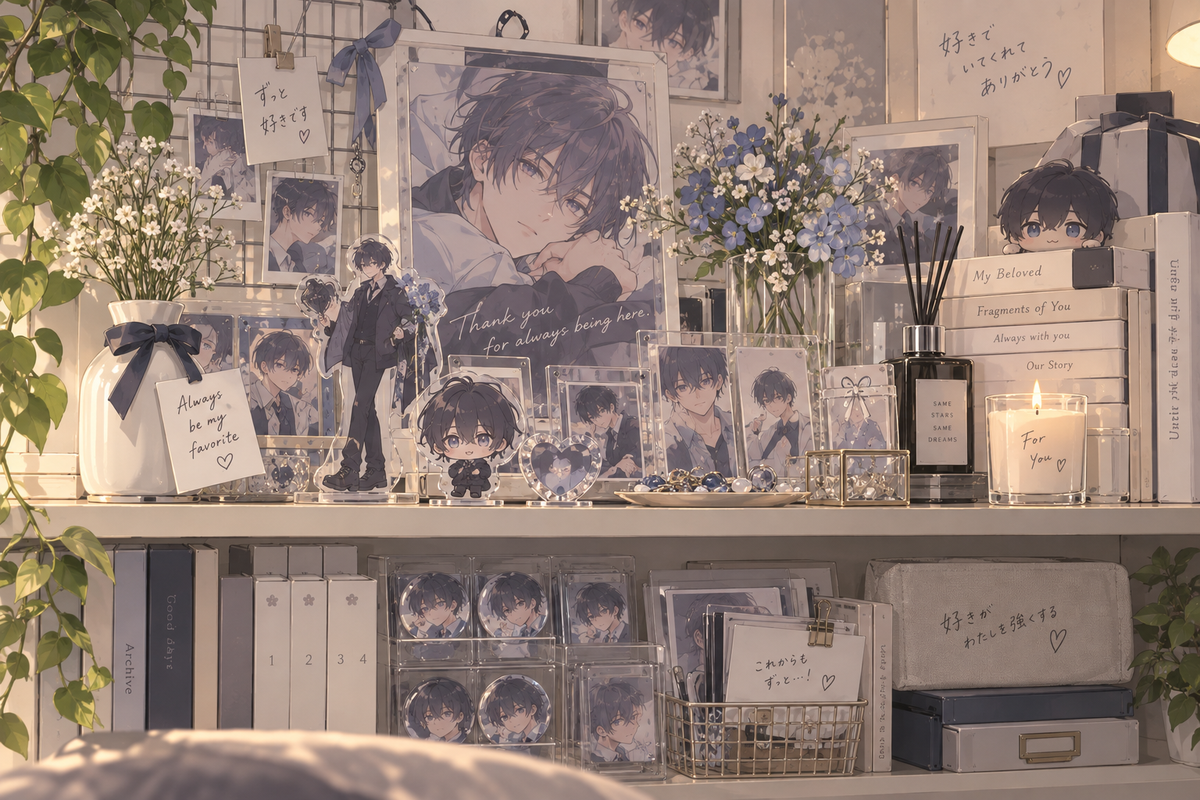
Illustrative image of a modestly arranged year-round shrine / GPT-5.6 Sol
Fans set the shrine up in one corner of their own room and make it part of the room's layout.
A shrine like this needs regular cleaning, so some fans set it up inside a glass case or display items such as acrylic stands unopened. In a studio apartment or a similar home for one person, a large space is simply hard to come by, so the result is a relatively modest shrine.
The Special-Occasion Shrine
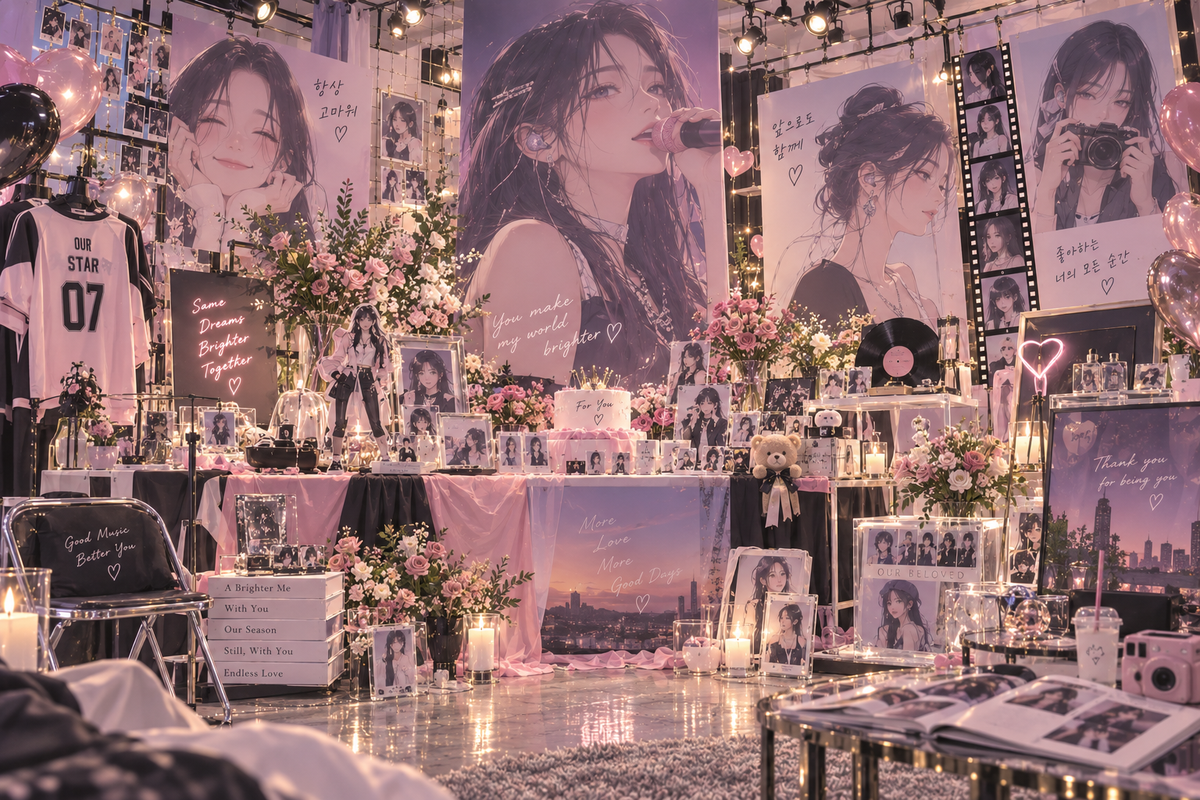
Illustrative image of a large-scale shrine set up only for a special occasion / GPT-5.6 Sol
This kind goes up for a limited time to mark a character's birthday or a series anniversary. Many of the flashy shrines you see on social media are probably this type.
Fans often spread out fabric and add lights to give the shrine a festive, glamorous feel.
Some fans rent a photo studio and build the shrine there. In Tokyo, there are quite a few stylish, compact studios at around 3,000 to 8,000 yen that are a good fit for a shrine.
How to Make a Character Shrine
You can pick up what you need for a base at 100-yen shops or on Amazon.
Use Risers to Add Height and Depth
Place your merch on a stepped base, and the items at the back stay in view instead of being hidden by the ones in front. On a flat desk with several rows, everything from the second row back tends to get lost behind the row in front. Varying the height also adds depth, so the merch comes together as a single display shelf rather than a pile.
With a clear acrylic tiered riser, the riser itself does not stand out and the merch alone stand out. If you want to build a base without spending money, another option is to stack a few empty boxes and cover them with fabric. The size of the boxes lets you set the height of each tier freely.
Drape Fabric for a Luxe Look
Draping fabric over the base hides the corners of a riser and the printed designs on empty boxes. When choosing a fabric, go for one with a sheen, such as velvet or satin. Under a light, the folds of the fabric show highlights and shadows, adding a three-dimensional feel that a flat base cannot give.
If you are unsure about the fabric color, try going by your oshi-iro. Oshi-iro is the color tied to your oshi, like the color assigned to each member of an idol group. Some fans match their clothes, their belongings and even their room decor to their oshi-iro. If your oshi-iro is red, go with red velvet, and if it is blue, blue satin. Once the fabric color is settled, you will not have to wonder about the colors of the lights and flowers you add later.
Arrange From Top to Bottom, Back to Front
First, place your centerpiece at the back of the top tier, in the middle. Sizable pieces such as a large acrylic panel, a plush toy or a poster work well as the centerpiece. From there, work down tier by tier and from back to front. After that, just fill in the remaining spaces in that order.
This order means you do not have to reach over merch you have already placed. You will probably also worry less about a sleeve snagging and acrylic stands toppling one after another. Because the tall items are at the back, the items in front do not block the rows behind them either.
Group the Same Type of Merch Together
Can badges, the tin pin badges, go together with other can badges. The same goes for acrylic stands, or akusuta for short. Just lining up goods of matching size and shape is enough to make a shrine look put together. A section packed edge to edge with can badges in neat rows and columns can seem like a single pattern from a distance.
A dedicated case for can badges is handy. You can move the whole case at once, so when you rearrange the shrine for a special occasion, you do not have to line the badges up again one by one.
Finish With Lights and Flowers
Adding lights and flowers makes the shrine much more festive. Battery-powered fairy lights can even go in spots with no power outlet. Fairy lights are strings of tiny LEDs on a thin wire. Run the wire through the gaps between items, and small points of light end up scattered around the bottom of your akusuta. LED strip lights work well stuck along the edges of the riser tiers to make a line of light.
If gaps remain between items, try filling them with artificial flowers. Choose flowers in the same oshi-iro as the fabric, and the overall color scheme should come together as well. For a birthday shrine, some fans set out a cake and balloons to celebrate.
Avoid real candles and use LED candles. A shrine has fabric and paper merch gathered in one spot, and an open flame there could set them on fire. Some LED candles on sale look like a flame.
Try 100 Yen Shops for Shrine Decor
Japan's major 100-yen shops, such as Daiso, Seria and Can Do, have put together special product lineups for oshikatsu, the things fans do to support their oshi. A 100-yen shop is a Japanese variety-store chain that mainly sells items priced at 100 yen before tax. You will probably find cases, tiered risers and lights there.
As of September 2026, Daiso's official online store carries products like the ones below. All prices include tax.
- Can Badge Display Case, 110 yen. A case for displaying can badges while they are still in their bags.
- Mycolle Display Case Long, 110 yen. A case for lining up small items in a long horizontal row.
- Display Stage, Wide, 3 Tiers, 220 yen. A three-tier stage made of polystyrene.
- Tape Light with Remote, 550 yen. An LED strip light whose color you can change with the remote.
- LED Candle Lights, 2-Pack, 110 yen. A set of two LED candles, with batteries sold separately.
As the list shows, Daiso prices most items at 110 yen but also mixes in some at 220 or 550 yen. Seria sells everything at a flat 110 yen.
Daiso also has stores outside Japan, spread across 25 countries and regions as of the end of February 2026. The United States alone has 231 stores. Still, the stores outside Japan do not necessarily sell the same products as in Japan. While you are traveling in Japan, a 100-yen shop is probably worth a look.
The article below, written for travelers, explains what 100-yen shops are like.

Making the Most of Your Character Shrine
Once you have the base and fabric, you can set them up again for every special occasion. After that, just swap out the merch and the color of the lights, and you get a different shrine each time.
If you are looking for new merch, the gachapon machines in Akihabara may be one option. A gachapon is a vending machine that dispenses prizes in capsules, and some hold akusuta or can badges.

The glossary has detailed entries for words such as oshi, otaku and nui, which is short for nuigurumi, or plush toy.
FAQ
Published Last Updated
Related Articles
Explore more articles on similar topics and deepen your knowledge of Japan.