DAN DA DAN: The Real Magazine Behind Okarun's Favorite Read. What Is Japan's Monthly Mu?
The occult magazine Okarun reads in Dandadan is modeled on one that really exists: Monthly Mu, in print since 1979. Here is what it covers, how it has officially worked with Dandadan, where to pick up an issue in Japan, and which places you can visit to step into the world of Mu.
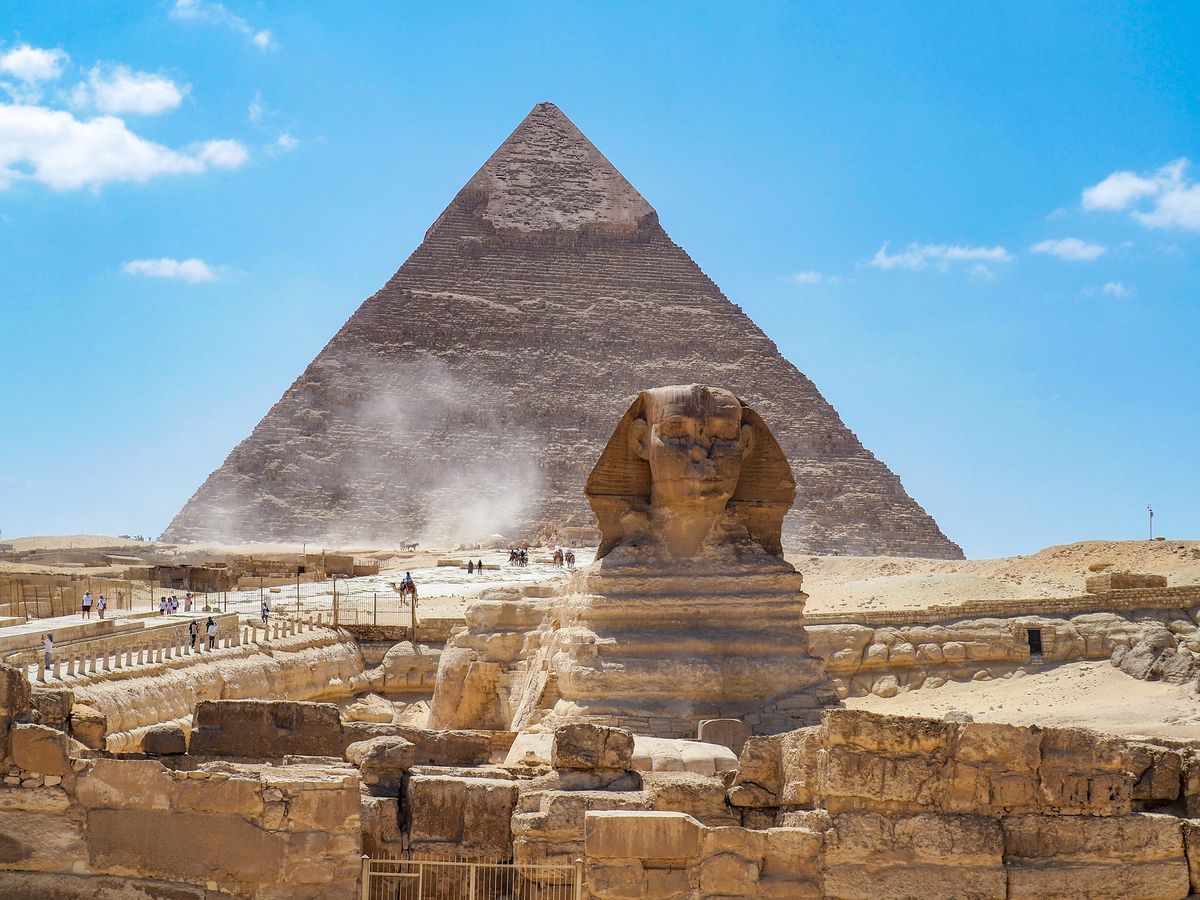
A third anime season of Dandadan is set to air in 2027. The series draws on aliens, on urban legends actually told in Japan, and on world-famous UMA, the Japanese term for cryptids.
Po, the magazine that protagonist Ken Takakura (better known as Okarun) reads religiously, is a fictional occult publication that runs stories on urban legends and cryptids like these. And it turns out it was modeled on a real magazine.
This article introduces Po as it appears in the series, and Mu, the famous occult magazine it is based on.
What is Po, Okarun’s Favorite Magazine?
Okarun is an occult obsessive of the highest order. By volume one of the manga, or episode one of the anime, he is already a devoted Po reader.
In the scene where he lectures his classmate Momo about aliens in that unstoppable rapid-fire otaku delivery, he has the magazine right there with him.
It Even Placed in the First Character Poll
Monthly Po showed up in the results of the first character popularity poll held on Shueisha's official site. Reader polls for Jump titles usually let people write in whatever they like, and votes for the author, or for some obscure object from the series, are part of the trope.
Po was up against entries like curry rice, and finished 153rd.
The Real Occult Magazine Behind Po: Monthly Mu
The model for PO is Monthly Mu, an occult magazine first published in 1979. It was launched by a company then called Gakushu Kenkyusha, and One Publishing publishes it today.
The title comes from Mu, the lost continent said to have sunk beneath the Pacific. Its tagline calls it the “Super Mystery Magazine that takes on the world's riddles and wonders”. Takeharu Mikami, the current editor in chief, became the fifth person to hold the post in 2005, and 2025 marked his twentieth year in the job.
Devoted readers even have a nickname the editorial team has approved: Mū-min, which calls to mind a certain much-loved character.
The Main Themes Mu Covers
The publisher lists its main subjects as ancient civilizations, UFOs, self-development, psychic powers, the supernatural, cutting-edge scientific theory, religion, and more.
In other words, every mystery and wonder the world has to offer. Below are a few of the topics that overlap most with Dandadan.
Paranormal Phenomena and UMA
Ghosts, UFOs, and UMA are Mu's signature genres. This is also where the overlap with Dandadan is largest.
Urban Legends
Turbo Granny & Kashima Reiko. Plenty of the entities in Dandadan grew out of urban legends that people in Japan have actually told for years.
As a specialist magazine, Mu has covered stories like these for many years. These are the articles Okarun would happily read through.
Cutting-Edge Science
Less obviously, the latest scientific theory is on Mu's list too. The August 2026 issue led with a feature on consciousness field theory and the mysteries of the Akashic records.
Science that looks a little questionable gets covered all the same, and that is the Mu way. As Mikami has put it, people say something is scientific, but it pays to ask which era's science they mean (To-o Nippo, August 2025).
Ancient History
Ancient civilizations have been a staple since the first issue. The magazine takes its name from the continent of Mu, after all.
The September 2026 issue runs a special feature on the legend that Saigo Takamori never died. In Mu's hands, even a historical figure straight out of the textbooks becomes material for a mystery.
Why Mu Is So Well Loved
More than forty-five years after the first issue, why do readers still stay with a shady occult magazine?
In his own book, Mikami writes that when he introduces Mu he calls it the most suspicious magazine in Japan. For Mu, suspicious is not an insult but a compliment. Even the editor in chief says he does not believe everything Mu prints (J-CAST, 2022).
Call it a grown-up pastime, taking the occult seriously and head on, for the fun of it.
Once you consider how many wonderfully strange people love films about sharks flying through the air or evolving on the moon, Mu's readership makes perfect sense.
The Official Dandadan Collaborations
Anyone looking in from outside can see that Po is based on Mu, and Dandadan and Mu have officially collaborated before.
The Collaboration Booklet
The first was in March 2023. To mark the release of volume nine, participating bookstores nationwide handed out a free collaboration booklet in which the Mu editorial team seriously analyzed eight of the series' entities.
The booklet works through Turbo Granny and the Serpo aliens from the series as Mu sees them, and it even includes a conversation between the manga's creator, Yukinobu Tatsu, and Mikami.
The Web Column: Dandadan Theory Files
It was not a one-off. In the summer of 2025, web Mu started a column called Dandadan Theory Files, updated every Thursday, and eleven pieces went up in all.
The pieces explain the series' entities, Turbo Granny and Acrobatic Silky among them.
We can't claim anything like Mu's authority, but Japaniche has covered the original Turbo Granny urban legend too, if you'd like to take a look.

The POP UP SHOP
In 2026, a POP UP SHOP tied to the anime toured Shibuya, Nagoya, and Osaka from January to March. Then in April, the fifth-anniversary site for Dandadan on Shonen Jump+ carried a comment submitted under the Monthly Mu name.
“We hear there is a magazine called Po that looks awfully familiar. An occult magazine in a world with town-wide paranormal incidents and interstellar warfare looks like it would never run short of material. We are envious.
It seems they’ve maintained a healthy relationship, which is nice to see.
With a third season ahead, another POP UP SHOP looks like a fair bet.
Where Can You Read Mu?
There are three main routes: the print magazine, the digital edition, and the free web Mu.
Bookstores in Japan
Starting with the classic route. Mu sits on the shelves at bookstores and convenience stores nationwide.
If you live in Japan, you can pick one up today. If you live abroad, look for a bookstore or a convenience store while you are traveling here.
To get a hold of an issue after you fly home, or to hunt down a back number, there are online stores such as Amazon.co.jp, along with forwarding and proxy-buying services aimed at overseas customers. The issue will most likely arrive without its extras. Whether it can be shipped at all depends on the country you are in, so do check before you order.
Digital Editions
The digital edition is available straight away, even where the paper copy is out of reach. You can buy it on Kindle and BOOK☆WALKER, among other stores.
One thing to watch for: the print and digital editions sometimes differ slightly in content. The product page normally spells out which articles are left out, so check it if there is a specific piece you want.
And naturally, the extra content do not come with it. The September 2026 issue, for one, arrived with a Sheet of Purifying Light and a separate booklet, a pocket encyclopedia of otherworlds in Japan and abroad. If those slightly shady items are what you are after, buy the paper edition at a bookstore or a convenience store.
web Mu
web Mu is the online edition. News and columns on the paranormal are free to read there, and the Dandadan Theory Files column mentioned above is collected on the site as well.
Look into web Mū-min Hiroba, the reader submission corner, and you will find strange experiences from Mu readers lined up one after another. Browser translation is easy to use on the web, so you can get a feel for Mu from outside Japan without much effort.
Places Connected to Mu
You can also go and stand in the world of Mu yourself.
If you read Japanese, the collaboration book with Chikyū no Arukikata, a fixture among Japanese travel guides, may come in handy.
Chikyū no Arukikata Mu JAPAN: Walking a Land of Mysteries covers strange spots all over the country from both publications' points of view. It runs from Jōmon-period sites and kofun burial mounds to UFOs, yokai, and oni.
UFO Fureaikan (Fukushima City, Fukushima)
Start in Iino, a district of Fukushima City in Fukushima Prefecture. The city runs a UFO-themed facility there, the UFO Fureaikan. In 2021 the International UFO Laboratory opened inside it, with Mikami himself as its first director. Since November 2024 a Mu logo installation has been on permanent display here too. It was once used at Hanayashiki, the amusement park in Asakusa, Tokyo.
It is open 9:00 a.m. to 5:00 p.m., closed on Mondays and over the year-end and New Year holidays. General admission is 400 yen, and 200 yen for elementary and junior high school students.
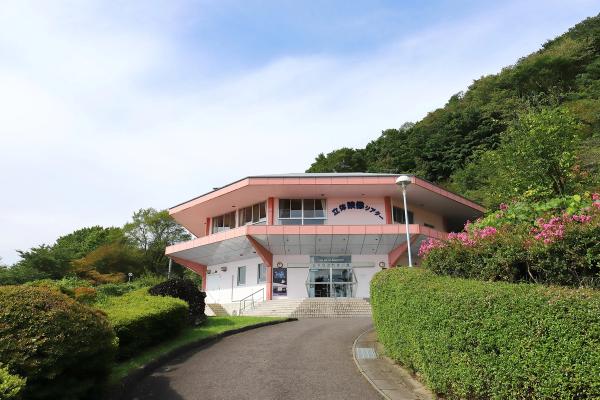
Cosmo Isle Hakui (Hakui City, Ishikawa)
If you can get as far as Hakui City in Ishikawa Prefecture, Cosmo Isle Hakui belongs on the list as well. It is the city's space science museum, showing genuine artifacts from NASA and the former Soviet Union, and it has run projects with Mu on a number of occasions. Happily, Ishikawa Prefecture's official English tourism site says many of the displays carry English labels.
It is open 8:30 a.m. to 5:00 p.m., with last entry at 4:30 p.m. It closes on Tuesdays, and admission starts at 500 yen for adults.

Shingo Village Mystery Camp (Shingo, Aomori)
If events are more your thing, there is the Mystery Camp held every year in Shingo Village, Aomori Prefecture. The village and Mu run it together, and the 2026 edition takes place on September 12 at Maginotai Green Park.
An itako medium room, an alien costume contest, the 2026 Occult Mystery Certification Exam, and a UFO ondo dance around the campfire. Just reading the lineup is enough to fill you up. Editor-in-chief Mikami will be speaking too.
Tickets are on sale through Lawson Ticket, though the information is in Japanese only and you'll need a Japanese phone number and payment method to buy them. That's a high bar to clear, but the village is also home to a spot known as the Grave of Christ and the Christ Legend Museum, so you can still make a Mu-like trip on non-camp days.
The Christ Village Tradition Museum is open 9:00 a.m. to 5:00 p.m., closed on Wednesdays and through the winter. Admission is 500 yen for high school students and up, and 300 yen for elementary and junior high school students.
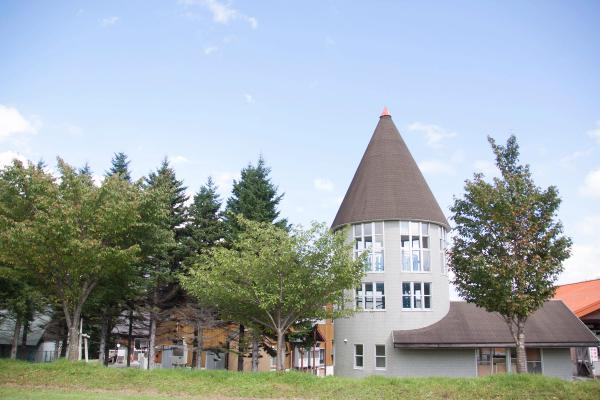
In Japan, a story nobody can explain, or a subject Mu would obviously take up, is sometimes called mū-teki, Mu-like. Mikami has said that regional folktales, myths, traditions, and legends have a natural affinity with the Mu-like world (To-o Nippo, August 2025). Shingo sits right in the middle of it.

Summary
Okarun's favorite magazine turns out to have a real-life model. And an officially blessed one at that: the actual publisher put out a collaboration booklet and even played up how envious they were of Po.
Next time you are in Japan, stop at the magazine rack in a bookstore and take a look.
We have a separate article on where the entities in Dandadan come from.

FAQ
Published Last Updated
Related Articles
Explore more articles on similar topics and deepen your knowledge of Japan.


Related Titles
Everything we have on this title: real life locations, stories, and where to get it.