The Edo Tale That Inspired Naruto's Sannin: The Tale of Jiraiya the Gallant Explained
The names Jiraiya, Tsunade, and Orochimaru all appear in an Edo-period story called Jiraiya Gōketsu Monogatari. We take a look at what the original three share with Naruto's Sannin and where they differ, the toad, slug, and snake standoff, the kabuki stage, and the English translation published in 2025.
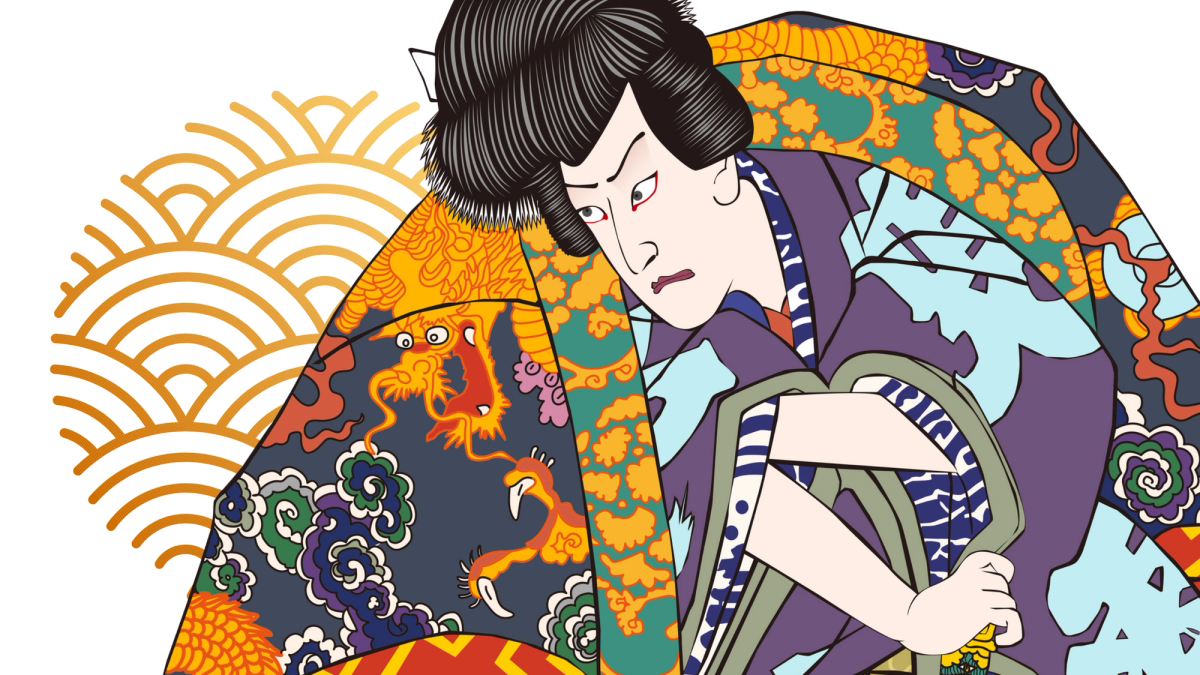
Jiraiya, Tsunade, and Orochimaru. The three ninja known as the Sannin in Naruto took inspiration from a story more than 180 years old.
Right down to the lineup: a man who works toad sorcery, a woman who works slug sorcery, and an enemy who works snake sorcery.
That story is The Tale of Jiraiya the Gallant (Jiraiya Gōketsu Monogatari / 児雷也豪傑譚), popular fiction that Japanese readers loved more than 180 years ago. It later became a kabuki play, and then Japan's first film to use special effects.
Better still, an English translation came out in 2025, and we will take a look at that at the end of this article.
The Tale of Jiraiya the Gallant, the Story Behind Naruto's Jiraiya
Publication of Jiraiya Gōketsu Monogatari began in 1839. It is a gōkan (illustrated popular fiction from late Edo) in which a bandit named Jiraiya (児雷也) commands toad sorcery, marries Tsunade, who uses slug magic, and battles Orochimaru, who wields snake sorcery.
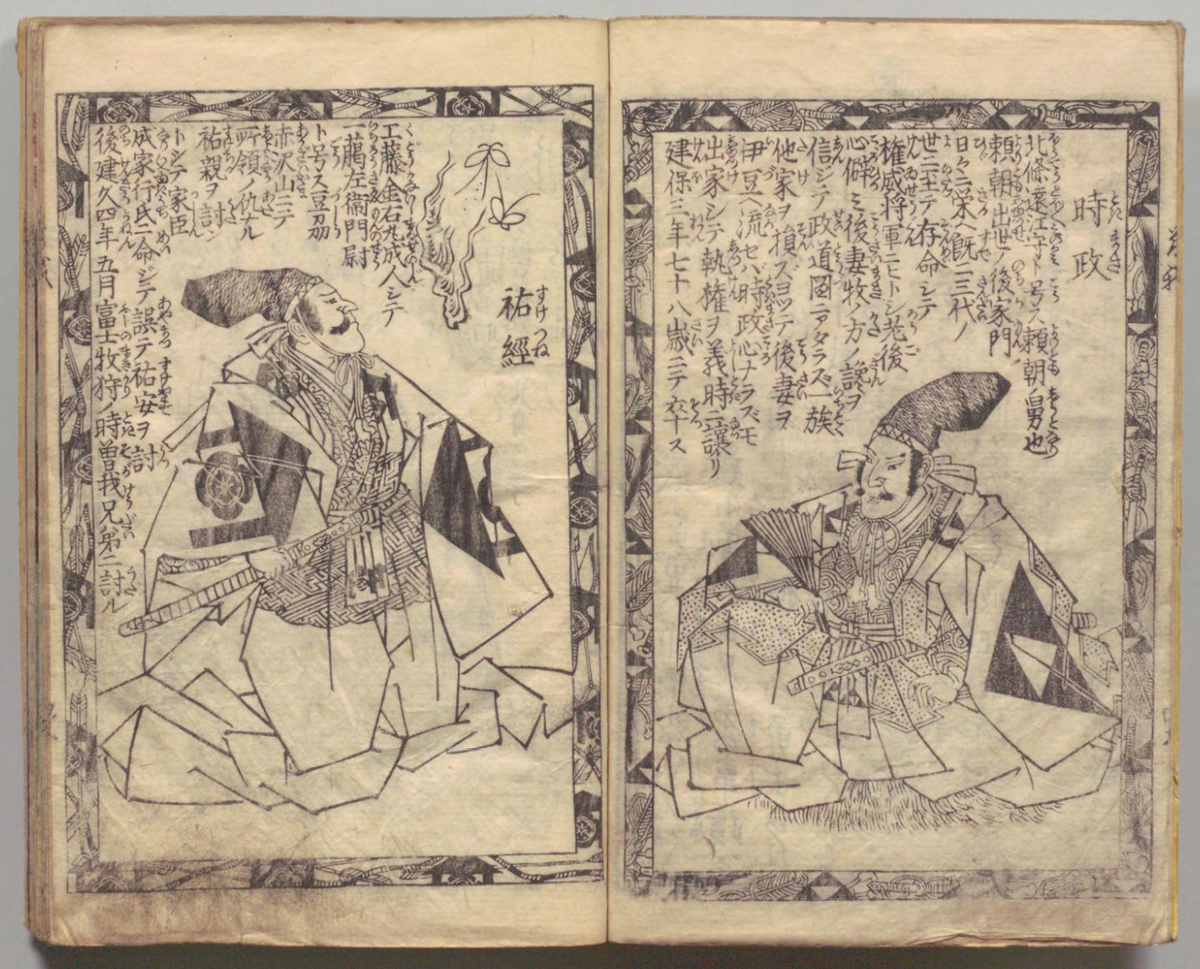
Publication continued until 1868, the year the long-standing Edo shogunate fell and the age of the samurai ended. Forty-three parts were produced and sequels kept appearing for close to thirty years, yet the story never reached an ending. By all accounts it is famous as a great unfinished work.
And it did not have a single author. Mizugaki Egao started it, then Keisai Eisen, Ryūkatei Tanekazu, and Ryūsuitei Tanekiyo took it over in turn, four writers in all.
A modern comparison may help: think of a hit film series like Star Wars or Jurassic Park, handed from creator to creator and numbered as it goes.
Seven ukiyo-e artists handled the illustrations. The best known is Utagawa Kunisada, who produced more than 10,000 works in his lifetime and is held to be the most prolific ukiyo-e artist of all. Utagawa Kuniyoshi, whose giant-skeleton print and other works hang in museums outside Japan, is among the seven as well.
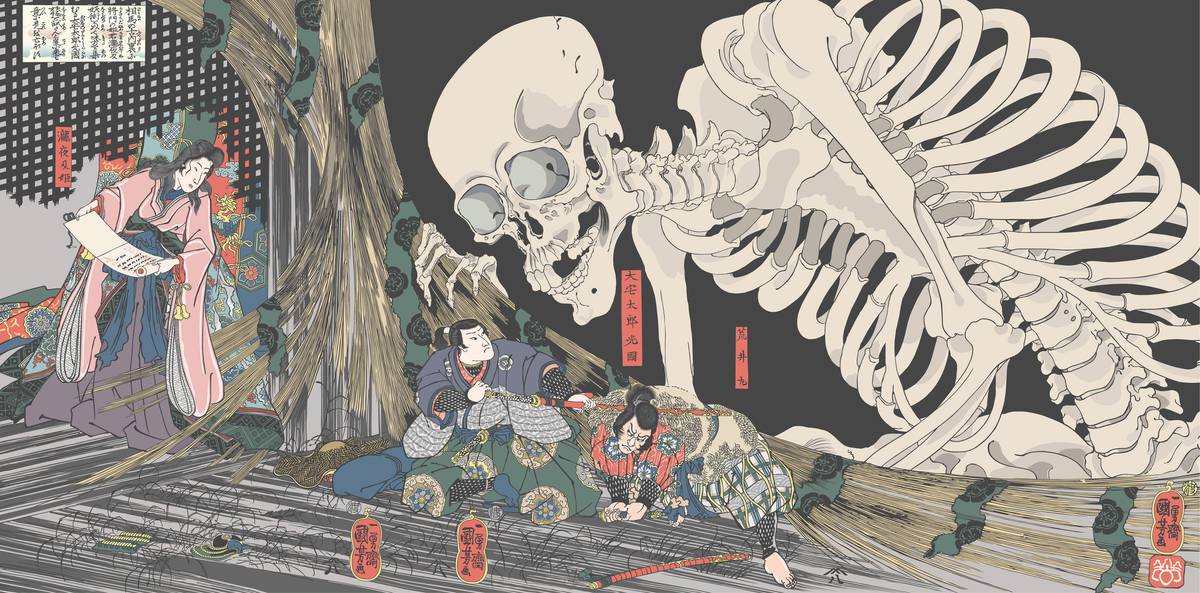
Utagawa Kuniyoshi's best-known print, Sōma no Furudairi
The artists named here are top-rank artists whose names are still known in Japan today.
The Title Appears in Jiraiya's Death Scene
Inside the series, the title of that old book is picked up again.
Volume 42 of the manga carries the famous scene of Jiraiya's final moments. There he calls his own life Jiraiya Gōketsu Monogatari (自来也豪傑物語).
In the anime Naruto Shippuden, the title of that episode is the same phrase, Jiraiya Gōketsu Monogatari. In English it was released as The Tale of Jiraiya the Gallant. The sense of loss runs deep, but the scene is also one that fans hold in the highest regard, in the manga and in the anime alike.
From here we compare the original and the series on the points they have in common.
The Sannin and the Original Three: What's the Same, What's Different?
The names, the creature behind each character, and the pattern of receiving magic from a mountain sage. These three carry across from the original to the series. What differs a little is Jiraiya's social standing and his relationship with Tsunade.
Jiraiya, the Noble Bandit Who Rides a Toad
The Jiraiya of the original is a noble bandit who steals only from the wicked. He works his sorcery from the back of a giant toad.
He was born into a samurai house, and his real name is Ogata Shūma Hiroyuki. The Ogata were a powerful provincial clan until a rebellion destroyed them, and with a retainer's help he grew up in Shinano, today's Nagano Prefecture.
The character 雷, meaning thunder, sits in his name because he catches a raijū in the story and comes to be called Raitarō. A raijū was a beast that people believed fell out of the sky with a lightning strike.
Receiving Toad Sorcery from a Mountain Sage
Later he receives toad sorcery from Senso Dōjin (仙素道人), a sennin of Mount Myōkō (妙香山). A sennin is told to be someone who withdraws into the mountains and gains the art of never aging, and in Japanese stories he plays the master.
Edo-period illustrations show a man standing on the back of a huge toad, framed as the disciple who has taken on the toad arts from his master.
Senso Dōjin
At his first appearance, Naruto's Jiraiya announces himself as the toad spirit of Mount Myoboku, Senso Dōjin (仙素道人). He adds that people call him the Toad Sage. Senso Dōjin is the name of the sage who taught the Jiraiya of the original story. The official Naruto site has taken up this overlap in a reported feature.
The mountain where Senso Dōjin lives in the original is Mount Myōkō (妙香山). The mountain where the toads live in Naruto is Mount Myoboku (妙木山), one character apart: 香 for incense, 木 for tree.
Tsunade, Who Works Slug Magic
The Tsunade of the original receives her sorcery from a slug sage. The sage lives at the foot of the sacred mountain Tateyama, around what is now Toyama Prefecture.
In Naruto, Jiraiya carries feelings for Tsunade, but she already has someone she holds dear. In the original, however, the two are united and Tsunade becomes his wife.
And both Tsunades share the same setup: a beauty with monstrous strength.
Orochimaru, Born of a Giant Serpent
Orochimaru is a sorcerer born of a giant serpent that lived in a pond. He makes his name as a villainous bandit and stands in Jiraiya's way as his sworn enemy.
Orochi (大蛇) means a giant serpent. He is born from a serpent, and he carries a serpent in his name.
Naruto's Orochimaru matches him here too, summoning the snake Manda, leaving the village behind, and becoming the enemy of the other two Sannin.
What Is the Frog, Snake, and Slug Standoff? The Link to Rock Paper Scissors
Old Japanese lore held that the snake eats the frog, the frog eats the slug, and the slug dissolves the snake. A setup in which each side beats one rival and loses to another is common in games too, and Japanese has a word for it: sansukumi.
It has the same format as the rock-paper-scissors games played around the world, and behind it lies mushiken, an old hand game close to the janken (rock-paper-scissors) of modern Japan.
Jiraiya Gōketsu Monogatari maps that pattern onto the relationship between its three sorcerers, and in the Naruto anime the episode where the Sannin face off alongside their summons is titled Sansukumi no Tatakai, released in English as "Deadlock! Sannin Showdown!"
Where Does the Name Jiraiya in Naruto Come From?
The name Jiraiya has its root in a Chinese bandit. In Xieshi (諧史), a collection of tales compiled by Shen Chu of the Southern Song, a thief appears under the name 我来也, Wo Laiye. The characters mean "I have come," and he would write them on the wall of the place he had just broken into, which took some nerve.
Then in 1806 it was remade in Japan as Jiraiya Monogatari (自来也説話). It is a yomihon by an author called Kanwatei Onitake, and the writing changed to 自来也, which carries the sense of coming of one's own accord. Naruto spells its character's name with those same characters.
Then in 1839, in Jiraiya Gōketsu Monogatari, the sound stayed the same while the characters became 児雷也. They read as child of thunder, a spelling with real charm to it.
Jiraiya Became a Kabuki Play and Japan's First Special-Effects Film
In July 1852 the story became kabuki, Japan's traditional theater, staged at the Kawarazaki-za in Edo. The playwright Kawatake Mokuami wrote the adaptation. Ichikawa Danjūrō VIII played Jiraiya.
Then in 1921 it became a film shot by Makino Shōzō, Gōketsu Jiraiya, and this is regarded as the first special-effects film made in Japan.
Japan is known for Godzilla and Ultraman, and the film that opened that tokusatsu tradition was this Jiraiya.
Can The Tale of Jiraiya the Gallant Read in English?
An English translation of Jiraiya Gōketsu Monogatari came out in April 2025, under the title The Tale of Jiraiya the Gallant. The translator is Andreas Kronborg Danielsen. Volume II is out as well, and the book was a nominee in the translation category at the 2025 American Manga Awards.
That title, incidentally, is the same as the official English subtitle of Naruto Shippuden episode 133.
English Readers Have an Easier Time Than Japanese Readers
The original itself, an Edo gōkan, is in fact a tall order for a Japanese reader. It is written in kuzushiji, a cursive script rarely seen today, and a big part of the reason is that you cannot decipher it without specialist training.
The Japanese edition written in modern characters costs a steep 63,800 yen, a price that puts it outside a casual purchase. Keeping the cost down means a library, in person or through an online viewing request.
Next to that, the English translation comes at a very reasonable price and can simply be enjoyed, and I envy English readers for that.
Wrapping Up: The Kabuki Connection
The character design of Naruto's Jiraiya calls kabuki to mind. The costume and headgear, of course, and the pose he strikes as he announces himself, and there is the kumadori-style makeup that comes with his jutsu. Having touches like these scattered through the design is very iki, a Japanese word for understated style.
Naruto, with kabuki running that close to it, was itself staged as Shinsaku Kabuki, a modern form of kabuki that brings in contemporary expression. We cover that production in our article on Shinsaku Kabuki, so please take a look.
FAQ
Published Last Updated
Related Articles
Explore more articles on similar topics and deepen your knowledge of Japan.



Related Titles
Everything we have on this title: real life locations, stories, and where to get it.