Nagano
長野県
Start here
What to know about Nagano
Cradled by the Japanese Alps, Nagano Prefecture is one of Japan's premier mountain destinations. Host of the 1998 Winter Olympics, the region draws visitors year-round with alpine scenery, historic temples, hot springs, and a food culture shaped by its highland climate.
Kamikōchi
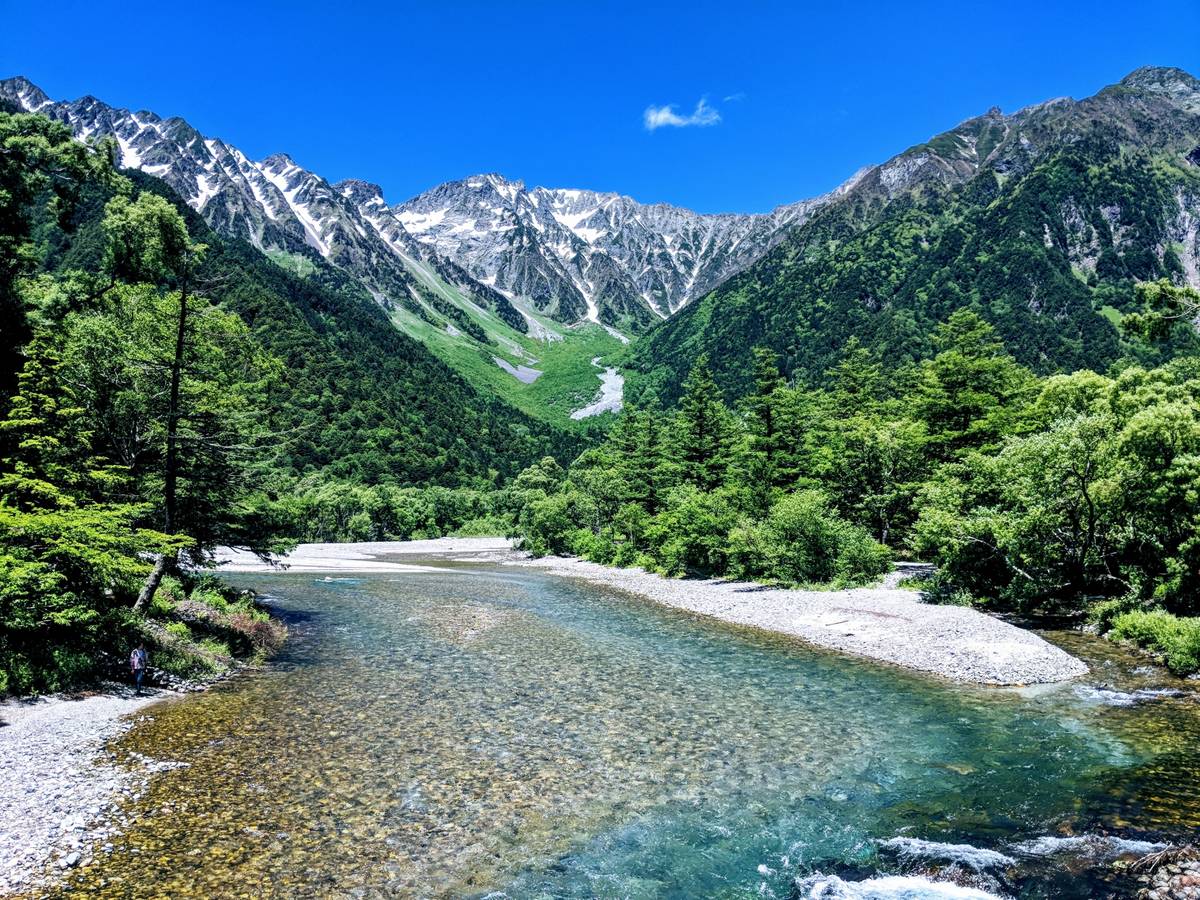
Sitting at an elevation of roughly 1,500 meters in the heart of the Northern Alps, Kamikōchi is one of Japan's most celebrated mountain landscapes. The crystalline Azusa River runs through the valley floor, framed by the towering peaks of Mt. Hotaka and Mt. Yari. The area is accessible only from mid-April through mid-November, and private vehicles are prohibited to preserve the pristine environment.
The walking trail from Taishō Pond through Kappa Bridge to Myōjin Pond follows mostly flat terrain, making it enjoyable even for casual hikers. Early-morning mist drifting across the valley and the autumn foliage reflected in the marshlands are among the scenes that draw visitors back season after season.
Zenkōji Temple
Standing in the heart of Nagano City, Zenkōji is a non-denominational temple welcoming followers of all Buddhist schools. Its history stretches back to the seventh century, and the hidden principal image enshrined here is said to be the oldest Buddhist statue brought to Japan. The approach to the temple is lined with shops and inns, preserving the atmosphere of a traditional pilgrimage town.
The main hall is designated a National Treasure, and beneath it lies the Kaidan Meguri, a pitch-dark passage where visitors feel along the walls to find a metal latch known as the Lock of Paradise. Touching it is believed to secure a bond with the Buddha. The Gokaicho ceremony, held once every seven years, when a replica of the hidden statue is publicly displayed, draws especially large crowds.
Matsumoto Castle
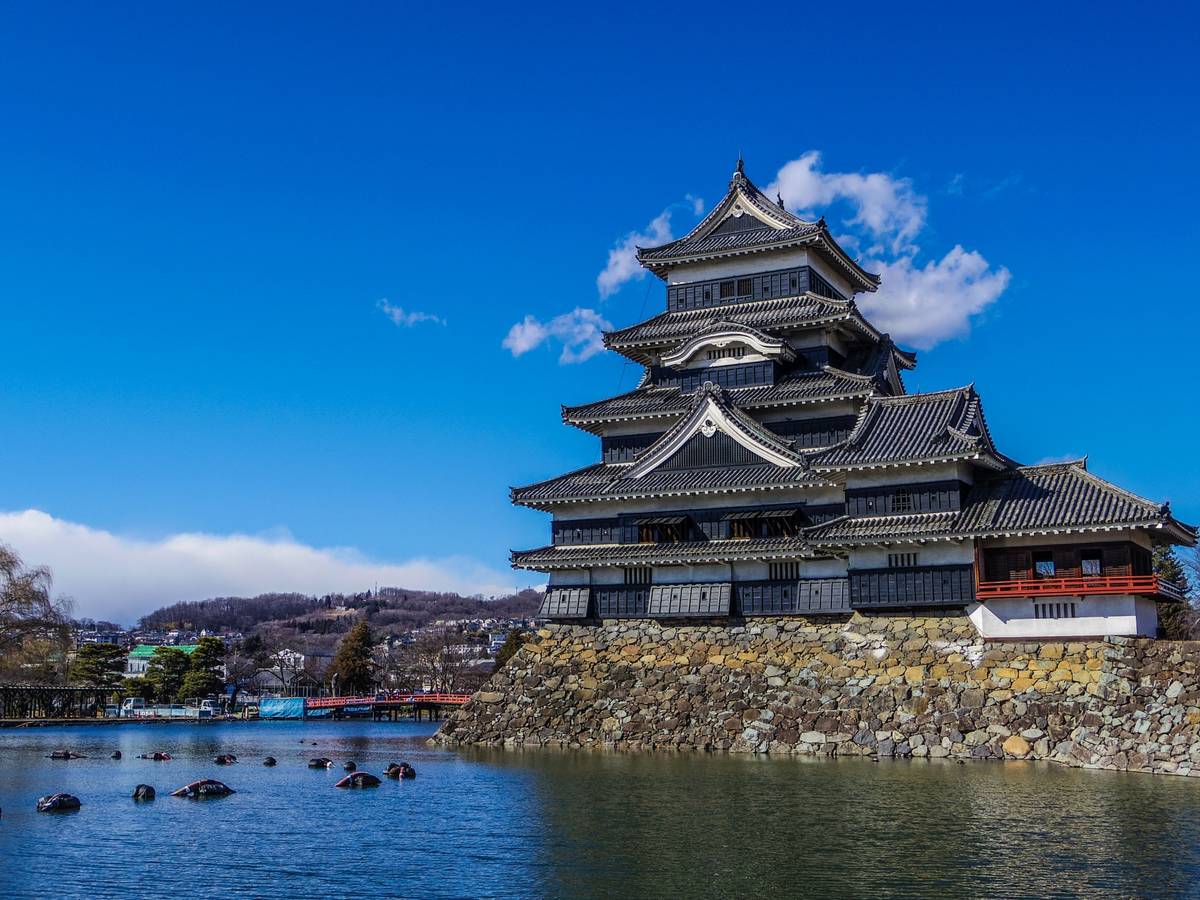
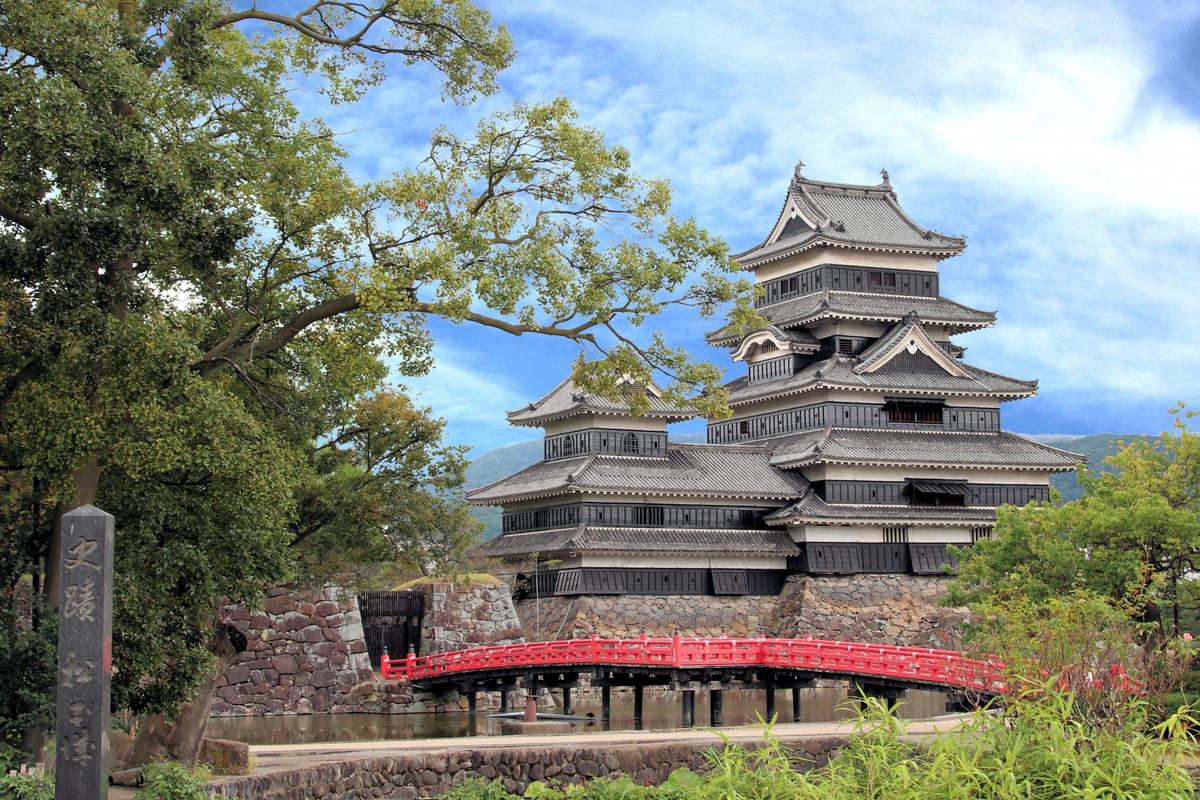
The symbol of Matsumoto City, Matsumoto Castle preserves a five-story, six-floor keep that ranks among Japan's oldest surviving castle towers. Its striking black walls have earned it the nickname Karasu-jō, or Crow Castle. Built on the flatlands rather than a hilltop, it is classified as a hirajiro, a plains castle, and its elegant silhouette reflected in the moat against the backdrop of the Northern Alps is one of Nagano's most iconic views.
Inside, visitors climb steep staircases through the keep's floors to reach the top-level observation deck, which commands a panoramic view of the city and surrounding mountains. The castle grounds are a popular spot for cherry blossoms in spring and the Taiko Matsuri drum festival in summer. Nakamachi Street, a short walk away, retains rows of white-walled storehouses that now house cafes and craft shops.
Jigokudani Monkey Park
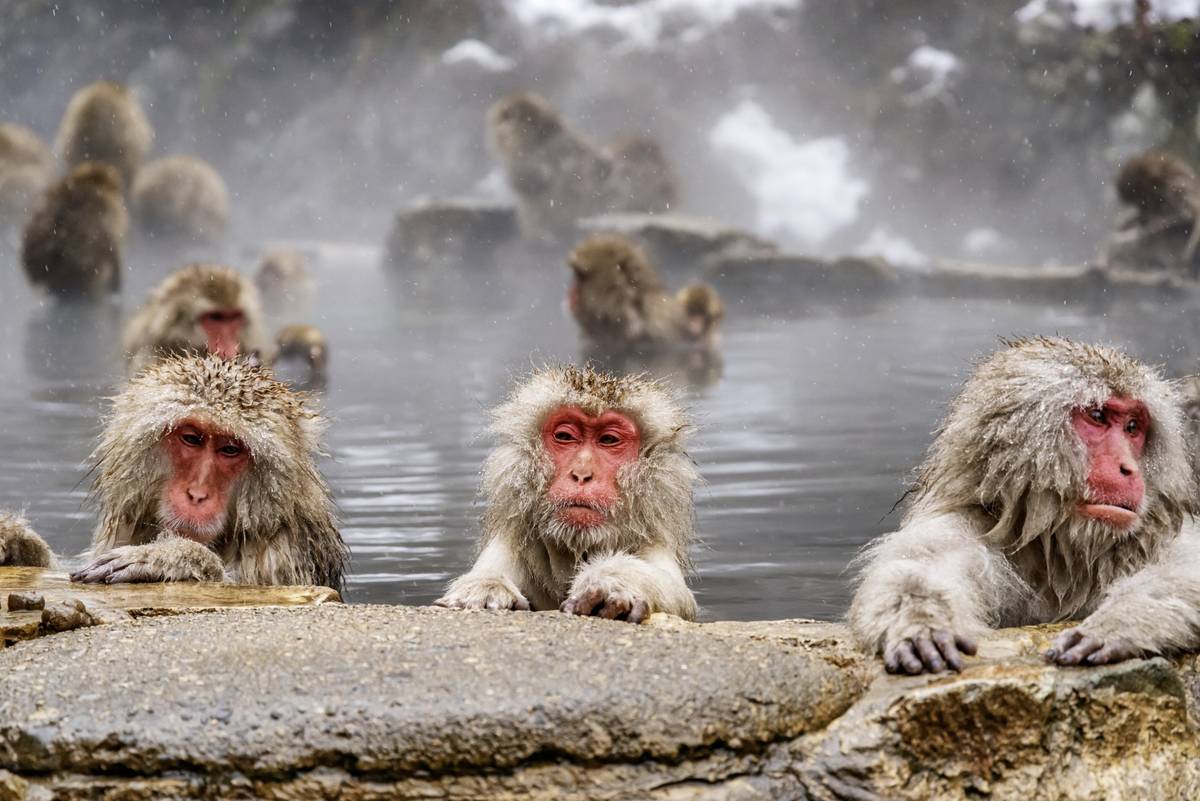
Located in the town of Yamanouchi, Jigokudani Monkey Park is one of the few places in the world where wild Japanese macaques can be observed bathing in natural hot springs. The park sits at around 850 meters above sea level in a steep valley where volcanic steam rises from the riverbed, a landscape that gave the area its name, Hell Valley.
The winter scene of monkeys bathing amid falling snow is the most iconic, but the park is open year-round. In spring and summer the animals can be seen grooming and nursing their young on the surrounding rocks. A roughly 30-minute walk along a forest trail leads from the parking area to the bathing pool, and the approach itself offers a chance to spot wildlife in a lush mountain setting.
Location
Where is Nagano?
Nagano Prefecture is a landlocked prefecture in the Chūbu region, situated near the center of Honshū. The prefectural capital is Nagano City, with a population of approximately 2.04 million as of the October 2020 national census. Ranking fourth in Japan by area, the prefecture is enclosed by three major mountain ranges: the Northern Alps (Hida Mountains), the Central Alps (Kiso Mountains), and the Southern Alps (Akaishi Mountains). Mountains account for roughly 80% of its land, with high-altitude basins and plateaus scattered throughout.
The climate is continental, with sharp temperature swings between summer and winter. Higher elevations stay cool even in summer, and Karuizawa and Kamikōchi have long served as highland retreats. Winter brings heavy snowfall, particularly in the north, where Shiga Kōgen and Hakuba host some of Japan's top ski resorts. Low humidity and abundant sunshine year-round create ideal conditions for growing highland vegetables and fruit.
Loading map...
Access
Getting to Nagano
Nagano has no airport, but excellent rail and highway bus connections make reaching the prefecture from the Tokyo area straightforward.
By rail, the Hokuriku Shinkansen links Tokyo Station to Nagano Station in as little as about 1 hour and 20 minutes. For Matsumoto, the Limited Express Azusa runs from Shinjuku Station on the JR Chūō Main Line in approximately 2 hours and 40 minutes. From Nagoya, the Limited Express Shinano takes about 3 hours to Nagano Station and about 2 hours to Matsumoto Station.
Highway buses also run frequently from Shinjuku, Tokyo Station, and Nagoya to the Nagano and Matsumoto areas, offering lower fares than rail. Seasonal direct buses serve mountain destinations such as Hakuba and Kamikōchi.
Getting around within the prefecture relies mainly on trains and local buses, though bus service in mountainous areas can be infrequent, so checking schedules in advance is recommended. Private vehicles are restricted from Kamikōchi; visitors transfer to shuttle buses at Sawando or Hirayu. The areas around Zenkōji and Matsumoto Castle are compact enough to explore on foot.
Heavy snowfall is common in the north and mountain areas during winter. Shuttle buses from Nagano Station and Hakuba Station provide convenient access to ski resorts. Roads can be icy, so allow extra time for winter travel.
Local pride
Specialty Products
Nagano's cool highland climate and wide day-night temperature swings make it one of Japan's leading producers of highland vegetables such as lettuce and celery. Fruit cultivation also thrives across the prefecture, with apples, grapes, and peaches grown in regions throughout.
As a landlocked prefecture with no coastline, Nagano developed a distinctive food culture centered on preserved and fermented foods. Soba noodles, miso, and pickles all have deep roots here. In recent years, wine-grape cultivation has expanded along the Chikuma River basin, and the number of wineries continues to grow. In traditional crafts, the legacy of mountain-sourced craftsmanship lives on through Kiso lacquerware and tsumugi silk textiles woven in communities across the prefecture.
Food
Crafts & Others
Through the ages
History of Nagano
Nagano Prefecture was historically known as Shinano Province and has served as an important waypoint along the Tōsandō route since ancient times. Zenkōji Temple is said to date back to the Asuka period (6th–7th century), and its distinctive practice of welcoming worshippers regardless of sect drew pilgrims from across the country. The saying "Even from afar, visit Zenkōji at least once" speaks to the depth of popular devotion the temple has inspired.
During the Sengoku period, Takeda Shingen of Kai Province and Uesugi Kenshin of Echigo Province clashed over control of northern Shinano. The Battles of Kawanakajima (1553–1564), fought five times, rank among the most celebrated rivalries in Japanese military history. Matsumoto Castle was built from the late Sengoku through the early Edo period; its five-story, six-floor keep is one of the oldest surviving in Japan. Under the Edo shogunate, the region was divided into several domains, including Matsumoto, Ueda, and Iida, each developing its own local culture.
During the Meiji-era abolition of domains, the region was briefly split into Nagano Prefecture in the north and Chikuma Prefecture in the south before being unified into the present Nagano Prefecture in 1876. The prefectural name comes from the town of Nagano (now Nagano City), where the prefectural government was established. The region prospered through the silk industry in the modern era, and in 1998, Nagano City hosted the Winter Olympics. The Games are also remembered for the "One School, One Country" program, in which local schools each adopted a participating nation, an initiative that earned international recognition.
Reading
Stories from Nagano
Articles, guides and travelogs about Nagano.

Continue exploring
Discover other areas and hidden gems across Chubu Region.