Toyama
富山県
Start here
What to know about Toyama
Where 3,000-meter peaks stand just a short distance from the deep waters of the sea, Toyama Prefecture is a place of extraordinary natural scale. A UNESCO World Heritage village of traditional farmhouses, a mountain route cutting through the heart of the Alps, and scenery found nowhere else in Japan await those who visit. With centuries-old festivals and living craft traditions, Toyama offers a depth of experience that rewards the curious traveler.
Tateyama Kurobe Alpine Route
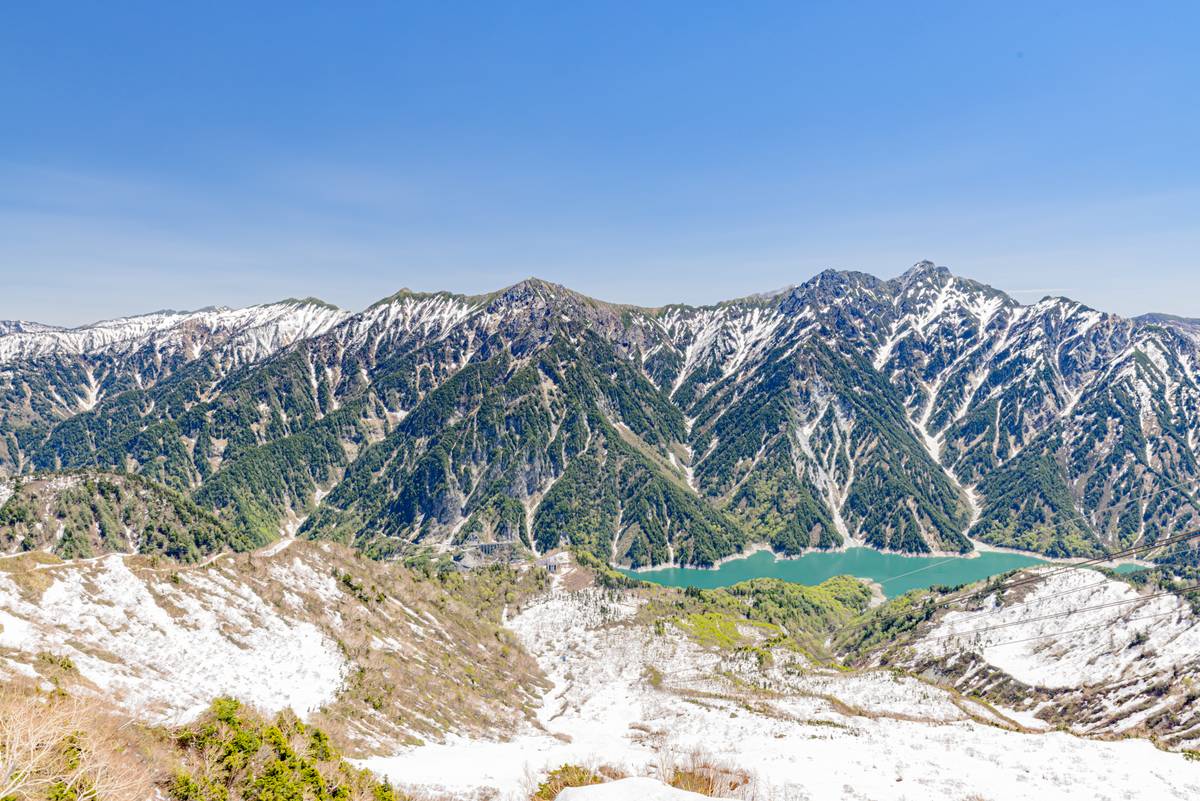
This 37.2-kilometer mountain sightseeing route cuts through the Northern Alps with an elevation change of 1,975 meters. Riders transfer between six different vehicles, including cable cars and ropeways, while taking in close-up views of peaks rising above 3,000 meters. The highest point along the route is Murodōdaira at 2,450 meters, where the famous Yuki no Ōtani, or Snow Wall, appears just after the route opens in April. Towering nearly 20 meters high, the walls of snow lining both sides of the road, carved out by snow-clearing crews, draw enormous crowds every year.
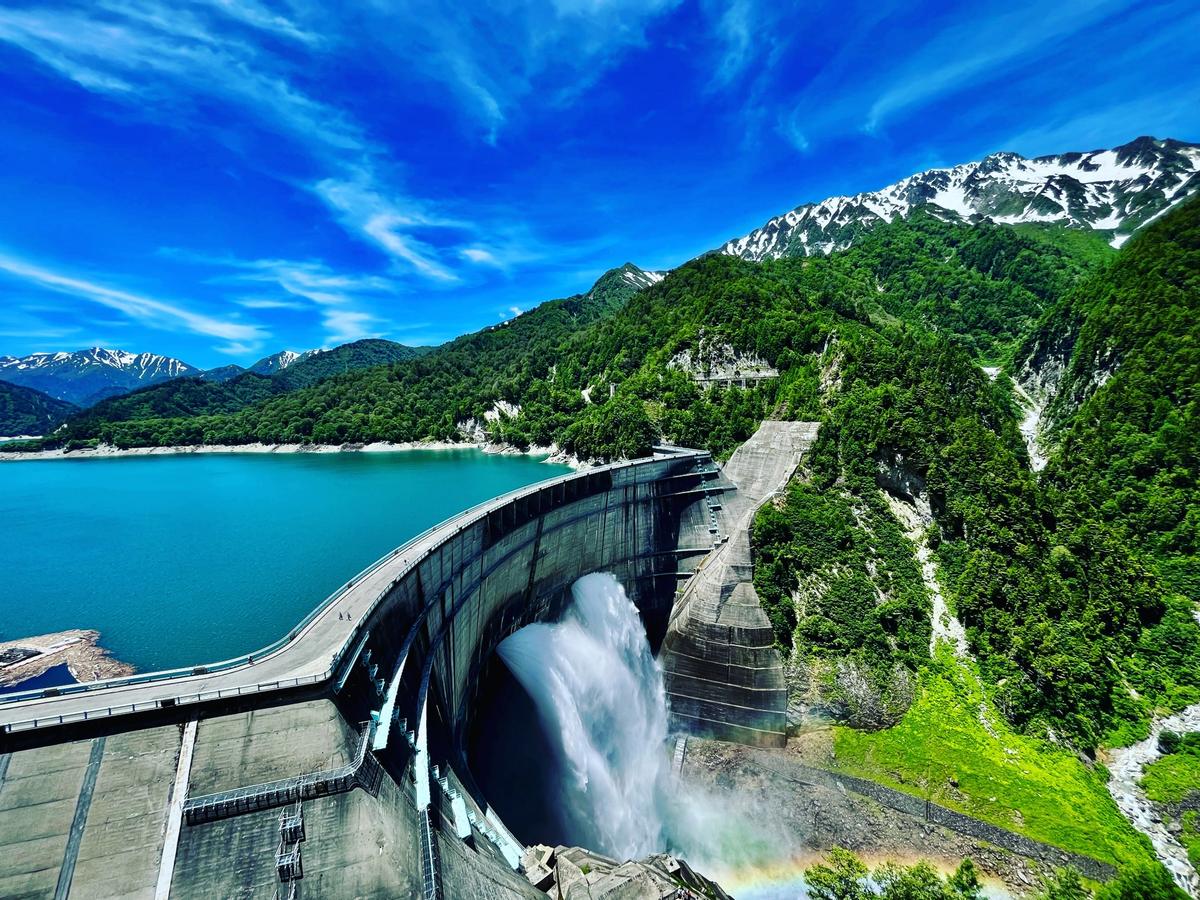
Kurobe Dam, located partway along the route, stands 186 meters tall, making it the highest dam in Japan. Between late June and mid-October, a spectacular tourist water discharge releases more than 10 tons of water per second with a thunderous roar, and rainbows frequently form in the spray. The route operates seasonally, typically from mid-April through the end of November.
Gokayama Gasshō-zukuri Villages
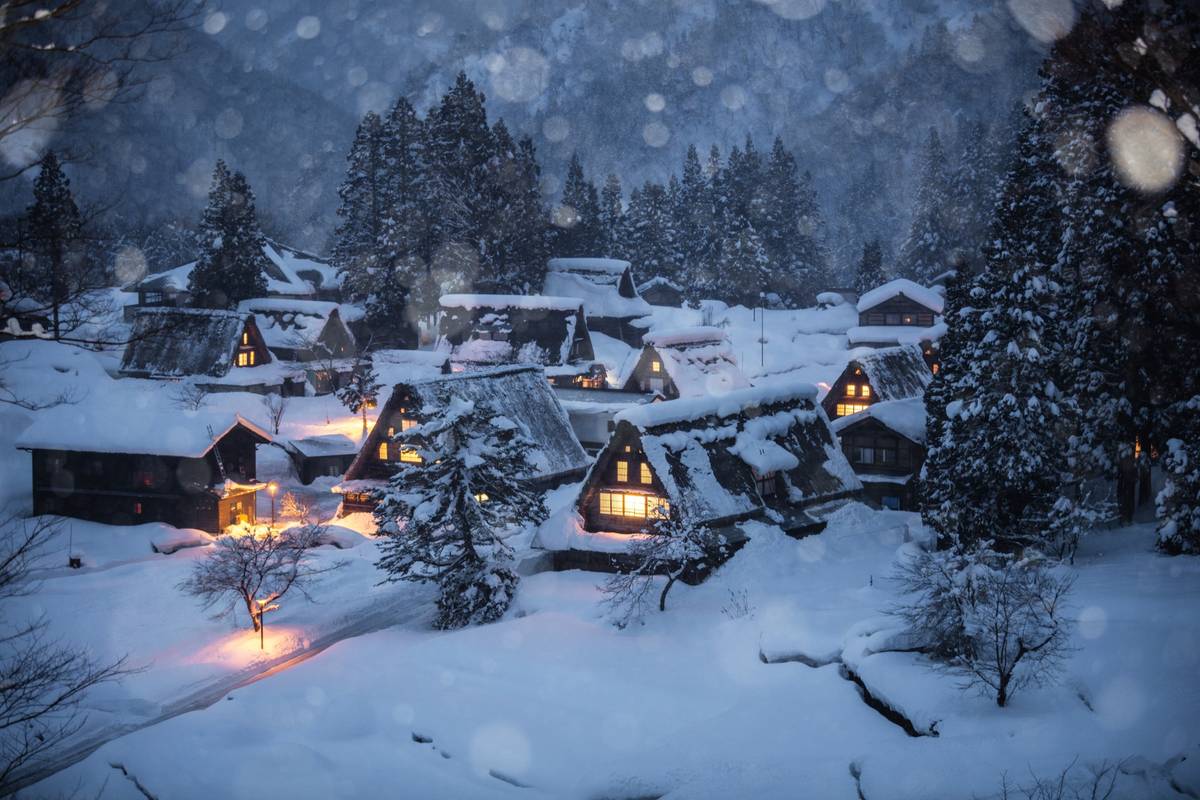
The Ainokura and Suganuma villages, nestled in the mountains of Nanto City, were inscribed as a UNESCO World Heritage Site in 1995. Gasshō-zukuri, meaning "built like hands in prayer," describes the steeply pitched thatched roofs designed to withstand heavy snowfall. Ainokura retains 20 gasshō-zukuri houses, and the fact that residents still live in them gives the village an authenticity that sets it apart.
In winter, special illumination events bathe the snow-covered thatched roofs in warm light, creating a scene of quiet beauty. Compared to the well-known Shirakawa-gō in neighboring Gifu Prefecture, Gokayama sees fewer visitors, allowing you to take in the atmosphere of these villages at a more peaceful pace.
Owara Kaze no Bon
Every year from September 1 through 3, the hillside town of Yatsuo in Toyama City hosts this traditional festival with over 300 years of history. Dancers wearing deep-brimmed woven hats move slowly through the streets to the melodies of the kokyū fiddle and shamisen, creating a mood unlike any other Japanese festival. Lanterns line the sloping streets, and as night deepens, so does the atmosphere. Around 200,000 people visit over the three days, yet the dancing itself is free of loud chanting or vigorous movement. What lingers instead is a quiet elegance that signals the arrival of autumn.
Takaoka's Casting Heritage and Artisan Streetscapes
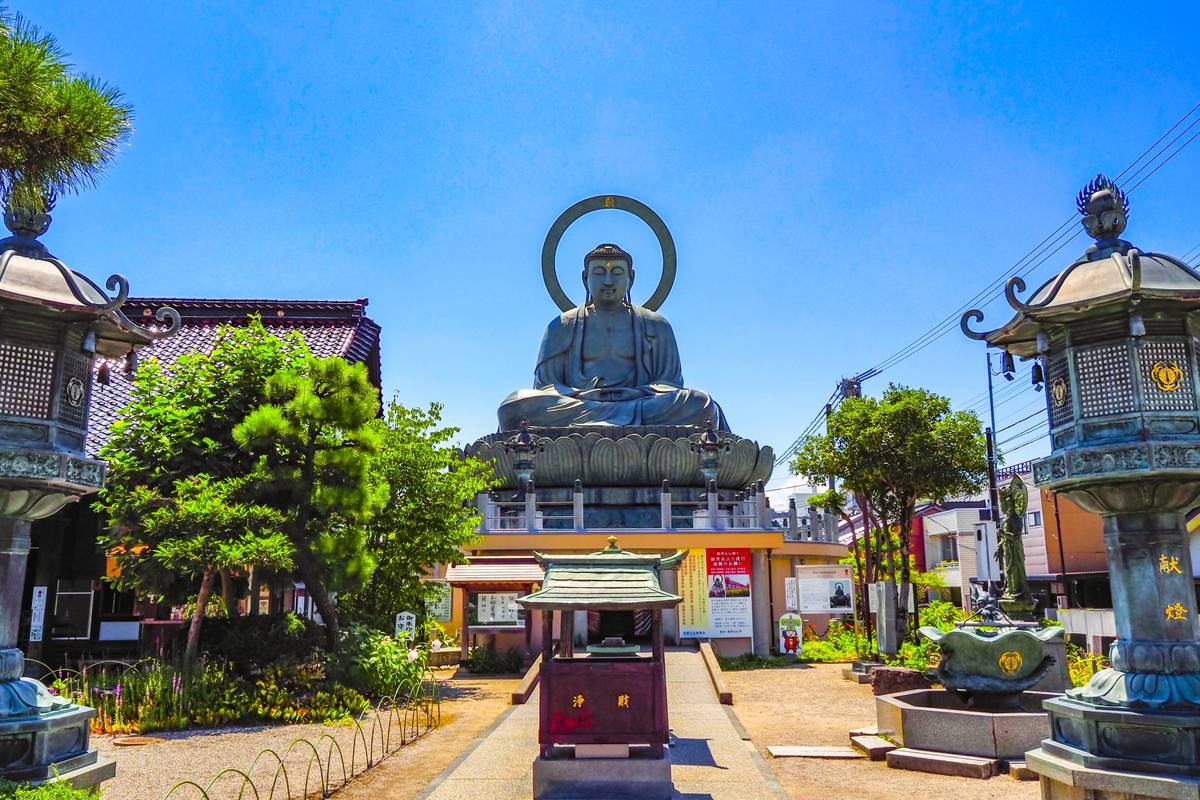
Takaoka has been a center of copperware production for over 400 years, and today the city accounts for more than 90 percent of Japan's output. Along the stone-paved streets of Kanayamachi, casting workshops stand side by side, and some facilities offer demonstrations of the craft. The Great Buddha of Takaoka, a bronze statue standing roughly 16 meters tall, was completed over a span of nearly 30 years by local copperware artisans. It is sometimes counted alongside the Great Buddhas of Nara and Kamakura as one of Japan's three great Buddhist statues.
A short walk from Kanayamachi brings you to Zuiryūji, a Zen temple designated as a National Treasure. Built as the family temple of Maeda Toshinaga, the second lord of the Kaga Domain, the complex is notable for the symmetrical alignment of its main gate, Buddha Hall, and Dharma Hall arranged in a single axis. It stands as a place to appreciate the architectural beauty of early Edo-period craftsmanship.
Location
Where is Toyama?
Toyama Prefecture sits along the Sea of Japan coast in the Hokuriku area of central Honshū. The prefectural capital is Toyama City, with a population of roughly one million as of October 2024. The prefecture covers approximately 4,248 square kilometers, ranking 33rd in size among Japan's 47 prefectures.
Toyama's geography is defined by the contrast between sea and mountains. To the north, Toyama Bay opens onto the Sea of Japan, while to the south the Tateyama Mountain Range rises to peaks above 3,000 meters. Between them stretches the fertile Toyama Plain, fed by abundant water from the surrounding highlands. Toyama Bay has an unusual structure where the seafloor drops steeply just offshore, creating conditions that draw a rich variety of fish and making it one of Japan's most productive fishing grounds.
The climate shows the classic characteristics of the Sea of Japan side. In winter, seasonal winds from the northwest bring heavy snowfall, and the mountainous interior ranks among the snowiest places in Japan. At Murodōdaira, situated at 2,450 meters above sea level, snow accumulation can exceed 20 meters. Summer, by contrast, tends toward heat and humidity as the foehn effect pushes temperatures up. The four seasons are sharply distinct here, and the prefecture transforms with each one, from tulip fields in spring to snow-covered landscapes in winter.
Loading map...
Access
Getting to Toyama
From Tokyo, the Hokuriku Shinkansen "Kagayaki" reaches Toyama Station in about two hours. Travelers coming from the Osaka area can take the limited express "Thunderbird" to Tsuruga Station, then transfer to the Hokuriku Shinkansen "Tsurugi" for a total journey of roughly two and a half hours. From Nagoya, the limited express "Hida" follows the Takayama Main Line northward over about three and a half hours, offering views of river gorges along the way.
For those traveling by air, flights from Haneda Airport to Toyama Kitokito Airport take about one hour. The airport is conveniently close to the city center, with local buses reaching Toyama Station in around 25 minutes.
Toyama Station serves as the hub of the prefecture's transit network, connecting the Ainokaze Toyama Railway, Toyama Chihō Railway, and the city's tram system. The tram is especially handy for getting around Toyama City, linking major spots from the station outward. To reach the Tateyama Kurobe Alpine Route, take the Toyama Chihō Railway to Tateyama Station. For the Gokayama area, the typical route combines the JR Jōhana Line with a connecting bus. Toyama is sometimes called the "kingdom of rail and tramways" for the density of its rail network, and many of the prefecture's main attractions are accessible by public transportation, which is a real convenience for visitors.
Winter brings heavy snowfall to the mountainous areas, and bus schedules may change or certain sightseeing routes may close during this period. The Tateyama Kurobe Alpine Route operates seasonally, typically from mid-April through the end of November, so it's worth checking dates before you go.
Local pride
Specialty Products
With Toyama Bay to the north and the Tateyama Mountain Range to the south, Toyama Prefecture has long enjoyed the bounty of both sea and mountains. The bay is so rich in marine life that it has earned the nickname "a natural fish tank," yielding around 500 species of fish and shellfish. Each season brings its own prized catch, from winter yellowtail fattened in the cold currents to translucent, delicate shrimp.
On the plains, snowmelt from the Tateyama range feeds thriving rice paddies, and the prefecture is well regarded as a producer of high-quality rice. The Tonami Plain is also one of Japan's leading producers of tulip bulbs, giving Toyama an identity that extends well beyond its rice-growing reputation. The prefecture's industrial roots run deep in other directions too. A pharmaceutical tradition dating back to the Edo period and metalworking expertise, particularly in copperware, have sustained Toyama's economy for centuries.
Food
Crafts & Others
Through the ages
History of Toyama
In ancient times, the area that is now Toyama Prefecture was known as Ecchū Province. The broader Hokuriku region originally formed a single territory called Koshi no Kuni, but by the late seventh century it had been divided into three provinces: Echizen, Ecchū, and Echigo. In 757, Noto Province was separated from Ecchū, leaving borders that roughly match today's prefectural boundaries. During the Nara period, the celebrated poet Ōtomo no Yakamochi was appointed governor of Ecchū, and he composed numerous poems inspired by the region's landscapes and daily life. His works, preserved in the Man'yōshū, remain a precious record of ancient Ecchū.
The Sengoku period saw fierce battles among warlords over Ecchū, with Sassa Narimasa ultimately bringing most of the province under his control. After his defeat at the hands of Toyotomi Hideyoshi, however, the territory passed to the Maeda clan. When the Edo period began, most of Ecchū fell under the domain of the Kaga clan, but in 1639 Maeda Toshitsugu established the Toyama Domain with an assessed yield of 100,000 koku and built Toyama Castle as its seat. Under the second lord, Masatoshi, the domain actively promoted the medicine trade, and "the medicine sellers of Ecchū Toyama" became known throughout Japan. Their distinctive business model, called sen'yō kōri, involved delivering medicines first and collecting payment later only for what was used. This practice has been handed down as a story that captures the spirit of trust and good faith central to Toyama's character.
When the Meiji government replaced feudal domains with prefectures in 1871, the former Toyama Domain briefly became Toyama Prefecture while the Kaga Domain's territory was folded into Kanazawa Prefecture. Soon after, all of Ecchū was absorbed into Ishikawa Prefecture. Local residents, unwilling to accept this arrangement, launched a movement for separation, and in 1883 Toyama Prefecture was reestablished. In the modern era, the prefecture leveraged its abundant water resources for hydroelectric power, which became a pillar of industry alongside pharmaceuticals. The plentiful water flowing from the Tateyama range also led to the construction of Kurobe Dam, generating electricity that helped fuel Japan's rapid postwar economic growth.
Reading
Stories from Toyama
Articles, guides and travelogs about Toyama.
Continue exploring
Discover other areas and hidden gems across Chubu Region.