Rakugo Classic 'Sanbō Ichiryō Zon' in Akane-banashi: Understanding the Story Behind Kyōji’s Performance
Kyōji performs the rakugo classic Sanbō Ichiryō Zon in Akane-banashi episode 4. We take a look at the story, its sage punchline, and how magistrate Ōoka Echizen settles a quarrel over three ryō.
Akane is officially accepted as Shiguma’s apprentice. After her senior apprentice Kyōji points out her shortcomings, she grows through training and practice. Seeing her progress, Kyōji takes the stage with Sanbō Ichiryō Zon, delivering a performance that demonstrates what it means to be both a senior member of the school and a futatsume (second-rank rakugo performer).
A Rakugo Classic Modeled on the Famous Magistrate Ōoka Echizen
Sanbō Ichiryō Zon is a classic rakugo piece. It belongs to the Ōoka seidan, a body of stories built around the magistrate Ōoka Tadasuke. Ōoka Tadasuke was a real person who served as a town magistrate (machi-bugyō) in Edo, today's Tokyo, and he was also known as Ōoka Echizen after his court title, Echizen-no-kami. A town magistrate held an office that combined what we would now split among a city hall, a court, the police, and the fire brigade. Acting on the shogun's orders, he governed the town of Edo and passed judgment whenever a crime or a quarrel broke out.
Ōoka Echizen was beloved by ordinary people as a warm-hearted, clever magistrate, and he became a favorite subject of rakugo, kōdan storytelling, and kabuki. His exploits have been retold again and again in television dramas and period pieces. That said, most of these stories are later inventions. There is no record that the rulings told in rakugo and kōdan ever actually took place.
The Plot of Sanbō Ichiryō Zon
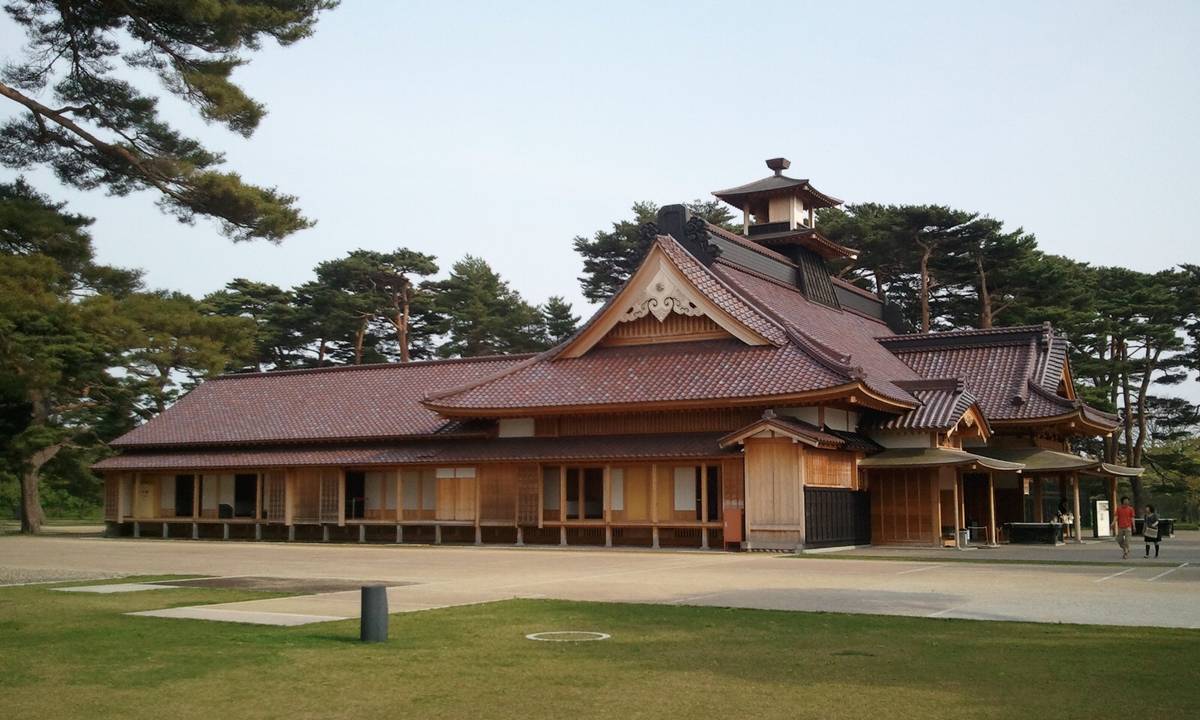
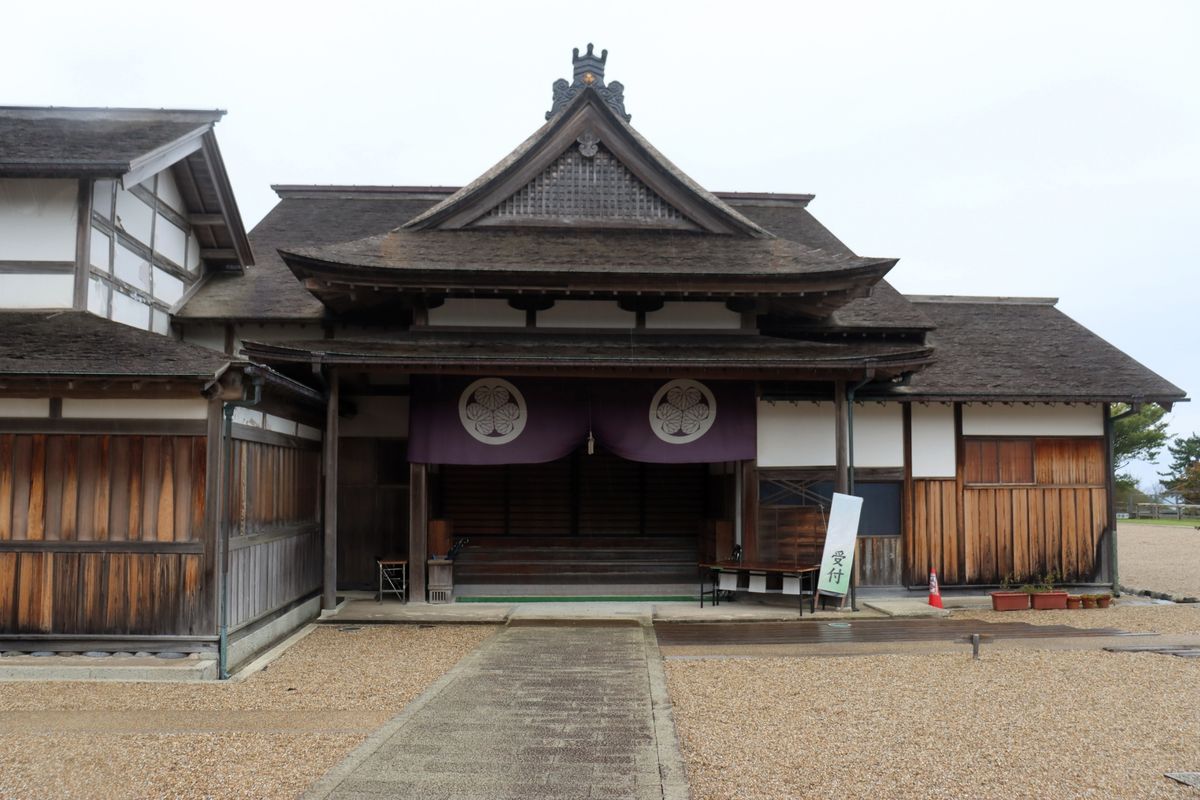
A town magistrate's office, where Edo's disputes were judged.
A Lost Wallet That Sparks Unexpected Trouble
The story begins when Kintarō, a plasterer who finishes the walls and floors of buildings, picks up a purse with three ryō (Edo’s currency) inside. He quickly works out that the owner is Kichigorō, a carpenter, and sets off to return the purse to him.
But Kichigorō, a stubborn man with the temperament of a true Edokko, a born-and-bred Edo native, says, "I'd already given that money up for lost, so I won't take it back. Keep it." Kintarō, every bit as much an Edokko himself, fires back that he did not bring the purse over to be paid for it. Neither will give an inch, and it blows up into a furious quarrel.
The reason they push such a large sum of money back and forth lies in the Edokko’s characteristics. People said an Edokko was proud and quick to fight, the sort who "never keeps a coin overnight." Free with money, short-tempered, and big-hearted. That is the Edokko. For Kichigorō, taking back money he had already written off would cost him his pride. And Kintarō would be mortified to be thought of as someone who returned the purse for a reward.
The Story Moves to the Magistrate's Office
The landlord of the nagaya where Kichigorō lives steps in to mediate, but neither man will back down at all. At a loss, the landlord asks the magistrate's office to rule on the matter.
The one who appears in the courtroom is the famous magistrate Ōoka Echizen. After hearing out both sides, the magistrate shows sympathy for each of them and is impressed by their honest, unselfish Edokko spirit. So he adds one ryō of his own to the three in the purse, making four, and hands the two men two ryō each, saying, "I grant a reward to two honest men."
The magistrate goes on, "Had you both been greedy, either of you could have walked away with three ryō. Instead you each end up with two, so you each lose one. And I, Ōoka Echizen, lost one ryō to settle the case. We shall call it Sanbō Ichiryō Zon, a loss of one ryō on every side." Kintarō and Kichigorō are satisfied, and the quarrel is resolved.
A Tale of Human Warmth With a Surprise Punchline
Once the quarrel is settled, the magistrate treats the two men to a meal. As they savor the feast, the magistrate calls out, "You shouldn't eat too much," and the pair reply, "Ōku wa kuwanē. Tatta no ichizen," meaning they won't eat much, just a single bowl. This is the story's sage, the closing punchline of a rakugo piece. It is a play on sound, with ōku wa echoing the name Ōoka and ichizen echoing Echizen, a clever ending that folds the magistrate's name into the final line.
What Makes Sanbō Ichiryō Zon Worth Watching
This is a story about Ōoka Echizen's sharp, satisfying judgment and about the sense of justice and human warmth of the Edokko. The biggest draw is how the performer brings to life the humanity of Kintarō and Kichigorō, their spirited back-and-forth, and the masterful ruling of a magistrate who reads the hearts of ordinary people and persuades them with reason. Depending on the performer, the magistrate might carry a stern yet dignified air, or come across as a breezy, easygoing figure.
Ordinarily, you would expect the story to involve a man who finds a lost wallet, pockets some of the money, and ends up in an argument of ‘Give it back!’ versus ‘I didn’t take anything.’ This story turns that on its head. Its charm is the comedy of honesty and goodwill carried so far that they cause a fight. The humor of two good intentions colliding all the way into a courtroom is then capped by the magistrate's ruling, which takes in both men's arguments and resolves everything with a satisfying conclusion.
Another fun point is that, for all the talk of "a loss on every side," it is not all losses. Kichigorō gets his purse back, and Kintarō receives a reward for returning it. Ōoka Echizen, too, burnishes his reputation with a brilliant ruling. All three come out ahead.
The drop from the climax of a brilliant ruling down to a pun for the punchline is another unique aspect of this story. The tension of the courtroom loosens all at once, and the curtain falls on a comical aftertaste. A solid piece of human drama, capped with a pun that earns a quiet chuckle. Because the structure is so simple, it puts the performer's skill to the test.
Watch a Rakugo Performance
The scene from episode 4 of the anime where Kyōji takes the stage.
A piece performed by the rakugo storyteller Shunpūtei Itchō at the "Akane-banashi no Kai," a live event held to mark the first anniversary of the Akane-banashi serialization.
A performance Tatekawa Danshi gave in March 1999 at his Danshi Hitori-kai at the National Engei Hall. The recording captures two pieces, Daiku Shirabe, a story about a carpenter, and Sanbō Ichiryō Zon, both of which depict Edo craftsmen and a magistrate's ruling. The pairing lets you compare two related pieces back to back.
We cover other rakugo pieces that appear in Akane-banashi as well. Try Shibahama, the piece featured in episode 1, and Manjū Kowai, the story Akane performed for her debut on stage.
FAQ
Published Last Updated
Related Articles
Explore more articles on similar topics and deepen your knowledge of Japan.