Jugemu Explained: The Rakugo Piece Akane Performed in Akane-banashi's Karaku Cup
Almost everyone in Japan knows the rakugo story Jugemu. In the anime Akane-banashi, it is the piece Akane takes on at the Karaku Cup. This article walks through the meaning packed into the name Jugemu, the outline of the story, and the highlights that change from one performer to another.

In rakugo, Japan's traditional comic storytelling, Jugemu is the definitive example of a zenza-banashi, one of the opening-act pieces a fledgling hanashika (storyteller) learns first. Because it was a story that could be broadcast within the strict content restrictions of Japan’s public broadcaster, it was one of the first rakugo pieces to be adapted for radio. It has also been featured in children’s educational programs over the years. As a result, Jugemu became so famous that virtually every Japanese person knows it. Many can even recite at least part of the famously long name that begins, “Jugemu, Jugemu, Go-Kō-no-Surikire.”
Its name has inspired characters in manga and games, and several musicians have written songs referencing Jugemu, which makes it a piece that feels close to home for people in Japan.
In Akane-banashi, Jugemu appears as the piece Akane performs at the Karaku Cup, a student rakugo championship. Akane asks to enter the Karaku Cup in order to face Arakawa Isshō, the man responsible for her father leaving the rakugo world. Her master, Shiguma, grants permission on the condition that she win with Jugemu.
Jugemu, the Piece Universally Known in Japan
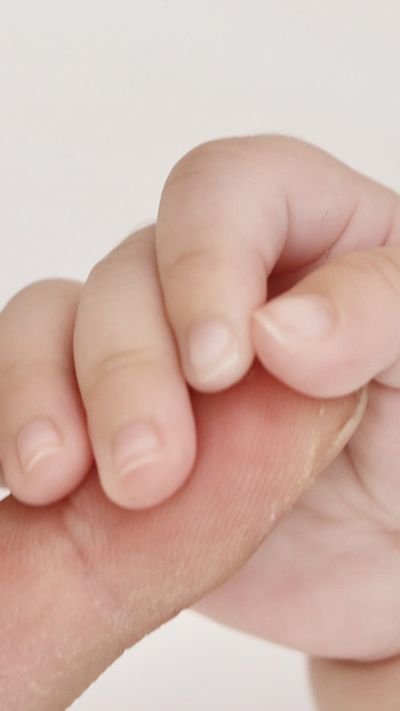
The structure of the story is simple. It is a comic tale about a parent who, hoping their newborn will be healthy and long-lived, gives the child an extra-long name for good luck.
In some tellings the parent simply wants the longest name possible. In others, the parent is taught a string of auspicious words and, unable to decide, ends up putting every one of them into the name.
The words in the name, their readings, and their meanings can vary from one hanashika to the next. The best-known version goes, "Jugemu, Jugemu, Gokō no surikire, Kaijarisuigyo no Suigyōmatsu Unraimatsu Fūraimatsu, Kū neru tokoro ni sumu tokoro, Yaburakōji no burakōji, Paipo Paipo Paipo no Shūringan, Shūringan no Gūrindai, Gūrindai no Ponpokopī no Ponpokona no, Chōkyūmei no Chōsuke."
The child grows up healthy, just as the parents had hoped. After a fight with a neighborhood kid, the boy who has been hit and left with a bump comes to tell his father. But as the long name is repeated again and again, so much time passes that the bump goes down on its own. That is the sage, the punchline.
The Meanings Behind the Jugemu Name
Because the name is meant to wish the child healthy growth and a long life, every word in it carries a meaning.
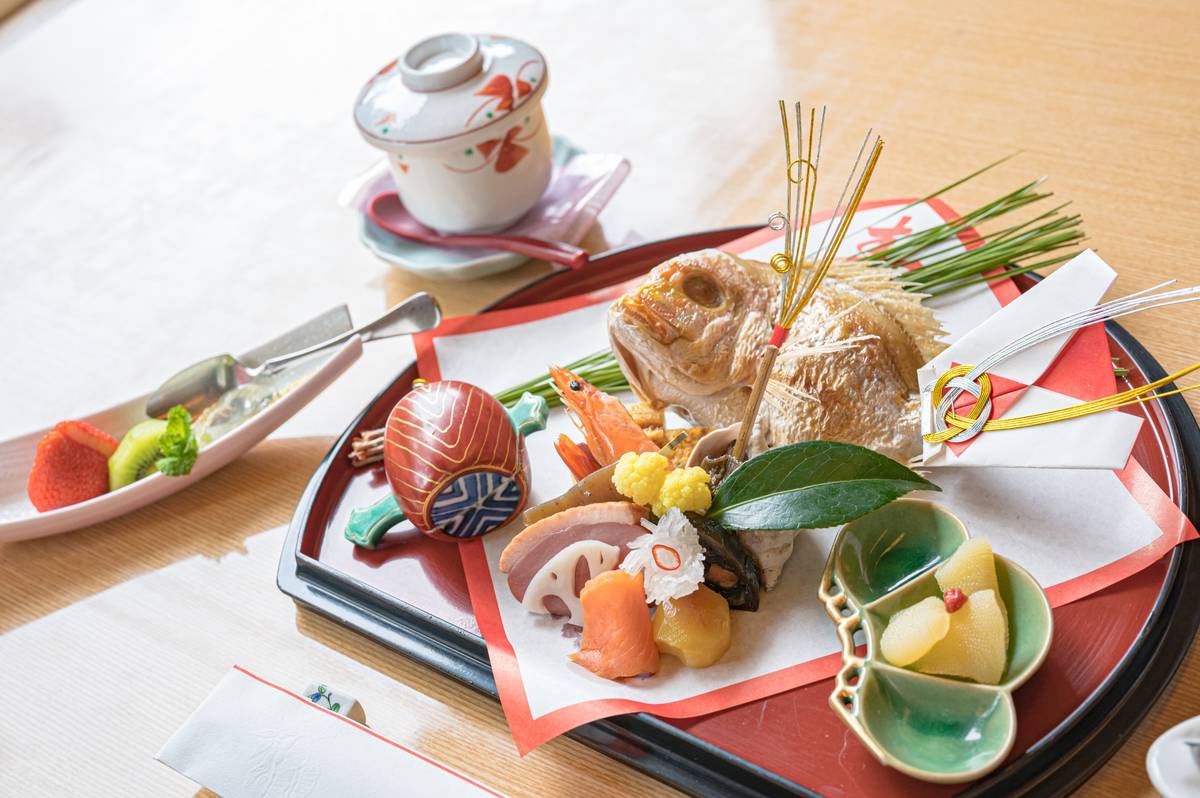
Every kind of lucky charm becomes part of the name. (The charms in the photo are not related to Jugemu.)
Jugemu
One account traces the word to the Sutra of Immeasurable Life (Muryōju-kyō), one of the scriptures of Mahāyāna Buddhism.
Gokō no Surikire
Kō is a word for an almost unimaginably long span of time. One kō is said to be longer than it would take a celestial maiden to wear a rock of about 25,600 square kilometers down to nothing, brushing it with her robe just once every hundred years. Gokō, five times that, describes a length of time no one could truly picture.
Kaijarisuigyo
This refers to things too numerous to count, such as the sand and pebbles in the sea or the fish beneath the water.
Suigyōmatsu, Unraimatsu, Fūraimatsu
Like the far courses of water, clouds, and wind, these stand for things that continue on and on without end.
Kū Neru Tokoro ni Sumu Tokoro
This one means exactly what it says. It stands for the essentials no one can do without, namely food, clothing, and shelter.
Yaburakōji no Burakōji
Yabukōji is a hardy shrub seen as a symbol of longevity and prosperity. In the story, burakōji is described as the image of yabukōji berries ripening on the shrub and swaying in the air.
Paipo Paipo Paipo no Shūringan, Shūringan no Gūrindai, Gūrindai no Ponpokopī no Ponpokona
These are the names of fictional characters King Shūringan of the Paipo Kingdom, his queen Gūrindai, and their daughters Ponpokopī and Ponpokona. The story tells that each of them lived a long life.
Chōkyūmei
This word means a long, enduring life. In some tellings, it is said to come from tenchōchikyū, a phrase meaning that heaven and earth endure forever, considered lucky both to read and to write.
Chōsuke
As its two characters (長助) suggest, it means to give help for a long time.
What Makes Jugemu Worth Watching
So what is worth paying attention to in Jugemu? Let's look at what to watch for in a performance and what makes it unique.
How the Hanashika Conveys a Parent's Love
It comes from a parent's love, the wish for a newborn to live long and to be given a bright, auspicious name. When that love goes too far and the doting parent gives the child what people in Japan now call a kirakira name (a highly unconventional given name with unusual kanji readings and references to modern/popular culture), the silliness is easy to sympathize with. It is precisely because the humor carries across time and culture that Jugemu has been loved for so many years.
The child's long name is essentially a tongue twister, which makes the piece a good one for a zenza, a performer in rakugo's lowest, beginner rank, to train clear diction and voice projection. In the part where the name is said over and over, the teller's level of skill shows in how smoothly and how rapidly they can pull it off.
Because the structure is so simple, much of the fun lies in how greatly the mood shifts from one performer to the next. The way the father is built as a character, the tempo and intensity with which the tongue-twister name is rattled off. Even the sight of the child, bump swelling from a fight with a friend, coming to whine and tattle to his father changes with every performer.
A Deeper, Surprisingly Serious Side
It is usually performed as a kokkei-banashi, a comic story. But as Koguma, a senior pupil in Shiguma's school, points out in Akane-banashi, there is also a sage in which the child dies, since the long name makes it take so long to report that he has drowned.
Everyone knows the story, which makes it hard to keep an audience hooked. At the same time, there is plenty of freedom to vary the delivery and the sage. It is precisely because Jugemu is actually such a demanding piece that Shiguma is thought to have set Akane the condition of winning with it.
Watch a Rakugo Performance
This is a kōza, a performance on the raised rakugo stage, given by Hayashiya Keiki, now known as Hayashiya Kikuhiko. He gave it at the Akane-banashi Gathering, an event marking one year since the manga began its serialization.
This is Jugemu as performed by Sanyūtei Rakushō, the first and most senior pupil of the sixth-generation Sanyūtei Enraku.
This is a Jugemu for children, performed by Katsura Fukumaru, a pupil of the fourth-generation Katsura Fukudanji.
FAQ
- External resources
Akane-banashi | Shueisha Weekly Shonen Jump Official Site
Akane-banashi TV Anime Official Site
Published Last Updated
Related Articles
Explore more articles on similar topics and deepen your knowledge of Japan.