Imado no Kitsune Explained: Koguma's Performance in Akane-banashi
Imado no Kitsune is an unusual classic rakugo story with a rakugo storyteller (rakugoka) as its hero, and the piece Koguma performs in Akane-banashi. We cover the plot and the pun behind its punchline.
Set to compete in the Karaku Cup, a rakugo contest for students and amateurs, Akane asks her senior apprentice Koguma to coach her, hoping to win with Jugemu, a piece famous as an opening-act story (zenza-banashi).
What sets Koguma apart is the way he digs into a story's history and the period it comes out of before he performs it. That store of knowledge has earned him the nickname "the terakoya of the Shiguma school," named after the neighborhood schools that taught the children of commoners in the Edo period. The classic piece Imado no Kitsune features Sanshōtei Karaku, the storyteller the Karaku Cup is named for. Koguma brings Karaku up in his makura, the warm-up talk a performer opens with before the main story, and goes straight from that bit of history into the performance itself.
The Story of Imado no Kitsune
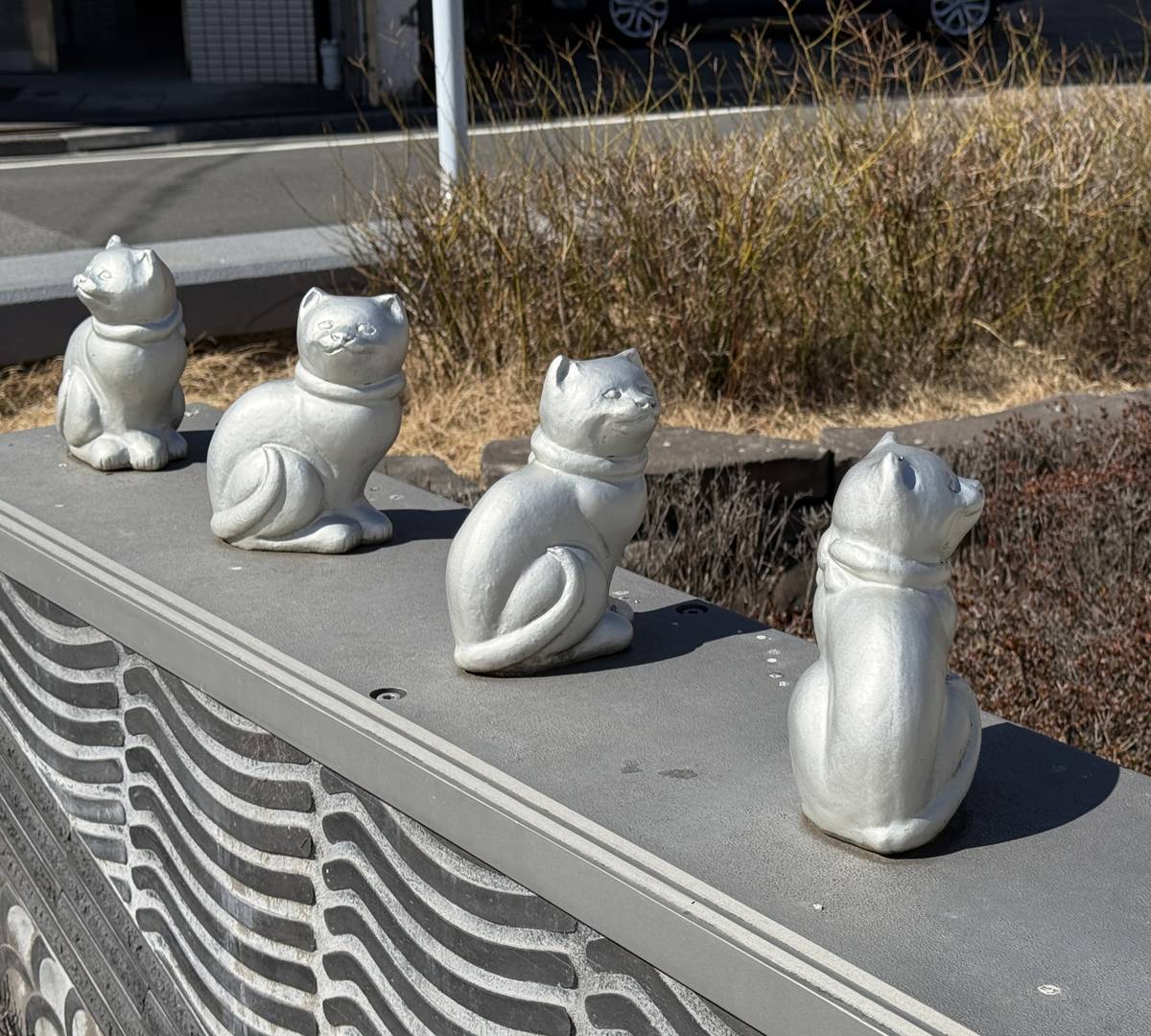
Imado-yaki cats. Imado-yaki is unglazed or raku ware, once made around Imado in Tokyo.
The story follows two men: Ryōsuke, a rakugo storyteller, and Guzutora, a yakuza. Ryōsuke starts out apprenticed to a gesakusha, a writer of popular fiction in the Edo period. His gift turns out to be his knack for speech rather than for prose, so his master recommends him to the storyteller Sanshōtei Karaku, and he is taken on as Karaku's pupil. In those days a zenza, a performer of the lowest rank, was paid nothing so Ryōsuke made what he could selling raffle tickets at yose, the traditional variety halls where rakugo is performed. He commutes to his master's house instead of boarding there, so the ticket money alone does not go far. Karaku soon promotes him to futatsume, the rank above, but his expenses rise with it and money stays tight.
Ryōsuke Takes On a Secret Side Job to Get By
Ryosuke starts taking on side work behind his master's back, painting Imado-yaki fox figurines. By the standards of the time, a performer doing piecework on the side was shameful, and if his master found out he'd be expelled from the school. So Ryosuke would shut the house up tight and do the work by whatever light came through the skylight.
He Finds a Coworker
Behind Ryōsuke's house is a komamonoya, a shop selling everyday goods and cosmetics, and the neighbors call the shopkeeper's wife kotsu no sai. Sai is an old word for a wife, and Kotsu was the common name for Kozukappara, a district at the northern edge of Edo, today's Tokyo. She once worked there as a jorō, a prostitute in a brothel. The neighbors think well of her: attentive, hardworking, easy to get along with.
Ryōsuke always has something funny to tell her when they meet, so she has been wondering where he’s been lately. One day she finds out about the piecework. She has been wanting work of her own, so she asks him to teach her how to paint the foxes, and she gets better and better at it.
A Gambler Yakuza Steps into the Story
Meanwhile, at Karaku's house, Guzutora hears the zenza counting up the raffle money among themselves and draws the wrong conclusion. "They're rolling dice in there. That must be kitsune, the game everyone's playing now." Gambling was forbidden under the shogunate's law. Guzutora decides to call on Karaku in the morning and squeeze him for money over it.
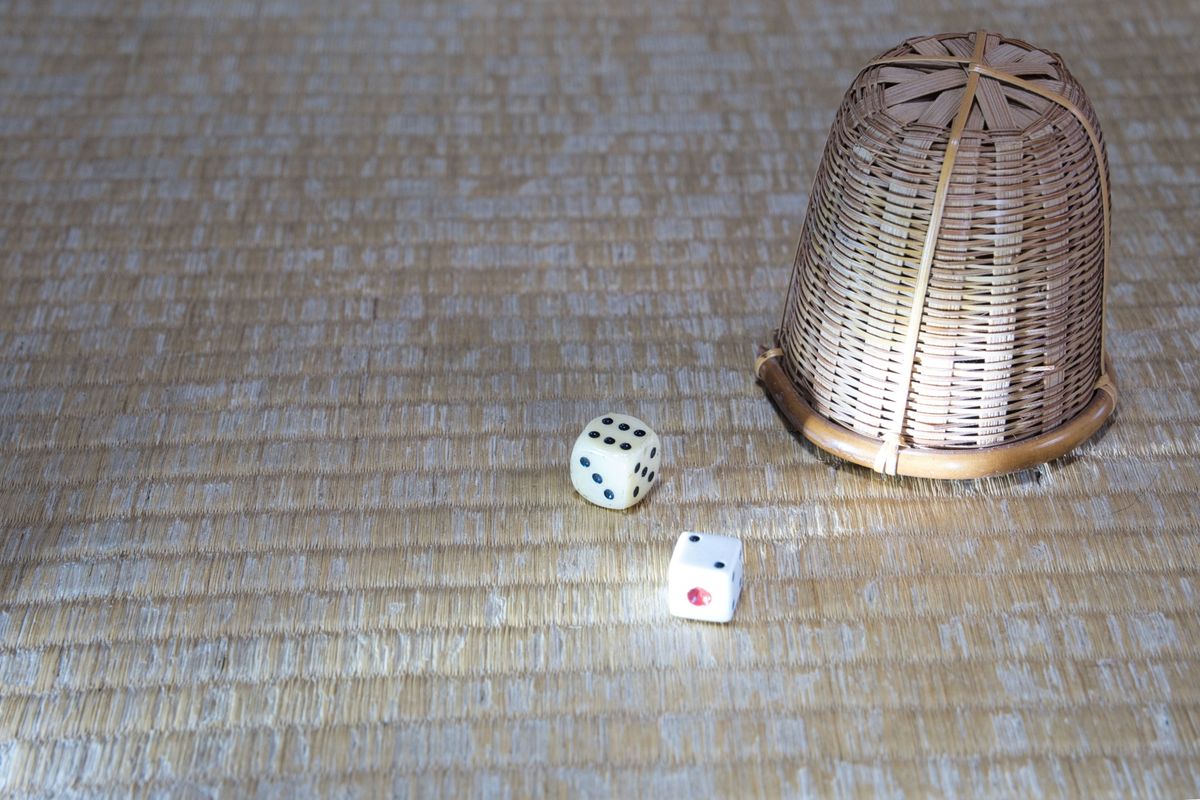
Kitsune is a form of dice gambling. The players each stake a chip on whichever number they like, and the banker rolls three dice. The more of the three that land on a player's number, the bigger the payout, so the winnings swing wildly.
The next morning Guzutora turns up at Karaku's door to shake him down, and of course Karaku has no idea what the man is talking about. Guzutora spells it out: "Hand over some cash and I'll keep quiet about you running kitsune on amateurs." Only then does Karaku understand what he is being accused of. He will have none of it: "I detest gambling. If a pupil of mine were doing it, I would expel him. There has been some mistake, so kindly leave."
Guzutora is furious, and one of the pupils takes him aside. "I heard you say kitsune, so I'll tell you this quietly. There's a man named Ryōsuke over in Imado who makes them."
How the Misunderstanding Lands the Punchline
Guzutora marches over to Ryōsuke's house in high spirits. "They tell me over at your master's place you've got kitsune here." Ryōsuke, sure that his piecework has been found out, steels himself and says, "They're right here. Please don't break them," as he brings out the painted clay foxes.
Guzutora, who has been talking about gambling the whole time, explodes: "Quit fooling around! The kitsune I mean is kotsu no sai (骨の賽)”, dice cut from bone. Ryōsuke answers, "Ah, kotsu no sai. That would be the shopkeeper's wife out back." That is the sage, the punchline of the piece.
What Makes Imado no Kitsune Worth Watching
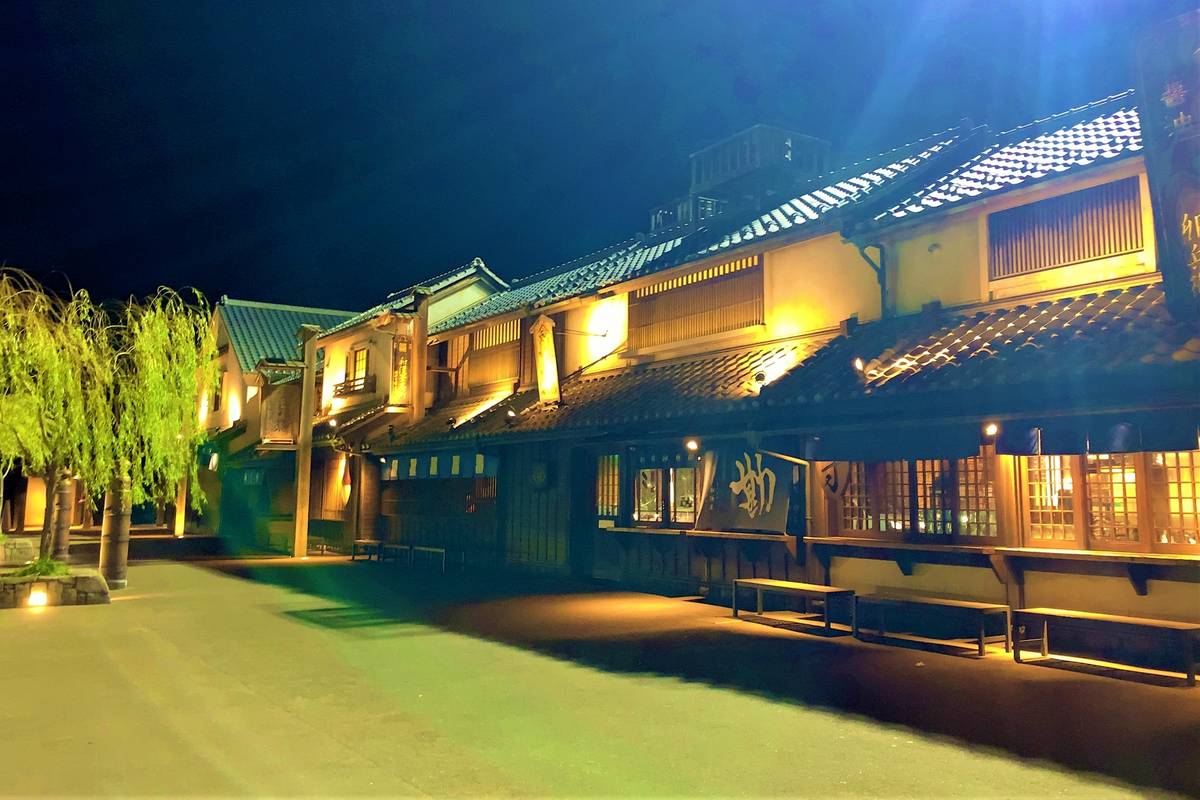
Traditional streets like those of Edo.
The word kitsune carries two meanings at once: the Imado-yaki figurine and the dice game that was in fashion in the Edo period. That double meaning is where the humor of the story begins.
The punchline turns on a play on words as well. The word for bone is also read “kotsu”, like the district where the shopkeeper's wife once worked. The word for a gambling dice is also read “sai”, like the word for wife in her nickname. So a fine die carved from ivory or animal bone is a “kotsu no sai”, and so is the wife from Kotsu. One misunderstanding stacks on top of another.
The story also gives a concrete picture of Ryōsuke's years in training, and of how people in Edo lived and amused themselves. The storytellers who perform it live in a different age, but they have gone through the same apprenticeship and known the same hardship, and that gives the piece depth and authenticity. It rewards listeners who know Edo's place names and something of rakugo and the world it grew out of.
Sanshōtei Karaku, who appears as Ryōsuke's master, was a real person, one of Japan's first professional rakugo storytellers. He opened a yose in 1798 and did much to establish the art.
Koguma is the storyteller Akane-banashi calls the terakoya of the Shiguma school, which makes this exactly the right piece for him to perform.
See Imado no Kitsune Performed
This is Arakawa Koguma's performance from the anime Akane-banashi.
We explain other rakugo pieces that appear in Akane-banashi as well. Jugemu is the piece Akane takes on at the Karaku Cup, Shibahama is the classic from episode 1, and Manjū Kowai is the story she performs for her stage debut. Kohome is the piece she comes back to after learning to read a room, and Tenshiki is the one that wins over her strict teacher. Sanbō Ichiryō Zon is the story her senior apprentice Kyōji tells, and Keikoya is the one Arakawa Kaisei performs.
FAQ
- External resources
Akane-banashi | Shueisha Weekly Shonen Jump Official Site
Akane-banashi TV Anime Official Site
Published Last Updated
Related Articles
Explore more articles on similar topics and deepen your knowledge of Japan.