
Chiikawa's Island Arc and its Origins Explained & Pilgrimage Sites to Visit
Chiikawa's first film arrives summer 2026. Its Island Arc echoes Japan's Yaobikuni legend, with parallels and fan pilgrimage spots across Aichi and Fukui.
熱田神宮
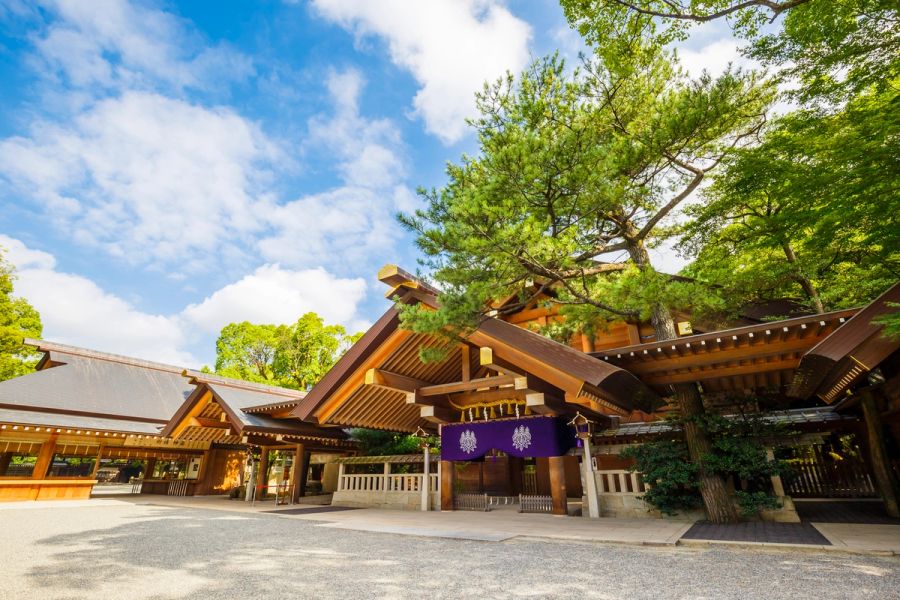
Atsuta Shrine (Atsuta Jingū) is a Shinto shrine in Atsuta Ward, Nagoya. It enshrines the Kusanagi Sword (Kusanagi-no-Mitsurugi) from Japanese mythology and has long been considered second in stature only to Ise Grand Shrine. The grounds span about 20 hectares, with the main hall, annex shrines, and minor shrines arrayed within a forest of thousand-year-old camphor trees. Restaurants serving Nagoya specialties like hitsumabushi and kishimen line the approach road, where you can stop by between visits.
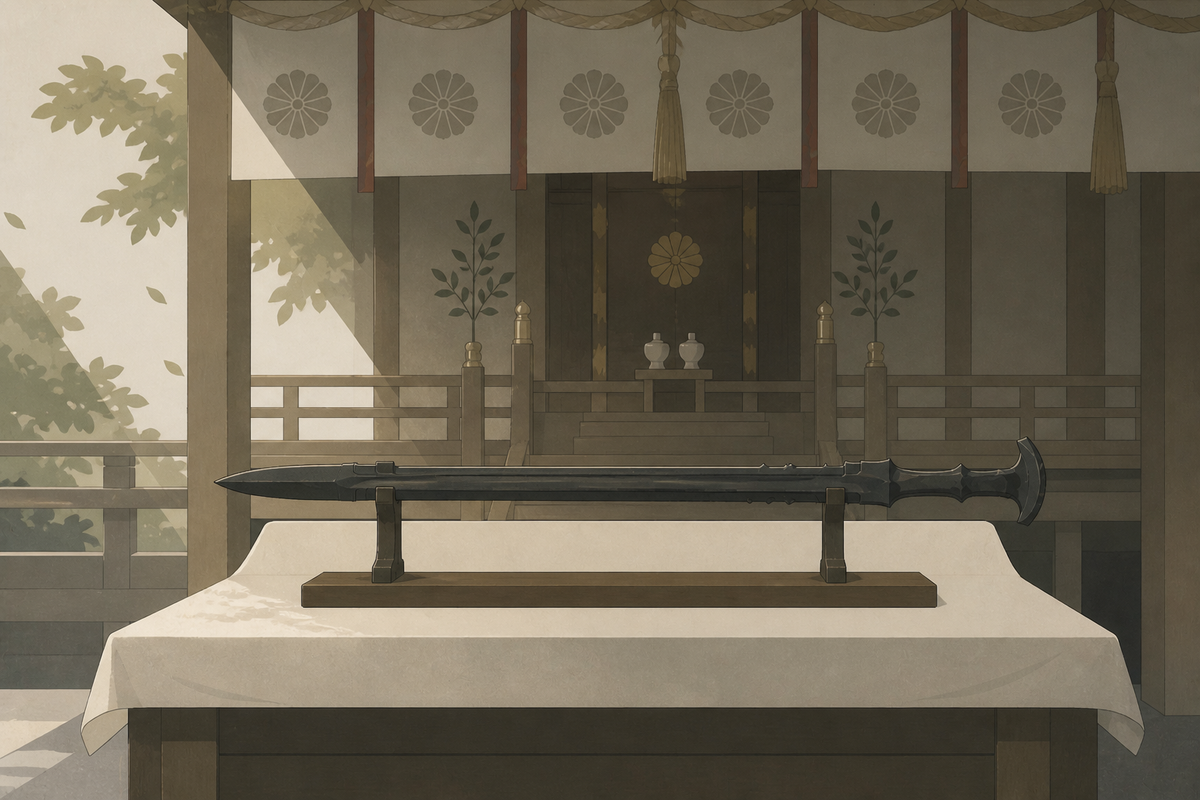
An imagined view of the enshrined Kusanagi Sword
At the very heart of Atsuta Shrine sits the Kusanagi Sword (Kusanagi-no-Mitsurugi), one of Japan's Three Sacred Treasures. The story of the sword reaches back to Yamato Takeru-no-Mikoto, a hero of Japanese mythology. During his eastern campaign, he took Princess Miyazu (Miyazuhime-no-Mikoto) as his wife and entrusted the sword to her. He then fell ill and died before reaching home. The princess carried on his last wishes and enshrined the blade in this place. That is how Atsuta Shrine began.
The sword has since been placed deep within the main hall and continues as the shrine's sacred presence to this day. Of the Three Sacred Treasures, the Yata-no-Kagami mirror is at Ise Grand Shrine, the Yasakani-no-Magatama jewel is at the Imperial Palace, and the sword is here at Atsuta Shrine. Even Japan's emperors throughout history have never been permitted to see it, making this the most closely guarded secret of the shrine.
Tradition holds that the Kusanagi Sword was first enshrined in the 43rd year of Emperor Keikō's reign (113 CE). The shrine took shape and came to be known as the Atsuta-no-Yashiro around the year 646 (Taika 2). In the Heian period, it was listed among the country's official shrines (shikinaisha). In the Edo period, it received imperial offerings as a chokusaisha. Throughout both eras, its rank stood second only to Ise Grand Shrine.
During the Sengoku period, Oda Nobunaga stopped here on his way to the Battle of Okehazama in 1560 to pray for victory. The Nobunaga Wall, which he donated in thanks after the battle, still stands in one corner of the grounds. From the Meiji era onward, the shrine was granted the title of Jingū, and in 2013, the 1,900th-anniversary rite of enshrinement was celebrated on a grand scale.
Atsuta Shrine's grounds hold several sights of historical significance.
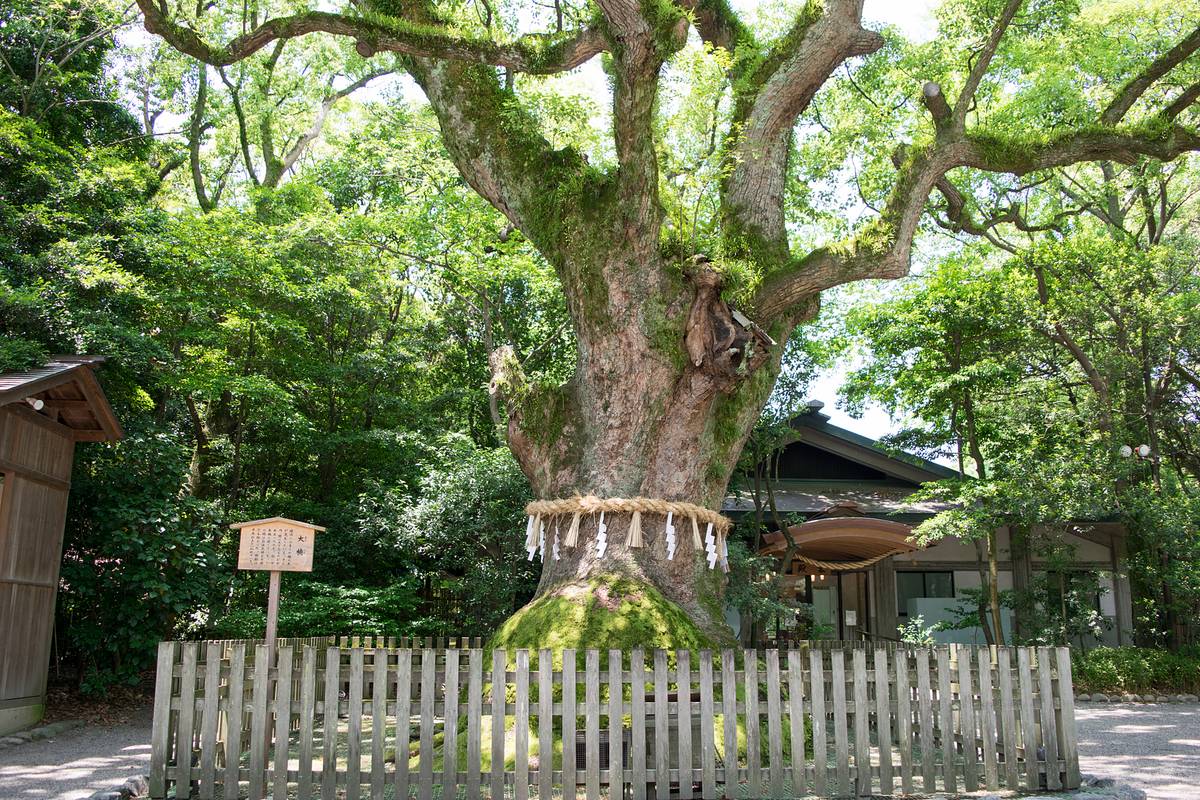
Great Camphor
As you walk up the approach from the South Gate (the first torii), the first highlight is a thousand-year-old camphor tree. It is one of the so-called Seven Camphors said to have been planted by the monk Kūkai, its thick trunk covered in moss and its branches reaching outward like bolts of lightning.
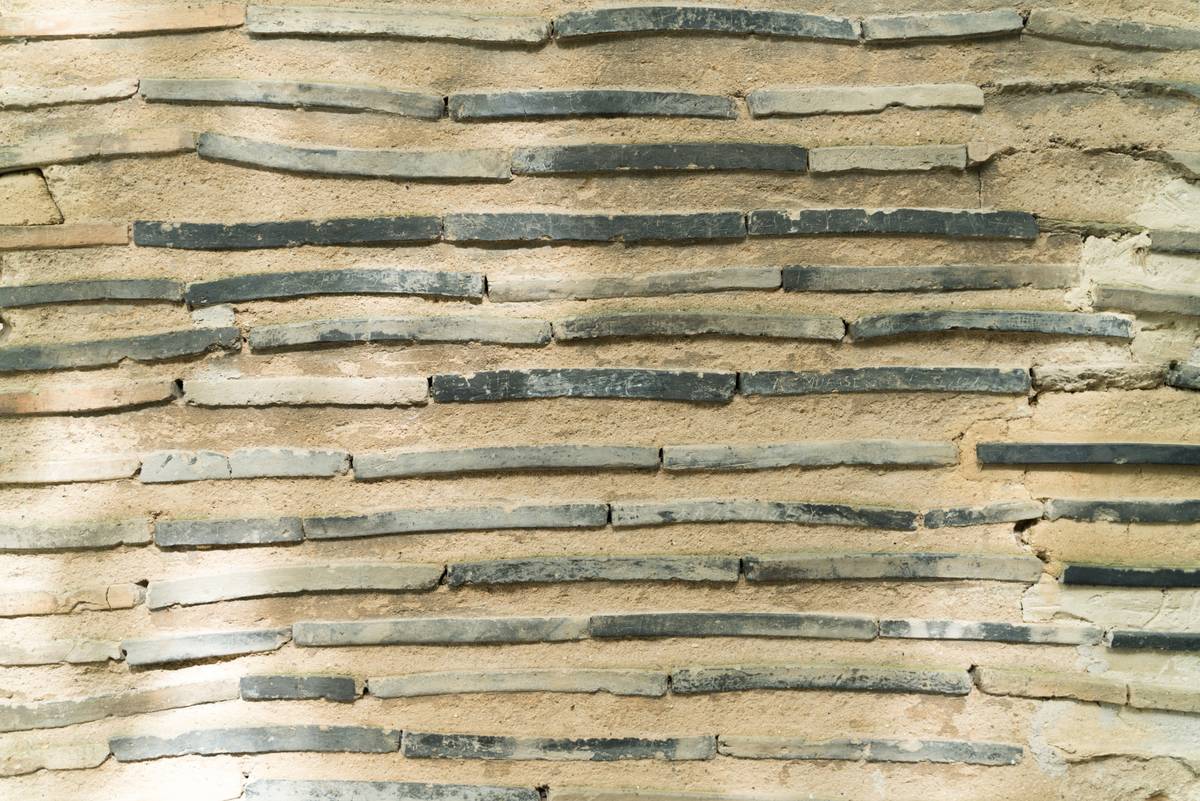
Nobunaga Wall
Beside the main hall stands the Nobunaga Wall. With its distinctive pattern of alternating layers of roof tile and earth, the wall is said to have been donated by Oda Nobunaga. It is counted among Japan's three great earthen walls, along with the Taikō Wall at Kyoto's Sanjūsangendō and the Daireibei Wall at Nishinomiya Shrine.
Hakkengū Branch Shrine
Near the great camphor stands Shimizusha, a small shrine dedicated to Mizuhanome-no-Kami, the goddess of water. Spring water that wells up at the back is said to heal eye ailments when used to wash the eyes. Pouring water from a ladle onto the stone tower three times is said to grant wishes, and washing one's skin with the water is believed to bring beauty.
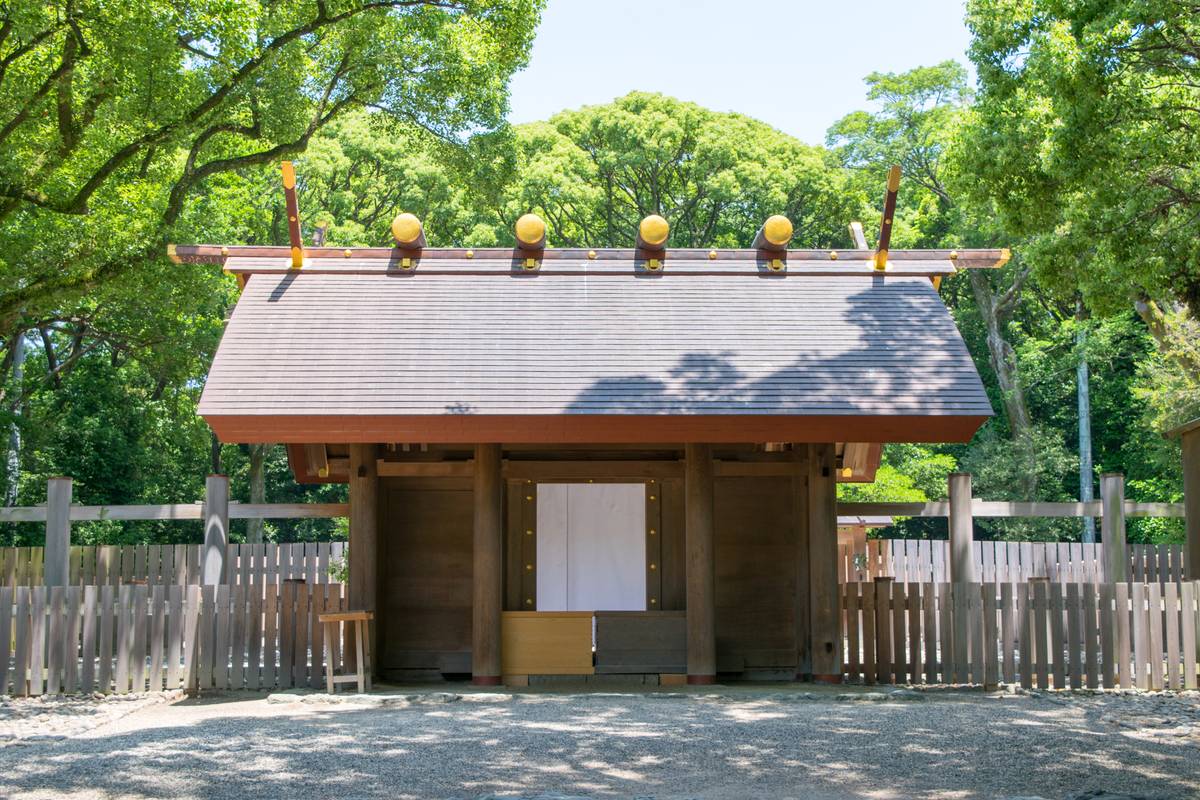
Standing southeast of the main hall is Hakkengū, an annex shrine. Founded in 708 by imperial command of Empress Genmei, it once temporarily housed the Kusanagi Sword and ranks second only to the main shrine.
Miya Kishimen
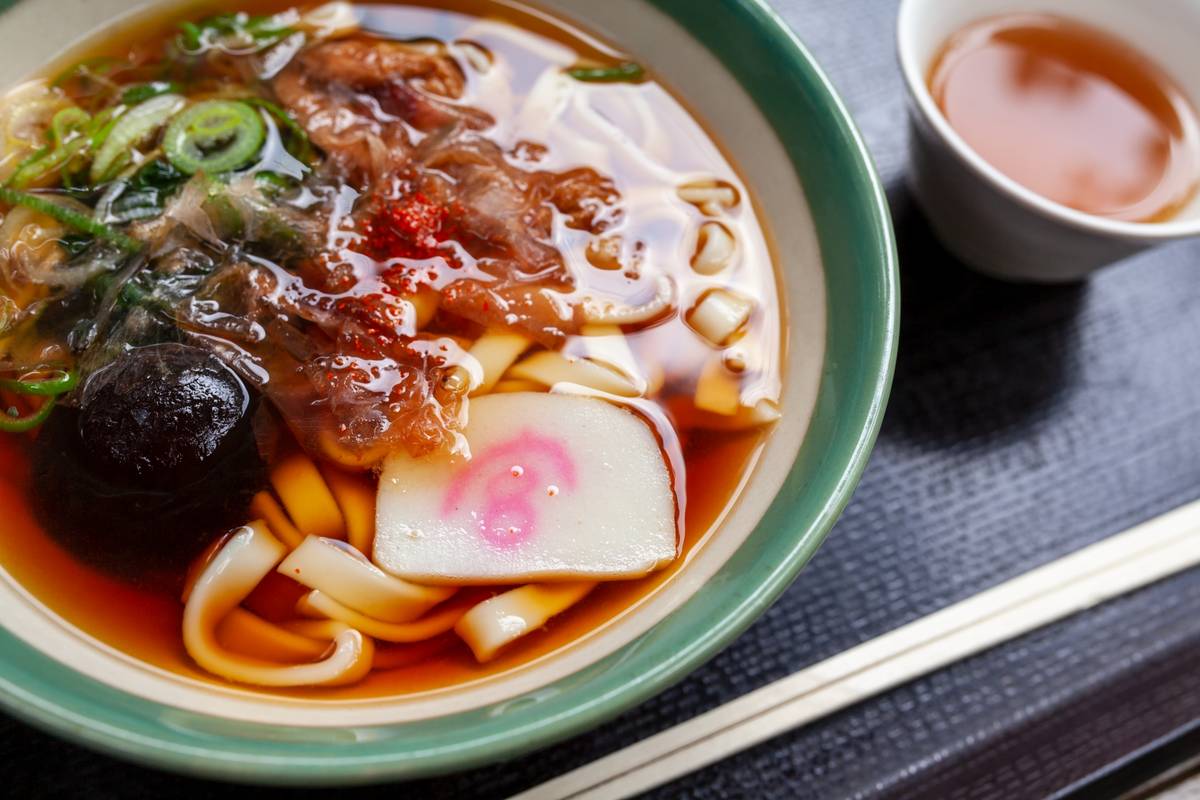
Visiting Atsuta Shrine includes the Nagoya specialties along the approach road. Miya Kishimen Jingu, located within the grounds themselves, is a rare place where you can enjoy warm kishimen noodles inside the sacred precincts.
Hitsumabushi
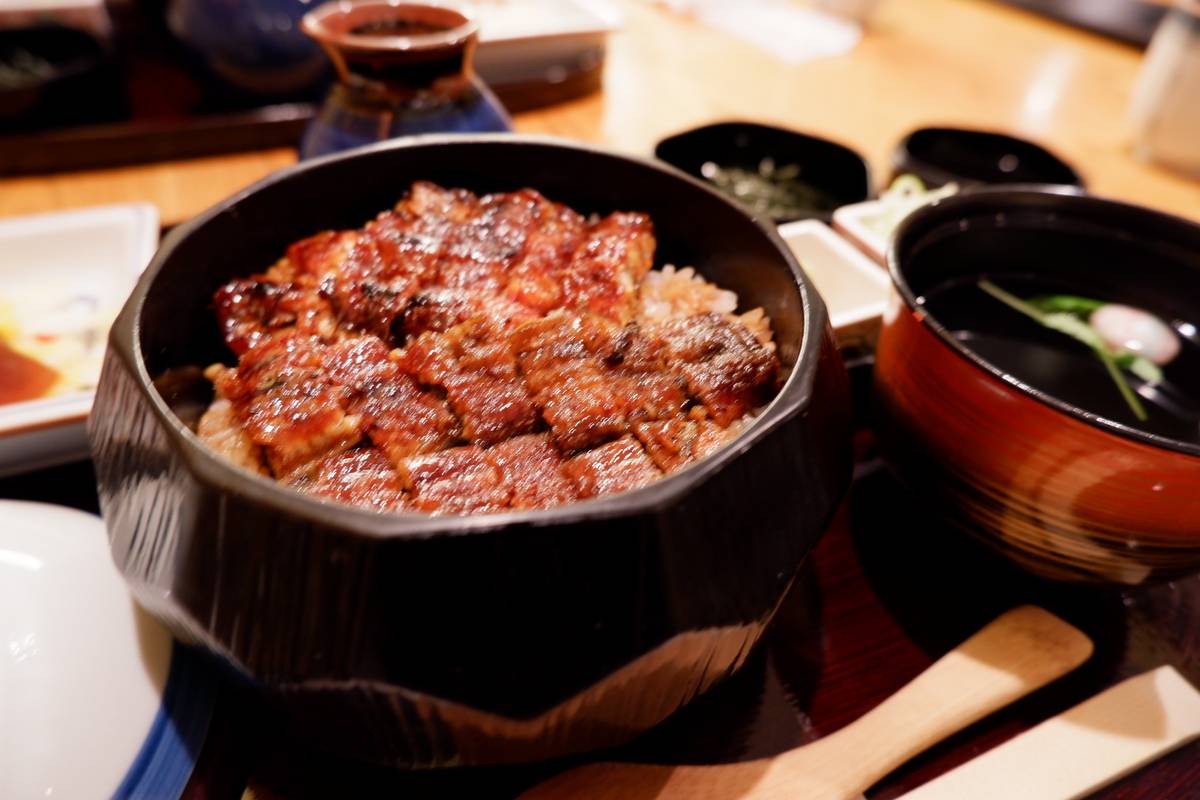
Atsuta Hōraiken Jingu, near the South Gate, is a long-established eel restaurant founded in 1873 (Meiji 6). It is the shop that created the trademarked dish hitsumabushi, and lunchtime always brings a line of customers waiting outside. For souvenirs, many visitors take home the white mochi from Kiyome Mochi Sōhonke, a confectionery whose origins trace back to a teahouse from the Edo period.
The closest station to Atsuta Shrine is Jingū-mae on the Meitetsu Nagoya Main Line, about a 3-minute walk from the west exit. From Jingū-nishi or Tenma-chō stations on the Subway Meijō Line, or Atsuta Station on the JR Tōkaidō Main Line, it is a 5- to 10-minute walk.
The shrine grounds are open for visits 24 hours a day, but the Treasure Hall, the Kusanagi Sword Treasury, the offering counter, and the goshuin stamp service all have their own posted hours.
During New Year's and the annual Atsuta Festival in early June, the grounds are especially crowded, so it is wise to check the shrine's official website for hours before your visit.
〒456-8585 1-chōme-1-1 Jingū, Atsuta Ward, Nagoya, Aichi
Loading map...
The anime, manga, and games that feature Atsuta Jingu in real life.
Chiikawa's first film arrives summer 2026. Its Island Arc echoes Japan's Yaobikuni legend, with parallels and fan pilgrimage spots across Aichi and Fukui.
Last Updated:
New articles and updates, delivered occasionally.
No spam. Unsubscribe anytime.