Tango no Sekku/Children's Day: Exploring Traditional Decorations and Anime Character Birthdays
Learn about Tango no Sekku and Children’s Day in Japan: koinobori, samurai armor, iris baths, traditional sweets, anime connections, and Golden Week travel tips.
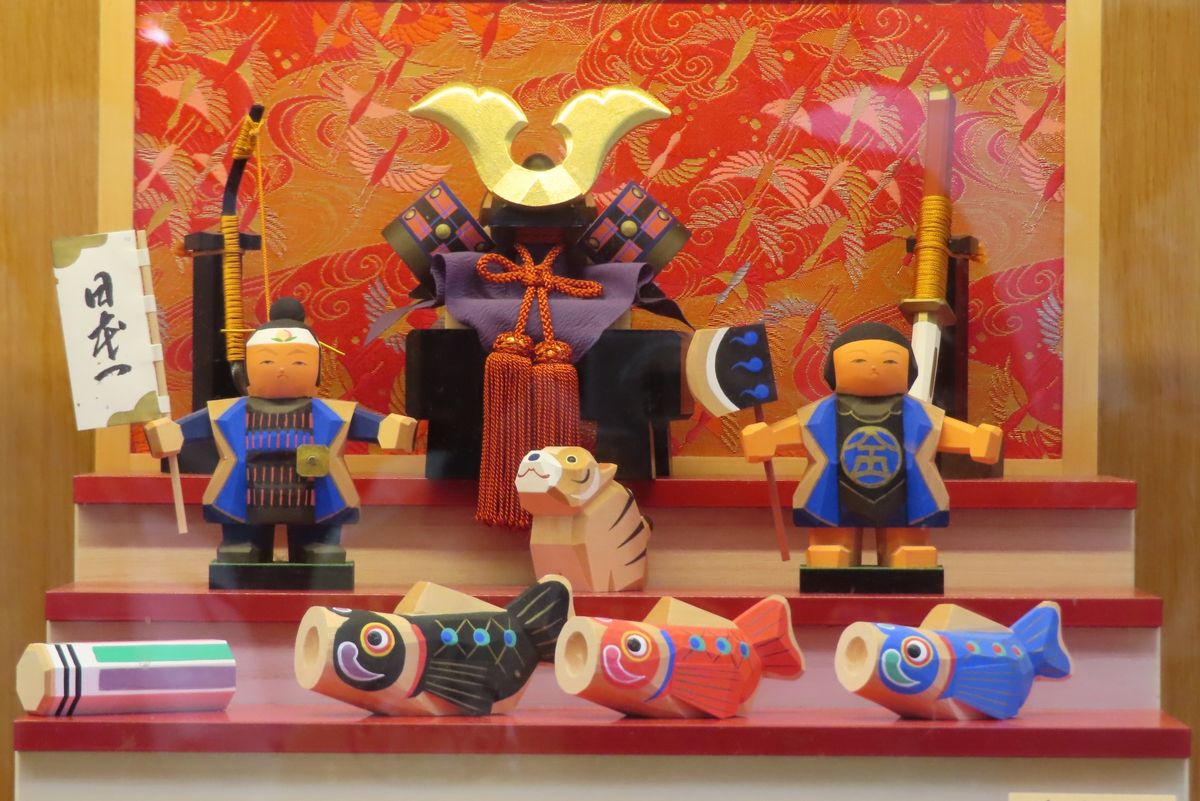
May 5th is Children’s Day in Japan. For centuries, this date has been cherished as Tango no Sekku, a festival celebrating the healthy growth of boys. Families display suits of armor and helmets, fly colorful koinobori (carp-shaped windsocks) in the sky, and soak in baths infused with irises. Each custom carries its own history and deeper meaning.
If you recognize these scenes in anime, understanding their origins will deepen your appreciation for the stories.
About Children’s Day
Children’s Day is generally celebrated as a festival for boys, originating from customs that traveled to Japan from China long ago.
In 1948, Japan’s National Holiday Law designated May 5th as Children’s Day. The official purpose behind the law is “to respect the personalities of children, to promote their happiness, and to express gratitude to mothers.” Legally, it is now a national holiday for all children regardless of gender.
Girls’ celebration falls on March 3rd with the Hinamatsuri (Girls’ Day/Doll’s Day), known as the Joshi no Sekku. These two occasions are celebrated as complementary traditions.
Tango no Sekku
Tango no Sekku is one of the five seasonal festivals that originated in China. These five festivals mark the turning points of the year: January 7th (Jinjitsu), March 3rd (Joshi, the Festival of Dolls), May 5th (Tango), July 7th (Tanabata), and September 9th (Choyo).
The name Tango refers to the first day of the horse (uma) in the fifth month. Originally, it fell on the first day of the horse in the fifth lunar month, but since the character 午 (go) shares its sound with the number 五 (also go, meaning five), the date eventually settled on May 5th.
In China, people gathered medicinal herbs and performed purification rituals during this season. When the tradition reached Japan, it evolved into a ceremony of warding off evil spirits using irises, which have a strong fragrance. Because “shobu/菖蒲” (iris) sounds like “shobu/尚武” (to value the principles of martial arts), the practice became popular among the samurai class. Over time, the festival transformed into a celebration of boys’ growth and strength.
May Dolls Displayed During Children’s Day
Because they are often quite expensive, fewer households own them today, but in homes that value tradition or observe auspicious customs, May dolls (gogatsu ningyo) are still displayed.
Armor and Helmet Displays
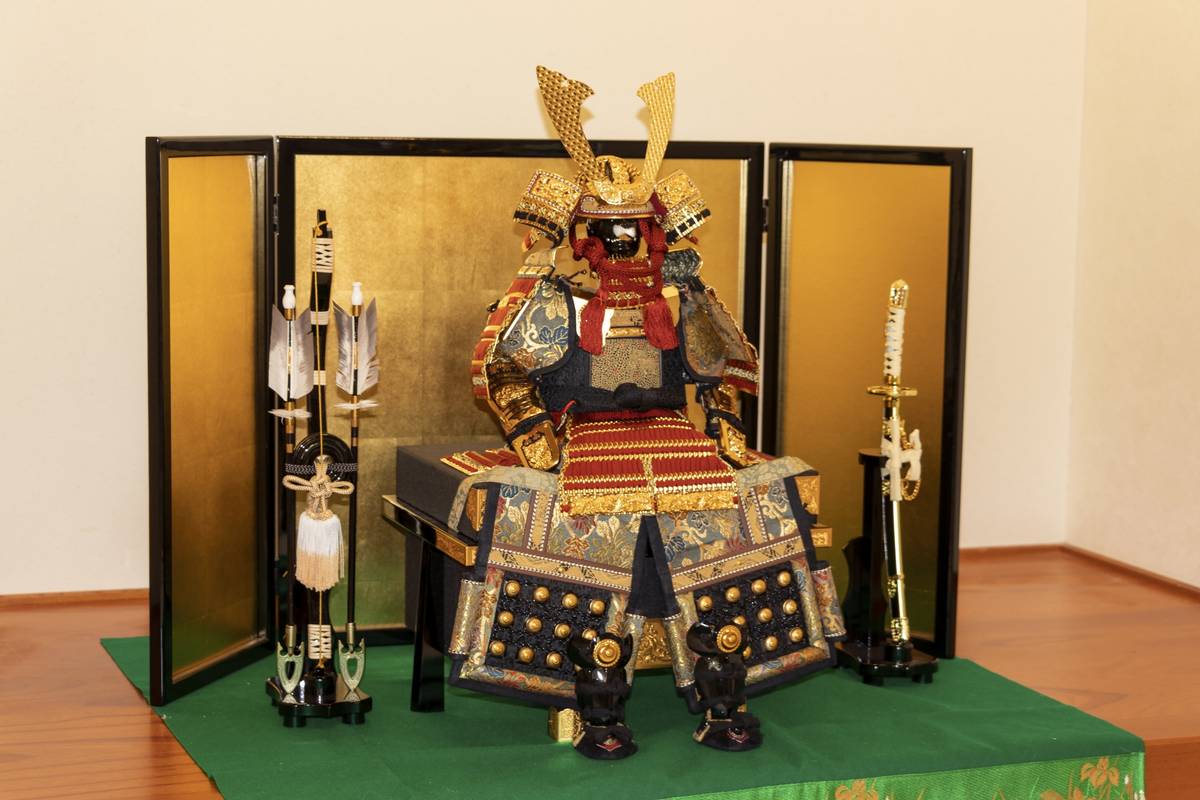
May dolls (go-gatsu ningyō) modeled after samurai armor from the warrior periods of Japan, known for their intricate craftsmanship.
These are dolls displayed to celebrate a boy’s birth and wish for his healthy growth. The most common designs are based on the armor of samurai from the Genpei period (the beginning of the samurai age) and armor worn by daimyo of the Sengoku period. In the Kansai region, families typically display full armor, while in the Kanto region, helmet-only displays are more common. Some helmets are sized for children to actually wear.
Papier-Mâché Tigers
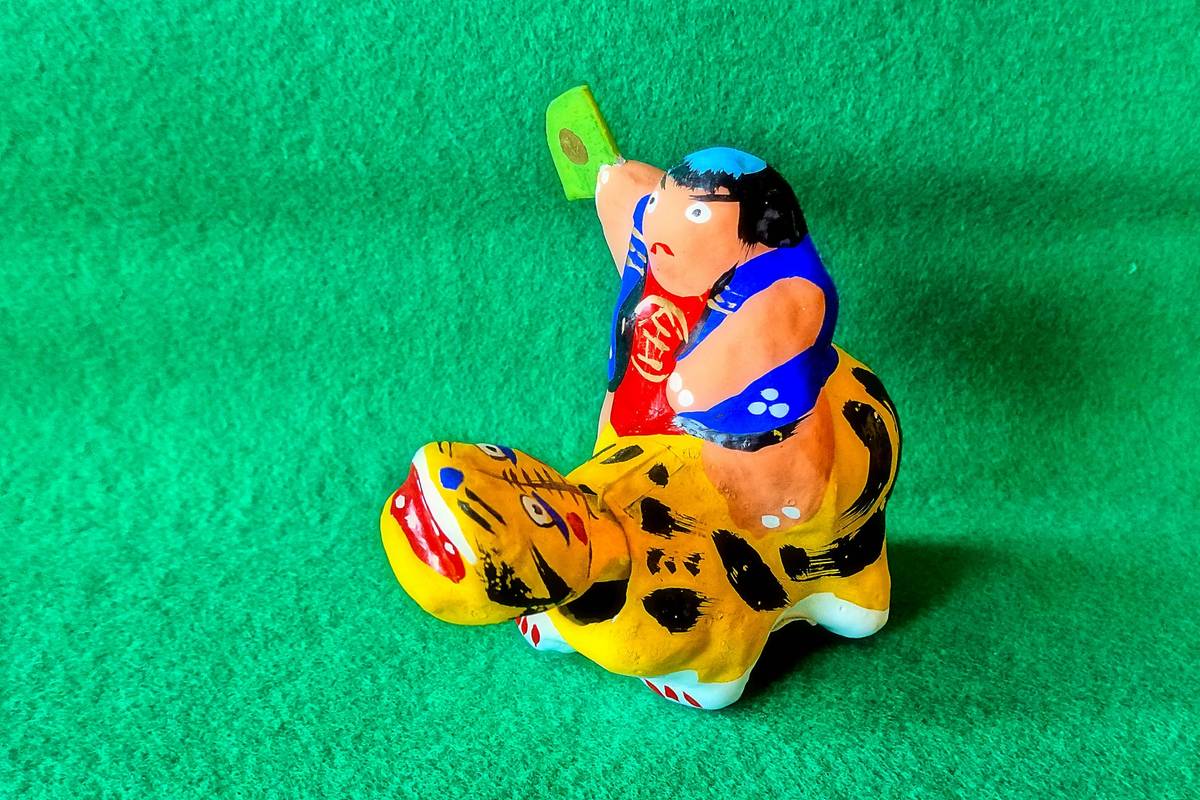
A Kintarō figurine riding a papier-mâché tiger, a traditional good-luck charm for boys’ healthy growth and success.
In the Kansai region, particularly in Kagawa Prefecture, a traditional craft called “hariko no tora” (papier-mâché tigers) is often displayed. Tigers are chosen for their association with strength, and in China they are venerated as divine or royal creatures.
What Is Hariko?
Hariko refers to toys made by stretching paper over frames built from bamboo, wood, or clay. The interior is hollow, making these figures surprisingly light for their size. The same technique is used to craft daruma dolls and paper lanterns.
Kintaro and Others
Other popular figures include legendary heroes and characters from kabuki theater. Among these, Kintaro is especially popular.
Kintaro appears in woodblock prints and children’s songs and is famous for a legend in which he wrestled a bear and won. He is thought to be based on the childhood of a real samurai warrior. In popular imagery, he carries a large axe, rides on a bear’s back, and wears a distinctive red diamond-patterned apron. Families display him hoping their children will grow up strong, bold, and kind like Kintaro.
Koinobori Swimming Across the Sky to Wish for Success
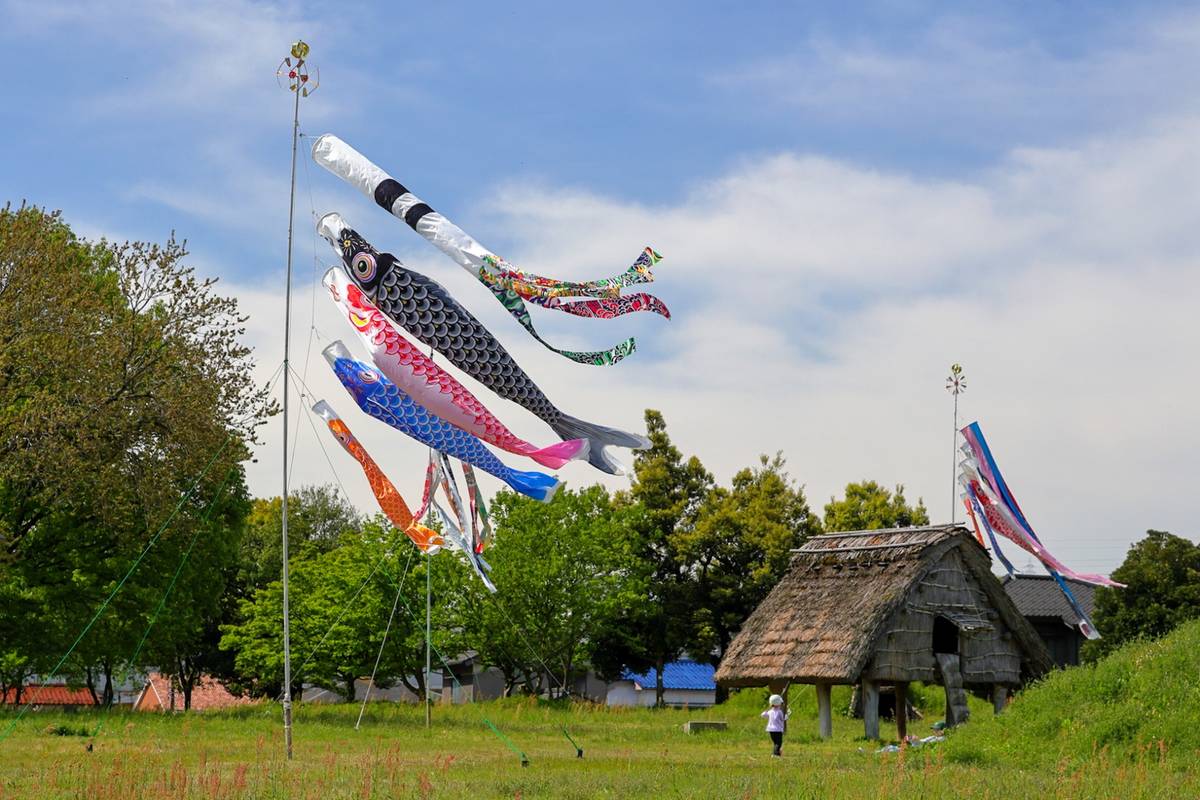
Around late April, large koinobori appear at schools, shopping centers, and parks, swimming through the sky.
This tradition began in the homes of samurai families during the Edo period. Carp are depicted on cloth or paper and hung as windsocks in gardens, schoolyards, storefronts, and building atriums.
At the top of the pole is a round ornament called a kago-tama. This serves as a landmark where the gods descend from the sky. Below it is a yaguruma (arrow wheel), a hexagonal wheel with radiating arrow feathers meant to ward off evil. Further down hangs a five-colored streamer, and below that are arranged carp in order of size, starting with the black koinobori, then red, then blue.
Originally, only black koinobori were used, but gradually red ones were added, creating a two-color design. The black koinobori initially represented the father and the red one the son. By the Showa period, blue koinobori were added, and their meanings shifted: the red became the mother and the blue represented children. In time, additional colors like green, pink, orange, and purple appeared, each representing older and younger siblings. The koinobori grew increasingly colorful.
Why Carp?
Among all the fish in the sea, carp were chosen because of a Chinese legend: a carp that swims up a waterfall becomes a dragon. This is the origin of the saying “toryumon” (gateway to success) symbolizing success and advancement. While real carp do not actually climb waterfalls, this legend made them symbols of prosperity. Combined with their naturally strong vitality, carp became regarded as auspicious creatures.
Koinobori Across Japan
In modern times, as single-family homes with gardens become rarer, the sight of koinobori in private homes is less common than before. In response, many municipalities have made large displays of koinobori or giant koinobori into tourist attractions and photo spots, establishing them as one of Children’s Day’s iconic sights.
For example, Kazo in Saitama Prefecture has been Japan’s largest producer of koinobori since before World War II. In 1998, the city created a world-record koinobori measuring 100 meters long and weighing 350 kilograms, achieving international fame.
Tsuetate Onsen in Oguni, Aso District, Kumamoto Prefecture displays 3,500 koinobori, while Tatebayashi in Gunma Prefecture displays over 5,000. In Ino Town, Agawa District, Kochi Prefecture, known for washi (traditional Japanese paper) production, koinobori made from waterproof washi are released into the Niyodo River.
Shobu-yu: Baths of Irises Favored by the Samurai
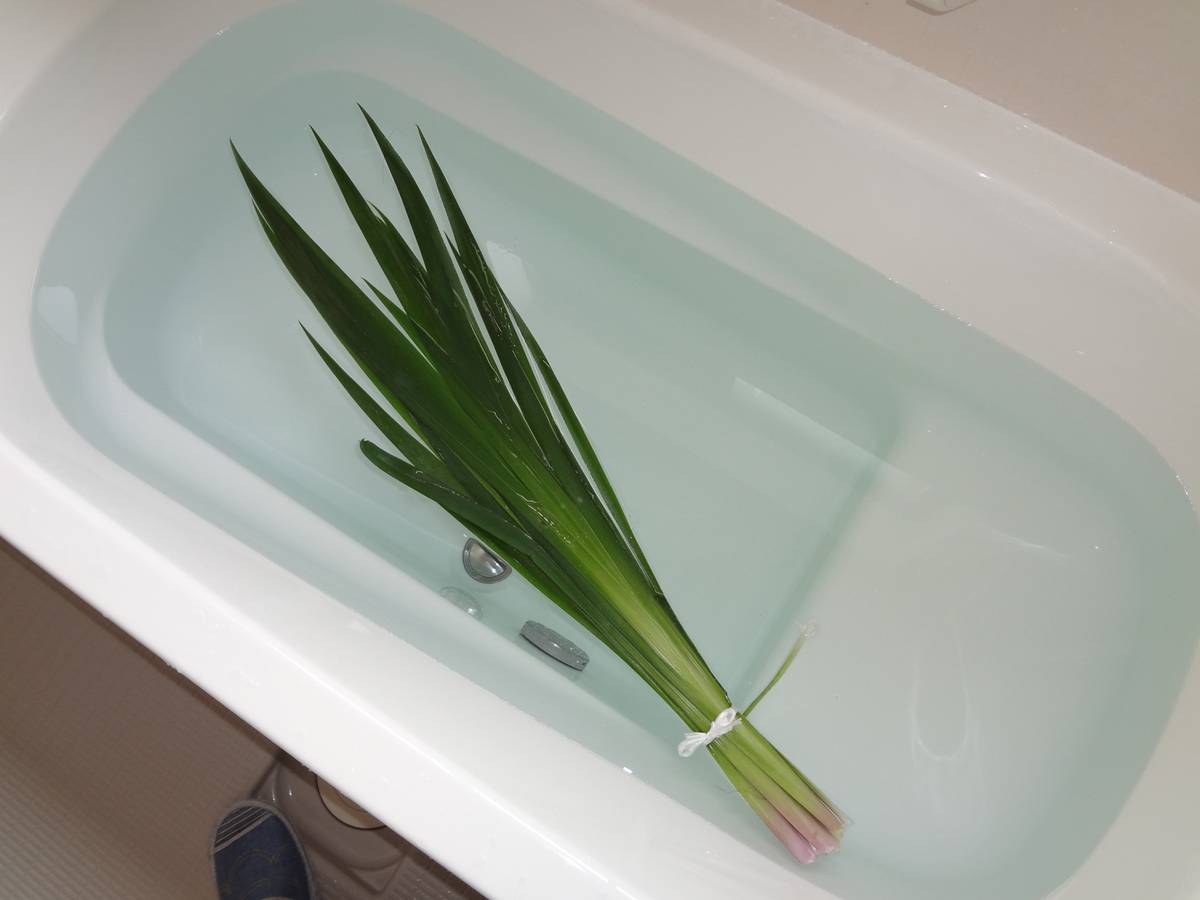
Iris leaves and roots are bundled and placed in the bath. Running hot water over them first releases the fragrance, then letting it cool slightly before bathing is most effective.
This custom involves placing iris roots or leaves in bathwater. Iris roots contain essential oils with properties that improve circulation and moisturize the skin. When buying irises for the bath at a shop, you will often receive the leaves rather than the roots. If you want to maximize the medicinal benefits, it is worth consulting a Chinese herbal medicine shop. Beyond their physical benefits, irises have a pleasant fragrance with aromatherapy effects. Since ancient times, the scent of irises has been believed to ward off evil spirits and illness.
The word “shobu/菖蒲” (iris) sounds identical to “shobu/勝負” (battle/match) and “shobu/尚武” (to honor the martial spirit), which explains why samurai held the plant in such high regard. This sort of wordplay is a quintessentially Japanese sensibility, and many customs have taken root precisely because of such puns.
Foods and Sweets for Children’s Day
Kashiwamochi
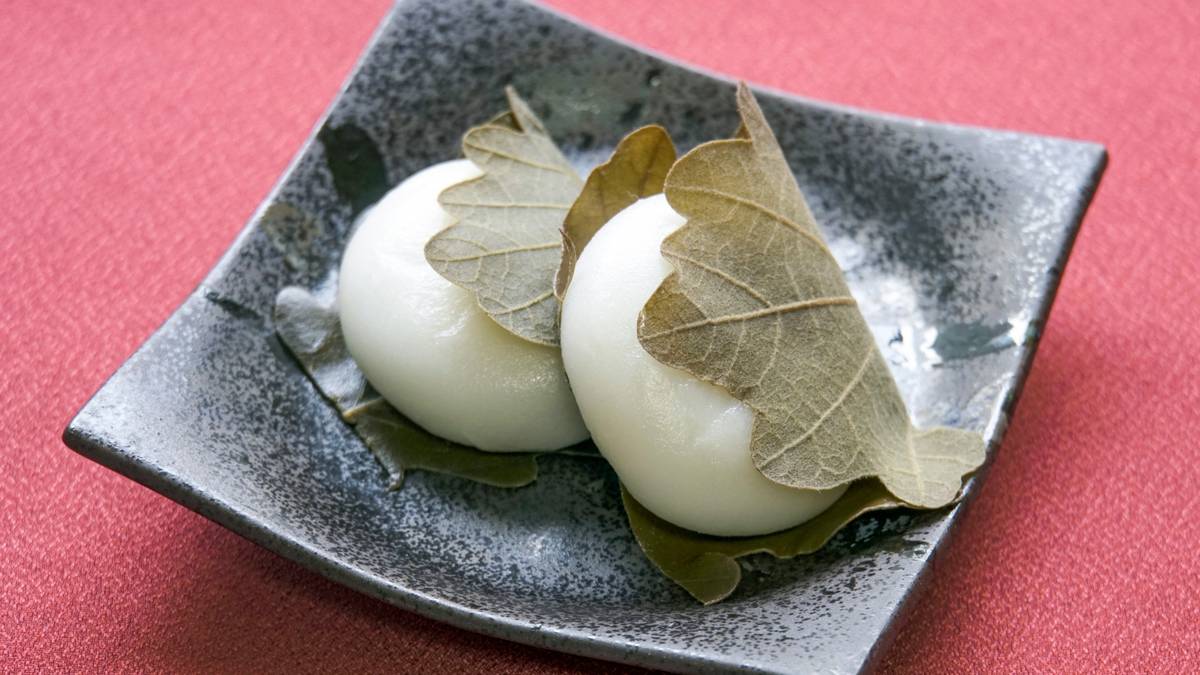
Kashiwamochi: mochi filled with bean paste, wrapped in oak leaves for fragrance. A satisfying traditional sweet.
A traditional sweet created during the Edo period, kashiwamochi consists of mochi filled with bean paste and wrapped in oak leaves for fragrance.
It differs from sakuramochi, the sweet eaten at the Hinamatsuri (Girls’ Day), in several ways. First, the filling. Sakuramochi typically contains smooth bean paste and whole bean paste, while kashiwamochi centers on smooth paste and miso paste. When mochi is wrapped in mugwort leaves instead of oak, the filling is usually whole bean paste. Mugwort is believed to have the power to drive away evil spirits and illness, and is often eaten plain without the oak leaf wrapper.
Second is whether you eat the wrapping leaf. With sakuramochi, you eat the cherry leaf, but oak leaves are tough and bitter, so they are not eaten. So why use oak leaves at all? Oak trees do not shed their old leaves until new ones sprout, making them a symbol of thriving descendants and unbroken family lines. Additionally, oak leaves have antimicrobial and preservative properties, and wrapping the mochi helps prevent it from drying out, a practical benefit in the days before modern storage.
In regions outside the Kanto area where oak trees do not naturally grow, different leaves are used or mochi is replaced altogether with chimaki. Mie Prefecture has ibara mochi, made the same way as kashiwamochi but wrapped in two leaves of Smilax plants. Tokushima Prefecture offers mugi dango, dumplings made with barley flour and wrapped in mountain lily leaves.
Chimaki (Rice Dumplings)
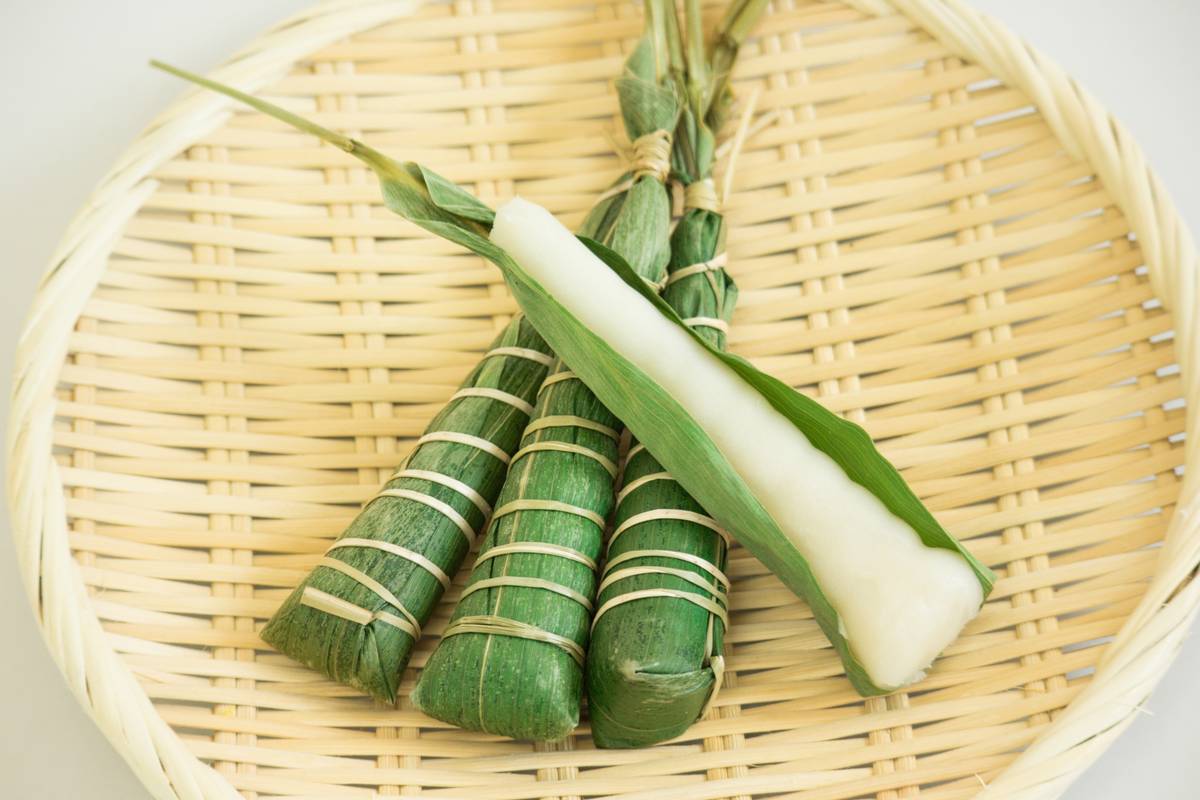
Made by wrapping sticky rice in bamboo leaves. Some contain bean paste filling, while others are sprinkled with sugar when eaten.
At Chinese restaurants, chimaki typically refers to a triangular savory sticky rice prepared with meat and vegetables, but the chimaki eaten during Tango no Sekku is a cone-shaped Japanese sweet made from sticky rice or arrowroot starch. It is wrapped in bamboo leaves, bamboo skin, or cogon grass leaves and is fragrant.
Depending on the region, dishes similar to chimaki also exist. In Akita and Yamagata Prefectures, sticky rice wrapped in bamboo leaves and boiled is served with kinako (roasted soybean powder) and sugar or dark molasses, a dish called sasa-maki. In Nagano and Gifu Prefectures, mochi filled with bean paste is wrapped in magnolia leaves and steamed, known as hoba-maki. In the Kyushu region, sticky rice is soaked in lye made from burning wood or bamboo, wrapped in bamboo skin, and simmered for hours to create aku-maki.
Regional Sweets Slightly Different from Kashiwamochi and Chimaki
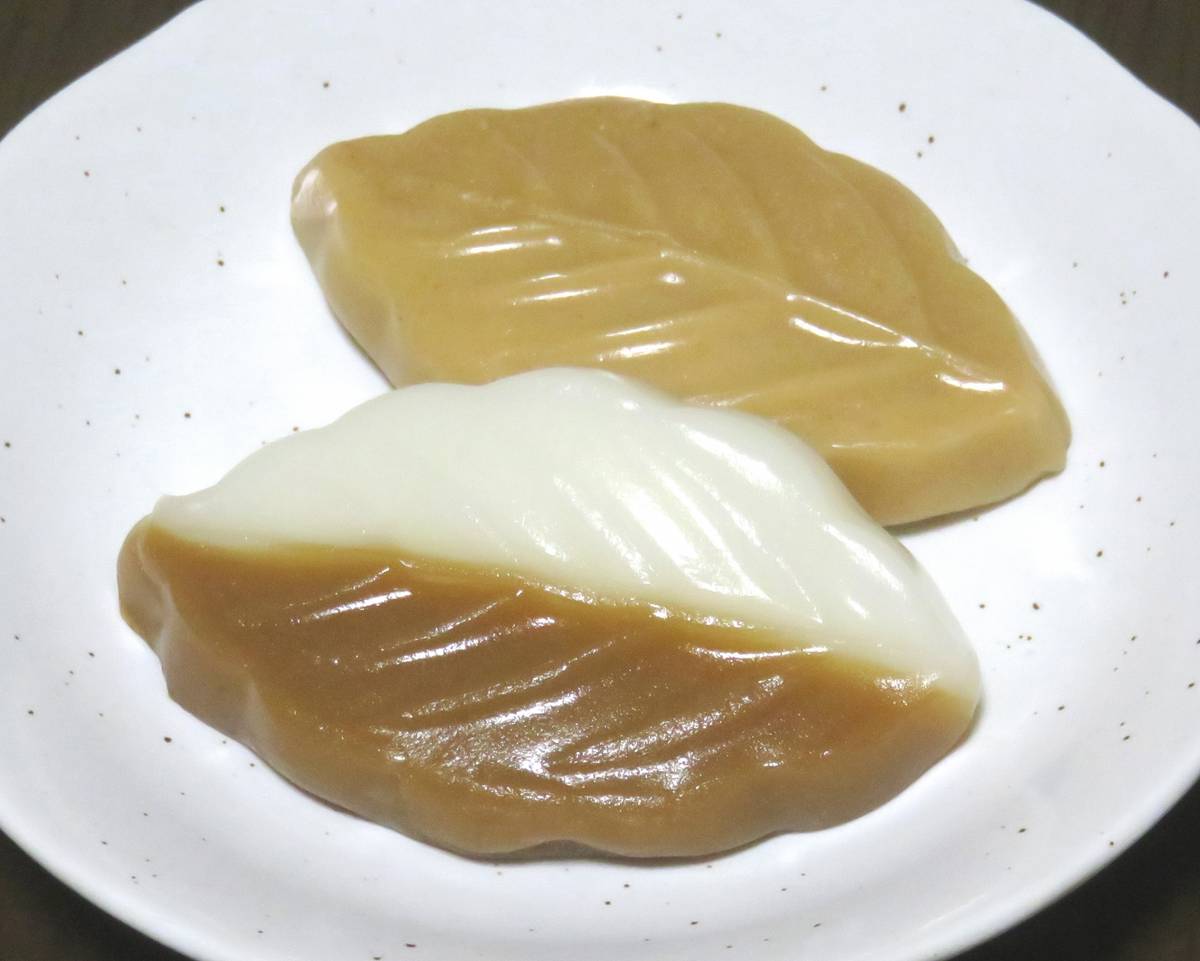
Beko mochi from Hokkaido
Hokkaido has beko mochi, a sweet shaped like a leaf. Made from rice flour and sugar, it has both a brown section made with brown sugar and a white section made with refined sugar. “Beko” is a Hokkaido and Tohoku dialect word for cow. While the reason for naming a leaf-shaped sweet after a cow remains unclear, the most popular theory is that the brown and white coloring resembled the cattle raised in Hokkaido. Similar sweets include kujira mochi, eaten on Girls’ Day in Aomori and Yamagata Prefectures, and suama, distributed at celebrations in the Kanto region as a good-fortune sweet.
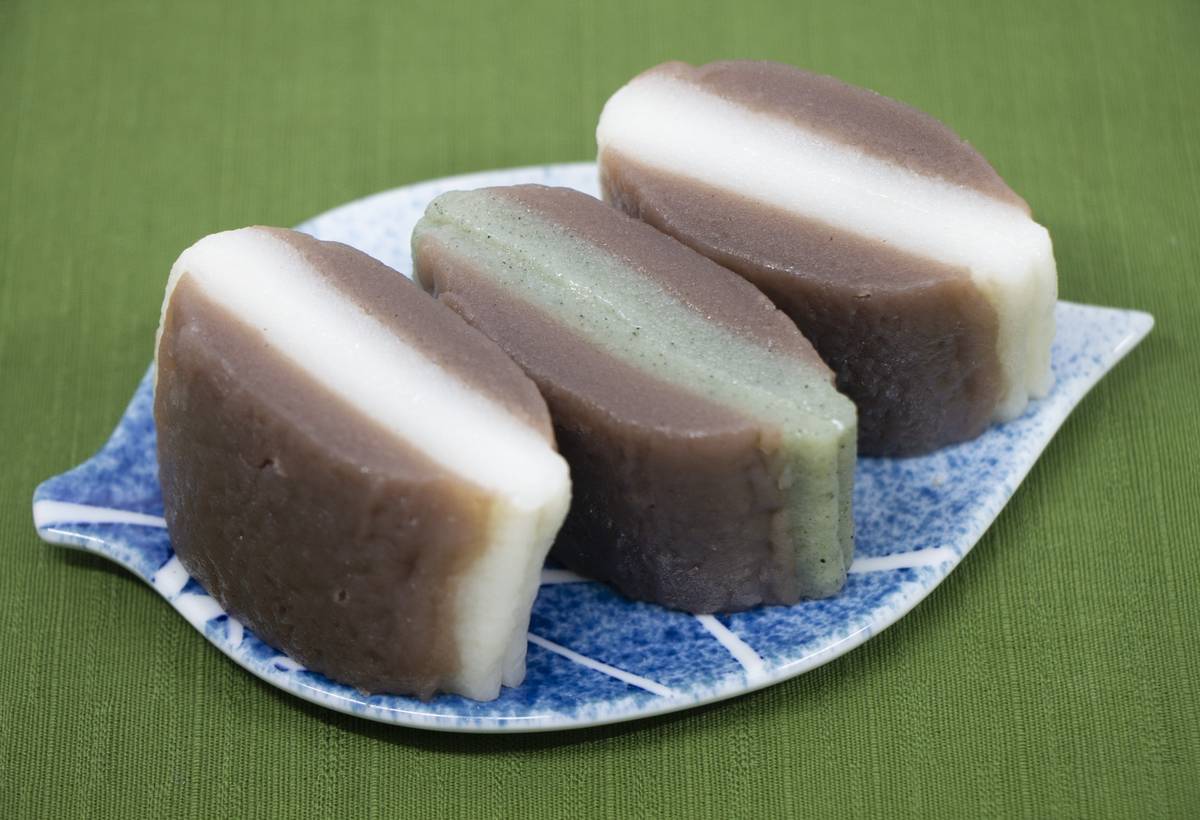
Kujira yōkan from Sadowara Town, Miyazaki Prefecture. Because it has a short shelf life, it is nicknamed the “sashimi of sweets.”
Miyazaki Prefecture’s kujira yokan is a traditional sweet made by wrapping steamed rice flour in bean paste. It has been eaten in Sadowara Town, Miyazaki Prefecture, for over 300 years. In 1676, when a dispute over succession arose in the Sadowara domain, a mother named Shojuin, anxious about her son’s future, requested that a sweet be made in the shape of a whale. She wished for her child to grow “as large and strong as a whale.” Because the sweet is made without preservatives, it has a short shelf life and is nicknamed the “sashimi of sweets.”
Takenoko (Bamboo Shoots)
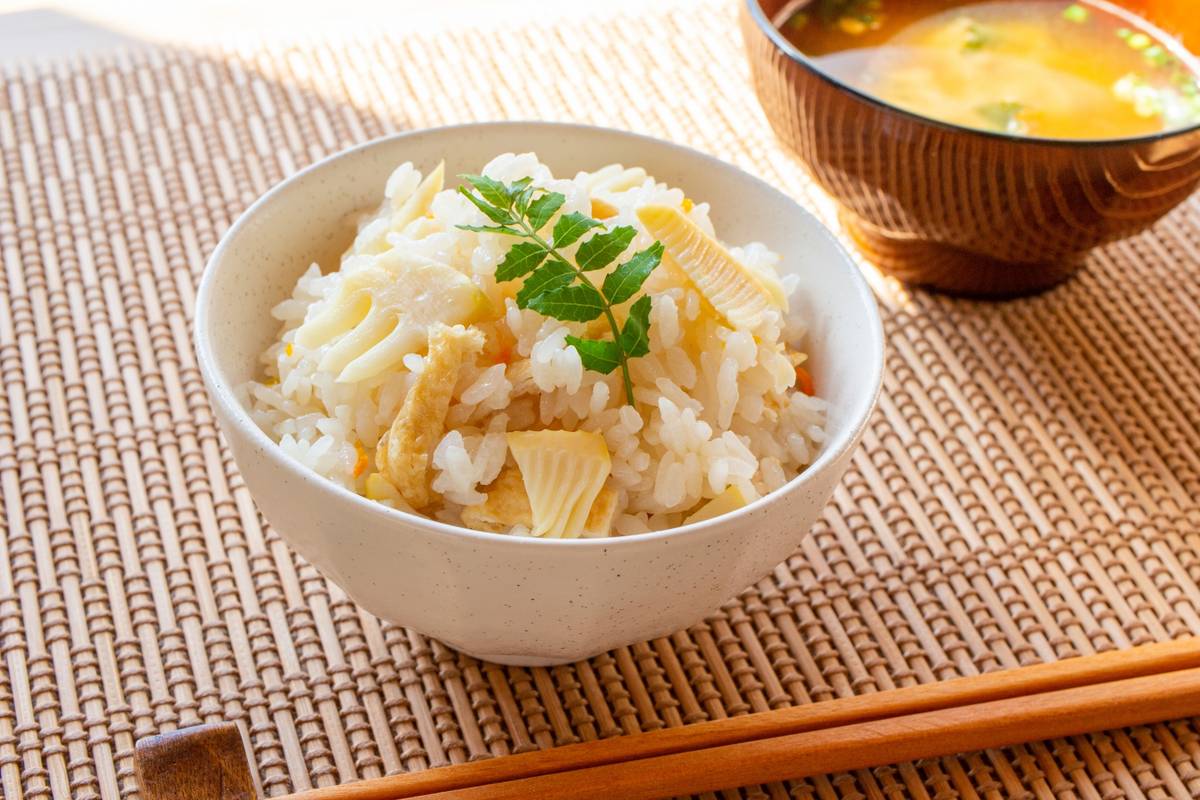
Bamboo shoots come into season in spring. Eating them on Children’s Day combines a wish for children’s growth with a seasonal delicacy.
Bamboo shoots come into season around the time of Tango no Sekku, and because they grow rapidly with strong vitality, they are eaten with the wish that children will grow tall and healthy. They appear in simmered dishes, soups, mixed rice, and spring rolls.
Buri and Bonito
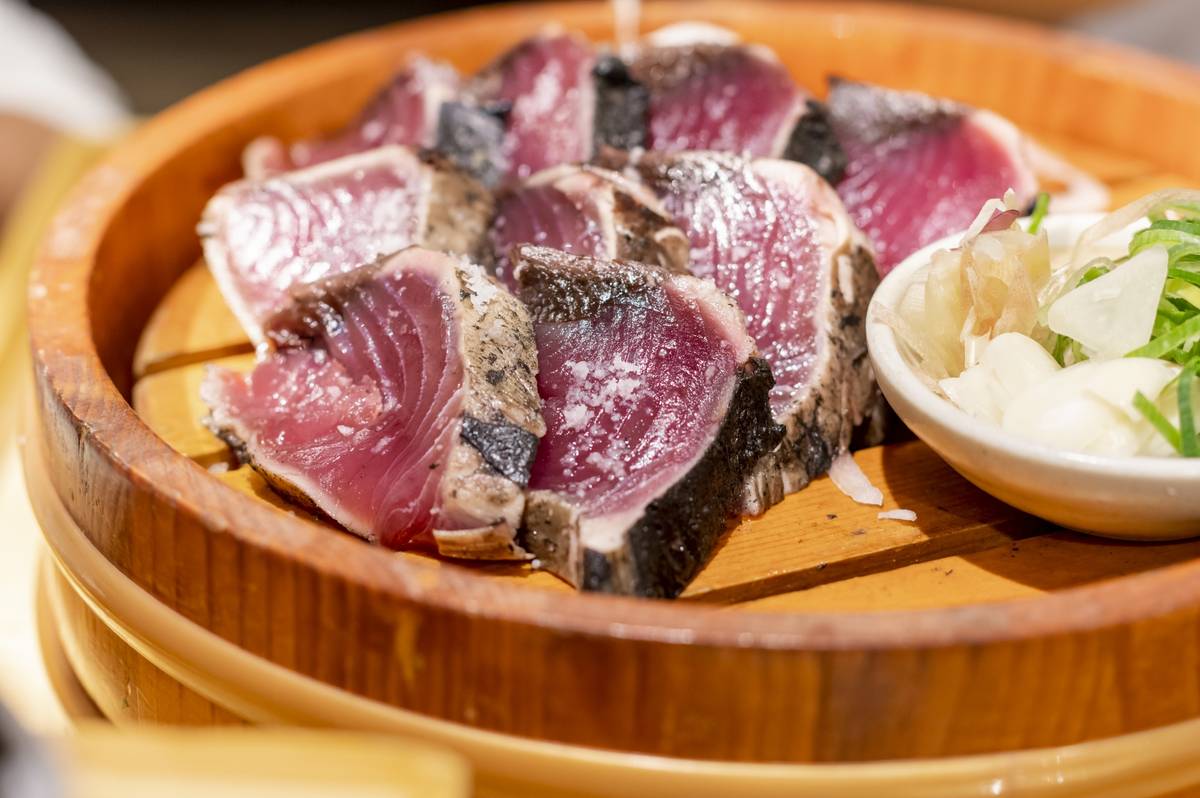
Buri and bonito are high-protein, nutritious fish that are also great for children’s health.
Buri (Japanese amberjack) is called a “shusse-uo” (a fish symbolizing advancement and success) because its name changes as it grows. In the past, people changed their names upon reaching adulthood or achieving advancement, making buri an auspicious fish beloved for generations.
As mentioned in the section on shobu-yu, Japan has a lot of lucky wordplay based on sound and meaning. Bonito is associated with the phrase “katsu otoko” (winning man), making it a fitting dish for the Tango no Sekku celebration of boys’ health and growth.
Children’s Day in Manga and Anime
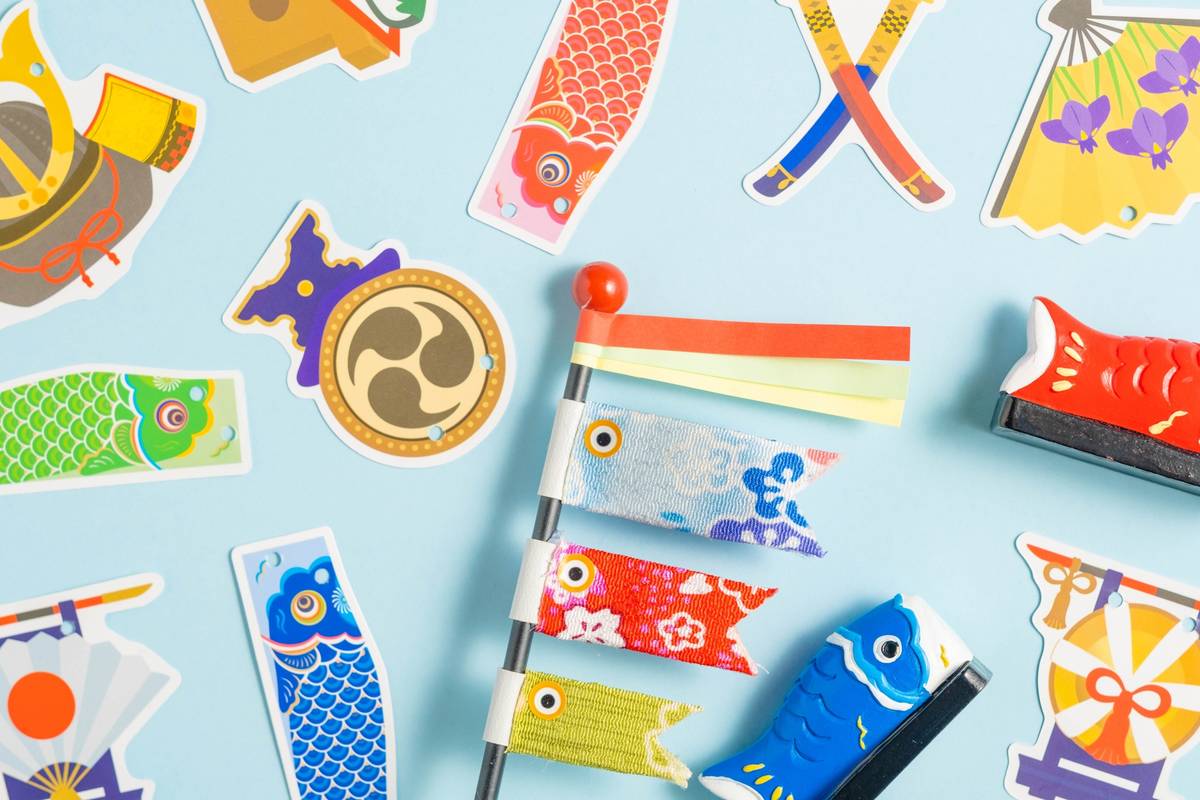
Stickers featuring Children’s Day motifs.
Commemorative artwork released around this time frequently shows characters with koinobori, kashiwamochi, or paper helmets folded in origami. Depicting characters during their childhood is also a popular theme. Inspired by the Kintaro legend, parody artwork often portrays characters wearing red diamond-patterned aprons or carrying large axes.
May 5th as Character Birthdays
Because May dolls display armor and helmets, and koinobori evoke images of gliding freely beneath blue skies, many anime and manga creators choose May 5th as the birthday for young boys or spirited characters.
Monkey D. Luffy
Luffy is the main character of the hugely popular manga and anime ONE PIECE, which also spawned a Netflix live-action adaptation. His birthday falls on Children’s Day. Every May 5th, the official ONE PIECE X account posts anniversary artwork, and fans celebrate with the hashtag #ルフィ誕生祭.
Gon Freecss
Despite extended hiatuses due to illness, Gon from HUNTER x HUNTER continues to garner passionate fan support, and the series even received an anime remake.
Deidara
Deidara from NARUTO, a series beloved internationally, is also said to have been born on Children’s Day. He belongs to the mysterious organization Akatsuki.
Children’s Anime and Events Flourish
Because schools close for the holiday, television stations air classic anime series in marathon or select programming blocks, and amusement parks and shopping malls host hero shows and other activities for children.
Many tourist facilities also provide discounts or free admission for children below a certain age.
Golden Week: Japan’s Long Holiday
Surrounding Children’s Day are other national holidays: Showa Day (April 29th), Constitution Day (May 3rd), and Greenery Day (May 4th). These holidays cluster together to form a stretch called Golden Week. At some companies, the days between Showa Day and Constitution Day are also declared holidays, creating a week-long break.
During Golden Week, families take trips together, office workers away from home return to visit family, and people enjoy leisure time unavailable during regular work weeks. The Okinawa and Kyushu regions often experience summer-like weather, while the Tohoku region may still see cherry blossoms through early May. Depending on location, Golden Week features different activities and festivals.
Things to Keep in Mind During Golden Week
Many events take place across the country, and tourist destinations become extremely crowded. Shinkansen, flights, and accommodations during the holiday period fill up quickly, so booking in advance is essential.
If you visit Japan during this season, you might encounter kashiwamochi and chimaki displayed in neighborhood sweet shops, and koinobori swimming along rivers and in parks. Some facilities showcase armor, helmets, and papier-mâché tigers up close, allowing you to experience the atmosphere of Tango no Sekku in its whole.
However, the crowds during Golden Week are considerable. Major tourist sites and transportation hubs are packed no matter where you go, so traveling on a relaxed schedule with buffer time is recommended.
Published Last Updated
Related Articles
Explore more articles on similar topics and deepen your knowledge of Japan.