Graduation and Entrance Ceremonies in Japan: How They Differ From Overseas
A guide to Japanese graduation and entrance ceremonies, from formal traditions to anime-inspired tropes.
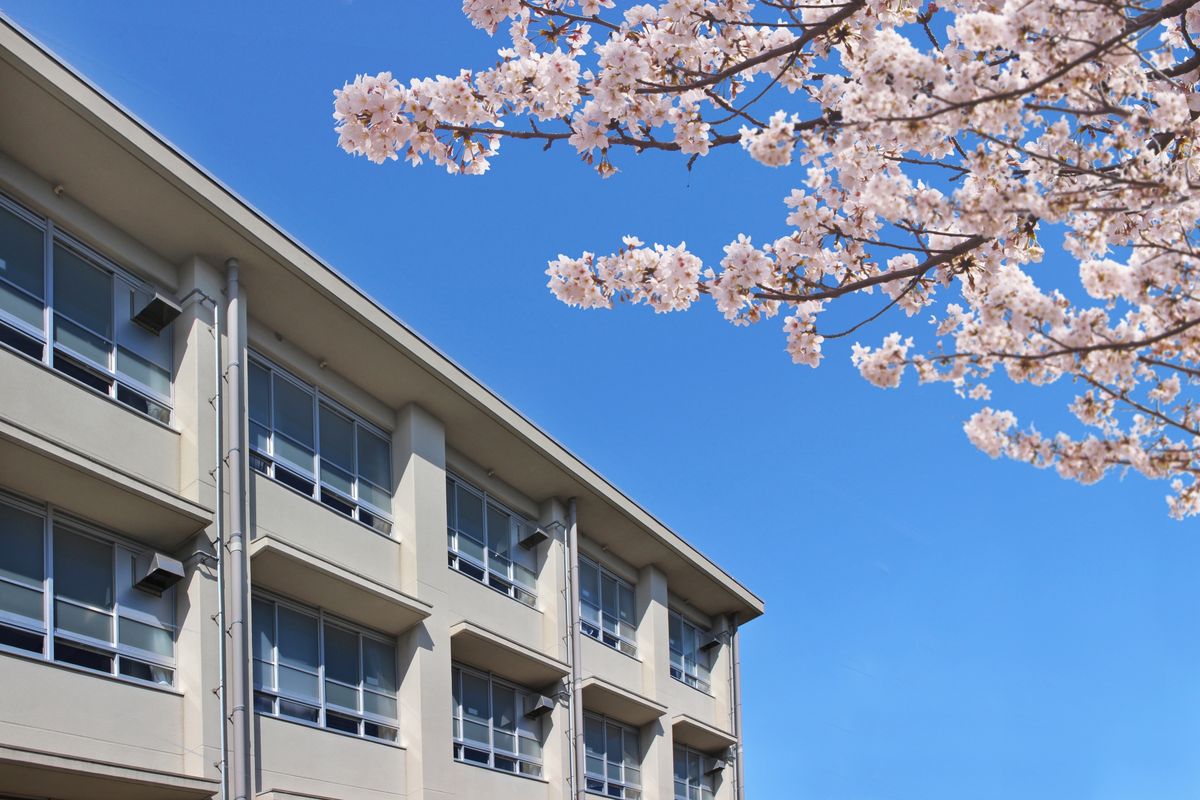
In Japan, there is a ceremony called nyugakushiki (entrance ceremony) held when children and students begin their first year at a new school. When they complete their course of study, they celebrate with a sotsugyoshiki (graduation ceremony).
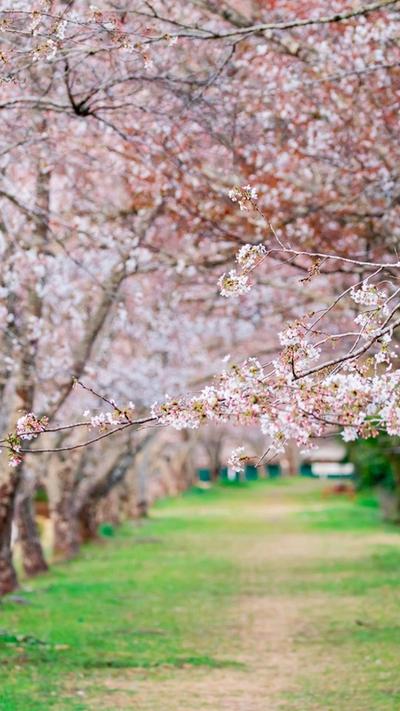
The timing of enrollment and graduation varies by country. In Japan, the academic year runs from April 1 to March 31 of the following year, so graduation ceremonies are held in March and entrance ceremonies in April. Spring, then, is regarded as a season of new beginnings and farewells. Cherry blossoms, the iconic flower of spring, have become a symbol of both.
Solemn Atmosphere Sets Japanese Ceremonies Apart
Globally, entrance ceremonies are uncommon, and graduation ceremonies tend to feel more like parties celebrating the completion of an academic program.
In Japan, however, schools serve not only as educational institutions but also as places where students learn discipline, social conduct, and group etiquette. The entrance ceremony marks the start of a new chapter in life, and the graduation ceremony marks its close. Both are treated as significant milestones. Students, faculty, parents, and invited guests attend in formal attire, and the atmosphere is quiet and solemn.
Five Types of Educational Institutions in Japan
- Certified childcare centers, kindergartens, and nursery schools for preschool-age children
- Elementary schools for ages 6 to 12
- Junior high schools (middle schools) for ages 12 to 15
- High schools for ages 15 to 18
- Vocational schools, junior colleges, four-year universities, and graduate schools, generally for ages 18 and up
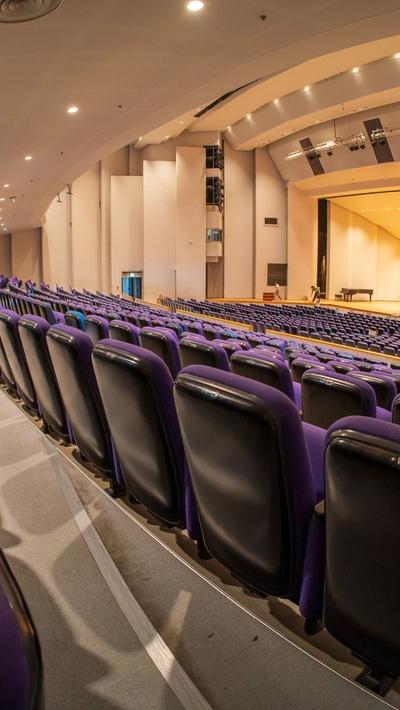
At each level, students attend an entrance ceremony in their first year and a graduation ceremony in their final year. These ceremonies are held in the school gymnasium or auditorium and typically last between 30 minutes to two hours.
March Graduations Celebrate Growth and Mark Farewells
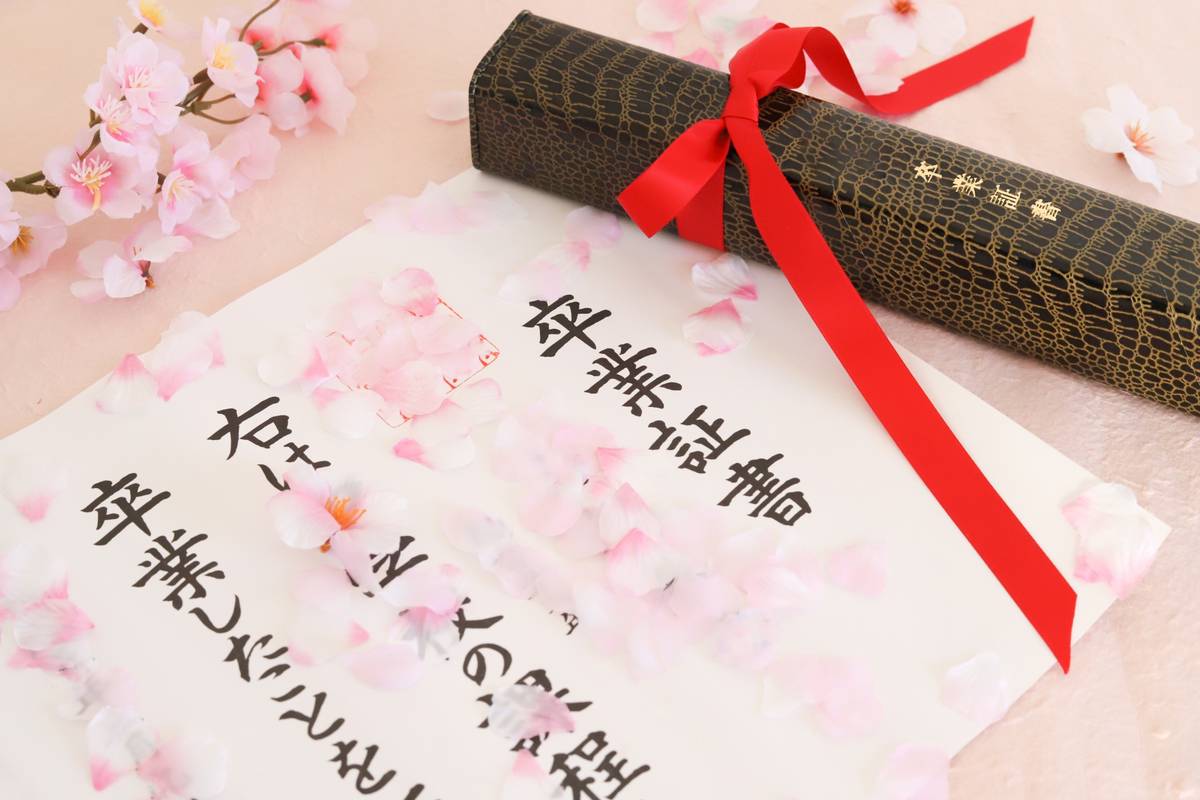
Each graduate receives a diploma during the ceremony. When taking it home, it is rolled up and placed in a cylindrical case.
While graduation ceremonies in Western countries tend to be upbeat, party-like events, Japanese graduations carry a more solemn tone. They serve as a farewell ritual for classmates and mentors who have shared years of school life together, filled with warmth and a touch of wistfulness.
The specifics vary by school, but a typical ceremony includes raising the national flag and singing the national anthem, congratulatory speeches from the principal and invited guests, and the awarding of diplomas. The remaining students deliver a farewell address to the graduates, expressing gratitude, congratulations, and encouragement, followed by a response from the graduates themselves, who thank their fellow students, teachers, and parents while reflecting on the joy of graduating.
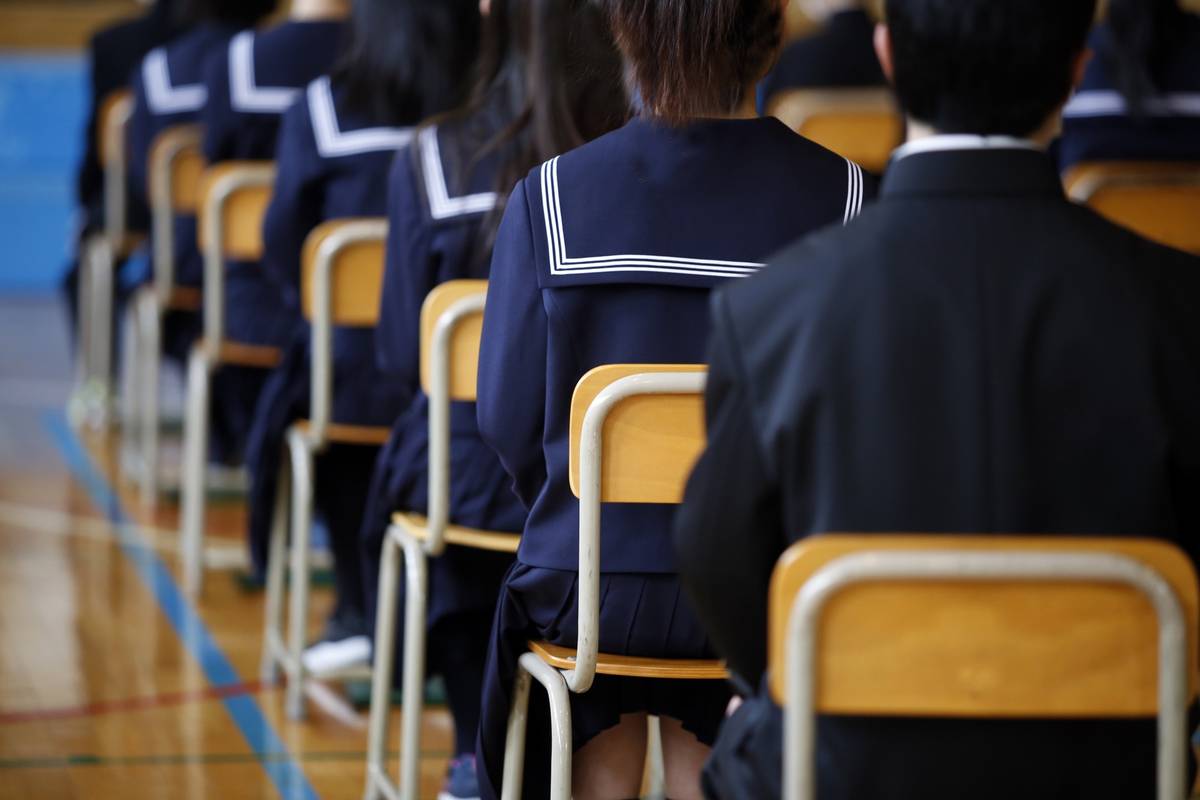
A graduation ceremony in progress. These events are typically held in the school gymnasium. Students sit on chairs brought from their classrooms, while teachers and parents use folding chairs.
Choral Performances Carry Messages of Gratitude and Encouragement
Many schools feature choral performances by both graduates and remaining students. Classic choices include Aoge ba Totoshi (a traditional song honoring teachers), Tabidachi no Hi ni (On the Day of Departure), and Daichi Sanshō (Ode to the Earth). In recent years, pop songs and even Vocaloid songs that became well-known as graduation anthems have been arranged for chorus as well.
Rather than lively, upbeat songs, the selections tend to be reflective and emotional. These performances evoke memories of school life and deliver messages of encouragement and gratitude. It is not uncommon for the students singing, as well as the teachers and parents listening, to be moved to tears.
What to Wear to a Graduation Ceremony
Around the world, graduation often brings to mind academic gowns and mortarboards. In Japan, however, students typically wear their school-designated uniforms. Since most junior high and high schools have uniforms, students attend in those. For elementary school graduations, some students wear the uniform of the junior high school they will be entering, while others dress in formal attire.
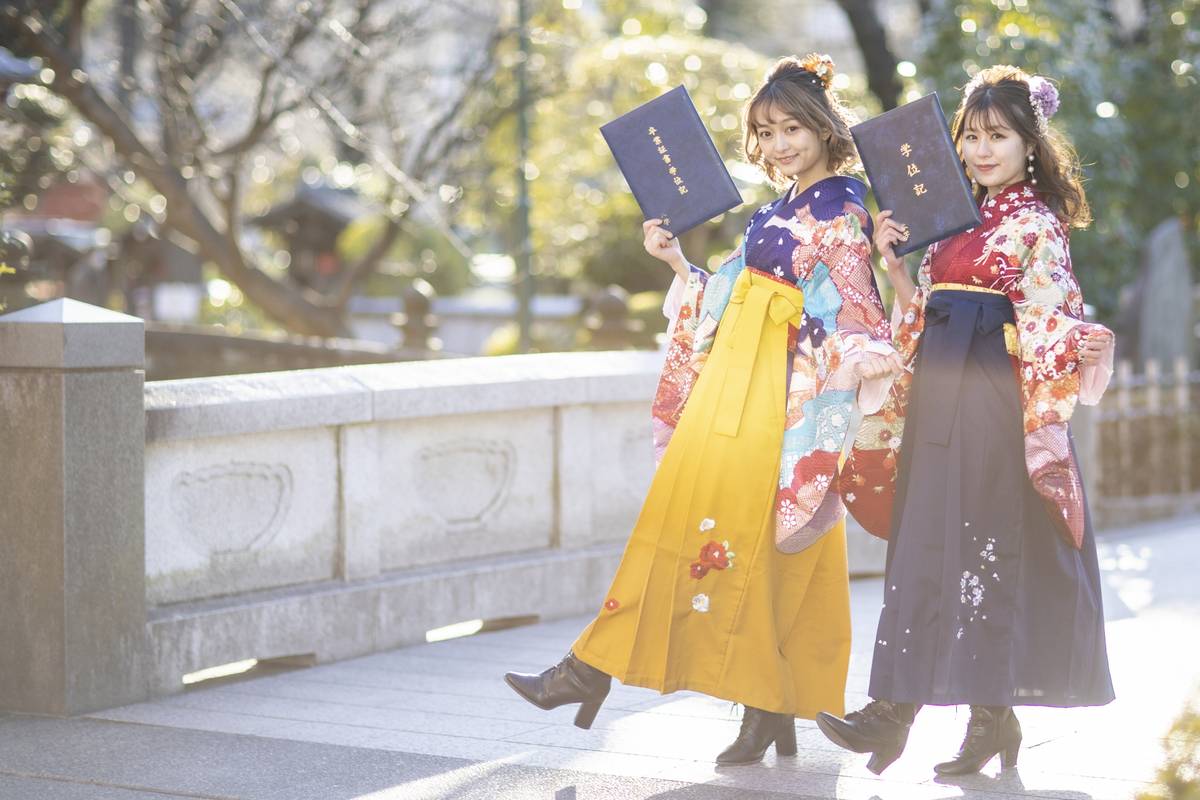
Women in hakama holding their graduation diplomas. Many women choose to wear hakama for university graduation ceremonies.
University students are generally free to choose their own attire. Men usually wear suits, and women often wear hakama. Hakama were worn by female students during the Taisho era and trace their roots back to the Nara and Heian periods, when they served as court garments and shrine maiden attire. Combining the elegance of kimono with greater ease of movement, hakama remain beloved as a refined and graceful choice.
At fashion vocational schools and arts universities, it has become a tradition for graduates to create their own outfits. Many show up in creative, playful costumes, making for a graduation ceremony full of smiles.
Parents and teachers also attend in suits or formal wear. Mothers typically choose gray, navy, or black, while fathers opt for dark suits. Teachers generally follow the same principle, though female homeroom teachers sometimes wear hakama.
Entrance Ceremonies, Held About a Month After Graduation
Through high school, students attend in their school uniforms. At the university level, suits are standard. After a ceremony similar in format to the graduation ceremony, students move to their classrooms, where the homeroom teacher hands out textbooks and documents for the coming year and explains school facilities and events.
While new students receive their classroom orientation, parents attend a meeting for the PTA (Parent-Teacher Association), an organization of parents and staff. This serves as an introductory gathering and enrollment session for the association.
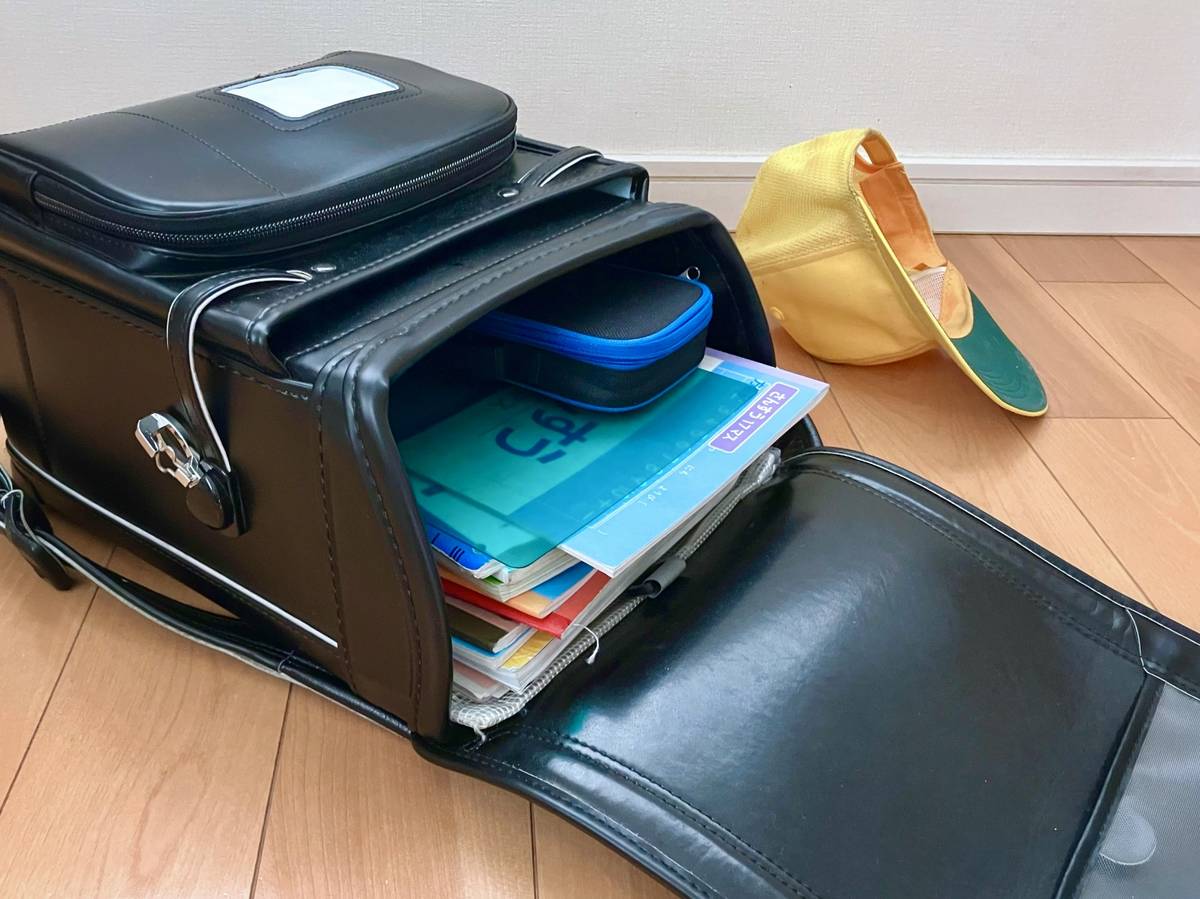
A randoseru filled with textbooks. Many Japanese schools do not allow students to leave textbooks and notebooks at school, making a sturdy school bag essential.
What to Wear to an Entrance Ceremony
Students attend in their school-designated uniforms or formal attire. For university entrance ceremonies, both men and women typically wear suits.
Parents and teachers wear suits or formal outfits, but unlike graduation ceremonies, brighter colors are common. Corsages and accessories/jewelry tend to be more festive as well, reflecting the celebratory mood and sense of hope that comes with a fresh start.
Only a Few Weeks Off Between Graduation and the New School Year
In countries where the school year begins in September, a long summer break separates one academic year from the next. In Japan, graduation ceremonies take place in early March, and the new term begins in early April.
Students who need to relocate for their next school face a tight timeline, sometimes having to find housing, sign a lease, and move in within roughly a month after graduation. Many begin apartment hunting before they even receive their acceptance letters, then finalize contracts once the results come in. Since results for second-round entrance exams are not announced until late March, some students and their parents must juggle exam preparation and housing searches simultaneously.
Opening and Closing Ceremonies for Continuing Students
At elementary, junior high, and high schools, continuing students also attend shugyoshiki (closing ceremonies) and shigyoshiki (opening ceremonies). These are smaller-scale school events compared to entrance and graduation ceremonies, and parents do not attend.
Japan's school year is divided by spring break, summer break, and winter break, with assemblies held at each of these transitions. Activities include awarding certificates of completion and introducing teachers who are transferring to other schools or joining the staff for the first time.
Gifts for Graduation and Enrollment
For graduation, gifts tend to be keepsakes that preserve memories of school life. For enrollment, gifts tend to be things that will be useful in the student's new academic chapter are preferred.
Graduation Gifts Focus on Lasting Memories
In Japan, graduating students receive a graduation album and a graduation essay collection from the school. The graduation album contains class group photos, individual portraits, and candid shots of school events and club activities. These albums include blank pages for yosegaki, where friends, teachers, and younger students write personal messages of gratitude and encouragement around the time of the graduation ceremony.
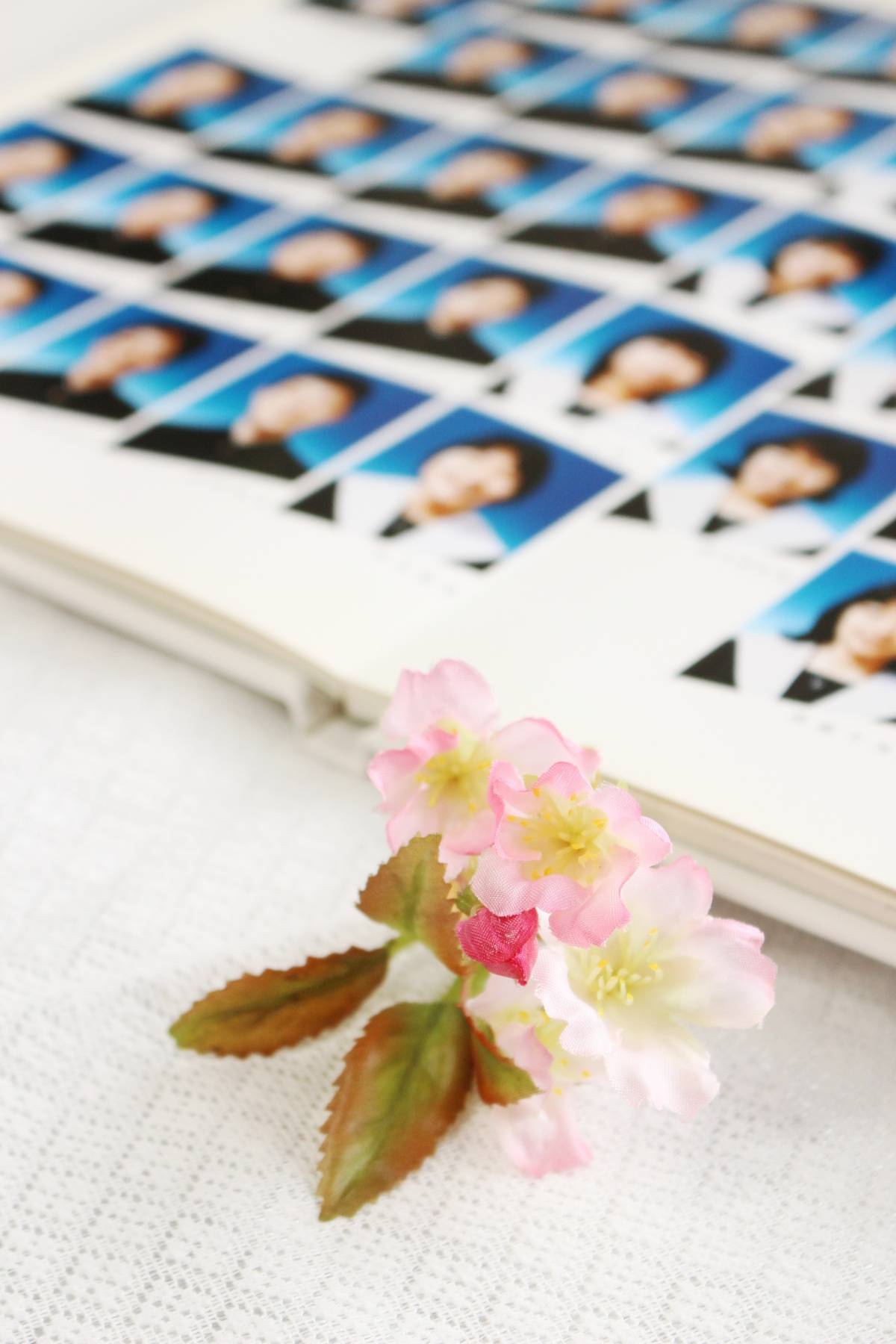
A graduation album featuring individual portraits of all graduates, along with photos from school events and club activities.
The graduation essay collection compiles compositions written by each student about topics like future dreams and favorite school memories. It also features contributions from homeroom teachers and other faculty who played a significant role, along with lighthearted entries such as rankings for “most likely person to become famous in the future.”
Club juniors also present graduates with a shikishi, a square cardboard used for yosegaki, filled with congratulatory and thankful messages. Schools may also give graduates commemorative items such as personal name stamps (hanko), engraved pens, or kōhaku manju, red-and-white steamed buns that symbolize good fortune in Japan (the combination of red and white is considered auspicious).
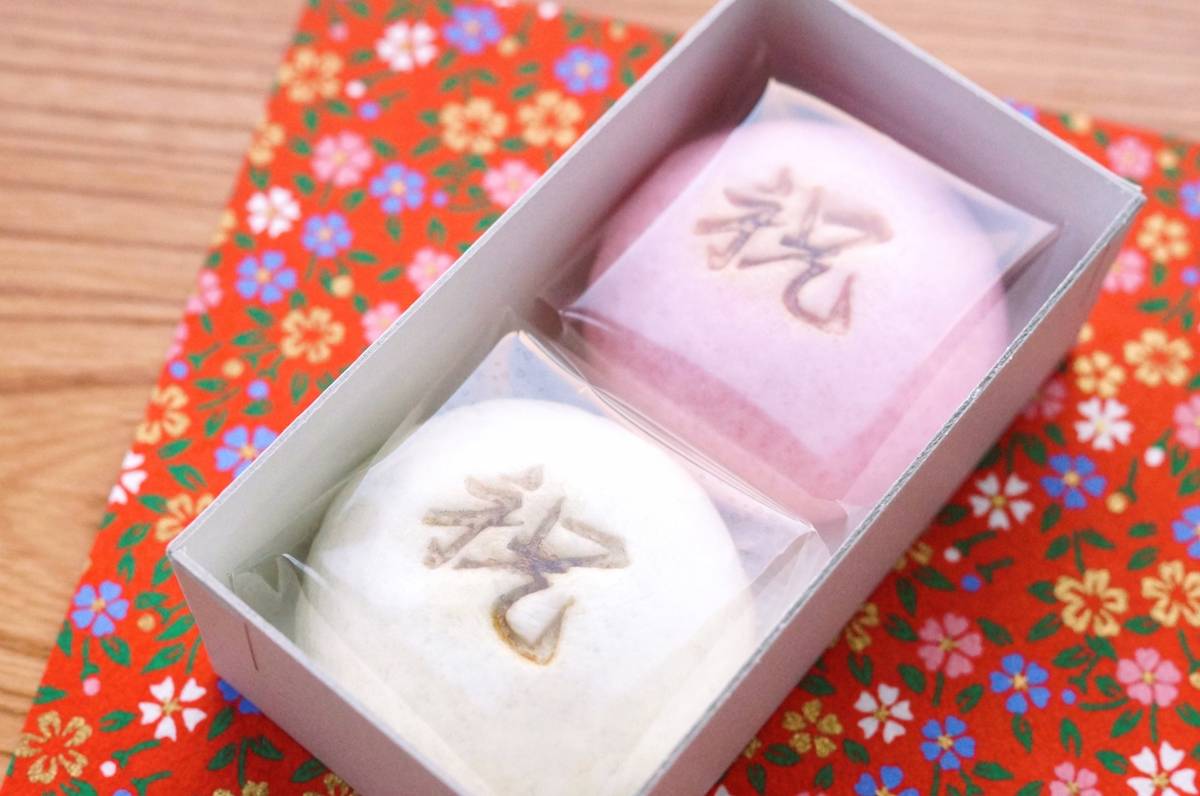
Kōhaku manjū are traditional Japanese steamed buns made from wheat flour dough with sweet bean paste inside. They are given as a set of two, one red (pink) and one white.
Enrollment Gifts Lean Toward Practical Items
While graduation gifts center on preserving memories through albums and yosegaki, enrollment gifts tend to be practical items like stationery and dictionaries. Schools may offer modest celebrations of their own, such as messages congragulating the students on their advancement, a special lunch menu featuring cake or chirashizushi for schools that serve kyushoku (Japan's school lunch program), or stationery printed with the school name and the student's name.
Enrollment gifts from family, particularly parents and grandparents, tend to be more substantial. Common choices include a randoseru (a sturdy leather school backpack, ranging from several hundred to over a thousand dollars), an electronic dictionary, or a laptop.
The Randoseru That Lasts All Six Years of Elementary School

A red and black randoseru. In recent years, the variety of colors and patterns has grown significantly, giving parents and children plenty of options to consider.
Some schools designate a specific backpack, but in most cases, elementary students use a randoseru for their daily commute to school.
A randoseru is a durable backpack made of leather, designed to be rain-resistant, dirt-resistant, and comfortable to carry. It has ample storage space for textbooks, notebooks, stationery, and other school supplies. Safety features are also built in, including reflective strips for visibility and cushioned construction to help protect children in case of an accident.
Red for girls and black for boys was once the standard, but today randoseru come in a wide range of colors to match individual preferences. Embroidered designs and other decorative touches have become increasingly popular as well.
Graduation and Entrance Ceremonies in Anime and Manga
In series centered on students or teachers, these ceremonies are often portrayed as pivotal events tied to character growth and emotional farewells. In school-life stories and romantic comedies, the graduation ceremony sometimes serves as the finale or climax, underscoring just how significant the event is within these narratives.
A common scene involves the entire class gathering in their homeroom to take a group photo at the end of the year, or students writing messages and drawing on the chalkboard with chalk. Some characters also leave hidden messages on desks or walls as personal mementos.
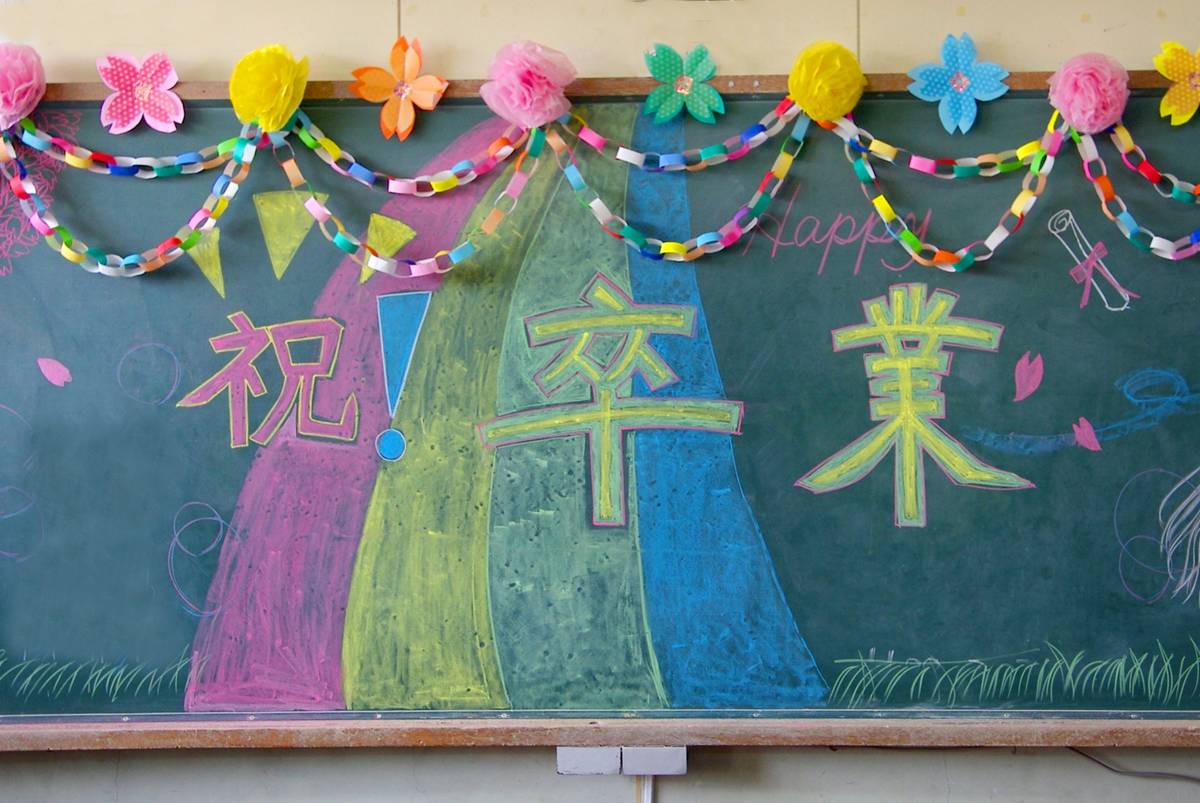
Chalkboard art. Teachers often create these for their students, though in manga and anime, it is usually the main characters who draw and write on the board.
The “Second Button”, a Romantic Comedy Classic
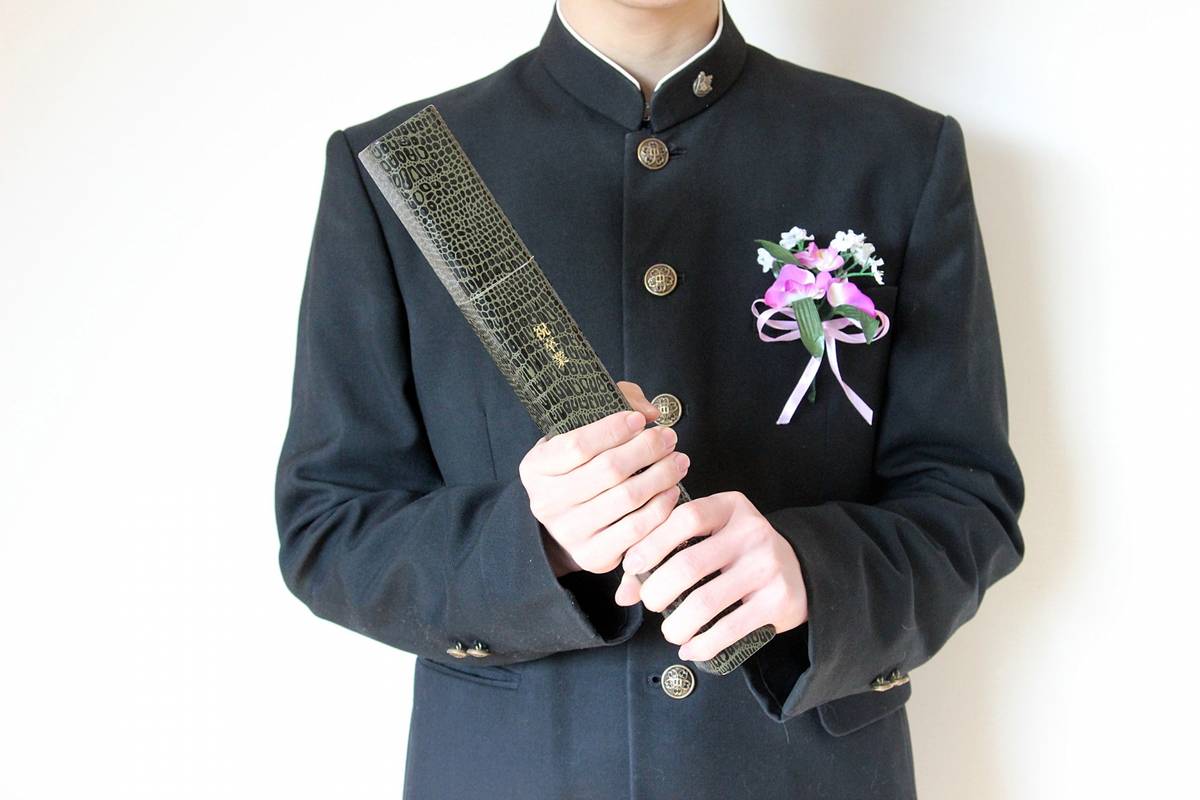
A gakuran, the standing-collar school uniform for boys. It is used in many junior high and high schools.
In romance manga where the main character wears a gakuran (a standing-collar military-style school uniform), storylines sometimes revolve around a scramble for the second button, or the tension of whether a character can successfully give or receive one from the person they have feelings for. The second button sits closest to the heart, giving it the symbolic meaning of "giving away one's heart."
Today, graduates can easily stay in touch through social media. In earlier decades, though, the only options were calling someone's home phone or writing letters, making contact outside of school far more difficult. Graduating from high school often meant moving to a distant city for university, adding physical distance to the emotional weight of farewell. This is why graduation was such a monumental event, and confession scenes and second-button exchanges featured heavily in manga and anime from the Showa era through the early Heisei period.
As blazer-style uniforms replaced the gakuran starting in the Heisei era and mobile phones became widespread, the second button has appeared less frequently. Even so, the image of giving your second button to the person you like remains deeply rooted. Scenes of a popular male character having every button on his uniform snatched away by admirers are still a familiar trope.
In yuri or GL (Girls' Love) works, which depict romance between female characters, the equivalent gesture sometimes takes the form of exchanging a sailor uniform scarf or a uniform ribbon.
Entrance and Opening Ceremonies in Anime and Manga
In stories featuring students or teachers, the entrance ceremony or opening ceremony held in April often serves as the starting point of the narrative. In romance stories, this is where the protagonist meets the main love interest. In sports series, it is where they encounter their teammate plus rival , a dependable upperclassman, or an inspiring coach.
In series that follow a protagonist from enrollment through graduation, April can launch a new story arc and introduce fresh characters, including new underclassmen.
In romantic comedies, the transition to a new school often triggers a change in living arrangements. A character might start living alone after moving for school, or find themselves home alone after their parents transfer for work. These new circumstances set the stage for the story to unfold.
Published Last Updated
Related Articles
Explore more articles on similar topics and deepen your knowledge of Japan.