Transfer Students in Anime and Manga: What's It Really Like in Japan?
Transfer students are a staple of anime and manga. Learn how Japan's unique classroom system makes them the perfect narrative device, and explore three storytelling patterns through works like Evangelion, Madoka Magica, and more.

If you watch Japanese anime or read manga, you'll notice transfer students (tenkosei) playing a pivotal role in countless works. Sometimes the protagonist transfers to a new school and the story begins; other times, a mysterious transfer student arrives and sends ripples through the class. The reason this motif appears so frequently lies in Japan's distinctive school system.
The Japanese Classroom: The Center of School Life
In many Western educational systems, individual students move from room to room for each subject. In Japanese elementary, middle, and high schools, however, the teachers come to the classroom, and an entire class takes lessons together in the same room. Students only leave for subjects that require specialized equipment, such as physical education, music, or art, and they rarely share a lesson with anyone from a different class.
From April, when the new school year begins, students spend an entire year in the same classroom with the same group of peers. They participate in school events like sports festivals, cultural festivals, and class trips as a single unit, preparing and competing together. How well the sports festival goes, the quality of the cultural festival booth, the memories made along the way; it all comes down to how well the class clicks.

At sports festivals, classes often compete for points, making teamwork within the class essential.
Students do step outside the class for club activities and committee work, but they spend the majority of the day in the same room with the same people. Anyone who struggles to fit in can quickly become isolated, and in the worst cases this leads to bullying or school refusal. It is no exaggeration to say that class assignments can make or break a student's school life.
Transfer Students: A Breath of Fresh Air in a Closed Group
Social dynamics within a class tend to settle within a few months of the entrance ceremony and class assignments in April. In elementary, middle, and high school, classes are reshuffled every year as a rule, though students at smaller schools or in specialized vocational programs may spend all three years with the same group.
The annual reshuffle exists to balance academic and athletic ability across classes, encourage broader social connections, and prevent any single teacher from being overburdened. At college-prep schools, on the other hand, classes are often divided by humanities, sciences, or target university, with curricula tailored to their respective entrance exams.

Because students spend an entire year in the same classroom with the same group, class assignments matter enormously.
A transfer student is someone who drops into these settled dynamics midway. They bring new values and perspectives into a class that tends toward insularity, shaking up the existing hierarchy. For anime and manga creators, this makes for an irresistible starting point for drama.
A returnee student who lived overseas can introduce cultural clashes. A student arriving mid-semester raises the question of 'Why now?', a natural hook for mystery. Even in fantasy settings, grounding the story in the familiar structure of Japanese schools and classrooms gives audiences an entry point into an unfamiliar world.
Transfer Student Tropes in Manga and Anime
There are classic, recurring tropes often used in scenes where a transfer student is introduced.
First, the homeroom teacher writes the newcomer's name on the blackboard, and the transfer student introduces themselves to the class. The door opens, and thirty pairs of eyes turn in unison. At break time, students crowd around the new arrival, bombarding them with questions like 'Where are you from?' Scenes of classmates speculating beforehand about whether the newcomer will be a boy or a girl, or buzzing with excitement over their appearance, are equally familiar.
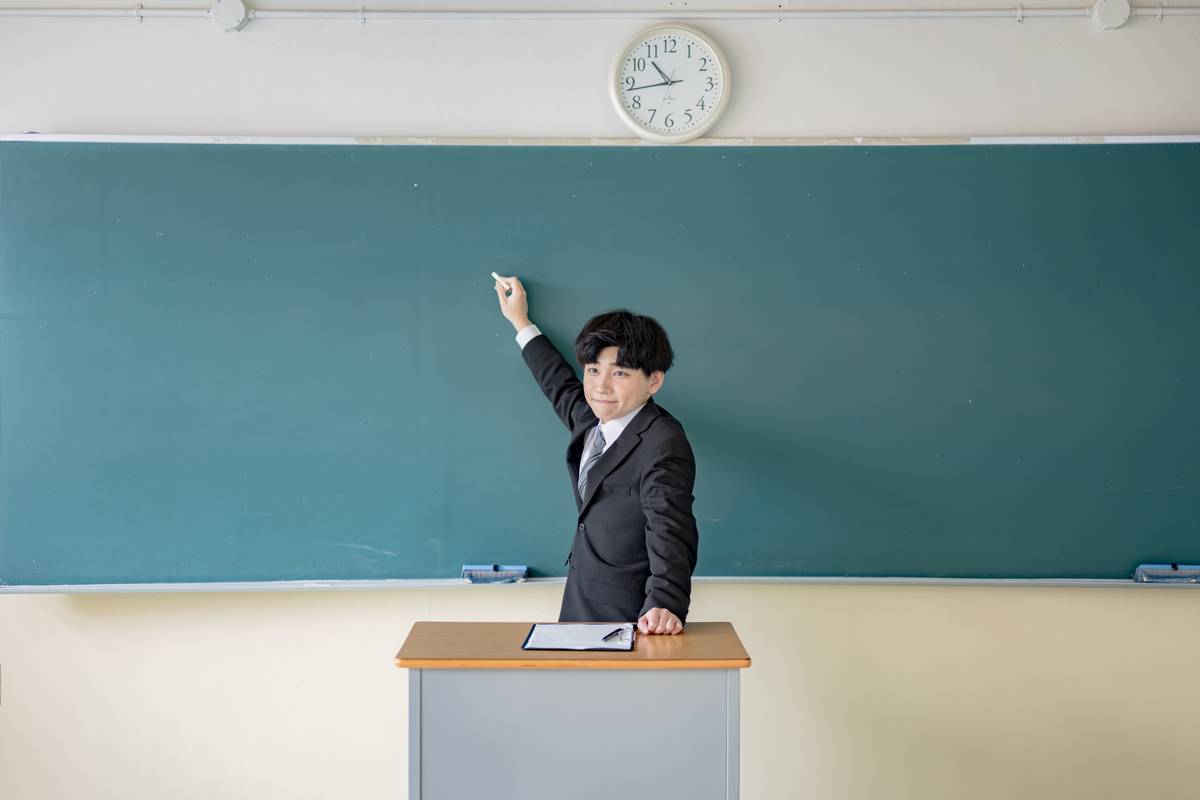
In a typical introduction, the teacher writes the transfer student's name in kanji on the chalkboard before they greet their new classmates.
Another classic trope is the seating assignment. Japanese schools have assigned seats, and in anime and manga the teacher typically points to a conveniently empty desk, almost always in the back row by the window or right next to the main character. The window seat has a practical animation reason as well, since there are fewer background classmates to draw. But it also makes for easy storytelling. The character can gaze outside lost in thought or be the first to notice something strange happening outdoors. In real schools, of course, there is rarely a spare desk sitting empty; a seat is prepared in advance when a transfer is expected.
Transfer Students in Real Life
The most common real-life reason for transferring schools is a parent's job relocation. Changes in family circumstances, including a parent's divorce or remarriage, can also be the cause.
In anime and manga, a parent's overseas transfer often becomes the excuse for the protagonist to start living alone in Japan. In reality, though, almost no family would allow a middle- or high-schooler to live on their own. The norm is to move in with relatives or relocate as a whole family. At athletic powerhouse schools that recruit nationwide or in cases where students come from remote islands, the school nearly always provides a dormitory or other accommodations.
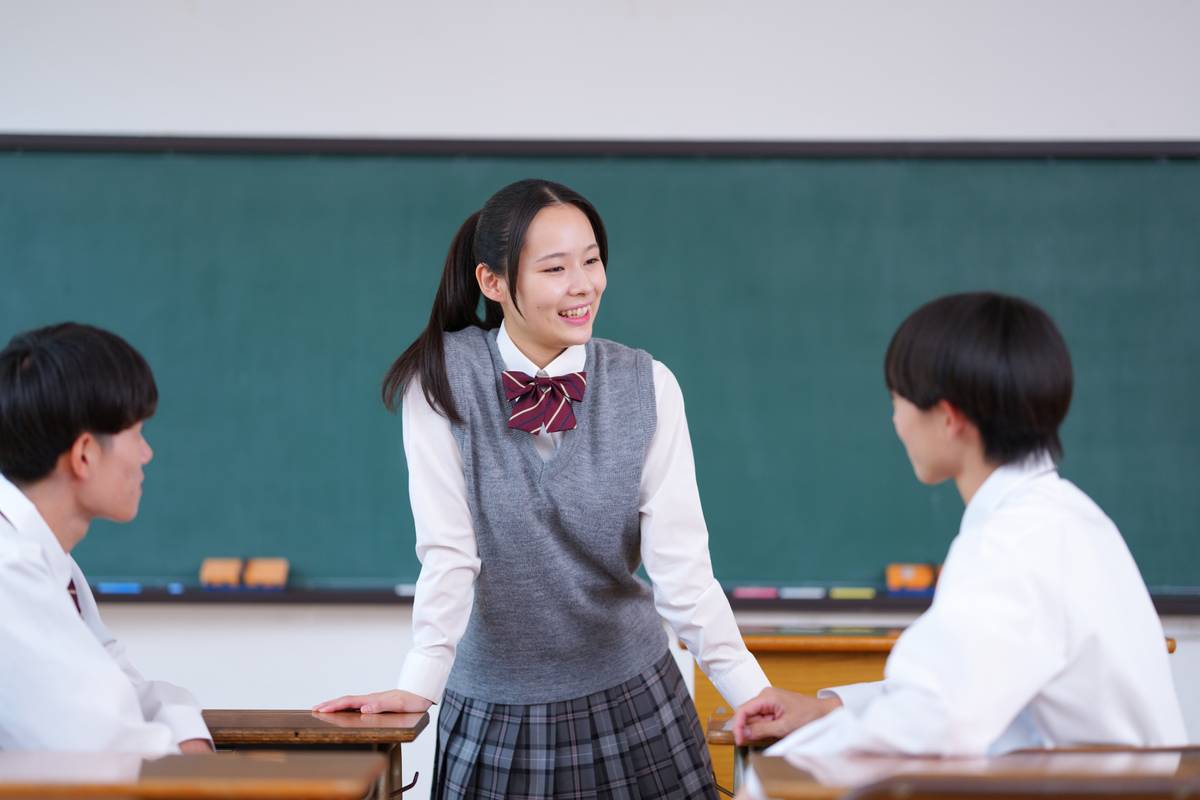
Because a new face in class is such a rare event, transfer students make a natural source of drama, which is exactly why anime and manga use the trope so often.
Responses to bullying also differ by country. While some countries have systems that mandate counseling or even transfer the aggressor, in Japan it is still not uncommon for the victim to be the one who changes schools. Some families seek a fresh start by transferring to correspondence high schools, where students can earn a diploma primarily through home study and online learning, or by turning to privately operated free schools.
Patterns That Make Transfer Students Drive a Story
A transfer student is more than just a character trait. It functions as a narrative device that sets the story in motion. The ways this device is used fall broadly into three patterns.
The Outsider Who Shakes Up the Class
The most classic pattern is the transfer student who collides with the established order and gradually changes everyone around them.
Neon Genesis Evangelion's protagonist, Shinji Ikari, transfers to a school in Tokyo-3 on his father's orders. Introverted and sensitive, Shinji finds little comfort in his new classroom. His isolation as a transfer student overlaps with the crushing burden of piloting a giant robot, building a story that feels suffocating and deeply layered.
The tokusatsu (live-action) series Kamen Rider Fourze takes the opposite approach with its protagonist, Gentaro Kisaragi. He declares on day one that he is going to befriend every single person in the school, and barrels headfirst into every social circle. The fun of the show lies in watching everyone get swept up in Gentaro's relentless energy.
Even with the same premise of being a transfer student, whether the character withdraws inward or charges outward gives the story an entirely different color.
Arriving with Secrets and Foreshadowing
In many stories, the reason for the transfer itself is tied to the heart of the plot. Readers are led to wonder why this person has appeared at this particular moment, and the very presence of the transfer student creates a sense of mystery.
Puella Magi Madoka Magica's Homura Akemi is a prime example. The story takes a darker turn from the moment Homura, who at first appears to be a quiet transfer student, warns the protagonist, Madoka, not to become a magical girl. Why Homura is so fixated on Madoka remains a central question, and when the answer is finally revealed, it completely transforms how the entire story is perceived.
In the manga Jujutsu Kaisen 0, Yuta Okkotsu is another protagonist who transfers under extraordinary circumstances. Haunted by the spirit of a childhood friend who died, and having inadvertently harmed classmates because of it, he is sent to a specialized school for jujutsu sorcery. His transfer, accompanied by desperation, becomes the starting point of a story about growth.
The manga Yu-Gi-Oh! features another memorable transfer student in Ryo Bakura. Gentle and soft-spoken, Bakura befriends the main characters, yet an ancient Egyptian artifact he wears harbors a second, far darker personality that schemes behind the scenes. The jarring contrast between his kind outer face and the ruthless one lurking beneath makes him a compelling wild card, and his sudden appearance in the story feels natural precisely because he arrives as a transfer student.
Stories Born from Farewell and Distance
Less common than characters who transfer in, but no less powerful, are characters who transfer away and become a turning point in the story. The focus shifts to those left behind, to how they feel and how they change, and this tends to draw out deeper emotional writing.
In the light-novel based anime Toradora!, the heroine Taiga Aisaka transfers away near the end of the story. The sudden absence of someone who had always been right there sets the protagonist's and everyone else's emotions into motion, propelling the narrative toward its final act.
In the game-based series Higurashi: When They Cry, a character's disappearance is explained to those around them as a 'school transfer.' This abrupt and unnatural explanation becomes one of the clues in unraveling the mystery behind the incidents occurring in the village.
Across many genres, the idea of a school transfer is used to convey a sense of loss and unease; for example, in stories about bullying where the perpetrator transfers away, or in suspense works where a student’s death is framed as a ‘transfer.’
In Closing
There are likely quite a few similarities with the school systems you’re familiar with in your own countries. The concept of transferring schools exists everywhere, and the issues that come with it are probably shared as well.
Where Japan differs is that teenagers spend nearly all their classes with the same fixed group of peers. Which class you end up in can make or break your school life. Even in real life, a transfer student can stand out as a fresh presence when they enter a class where tight-knit friend groups are already formed and social dynamics are fixed.
Beyond the classroom system, Japan's entrance and graduation ceremonies have a distinctive atmosphere themselves. We've written about the timing of enrollment, graduation-day superstitions, and more, so check it out below.

Published Last Updated
Related Articles
Explore more articles on similar topics and deepen your knowledge of Japan.