Asakusa Shrine
浅草神社
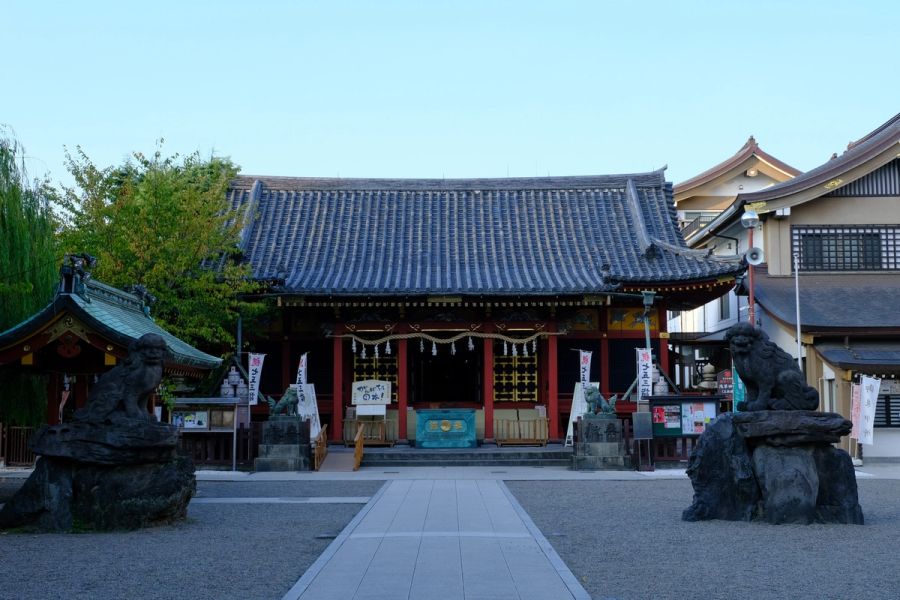
About Asakusa Shrine
Asakusa Shrine stands in Asakusa, Taitō Ward, Tokyo, just to the left of Sensō-ji Temple, one of the area's most famous landmarks. Its annual Sanja Matsuri, held each May, draws crowds of visitors.
Origins
On March 18, 628, the fisherman brothers Hinokuma no Hamanari and Takenari went out to fish, but caught no fish at all. Instead, a small religious figure became caught in their nets. They returned it to the sea and tried a different spot, only for the same kind of figure to come up again rather than fish. Puzzled, the brothers placed it on a tree stump.
When they told the story to Haji no Matsuchi, a learned figure in the community, he recognized the statue as Shō Kanzeon Bosatsu (the Holy Kannon Bodhisattva), a deity believed to grant blessings. The brothers enshrined the figure and offered prayers, and the next day's haul was bountiful.
Before long, Haji took Buddhist orders and turned his own home into a temple. He installed the Kannon statue there and devoted the rest of his life to teaching and guiding the local community. The temple is said to have attracted devotion from shoguns, samurai families, and commoners alike, and the surrounding area prospered with it.
Generations later, a descendant of Haji received a divine message in a dream from Shō Kanzeon Bosatsu. This led to the founding of Sanja Gongensha, a shrine that enshrined the brothers Hamanari and Takenari alongside Haji no Matsuchi as three local kami.
The shrine's name was later changed under the Shinbutsu-bunri edict separating Shinto from Buddhism, but it is still affectionately known as Sanja-sama.
The Main Hall, an Important Cultural Property
The complex follows the Gongen-zukuri style, in which the offering hall (heiden) and worship hall (haiden) are joined by a covered walkway. It was built by Tokugawa Iemitsu, the third shogun of the Edo shogunate. Having survived both the Great Kantō Earthquake and wartime damage, the structure retains its original appearance more than 350 years on.
Sanja Matsuri, an Early Summer Tradition
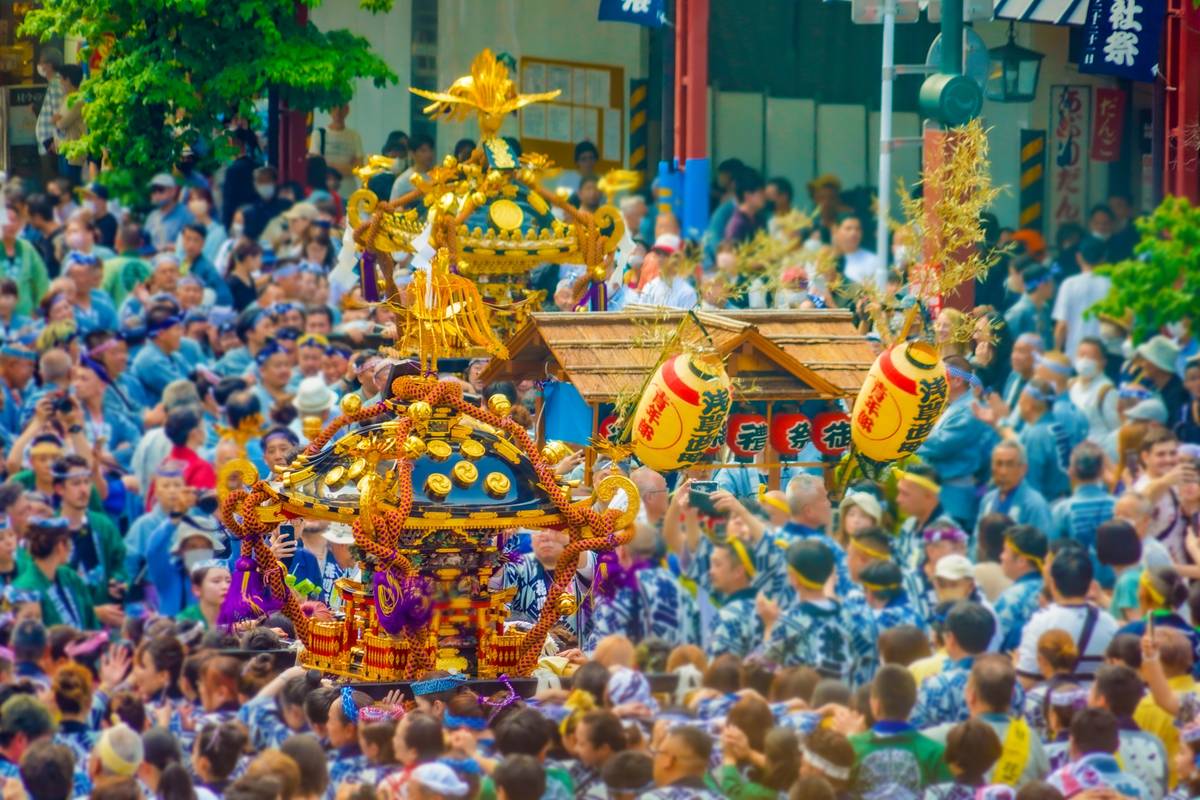
Sanja Matsuri. The mikoshi serves as a vehicle for the deity's spirit, and bearers carry it through the streets so the kami can survey the neighborhood.
Held on the Friday, Saturday, and Sunday of the third week of May, the festival sends bold, ornately decorated mikoshi parading through the streets. Around 1.8 million people are said to attend across the three days, making it the busiest weekend of the year for the old downtown of Asakusa.
Day one opens with the Daigyōretsu, a grand procession that includes traditional dance. It also features the Binzasara-mai, a ritual dance designated as a Tokyo Intangible Cultural Property, performed as an offering to the kami.
Day two centers on the Reitaisai ceremony, during which the mikoshi owned by the ujiko, the parishioners who worship the local deity and support the shrine, are ritually purified.
Day three is when the mikoshi are taken out from early morning and carried through the streets. The bearers shake them roughly along the way, a ritual gesture believed to invigorate the kami inside and, by doing so, strengthen the deity's power to bestow blessings. There are three mikoshi dedicated by the ujiko, and alongside the parishioners themselves, members of mikoshi enthusiast associations also join as bearers. After sunset, the mikoshi return to the shrine grounds, and the festival comes to a close.
Tips for Visiting Sanja Matsuri
Sanja Matsuri stands out even among Japanese festivals for its sheer energy and bravado. It is a great fit for travelers who want to experience old-Tokyo downtown culture, but a few things are worth keeping in mind.
Pack Light and Dress for Comfort
Asakusa keeps the atmosphere of an old downtown and is busy with sightseers even on ordinary days. During Sanja Matsuri, the streets become so crowded that simply walking through them takes effort. Stow large bags in coin lockers or at your accommodation, and wear shoes that are easy to walk in.
Asakusa has plenty of shops selling happi coats, folding fans, and uchiwa fans, along with kimono rental shops, so dressing in a happi or yukata is a fun way to take in the festival in true Japanese style.
Prepare for Heat and Crowds
The festival takes place in the third week of May. Recent years have seen daytime temperatures in May rise above 21°C (about 70°F), warm enough for short sleeves. With the dense crowds, it can feel as hot as midsummer. Anyone who struggles with heat or gets dizzy in crowds should carry water and any usual medications. Mornings and evenings can still be chilly, so a light jacket is useful depending on when you are out.
Asakusa is also full of small, family-run shops, which makes finding restrooms or places to rest amid the crowds harder than usual. It pays to check ahead and plan their locations into your route and timing.
Take Reasonable Safety Precautions
The festival gets extremely crowded, so it is wise to take precautions against losing valuables or having them stolen.
At Sanja Matsuri you may also see people whose backs and arms are covered in large traditional Japanese tattoos, with motifs such as dragons, cherry blossoms, or tigers. While tattoos are widely worn as fashion around the world, traditional Japanese tattoos still carry strong associations with organized crime in Japan. The artistry is genuinely impressive, but staring or photographing without permission can lead to trouble, so it is best avoided.
If anyone confronts or shouts at you, the safest response is to walk away quietly without engaging. If a real problem arises, dial 110 to call the police for help.
That said, locals and visitors alike enjoy the festival safely every year, and there is no need to be overly cautious. One of Japan's liveliest festivals is well worth experiencing in person.
〒111-0032 2-chōme-3-1 Asakusa, Taito City, Tokyo
Loading map...
Stories about this place
Discover stories and insights about Asakusa Shrine
Last Updated: