Nezu Shrine
根津神社
About Nezu Shrine
Nezu Shrine stands quietly in Tokyo's Bunkyō Ward, a sacred site said to have been founded around 1,900 years ago. The seven shrine buildings commissioned in the Edo period by Tokugawa Tsunayoshi, the fifth shōgun, are all designated Important Cultural Properties of Japan. In spring, some 3,000 azalea bushes fill the grounds with color, and a tunnel of vermilion torii gates lines one of the paths.
History and Construction
According to tradition, the shrine was founded about 1,900 years ago by Yamato Takeru, a legendary prince of early Japan. Later, during the Bunmei era (1469–1487), the warrior Ōta Dōkan rebuilt and expanded its halls.
The next turning point came in 1706, when the fifth shōgun, Tokugawa Tsunayoshi, donated this land to the shrine. The plot had once been the estate of the Kōfu branch of the Tokugawa family. Tsunayoshi also ordered a full rebuilding project, drawing on the combined effort of feudal lords from across the country and backed by the full prestige of the shogunate. The shrine complex that stands today dates from that work. By the reign of the sixth shōgun, Tokugawa Ienobu, the Nezu Shrine festival had been elevated to the rank of a Tenka Matsuri, a "festival of the realm," placing it alongside the Sannō and Kanda festivals. Grand processions wound through the streets of Edo, drawing in the whole city.
Architectural Highlights
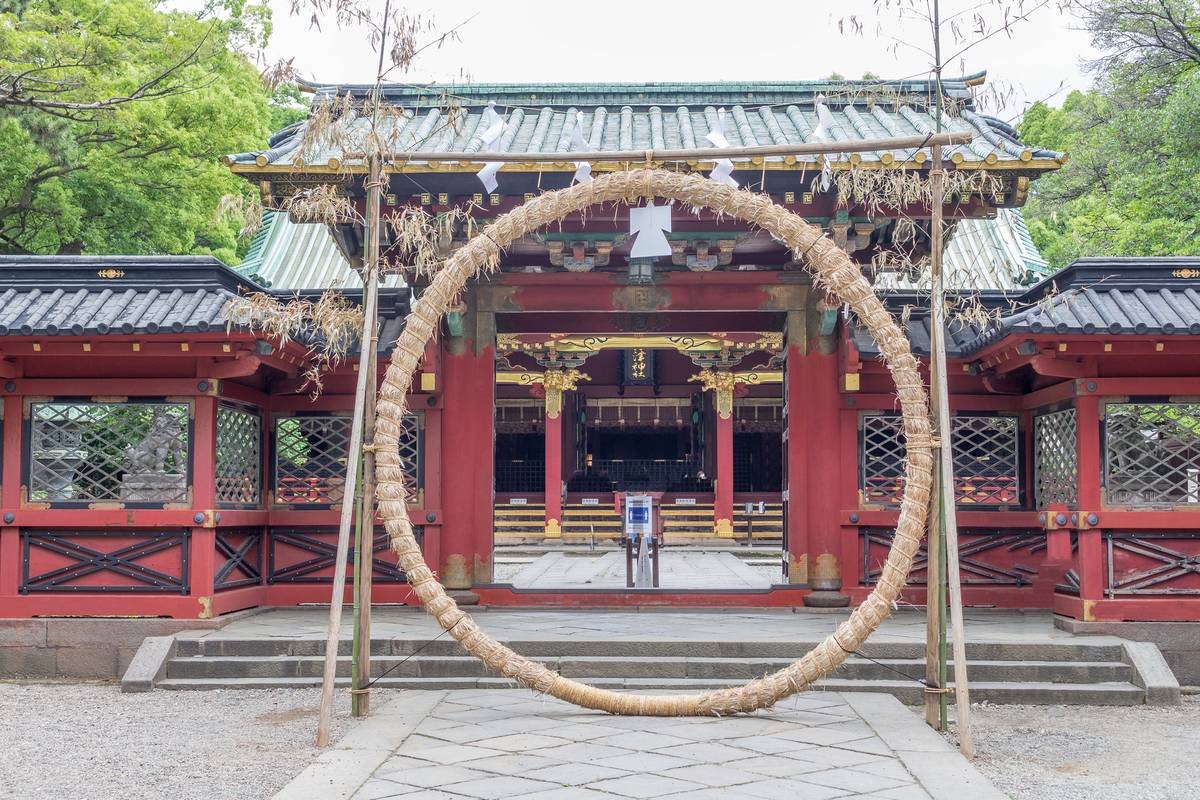
The shrine's buildings follow the gongen-zukuri style, a form of Edo-period shrine architecture. In this design, the haiden, where visitors pray, and the honden, where the deities are enshrined, are joined into a single connected structure. The result blends ornamental splendor with practical function. Seven of its buildings are designated Important Cultural Properties. These are the main hall (honden), offering hall (heiden), worship hall (haiden), Chinese-style gate (karamon), two-story tower gate (rōmon), west gate (saimon), and the latticework wall known as sukibei. Together they preserve the fine craftsmanship of the Edo period.
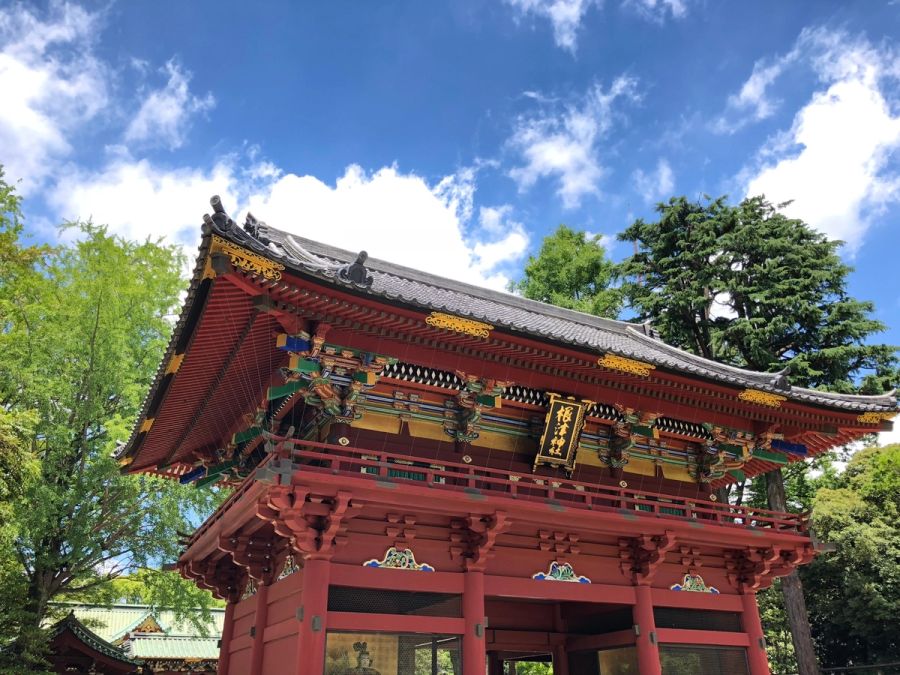
The rōmon stands out as a highlight. Nezu Shrine has the only Edo-period rōmon still surviving anywhere in Tokyo. Its imposing two-tiered structure greets visitors at the entrance to the approach path.
The sukibei is another feature not to miss. This latticed wall stretches roughly 200 meters, with foundations sunk as deep as 8 meters underground. More than 300 years later, it still stands as a testament to the skill of its builders.
The Azalea Festival
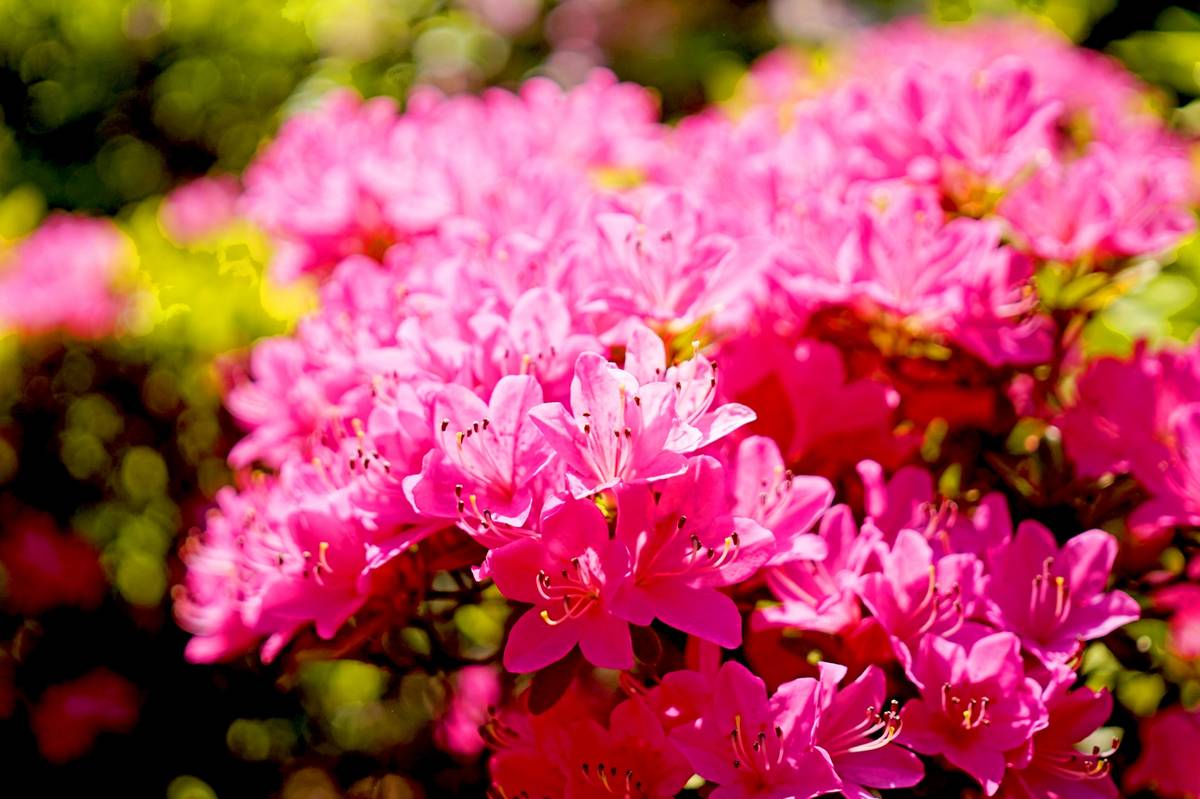
In spring, the shrine grounds turn into a landscape of flowers. Held every April, the Bunkyō Azalea Festival brings some 3,000 azalea plants in more than 100 varieties into bloom.
The azalea garden covers about 6,600 square meters. Early, mid, and late-blooming varieties flower in stages, so the scenery shifts from week to week throughout the month. Admission ranges from 500 to 1,000 yen depending on the date, and the garden is open from 9:00 in the morning until 5:30 in the evening.
The Senbon Torii and Otome Inari Shrine
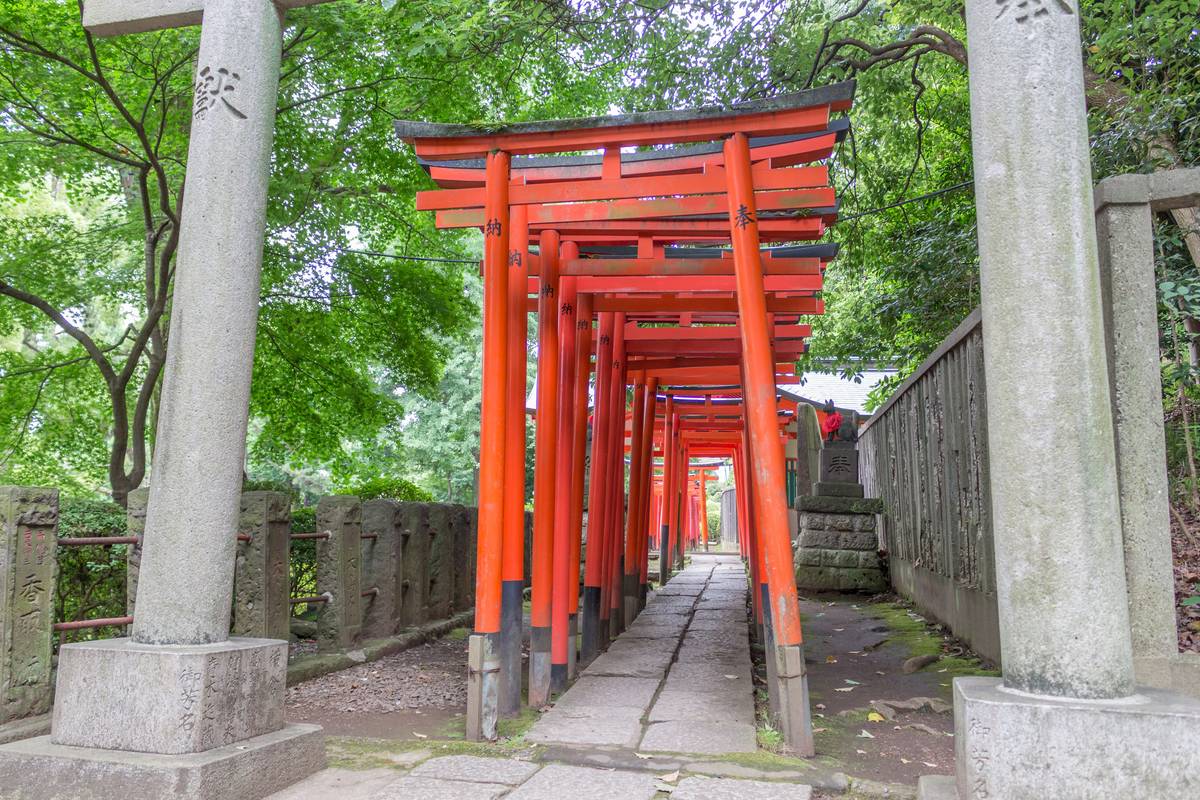
One of the most striking sights on the grounds is the Senbon Torii, a tunnel of a thousand vermilion gates. The red torii line up one after another to form a passageway, and each step beneath them carries you a little further from everyday life.
Just beyond stands Otome Inari Shrine. Its hall is built in the butai-zukuri style, with a raised platform extending out over the slope below. In the Edo period, the shrine was known as Ana Inari. Today it is best known as a place to pray for good matches in love, and visitors still come with that wish in mind.
The Kōshintō Stones
At the fork where the Senbon Torii path meets the route to Komagome Inari Shrine, six stone monuments stand in a row. These are kōshintō, carved stones that people of the Edo period put up to pray for safe travel and protection from misfortune. The oldest dates to 1632. The stones originally stood at crossroads in the city, and were moved to this spot as roads were widened from the Meiji era onward.
The Surrounding Neighborhood
Nezu Shrine sits in the neighborhoods known as Yanaka, Nezu, and Sendagi. Old shops and narrow back streets remain here, and it is one of the places in the city where the shitamachi, Tokyo's traditional downtown atmosphere, still comes through most clearly. The Hongō campus of the University of Tokyo lies just a short walk away. An ancient shrine standing side by side with a seat of modern learning gives the neighborhood a character that feels uniquely Tokyo.
〒113-0031 1-chōme-28-9 Nezu, Bunkyo City, Tokyo
Loading map...
Stories about this place
Discover stories and insights about Nezu Shrine
Last Updated: