Koenji
高円寺
Things to Do in and Around Koenji
Koenji is where Tokyo's counterculture settled down. While Harajuku chases the newest trends, this neighborhood on the JR Chuo Line, about seven minutes from Shinjuku, built its identity on the secondhand and the homegrown: more than a hundred vintage clothing shops, cramped record stores, and live houses that incubated Japanese punk in the 1970s. Then, for two evenings every August, the whole place transforms into one of the biggest street festivals in Tokyo.
Places to visit in Koenji
Where is Koenji?
Koenji is in Suginami Ward, in the western part of Tokyo's 23 wards, along the JR Chuo Line. Nakano, home of the Broadway subculture mall, is one stop to the east, and Shinjuku is about seven minutes away by train. The neighborhood spreads north and south from the station as a web of old-fashioned covered shopping arcades.


Getting Around
Koenji Station is on the JR Chuo and Chuo-Sobu lines, about seven minutes from Shinjuku. One note: on weekends and holidays, Chuo Line rapid trains skip Koenji, so take the local Chuo-Sobu Line (the yellow trains) instead. Shin-Koenji Station on the Tokyo Metro Marunouchi Line, about a 10-minute walk south of the JR station, is a useful alternative.
Loading map...
About Koenji
Koenji's pleasures are small-scale and dense. An afternoon here means drifting between racks of vintage denim, crates of records, and the counters of old-school izakaya. No landmarks required.
Vintage Clothing Heaven
More than a hundred secondhand and vintage shops cluster around the station, concentrated along the PAL covered arcade and the Look Street shopping strip running south toward Shin-Koenji. The range is wide: American workwear, 1980s designer pieces, kimono remakes, 500-yen bargain bins. Prices generally run lower than in Shimokitazawa or Harajuku, which is exactly why serious collectors start their hunt here.
Tokyo Koenji Awa-Odori
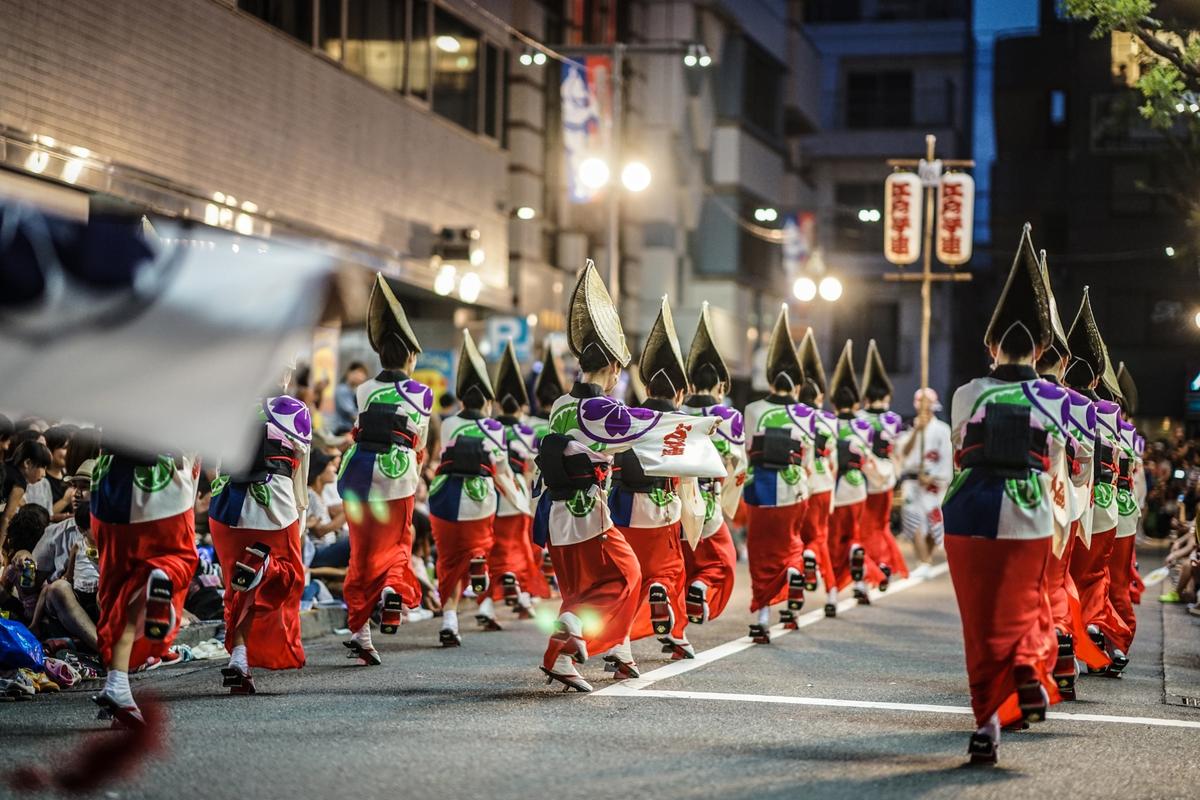
Every year in late August, Koenji hosts Tokyo's largest Awa-Odori, a traditional dance festival that originated in Tokushima on the island of Shikoku, where it has roots going back some 400 years. Koenji's version began in 1957 as a small shopping-street event and has grown to draw roughly 10,000 dancers and around a million spectators over two evenings. Troupes in indigo robes and woven hats sweep through the narrow streets to flutes, drums, and shamisen, passing close enough to touch.
Live Houses and the Underground
Koenji's music scene took shape in the mid-1970s, when the neighborhood became a cradle of Japanese punk rock. Dozens of small live houses still operate in basements and upper floors around the station, hosting everything from noise rock to acoustic folk on any given night. The bohemian reputation reaches literature, too: in Haruki Murakami's novel 1Q84, the protagonist Aomame spends much of the story hiding out in a Koenji apartment. The address is fictional, but the choice of neighborhood is a knowing one.
Koenji
Discover stories and insights about Koenji