Shizuoka
静岡県
Start here
What to know about Shizuoka
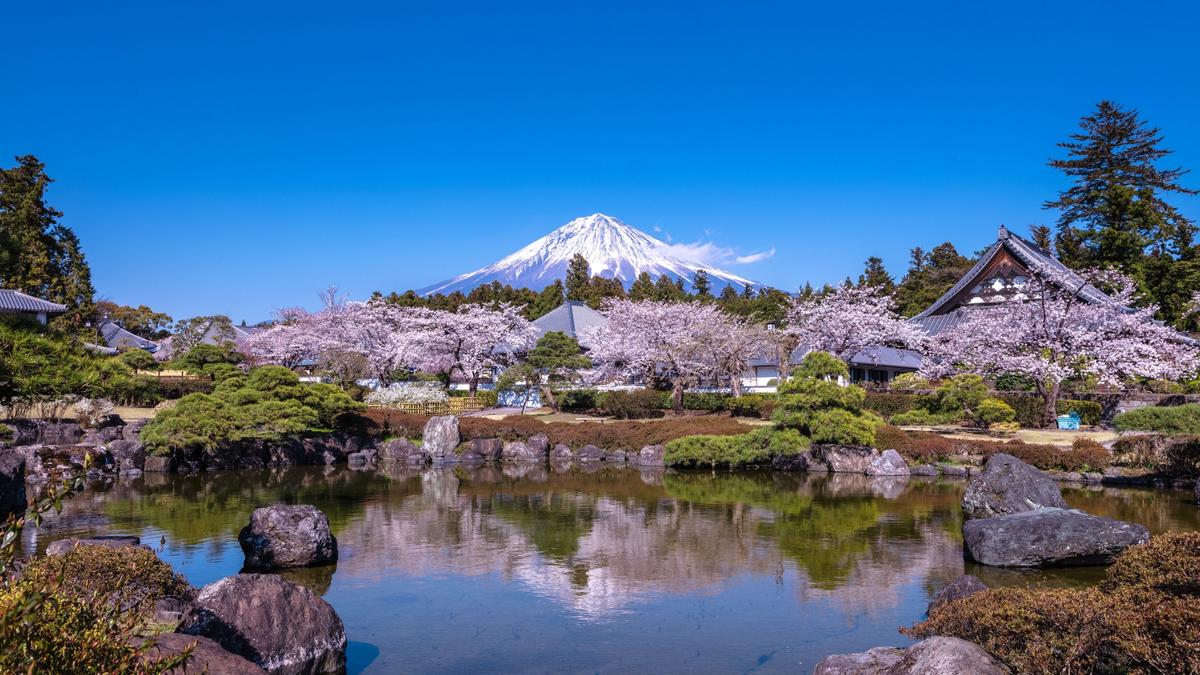
Shizuoka Prefecture sits beneath the soaring peak of Mt. Fuji, Japan's tallest mountain, with the warm Pacific Ocean stretching out to the south. Along this historic stretch of the old Tōkaidō highway, hot spring resorts dot the Izu Peninsula, the bounty of Suruga Bay fills local tables, and sites connected to the shōgun Tokugawa Ieyasu lie scattered across the landscape—a prefecture where nature, history, and cuisine converge.
Mt. Fuji and Miho no Matsubara
Standing 3,776 meters tall, Mt. Fuji is Japan's highest peak and was inscribed as a UNESCO World Cultural Heritage Site in 2013. From the Shizuoka side, the mountain's majestic form can be seen stretching down to its base, and the Fujinomiya 5th Station serves as the main trailhead on this side. Every year from July to September, climbers flock to reach the summit during the official climbing season. Even without climbing, viewpoints throughout the prefecture—Nihondaira, Asagiri Plateau, and many others—offer ever-changing views of Fuji as the light and seasons shift.
Miho no Matsubara is a pine grove stretching approximately 7 kilometers along Suruga Bay in Shimizu Ward, Shizuoka City, and is one of the component sites of the Mt. Fuji World Cultural Heritage Site. The view of Mt. Fuji rising beyond some 30,000 pine trees is an iconic Japanese landscape, famously depicted in the ukiyo-e woodblock prints of Utagawa Hiroshige. The "Hagoromo no Matsu," a pine tree where a celestial maiden is said to have hung her feathered robe, also stands in this grove. Together with the adjacent Miho Shrine, it has long been a place of spiritual significance and artistic inspiration. The view of Mt. Fuji from the water's edge is said to be especially beautiful on clear early mornings.
Izu Peninsula
The Izu Peninsula juts out from the eastern part of Shizuoka Prefecture and was designated a UNESCO Global Geopark in 2018 for its volcanic and coastal formations. The peninsula was originally a volcanic island on the Philippine Sea Plate that collided with the main island of Honshū—a dramatic origin on a planetary scale. Visitors can explore the sheer cliffs carved by lava flows at Jōgasaki Coast, the light streaming into the Dōgashima Tensōdō sea cave, and the beauty of the cascading Kawazu Nanadaru waterfalls—a diverse array of landforms shaped by volcanic activity.
Izu is also one of Japan's most established hot spring regions, with resort towns of distinct character—Atami, Itō, Shuzenji, and Shimoda among them—dotting the peninsula. Shuzenji Onsen, with over 1,200 years of history, is a particularly atmospheric spa town with bamboo-lined paths and vermilion-painted bridges. In the town of Kawazu, the early-blooming Kawazu-zakura cherry trees burst into flower along the river each February, drawing crowds in search of an early taste of spring. With hot springs, ocean, mountains, and blossoms, Izu offers something in every season.
Kunōzan Tōshō-gū
Kunōzan Tōshō-gū is a shrine built at the site where Tokugawa Ieyasu was first interred after his death, and its main hall is designated a National Treasure. Constructed in 1617 by order of the second shōgun Hidetada, the Gongen-zukuri style buildings are adorned with brilliantly painted polychrome carvings. Although Ieyasu's remains were later said to have been reinterred at Nikkō Tōshō-gū, some scholars believe Kunōzan remains the true resting place of his spirit, a debate that continues to this day.
Visitors can reach the shrine either by climbing 1,159 stone steps overlooking Suruga Bay, or by taking the ropeway from Nihondaira. The ropeway ride offers an aerial journey with Suruga Bay and Mt. Fuji as the backdrop, and the observation deck at the summit has been named one of Japan's Top 100 Tourist Destinations. The shrine grounds also house a museum containing personal belongings of Ieyasu, offering a glimpse into the life of the warlord who unified Japan.
Ōigawa Railway and Sumatakyō
The Ōigawa Railway is a local railway running along the Ōi River in central Shizuoka Prefecture, renowned nationwide for its heritage steam locomotive operations. The sight of SL locomotives built in the early Shōwa era still running in active service captivates not only railway enthusiasts but all visitors, as tea plantations and the gorges of the Ōi River unfold beyond the windows. The Ikawa Line, known as the South Alps Abt Line, features Japan's only rack-and-pinion railway section, offering the rare experience of climbing steep gradients using cogwheel technology.
Sumatakyō, located near the terminus of the Ōigawa Railway, is a gorge surrounded by the foothills of the South Alps, with the "Yume no Tsuribashi" (Dream Suspension Bridge) as its star attraction. This 90-meter-long suspension bridge spanning Lake Ōma Dam allows only 10 people to cross at a time, and the thrill of walking above the emerald-green water combined with the stunning scenery has earned it widespread acclaim. It has even been featured on travel sites as one of the world's pedestrian suspension bridges to cross before you die. During autumn, the entire gorge is painted in shades of red and gold, and visitors can combine the scenic walk with a day trip to the local hot springs.
Where to go
Places to visit in Shizuoka
Curated spots and experiences across Shizuoka.
Nature
1 place
Zoom in
Areas in Shizuoka
Neighborhoods and districts to explore


Location
Where is Shizuoka?
Shizuoka Prefecture is located in the southeastern part of the Chūbu region, stretching east to west along the Pacific coast. The prefectural capital is Shizuoka City, with a population of approximately 3.63 million as of the October 2020 national census. The Izu Peninsula extends to the east, Lake Hamana lies to the west, and Mt. Fuji towers over the northwest, creating a landscape of remarkable geographic diversity. Suruga Bay, reaching depths of approximately 2,500 meters, is the deepest bay in Japan and nurtures abundant marine life. Major rivers including the Ōi River and the Tenryū River also flow through the prefecture, giving it the character of both coastal plains and mountainous terrain.
The climate is generally mild, with coastal areas warmed by the Kuroshio Current remaining relatively temperate even in winter. The southern tip of the Izu Peninsula is so mild that early-blooming cherry blossoms begin to flower as early as late January. Summers bring the high heat and humidity typical of the Pacific coast, though the foothills of Mt. Fuji and mountainous areas remain cool and comfortable. The Enshū area in western Shizuoka is known for the "Enshū no Karakkaze," a strong seasonal wind that blows through in winter.
Loading map...
Access
Getting to Shizuoka
Mt. Fuji Shizuoka Airport serves the prefecture, with domestic flights to destinations including Sapporo and Fukuoka, and a limited number of international routes to parts of Asia. The airport is approximately 50 minutes from central Shizuoka City by shuttle bus.
Six Tōkaidō Shinkansen stations are located within the prefecture. From Tokyo, the Hikari service reaches Shizuoka in about 1 hour and Hamamatsu in about 1 hour and 20 minutes. From Nagoya, Hamamatsu is about 30 minutes away and Shizuoka about 50 minutes. The JR Tōkaidō Main Line also runs east to west and provides convenient access to towns not served by the Shinkansen. For the Izu area, the JR Odoriko limited express runs from Tokyo via Atami and continues directly onto the Izukyū Line.
Highway buses operate from Tokyo, Nagoya, and Osaka to Shizuoka City and Hamamatsu. Overnight buses are also widely available, serving as a budget-friendly travel option.
For travel within the prefecture, the JR Tōkaidō Main Line forms the east-west backbone. The Izuhakone Railway and Izukyū Line serve the Izu Peninsula, while the JR Minobu Line and Fujikyū buses provide access to the Mt. Fuji area. The Ōigawa Railway is a popular tourist line where steam locomotives still run and also provides access to Sumatakyō.
Shizuoka Prefecture stretches approximately 155 km from east to west, and the Izu and Mt. Fuji area, the Shizuoka City area, and the Hamamatsu and Lake Hamana area each have their own distinct character. Covering everything in a single trip is difficult, so focusing on one area or connecting key spots by Shinkansen makes for a more efficient itinerary. Coastal areas see little snowfall even in winter, but road icing can occur around Mt. Fuji and in mountainous areas.
Local pride
Specialty Products
Blessed with a mild Pacific climate and the rich fishing grounds of Suruga Bay, Japan's deepest bay, Shizuoka Prefecture leads the nation in tea production, with vast tea fields spreading across the Makinohara Plateau and throughout the prefecture. Citrus cultivation also thrives here, with mikan oranges grown along the coast in the warm climate. From rare seafood nurtured in the deep waters of Suruga Bay to tuna and bonito landed at deep-sea fishing ports, the prefecture's marine industry is equally diverse.
In manufacturing, Hamamatsu and its surroundings are globally recognized for motorcycle and musical instrument production, and the prefecture also ranks among the top in Japan for paper manufacturing. Traditional crafts include Suruga Takesensuji-zaiku, a bamboo craft distinguished by the delicate assembly of thin rounded bamboo strips, and Suruga Hina-gu, miniature furnishings made for hina doll displays—handcraft traditions deeply rooted in the Suruga region.
Food
Crafts & Others
Through the ages
History of Shizuoka
The area now comprising Shizuoka Prefecture was historically divided into three provinces: Suruga, Tōtōmi, and Izu. The Tōkaidō road running east to west made this region a vital transportation corridor since ancient times, and Suruga Province in particular prospered as a relay point between Kyoto and the eastern provinces from the Heian period onward. During the Sengoku period, Imagawa Yoshimoto built the most powerful domain in the Tōkai region from his base in Suruga and aimed to march on Kyoto, but was defeated and killed by Oda Nobunaga at the Battle of Okehazama in 1560, leading to the rapid decline of the Imagawa clan.
The young Tokugawa Ieyasu, who would later unite Japan, spent his boyhood years as a hostage under the Imagawa clan. Ieyasu used Hamamatsu Castle in Tōtōmi as his base for 17 years, and later spent his final years as retired shōgun at Sunpu Castle in present-day Shizuoka City. After his death, he was buried at Mt. Kunō, where Kunōzan Tōshō-gū was built. The fact that 22 of the 53 stations of the Tōkaidō were located within Shizuoka Prefecture attests to the region's place along the main artery of Edo-period Japan.
After the Meiji Restoration, the three provinces of Suruga, Tōtōmi, and Izu were consolidated to form the present Shizuoka Prefecture in 1876. The port of Shimoda, opened at the end of the Edo period, holds a place in Japan's modern diplomatic history as a key setting in the opening of Japan under the Treaty of Kanagawa with the United States. In the modern era, large-scale tea cultivation began on the Makinohara Plateau, and Shizuoka grew into Japan's foremost tea-producing region. In Hamamatsu, organ manufacturing that began in the Meiji period gave rise to the musical instrument industry, which eventually expanded into motorcycle manufacturing.
Continue exploring
Discover other areas and hidden gems across Chubu Region.