Shinagawa Shrine
品川神社
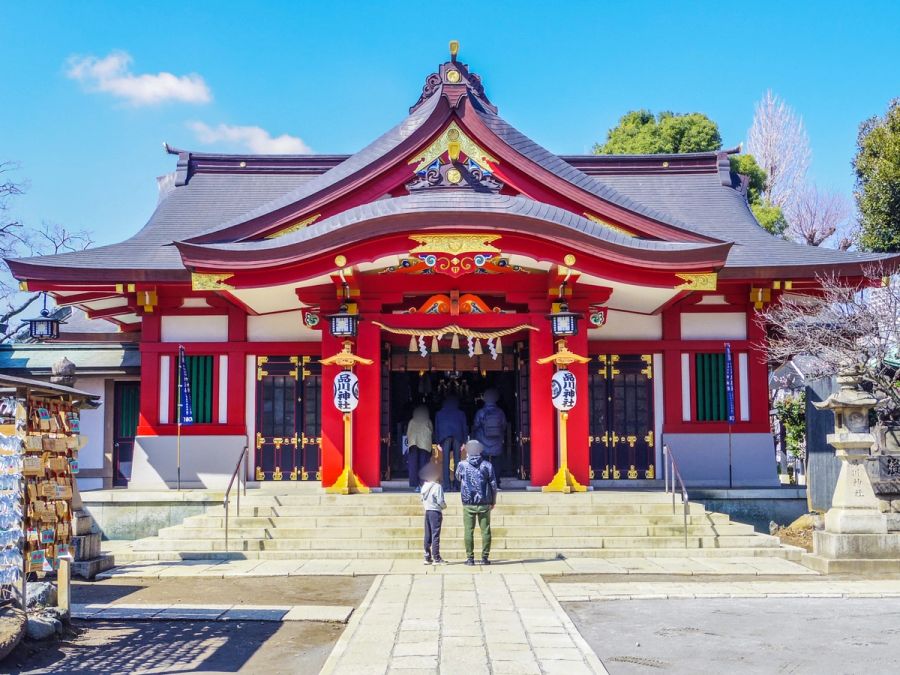
About Shinagawa Shrine
Step off the Keikyu line at Shin-Bamba Station and steep stone stairs rise directly before you. Shinagawa Shrine traces its roots to 1187, when Minamoto no Yoritomo enshrined a guardian deity of the sea, giving it a history spanning over 800 years. Listed among Tokyo's Ten Shrines, this compact sanctuary overflows with character, from a torii gate carved with dragons and one of Tokyo's largest Fuji mounds to a spring said to bring good fortune in money matters. It also enshrines Daikoku, one of the Seven Lucky Gods of the Tōkaidō region.
The Sea Guardian That Yoritomo Prayed To
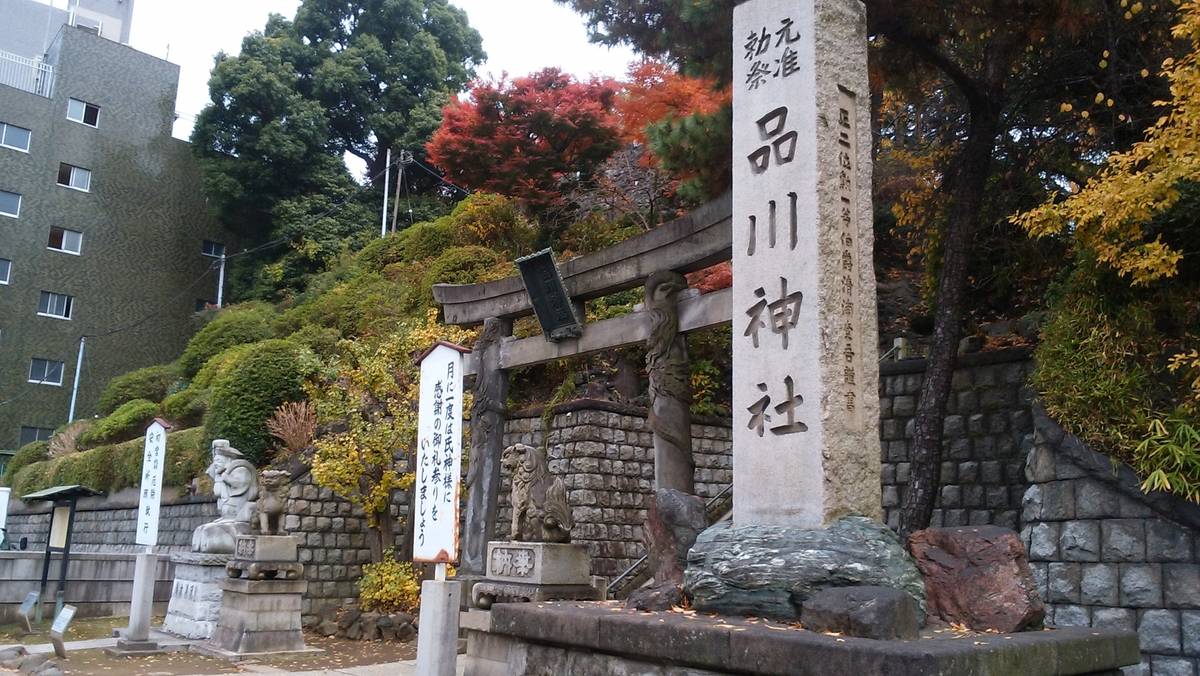
In 1187, Minamoto no Yoritomo brought Ame no Hirino Me no Mikoto from the Susaki Shrine in Awa Province, in what is now southern Chiba, and built a sanctuary in Shinagawa. As a guardian of maritime safety, the deity watched over the ships crossing through Edo Bay. In 1319, an Inari deity was enshrined; in 1478, the warrior Ōta Dōkan added a deity of misfortune prevention. This three-deity arrangement forms the foundation of the shrine as it exists today.
In 1600, Tokugawa Ieyasu stopped here before the Battle of Sekigahara, the decisive clash that would determine the future of Japan. After his victory, he donated a mask and a portable shrine (mikoshi) to the sanctuary. In the Meiji period, it was designated a special shrine where the Emperor himself commanded the rituals. In 1975, it was chosen as one of Tokyo's Ten Shrines, and it remains a cherished guardian shrine for the neighborhood today.
The Twin-Dragon Torii and Shinagawa's Fuji
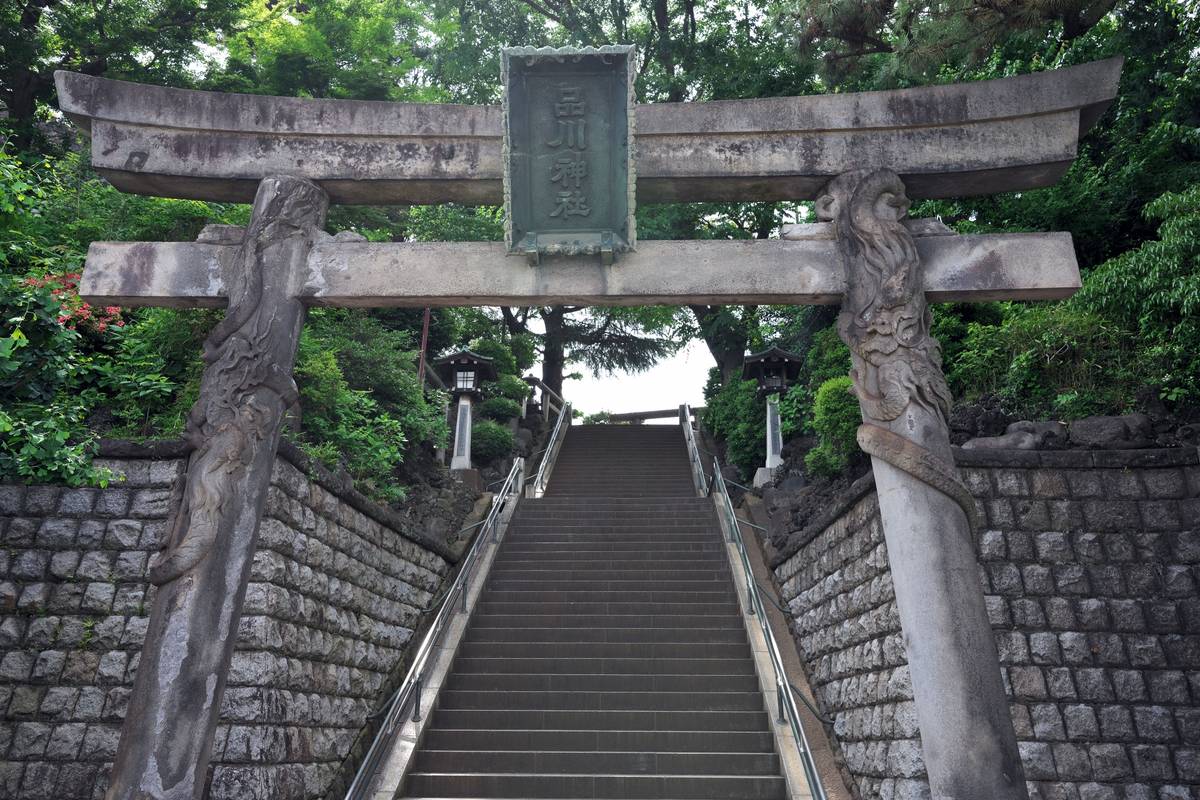
At the base of the stone stairs stands a torii gate carved with an ascending dragon on the left and a descending dragon on the right. Completed in 1925 by stonemason Takahashi Yasugorō, it is one of only three dragon-carved torii gates in Tokyo. Visitors are first greeted by the raw power of these sculptures.
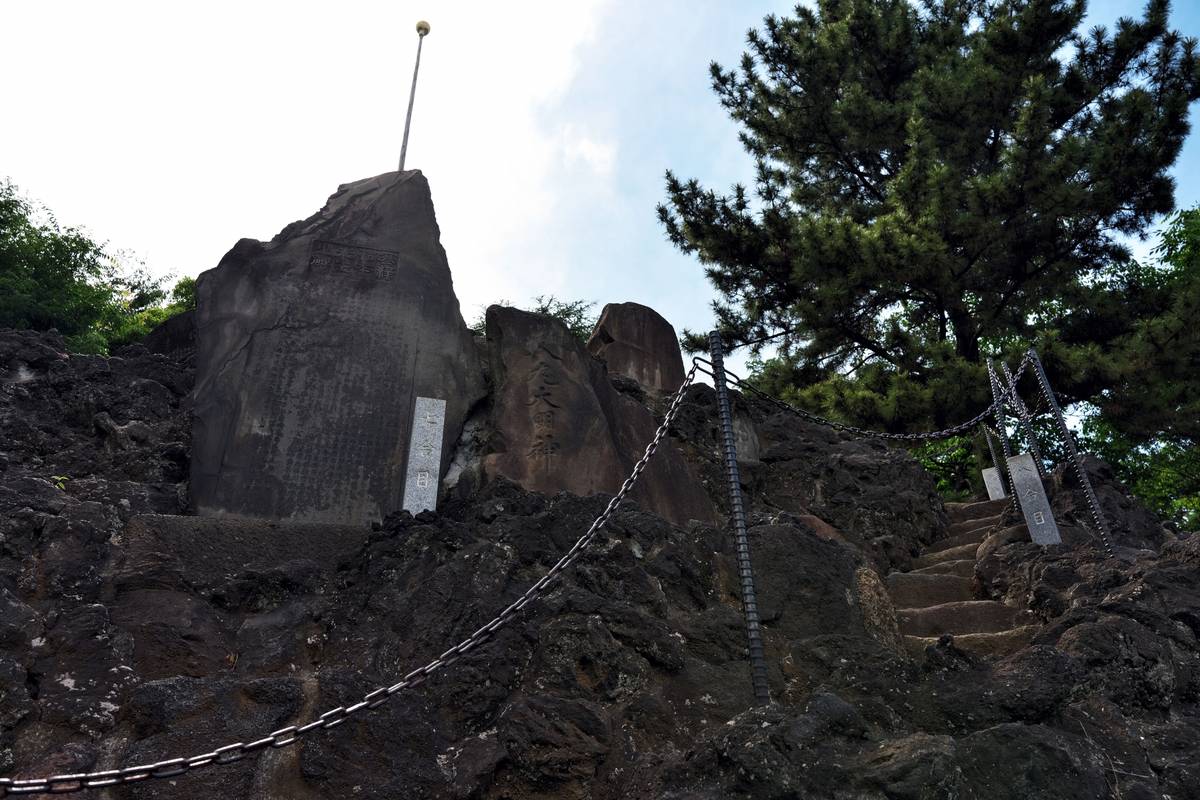
Beyond the stairs, deep within the shrine grounds, a Fuji mound rises about 15 meters high. Such mounds were built for people unable to make the difficult pilgrimage to Mount Fuji itself. This one was constructed in the early Meiji period by roughly 300 members of a Fuji worship group in Shinagawa, who stacked volcanic rock from Mount Fuji itself. Markers carved along the path indicate each of the nine ascending stations. Designated as a tangible folk cultural property by Shinagawa ward, anyone can climb it year-round.
The Spring of Thousandfold Increase and the Annual Festival
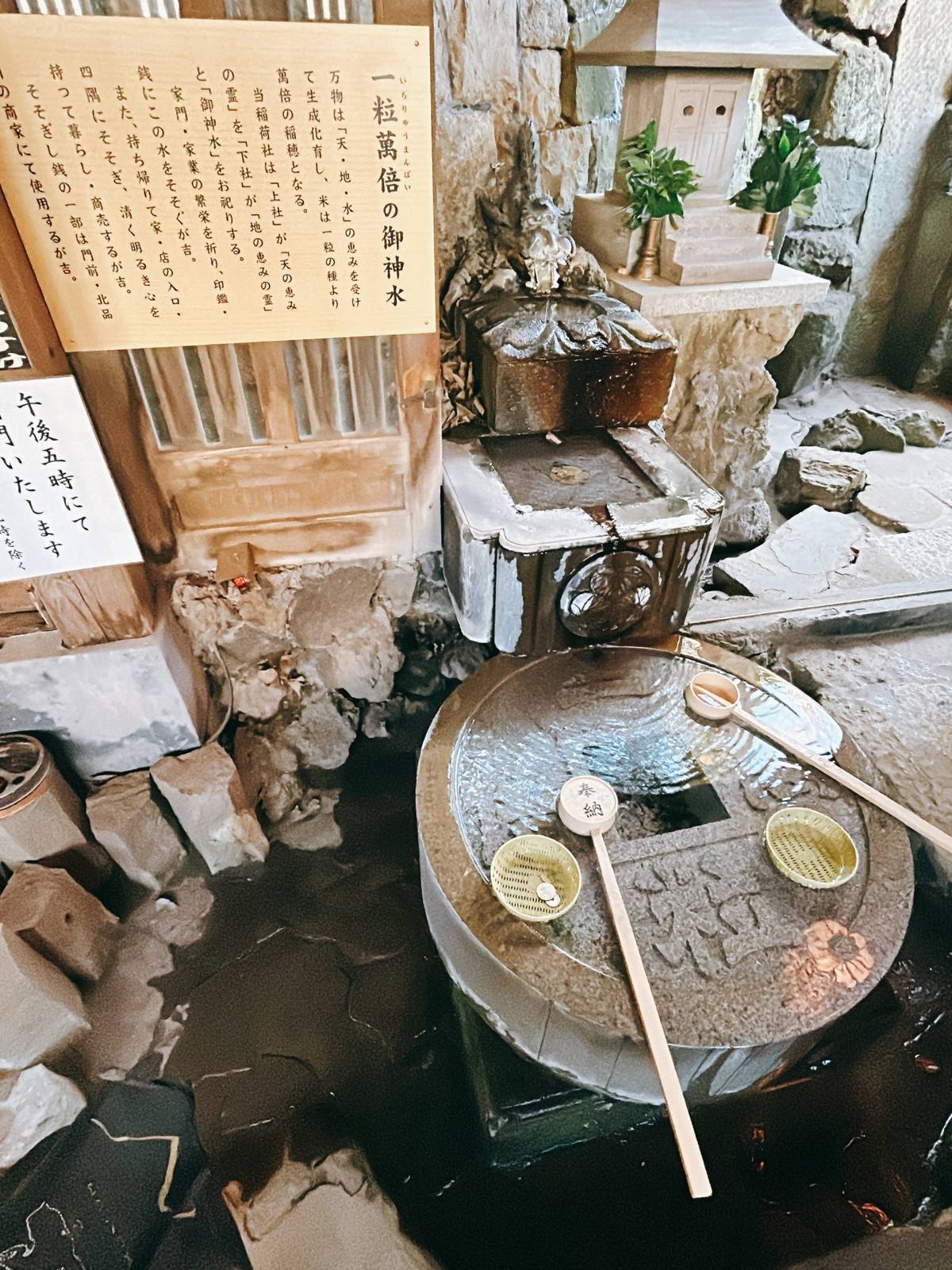
The Ana Inari Shrine within the grounds consists of upper and lower shrines. Within a cave-like space at the lower shrine flows the "Spring of Thousandfold Increase." Named after the belief that a single grain of rice becomes ten thousand stalks, the water is said to bring financial fortune to those who dip coins or bills into it. Visitors seeking prosperity in business never stop coming.
Each June, the shrine holds its annual festival. A highlight is the Daidai Kagura, a sacred music and dance performance played with dragon flutes and large drums. Dating to the 1570s, this kagura is designated as an intangible folk cultural property of Tokyo. The sight of a portable shrine (mikoshi) ascending those steep stone stairs is itself a breathtaking spectacle unique to this festival.
〒140-0001 3-chōme-7-15 Kitashinagawa, Shinagawa City, Tokyo
Loading map...
Stories about this place
Discover stories and insights about Shinagawa Shrine
Last Updated: