Namiyoke Shrine
波除神社
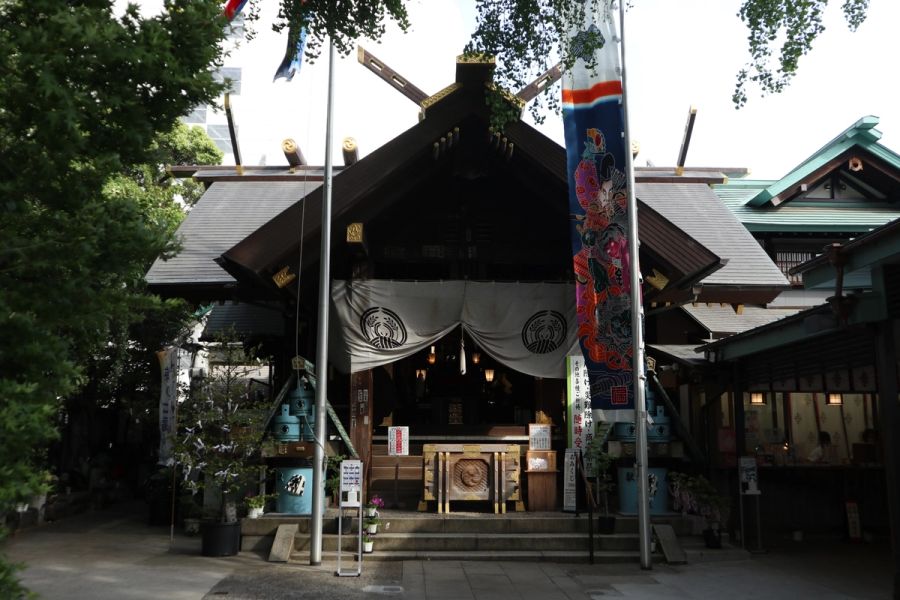
About Namiyoke Shrine
Namiyoke Shrine sits in Tsukiji in Tokyo's Chuo Ward, enshrining a deity long revered for warding off disasters and rough waves.
The Inari Deity Who Protected Tsukiji
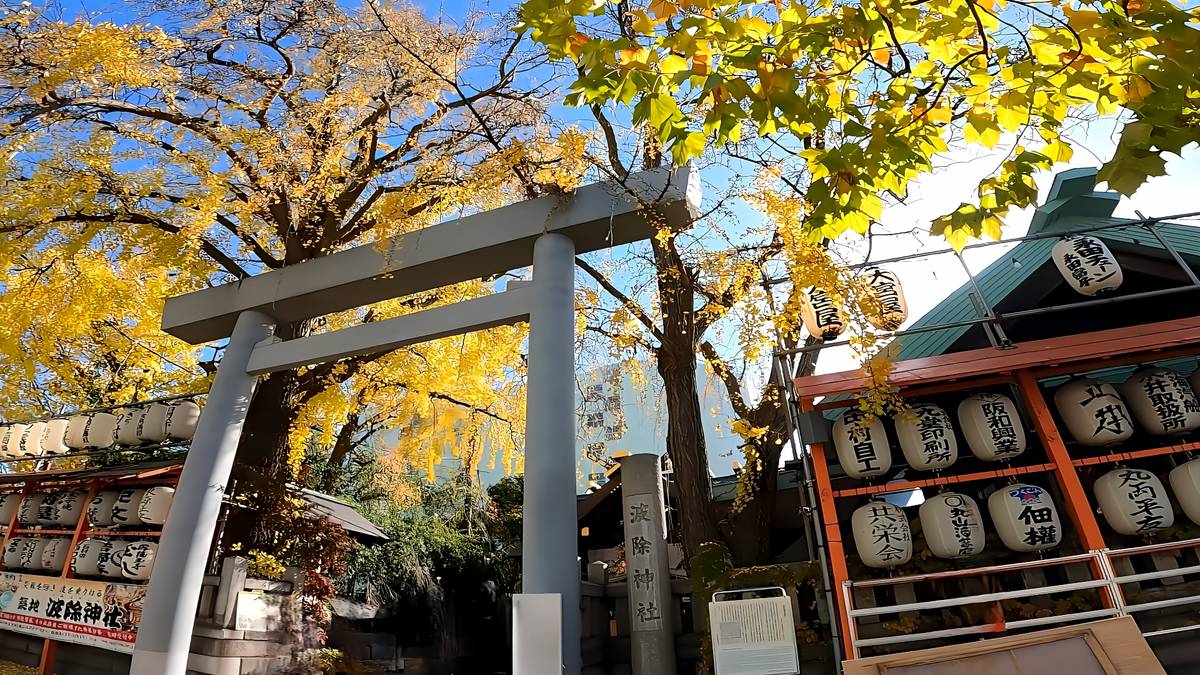
Namiyoke Shrine
When the Tokugawa shogunate was first established, the area that is now Tsukiji was still part of the sea. The fourth shogun, Tokugawa Ietsuna, ordered land reclamation work to begin, but the embankments were repeatedly washed away by the waves, and the project struggled to move forward.
Then one night, people noticed something glowing on the water. They rowed out and found a magnificent sacred body of Inari Ōkami drifting on the surface. They quickly built a shrine, enshrined it, and held a grand festival. The waves and winds that had stalled the work suddenly calmed, and the reclamation was completed in 1659.
Awed by the power and blessings of Inari Ōkami, the people came to call the deity Namiyoke, meaning wave-warding, out of reverence. In gratitude they dedicated three enormous heads to the shrine, a dragon that commands the clouds, a tiger that commands the winds, and a lion whose single roar overpowers all things. Carrying these heads through the streets became the beginning of the Tsukiji Shishi Matsuri (Tsukiji Lion Festival), which is still held today.
Tsukiji Shishi Matsuri, Held Around June 10
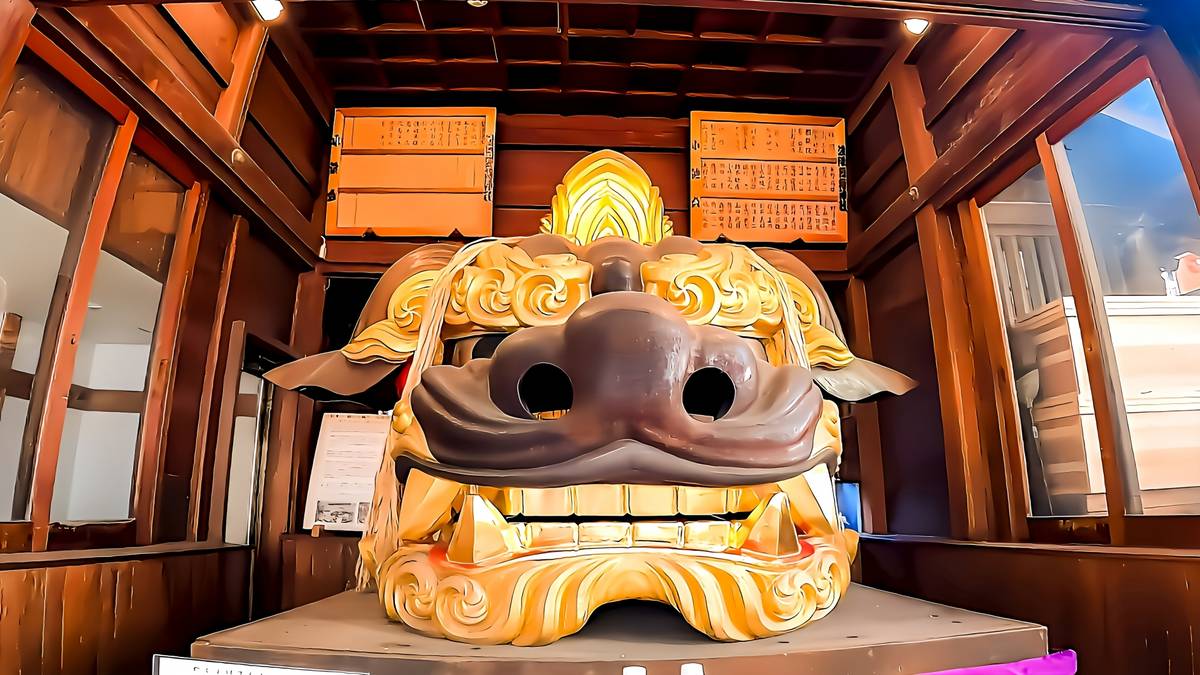
Tenjō Ōjishi (male). Carved from a single block of black cypress, this enormous lion head stands 2.4 m tall, 3.3 m wide, and weighs one ton.
Widely known since the Edo period, the festival follows a cycle of one Honmatsuri (main festival) every three years, with smaller Kagematsuri held in the years between. Three items take center stage. The first is the shrine's Senganmiya mikoshi, a portable shrine measuring 4 shaku 1 sun (about 1.3 m). The Tenjō Ōjishi, the male lion, stands roughly 3 m tall and wide. The Benzaiten Ohaguro-jishi, the female lion, measures about 2 m on each side.
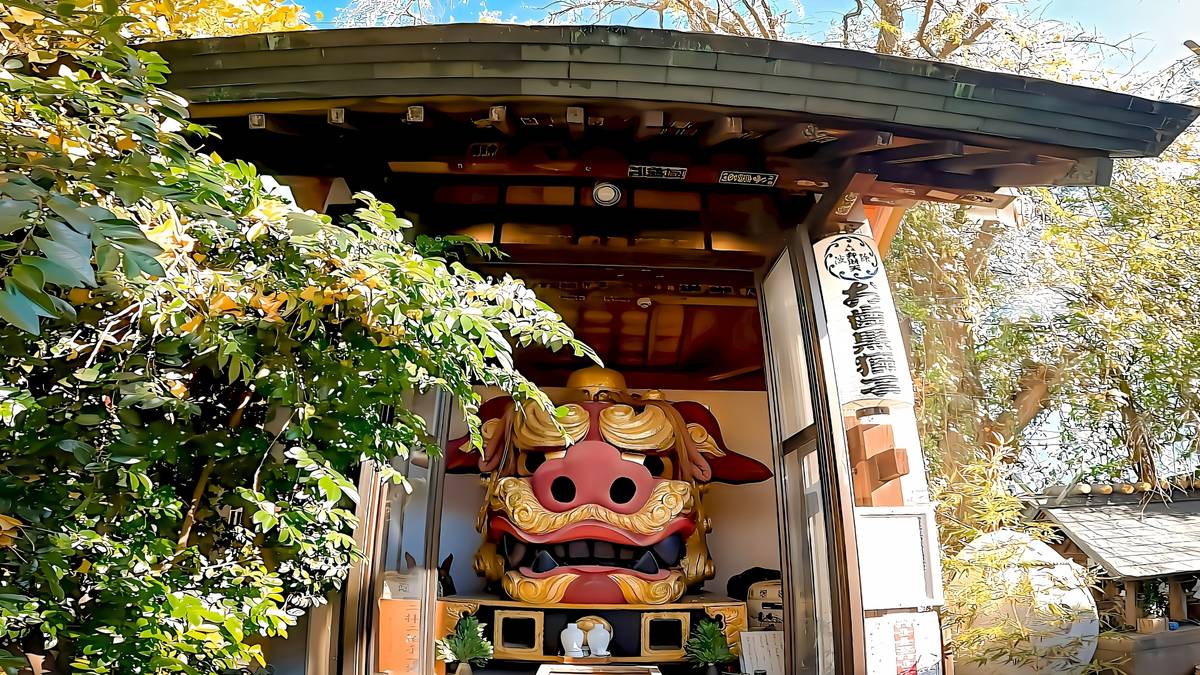
Ohaguro-jishi (female). True to her name, she is known for her blackened teeth. She stands 2.15 m tall, 2.5 m wide, and weighs 700 kg.
In Kagematsuri years, just one of these is carried through the streets. In Honmatsuri years, the Senganmiya mikoshi appears together with either the male or the female lion. The vibrant, powerful festival is cherished as a hallmark of summer in Tsukiji.
A Variety of Unusual Tsuka (Memorial Mounds)
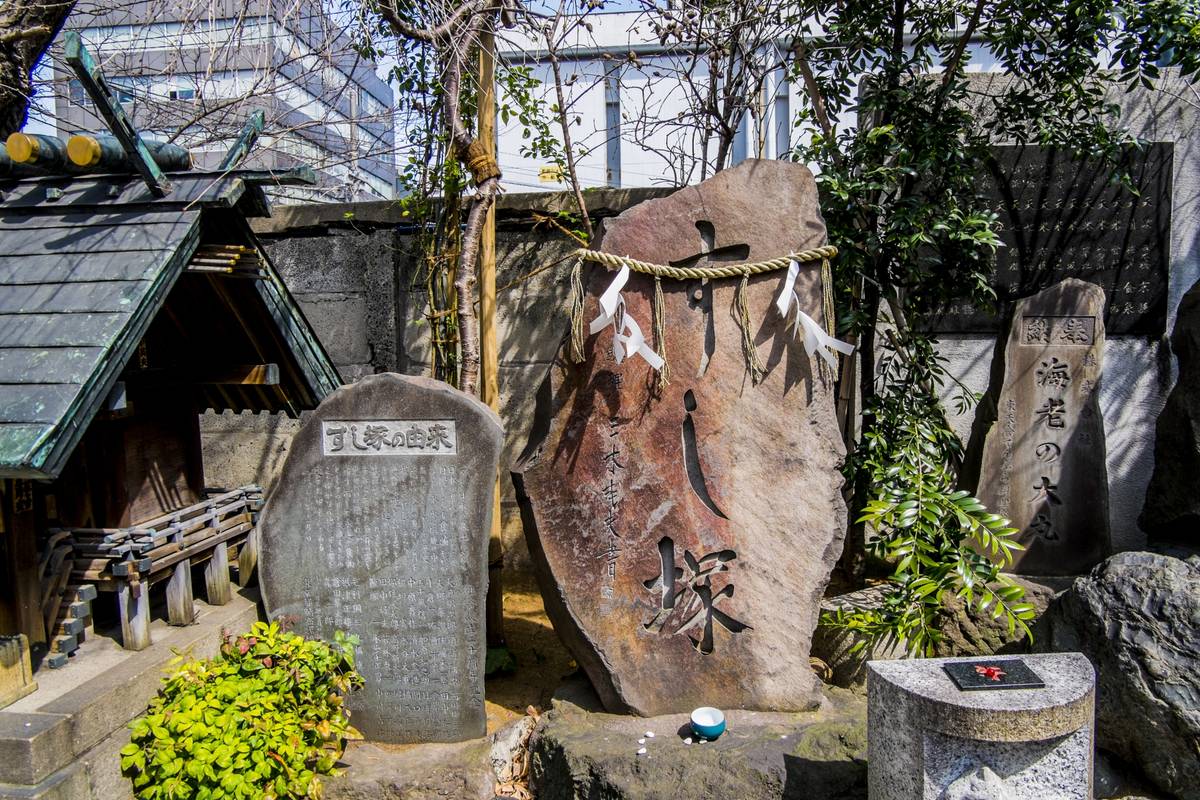
Sushi-zuka. The shrine grounds hold many other mounds dedicated to different ingredients.
Because Namiyoke Inari Shrine stands beside the Tsukiji market, it also honors the spirits of the seafood and eggs traded there. The grounds hold mounds and stones rarely seen at other shrines. There are Sushi-zuka for sushi, Ebi-zuka for shrimp, Tamago-zuka for eggs, Kombu-zuka for kelp, and Hamaguri-ishi for clams. The custom reflects a Japanese way of putting hands together in thanks before and after meals and never letting food go to waste.
〒104-0045 6-chōme-20-37 Tsukiji, Chuo City, Tokyo
Loading map...
Stories about this place
Discover stories and insights about Namiyoke Shrine
Last Updated: