Tsukiji
築地
Things to Do in and Around Tsukiji
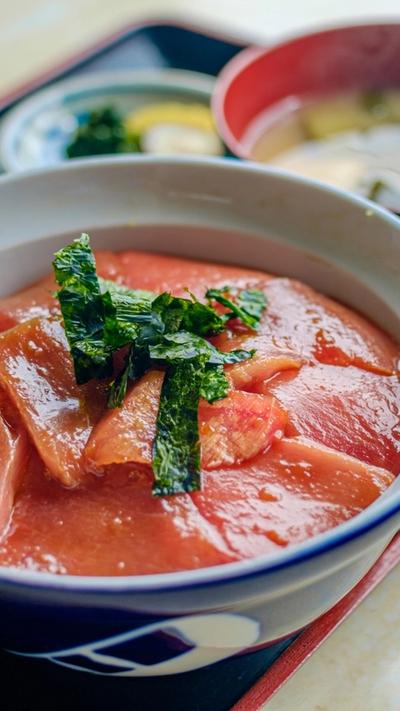
Tsukiji is a historic area once known as the "Kitchen of Japan." Even after the wholesale market moved to Toyosu, the "Tsukiji Outer Market" remains bustling with many restaurants and shops, continuing to thrive as a vibrant gourmet destination.
Places to visit in Tsukiji
Where is Tsukiji?
Tsukiji is located in the southeastern part of Chuo City, Tokyo. To the north, it is adjacent to Ginza, one of Japan's most famous shopping districts, which is about a 10 to 15-minute walk away.
To the east, it faces the Sumida River, and crossing the Kachidoki Bridge leads to the Kachidoki and Tsukishima area, where high-rise apartments are lined up. Additionally, to the south lies the expansive Hamarikyu Gardens, characterized by its location that offers both accessibility and a sense of openness, surrounded by water and greenery in the midst of the city.


Getting Around
The nearest stations are Tokyo Metro Hibiya Line 'Tsukiji Station', Toei Oedo Line 'Tsukiji Shijo Station', and Toei Asakusa Line 'Higashi-Ginza Station'. It is also about a 10-minute walk from each line's Ginza Station and Shiodome Station.
Loading map...
About Tsukiji
From 1935 to 2018, for a span of 83 years, this area served as a wholesale hub for marine products, fruits and vegetables, poultry eggs, pickles, and various processed goods. Although the market itself has moved to Toyosu, the shopping district known as the "Outer Market" continues to bustle with people today due to its excellent location near Ginza. Furthermore, the surrounding area features many facilities and spots with a calm atmosphere, such as "Tsukiji Hongwanji Temple."
Tsukiji Outer Market
This is an extensive wholesale district stretching from the former site of the Tsukiji Market to just before the Kabukiza area in Higashi-Ginza. It is characterized by many long-established shops that have been in business for generations and are beloved by locals. Visitors can experience a truly lively atmosphere.
Tsukiji Uogashi
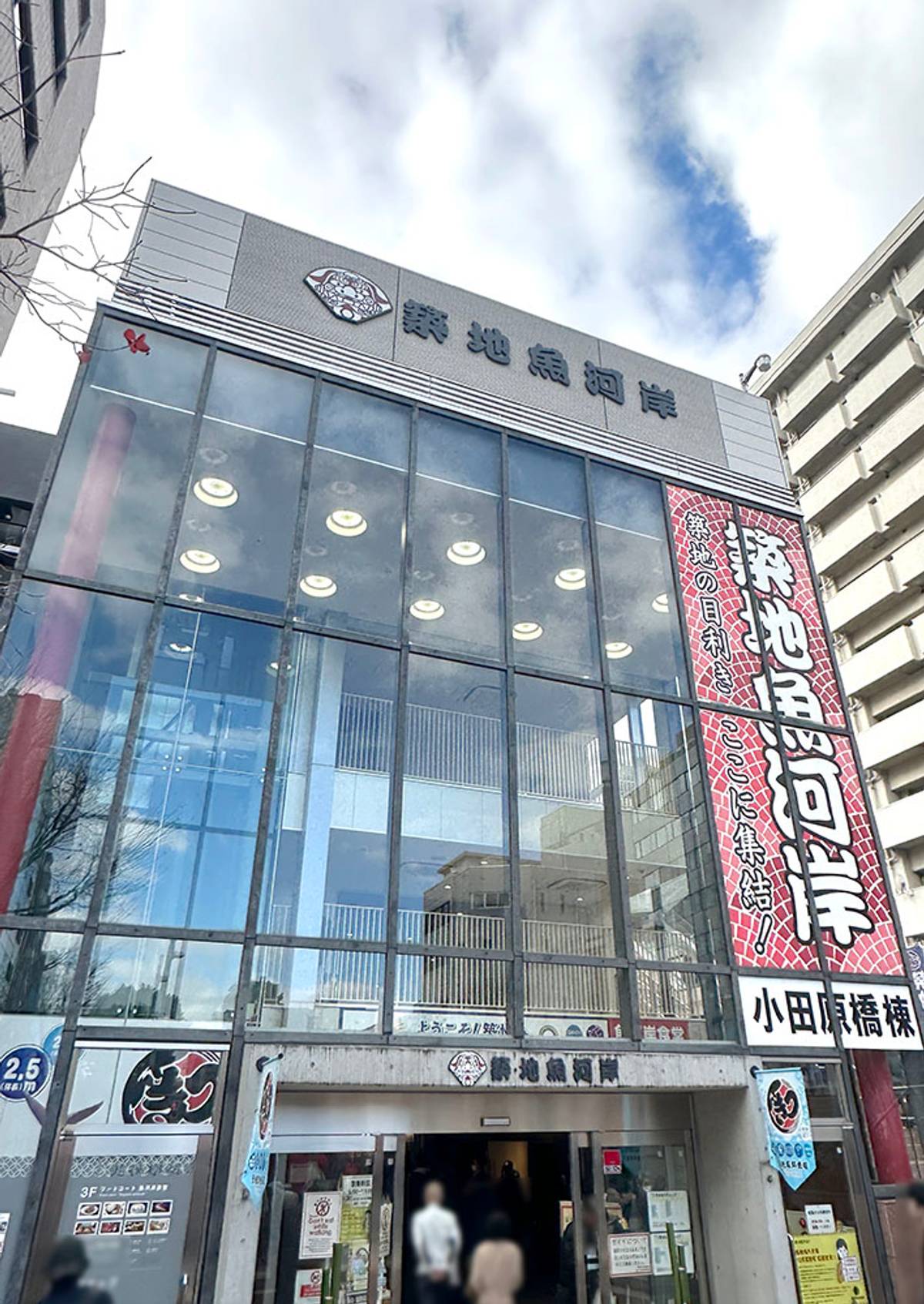
Tsukiji Uogashi / Photo by Japaniche
This is a fresh food market established by Chuo City to carry on the vitality and bustle of Tsukiji even after the relocation of the main market. It houses approximately 60 retail shops and restaurants, and is loved by a wide range of people, from food professionals to general customers and tourists. It offers a wide variety of products, including tuna and other large fish, high-end fresh fish, whale, Atlantic salmon, processed goods, and produce.
Products and Services Available at the Tsukiji Outer Market
- Fresh Fish & Processed Marine Products: Tuna, fresh fish and shellfish, salted/dried fish, and processed marine goods.
- Meat & Eggs, Produce & Garnishes, Dried Goods: Dried foods, bonito flakes, seaweed/tea, cereals, and beans.
- Processed Foods: Oden/fish paste products, delicacies, pickles, Tsukudani (simmered in soy)/boiled beans/side dishes, Tamagoyaki (rolled omelets), groceries/frozen foods, and sweets.
- Kitchen Utensils: Cooking tools/kitchen equipment, cutlery (knives), tableware, wrapping paper, and clothing.
Tsukiji Hongwanji Temple
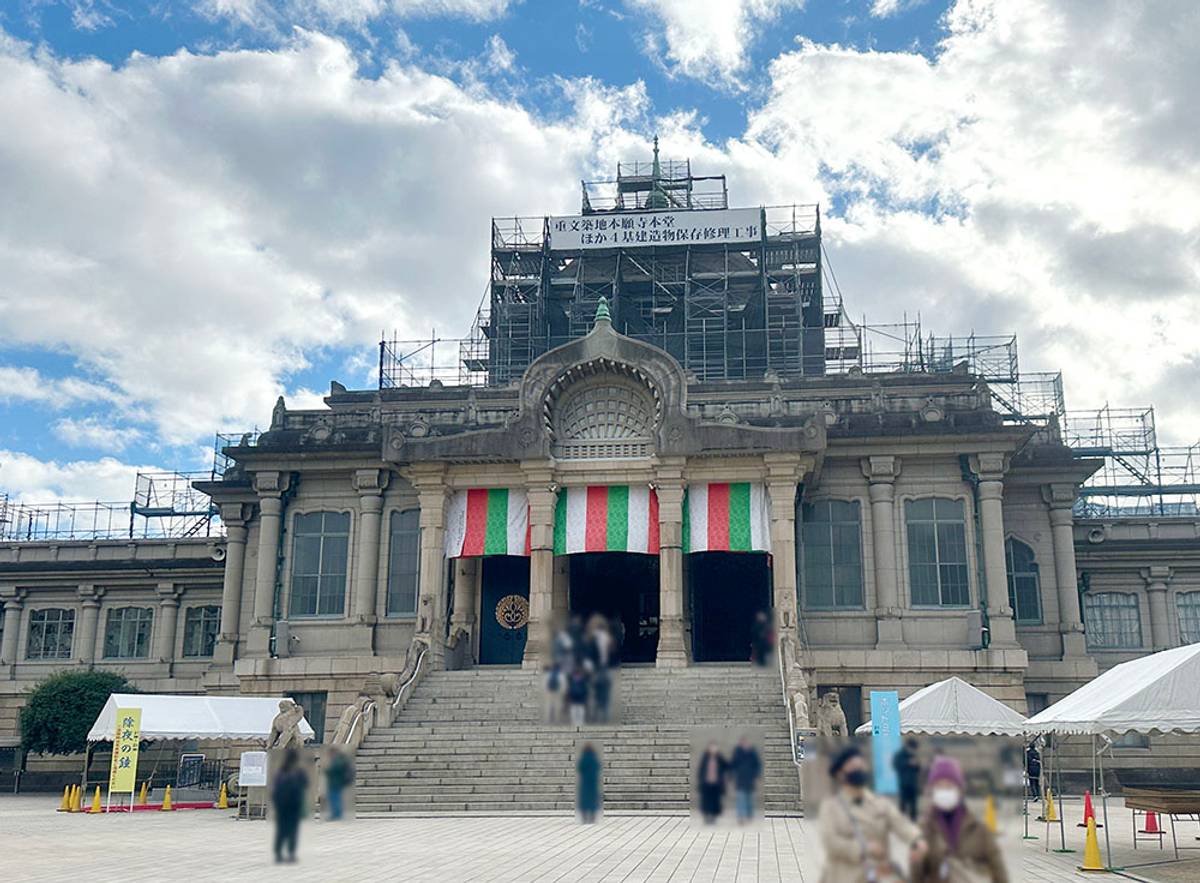
Tsukiji Hongwanji / Photo by Japaniche
Originally founded in 1617, the current Main Hall was built in 1934. The Main Hall was designed by Dr. Chuta Ito, an architectural historian and honorary professor at Tokyo Imperial University (now the University of Tokyo). Its exterior, modeled after ancient Indian Buddhist architecture, is its defining feature. With its stained glass and marble sculptures of animals like lions and oxen, the design is both innovative and solemn, exuding an oriental atmosphere. The Main Hall, the Oya stone walls, and the three gateway pillars are designated as National Important Cultural Properties. Additionally, a pipe organ is installed in the Main Hall, and since 2006, the "Tsukiji Hongwanji Pipe Organ Concert" has been held on the last Friday of every month. In 2017, an information center featuring a cafe and other facilities was completed, and the temple is loved by many as an "open temple."
Hamarikyu Gardens
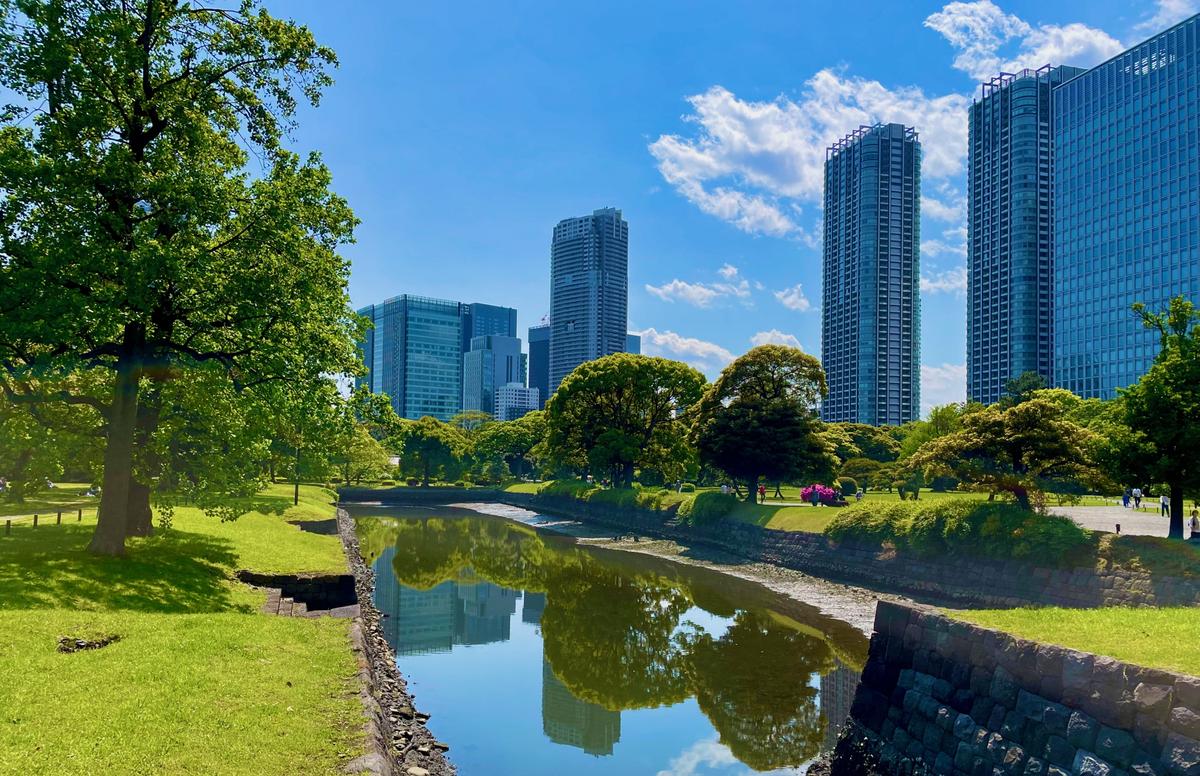
This is a Japanese garden created during the Edo period and loved by successive Shoguns. It is designated as a National Special Place of Scenic Beauty and a Special Historic Site. Many people visit to enjoy the natural beauty of the four seasons, including cherry blossoms in spring and autumn leaves in the fall. It features the only surviving seawater pond among the Edo gardens in Tokyo. In the "Shio-iri no Ike" (Tidal Pond), which changes its appearance with the ebb and flow of the tide, sits the "Nakajima no Ochaya" (teahouse), where you can enjoy matcha green tea and Japanese sweets. Furthermore, teahouses where successive Shoguns once spent their time have been restored based on historical records, and visitors can also see "Kamoba" (duck hunting sites).
Kachidoki Bridge
Spanning the Sumida River on the way from Tsukiji toward Kachidoki Station, this bridge is one of the few remaining movable bridges (bascule bridges) in Japan. With a total length of 246 meters, the central part used to split into two and lift up to allow large ships to pass. Today, power transmission to the mechanical parts has ceased, and the bridge no longer opens. In addition to being illuminated at night, on clear days, you can see the Tokyo Skytree and Tokyo Tower from the bridge. At the foot of the bridge on the Tsukiji side, there is the "Museum of Kachidoki Bridge," and tours of the bridge equipment are held periodically. The bridge is often used as a setting for manga and dramas, appearing in works such as Kochira Katsushika-ku Kameari Koen-mae Hashutsujo and Seven Days' War. In older movies and TV dramas, such as Tokyo no Koibito (Tokyo Sweetheart), you can see footage of the bridge actually opening.
Tsukiji
Discover stories and insights about Tsukiji