Kitano Tenmangu Shrine
北野天満宮
About Kitano Tenmangu Shrine
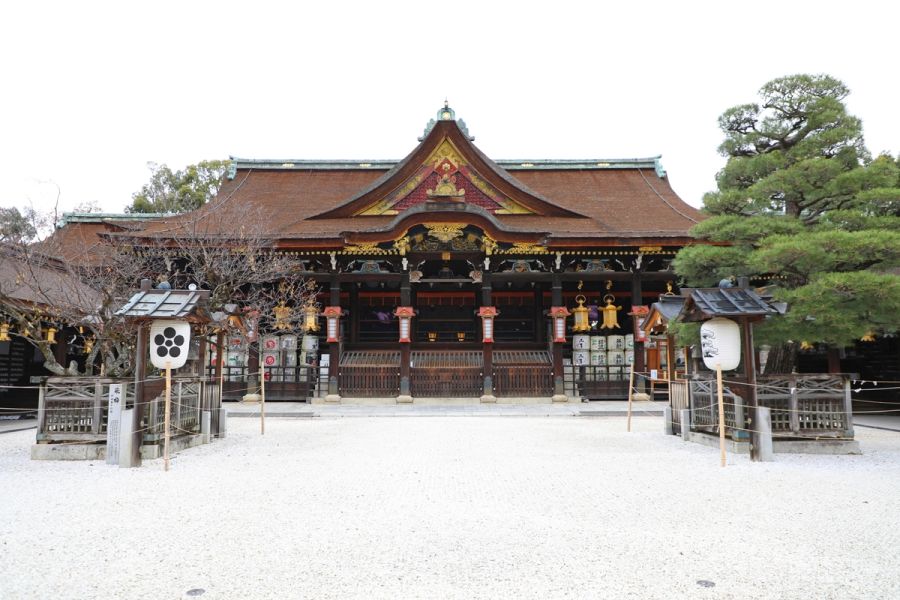
Kitano Tenmangū, located in the northern part of Kyoto, is a shrine dedicated to Sugawara no Michizane, a statesman, scholar, and poet of Chinese verse from the Heian period. Founded in 947, it stands as the foremost among approximately 12,000 Tenmangū and Tenjin shrines across Japan. During entrance exam season, the shrine draws a steady flow of visitors praying for academic success.
From Vengeful Spirit to God of Learning
The origins of Kitano Tenmangū are surprisingly dark. Sugawara no Michizane rose to the position of Udaijin (Minister of the Right), the second-highest rank among officials serving the emperor. In 901, however, a political conspiracy saw him exiled to Dazaifu in Kyushu. Stripped of his salary and attendants, he died in misery two years later in 903. In the years that followed, those involved in his exile fell ill and died one after another. Then in 930, lightning struck the imperial palace, killing and injuring several people. The public believed this was the work of Michizane’s vengeful spirit, and the imperial court enshrined him here in Kitano to appease it.
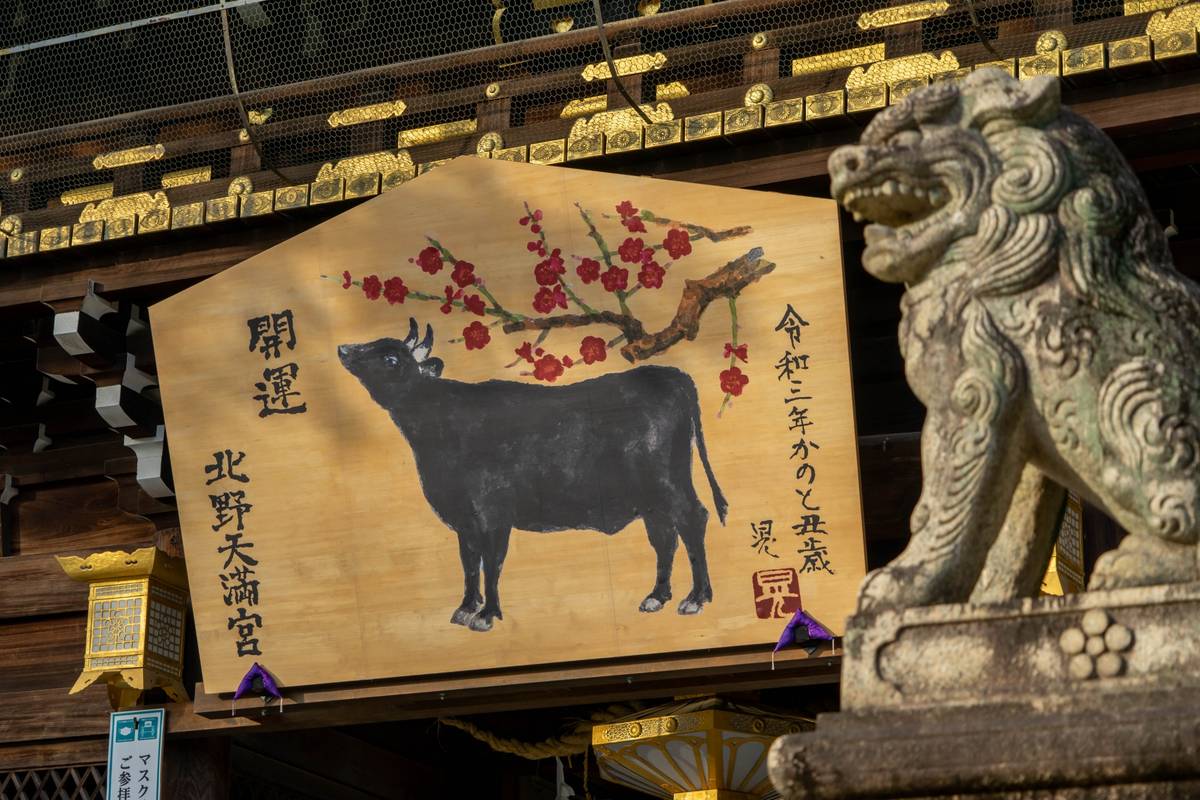
Over time, the fearsome image faded, and Michizane came to be revered as the god of learning. During the Edo period, as terakoya (community schools for common people) spread across the country, a tradition took hold of praying to Michizane when learning to read and write. Today, students from all over Japan visit the shrine during entrance exam season from January to March to pray for success. High school and university entrance exams in Japan are concentrated in this period, so the grounds fill with exam candidates holding ema, wooden votive plaques on which they have written their wishes.
A Momoyama Masterpiece, the National Treasure Main Hall
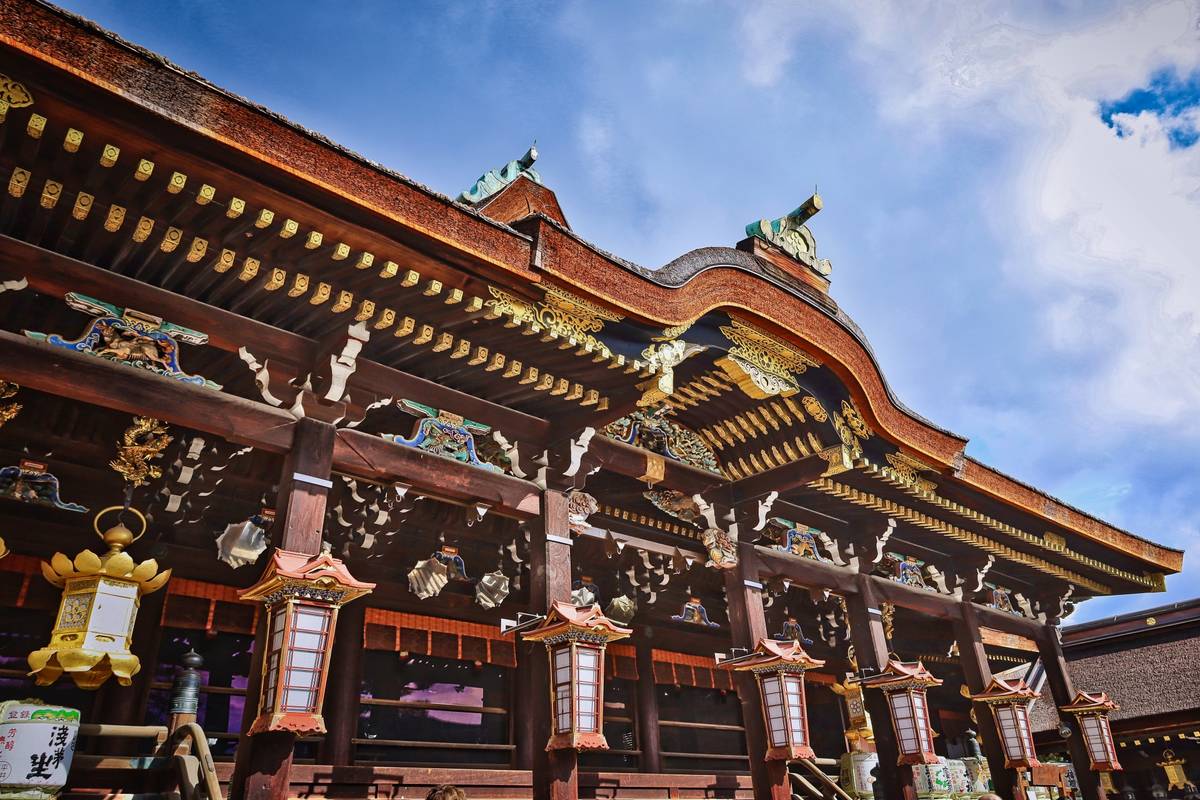
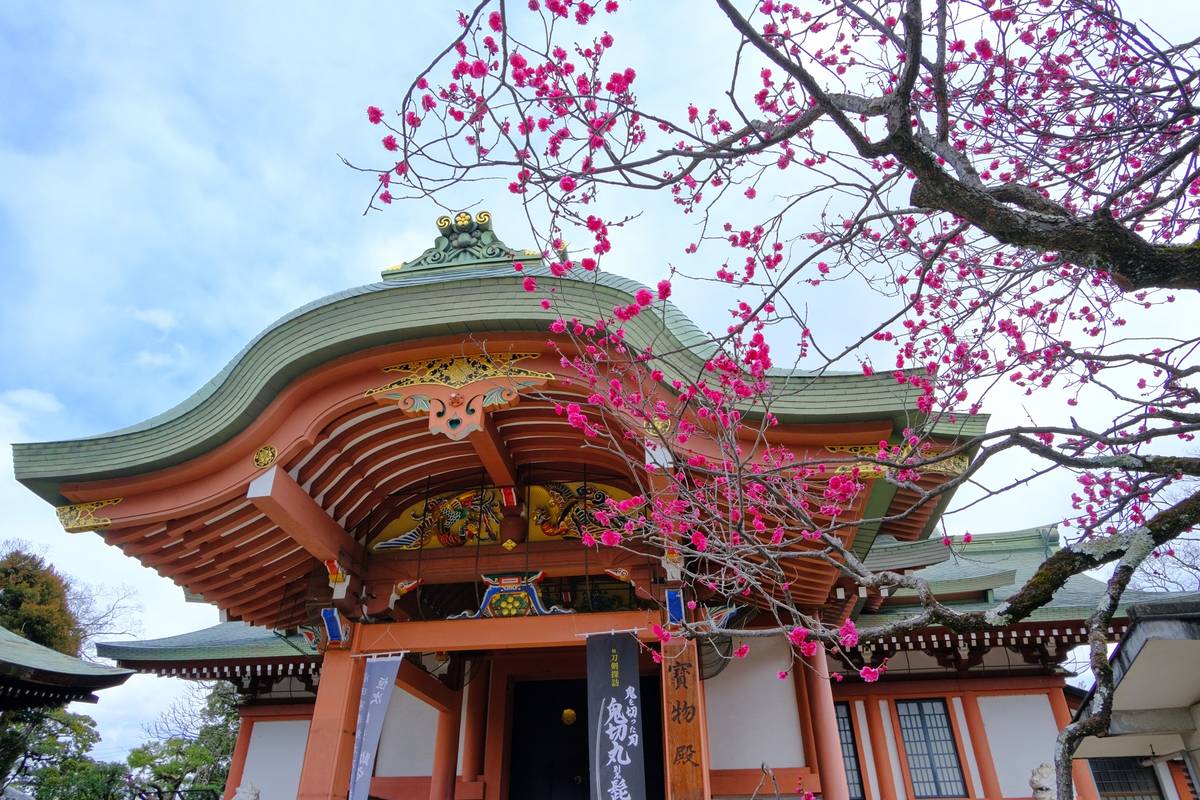
The main hall of Kitano Tenmangū is a National Treasure completed in 1607. Donated by Hideyori, the son of Toyotomi Hideyoshi, Japan’s great unifier, the building was constructed in a distinctive architectural style known as yatsumune-zukuri or gongen-zukuri. The roof is clad in hiwada-buki, layers upon layers of Japanese cypress bark, covering a total area of roughly 500 tsubo (about 1,650 square meters). It has long been celebrated as one of the finest examples of Momoyama-period architecture. Visitors quietly pressing their hands together in prayer before the hall is a reminder that this building, over four centuries old, remains a living place of worship.
Plum Blossoms and Autumn Leaves, Seasonal Faces of the Shrine
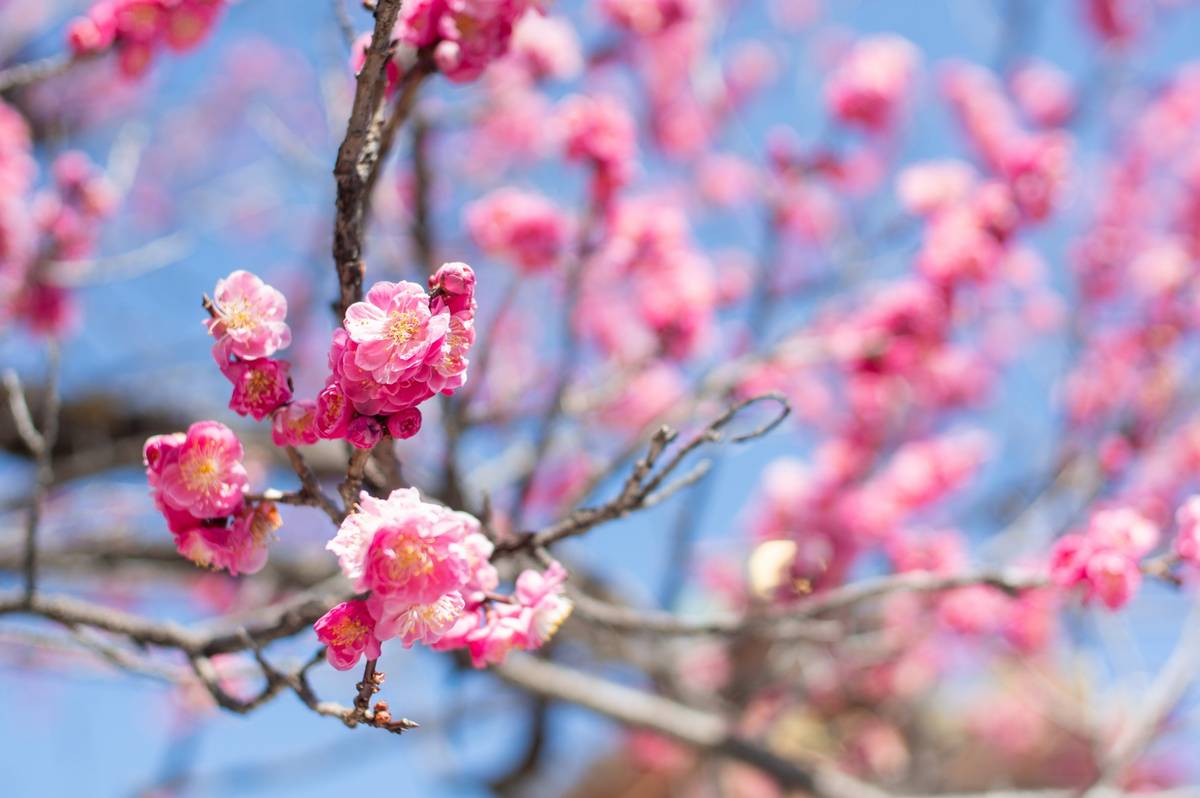
Kitano Tenmangū is renowned for its plum blossoms. The plum garden, called Hana no Niwa (Garden of Flowers), contains around 50 varieties and 1,500 plum trees, open to the public from early February through late March. Admission is 1,000 yen for adults and includes tea and traditional sweets. Visitors can enjoy matcha while enveloped in the fragrance of plum blossoms.
In autumn, the Momiji-en (Maple Garden) comes alive with around 350 maple trees. Many of these are venerable specimens over 350 years old. The garden sits on the remains of the Odoi, an earthen rampart Toyotomi Hideyoshi built in 1591 to encircle Kyoto. The section preserved at Kitano Tenmangū is said to retain the original form of the structure better than any other.
Tenjin-san on the 25th and the Baika-sai
The 25th of every month is Tenjin-san, a festival day at the shrine. The tradition stems from Sugawara no Michizane’s birthday and the date of his death falling on June 25 and February 25 respectively. On this day, a bustling market with street vendors springs up on the grounds. As evening descends, 350 stone lanterns and 250 hanging lanterns are lit, bathing the shrine in an otherworldly glow.
The Baika-sai (Plum Blossom Festival) on February 25 is the most special of these occasions. On this day, marking the anniversary of Michizane’s death, geiko and maiko from Kamishichiken, the geisha district just outside the shrine gates, host an outdoor tea gathering in the plum garden. The grounds also carry the legacy of the grand Kitano Ōchanoyu tea ceremony, held here by Toyotomi Hideyoshi in 1587 with some 1,500 tea stalls. It is a place with deep ties to the culture of tea.
Nade-ushi, the Sacred Oxen
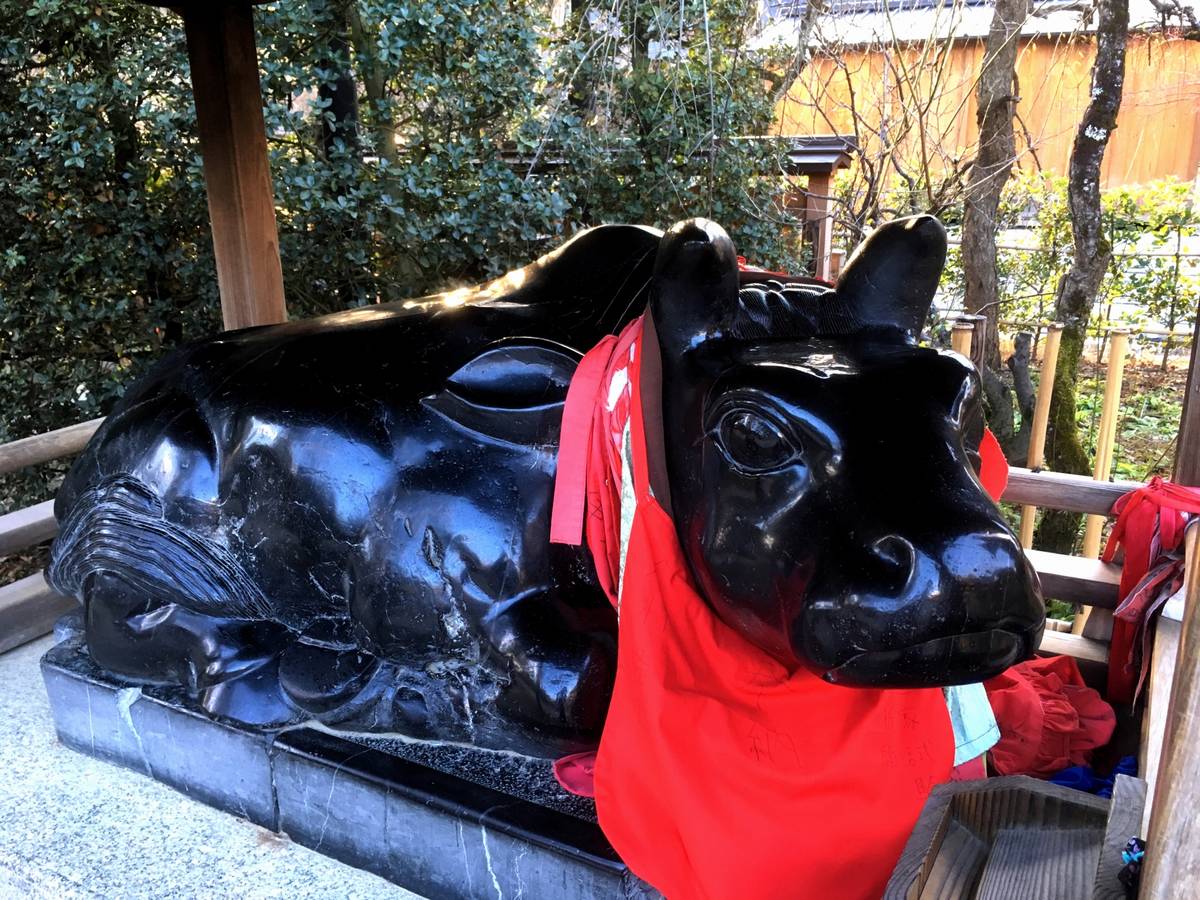
Several stone statues of reclining oxen sit throughout the grounds of Kitano Tenmangū. Michizane was born in the Year of the Ox, and legend holds that the ox pulling his funeral cart refused to move at this very spot, where his remains were then buried. Ever since, the ox has been considered a sacred messenger of the god Tenjin. Visitors stroke the heads of these statues while praying for academic improvement, and it is believed that rubbing a spot on the statue that corresponds to an ailing part of one’s body will bring healing. After years of being touched, the heads of the oxen gleam with a polished shine.
Visiting Information
From Kyoto Station, take Municipal Bus No. 50 for approximately 35 minutes and get off at Kitano Tenmangū-mae. Gate hours vary by season: April through September, 5:00 a.m. to 6:00 p.m.; October through March, 5:30 a.m. to 5:30 p.m. Admission to the shrine grounds is free. Garden fees apply only during the seasonal opening of the plum garden and the maple garden.
〒602-8386 Bakurocho, Kamigyo Ward, Kyoto
Loading map...
Stories about this place
Discover stories and insights about Kitano Tenmangu Shrine
Last Updated: