Kyoto
京都府
Start here
What to know about Kyoto
Kyoto Prefecture was the seat of Japan's capital for roughly 1,100 years, beginning in 794. Today it remains a living ancient capital, home to 17 UNESCO World Heritage Sites alongside temples, machiya townhouses, geisha districts, and traditional crafts, welcoming travelers from around the world.
And there is far more than Kyoto City. From Uji, with its matcha and the Byodo-in, to the bamboo groves and Togetsukyo Bridge of Arashiyama and Sagano, the sake breweries and vermilion torii gates of Fushimi, and the Sea of Japan scenery of Amanohashidate and the Ine boat houses, every part of the prefecture has its own character.
Kyoto is also a city of creativity, the birthplace of Kyoto Animation, the Kyoto International Manga Museum, and Nintendo. Between temple visits, you can follow the trail of real-life anime locations too.
Where to go
Places to visit in Kyoto
Curated spots and experiences across Kyoto.
Shrines & Temples
2 places

Shopping
1 place
Zoom in
Areas in Kyoto
Neighborhoods and districts to explore


Location
Where is Kyoto?
Kyoto Prefecture is located in the Kinki (Kansai) region and was the capital of Japan until 1868, before the current capital, Tokyo.
The northern part of the prefecture extends from the Sea of Japan coast, including Maizuru Bay and Miyazu Bay, to mountainous areas such as Mount Hiei and the Kameoka Basin, with altitudes below 1000 meters. Over 75% of the prefecture's area consists of mountains and hills. It borders Fukui Prefecture to the north, Shiga and Mie Prefectures to the east, Nara and Osaka Prefectures to the south, and Hyogo Prefecture to the west, touching all prefectures in the Kinki region.
In terms of climate, the Sea of Japan side experiences heavy snowfall in winter, with snow accumulation exceeding 2 meters in some years.
The prefectural capital is Kyoto City, with a population of about 1.43 million, making it the most populous in the prefecture, followed by Uji City with about 170,000 people, and Kameoka City with about 80,000 people.
Loading map...
Access
Getting to Kyoto
The easiest way to reach Kyoto is by bullet train. From Tokyo, the Tokaido Shinkansen Nozomi takes about 2 hours 14 minutes; from Shin-Osaka, just 14 minutes. From Kansai International Airport, the JR Haruka limited express runs directly to Kyoto Station. Around the city, an extensive subway and bus network gets you around, while private railways are handy for reaching Arashiyama and Uji.
Stops at Kyoto Station, the main gateway from outside the prefecture.
Tokyo: About 2 hours 14 minutes by Nozomi.
Osaka: About 14 minutes from Shin-Osaka.
Handy when coming from Osaka or Kobe.
Tokyo: The Shinkansen is the standard route.
Osaka: About 29 minutes by JR Special Rapid, or 43 minutes by Hankyu from Osaka-Umeda.
Kansai International and Osaka (Itami) airports are the nearest. See the airport details below.
Day and overnight buses from Tokyo, Nagoya and other cities arrive at the Hachijo exit of Kyoto Station. A budget-friendly option.
Tokyo: Overnight and day buses from Tokyo and Nagoya.
Airports
- Kansai International Airport KIX
To center: About 75 to 80 minutes to Kyoto Station on the JR Haruka limited express.
- Osaka International Airport (Itami) ITM
To center: About 55 minutes to Kyoto Station by airport limousine bus.
Major Stations
- Kyoto Station Tokaido ShinkansenJR Kyoto & Biwako LineJR Nara LineJR Sagano LineKintetsu Kyoto LineKarasuma Subway Line
- Kawaramachi / Karasuma (Hankyu) Hankyu Kyoto Line
- Sanjo / Gion-Shijo / Demachiyanagi (Keihan) Keihan Main LineOto Line
- Saga-Arashiyama / Arashiyama JR Sagano LineRanden (Keifuku)Hankyu Arashiyama Line
Local pride
Specialty Products
Kyoto Prefecture is a region in Japan where you can strongly feel the essence of "Wa" (Japanese harmony) through its many local specialties.
From tofu and yuba (tofu skin) dishes that represent soybean-based foods, to obanzai, which are traditional Kyoto-style side dishes served in small bowls, the food culture that has been passed down through generations is still deeply rooted in daily life.
Additionally, Kyoto vegetables such as Kamo eggplant, Kujo green onions, and Shogoin radish, cultivated with Kyoto's unique historical farming techniques, are popular nationwide.
Furthermore, in the field of crafts, Nishijin weaving, Kiyomizu pottery, and Kyo Yuzen dyeing are known as designated Kyoto crafts, and have long been cherished as traditional crafts by many people.
Food
Crafts & Others
Through the ages
History of Kyoto
The history of Kyoto begins in 794 when Emperor Kanmu moved the capital from Nagaoka-kyō, located around present-day Nagaokakyō City in Kyoto Prefecture, to Heian-kyō. For approximately 1075 years, until the capital was moved to Tokyo City in 1869, Kyoto served as Japan's capital.
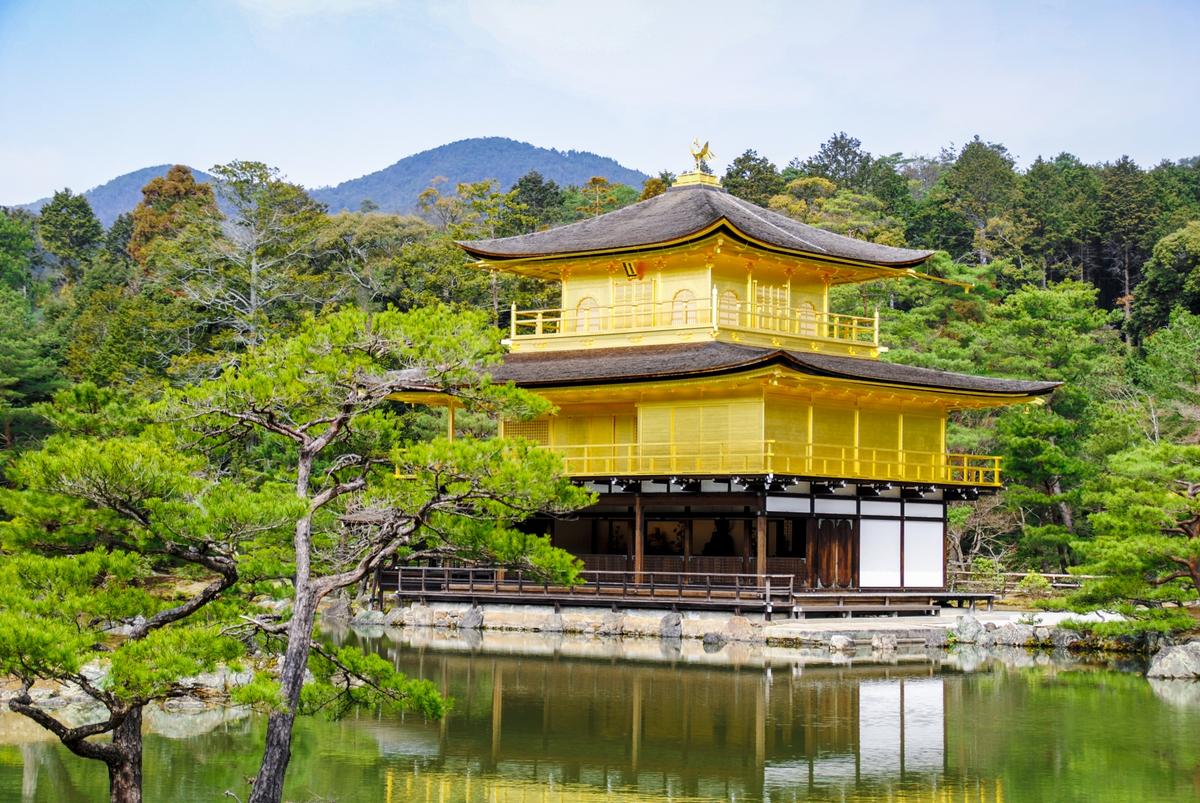
Due to its long-standing status as the capital, Kyoto developed significantly as a political and cultural center. Even today, 17 World Cultural Heritage sites, including Kiyomizu-dera, Byōdō-in, and Kinkaku-ji (Golden Pavilion), convey the depth of its history.
The name "京都(Kyoto)" is derived from the ancient East Asian words "京(Kei)" or "京師(Keishi)," which meant capital. From there, it came to be called "京都(Keito)" and eventually became known as the present-day Kyoto.
Even after the capital moved to Tokyo in the Meiji era, Kyoto continued to thrive as a city where traditional crafts and new creativity coexist. It is the home of Nintendo, founded here in 1889, along with Kyoto Animation and other world-renowned makers and creative studios.
Plan your trip
Official Resources
Continue exploring
Discover other areas and hidden gems across Kinki Region.