Kamigyo
上京区
Things to Do in and Around Kamigyo
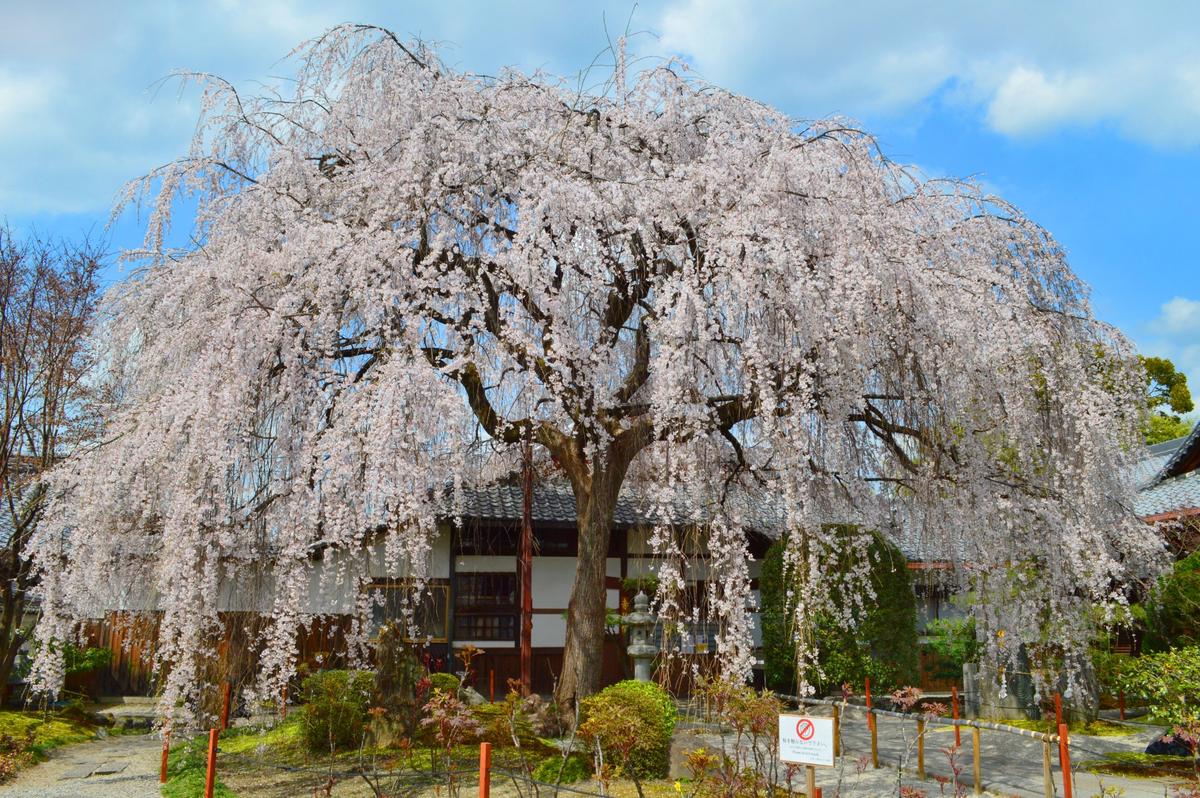
Kamigyo Ward occupies the heart of Kyoto and has remained the center of imperial life and faith for more than a thousand years. From the Heian period onward, the townscape has sprawled in an orderly grid pattern, with dignified buildings such as the Kyoto Imperial Palace found throughout. At the same time, the sound of looms continues to echo through Nishijin, where the district maintains its identity as a craftspeople’s quarter. This is the area where courtly culture and the traditions of handwork coexist most vividly, embodying the essence of Kyoto.
Places to visit in Kamigyo
Where is Kamigyo?
Located at the center of Kyoto, Kamigyo Ward is bounded on the east by the Kamo River, which separates it from Sakyō Ward, and on the south by Marutamachi Street, which borders Nakagyo Ward. The north and west are adjacent to Kita Ward, separated by Kurama-guchi Street and the Kamiya River respectively. With an area of 7.03 square kilometers and a population of approximately 75,000 as of April 2025, the ward retains the grid-pattern street layout that has persisted since the Heian period, preserving the rectangular urban structure characteristic of Kyoto. Due to the basin climate, summers are hot and humid, while winters bring a biting cold that chills from the ground up.


Getting Around
From Kyoto Station, the Karasuma Line subway reaches Imadegawa Station in just about ten minutes. The main stations are Imadegawa (K06) and Kurama-guchi (K05), with multiple Kyoto City Bus routes also serving the area. Most of the ward’s attractions are concentrated within walking distance, so once you arrive at a station, you can explore the highlights on foot.
Loading map...
About Kamigyo
Kamigyo’s attractions form a cultural landscape where history and faith interweave. From the imperial gardens where the imperial family lived for over a thousand years, to the head shrine presiding over all Tenjin shrines nationwide, to the weaving workshops of Nishijin where loom sounds still resonate today. Buildings preserved through repeated waves of conflict and craftsmanship passed down through generations shape the character of this district.
Kyoto Imperial Palace and Kyoto Gyoen
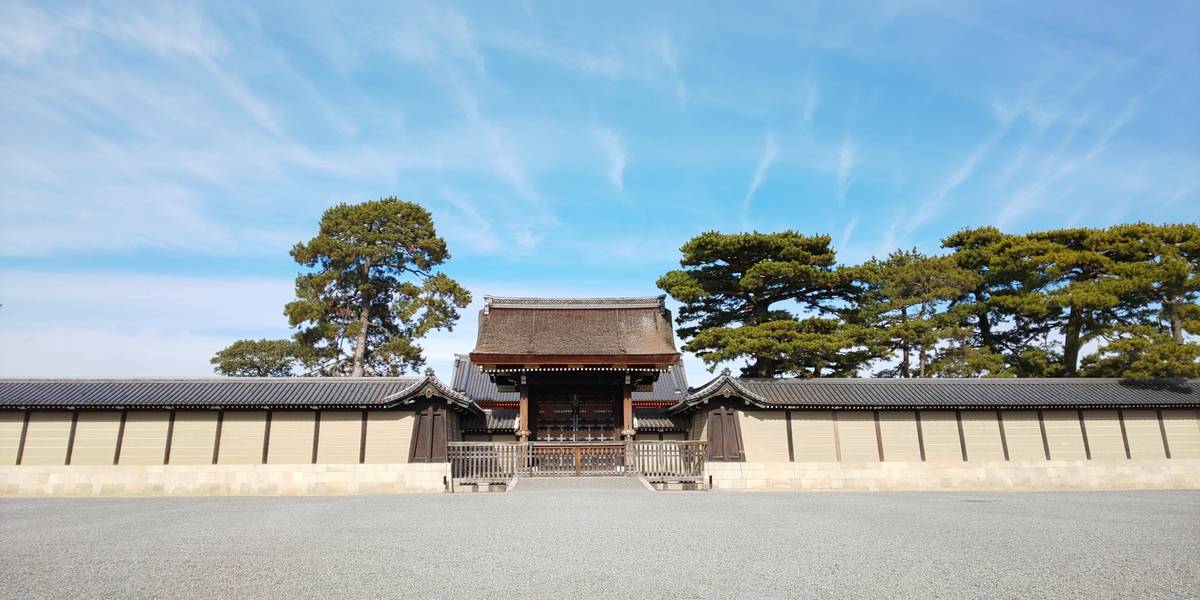
Spanning approximately 700 meters east to west and 1.3 kilometers north to south, this vast green space shelters the Kyoto Imperial Palace at its center. For more than a thousand years, it served as the residence of the imperial family. Until the Meiji Emperor relocated the capital to Tokyo in 1868, this was the imperial residence of Japan.
Admission is free, and the grounds are open to the public except on Mondays and during year-end holidays. Shūsuitei, a teahouse built during the Edo period, stands within the grounds and can be visited for 300 yen. Walking through the grounds where only the crunch of gravel underfoot breaks the silence, you find yourself enveloped in a quietness that makes you forget you are in the midst of a city.
Kitano Tenmangu
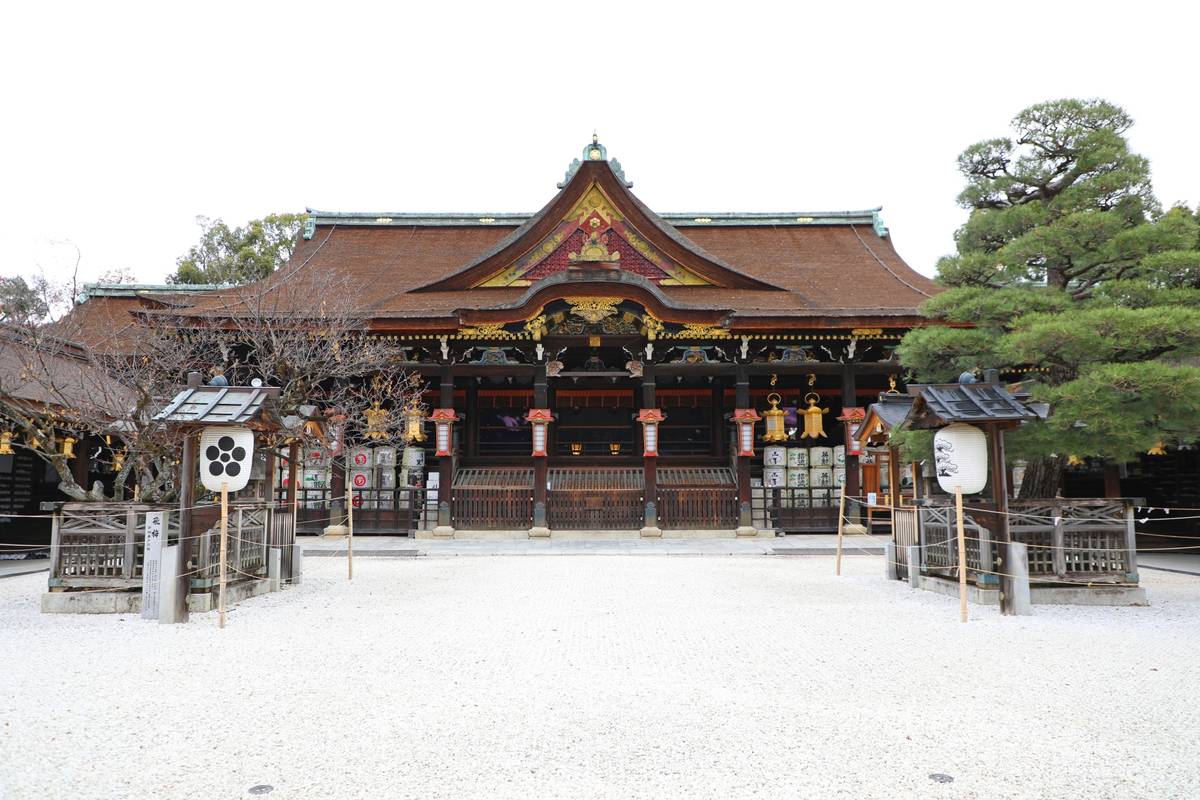
Since its founding in 947, this shrine has been revered as the head shrine of approximately 12,000 Tenmangu and Tenjin shrines throughout Japan. Its deity is Sugawara no Michizane, a scholar of the Heian period, venerated as the god of learning. During exam season, lines of worshippers never cease. The current main hall, constructed in 1607 by Toyotomi Hideyori, is a designated national treasure, showcasing the splendor of the yatsumune architectural style characteristic of the Momoyama period.
The plum garden contains some 1,500 trees of approximately 50 varieties, with peak bloom from mid-February to mid-March. Along the approach path stand statues of the sacred ox, rooted in the tradition that Michizane was born in the Year of the Ox. Visitors rub the part of the statue corresponding to an afflicted part of their own body, believing it brings divine favor. In autumn, approximately 350 maple trees reflect in the waters of the Kamiya River beneath a vermillion arched bridge, creating a scene not to be missed.
Nishijin
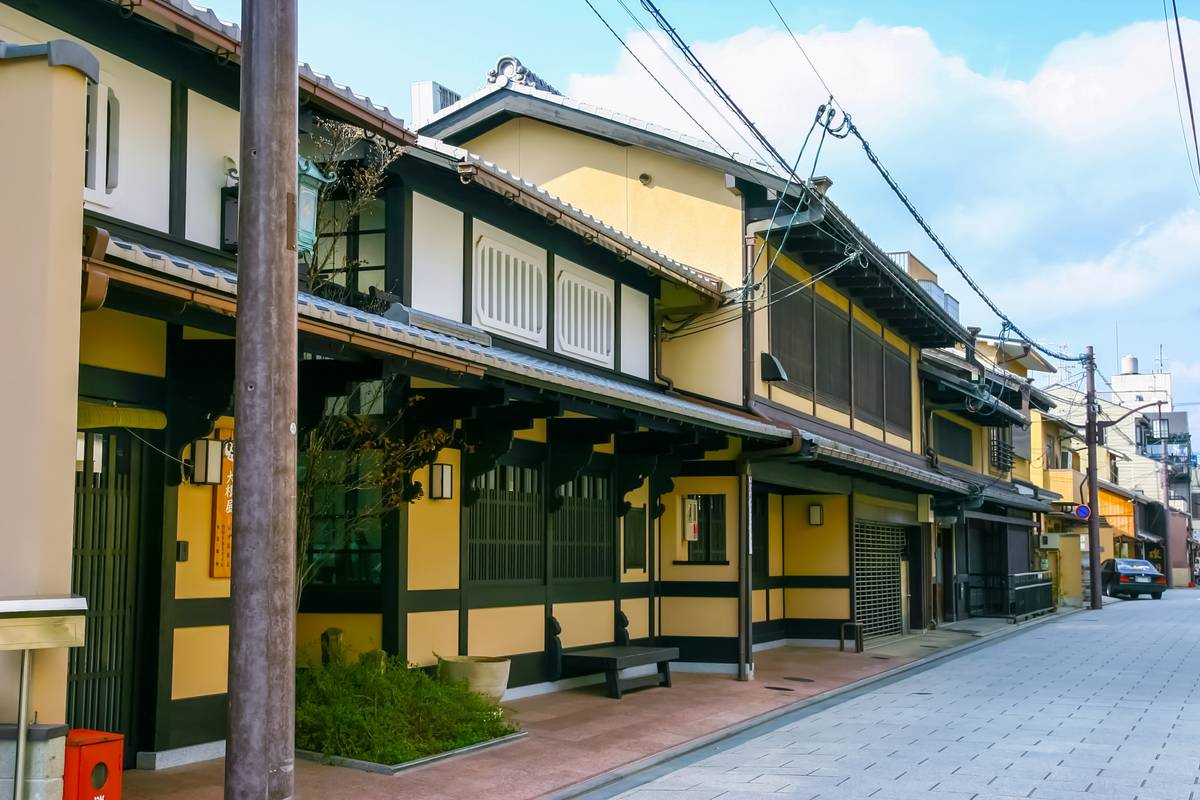
The sound of looms reverberates throughout this district, which epitomizes Kyoto’s weaving culture. The name Nishijin, spanning both Kamigyo and Kita wards, derives from the Western Army’s encampment here during the Ōnin War. Its origins trace further back to the 5th and 6th centuries, when the Hata clan pioneered sericulture and weaving. Though the district declined during the Ōnin War, craftspeople who had fled gradually returned, bringing new techniques that allowed Nishijin to flourish anew.
Pre-dyed brocades, where yarn is dyed before being woven into intricate patterns, were designated as a traditional craft by the government in 1976. Workshops converted into cafes and weaveries welcoming visitors dot the neighborhood. Walking down the narrow lanes, you may suddenly hear the rhythmic clatter of looms echoing from beyond a window.
Seimei Shrine
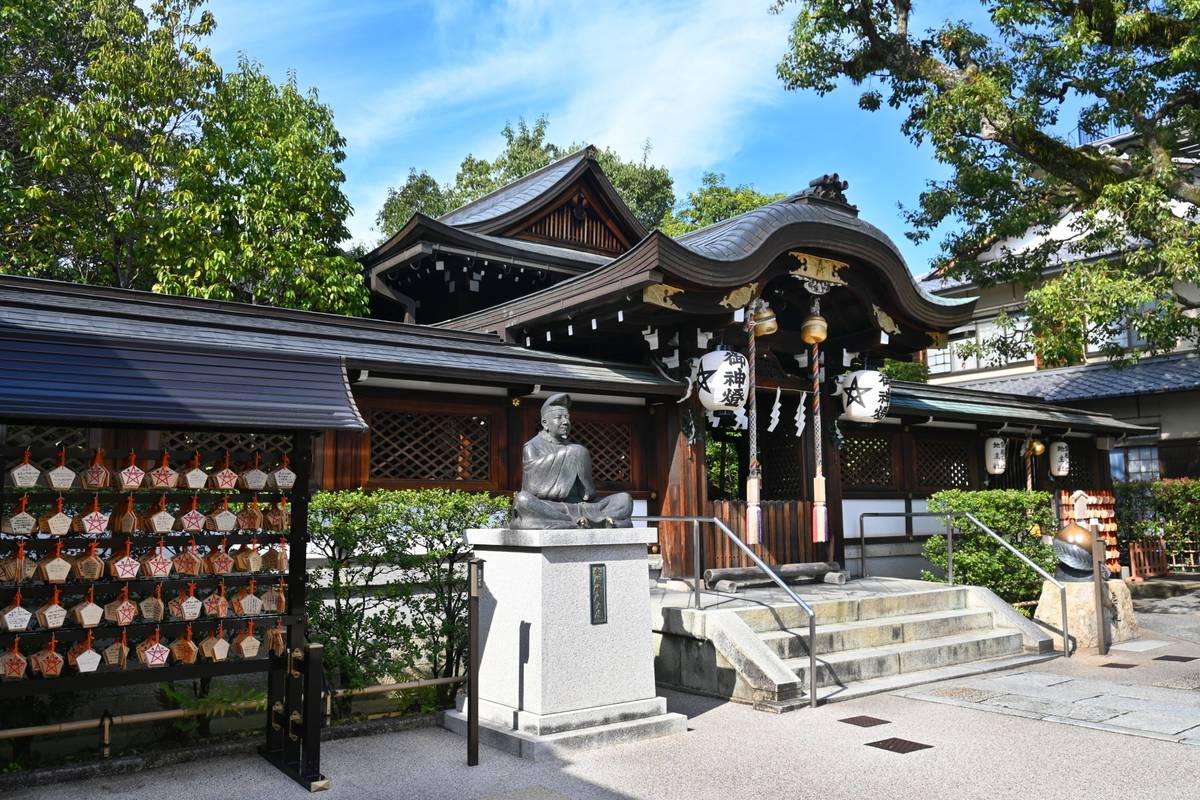
This shrine is dedicated to Abe no Seimei, a renowned onmyōji of the Heian period. It was established in 1007 by order of Emperor Ichijō on the site of Seimei’s former residence. The distinctive five-pointed star emblem known as the Seimei Kikyō seal adorns the grounds, lending the shrine a unique atmosphere.
The Seimei Well within the grounds is said to have been summoned by Seimei’s spiritual power and continues to flow with water to this day. An ancient sacred tree, over 300 years old, stands quietly in the precinct, a testament to the passage of time. One hundred meters south of the shrine lies the Ichijō-modori Bridge, renowned for its connection to Kyoto’s demon-slaying legends.