Akasaka Hikawa Shrine
赤坂氷川神社
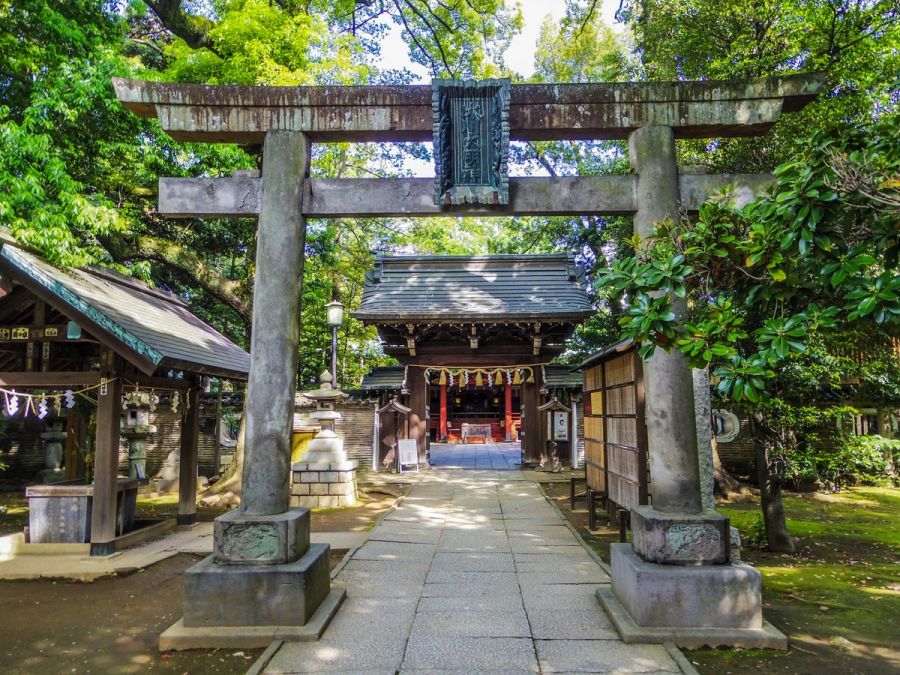
About Akasaka Hikawa Shrine
On a verdant hilltop in Akasaka stands a shrine whose main hall has remained unchanged for nearly 300 years. Akasaka Hikawa Shrine was founded in 951 and boasts over a thousand years of history. The shrine building constructed by the eighth shōgun, Tokugawa Yoshimune, in 1730 miraculously survived both the Great Kantō Earthquake and the Tokyo air raids. One of the Ten Shrines of Tokyo, it is equally beloved as a matchmaking shrine.
The shrine hall built by Yoshimune stands intact
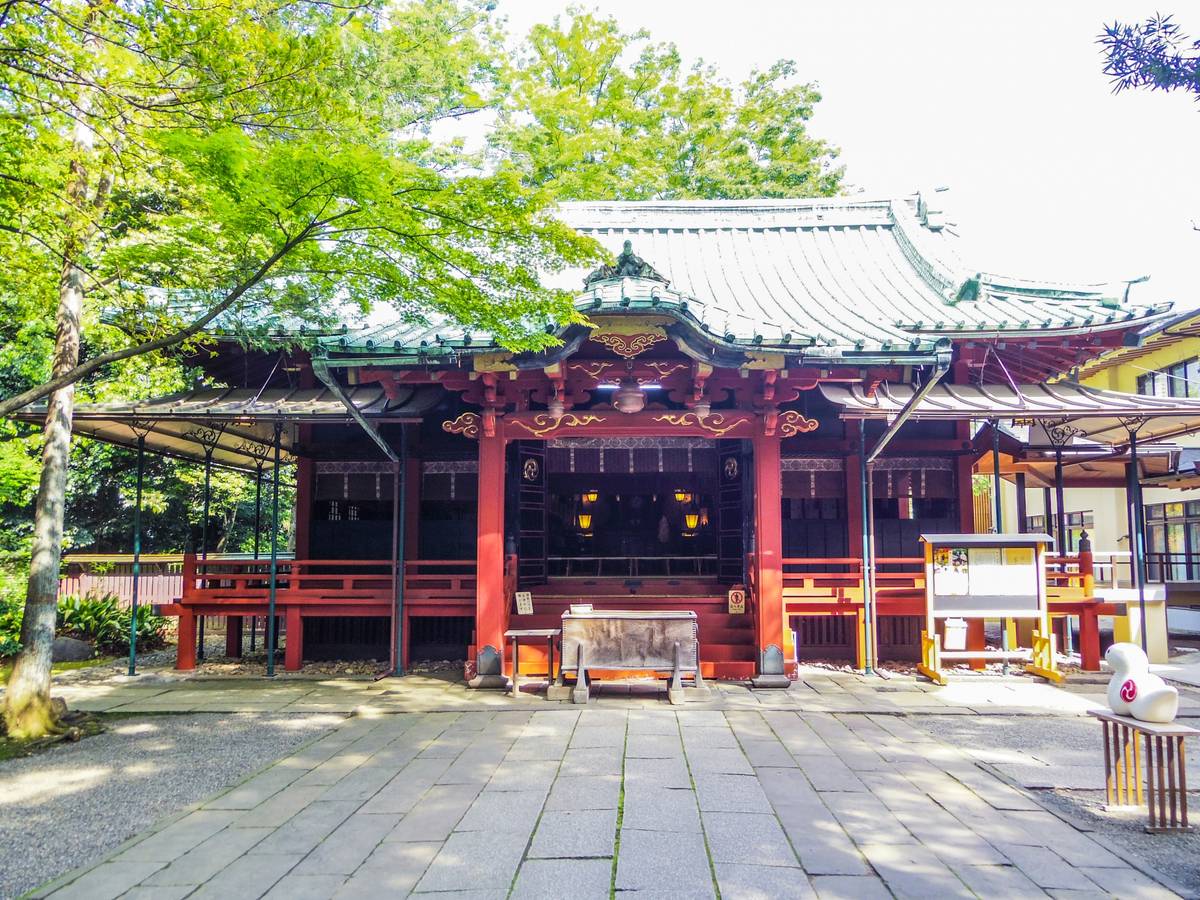
In 951, a Buddhist monk received a divine message in a dream and built a shrine in the village of Hitotsuki, marking the beginning of Akasaka Hikawa Shrine. This village corresponded to present-day Akasaka 4-chōme. The enshrined deities are Susanoo no Mikoto and his wife Kushinada Hime no Mikoto, along with Ōnamuchi no Mikoto, known as the god of nation-building.
A major turning point came in 1730 when the eighth shōgun Tokugawa Yoshimune ordered the shrine’s relocation to its current site. The project’s chief administrator was Mizuno Tadayuki, a senior councilor who held one of the highest positions in the shōgunate. Constructed from cypress wood with a copper roof and vermillion-painted pillars, the shrine building is designated as an Important Cultural Property of Tokyo.
Since then, the shrine hall has remained unscathed. It miraculously survived the 1855 Ansei earthquake, the Great Kantō Earthquake, and the Tokyo air raids, preserving its appearance from roughly 300 years ago. The chōzuya, where visitors ritually cleanse their hands, and the kagura hall where sacred dances are performed were destroyed in the raids, but the main sanctuary endured. In 1975 it was selected as one of the Ten Shrines of Tokyo.
The Great Ginkgo and the Shiai Inari
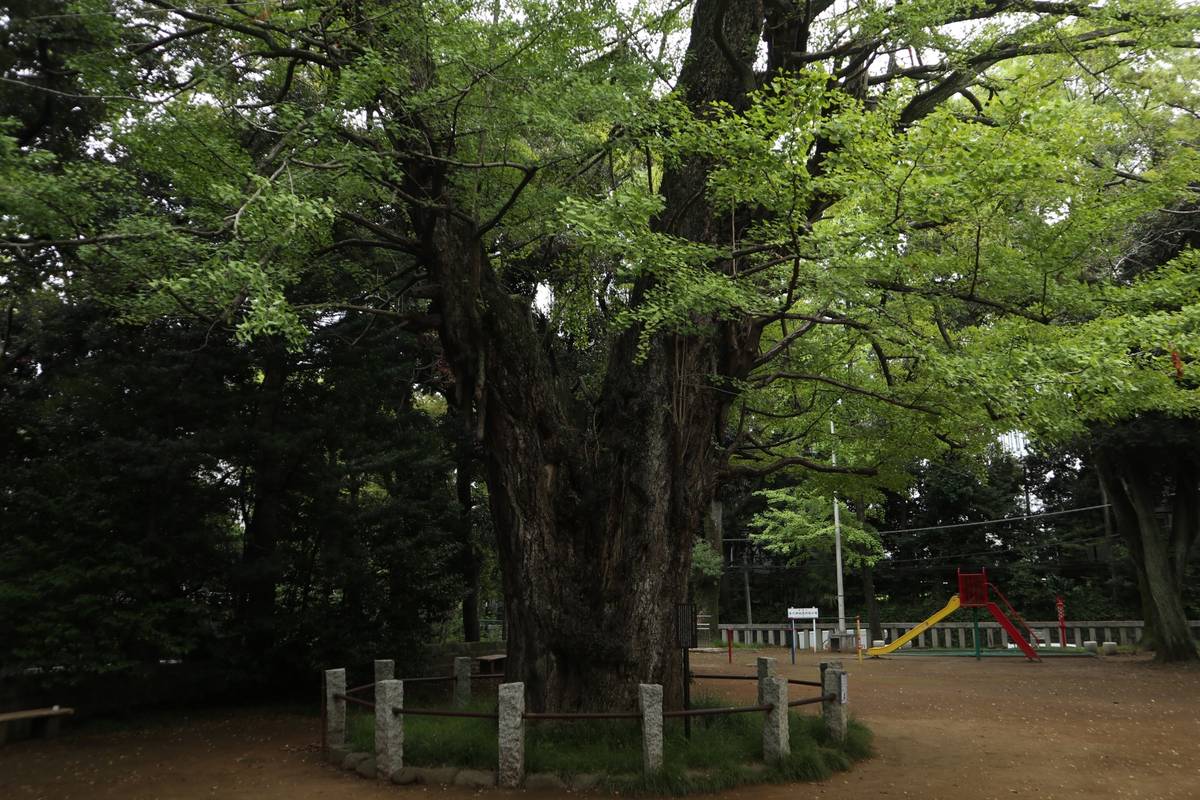
The sacred tree revered within the shrine grounds is a great ginkgo with an estimated age exceeding 400 years. Its trunk measures approximately 7.5 meters in circumference and is designated as a natural monument of Minato Ward, making it one of the district’s most impressive ancient trees. It had already taken root at this location before the shrine’s relocation.
The trunk suffered extensive fire damage during the Tokyo air raids. Yet each year in late November, it turns a brilliant gold, bathing the shrine grounds in a luminous glow.
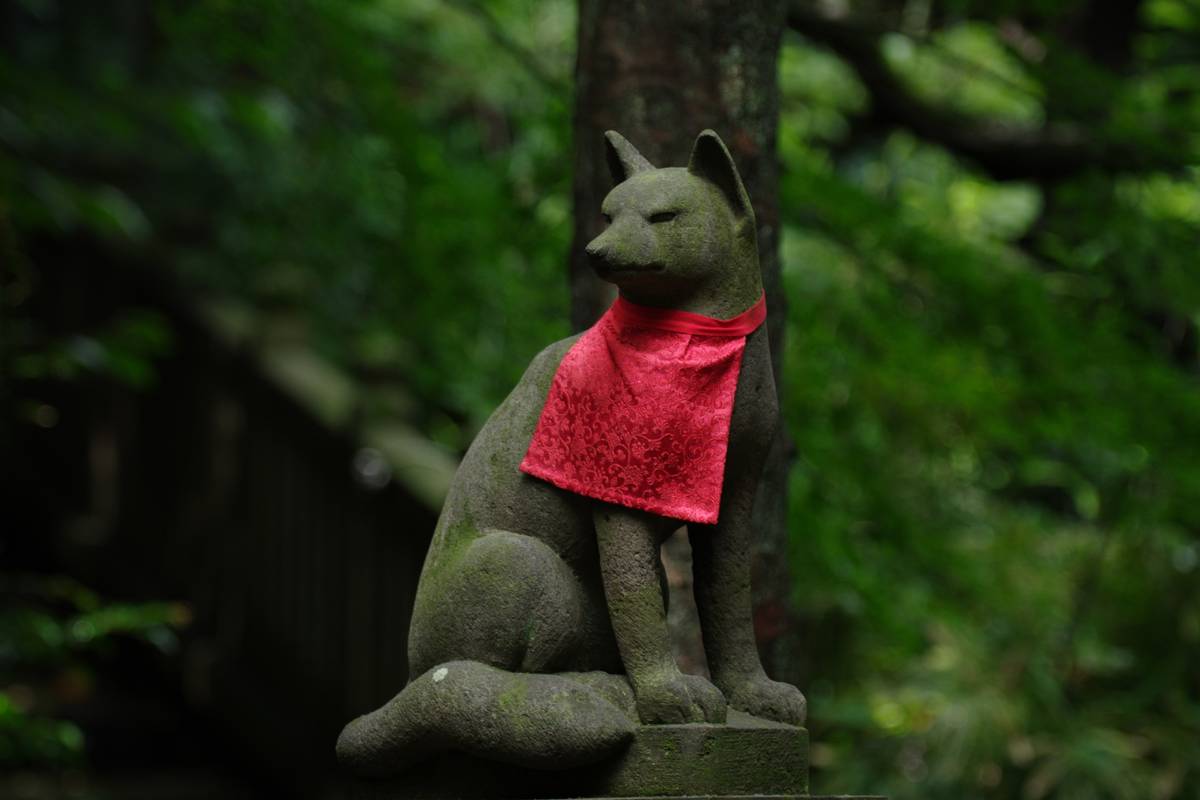
Descending the approach path from the shrine, visitors encounter the Shiai Inari. Established in 1898, it combines four inari shrines that once stood nearby, and was named by Katsu Kaishū. The name plays on “shiawase,” the Japanese word for happiness. Katsu Kaishū was a statesman who rose to prominence during the late Edo and Meiji periods, establishing his residence in Akasaka in 1859 and living near Hikawa Shrine throughout his final years.
Matchmaking and Edo-period festival floats
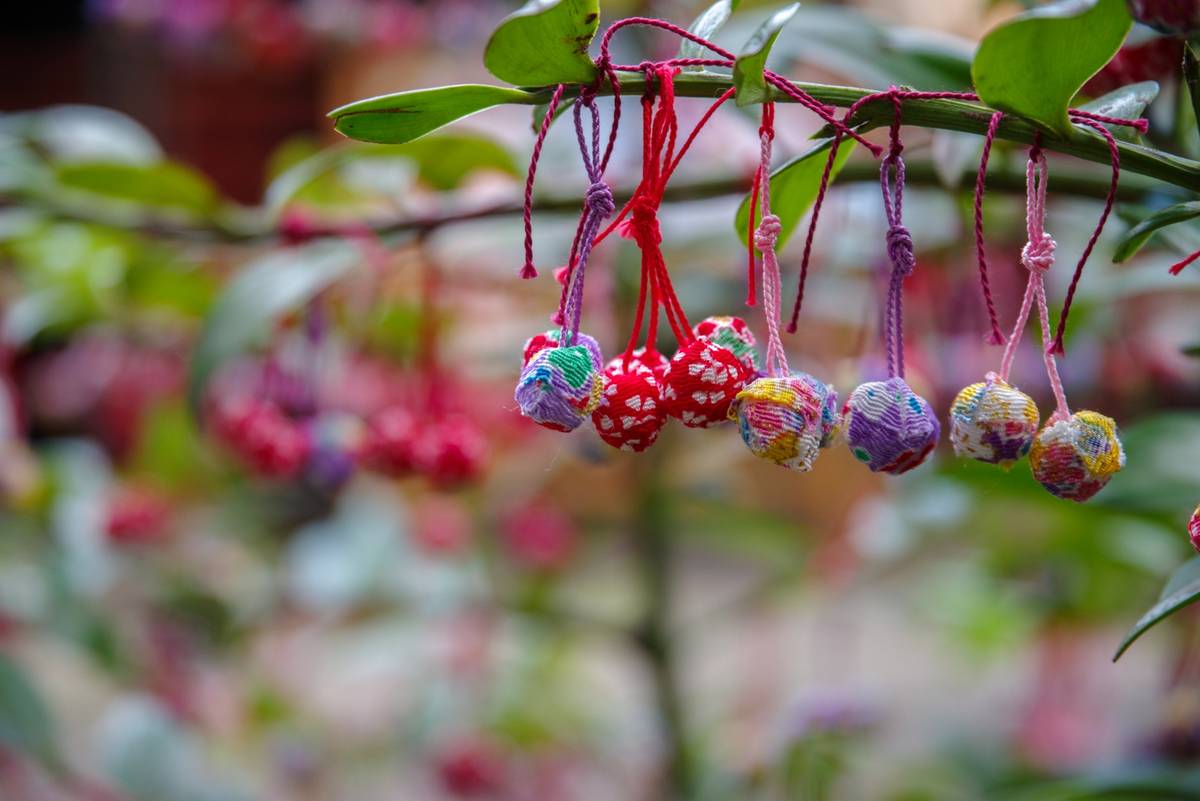
Sakuranbo musubi
Among the enshrined deities, Susanoo no Mikoto and Kushinada Hime no Mikoto are a divine couple. Ōnamuchi no Mikoto is also revered as the god who forged countless connections in building the nation. Against this backdrop, Akasaka Hikawa Shrine has long been venerated as a matchmaking shrine.
Once monthly, a prayer ritual called “En-musubi Mairi” welcomes up to 30 participants. The ritual covers all manner of bonds, from romantic relationships to friendships, career connections, and wishes for children. Sessions fill immediately due to their popularity. The indigo seeds (seeds of love) and the wooden combs of happiness bestowed here are unique to this shrine.
The annual grand festival falls on September 15, known as the Akasaka Hikawa Festival. The celebrations feature festival floats that follow Edo-period tradition as they parade through the streets. After lying dormant for approximately 80 years, the floats were revived in 2007, and in 2016 a joint procession with the shrine’s mikoshi took place for the first time in roughly a century. The floats are topped with figures fitted with mechanical devices that allow them to rise and lower so they can pass through the gates of Edo Castle. This contrivance was born from the need to clear the castle gates when the shōgun watched the procession.
〒107-0052 6-chōme-10-12 Akasaka, Minato City, Tokyo
Loading map...
Stories about this place
Discover stories and insights about Akasaka Hikawa Shrine
Last Updated: