Kotohira
琴平町
Things to Do in and Around Kotohira
Kotohira sits at the foot of Mount Zōzu in western Kagawa Prefecture. As the gate town of Kotohira-gū, the shrine affectionately known as Konpira-san, it became a major center of worship in the Edo period, drawing pilgrims from every corner of Japan. Shipping merchants and traders came to pray for safe voyages, and sailors from distant ports found their way here as well. The fervor of that era still lingers in the stone steps of the approach and the streets of the town today.
For a town of fewer than 10,000 people, the list of things worth seeking out is long. The view that opens up at the top of 785 stone steps. The clack of wooden clappers from the kabuki theater in spring. A bowl of Sanuki udon eaten along the approach. Each of these is something Kotohira has cherished for generations.
Places to visit in Kotohira
Where is Kotohira?
Kotohira, in Nakatado District of Kagawa Prefecture, is a small town in the west-central part of the prefecture. It spreads across an alluvial fan formed by the Kanakura River at the foot of Mount Zōzu, which rises to 538 meters. Around 9,900 people live here, across an area of just 8.47 square kilometers, small enough to cross on foot. The Setouchi climate keeps the area mild throughout the year. Major cities such as Takamatsu and Marugame lie within a short ride, but Kotohira itself holds on to the quiet feel of a town tucked among the hills.


Getting Around
Several routes lead into Kotohira. From Tokyo, take the Shinkansen to Okayama Station, then transfer to the JR Dosan Line to reach Kotohira Station. From Takamatsu Airport, the airport bus runs to the station in 34 to 53 minutes, and a taxi covers the same stretch in about 29 minutes.
Another handy option is the Kotoden Kotohira Line from Takamatsu-Chikkō Station, which reaches Kotoden Kotohira Station in about 62 minutes. From either Kotohira station, it is roughly a 10-minute walk to the entrance of the main approach. The town center is compact enough to explore on foot, so a rental car is not needed. Much of the approach rises in stone steps, so comfortable walking shoes are the best choice.
Loading map...
About Kotohira
A walk through Kotohira unfolds along the stone-stepped approach that leads up to Kotohira-gū. Japan's oldest surviving kabuki theater, still wearing its Edo-period frame. Long-standing Sanuki udon shops that give the gate town its color. A hot spring quarter waiting at the end of the climb. For a small town, the sights grow richer with every step up the mountain.
Kotohira-gū
Kotohira-gū stands partway up the slopes of Mount Zōzu. Reaching the main shrine takes 785 stone steps, and anyone aiming for the inner sanctuary has a total of 1,368 steps to climb. The main deity enshrined here is Ōmononushi no Kami, long revered as a god of the sea. In the Edo period, pilgrimages known as Konpira-mairi became a nationwide craze among shipping merchants and traders, and worshippers traveled in from every province. With each step up the staircase, the weight of the prayers once carried here feels closer.
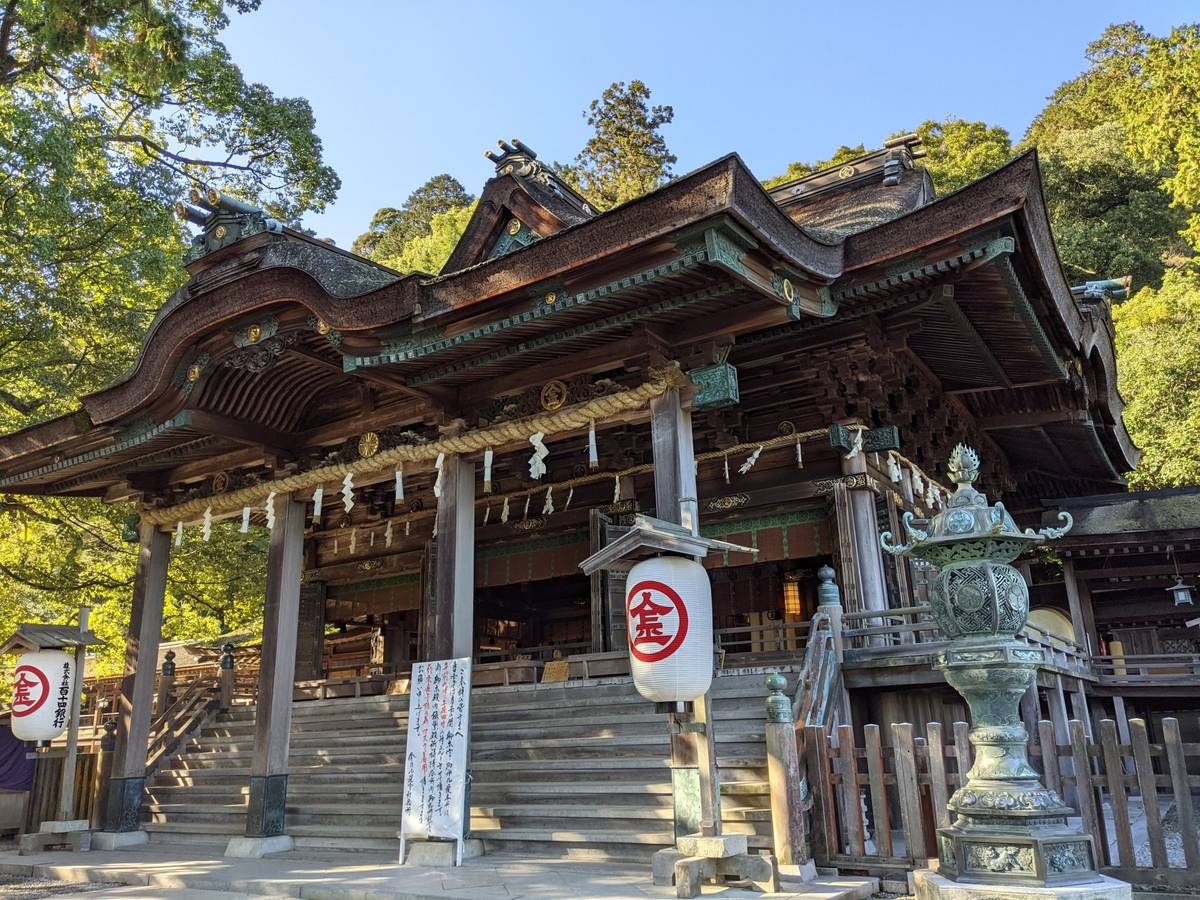
Along the approach, you pass through the Ōmon, a great gate donated by Matsudaira Yorishige, the first lord of the Takamatsu domain. Beyond it stretches Sakura-no-Baba, a stone-paved avenue. Keep climbing and the Asahi-sha comes into view, a hall completed in 1845. Its stately form is an Important Cultural Property, preserving the workmanship of the late Edo period intact. A little further up stands the Shoin, a reception hall built between 1658 and 1660. Inside, sliding-door paintings by the Edo-era artist Maruyama Ōkyo still line its walls. The Room of Cranes. The Room of Tigers. The Room of the Seven Sages. In each, Ōkyo's brushwork still feels alive.
Entering the shrine grounds is free, while the Treasure Hall and the Shoin charge admission. The view of the Sanuki Plain that opens up once you reach the top has a way of lifting the tiredness right out of your legs. Cherry blossoms in spring, red leaves in autumn. Each season reshapes the look of the shrine buildings, and lingering there for a while is the kind of moment that stays with you.
The Kyū Konpira Grand Theater and Kanamaru-za
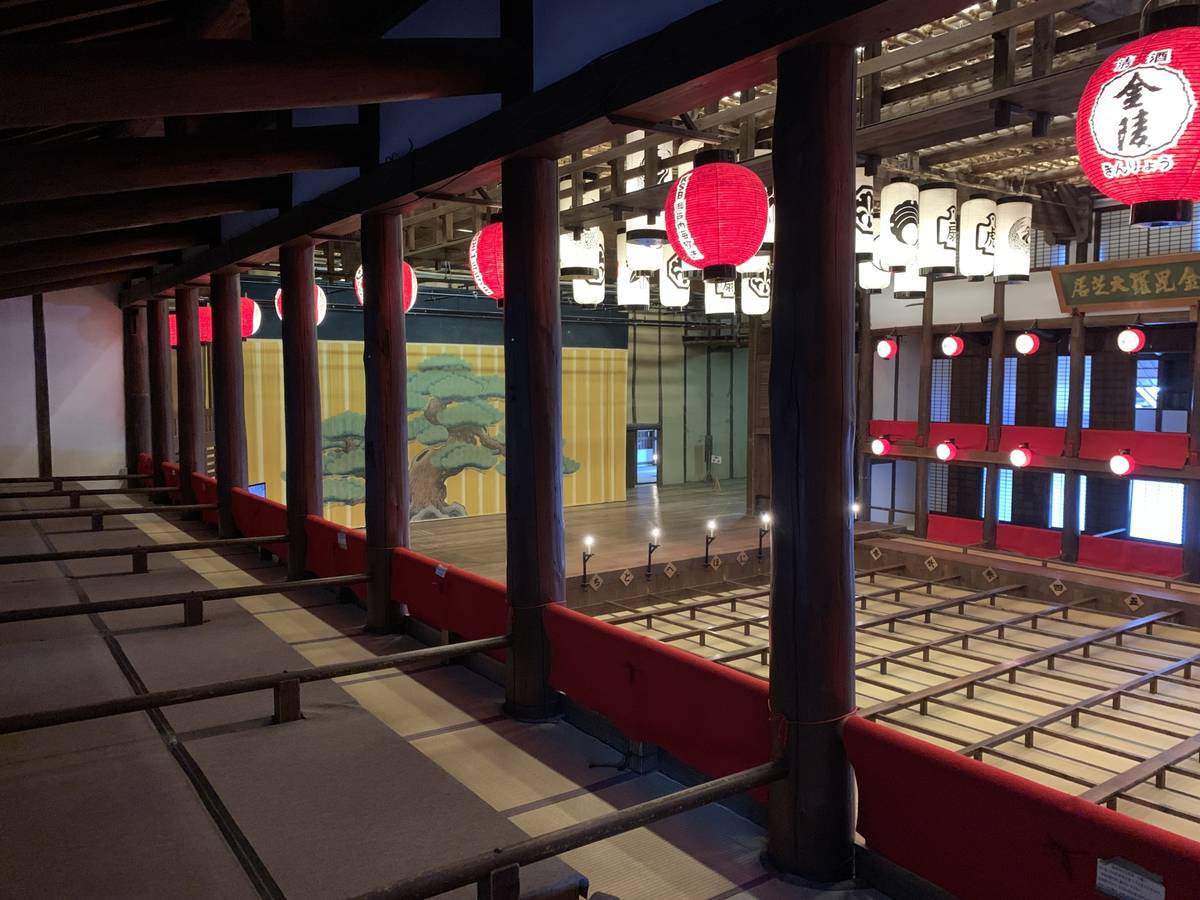
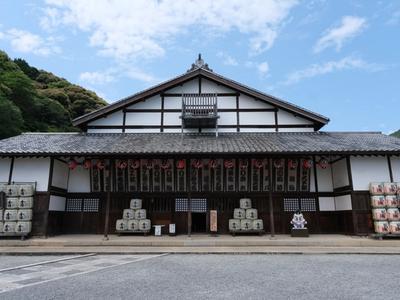
The Kyū Konpira Grand Theater was built in 1835, the sixth year of the Tenpō era. Its popular name, Kanamaru-za, was coined in 1900 (Meiji 33), and the theater remains the oldest surviving kabuki playhouse in Japan. In 1970 it was designated a national Important Cultural Property. Its most striking feature is that every piece of stage machinery runs on human power. The revolving stage. The suppon, a trapdoor that lifts an actor up into a scene from below. Even the windows that let in daylight are swung open and shut by teams of crew hidden backstage. No electric lights are used during a performance, so the brightness is controlled entirely by how much natural light streams in through those windows.
Since 1985, the theater has hosted the Shikoku Konpira Kabuki Grand Performance every spring. On a stage built nearly 190 years ago, today's leading kabuki actors take the boards. The interior is also open to visitors during the run of performances, so you can feel the air of an Edo-period playhouse exactly as it was.
The Streets of the Approach and Sanuki Udon
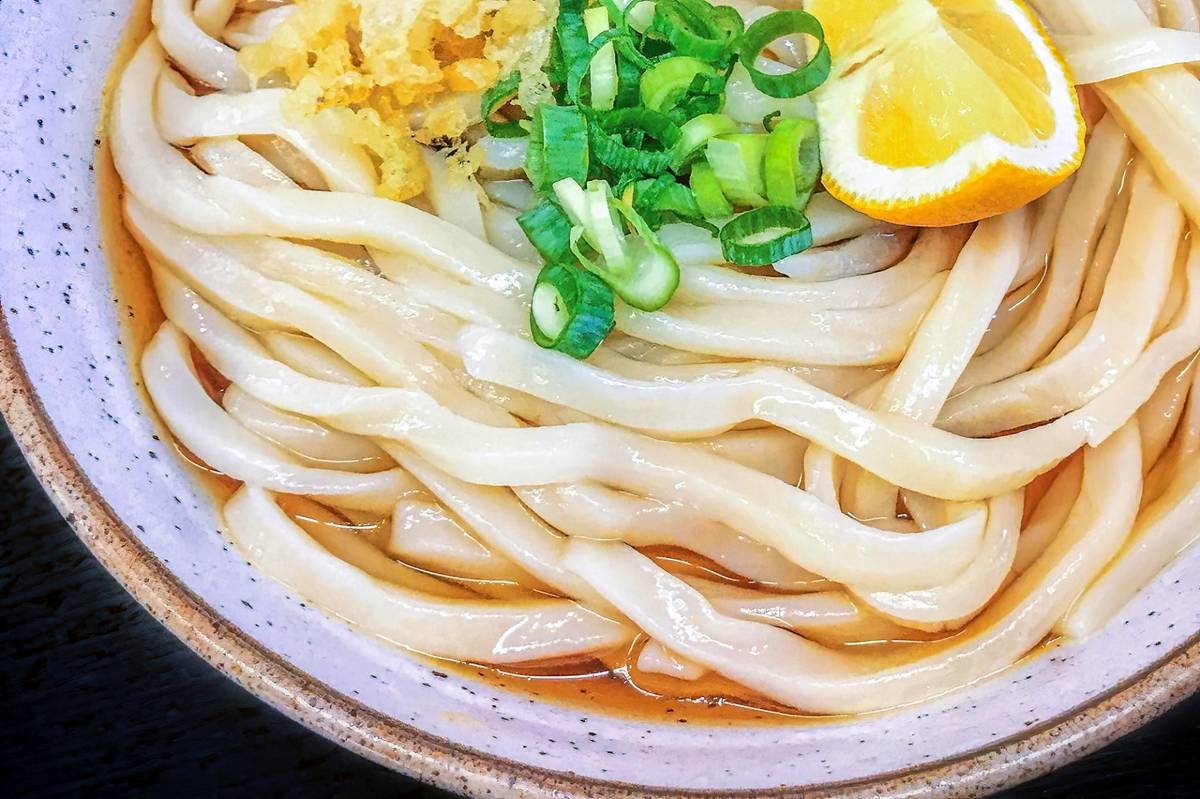
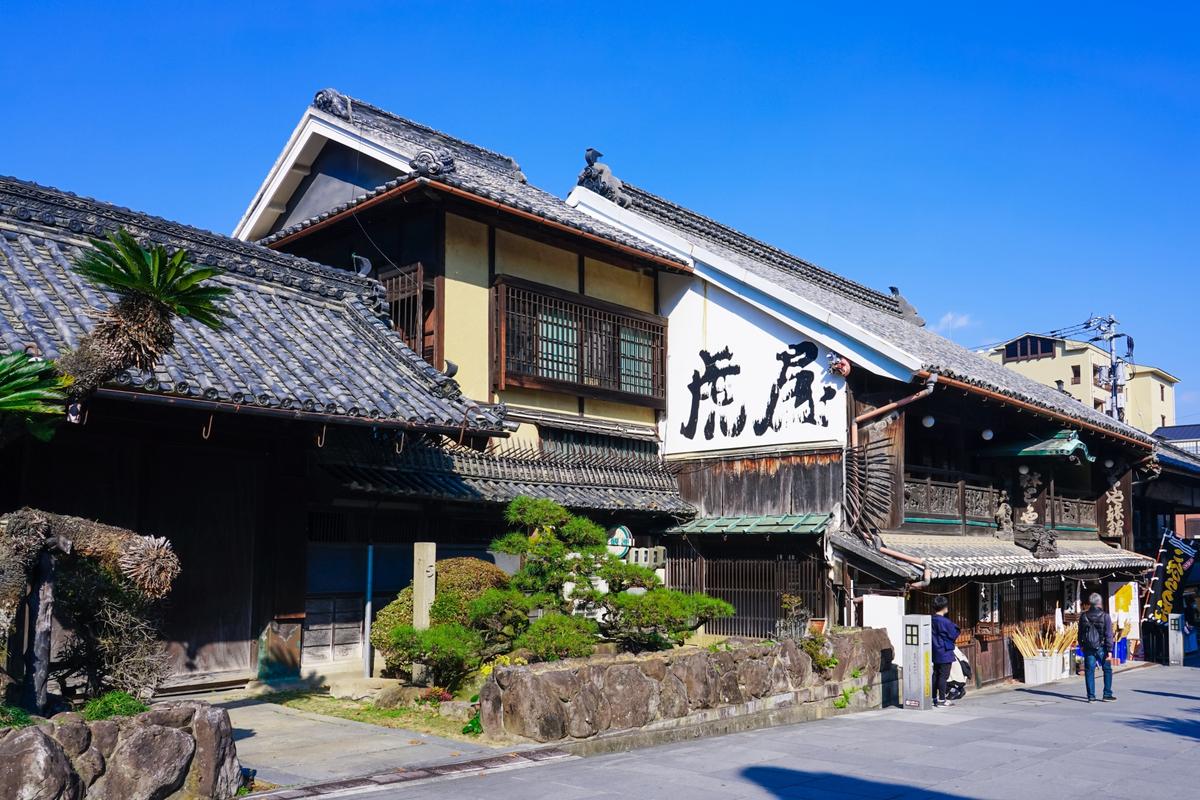
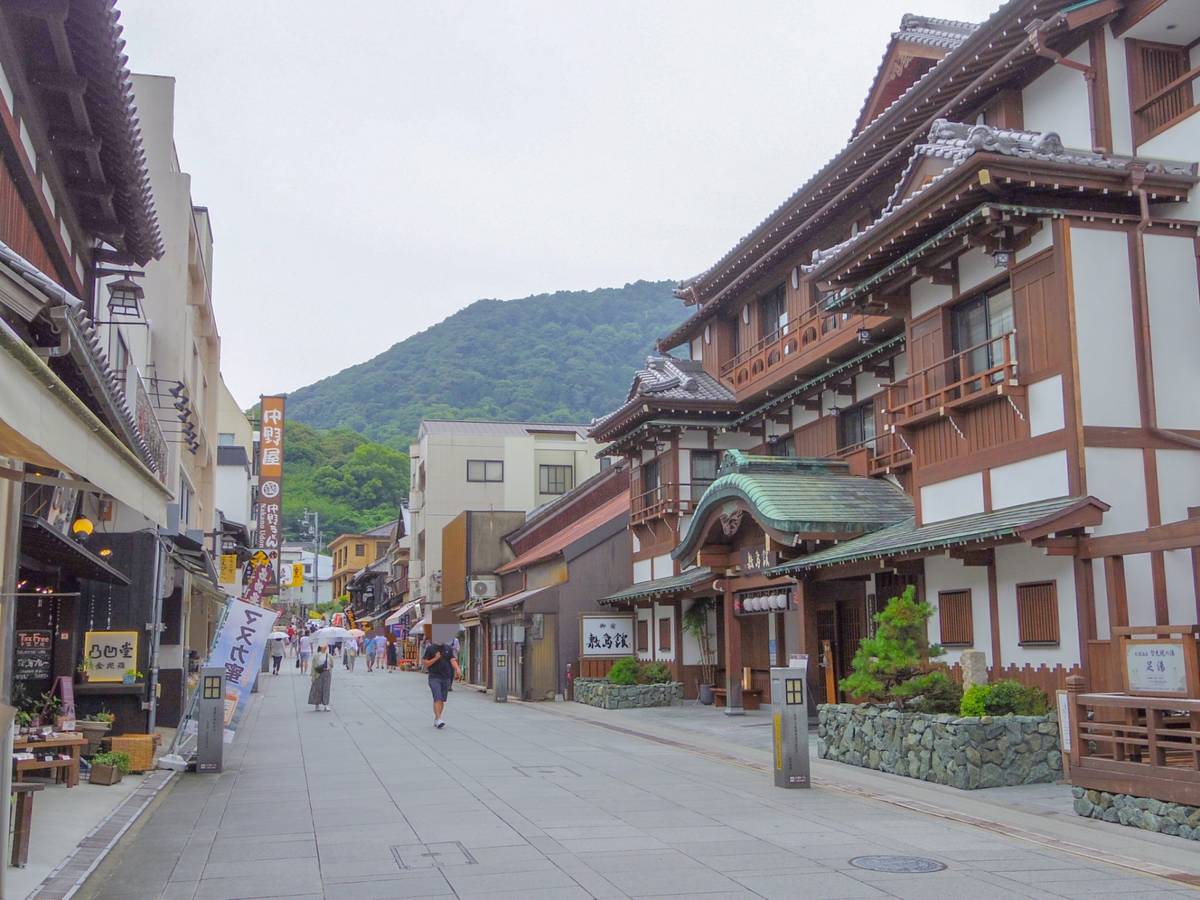
Along both sides of the approach, the streets still carry traces of the gate town that took shape in the Edo period. Long-standing souvenir shops stand side by side with Sanuki udon restaurants, a combination that feels uniquely Kotohira. Konpira Udon Honten serves its bowls inside a building from 1850 that is registered as an Important Cultural Property. A bowl eaten in a room with that much history makes for a small reward midway through the journey.
The approach area is also home to Konpira Onsen-kyō, a hot-spring district that took on its current form in 1997. Water flows clear and colorless from three sources, and two mineral types are available, a chloride spring and a hydrogen carbonate spring. The district has been named one of Japan's 100 best hot springs. A slow soak for tired legs after all those stone steps is a moment no visit to Kotohira should skip.