Chuo (Osaka)
中央区 (大阪)
Things to Do in and Around Chuo (Osaka)
Within Osaka, Chuo Ward is where tourism and history overlap most thickly. There's the "Minami" entertainment area covering Namba, Shinsaibashi, and Dotonbori; Osaka Castle and the Naniwa Palace Site preserved on the Uemachi Plateau; and the merchant streets stretching from Sakaisuji Avenue toward the Senba district. These are all just a few minutes apart by subway, so you can walk through the main faces of Osaka in half a day. Together with the ginkgo-lined Midosuji Avenue and the bustle of Kuromon Market, this is the ward that most represents the image of Osaka.
Places to visit in Chuo (Osaka)
Where is Chuo (Osaka)?
Osaka City's Chuo Ward, true to its name, sits at the center of the city. It borders Kita Ward to the north, Nishi Ward to the west, Tennoji and Naniwa Wards to the south, and Higashinari and Joto Wards to the east. On the eastern side of the ward stands the elevated Uemachi Plateau, which includes the grounds of Osaka Castle, while the western side opens onto the Senba district that spreads south of the Dojima and Tosabori rivers.
Running north to south is Osaka's signature boulevard, Midosuji Avenue. Its ginkgo trees line about 4 kilometers from Umeda all the way to Namba, turning the street yellow in autumn. Cutting east to west is the Dotonbori Canal, where the riverside promenade Tombori River Walk connects directly to the Minami entertainment area. Chuo Ward sits where this north-south Midosuji and east-west Dotonbori meet, gathering its tourism, commerce, and government functions in one place.


Getting Around
From Osaka's main hubs, much of central Chuo Ward is reachable by subway or direct trains. From Shin-Osaka Station, the Osaka Metro Midosuji Line takes about 11 minutes to Shinsaibashi Station and about 13 minutes to Namba Station. From Kansai International Airport, the Nankai Railway runs to Namba Station in about 34 minutes by Limited Express Rapi:t or about 44 minutes by Airport Express. From Itami Airport, a limousine bus heads directly to OCAT in Namba in about 25 to 30 minutes.
Once inside the ward, the subway is your main option. Seven Osaka Metro lines run through Chuo Ward, the Midosuji, Tanimachi, Yotsubashi, Sennichimae, Sakaisuji, Nagahori Tsurumi-ryokuchi, and Chuo lines, all crossing one another and letting you transfer at major stations like Shinsaibashi, Namba, Honmachi, and Tenmabashi to reach almost any destination. The three districts of Shinsaibashi, Dotonbori, and Namba are also close enough to walk between in around 10 minutes. Taking in the streetscape on foot is one of the pleasures unique to this area.
Loading map...
About Chuo (Osaka)
The fun of walking through Chuo Ward is meeting different eras of Osaka within the span of just a few hundred meters. Edo-era merchant streets, Meiji-era nightlife, postwar neon, redevelopment-era high-rises. Seeing each one still alive and working as a real neighborhood comes through far better when you walk it than when you look at guidebook photos.
Osaka Castle Park, a Storied Castle on the Uemachi Plateau
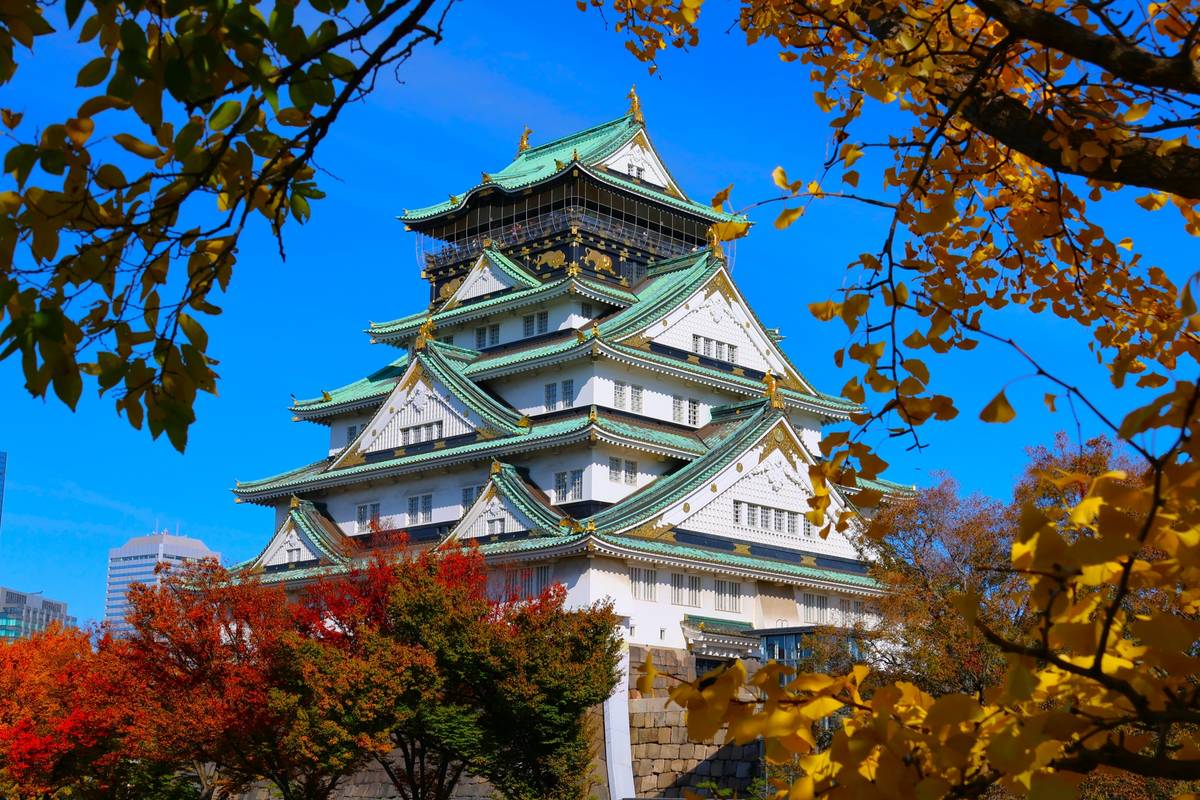
Osaka Castle stands in the northeast of Chuo Ward, at the northern edge of the Uemachi Plateau. The current keep is the third generation, rebuilt in 1931 with funds donated by the citizens of Osaka, with five exterior tiers and eight interior floors of reinforced concrete. The first keep, built by Toyotomi Hideyoshi in 1583, burned down in the Siege of Osaka in 1615, and the second one, rebuilt by the Tokugawa shōgunate, was lost to a lightning strike in 1665. What stands today is the second rebuilding.
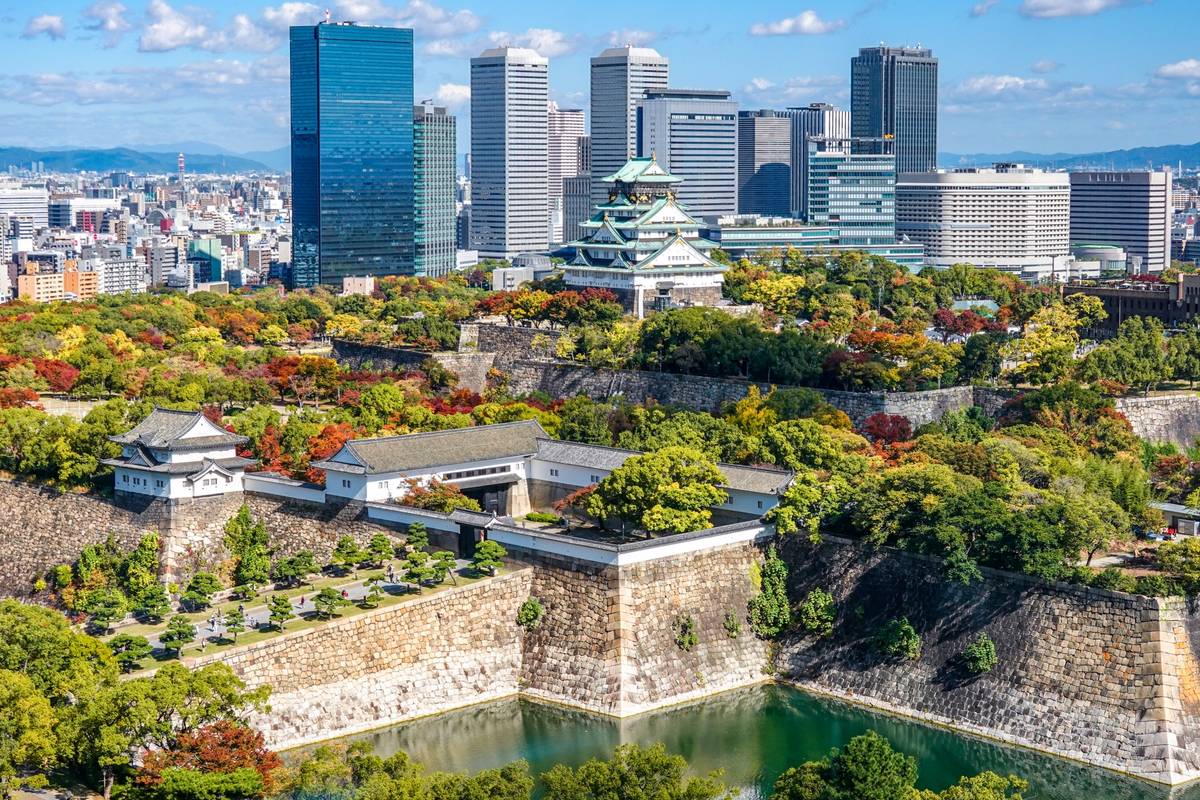
The park covers about 106 hectares, roughly 23 times the area of the Tokyo Dome. Its appearance shifts with the seasons, with the moats and cherry trees of the inner bailey and the Yoshino cherries of the Nishinomaru Garden. Late March through early April is generally peak cherry-blossom season. From the top of the keep you can see all the way to the Naniwa Palace Site and the Minami entertainment area, giving you a real sense of how the Uemachi Plateau rises above the surrounding Osaka Plain.
Dotonbori, Symbol of the Minami Entertainment District
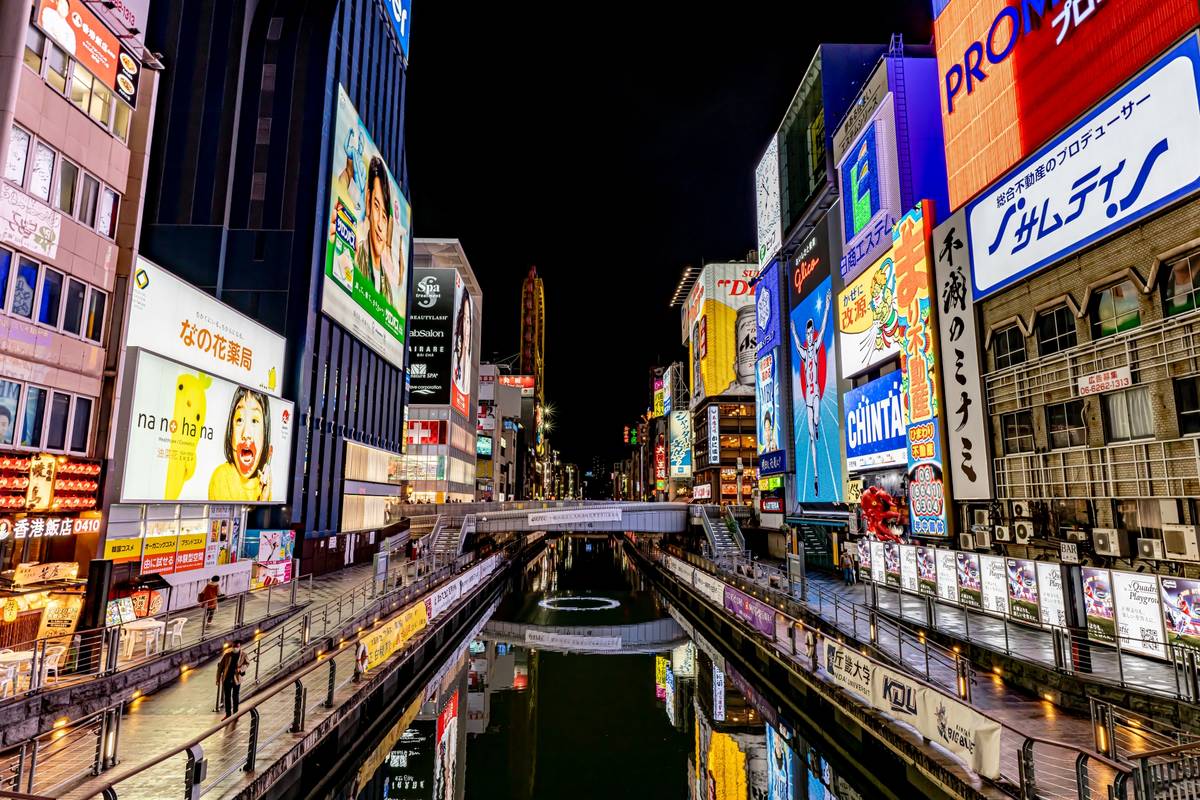
Dotonbori is the entertainment district that runs east to west along the Dotonbori Canal in the southern part of Chuo Ward. The neighborhood traces its beginning to the early Edo period, when Yasui Dōton and others paid out of their own pockets to dig the canal. Throughout the Edo era, kabuki and bunraku puppet theaters lined the area, and from the Meiji period onward it grew into a hub for restaurants and bars.
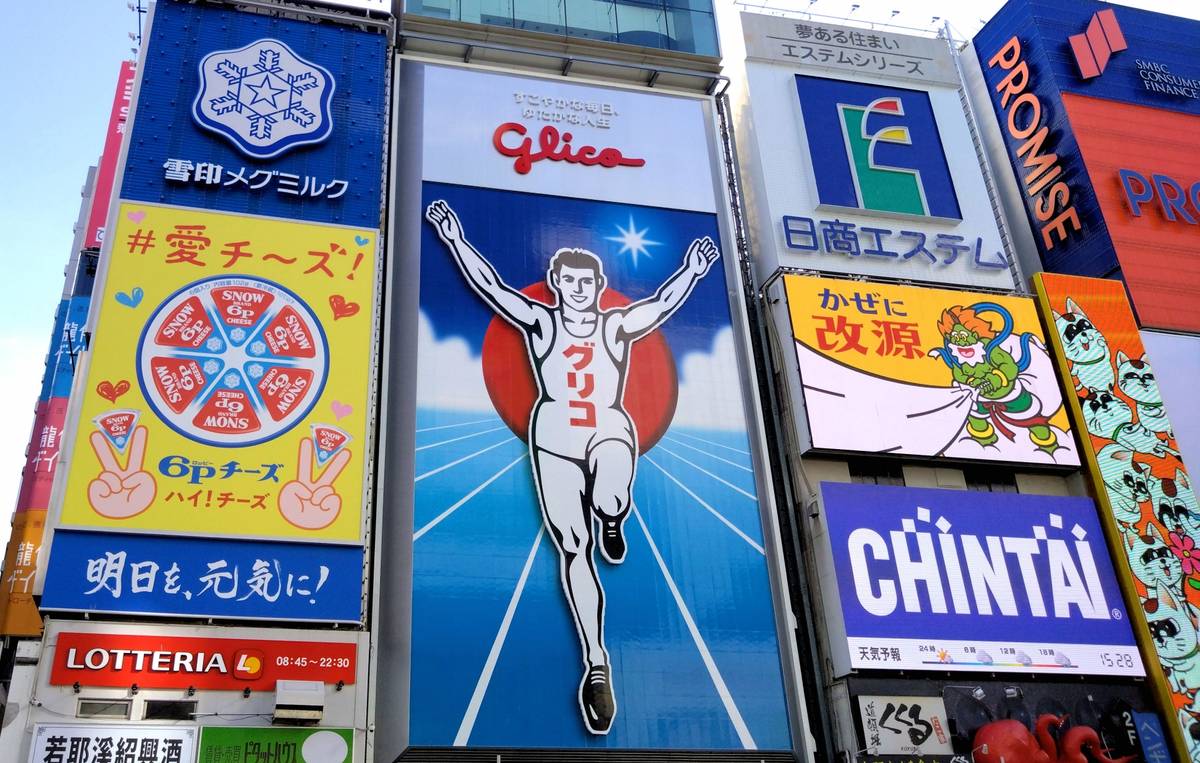
The district's signature landmark is the "Glico Sign," which depicts a runner crossing the finish line with both arms raised. The first version went up in 1935, and the current LED display, the sixth generation, was switched on in 2014. From the riverside promenade called Tombori River Walk you can take in the nighttime view of neon reflected on the water. Sampling Osaka's konamon flour-based dishes like takoyaki, okonomiyaki, and kushikatsu at storefront stalls or while strolling is part of the appeal here.
Kuromon Market, Known as the Kitchen of Osaka
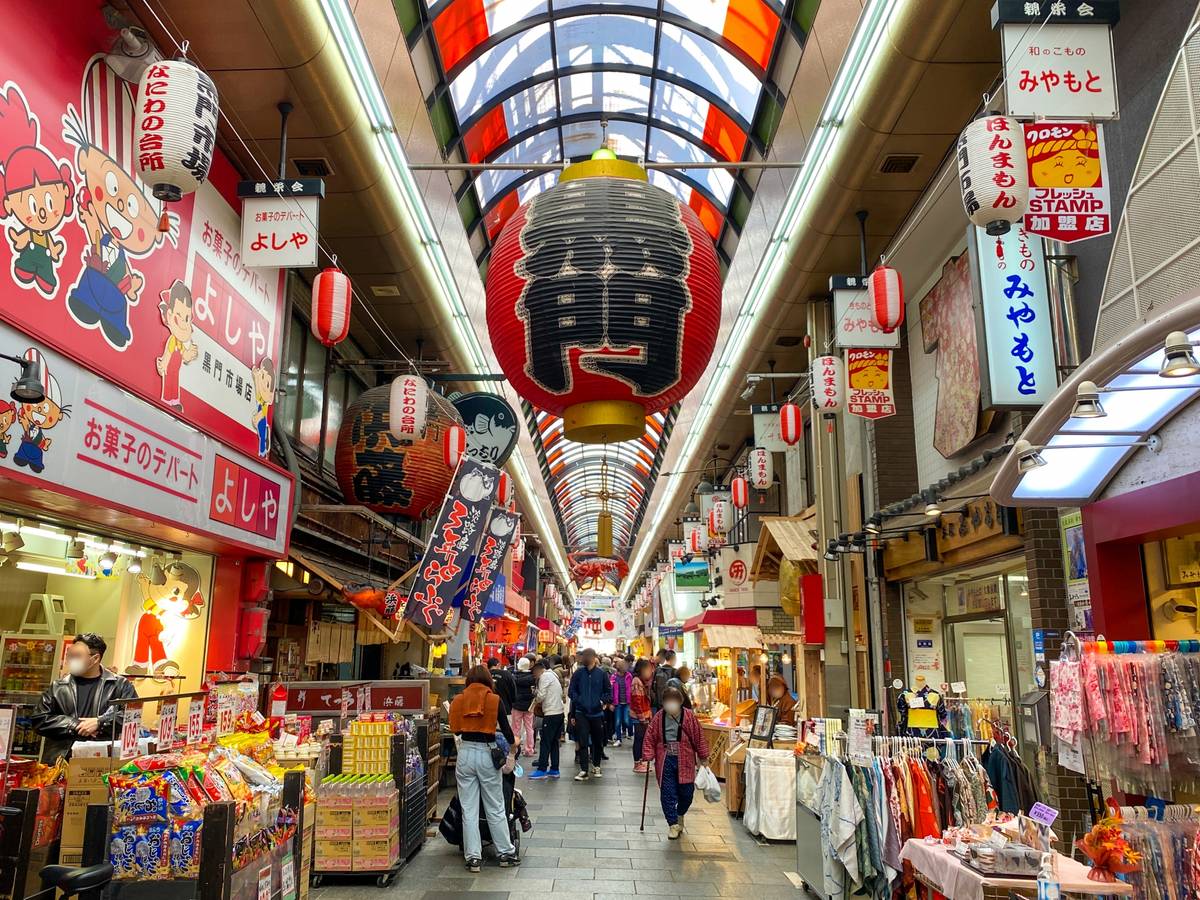
A few minutes' walk south from Dotonbori, in the Nipponbashi area, you'll find Kuromon Market. The covered shopping arcade runs about 580 meters end to end, lined with more than 150 shops. It was already operating as a fish market by the late Edo period, and after the war it became known as the "Kitchen of Minami," supplying ingredients to home cooks and professional chefs alike.
In recent years, with the rise in foreign visitors, you'll spot stalls preparing fresh sushi to order, grilling eel right at the counter, and selling seasonal fruit by the slice. Many shops also specialize in fugu blowfish, and the giant fugu lanterns swaying over the main aisle have become a marker of the central street. Down the side streets that rarely make the guidebooks, neighborhood greengrocers and dried-goods stores still serve their everyday customers.
Hōzenji Yokochō, an Alley Steeped in Prayer and Nightlife
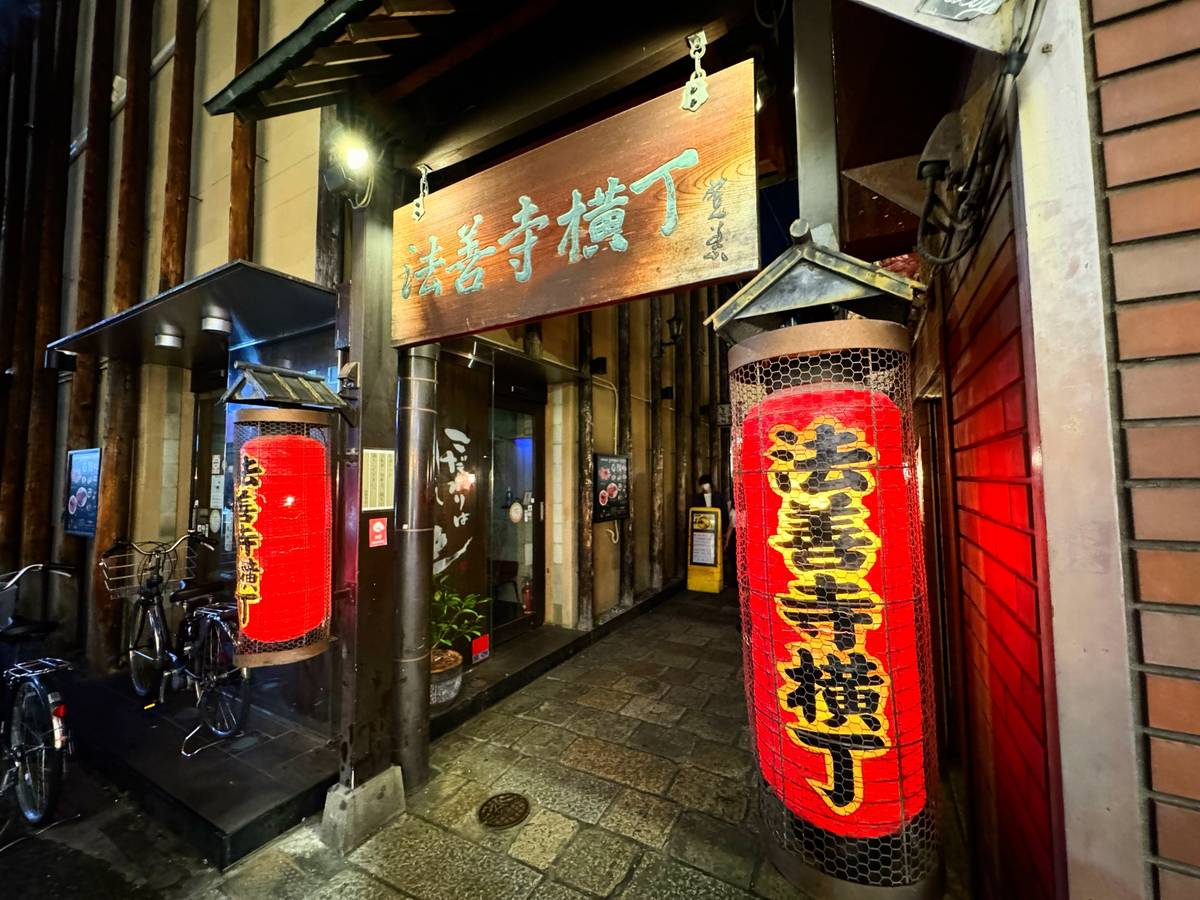
Hōzenji Yokochō is a roughly 80-meter cobblestone alley running parallel just south of Dotonbori. Tucked along this narrow lane are small Japanese eateries, bars, and traditional restaurants facing each other on both sides. Despite its size, deeper in the alley you'll find Hōzenji Temple and a stone statue of Fudō Myōō known as the "Mizukake-Fudō," where visitors pour water on the figure with a wooden ladle and silently make their wishes, a custom that has continued for centuries.
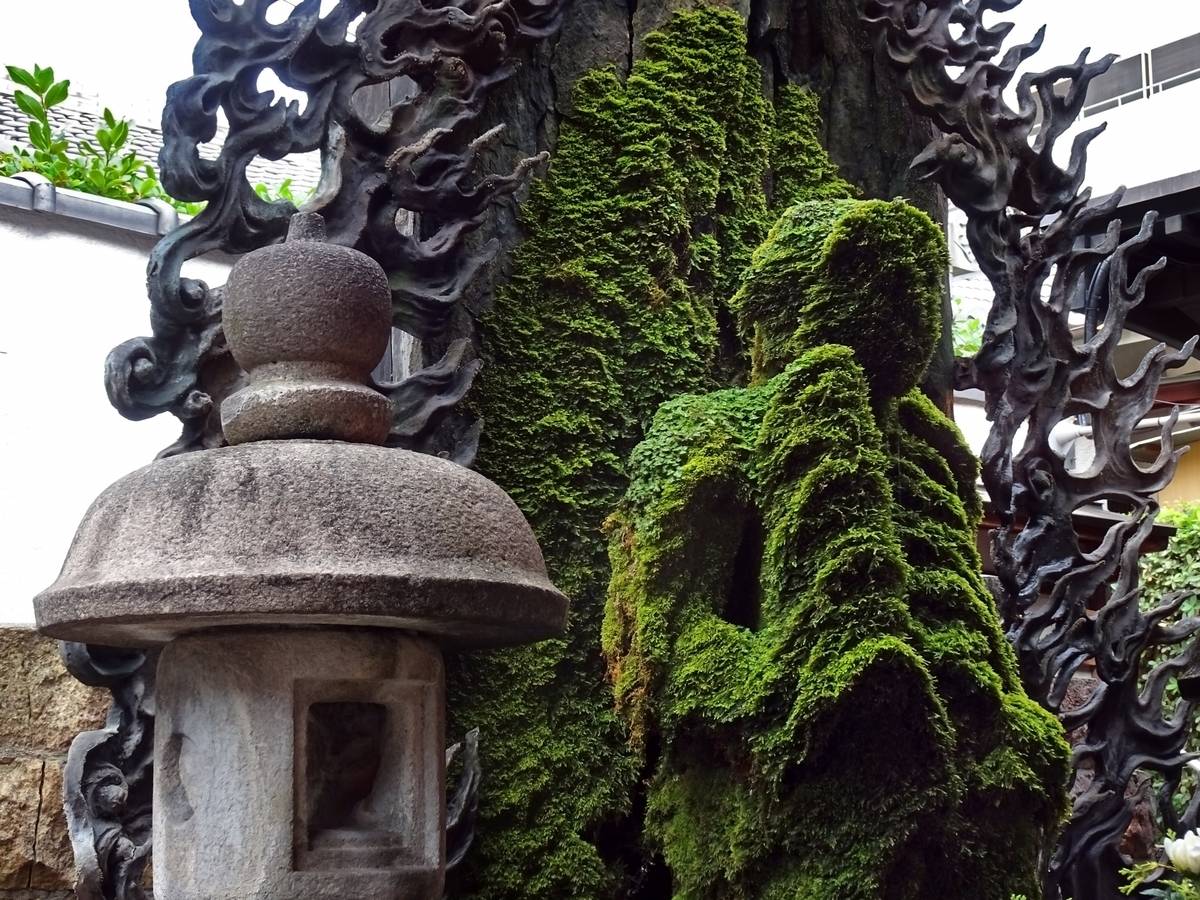
The statue's surface has been so thoroughly covered with water and moss over the years that you can barely make out the original carving. The alley is also known as the setting of Oda Sakunosuke's novel "Meoto Zenzai," and the sweet zenzai red-bean shop of the same name, in business since the Meiji period, is still serving customers today. Squeezed between modern buildings, this small stretch holds onto the atmosphere of prewar Osaka entertainment quarters.
Naniwa Palace Site, an Ancient Capital on the Uemachi Plateau
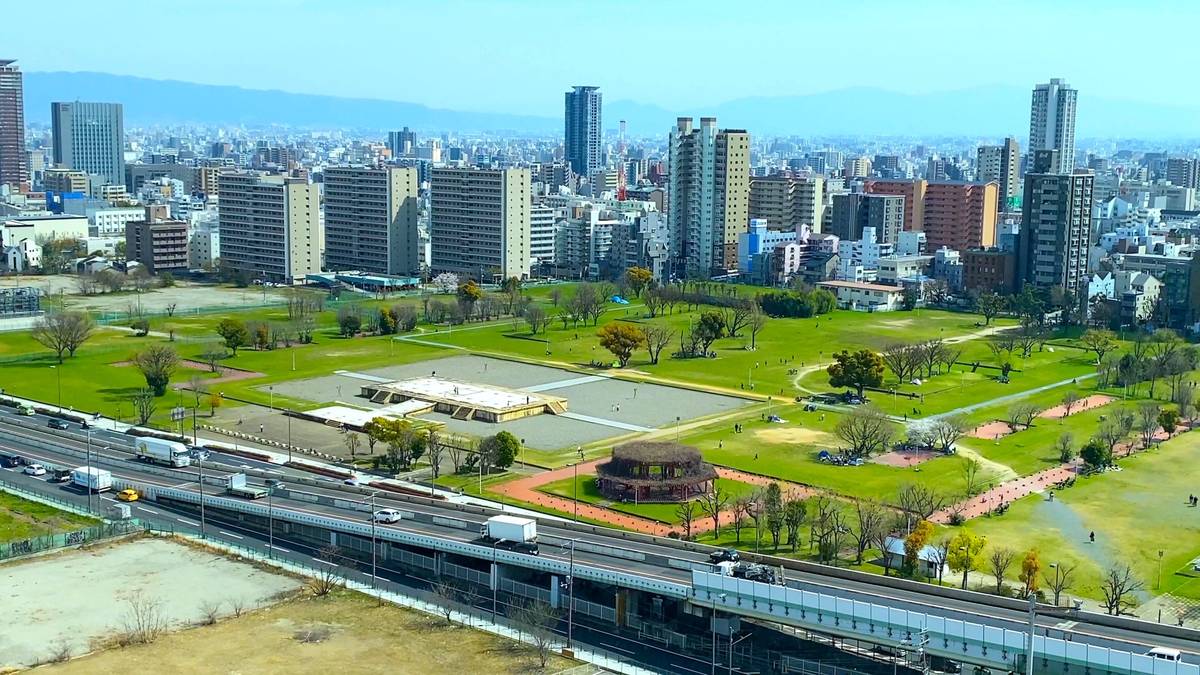
South of Osaka Castle, atop the Uemachi Plateau, you'll find the grassy expanse known as the Naniwa Palace Site. Two different palaces were built here, the seventh-century early Naniwa Palace from the reign of Emperor Kōtoku and the eighth-century later Naniwa Palace from the reign of Emperor Shōmu, both layered on the same ground roughly a century apart, making this a rare archaeological site in Japan. Excavations beginning in 1953 uncovered the foundations of major structures including the Daigokuden Great Audience Hall, and today the area is a nationally designated Historic Site.
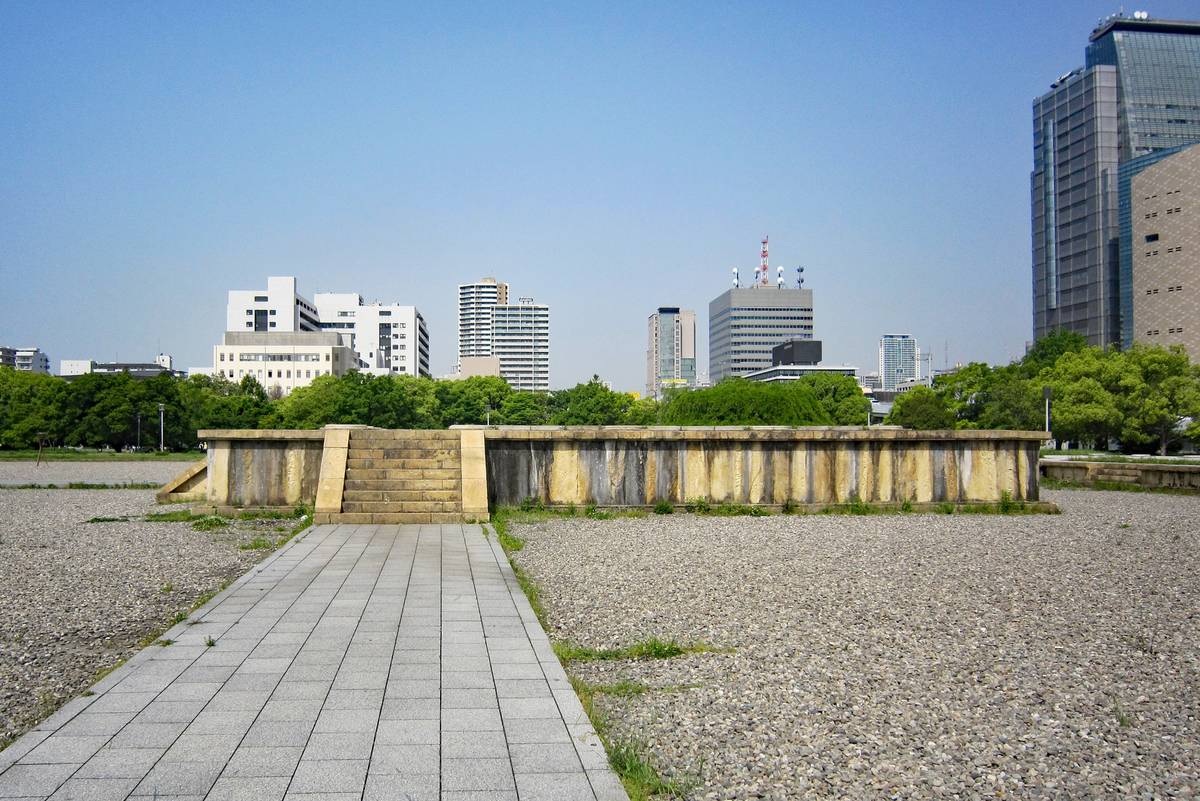
Only the outlines of the foundations have been restored at ground level, so the place doesn't feel like a typical tourist attraction. Even so, knowing that an ancient Japanese capital comparable to those of Kyoto and Nara once stood in Osaka adds real depth to the history of the Uemachi Plateau. The Osaka Museum of History next door, also located in Chuo Ward, has dedicated exhibits on the Naniwa Palace, and visiting both together is the quickest way to understand the site.
Chuo (Osaka)
Discover stories and insights about Chuo (Osaka)