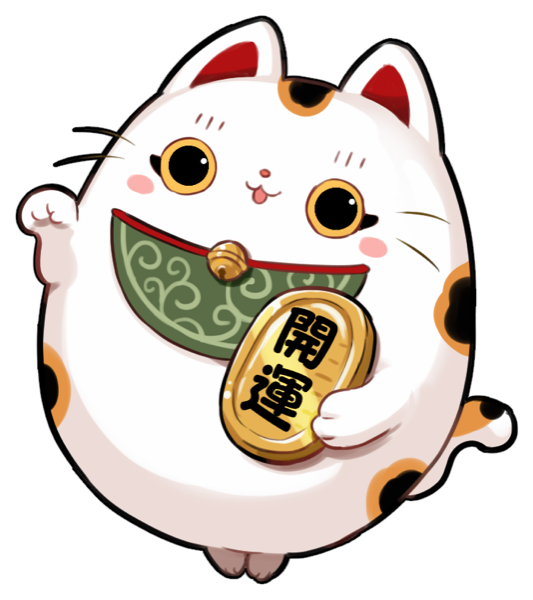
Nekomimi
Meaning
Nekomimi (猫耳) refers to the cat ears on the head of a character in human form in anime, manga, and games. Characters with cat ears are called nekomimi chara (猫耳キャラ), or cat-ear characters, and the word nekomimi alone is sometimes used as shorthand for the characters themselves.
Characters designed with cat ears growing from their heads and characters who wear cat ears on a headband or hat both fall into the nekomimi chara category.
In real life, too, headbands and other accessories shaped like cat ears are called nekomimi. The word is well established as a general name for them, but characters and outfits with cat ears are strongly associated with otaku and are not generally accepted as fashion.
The ears of dogs, foxes, and other animals are called kemomimi, and nekomimi are considered a representative example.
Origin
Nekomimi is a compound of neko (猫), meaning cat, and mimi (耳), meaning ear, and in its literal sense it refers to a cat's ears.
Shogakukan's Japanese dictionary, the Digital Daijisen, lists two meanings for nekomimi. The first is "a cat's ears," and the second is "in anime, games, and the like, a girl who wears a headband, hat, or similar item modeled on cat ears."
There are other words that, like nekomimi, add mimi to the name of an animal. Besides inumimi (犬耳, dog ears) and kitsunemimi (狐耳, fox ears), there is usamimi (うさ耳), which refers to rabbit ears and is also a headword in the Digital Daijisen. Kemomimi is written 獣耳 in kanji and can also be read kemonomimi, but in otaku contexts it is usually called kemomimi.
Usage Examples
- 1 "Apparently everyone's getting nekomimi headbands for the class project at the school festival." "The boys too?" "The boys too."
- 2 "Are that character's nekomimi actually part of a hat?" "Yep. Take the hat off and there are human ears underneath."
- 3 "You like nekomimi, right?" "Not just nekomimi. Dog ears, fox ears, I like all of it as long as it's kemomimi."
- 4 "When this character gets startled, the nekomimi stand straight up." "The way even the tail puffs up at the same time is so cute."
Supplement
Wata no Kuni Hoshi and Felicia
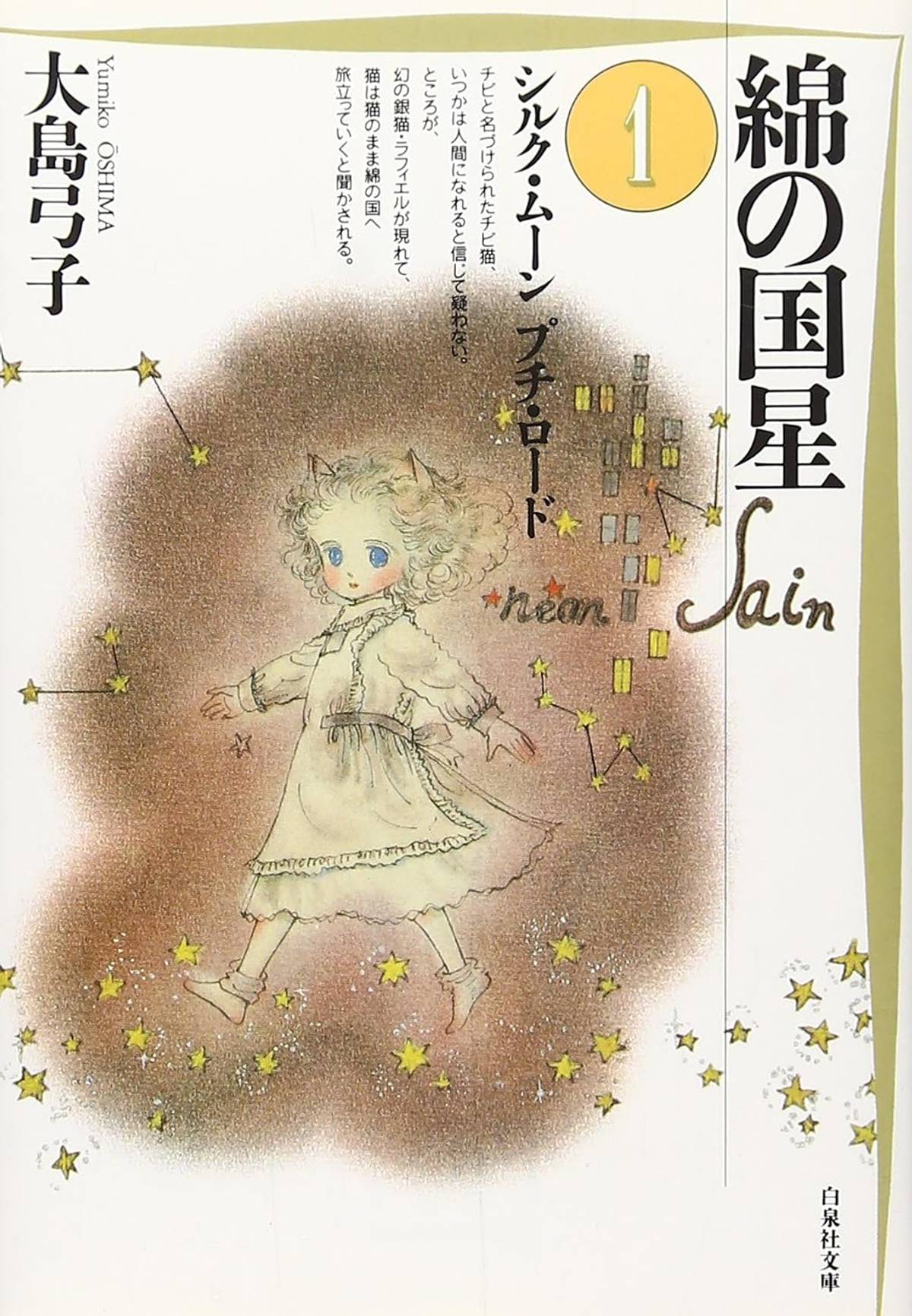
Wata no Kuni Hoshi (The Star of Cottonland) is a manga by Yumiko Ōshima that is sometimes said to be the origin of nekomimi characters. Its irregular serialization began with the May 1978 issue of LaLa, Hakusensha's shōjo manga magazine.
The main character, Chibi-neko, is a kitten taken in by the Suwano family. In the story, she believes she is human and is drawn as a small girl with cat ears and a tail. When she talks to people, all they hear is a cat's meow. The other cats likewise appear in human form with cat ears.
Wata no Kuni Hoshi is regarded as a work that popularized depicting cats as girls. Some theories trace the origin to earlier works, but there is no consensus on which came first.
Capcom's 1994 fighting game Vampire features a character named Felicia who has the traits of a cat. The overseas version is titled Darkstalkers: The Night Warriors. In the game's story, Felicia was abandoned at the gate of a church and raised by a nun. As she grew up, her body began to change, and she found out that she was a catwoman. In that form, she has cat ears and a tail, and claws on her hands and feet.
Di Gi Charat and the Cat-Ear Hat
Di Gi Charat, commonly known as Dejiko, is a character created in 1998. She was made as the mascot for Broccoli, a company that deals in anime and game merchandise, and for Gamers, the retailer it ran directly at the time. Dejiko debuted in a four-panel comic strip in From Gamers, Broccoli's in-house magazine. Her character design is by Koge-Donbo*, then an employee of the company.
Her official profile lists Dejiko as the First Princess of the planet Di Gi Charat and gives her age as ten. In the story, she comes to Earth hoping to become a star actress. The official introduction describes her look as a cat-ear hat with a maid outfit, and names her sharp-tongued personality and her habit of ending sentences with "nyo" as her distinguishing traits.
In a 2021 interview, Broccoli founder Takaaki Kidani recalled that the mascot started as an idea from the staff. He said he left the design to the team. "We brought in things otaku seemed likely to go for, like nekomimi, a maid outfit, and bells, and that's how Dejiko ended up with that design of hers," he explained.
In 1999, Dejiko was adapted into a TV anime, which aired on the TBS network as a short-form series of 16 episodes. More anime followed, including Di Gi Charat Nyo! from 2003 to 2004 and Reiwa no Di Gi Charat in 2022. Within the series, she is often shown working at Gamers in Akihabara. In real life, Gamers' main store in Akihabara opened in November 1999, after Dejiko was created.
Nekomimi Characters Since the 2000s
NISIOISIN's novel Bakemonogatari was published under the Kodansha Box imprint in 2006 and adapted into a TV anime in 2009. In the story, when the model student Tsubasa Hanekawa is taken over by an aberration called the sawarineko as a result of stress, she takes on a form with white hair and cat ears. This state is commonly called Black Hanekawa. While she is Black Hanekawa, she pronounces "na" as "nya."
K-ON! is a four-panel comic strip series by kakifly. It began running in Houbunsha's Manga Time Kirara with the May 2007 issue and was adapted into an anime in 2009. In the series, Azusa Nakano, a new member of the Light Music Club, gets the nickname Azu-nyan after cat ears are put on her. The name combines "Azu," short for Azusa, with "nyan," which represents a cat's meow. Among fans, too, Azusa goes by this nickname. Her cat ears are an accessory she wears, not her own ears.
NEKOPARA is a visual novel series by NEKO WORKs, and the first game came out in December 2014. In the game's world, catgirls who look very much like humans live alongside people. The flagship characters are Chocola and Vanilla, twin catgirls of the Minaduki family. Unlike Hanekawa's and Azusa's, Chocola and Vanilla's cat ears are neither caused by an aberration nor worn as an accessory; they are drawn as part of the catgirls' natural form. The Steam version lets players switch between Japanese, English, and Chinese. The series has gained fans outside Japan. A TV anime aired in 2020 as well.
Another recent and memorable anime with nekomimi characters is Chainsmoker Cat (Yanineko), which aired in 2026.
Kemomimi Anime
There are also anime starring characters with animal ears of various kinds, not just cat ears. Kemono Friends, which began airing on TV Tokyo in January 2017, includes characters with the ears of many different animals. In the series, animals take on human form through the power of a substance called Sandstar and are known as Animal Girls.
Umamusume: Pretty Derby is a multimedia franchise run by the game company Cygames. The first season of its TV anime began in April 2018. The Umamusume, or horse girls, are portrayed as characters with horse ears and tails. Rather than nekomimi, both works feature kemomimi, the term for animal ears in general.
Wearable Nekomimi
Nekomimi headbands and similar accessories are used as props for dress-up and cosplay. In 2009, a company called Thanko released a headband shaped like cat ears with earphones attached, under the name Nekomimi Iyafon (cat-ear earphones).
The necomimi is a headband shaped like cat ears that moves in response to brain waves. It was conceived by a project called neurowear and turned into a product by NeuroSky, a maker of brain wave sensors. It measures brain waves with sensors that rest against the forehead and ear, and from them calculates levels of concentration and relaxation. The ears stand straight up when the wearer concentrates and droop when the wearer relaxes.
A prototype of the necomimi was unveiled in spring 2011, and the product went on sale in Japan, ahead of other countries, at the Niconico Chokaigi event in April 2012. Media reports put first-day sales at about 3,000 units.
Catgirls and Nekomimi in English
In English, a female character with cat ears is called a catgirl, and a male one is called a catboy. Some fans call cat-ear characters by the Japanese words nekomimi or neko. Animal ears in general are called kemonomimi, a romanization of 獣耳.
Japanese nekomimi characters who have been introduced to English-speaking audiences include Dejiko. The anime was licensed for North America under the title Di Gi Charat. Its US distributor describes Dejiko as "an interstellar cat princess."
- External resources
Kotobank: "Nekomimi" (Digital Daijisen)
The Digital Daijisen definition, which gives two meanings: a cat's ears, and a girl who wears an accessory modeled on cat ears on her head.
What Is Di Gi Charat? (Di Gi Charat Official Website)
Broccoli's official introduction to the character, covering her creation in 1998, her status as a princess, her look of a cat-ear hat with a maid outfit, and the "nyo" at the end of her sentences.
Why Is Di Gi Charat Getting an Anime in the Reiwa Era? Bushiroad Chairman Kidani on the Story Behind the First New Series in 15 Years (J-CAST News)
A 2021 interview with Broccoli founder Takaaki Kidani, who talks about how Dejiko came about and about her design, which incorporates nekomimi, a maid outfit, and bells.
LaLa 50th Anniversary (Comic Natalie)
A feature tracing 50 years of LaLa, Hakusensha's shōjo manga magazine. It shows that Wata no Kuni Hoshi began its serialization in the May 1978 issue.
Last Updated
Japanese
猫耳
Hiragana
ねこみみ
Table of Contents