Tomioka Hachimangu
富岡八幡宮
About Tomioka Hachimangu
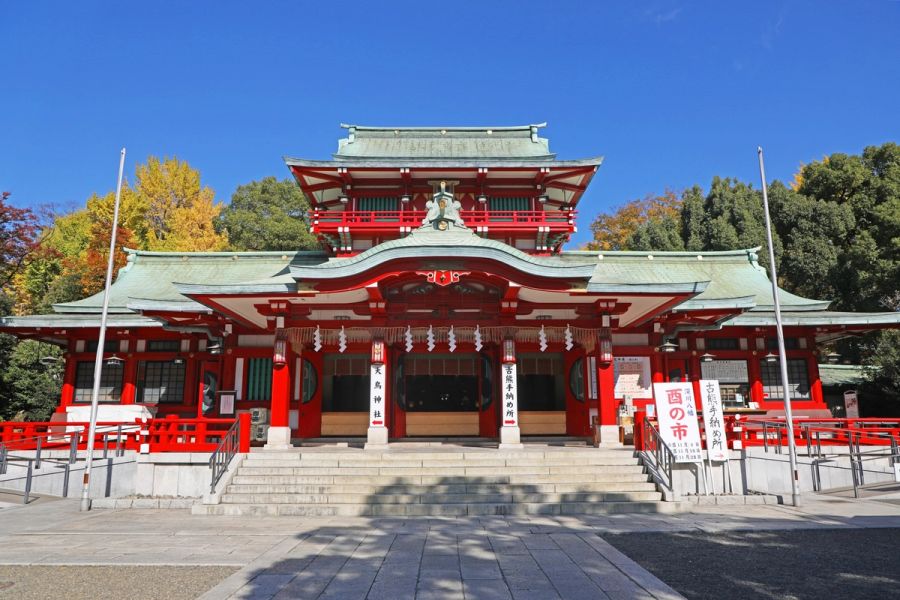
Walking through Fukagawa, the old downtown of Edo, a crimson torii gate still catches the eye. Tomioka Hachimangū has been cherished by locals as "Fukagawa's Hachiman" since its establishment in 1627. During the Edo period, it served as the stage for festivals and sumo, while the surveyor who created Japan's first scientifically measured maps set out on his journeys from this very shrine. Layer upon layer of stories, reaching well beyond religious worship, have accumulated here.
Protected by the Tokugawa shogunate, Tomioka Hachimangū grew to become the largest Hachiman shrine in Edo and remained the center of commerce and culture for the Monzen-nakachō district. Following its history reveals what the Edo era held most dear.
A Shrine Nurtured by Edo's Common People
In 1627, a Buddhist monk named Chōsei received a divine revelation and enshrined Emperor Ōjin on Eitaijima Island. With generous support from the shogunate, it blossomed into Edo's greatest Hachiman shrine.

Fukagawa Meshi (clams on rice) / Photo AC
The shrine flourished alongside Edo's ordinary people. As worshippers multiplied and the temple town developed, Monzen-nakachō transformed into a commercial district lined with longstanding restaurants, traditional confectioners, and tsukudani shops. Fukagawa meshi, a local clam rice dish, also originated here. The shrine and town became one, shaping the region's cultural identity.
The Fukagawa Hachiman Festival, a Mirror of Edo's Vitality
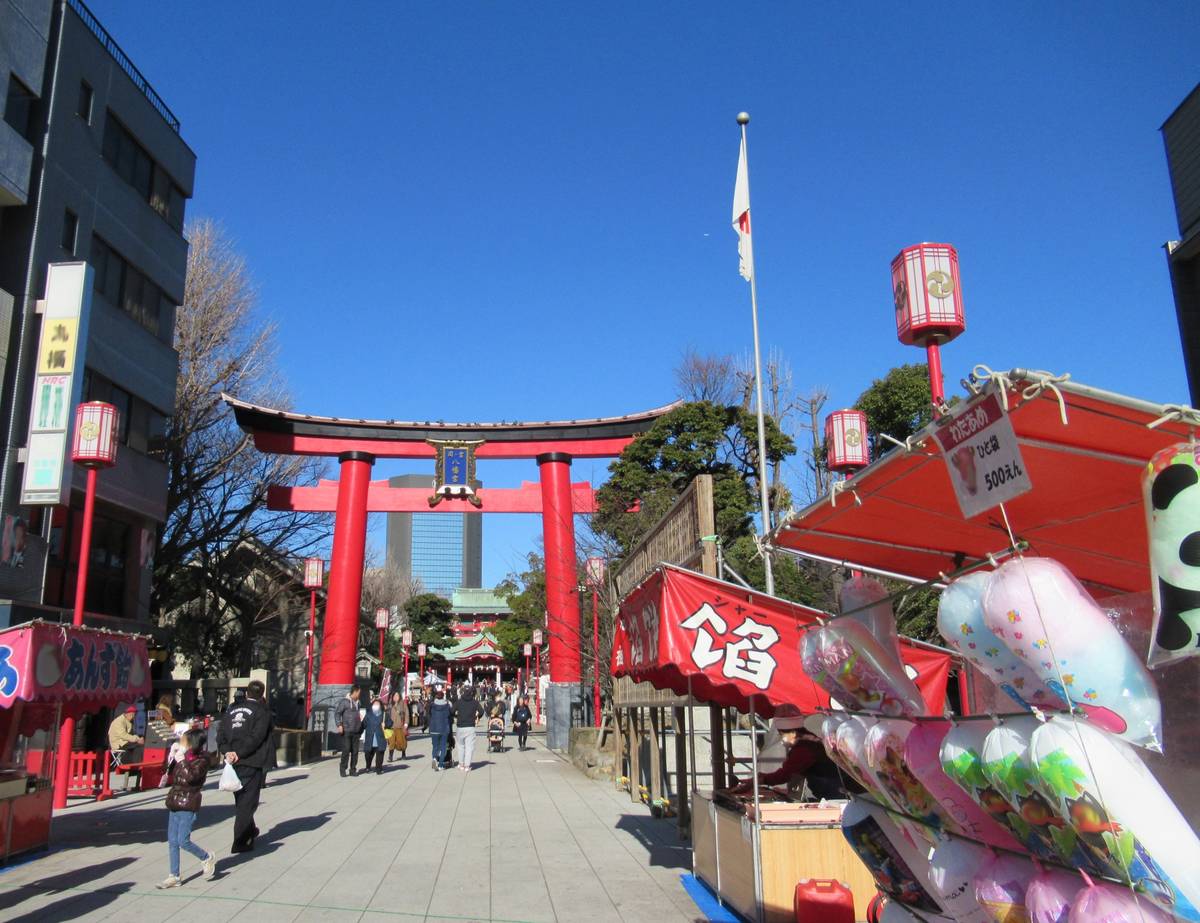
Tomioka Hachimangū's annual festival, known as the Fukagawa Hachiman Festival, ranks among Edo's three greatest festivals. It stands alongside the Sannō Festival at Hie Shrine and the Kanda Festival at Kanda Shrine, held in mid-August each year.
The festival's crowning moment is the water-splashing ritual. As carriers parade the mikoshi (portable shrines) through the streets, spectators drench them with water in a purification tradition. Onlookers become swept up in the moment, becoming protagonists of the celebration themselves. The sight of approximately fifty mikoshi assembled at once during the main festival is breathtaking.
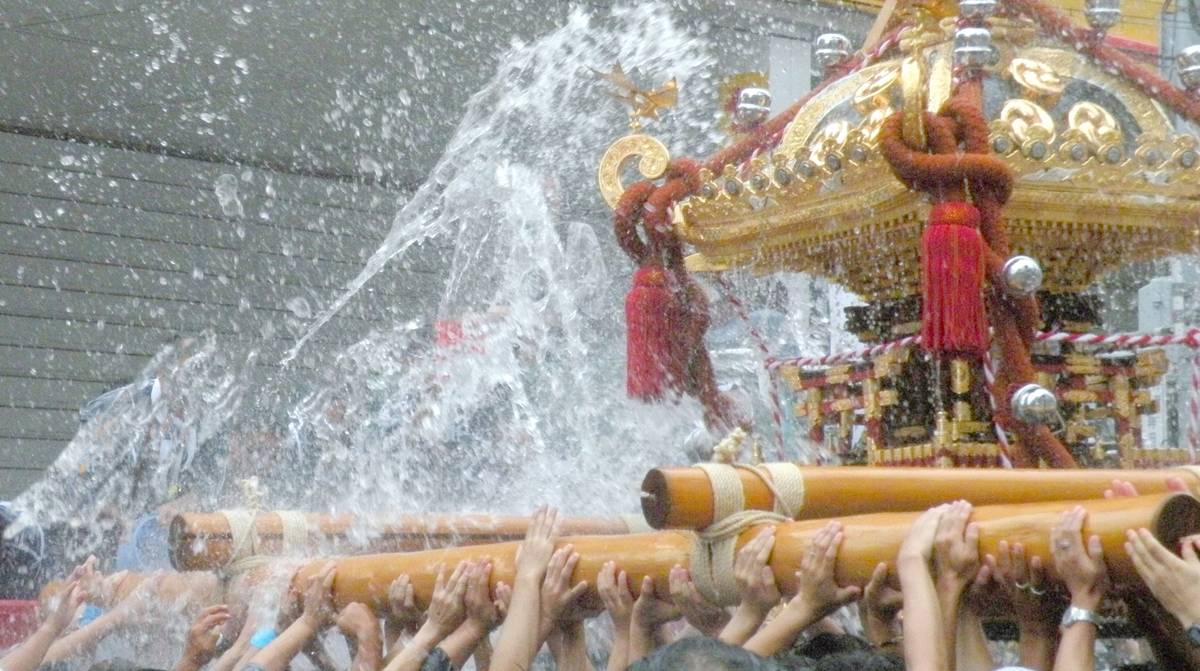
The festival follows a three-year cycle of main festival, subsidiary festival, and minor festival, with the full display of mikoshi appearing only during main festival years. The next main festival is scheduled for 2026. The rhythm of this roughly four-hundred-year-old tradition continues unbroken to this day.
Sumo's Sacred Ground
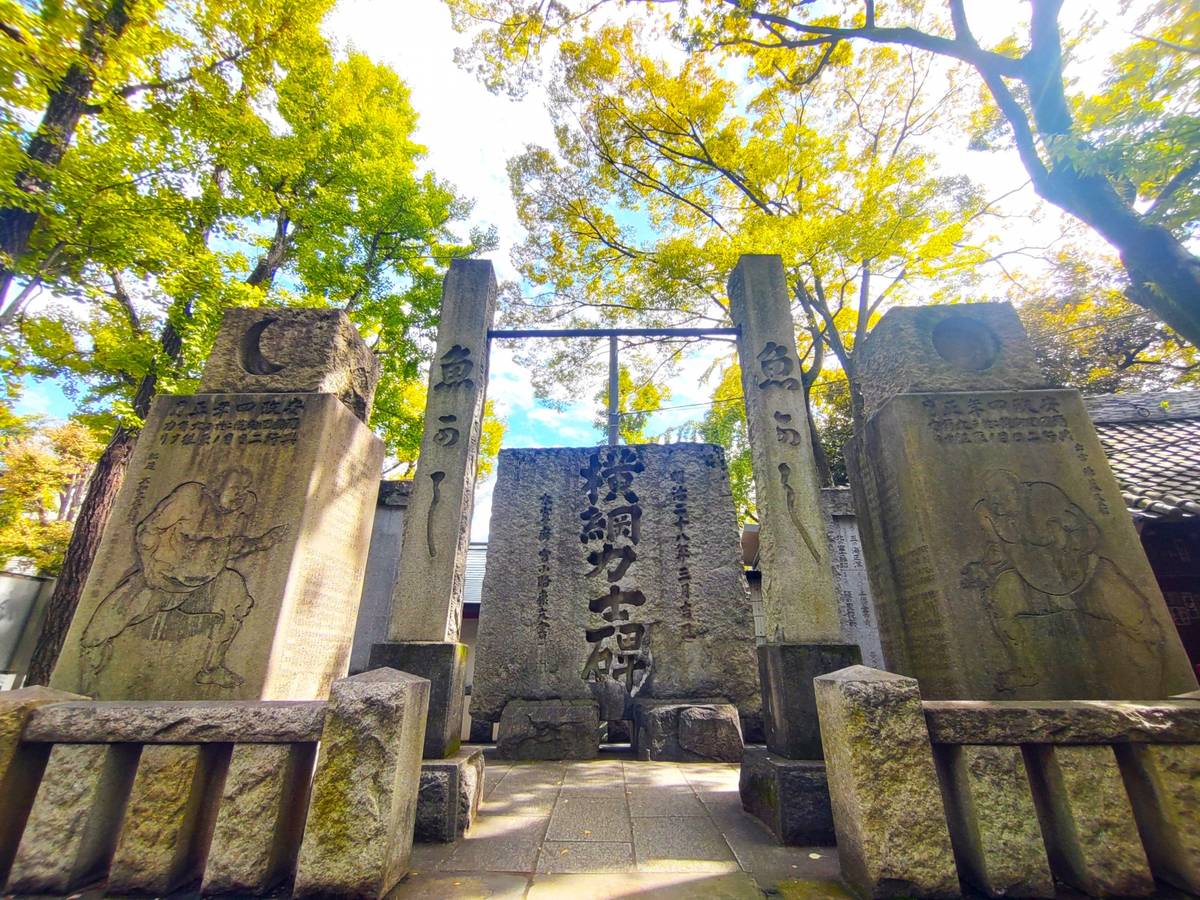
Tomioka Hachimangū has another face, a profound connection to professional sumo. In 1684, the shogunate granted permission for kanjin-zumō, sumo tournaments organized by temples and shrines to raise funds, to be held here. For roughly a century, the shrine grounds hosted these competitions. During an era when sumo's format was still taking shape, the modern sport's defining features, regular tournaments and ranking systems, were born in this very place.
The Yokozuna Rikishi Monument embodies this history. Erected in 1900 at the initiative of the 12th yokozuna Jinmaku Kyūgorō, this white granite monument stands 3.5 meters tall and weighs approximately twenty tons. Engraved with the names of every yokozuna from the first to the present, a new name-carving ceremony takes place each time a new yokozuna is crowned.
Inō Tadataka's Point of Departure
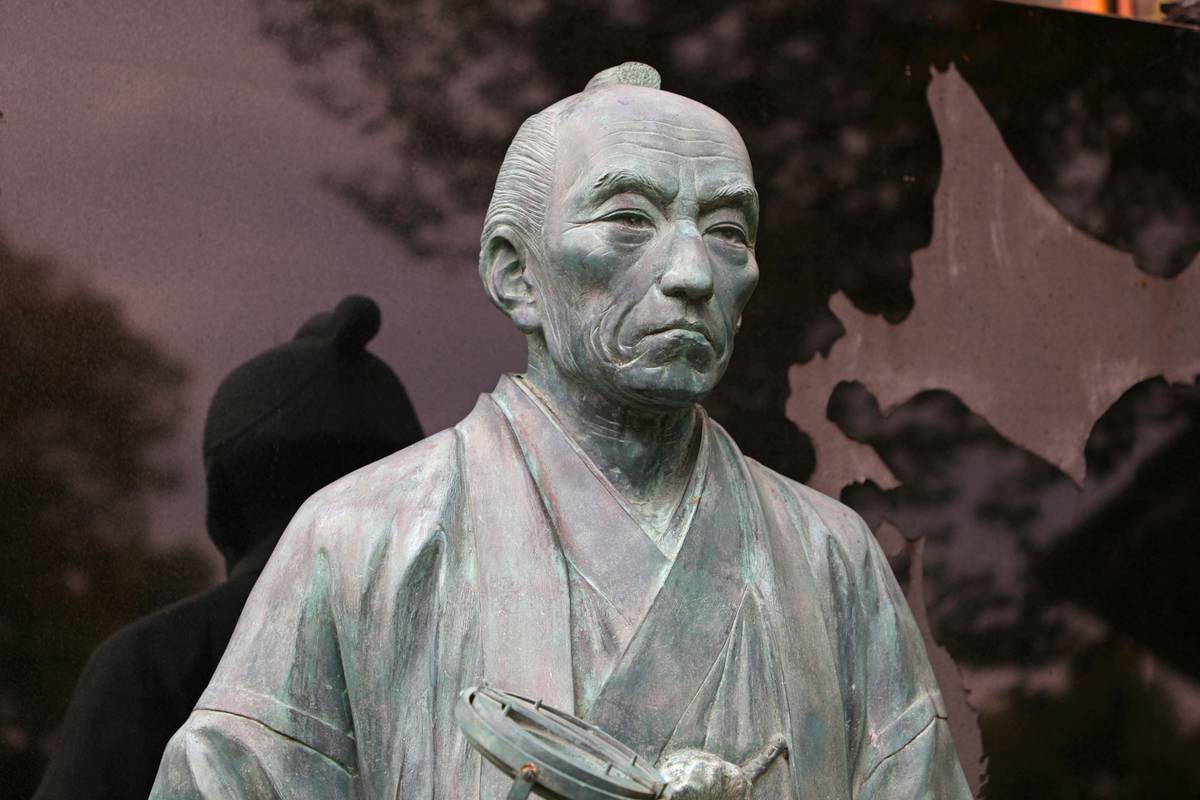
The shrine grounds hold one more statue worth noting. It honors Inō Tadataka, who walked across Japan during the Edo period and completed its first scientifically measured map.
Inō Tadataka lived in Fukagawa Kuroe-chō, near present-day Monzen-nakachō, and visited this shrine to pray for safe travels each time he embarked on a surveying expedition. His first journey to Ezo (present-day Hokkaido) in 1800 began right here. Erected in 2001 to commemorate the two-hundredth anniversary of his surveying efforts, this statue testifies to the shrine's enduring role in supporting bold endeavors.
〒135-0047 1-chōme-20-3 Tomioka, Koto City, Tokyo
Loading map...
Stories about this place
Discover stories and insights about Tomioka Hachimangu
Last Updated: