Shiba Daijingu
芝大神宮
About Shiba Daijingu
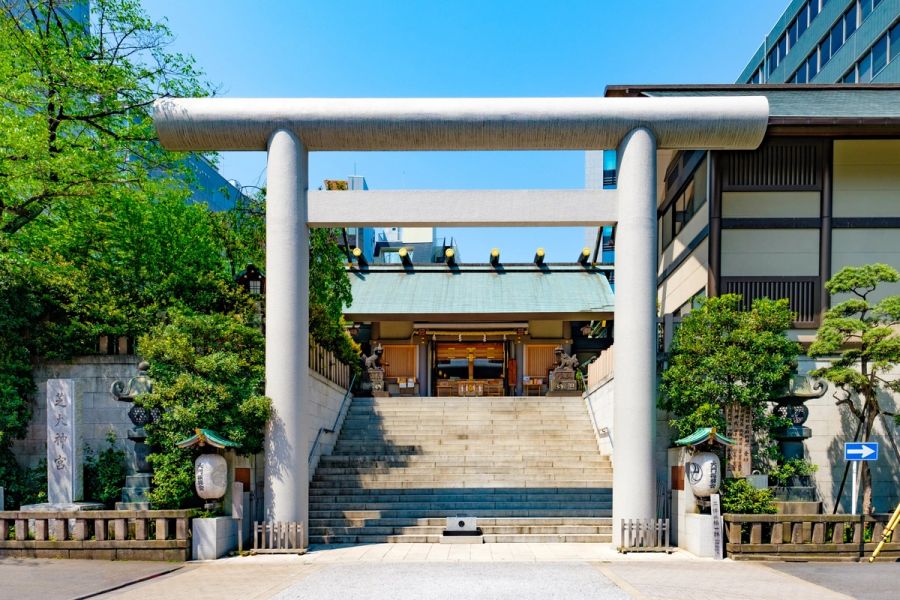
Amid the office towers of Hamamatsuchō stands a shrine with more than a thousand years of history. Shiba Daijingu was founded in 1005, when the inner and outer sanctuaries of Ise Jingū were enshrined here, and it has been revered ever since as the "Ise Shrine of Kantō." One of Tokyo's Ten Shrines, it was twice destroyed by fire, in the 1923 Great Kantō Earthquake and the 1945 Tokyo air raids, yet rebuilt each time. Today it continues to welcome countless visitors.
The Ise Shrine of Kantō
Shiba Daijingu's origins trace to 1005, when the deities Amaterasu Ōmikami and Toyouke no Ōkami from Ise Jingū were enshrined here during the reign of Emperor Ichijō. Because Ise Jingū is Japan's most revered shrine, and because both its inner and outer sanctuaries were established at this location, people throughout Kantō came to call it the Ise Shrine of Kantō and held it in deep reverence.
During the Edo period, the Tokugawa shōgunate lavished patronage on the shrine, and its grounds thrived with tea stalls and playhouses. Sumo tournaments and lottery games were held here, making it a place where the faith and entertainment of ordinary Edo residents converged.
The 1923 Great Kantō Earthquake destroyed the shrine, which was rebuilt by 1927. The 1945 Tokyo air raids then burned it to the ground a second time. The present main hall was completed in 1964. In 1975, the shrine was designated one of Tokyo's Ten Shrines.
The Eleven Days of the Daradara Festival
Each year from September 11 to 21, an autumn festival unfolds over eleven days. Its formal name is Shiba Shinmei Matsuri, but it is widely known by the affectionate nickname Daradara Matsuri, a nod to its leisurely, drawn-out duration.
Ginger is the festival's signature offering, sold throughout the grounds. The festival is sometimes called the Ginger Festival for this reason. In ancient times, ginger was abundantly cultivated in this area and was presented before the deity. Tradition held that ginger dispels impurity and brings one closer to the divine, a belief that has sustained the practice over centuries.
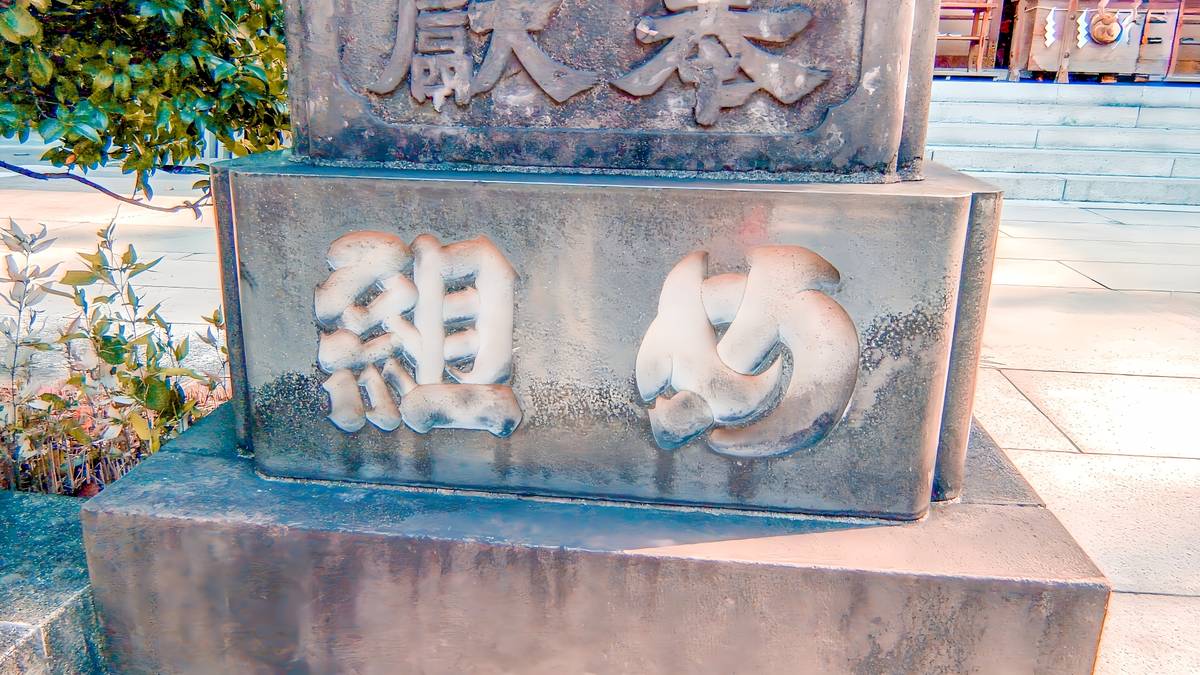
In 1805, an incident erupted during the festival. Steeplejacks from the Me-gumi, a firefighting brigade of the Edo period, clashed with sumo wrestlers over a dispute while watching a match. The conflict later inspired the kabuki play "The Quarrel of the Me-gumi," which continues to be performed today.
Me-gumi
Chigibako and a Shrine in the City
Shiba Daijingu's signature amulet is the chigibako, a tiered box of bent wood decorated with wisteria flowers and filled with azuki beans. It is also recognized as a folk craft of Tokyo.
Chigi refers to the crossing beams that protrude from a Shinto shrine's roof. The name comes from the leftover wood used to craft them. Because chigi also sounds like "a thousand garments," the amulet came to symbolize never lacking for clothing. Over time, it became cherished as a charm for good fortune in love and women's happiness.
The grounds hold other points of interest. The Savings Mound honors Motojirō Makino, a banker known as the savings king. Nearby stand strength stones inscribed with records of lifting contests from the Meiji period. Each speaks to the deep layers of history woven into this shrine.
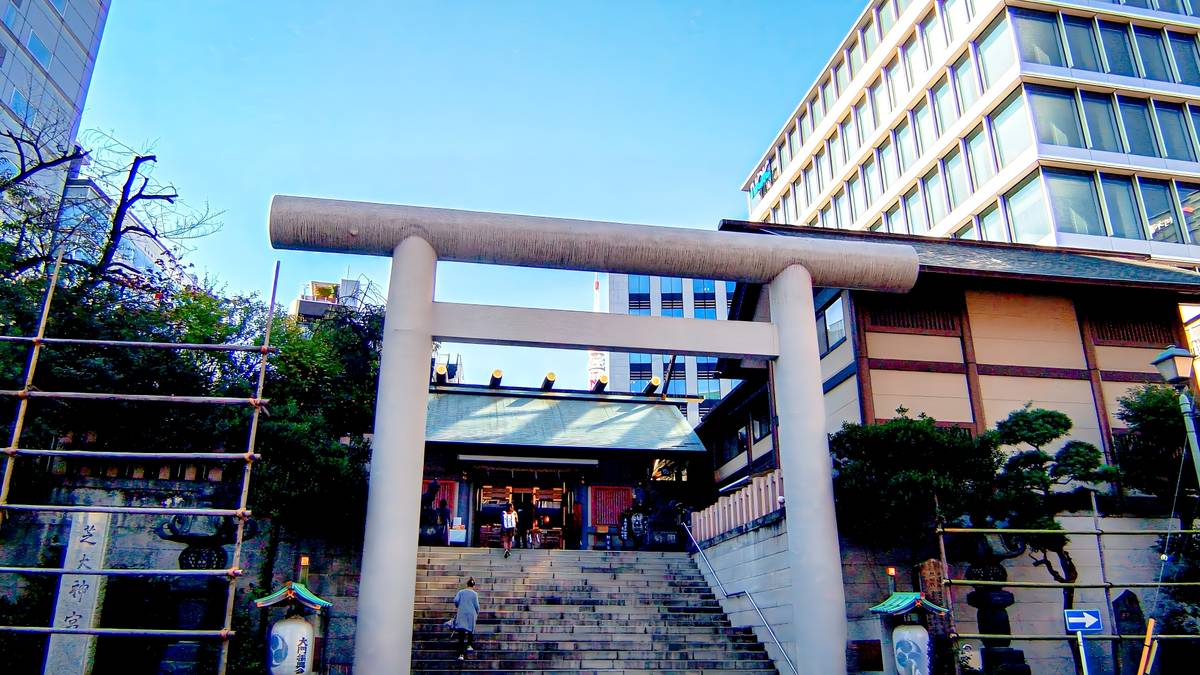
A minute's walk from Daimon Station, the shrine's grounds are tucked among high-rise buildings, blending seamlessly into the business district. At midday, it is not uncommon to see office workers in suits pausing here to pay their respects.
〒105-0012 1-chōme-12-7 Shibadaimon, Minato City, Tokyo
Loading map...
Stories about this place
Discover stories and insights about Shiba Daijingu
Last Updated: