Miyazaki
宮崎県
Start here
What to know about Miyazaki
Miyazaki is a land steeped in myth and natural beauty. From gorges in the northern mountains to strange rock formations along the coast and highland lakes in the interior, the prefecture offers a rich variety of landscapes.
Takachiho Gorge
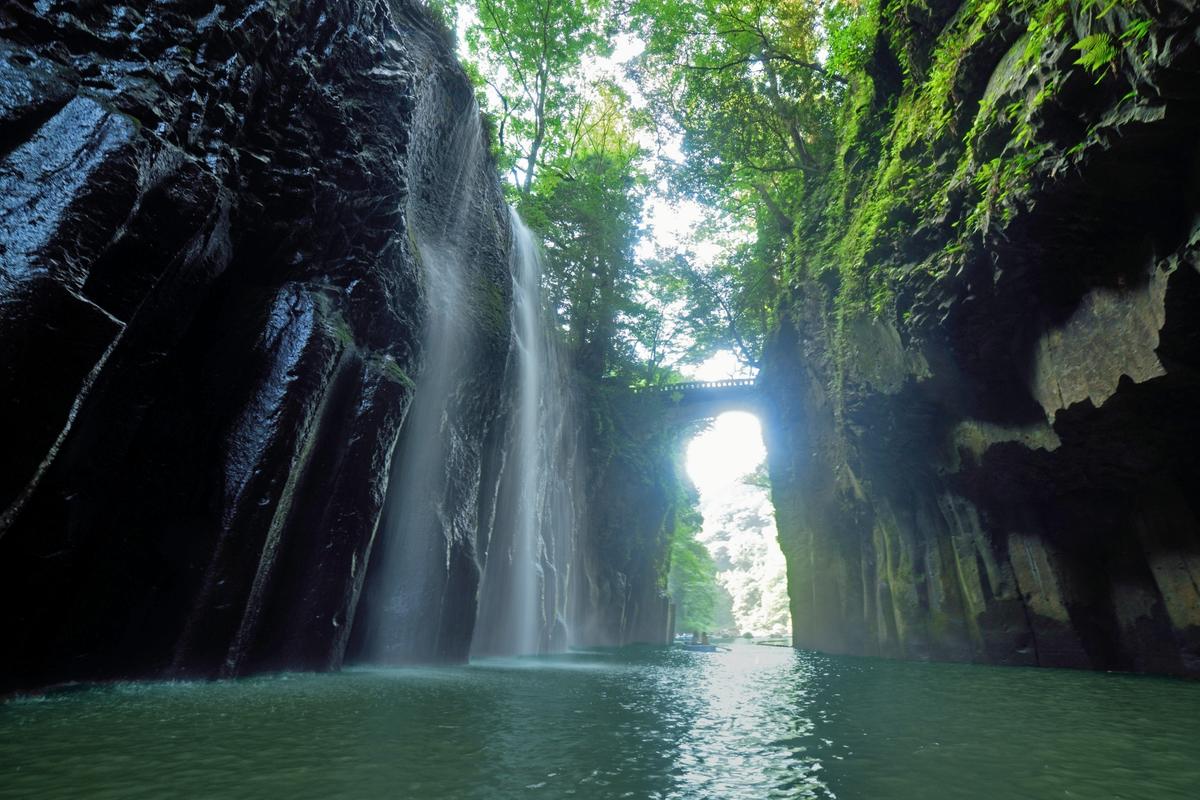
Carved by pyroclastic flows from Mount Aso, this gorge is one of Miyazaki's most celebrated scenic spots. The highlight is Manai Falls, with a drop of roughly 17 meters; visitors can rent a boat and paddle right up to the base. Sheer cliffs tower on either side, conveying the overwhelming force of nature. Nearby, Ama-no-Iwato Shrine and Ama-no-Yasukawara offer a journey into the world of Japanese mythology.
Aoshima
A small island just off the coast of Miyazaki City, with a circumference of 1.5 kilometers. The shore is ringed by a distinctive wave-cut rock platform known as Oni no Sentakuita, or the Devil's Washboard, a striking formation created by nature over millennia. Aoshima Shrine, perched on the island, is known for its association with romantic blessings and draws many visitors.
Udo Jingū
An unusual shrine along the Pacific coast of Nichinan, where the main hall sits inside a sea cave carved into the clifftop. Worshipping within the cave is a one-of-a-kind experience. Visitors can try undama-nage, tossing small clay balls toward a hollow in the rocks below. If your throw lands inside, your wish is said to come true.
Ebino Plateau
Located in the city of Ebino at an elevation of about 1,200 meters in the Kirishima mountain range. The plateau is home to two volcanic crater lakes, Fudō-ike and Rokkannon-mi-ike, and is known for its colonies of Miyama Kirishima azaleas. Each season brings a different face to this highland landscape.
Location
Where is Miyazaki?
Miyazaki Prefecture sits on the southeastern coast of Kyūshū, with Miyazaki City as its capital. The population is approximately 1.02 million as of 2025. The eastern side faces the Pacific Ocean along the Hyūga Sea, while the Kirishima mountain range lines the southwestern border with Kagoshima Prefecture. The Miyazaki Plain spreads across the center of the prefecture, and to the north, the gorge scenery of Takachiho is one of the region's most celebrated landscapes.
A warm climate defines Miyazaki. The average annual temperature is around 17°C, and the prefecture ranks among the top in Japan for hours of sunshine. The region is prone to typhoons from summer into autumn, but this abundant sunlight and warmth form the foundation of the local economy, starting with agriculture.
Loading map...
Access
Getting to Miyazaki
Miyazaki Bougainvillea Airport serves as the gateway to the prefecture. Flights from Tokyo Haneda take about one hour and 45 minutes, and from Osaka Itami about one hour and 10 minutes. From the airport, the JR Miyazaki Airport Line reaches Miyazaki Station in roughly 10 minutes.
The JR Nippō Main Line connects Miyazaki with Ōita and Kokura to the north. From Hakata, you can take the Shinkansen to Kokura and transfer to the limited express Nichirin to Miyazaki Station, a journey of about five and a half hours in total.
Getting Around the Prefecture
To reach Takachiho, an express bus from Miyazaki Station takes about two hours and 40 minutes; from Nobeoka Station, a local bus takes around one and a half hours. The prefecture has a well-developed bus network, and the JR Nichinan Line runs south along the Nichinan Coast.
Best Times to Visit
Winter is relatively mild and comfortable. Summer through autumn, however, brings a higher risk of typhoons, so it's important to check weather forecasts when planning a trip during those months.
Local pride
Specialty Products
Miyazaki's industries make the most of the prefecture's warm climate and generous sunshine. In agriculture, it leads the nation in cucumber production and ranks second in green peppers, with tropical fruit cultivation also thriving. In livestock, Miyazaki is second in Japan for the number of chickens raised and is well known as a producer of premium beef. Along the coast, pole-and-line fishing in the Hyūga Sea brings in bonito and tuna. The prefecture is also a major production area for sweet potato shōchū, with numerous distilleries supporting the local economy.
Food
Through the ages
History of Miyazaki
The history of Miyazaki, once known as the province of Hyūga, is deeply intertwined with Japanese mythology. In the myth of the heavenly descent, the deity Ninigi descended to the peak of Kushifuru in Takachiho. The area is also the setting for the myth of Ama-no-Iwato, in which the sun goddess Amaterasu hid in a cave. These stories, recorded in the Kojiki and Nihon Shoki, underscore Miyazaki's special standing as a land of myth.
From the medieval period through the early modern era, the region came under the control of the Shimazu clan. Conflicts with the Itō clan further complicated local governance. During the Edo period, several smaller domains coexisted, including the Nobeoka, Takanabe, and Obi domains, each fostering its own distinct culture and industries.
With the modernization of the Meiji era, Miyazaki Prefecture was established in 1873. It was briefly absorbed into Kagoshima Prefecture in 1876 but separated again in 1883 to stand as an independent prefecture. The regional identity forged through this history laid the groundwork for the industries and culture that define Miyazaki today.
Continue exploring
Discover other areas and hidden gems across Kyushu Region.