Yamaguchi
山口県
Start here
What to know about Yamaguchi
Yamaguchi Prefecture spreads across the western edge of Honshū, offering attractions with remarkable range, from vast underground caverns, to castle towns where late Edo period patriots once walked, to bridges that seem to run across the sea. Its position between two seas with contrasting characters, the Seto Inland Sea and the Sea of Japan, has shaped both its natural landscapes and the unfolding of history in uniquely distinctive ways.
Akiyoshidai and Akiyoshidō
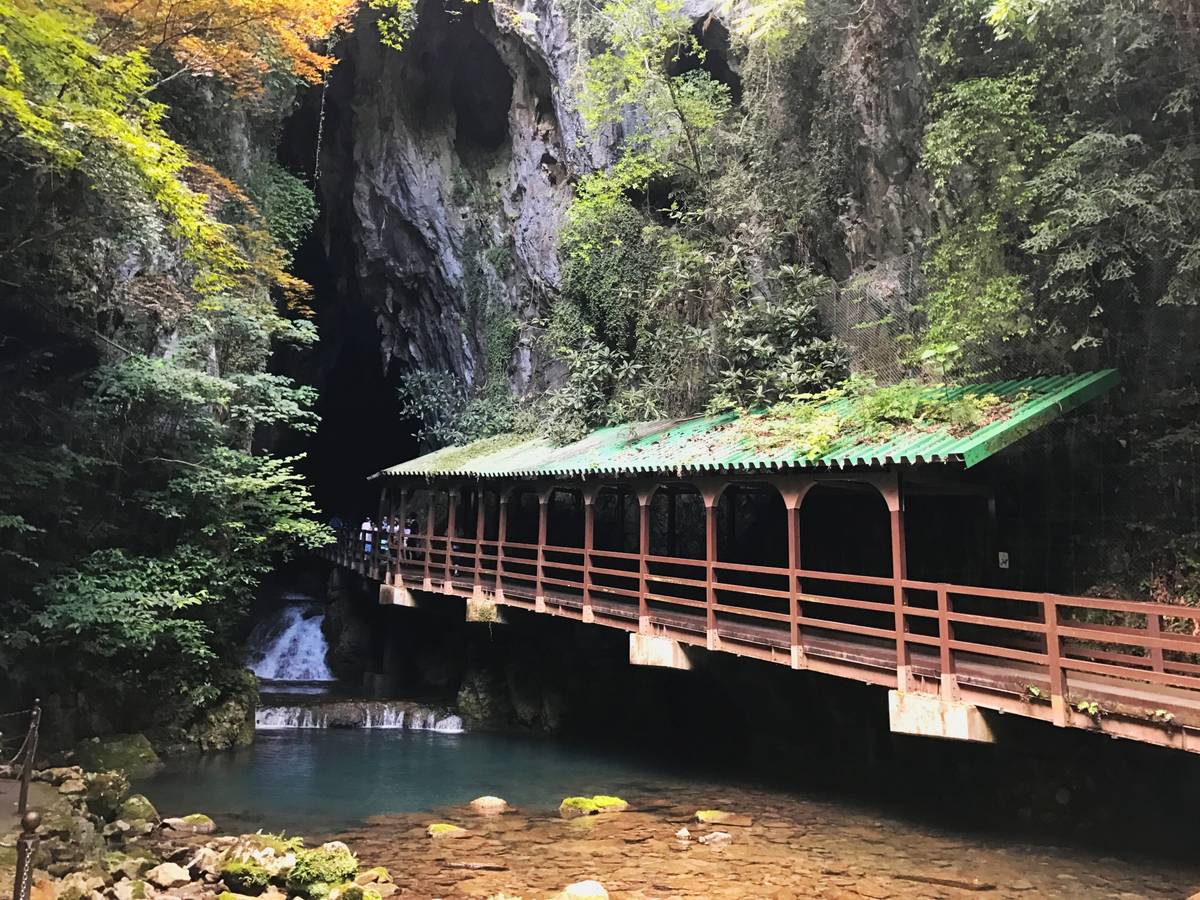
Spreading across the center of Yamaguchi Prefecture, Akiyoshidai is Japan's largest karst plateau, covering approximately 130 square kilometers. The landscape of countless white limestone rocks scattered across grassland, carved by rain over millennia, is rarely seen elsewhere in Japan. The observation trails that cross the plateau turn lush green from spring through summer, offering expansive views. In autumn, the entire expanse glows silver with Japanese silver grass.
Beneath this plateau lies Akiyoshidō, an underground cavern of national significance stretching over 10 kilometers in total length. Even the approximately 1-kilometer publicly accessible section leaves visitors awestruck by stalactites and stalagmites sculpted over hundreds of thousands of years by limestone-rich water. The cave maintains a consistent temperature of about 17 degrees Celsius year-round, remaining pleasantly cool in summer and gently warm in winter.
Hagi Castle Town and World Heritage Sites
Facing the Sea of Japan, Hagi preserves a castle town where the character of Edo-period samurai residences and townhouses lingers in its streets. Walking along the white and namako-textured walls transports you back to the era when the Mōri clan ruled this region for approximately 260 years.
In 2015, the Hagi castle town and Shōka Sonjuku were registered as UNESCO World Heritage sites as part of the Sites of Japan's Meiji Industrial Revolution collection. The Shōka Sonjuku stands as a small wooden structure within the grounds of Shōin Shrine, where Yoshida Shōin taught for just over a year. Yet the fact that figures who would shape modern Japan, including Itō Hirobumi and Takasugi Shinsaku, emerged from this single room gives this place profound historical significance.
Kintai-kyō Bridge
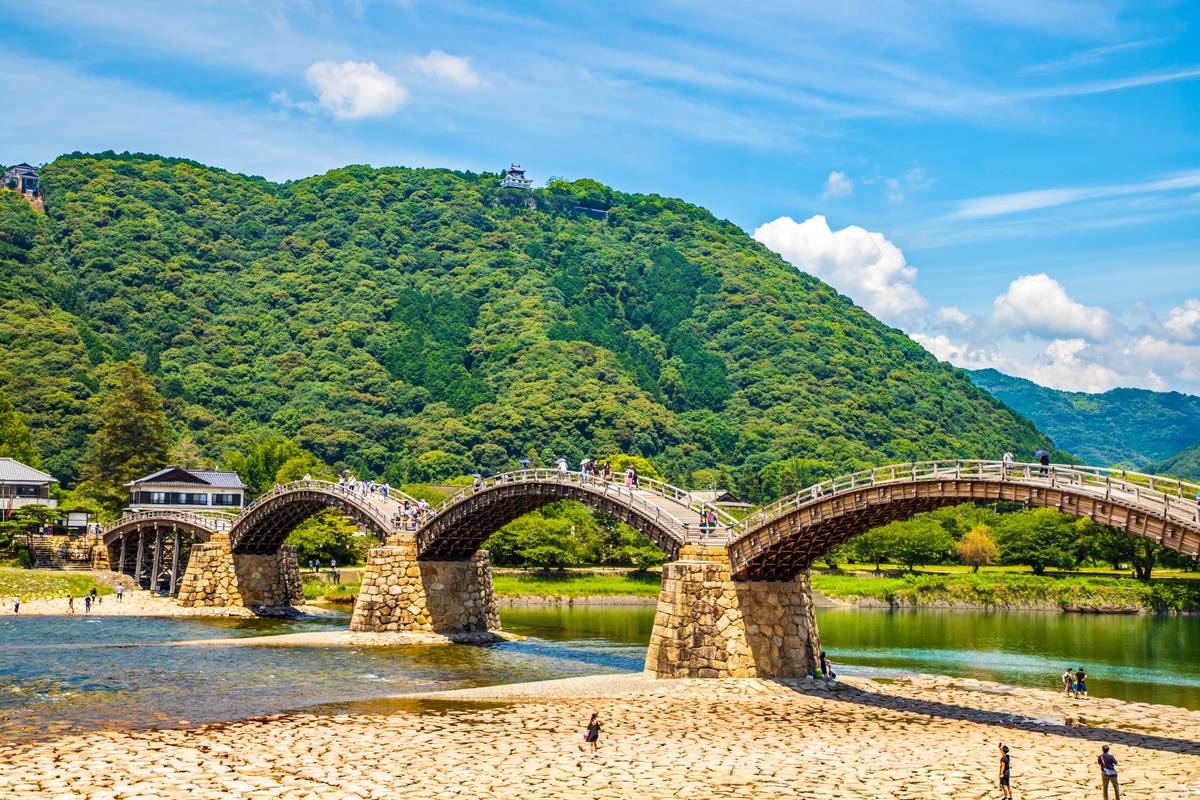
The Kintai-kyō Bridge spanning the Nishikigawa River in Iwakuni is a wooden five-arch bridge constructed in 1673. Built through intricate woodworking techniques that require no nails, it is counted among Japan's three most celebrated bridges. The sight of its approximately 193-meter-long arches reflected in the river is breathtaking in any season.
Come spring, roughly 3,000 cherry trees bloom at the bridge's approaches, drawing crowds to this celebrated viewing spot. Beyond the bridge, a ropeway ascends to Iwakuni Castle, from which visitors can overlook both the Kintai-kyō Bridge and the castle town below.
Tsunoshima Bridge and the Sea of Japan Coastline
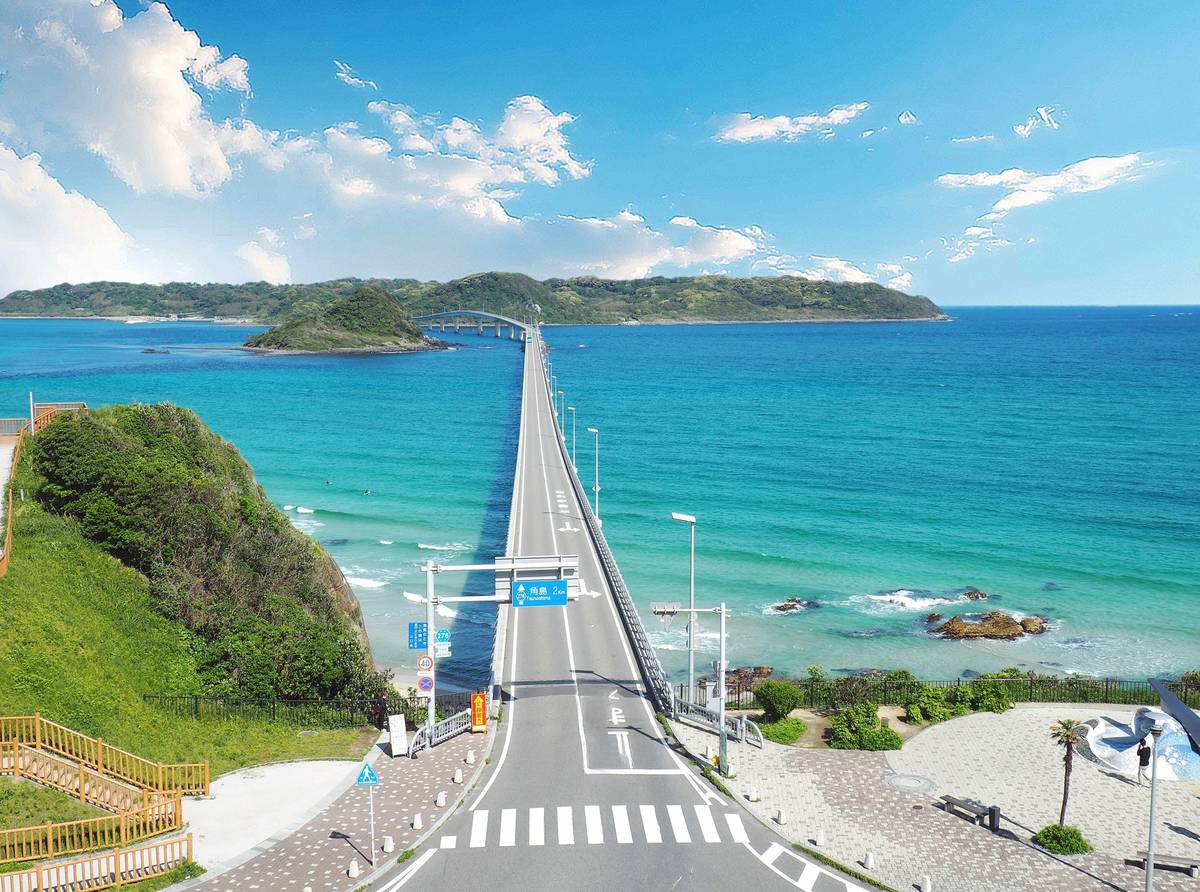
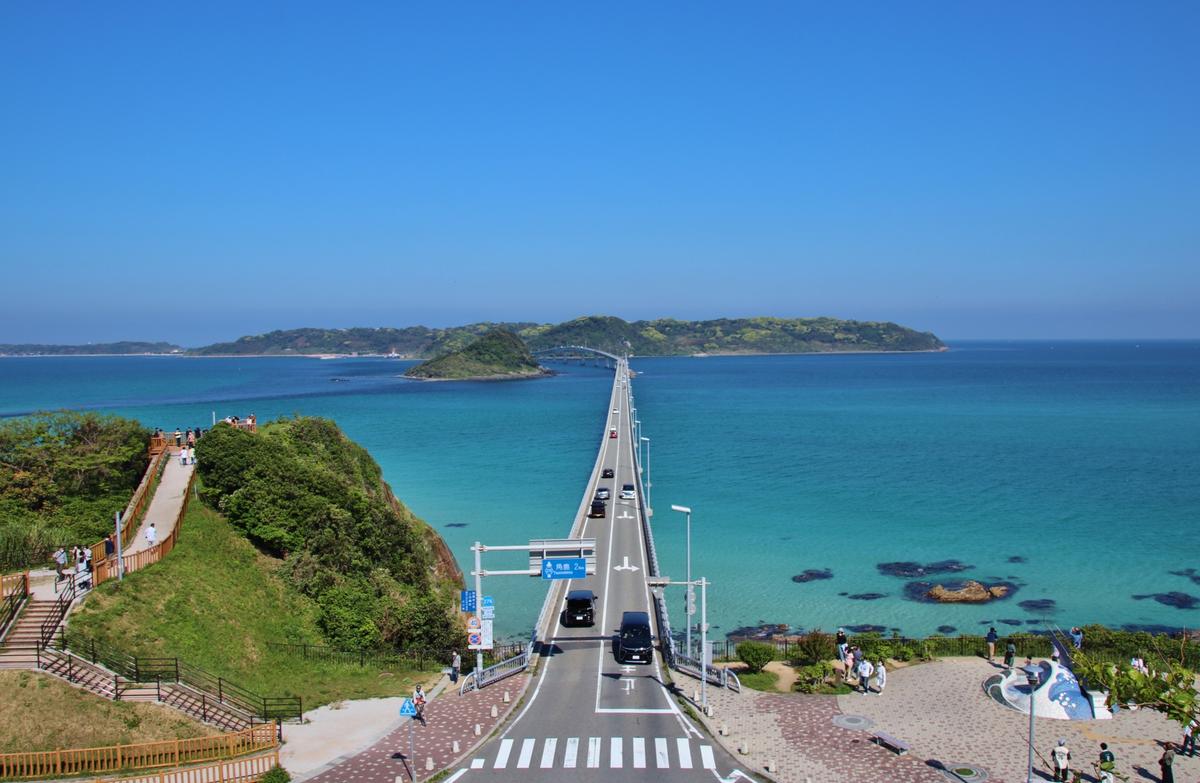
The Sea of Japan side of Yamaguchi Prefecture has recently drawn attention for spectacular coastal scenery. The Tsunoshima Bridge near Shimonoseki is particularly striking, stretching 1,780 meters straight across cobalt-blue waters. Its appearance has made it a favorite location for films and commercials. On clear days, the view conveys a tropical transparency that defies the typical image of the Sea of Japan.
Further along the coast in Nagato stands Motonosumi Shrine, where 123 vermillion torii gates arranged along a cliffside create a landscape unmatched anywhere else. The site appeared in CNN's selection of Japan's 31 most beautiful places, and its popularity with international visitors continues to grow.
Location
Where is Yamaguchi?
Yamaguchi Prefecture belongs to the Chūgoku region and sits at the westernmost tip of Honshū, with Yamaguchi City as its prefectural capital. As of April 2025, the population stands at approximately 1.28 million. The prefecture is bounded by the Sea of Japan to the north and west, the Seto Inland Sea to the south, and lies close to Kyushu across the Kanmon Strait. Its defining feature is a geography surrounded by sea on three sides.
The Chūgoku Mountains extend through the inland areas, though the terrain is generally gentle. Even the highest peak, Jakuchisan, reaches only 1,337 meters. Climate varies significantly between north and south. The southern regions facing the Seto Inland Sea receive little rainfall and enjoy mild winters, with an annual average temperature around 15 degrees Celsius. By contrast, the northern coastal areas along the Sea of Japan and inland regions experience cloudy winters with occasional snow, and slightly cooler average temperatures of approximately 13 degrees Celsius.
Loading map...
Access
Getting to Yamaguchi
Yamaguchi Prefecture has two airports. Yamaguchi Ube Airport is approximately 1 hour 30 minutes from Haneda Airport, with bus service to Shin-Yamaguchi Station taking roughly 45 minutes. Iwakuni Kintai-kyō Airport is slightly closer at about 1 hour 20 minutes from Haneda, with buses reaching Iwakuni Station in approximately 10 minutes.
When traveling by shinkansen, the Nozomi takes about 4 hours 30 minutes from Tokyo to Shin-Yamaguchi Station, or about 2 hours from Shin-Osaka. Shin-Yamaguchi Station serves as the transfer hub for destinations throughout the prefecture.
For travel within the prefecture, JR lines including the Sanyō, Yamaguchi, and San'in main lines operate alongside bus services from Bōchō and Sanden. Major tourist sites are accessible by bus or taxi, and checking schedules before departure is recommended. For travel between cities like Hagi and Shimonoseki, express and rapid JR trains offer the most convenient option.
Local pride
Specialty Products
Facing two seas with distinctly different characters, Yamaguchi Prefecture brings together a remarkable diversity of seafood. Shimonoseki City stands out as a top national hub for handling fugu (pufferfish), earning its place as the quintessential winter delicacy. The inland areas flourish in raw-log shiitake mushroom cultivation, offering the bounty of the mountains. High-quality rice and fresh water have supported sake brewing traditions here for centuries. In the crafts sector, Yamaguchi's history of prosperity through trade with continental Asia during the Muromachi period created fertile ground for distinctive traditional lacquerware, pottery, and inkstones.
Food
Crafts & Others
Through the ages
History of Yamaguchi
In ancient times, what is now Yamaguchi Prefecture was divided into two provinces: Suō and Nagato. During the medieval period, the Ōuchi clan rose to prominence, using their wealth from continental trade to build a city modeled on Kyoto. Called the "Kyoto of the West," this era also saw the master painter Sesshū active under Ōuchi patronage. However, in 1551, retainer Sue Harukata staged a coup forcing the Ōuchi lord to take his own life. By 1557, Mōri Motonari, the dominant power in the Chūgoku region, destroyed the Ōuchi clan and became the new ruler.
The Mōri clan fought on the Western army's side at the Battle of Sekigahara and lost vast territories, retaining only Suō and Nagato. In 1604, they built Hagi Castle and established their domain administration there, ruling the Hagi domain (also known as the Chōshū domain) for approximately 260 years. By the late Edo period, luminaries like Takasugi Shinsaku, Itō Hirobumi, and Yamagata Aritomo emerged one after another from the Shōka Sonjuku academy in Hagi. This small private school, founded by Yoshida Shōin in 1857, operated for barely a year yet became the epicenter that redirected the course of modern Japan.
In 1863, the Chōshū domain bombarded foreign vessels, triggering the Shimonoseki War. Their defeat prompted a shift toward opening the country and modernization. Through the Satsuma-Chōshū Alliance, they led the Meiji Restoration and produced numerous politicians, including Itō Hirobumi, the first Prime Minister. The abolition of the feudal domain system in 1871 established Yamaguchi Prefecture, named after its capital city. In 1895, the peace treaty ending the Sino-Japanese War (the Treaty of Shimonoseki) was signed in Shimonoseki, leaving its mark on modern Japan's diplomatic history.
Continue exploring
Discover other areas and hidden gems across Chugoku Region.