Okayama
岡山県
Start here
What to know about Okayama
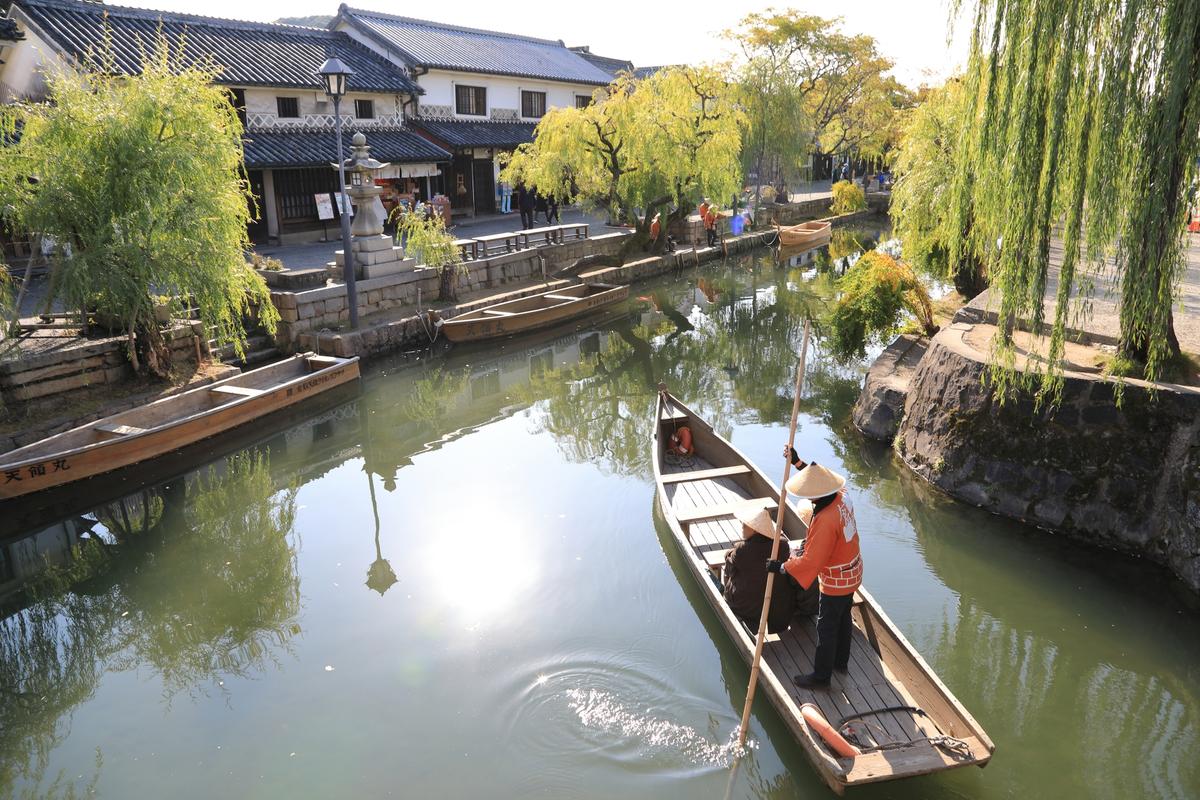
Okayama Prefecture's mild, sunny climate creates an ideal setting for exploring historic gardens and castles, white-walled merchant quarters, and much more. From the gentle landscapes fringing the Seto Inland Sea to the red-hued mountain villages nestled in highland valleys, the prefecture's diverse character is part of what makes it captivating.
Kōrakuen Garden and Okayama Castle
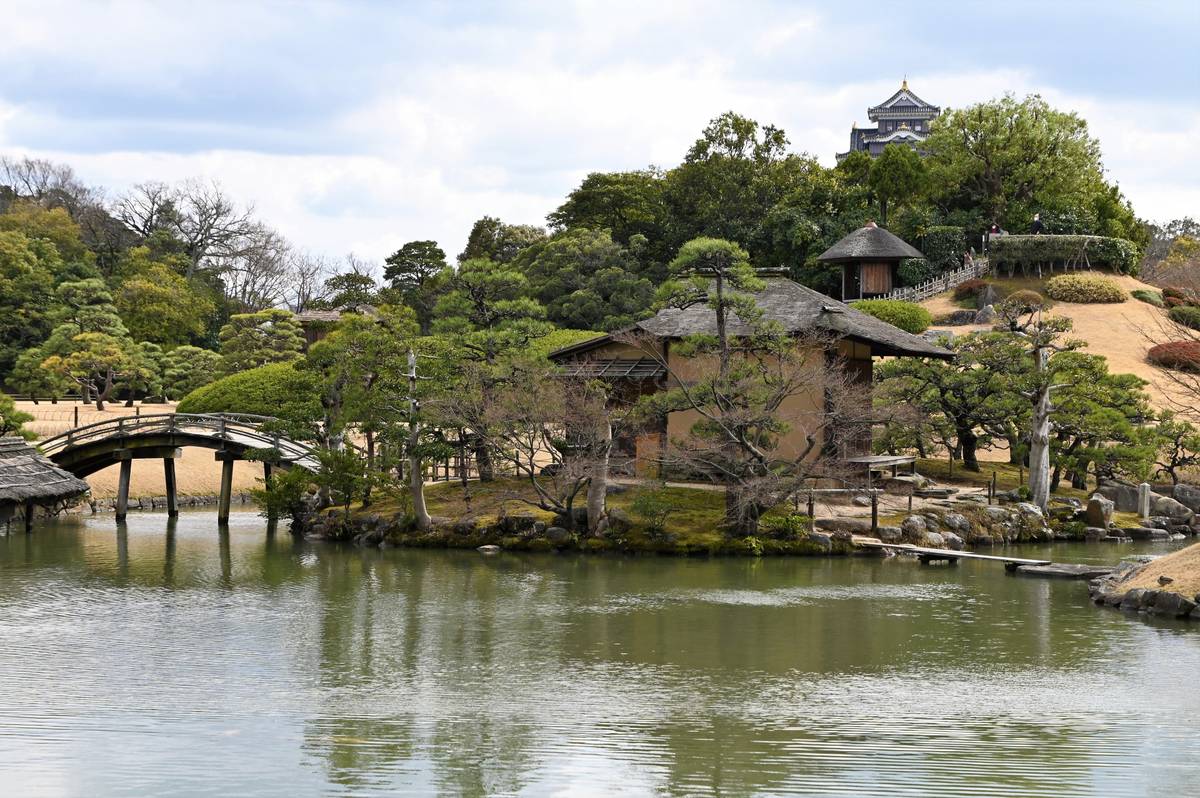
Kōrakuen ranks alongside Kenrokuen in Kanazawa and Kairakuen in Mito as one of Japan's three most celebrated daimyō gardens. Spanning roughly 14.4 hectares, this strolling garden weaves together broad lawns, ponds, tea fields, and plum groves that transform with the seasons. Spring brings cherry blossoms and fresh greens; summer offers lotus flowers in bloom; autumn paints maples in fiery hues; and winter dusts the landscape with snow, each season revealing the garden's unique beauty.
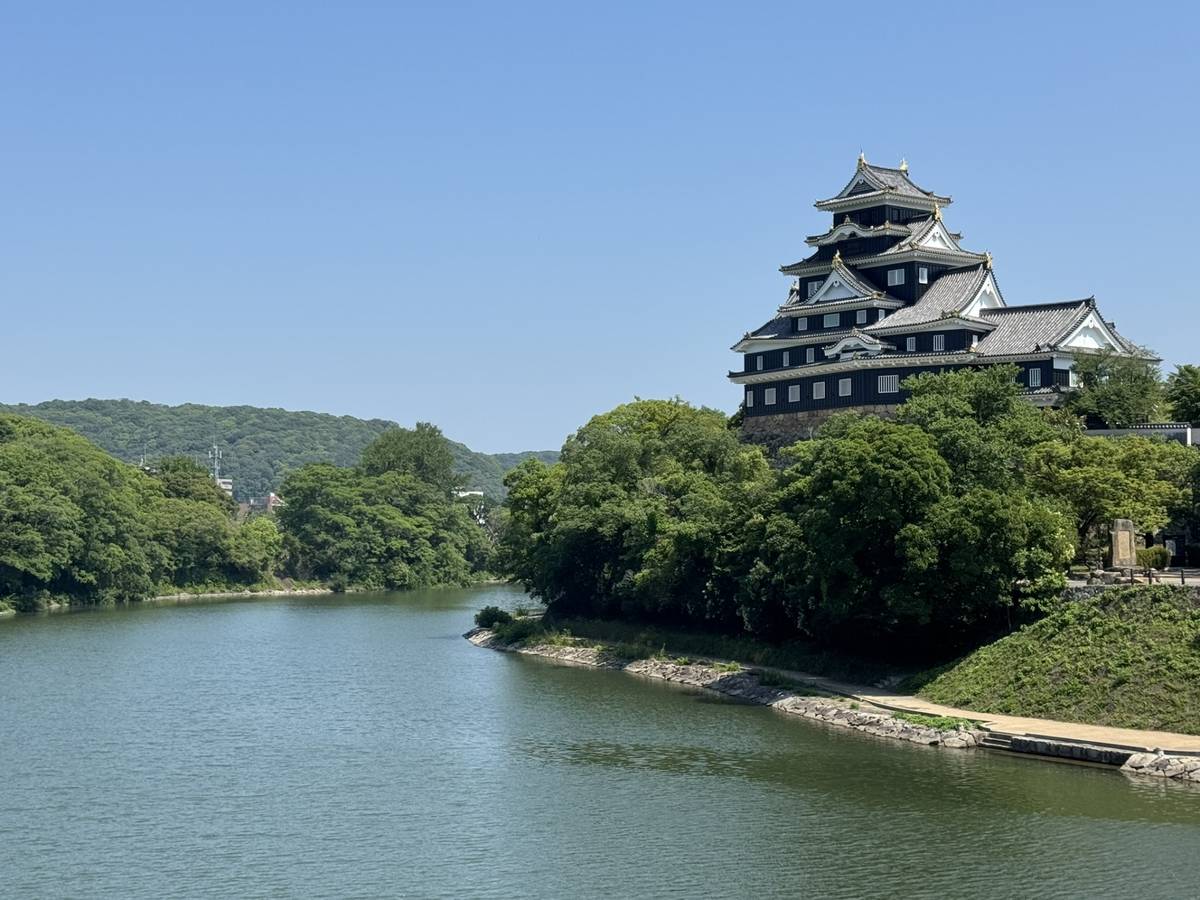
Adjacent to the garden stands Okayama Castle, built by Ukita Hideie in the late 16th century and known as Ujō, the Crow Castle, for its distinctive black exterior. The main tower underwent comprehensive restoration completed in 2022, and interior exhibits have been refreshed. Separated by the Asahigawa River, garden and castle face one another across the water, and the view of the castle tower rising beyond the river from within Kōrakuen exemplifies Okayama's iconic landscape.
Kurashiki Bikan Historical Quarter
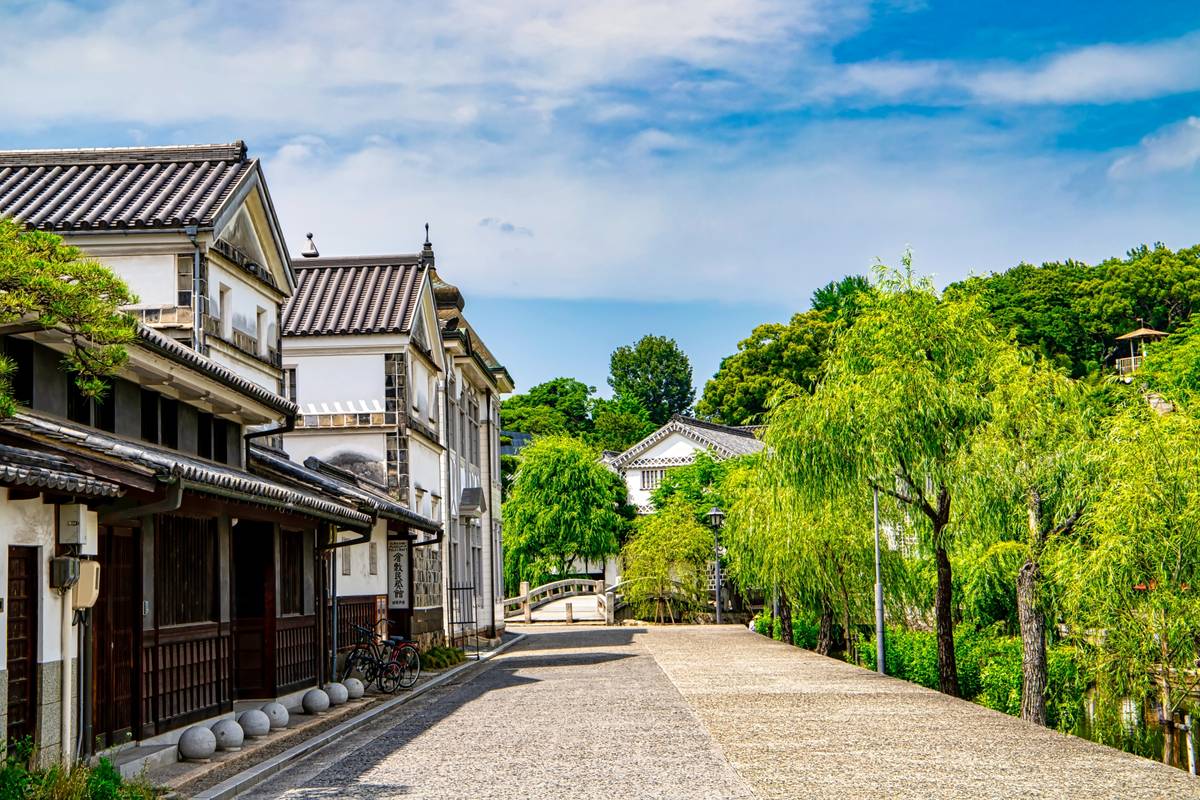
Along the Kurashiki River, white-walled storehouses and namako-kabe latticed plasterwork buildings create a picturesque historic quarter. During the Edo period, Kurashiki thrived as a tenryō, a district under direct shogunal control, flourishing as a distribution center for goods. The merchants' houses and warehouses from that era still stand, preserved within a Preservation District for Groups of Traditional Buildings designated by the national government.
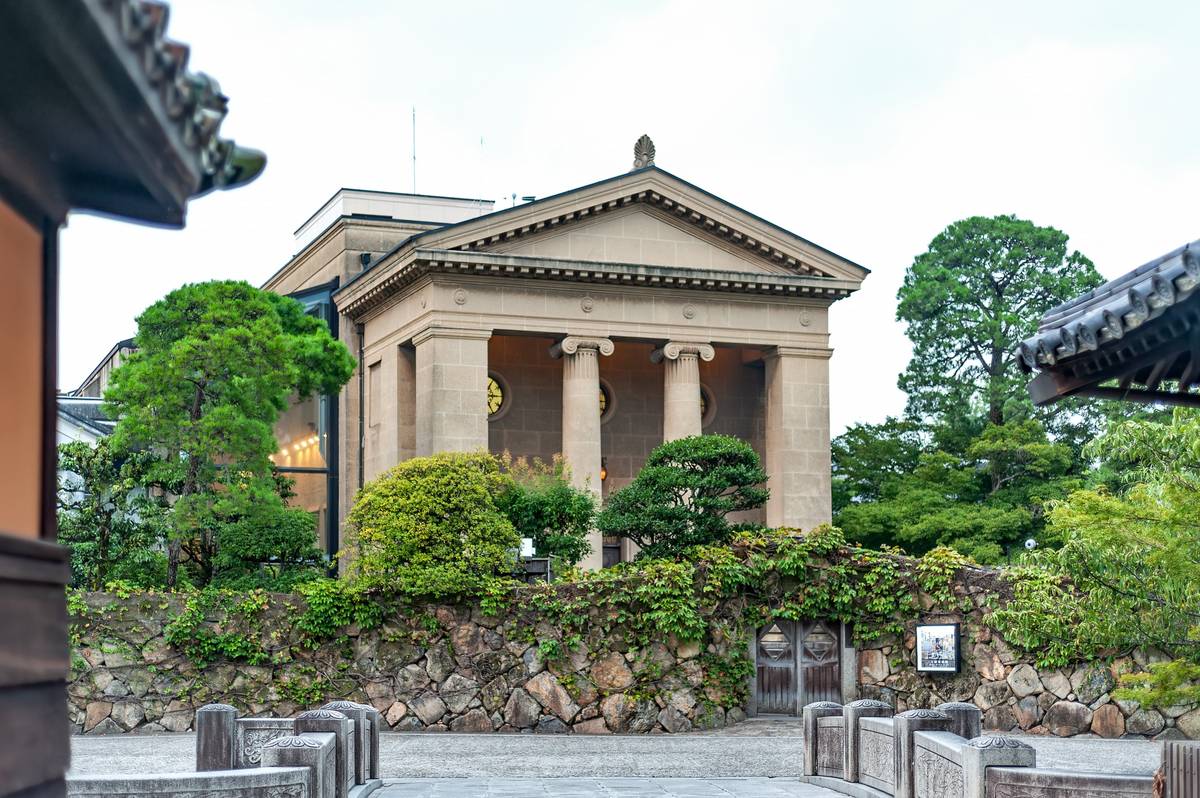
Dominating this district is the Ōhara Museum of Art, which opened in 1930 as Japan's first private Western art museum. Its collection includes masterworks of international renown such as El Greco's "Annunciation" and Monet's "Water Lilies." Designed in classical Greek temple style and sited beside the Kurashiki River, the museum adds a striking architectural accent to the historic streetscape.
Seto Ōhashi Bridge and the Seto Inland Sea
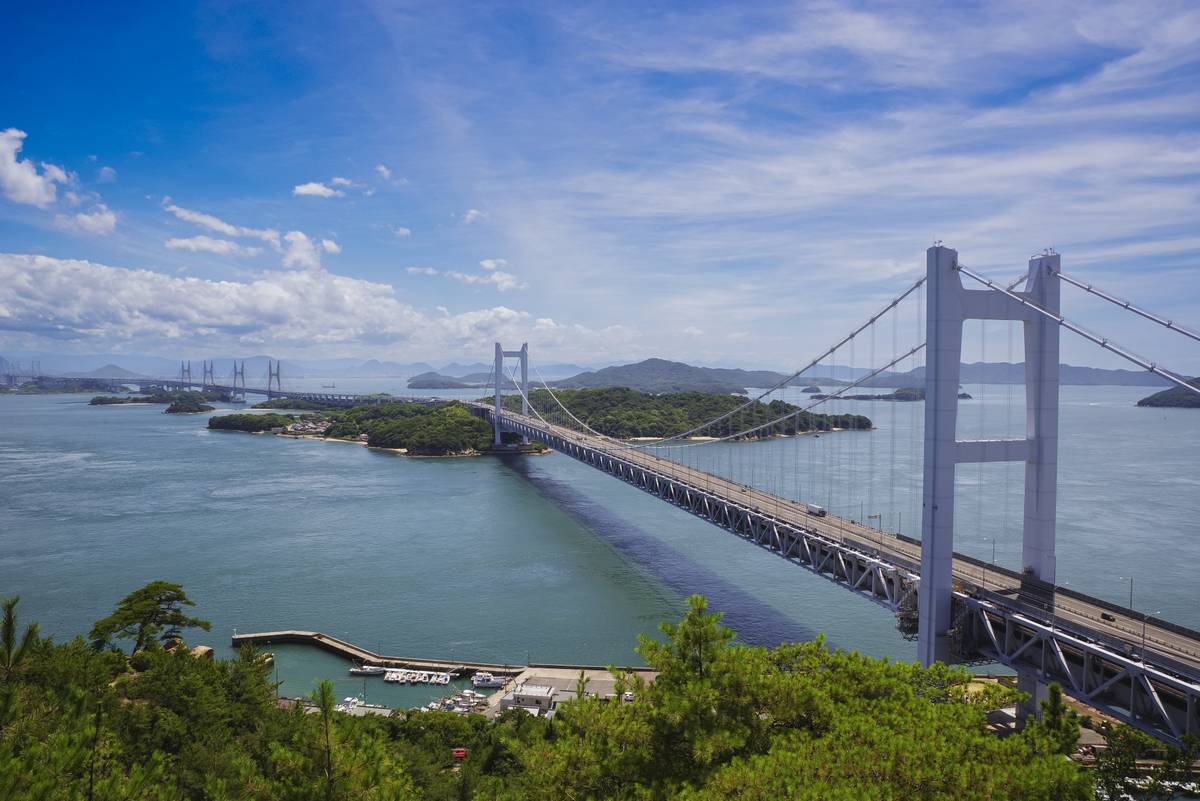
Opened in 1988, the Seto Ōhashi Bridge connects Kurashiki in Okayama to Sakaide in Kagawa Prefecture. With a total bridge length of approximately 9.4 kilometers, it stands as the world's longest combined road and railway bridge. The scale is breathtaking as six separate bridges link island to island across the strait.
The Washuzan observation platform, situated at the bridge's foot, offers sweeping views of the islands dotting the inland sea and the bridge's grand span. At dusk, the water glows orange and the bridge silhouettes against the sky, creating an unforgettable vista. The calm, island-studded beauty of the Seto Inland Sea may be the most striking natural panorama Okayama has to offer.
Fukiya Old Town
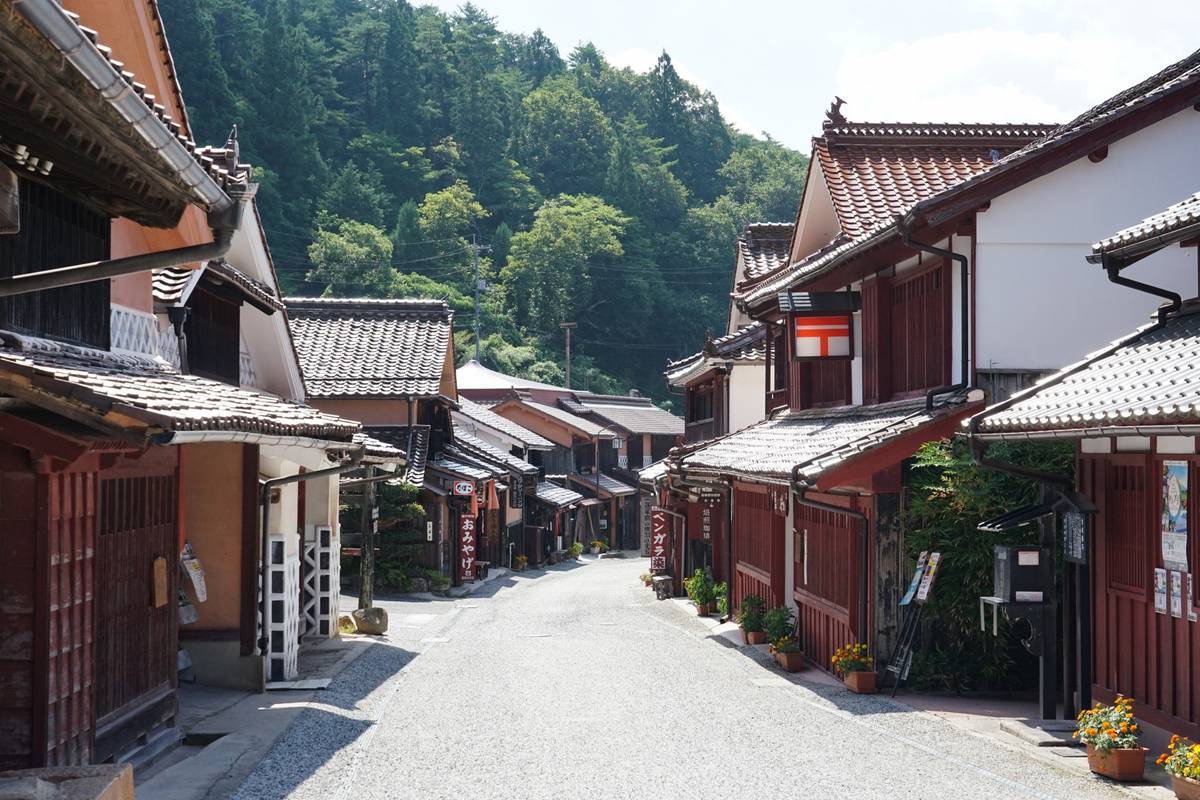
Nestled in the mountains of Takahashi City at an elevation of roughly 550 meters, Fukiya is a settlement where every building shares a distinctive red hue. This color comes from bengara, an iron oxide pigment that was first mass-produced in Japan here during the mid-Edo period. The pigment's insecticidal and preservative properties made it highly valued, and it was applied in layers to exterior walls and wooden lattice screens. The rows of houses painted in shades of bengara create a striking red ribbon winding through the surrounding green forest.
In 2020, Fukiya earned recognition as a Japan Heritage site under the designation "Birthplace of Japan Red." Visitors can tour the Former Katayama Residence and the Bengara Museum, and the Sasaune Mine shafts are open for exploration. Bengara stencil-dyeing workshops offer hands-on experience with traditional techniques. The town has retained its unpolished, understated charm without becoming overly commercialized, making it a place best savored at a leisurely pace.
Location
Where is Okayama?
Okayama Prefecture sits in the southeastern part of the Chūgoku region. The prefectural capital is Okayama City, and as of April 2025, the region is home to approximately 1.82 million people, making it the second most populous prefecture in Chūgoku after Hiroshima.
The prefecture's terrain shifts dramatically from south to north. Temperate plains spread along the Seto Inland Sea coastline in the south, while the Chūgoku Mountains chain the northern reaches. Winter snowfall is not uncommon in the mountainous north, but the southern region receives relatively little annual rainfall and enjoys abundant sunny days by national standards. This favorable climate earned Okayama the nickname "Land of Clear Skies."
The Seto Ōhashi Bridge connects Okayama to Kagawa Prefecture in Shikoku, positioning the prefecture as a crucial transportation hub linking Honshū and Shikoku.
Loading map...
Access
Getting to Okayama
Okayama Momotarō Airport offers flights from Tokyo's Haneda Airport in approximately 1 hour and 15 minutes. A limousine bus runs from the airport to Okayama Station's west exit in approximately 30 minutes for ¥780.
By Shinkansen, the Nozomi service connects Tokyo Station to Okayama Station in about 3 hours and 15 minutes. From Shin-Osaka Station, the journey takes just 45 minutes, making access from the Kansai region particularly convenient. Okayama Station serves as a major terminal where the San'yō Shinkansen connects with local railways, offering easy transfers to Shikoku.
Getting around Okayama City is simple with the streetcars departing from in front of Okayama Station. The Okayama Electric Tramway operates two lines, the Higashiyama and Seikibashi lines, with a flat fare of ¥160 across the network. These trams are especially convenient for reaching Kōrakuen Garden and Okayama Castle.
Kurashiki is a short 15-minute train ride from Okayama Station on the JR San'yō Main Line. Route buses and tourist loop buses connect the prefecture's major attractions, and taxis offer another option for getting around.
Local pride
Specialty Products
The warm climate and long sunshine hours of the Seto Inland Sea side make the region ideal for fruit cultivation. Okayama has earned recognition as a "Kingdom of Fruit," with orchards thriving throughout the prefecture. Grape and peach production ranks among the highest in the nation.
The waters of the Seto Inland Sea yield a diverse bounty of fish and seafood that has long sustained the local diet. In the northern Chūgoku Mountains, livestock farming has deep roots, particularly the raising of Japanese beef cattle, taking advantage of the cooler mountain climate.
In traditional crafts, Okayama is known nationwide for pottery fired without glaze, shaped only by earth and flame, with kiln traditions spanning more than a thousand years. Handicrafts made from igusa reed grass represent another enduring specialty of the southern prefecture.
Food
Crafts & Others
Through the ages
History of Okayama
In ancient times, the region was known as Kibi, a domain as influential as Yamato, Tsukushi, and Izumo. Its power is testified by the Tsukuriyama Kofun, Japan's fourth largest burial mound, with a front-to-back length stretching roughly 350 meters. This monumental keyhole-shaped tomb speaks to the authority of regional rulers of that era. In the late 7th century, the imperial court divided Kibi into three smaller provinces, and in 713 Mimasaka was further separated from Bizen. Some scholars suggest this fragmentation was deliberate, aimed at curtailing Kibi's influence. The Nara-period scholar Kibi no Makibi and the statesman Wake no Kiyomaro, both from this region, rose to prominence at court.
When the Warring States period arrived, Ukita Naoie began establishing a castle town at Okayama. His son, Ukita Hideie, rose to become one of the Council of Five Elders under Toyotomi Hideyoshi and oversaw construction of Okayama Castle as a fully realized early-modern fortification along the Asahigawa River. With its black exterior walls, the castle earned the nickname Ujō, the Crow Castle, and became the foundation upon which the city was built. Following the defeat of Ukita Hideie's Western forces at the Battle of Sekigahara, he was exiled to Hachijōjima. The Ikeda clan subsequently took control of the domain and ruled throughout the Edo period.
Under Ikeda stewardship, Okayama flourished. In 1687, the second-generation lord, Ikeda Tsunamasa, commissioned construction of a garden that would take fourteen years to complete, finally opening in 1700. Today Kōrakuen ranks among Japan's three finest gardens and stands as a masterwork of Genroku-era elegance. Following the Meiji Restoration's abolition of feudal domains, the majority of Bizen and Bitchū merged with Mimasaka to form present-day Okayama Prefecture.
Continue exploring
Discover other areas and hidden gems across Chugoku Region.