Fukui
福井県
Start here
What to know about Fukui
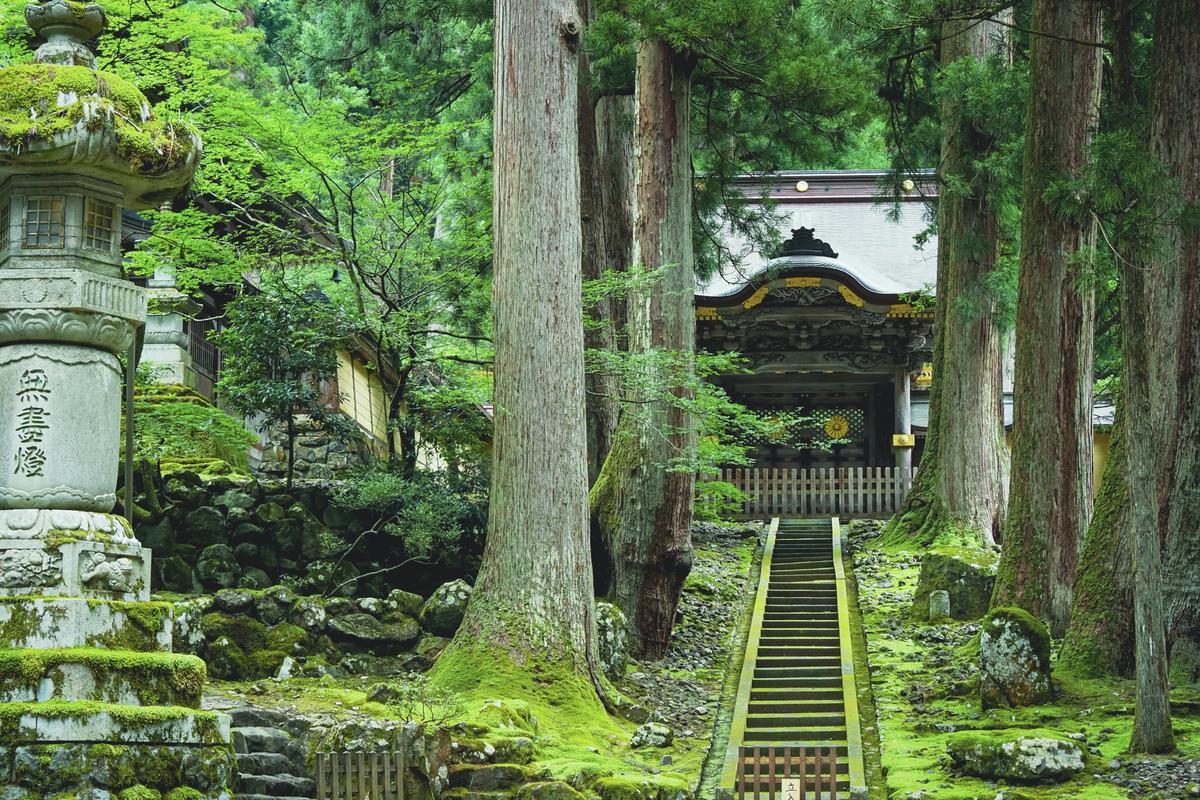
The sheer cliffs and crashing waves of Tōjinbō, the ancient Zen monastery of Eihei-ji wrapped in deep cedar forests, and one of the world's premier dinosaur fossil sites. In Fukui Prefecture, the grandeur of nature shaped by the Sea of Japan, a culture of quiet contemplation, and the ancient history of the earth all come together in one place. Quite different from Japan's flashier tourist destinations, Fukui is a place that reveals more with every visit.
Tōjinbō
Tōjinbō in Sakai City is a scenic spot where columnar-jointed cliffs of pyroxene andesite stretch for approximately 1 km along the Sea of Japan coast. Columnar jointing on this scale is rare anywhere in the world, and the site has been designated a National Natural Monument. Looking down from the roughly 25-meter-high cliffs, the view of the Sea of Japan is breathtaking, with the sound of waves crashing against rock echoing constantly.
Walking paths run along the cliff edges, allowing visitors to observe the columnar joints up close from various angles. Sightseeing boats offer a different perspective, looking up at the cliffs from the sea for an entirely different sense of scale. The nearby Tōjinbō Tower also has an observation deck with panoramic views of the Echizen coastline.
Eihei-ji Temple
Founded in 1244 by the Zen master Dōgen, Eihei-ji is known as one of the two head temples of the Sōtō school of Zen Buddhism. The approximately 330,000-square-meter temple grounds are surrounded by centuries-old cedar trees, with seven main buildings (Sanmon gate, Butsuden, Hattō, Sōdō, Kuin, Yokushitsu, and Tōsu) connected by covered corridors.
Today, around 150 training monks continue rigorous daily practice here, and the opportunity to observe their way of life is one of the temple's great draws. Walking along the meticulously polished corridors as the sound of early morning chanting resonates through the cedar groves, visitors are enveloped in a stillness far removed from everyday life. Programs for zazen (seated meditation) and shakyō (sutra copying) are also available, making this a rare and valuable experience for travelers seeking to encounter the world of Zen firsthand.
Fukui Prefectural Dinosaur Museum
Located in Katsuyama City, the Fukui Prefectural Dinosaur Museum is counted among the world's three great dinosaur museums, alongside the Royal Tyrrell Museum in Canada and the Zigong Dinosaur Museum in China. Inside its distinctive silver dome-shaped building, over 50 full-body dinosaur skeletons are on display.
Fukui Prefecture is where approximately 80% of all dinosaur fossils discovered in Japan have been unearthed, making it a true treasure trove. Several dinosaur species bear the prefecture's name, including Fukuiraptor and Fukuisaurus. In addition to close-up views of these fossils, the museum features life-size dioramas and hands-on fossil excavation experiences that appeal to visitors of all ages. The museum reopened after renovation in 2023 with expanded exhibition space.
Ichijōdani Asakura Clan Ruins
Situated in the southeastern part of Fukui City, the Ichijōdani Asakura Clan Ruins are the remains of a castle town that served as the stronghold of the Asakura clan, a Sengoku-period feudal lord family, for approximately 100 years across five generations. After the town was burned down in an attack by Oda Nobunaga in 1573, it lay buried underground for centuries until archaeological excavations uncovered samurai residences, temples, townhouses, and gardens. The quantity and quality of artifacts unearthed here are unmatched among Sengoku-period sites in Japan. The entire site is designated a Special National Historic Site, and the garden complex holds the distinction of Special Place of Scenic Beauty.
In the Restored Townscape area, townhouses and samurai residences from the period have been reconstructed at full scale based on excavation findings, creating a space where visitors can experience everyday life during the Sengoku era. In 2022, the Ichijōdani Asakura Clan Ruins Museum opened on adjacent grounds, offering deeper insight into the rise and fall of the Asakura clan through exhibited artifacts and reconstructed models of the castle town.
Where to go
Places to visit in Fukui
Curated spots and experiences across Fukui.

Location
Where is Fukui?
Fukui Prefecture is located in central Honshū, facing the Sea of Japan as part of the Chūbu region (Hokuriku area). The prefectural capital is Fukui City. As of October 2024, the estimated population is approximately 740,000, making it one of Japan's least populated prefectures.
To the east, Fukui borders Ishikawa and Gifu Prefectures, and to the south, Shiga and Kyoto Prefectures. The prefecture is broadly divided into two areas, Reihoku in the north and Reinan in the south, separated by the Kinome Pass. Culture and dialect differ notably on either side. Reihoku features the Fukui Plain through which the Kuzuryū River flows, while Reinan is characterized by the rias coastline along Wakasa Bay.
The climate is typical of the Sea of Japan side, with heavy snowfall in winter brought by northwesterly seasonal winds and moist air off the sea. Fukui City is known as one of the snowiest cities in Japan, recording nearly 150 cm of snow accumulation in its urban area in 2018. In summer, the foehn effect tends to push temperatures higher, bringing extended periods of hot and humid weather.
Loading map...
Access
Getting to Fukui
The extension of the Hokuriku Shinkansen to Tsuruga in March 2024 has significantly improved access to Fukui Prefecture. From Tokyo, the fastest Kagayaki service on the Hokuriku Shinkansen reaches Fukui Station in approximately 2 hours and 50 minutes with no transfers required.
From the Osaka area, the Limited Express Thunderbird runs to Tsuruga Station in about 1 hour and 20 minutes, or about 40 minutes from Kyoto. At Tsuruga, transfer to the Hokuriku Shinkansen for the roughly 15-minute ride to Fukui Station, bringing the total travel time to about 2 hours from Osaka and about 1 hour from Kyoto.
For those traveling by air, Komatsu Airport in Ishikawa Prefecture is the nearest airport. The flight from Haneda Airport in Tokyo takes approximately 1 hour, and from Komatsu Airport, it is about an hour to reach Fukui Station via JR Komatsu Station.
Within Fukui City, local buses and taxis are convenient for getting around. Eihei-ji Temple is about 30 minutes from Fukui Station by direct bus. To reach Tōjinbō, take the Echizen Railway to Mikuni-Minato Station and transfer to a bus, with the total journey taking about 1.5 hours. For the Reinan area, including Tsuruga and Obama, the Hokuriku Shinkansen and JR Obama Line are available.
In winter, be prepared for the heavy snowfall characteristic of the Hokuriku region. Even within Fukui City, significant snow accumulation can occur, so waterproof footwear and warm clothing are recommended from December through February.
Local pride
Specialty Products
Fukui Prefecture's location along the Sea of Japan provides an abundance of seafood, with winter snow crab being the most celebrated catch. The rias coastline of Wakasa Bay yields a diverse range of marine products, while the inland plains support thriving rice and buckwheat cultivation. The heavy snowfall and humid climate of the Hokuriku region also create ideal conditions for sake brewing and the production of fermented foods.
Fukui is also home to a notably high number of nationally designated traditional crafts, including Echizen lacquerware, Echizen washi paper, Wakasa-nuri chopsticks, and Echizen forged blades. The long winters historically encouraged indoor handicraft work, and these traditions have been passed down as living industries to the present day. It is a land of depth in both cuisine and craftsmanship, where the bounty of sea and mountain meets the skill of artisans.
Food
Crafts & Others
Through the ages
History of Fukui
The area of present-day Fukui Prefecture was once divided into Echizen Province in the north and Wakasa Province in the south. Wakasa had active exchange with the Asian continent from ancient times and served as one of the miketsukuni, provinces that supplied seafood to the imperial court. Mackerel and other seafood caught in Wakasa Bay were transported to Kyoto along a road that came to be known as the Saba Kaidō, or Mackerel Road. Echizen Province is where Murasaki Shikibu, author of The Tale of Genji, once lived after accompanying her father Fujiwara no Tametoki to his post as provincial governor. It is said that this stay may have influenced the conception of her masterwork.
During the Sengoku period, the Asakura clan ruled Echizen from their base at Ichijōdani for approximately 100 years. They invited cultural figures from Kyoto and fostered a distinctive culture in their castle town despite the age of constant warfare, but the clan was destroyed by Oda Nobunaga in 1573. Afterward, Nobunaga's senior retainer Shibata Katsuie built Kitanoshō Castle and governed Echizen. In the Edo period, the Matsudaira family ruled the Fukui domain, and the late-era lord Matsudaira Shungaku was known as one of the most influential daimyō of his time. His retainer Hashimoto Sanai is remembered as a prominent figure of the Bakumatsu era, while Yuri Kimimasa played a role in drafting the Charter Oath that laid the foundation for the Meiji government.
The present-day Fukui Prefecture was established in 1881. The name "Fukui" originates from the castle town once called Kitanoshō, which was later renamed to Fukui (福居) and then to the current characters (福井). In 1948, the Fukui Earthquake (magnitude 7.1) devastated the city center, but the area was rebuilt in the years that followed. In recent decades, the prefecture has also earned a reputation for manufacturing, particularly in the textile industry and eyeglass frame production. The city of Sabae accounts for approximately 96% of Japan's domestic eyeglass frame output.
Continue exploring
Discover other areas and hidden gems across Chubu Region.