Comiket
Meaning
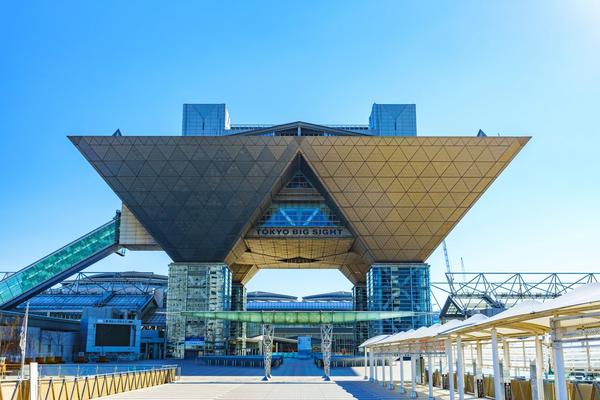
Comiket (コミケ) is the common name for the doujinshi convention "Comic Market." Doujinshi are self-published books by fans and individual creators. Held at Tokyo Big Sight in the Ariake district of Tokyo, it takes place twice a year, in mid-August in summer and at the end of December in winter. The organizers call it the largest doujinshi convention in Japan.
The most recent ones held have grown to a scale that draws a combined 250,000 to 300,000 people over a two-day run. C106, held in the summer of 2025, recorded a combined 250,000, and C107, that winter, a combined 300,000. C106 also drew participants from 71 countries and regions abroad.
At the heart of the venue is the sale of doujinshi by their creators, both individuals and the creator groups known as circles. Corporate booths related to anime and games line the hall, and cosplayers gather in a designated zone. Before the doors open, the waiting line stretches outside the building.
Origin
As noted above, Comiket is a shortened form of the name Comic Market. The company that runs it is Comiket Ltd. Each convention is referred to by the letter C followed by a serial number, and the most recent, in the winter of 2025, was C107.
The First Comiket, December 1975
The first Comiket was held on December 21, 1975. The venue was a meeting room in the Nihon Shōbō Kaikan, a fire-service hall in Toranomon, Tokyo, where 32 circles gathered and turnout is estimated at around 700 people.
It was organized by the manga criticism group Meikyū, and its first representative was Teruo Harada, a figure later also known by the pen name Takanaka Shimotsuki. Comic Market is said to have grown out of dissatisfaction with the way existing manga events were run.
The Venue Over the Years
The venue has changed as the event has grown in size. First, around 1980, the Tokyo International Trade Center in Harumi, Tokyo, became the main site. From 1989 the event used Makuhari Messe in Chiba three times, but in 1991 the venue's operators declined to allow further use, and Comiket returned to Harumi.
The move at C50, in August 1996, was to what is now Tokyo Big Sight. Since then, the event has not moved from this large exhibition hall on the waterfront.
Through COVID to the 50th Anniversary
The peak before the COVID pandemic came at C97, in December 2019. Over a four-day run, attendance reached a combined 750,000. C98, the next edition, planned for May 2020, was canceled as infections spread and was replaced by an online project called Air Comiket. From C99, in December 2021, the event resumed with entry limits in place.
For many years the event was led by Yoshihiro Yonezawa, who became its second representative in 1980. Since his passing in 2006, leadership has continued under a system of co-representatives. C107, in December 2025, became a milestone edition, 50 years from the first.
Usage Examples
- 1 A: "Did your circle get into natsu-comi?" B: "Yeah, day two, East halls. We're putting out two new books."
- 2 "I'm going to fuyu-comi as a general participant. I'll catch the first train of the morning to line up, then make the rounds of the circles I'm after."
- 3 "This is my haul from this Comiket. The books from the popular circles had sold out before noon."
Supplement
There Are No "Customers"
At the foundation of Comiket lies the idea that buyers are not treated as customers. The official Comiket Manual spells this out, stating, "There are no 'customers' at Comiket." Even those who come to buy doujinshi are called general participants.
Circles, cosplayers, companies, and staff are all equal in standing. The principle is that everyone at the venue supports it as an equal participant. Comiket is positioned as a place for amateur expression that does not put profit first.
Not a Generic Term
The word Comiket is not a generic term for doujinshi conventions. Comiket, Komiketto, and Comic Market are all registered trademarks of Comiket Ltd. The name refers strictly to this one specific event.
A notice released in December 2025 gave guidance on how the name should be handled. People are asked to refrain from calling a convention "such-and-such Comiket" when the Comic Market Preparatory Committee, the organizing body, has no part in it. The word is not intended to spread as a general term for conventions.
Natsu-comi, Fuyu-comi, and Related Terms
Depending on when it is held, the event is called either natsu-comi or fuyu-comi, the summer and winter editions. The August event is natsu-comi, and the December one is fuyu-comi. When pinning down an exact edition, people use the C number, as in C97 or C107.
Participants, too, are divided by role. Taking part to sell one's own work is circle participation, coming to buy is general participation, and joining in cosplay is cosplay participation. Because even those who come only to look are counted as participants, at Comiket people speak of "taking part" rather than "going."
Last Updated
Japanese
コミケ
Hiragana
こみけ
Table of Contents