Kameido Tenjin Sha
亀戸天神社
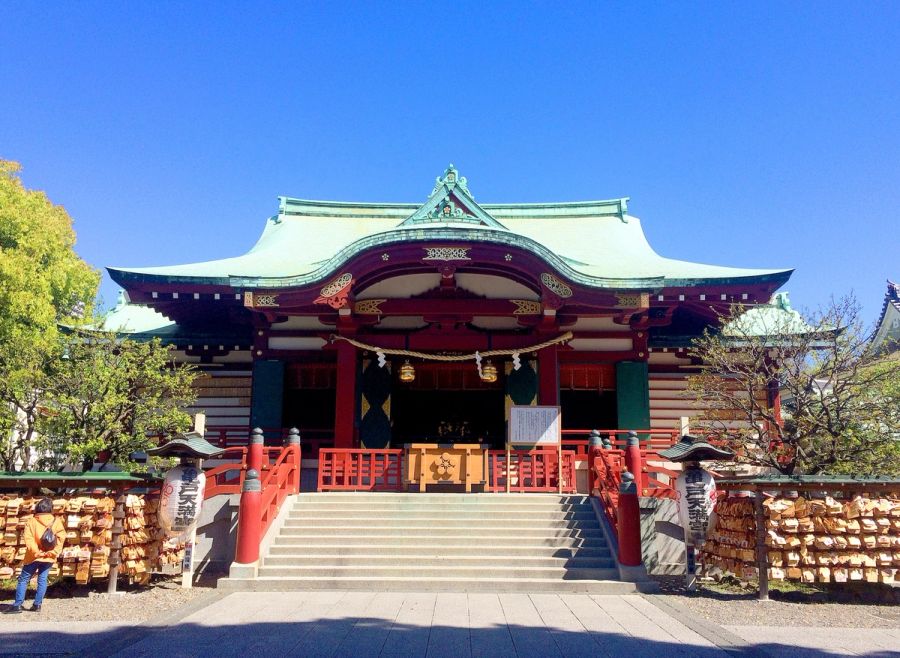
About Kameido Tenjin Sha
Kameido Tenjin Sha (Kameido Tenjin Shrine) is dedicated to Sugawara no Michizane, revered as the kami of scholarship. Founded in 1662 during the Edo period, it remains one of Tokyo's most important sites for Tenjin worship, drawing a steady stream of visitors. The shrine grounds, immortalized in woodblock prints by Utagawa Hiroshige and Katsushika Hokusai, become Tokyo's premier wisteria destination each spring.
The shrine is a 15-minute walk from the north exit of Kameido Station or Kinshichō Station on the JR Sōbu Line. From Oshiage Station, served by Tokyo Metro, Toei Subway, Keisei, and Tobu lines, the walk takes about 20 minutes. The grounds are open from 8:30 a.m. to 5 p.m., with no admission fee.
History and Tenjin Worship
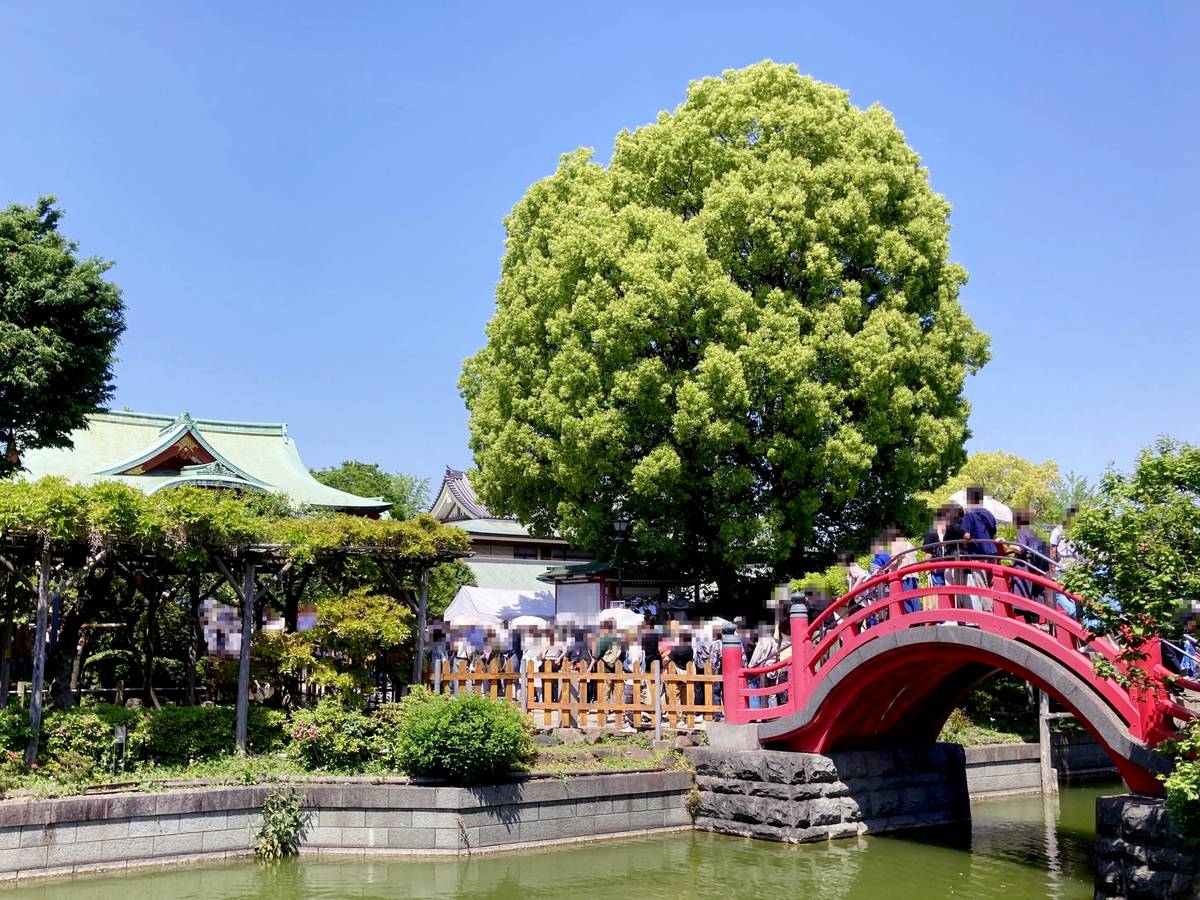
The shrine traces its origins to Sugawara Ōtorii Nobusuke, a priest at Dazaifu Tenmangū in Kyushu, who carved a statue of Tenjin from the legendary flying plum tree associated with Michizane and enshrined it at a small local shrine. The grounds were later built to mirror Dazaifu, with worship halls, a tower gate, and a heart-shaped pond, earning the name Higashi Dazaifu Tenmangū. After the Great Meireki Fire, the fourth shōgun Ietsuna donated the current grounds, and the shrine flourished further.
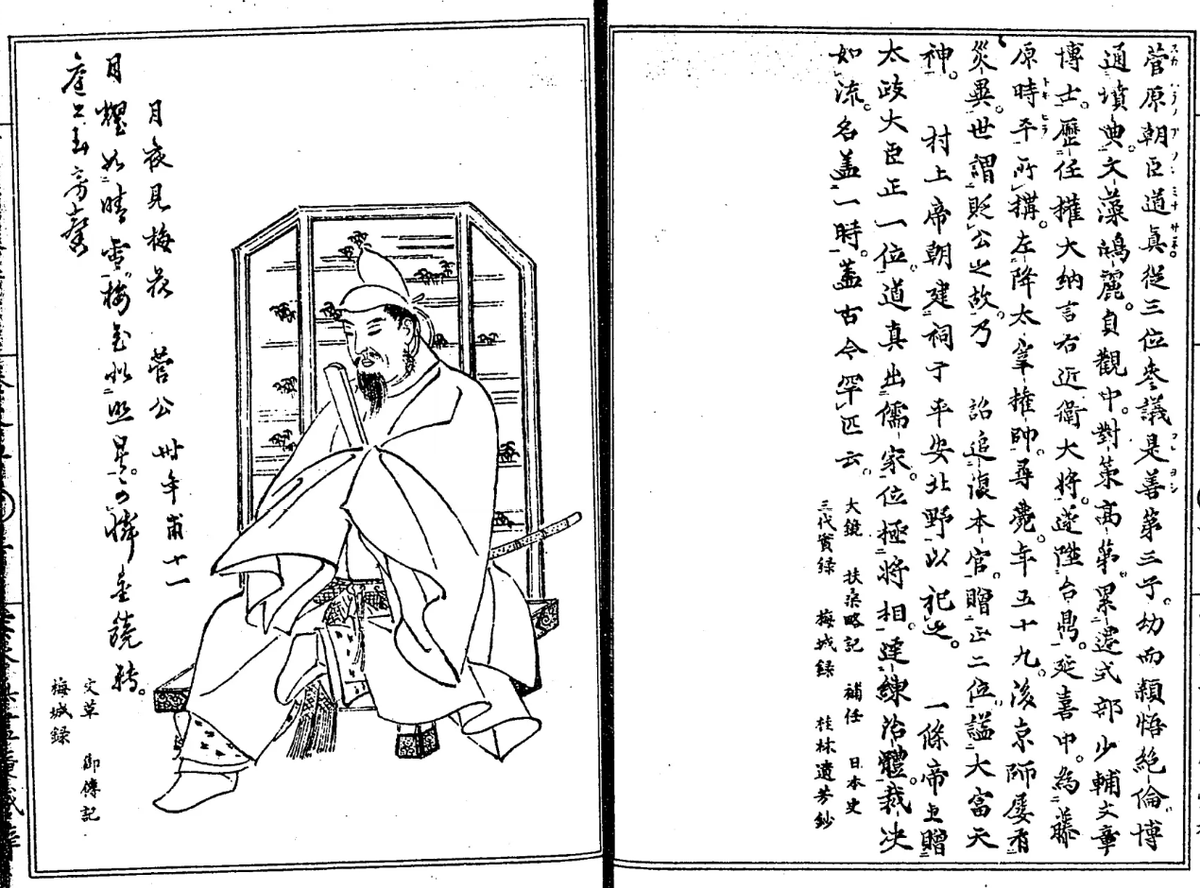
Sugawara no Michizane rose to the rank of Minister of the Right during the Heian period, only to be exiled to Dazaifu in Kyushu through political intrigue, where he spent the rest of his life. Though feared as a vengeful spirit after his death, he eventually came to be worshipped as Tenman Tenjin, the kami of learning and wisdom. This faith spread to common people during the Edo period through temple schools known as terakoya, and today roughly ten thousand Tenjin shrines stand throughout Japan.
The shrine also holds a distinguished place in the history of woodblock art. During the Ansei era, Utagawa Hiroshige depicted the shrine grounds in his series One Hundred Famous Views of Edo, capturing the drum bridge framed by wisteria trellises. Katsushika Hokusai also featured the drum bridge in Remarkable Views of Bridges in Various Provinces, a testament to how widely celebrated Kameido was among Edo's great landmarks.
Highlights of the Grounds
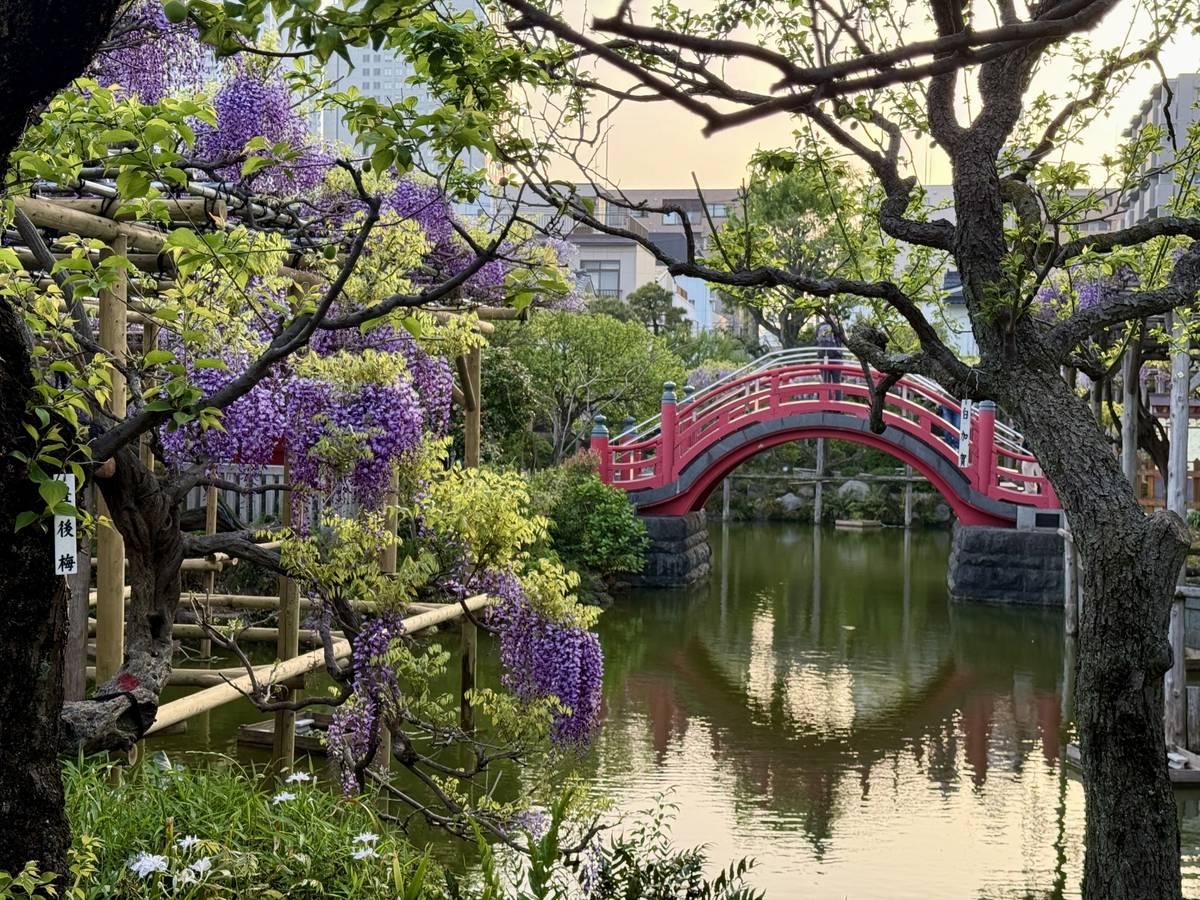
Beyond the main torii gate, a heart-shaped pond called Shinjiike stretches out before you. Three bridges span the water, known as the male bridge, the middle bridge, and the female bridge, representing past, present, and future in Buddhist thought. Visitors cross each bridge in turn, symbolically purifying themselves before approaching the main hall. From the top of the drum bridge, the wisteria trellises and turtles swimming in the pond come into full view.
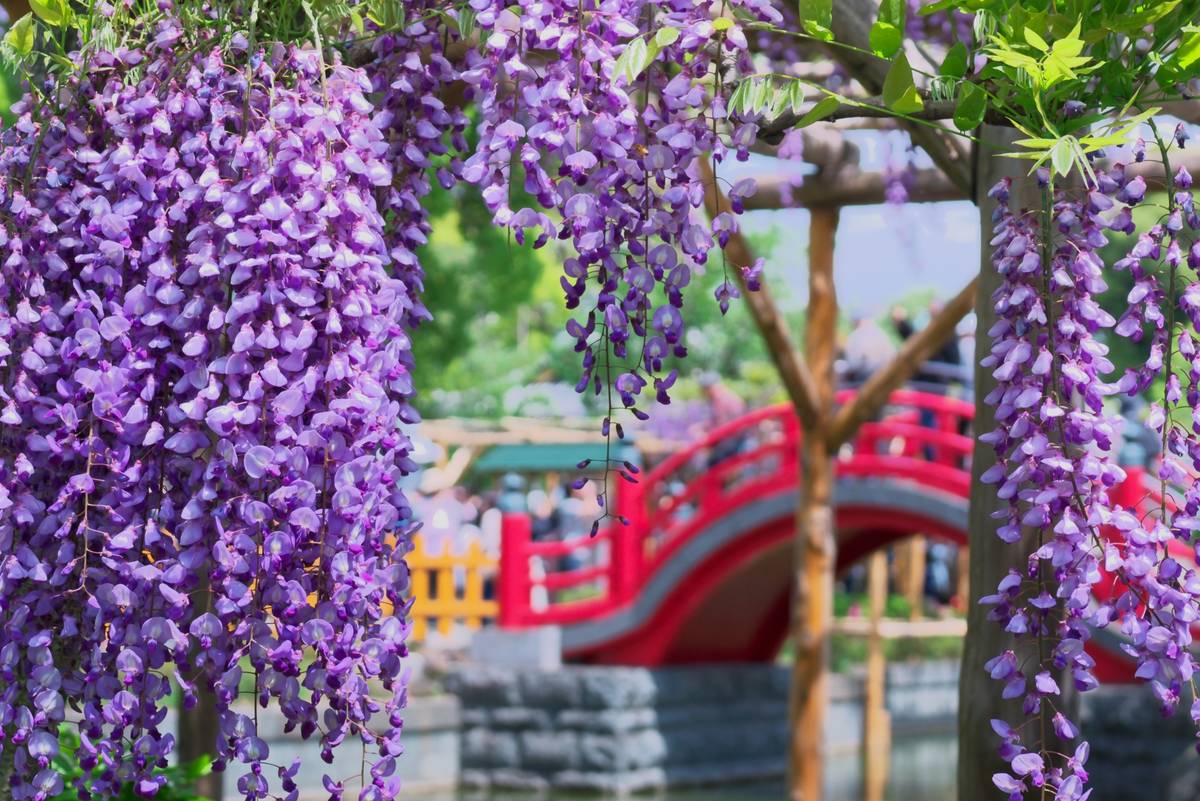
The Wisteria Festival is the signature event of spring. From early to late April, the trellises across the grounds shift from pale violet to deep purple, filling the air with a sweet fragrance. Evening illuminations run from sunset until 9 p.m., revealing the blossoms in an entirely different light. Earlier in the year, the Plum Festival runs from early February to early March, when over 250 plum trees bring color to the grounds as winter recedes.
A well-known New Year tradition is the Usokae Shinji ritual, held on January 24th and 25th. Visitors receive a small wooden carving of a bullfinch, called uso in Japanese. The exchange symbolically turns the previous year's misfortunes into falsehoods (also uso) and invites good fortune. It draws from the saying, "May last year's ills become uso, and true fortune take their place."
〒136-0071 3-chōme-6-1 Kameido, Koto City, Tokyo
Loading map...
Stories about this place
Discover stories and insights about Kameido Tenjin Sha
Last Updated: