What Is Hinamatsuri? Introducing Japan’s Girls’ Day, Hina Dolls, and Related Cultural Traditions
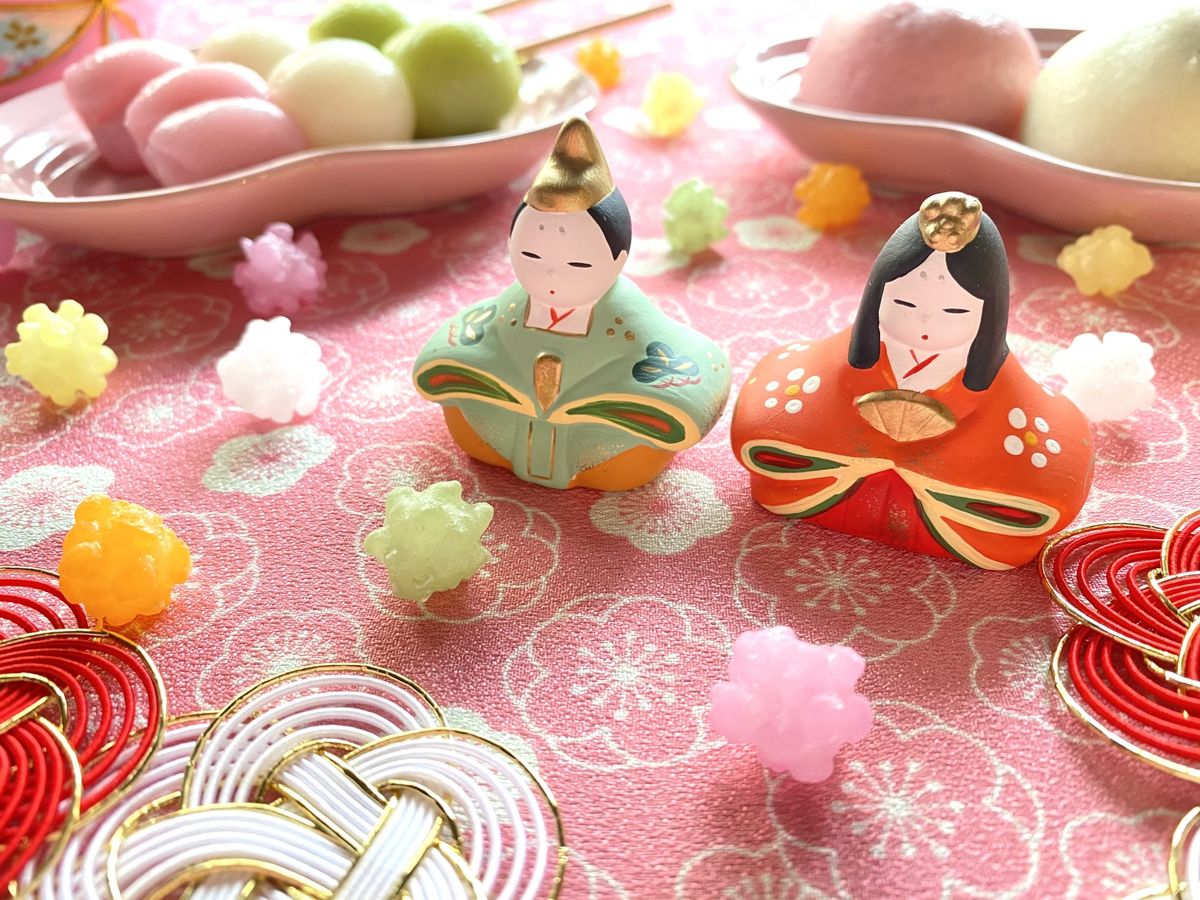
Hinamatsuri is one of the most iconic early spring festivals in Japan. Originating from ancient China, it has been celebrated in various forms for over 1,000 years.
This festival frequently appears in anime and manga. In this article, we will explore its basic concepts as well as the unique food traditions enjoyed on this special day.
When Is Hinamatsuri Celebrated?
Hinamatsuri takes place every year on March 3rd. It is an occasion to pray for the happiness and well-being of girls, and is also known as Momo no Sekku (Peach Festival). Families typically display hina dolls and enjoy seasonal treats like hina arare (small rice crackers).
Tango no Sekku: A Festival for Boys Too
You might find it strange that the celebration is only for girls. There is a separate festival dedicated to boys' healthy growth, held every year on May 5th. Called Tango no Sekku, it features displays of samurai armor and helmets, carp streamers (koinobori), and seasonal treats like kashiwa mochi (rice cakes wrapped in oak leaves).
Hina Dolls: The Heart of Hinamatsuri
Hina dolls are the centerpiece of Hinamatsuri decorations. Also called Ohina-sama, these Japanese dolls are characterized by their round, white faces and elaborate, colorful outfits.
Origins of Hina Dolls
In ancient Japan, people would transfer their kegare (spiritual impurity brought on by illness or death) and misfortune onto dolls made of paper or straw, then set them adrift on rivers. This custom eventually merged with hina-asobi, a form of play among aristocratic girls who used paper and wooden dolls for make-believe and dress-up. Together, these traditions gave rise to Hinamatsuri as a celebration of girls' health and growth. (The word "hina" can refer to a young chick just hatched from an egg, but it also carries the meaning of "small and adorable.")
Originally, nagashi-bina (above mentioned act of sending dolls along rivers) were made as stand-ins to absorb misfortune and protect girls as they grew up. Over time, however, the dolls became increasingly elaborate and people stopped sending them down the river.
Today, nagashi-bina is rarely practiced, partly due to environmental concerns. A few communities, such as Mochigase in Tottori City, Tottori Prefecture, still carry on the tradition, and the mesmerizing sight of dolls drifting downstream draws many visitors.
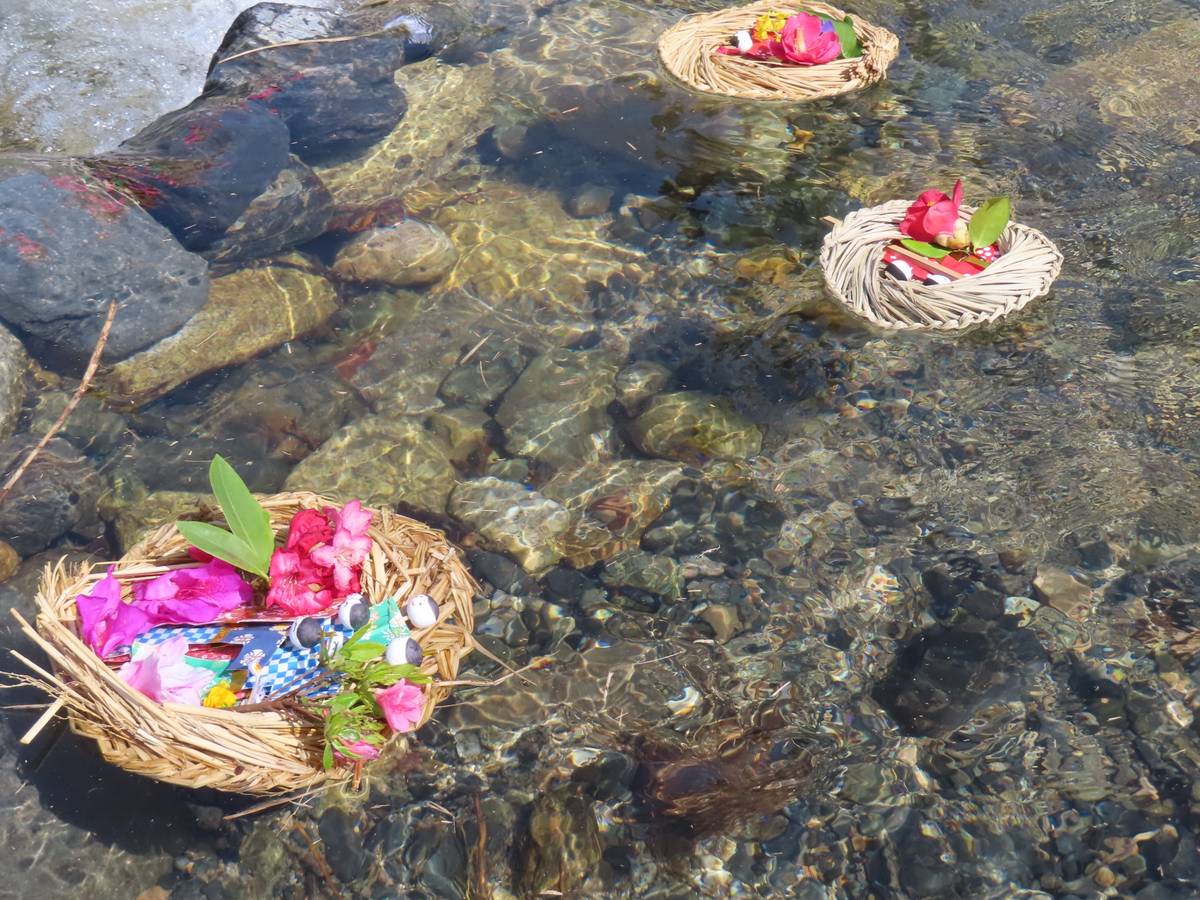
Nagashi-bina (floating dolls)
Types of Hina Dolls
Hina dolls come in two main regional styles: Kyo-bina from Kyoto and Kanto-bina from the Kanto (Tokyo) region. Kanto-bina tend to have more defined facial features. The placement of the dolls also differs between regions. Traditionally in Japan, the right side held higher status, so the male doll (obina) was placed on the viewer's right. This arrangement is still used in Kyoto and the surrounding Kansai area. After the Meiji era, Japan adopted the Western convention of placing the higher-ranking figure on the viewer's left, mirroring the positions of the Emperor and Empress. As a result, in the Kanto region, the female doll (mebina) is now on the viewer's right.
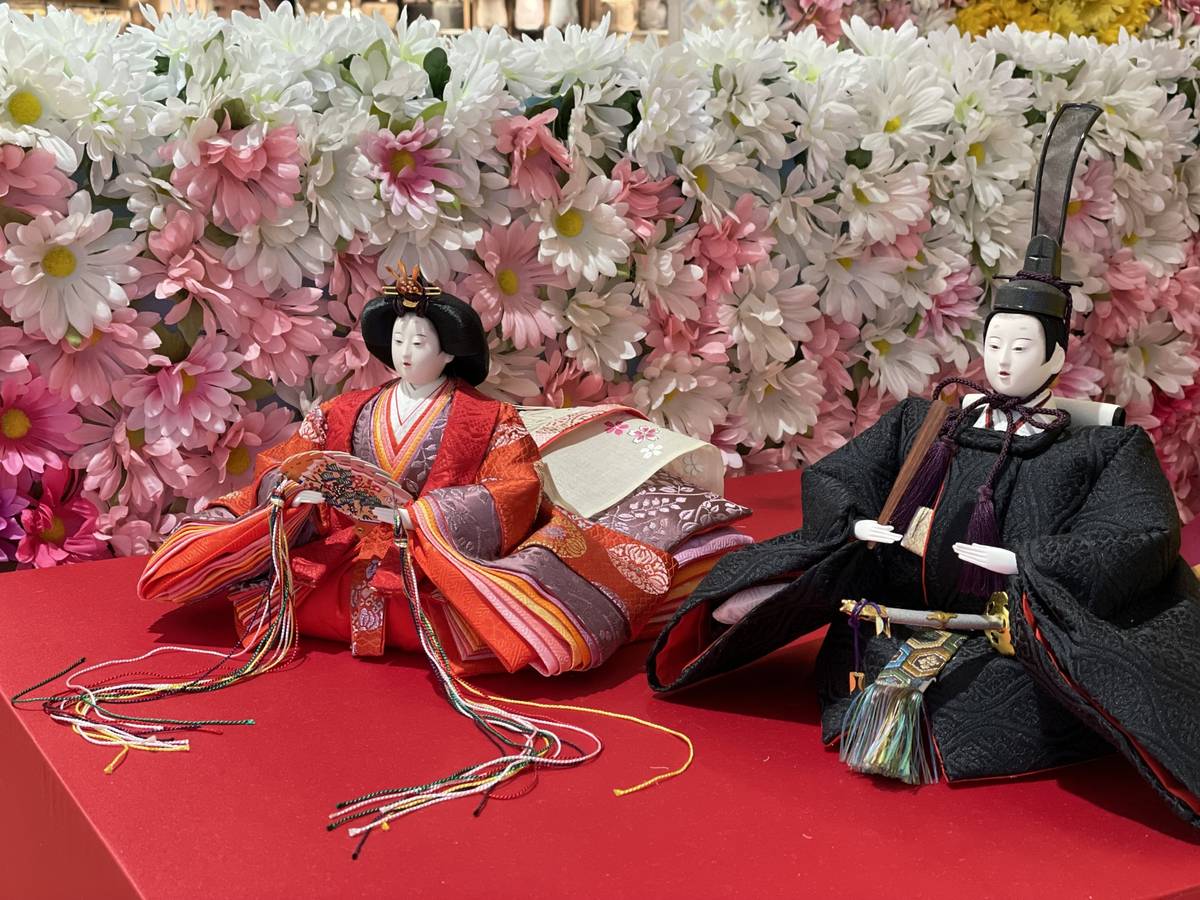
Kyo-bina (Kyoto-style hina dolls)
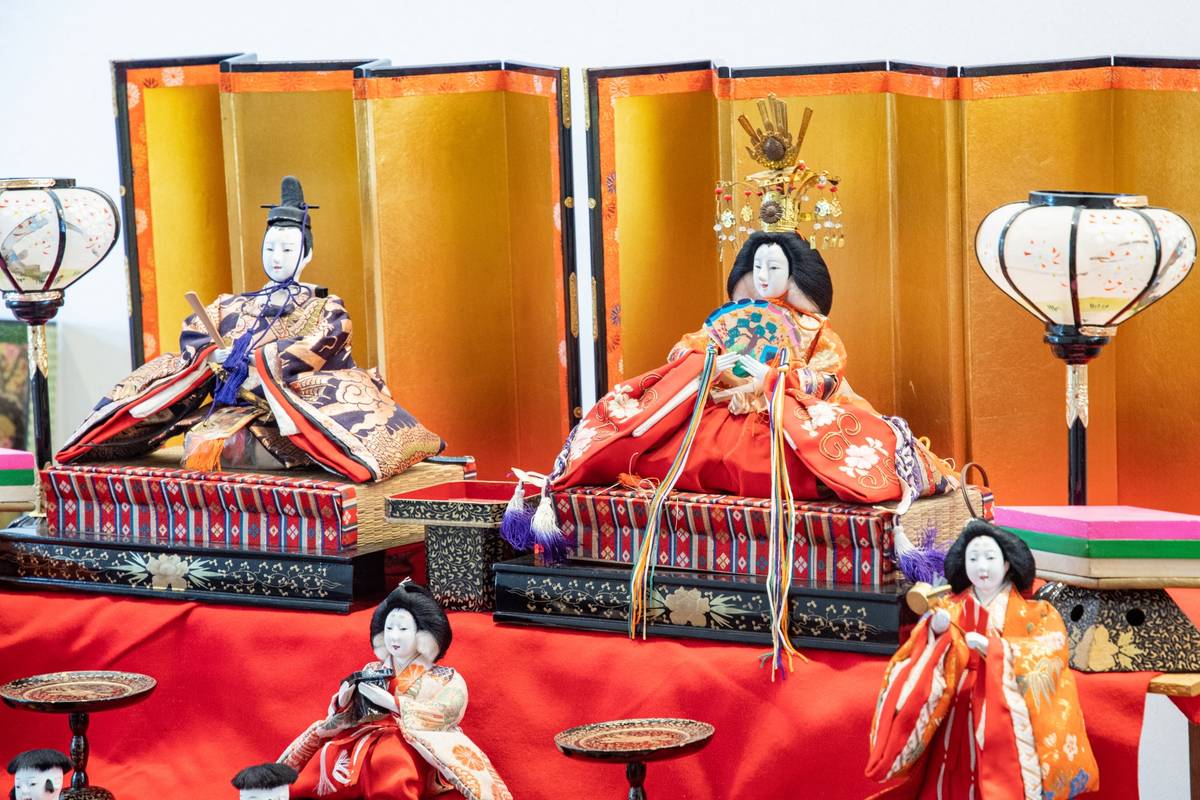
Kanto-bina (Kanto-style hina dolls)
Arrangement and Meaning of the Hina Dolls
The dolls started out as simple figures made of paper or straw, but as Hinamatsuri became more widespread, they grew increasingly elaborate; focusing on the obina and mebina dolls, the display came to represent a lavish imperial wedding ceremony. The obina symbolizes the Emperor, the mebina the Empress, and the figures on lower tiers serve as attendants and guards.
The most common configurations are the Shinno-kazari (Emperor and Empress only), along with three-tier, five-tier, and seven-tier displays. The dolls are arranged from highest to lowest rank, top to bottom, with bridal trousseau items on the bottom tiers.
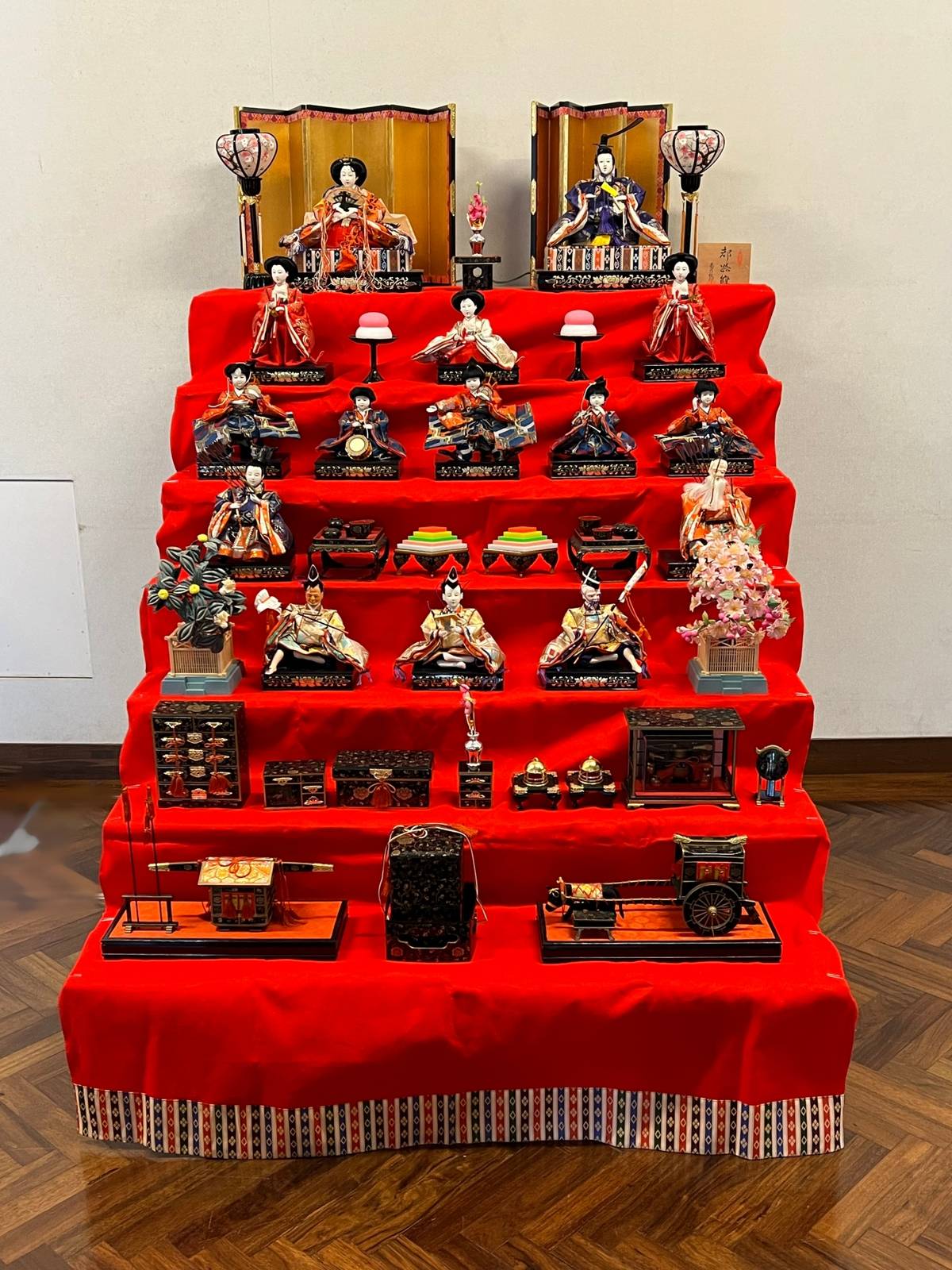
Seven-tier display
Top Tier: Shinno
The Dairi-bina (imperial pair comprised of the obina and mebina) are the most important figures in the display. They are modeled after the Emperor and Empress of the Heian period (794–1185) and wear aristocratic attire of that era: hakama and eboshi for the Emperor, and the layered juni-hitoe kimono for the Empress. Symbolizing a harmonious marriage and a peaceful life, they occupy the highest and most prestigious tier.
A display featuring only these two dolls along with miniature lanterns (bonbori) and a folding screen (byobu) is called a Shinno-kazari. Compact enough to fit on a dresser or shelf, this style has become the most popular choice in modern Japan, where smaller households are the norm.
Second Tier: San-nin Kanjo
The San-nin Kanjo are attendants who care for the Empress. Each holds an item used during the wedding ceremony.
The figure on the far left (from the viewer's perspective) holds a hisage, a kettle-like vessel with a spout used for carrying and warming water or sake.
The figure in the center holds a sanpo, a small tray for serving food, symbolizing a prayer for abundance. This item is the highest-ranking of the three, and the doll holding it is considered the leader of the court ladies. This figure may also feature ohaguro (blackened teeth) and hikimayu (shaved eyebrows redrawn higher on the forehead). These beauty practices might look eerie to modern eyes, but in Heian-era Japan, jet-black teeth and high-drawn eyebrows were considered marks of beauty and signs of adult status and responsibility.
The figure on the far right holds a nagae-choshi, a long-handled ladle used to pour sake from the hisage into cups.
A display that adds the San-nin Kanjo to the Shinno-kazari is called a three-tier display (Sandan-kazari), striking a balance between elegance and practicality.
Third Tier: Go-nin Bayashi
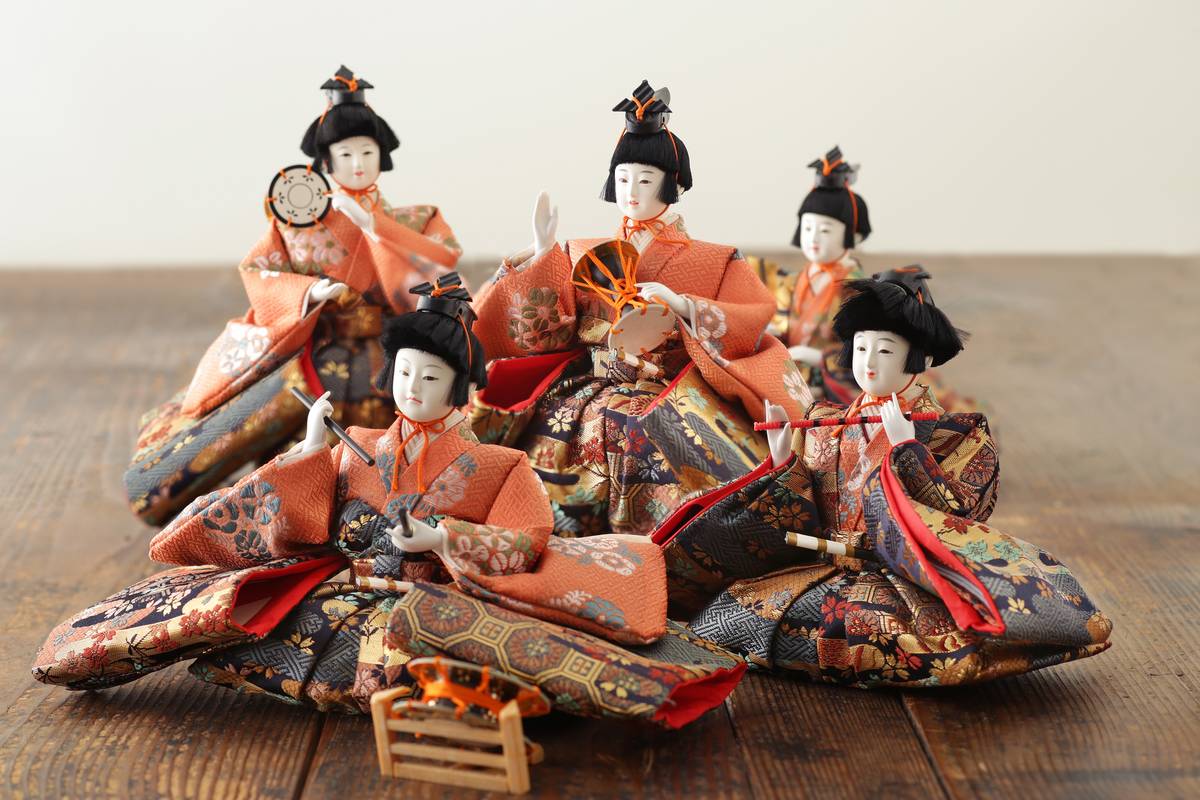
This row of five musicians perform before the imperial couple, providing music for the wedding banquet. They are typically depicted as young boys who have not yet undergone genpuku (the coming-of-age ceremony held between ages 11 and 17), and they hold instruments used in Noh theater or gagaku (traditional court music).
Noh-Style: Go-nin Bayashi
This ensemble consists of one ji-utai (chorus singer) and four hayashi-kata (instrumentalists). The instruments are a bamboo flute, a ko-tsuzumi (small hand drum held on the shoulder), an o-tsuzumi (a slightly larger hand drum), and a taiko (a drum played sitting down using drumsticks).
Gagaku-Style: Go-Gakunin
Some displays feature Go-Gakunin (five court musicians) instead of Go-nin Bayashi.
This ensemble includes players of a transverse flute, a vertical flute, a kaen-daiko (flame-decorated drum played upright), a sho (a reed instrument made of thin bamboo pipes arranged in a circle), and a kakko (a small drum serving as the conductor's instrument). The easiest way to tell them apart from Go-nin Bayashi is to look for the distinctive large kaen-daiko. In seven-musician configurations, a koto (zither) and biwa (lute) are also added.
Fourth Tier: The Zuishin
This pair of ministers serve as bodyguards for the Dairi-bina. They are individually commonly called Udaijin (Minister of the Right) and Sadaijin (Minister of the Left), thanks to the well-known children's song Ureshii Hinamatsuri, which includes a line about "the red-faced Minister of the Right." Contrary to the song, however, the red-faced doll is actually the Sadaijin (Minister of the Left), an elderly figure representing wisdom and learning. The Udaijin (Minister of the Right) is a young man representing martial strength. As with Kyo-bina, the Sadaijin on the viewer's right holds the higher rank.
Despite being called "ministers," the Zuishin were actually lower-ranking officials tasked with bodyguard duties. This is why they are placed on a lower tier in the hierarchy.
Fifth Tier: Shicho / Eji
These soldiers handled miscellaneous duties at the imperial court. They hold items such as umbrella and shoe stands, brooms, and dustpans. From left to right (viewer's perspective), they are arranged to show "anger," "sorrow," and "laughter," symbolizing the richness of human emotion.
The five-tier display features all the dolls without the trousseau items. It preserves the full traditional cast while keeping the display more compact than a seven-tier set.
Sixth and Seventh Tiers: Trousseau Items
These tiers display items that a Heian-era noblewoman would bring to her marriage: a chest of drawers, a mirror stand, tea utensils, a gosho-guruma (ox-drawn carriage), and more. They express the wish for the girl to live a prosperous and happy life.
Traditional Hinamatsuri Foods and Sweets
Specific dishes vary by region and household, but here are the most well-known Hinamatsuri foods enjoyed across Japan.
Hishimochi
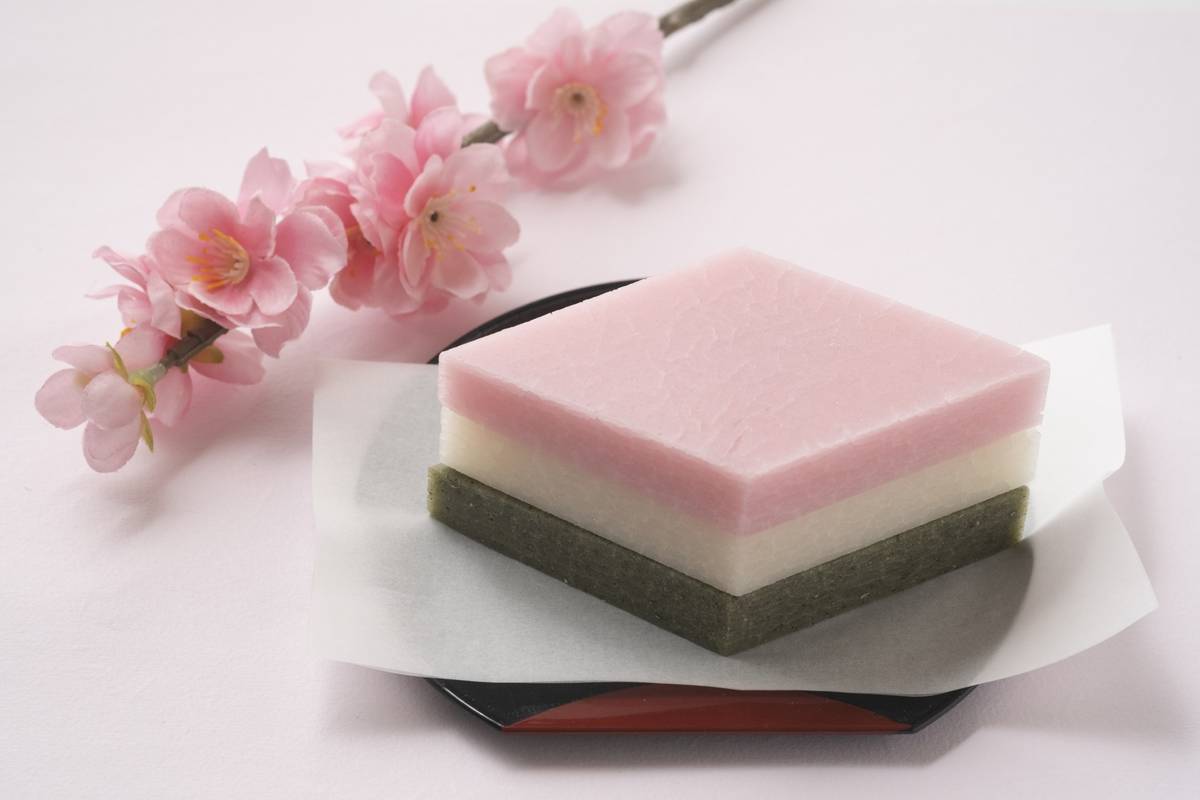
Hishimochi / The photo shows a standard type made from glutinous rice
Hishimochi are diamond-shaped rice cakes in three colors: pink, white, and green. Pink is said to ward off evil spirits, white symbolizes the prosperity of descendants, and green represents good health. The layered colors also evoke the arrival of spring: white snow, green shoots, and pink peach blossoms. Traditionally made from glutinous rice in a uiro-style form, hishimochi now come in modern variations including okoshi (puffed rice bars), yokan (sweet bean jelly), and jelly, making them easier to eat.
Hina Arare
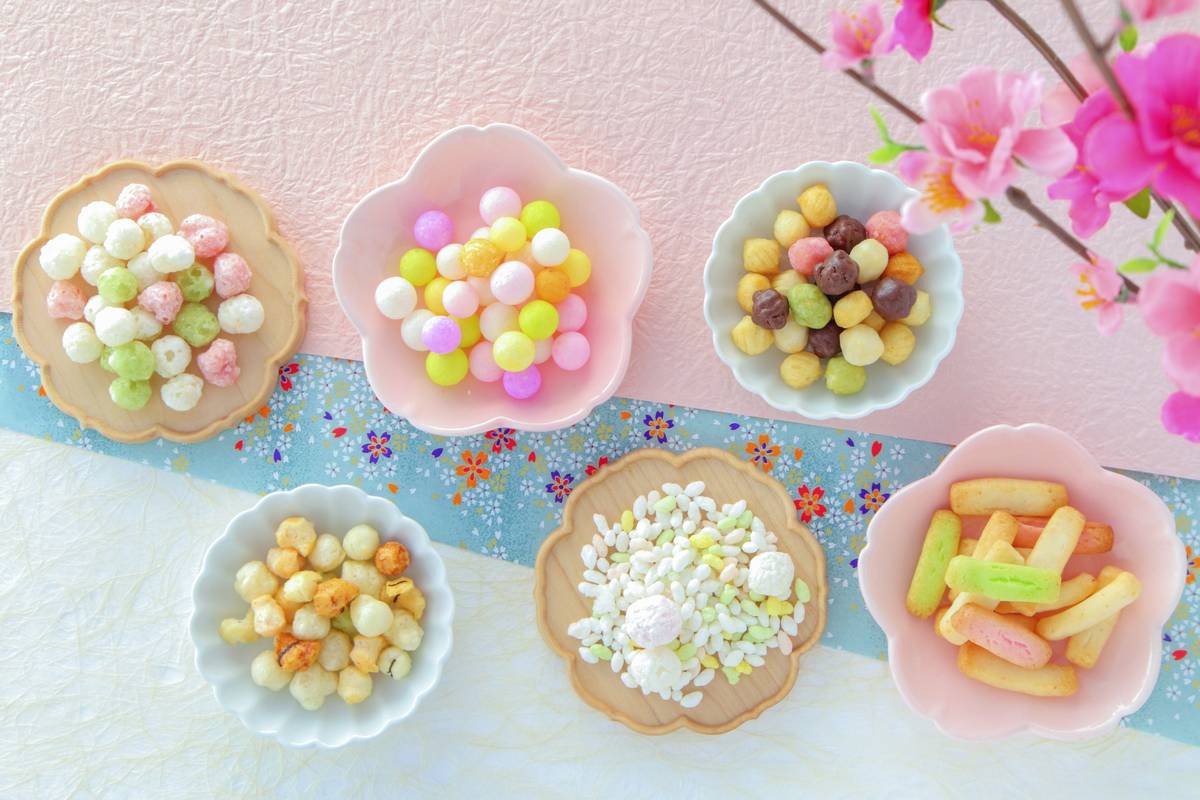
Hina arare / From Kanto-style and Kansai-style to creative varieties, many types are available
Kanto-style hina arare are puffed rice snacks coated in sugar and tinted in pastel colors, with a light, crispy texture and gentle sweetness perfect as an afternoon treat. Kansai-style hina arare, on the other hand, are savory rice crackers flavored with soy sauce or salt, often mixed with seaweed and shrimp crackers. Some creative varieties even come in mayonnaise flavor. They pair well with drinks and are enjoyed as a casual snack.
Sakura Mochi (Cherry Blossom Rice Cakes)
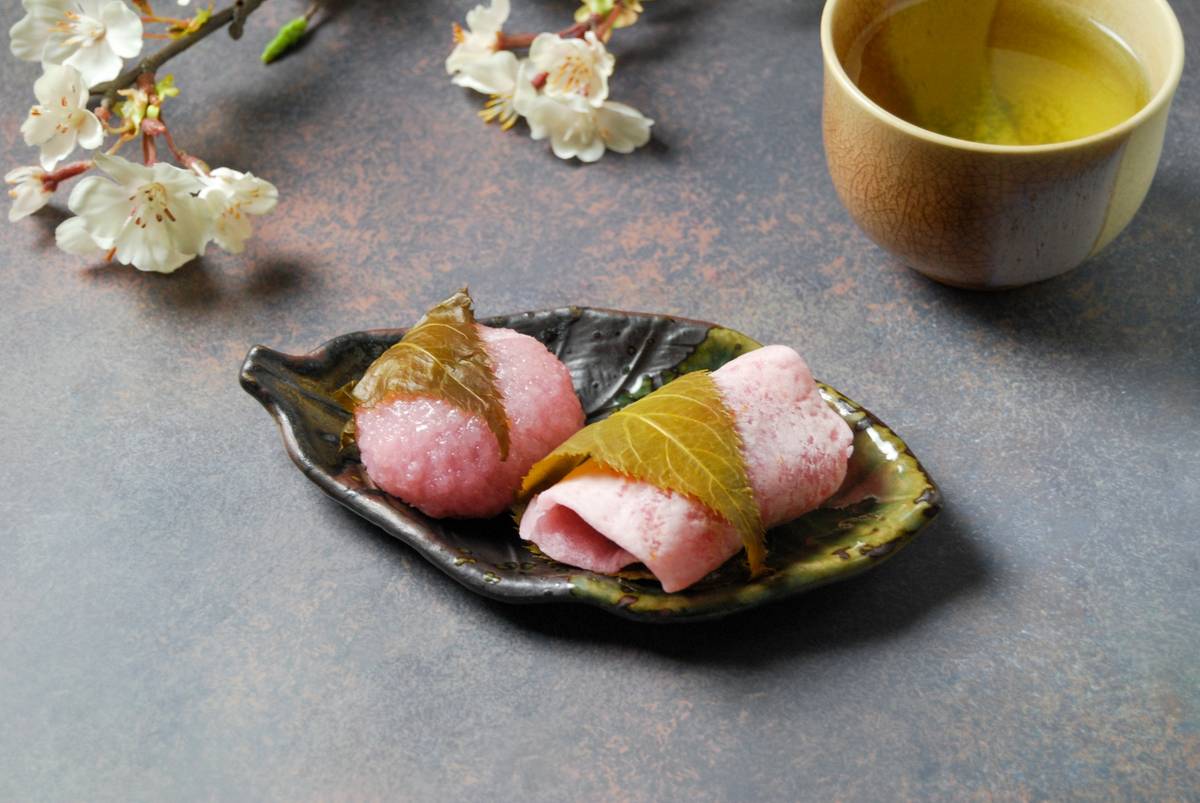
Sakura mochi / Domyoji (Kansai-style) on the left, Chomeiji (Kanto-style) on the right
Sakura mochi come in Kanto-style and Kansai-style versions, and lively debates sometimes arise over which one people prefer.
The Kanto version, called Chomeiji, wraps smooth red bean paste (koshi-an) in a thin, crepe-like skin made from wheat flour, then finishes it with a salted cherry leaf. The dough tends to be understated, letting the smooth bean paste take center stage. Some shops make a chewier, more substantial dough that tastes almost like a cherry-scented dorayaki.
The Kansai version, called Domyoji, uses coarsely ground glutinous rice (domyoji-ko) to wrap the bean paste, then finishes it with a salted cherry leaf. Its chewy, slightly grainy texture is similar to ohagi (another traditional rice cake). Depending on the shop, you may find either smooth or chunky bean paste, offering different texture experiences.
Note: The leaf wrapped around sakura mochi is safe to eat. If you prefer not to eat it, you can simply remove it before eating. Even without the leaf, the delicate aroma it imparts enhances the mochi’s natural sweetness, allowing you to fully savor its flavor. In contrast, the oak leaf on kashiwa mochi (eaten during Tango no Sekku in May) serves an antibacterial and aromatic purpose and is not meant to be eaten. It is not harmful, but it is tough and bitter, so it does not complement the mochi the way a cherry leaf does.
Shirozake (Sweet White Sake)
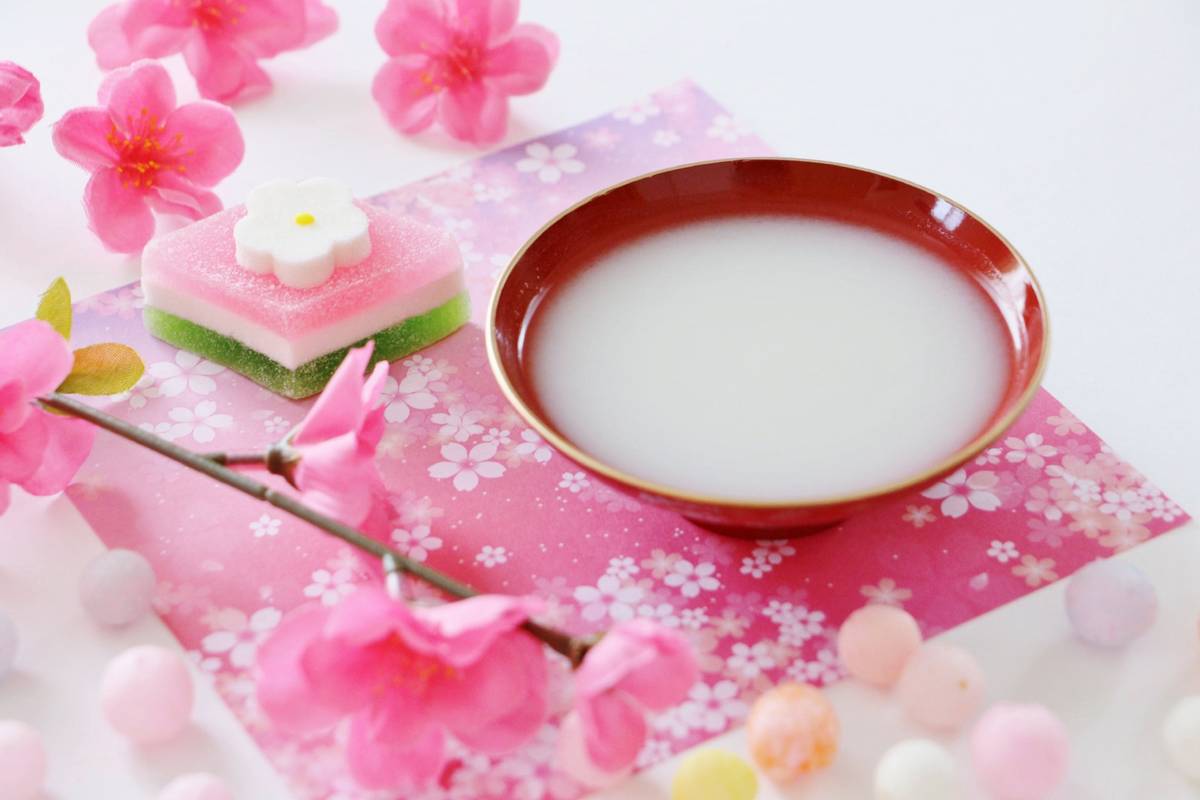
Shirozake / Both alcoholic and non-alcoholic versions are available
Shirozake is a cloudy sake made by mixing steamed rice and koji (rice malt) with shochu (distilled spirit) or mirin (sweet rice wine), then aging the mixture. With an alcohol content of about 9% and a sweet flavor, it was traditionally considered a drink for women and children. Today, non-alcoholic versions and amazake (sweet fermented rice drink) are widely available for children and those who prefer not to drink alcohol.
Note: There are other alcoholic beverages that also go by the name “shirozake,” so be careful not to confuse them.
One is shirozake (also read shiroki or shirosasa), a clear sake made from new rice used as an offering to the gods. Another is baijiu, a Chinese distilled spirit also known as paikaru in Japanese. These are entirely different drinks from Hinamatsuri shirozake.
Chirashi-zushi
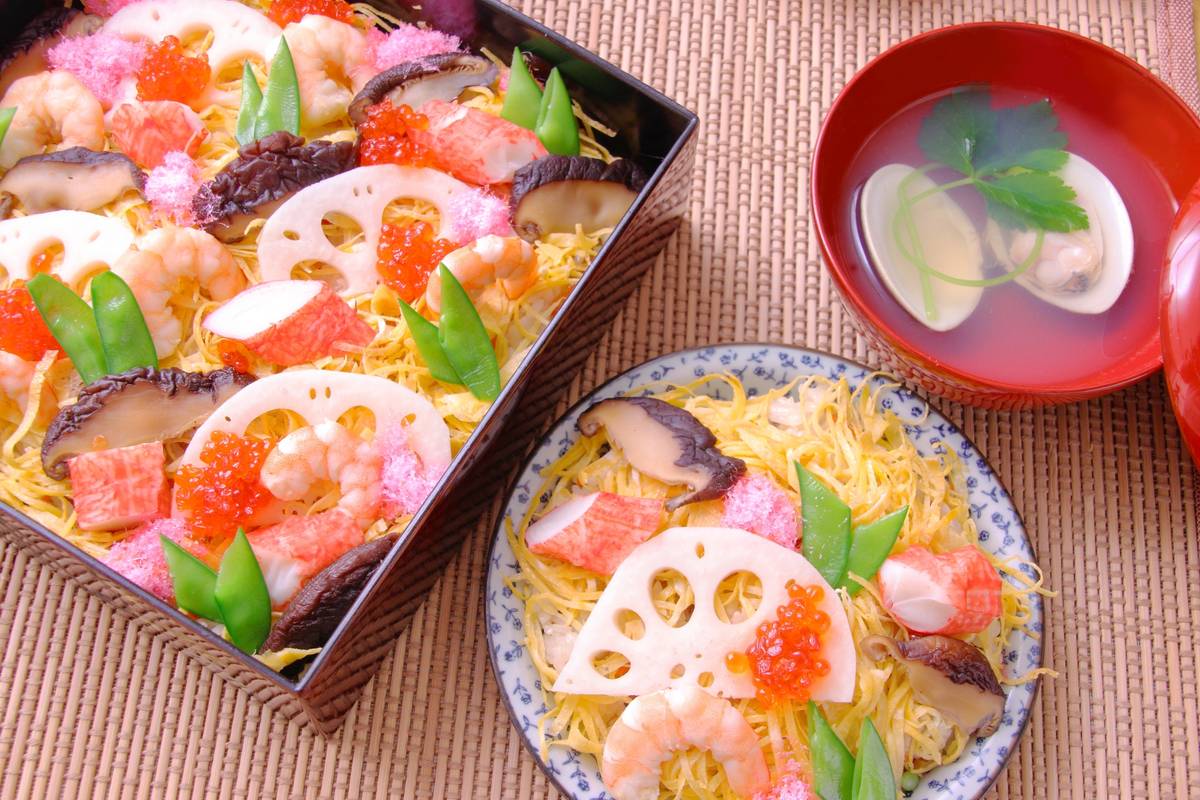
Chirashi-zushi / Colorfully prepared with green beans, carrots, shredded egg crepe, and more
Chirashi-zushi is a home-style dish made by topping or mixing seasoned sushi rice with a variety of ingredients. Common additions include dried shiitake mushrooms, kanpyo (dried gourd strips), lotus root, bamboo shoots, and carrots mixed into the rice, with shrimp, conger eel, green beans, shredded egg crepe (kinshi tamago), and shredded nori seaweed on top. Relatively easy to make and visually festive thanks to its colorful toppings, chirashi-zushi has become a go-to dish for celebrations. At sushi restaurants, you can find variations like Edomae chirashi (topped with tuna, white fish, shellfish, and salmon roe) and bara-chirashi (topped with finely diced sushi toppings and fish).
Hinamatsuri in Anime and Manga
Because of its association as a "girls' festival," March 3rd is a popular birthday choice for anime and manga characters who have cute or endearing qualities, regardless of gender. Hinamatsuri also frequently appears as a seasonal event in stories set in Japanese schools or everyday life, serving as a marker of spring.
Related Characters and Works
Touhou Project: Kagiyama Hina
In the Touhou Project game series, Kagiyama Hina is a yokai who draws her power from nagashi-bina, the dolls that humans cast away to transfer their misfortune. While Hina herself is friendly toward humans, she is avoided by both humans and yokai because being near her brings bad luck, making her a somewhat tragic character. References to nagashi-bina and hina dolls appear in her in-game titles and spell cards.
Hinamatsuri (Manga/Anime)
This series has no direct connection to the Hinamatsuri festival itself. Its title is a wordplay on the name of the main character, a girl named Hina. A comedy manga by Otake Masao, it was serialized from 2010 to 2020 and collected in 19 volumes. The story follows the daily life that unfolds after Hina, a girl with psychic powers, suddenly appears in the apartment of a young yakuza member named Nitta.
Hina Dolls as a Popular Motif
In calendar illustrations and monthly promotional artwork, anime characters are sometimes dressed up as hina dolls. Usually, the main hero and heroine, or a romantic couple, are placed in the role of the Dairi-bina.
The San-nin Kanjo, Go-nin Bayashi, and guards are often assigned to teams, siblings, or groups of characters whose numbers match, or to characters whose personality traits fit the roles of attendants, musicians, or guards.
Sakura Mochi as a Character's Favorite Food
Sakura mochi appears as a favorite food for various anime and game characters. Examples include Sakura Bakushin O from the mobile game Uma Musume Pretty Derby and Shinobi Anko, a Japanese-themed character from the arcade music game pop'n music series. In the manga and anime Demon Slayer: Kimetsu no Yaiba, the Love Hashira Kanroji Mitsuri is said to have eaten so much sakura mochi that her hair turned pink and green.
Published Last Updated
Related Articles
Explore more articles on similar topics and deepen your knowledge of Japan.