Otaku Girls Explained: Meaning, Types, and Fashion Trends

Ayana Sasaki
From Yokohama
This article explores the meaning of the term “otaku girl” and introduces how they are perceived in Japan, the cultural heartland of otaku culture.
Please note that some parts of this article reflect the author’s own interpretations, based on observations gathered over many years of navigating online communities.
What is an Otaku Girl in Japan?
The term refers to women who are otaku, primarily fans of subculture content such as anime, manga, and games. While overseas, it mainly centers around fans of Japanese anime, in Japan, the term "otaku" often describes someone who passionately collects information about a specific person or genre, not limited to anime.
As the word "girl" suggests, both in Japan and overseas, the term is generally used to refer to younger female otaku. In Japan, otaku interests span across all ages, so there is also the term "otaku onna" (otaku woman) which refers to adult female otaku.

Types of Otaku Girls
In Japan, "otaku girls" or "female otaku" can be categorized into several types. Some individuals may fall into multiple categories.
オタク / Otaku
First is the general "otaku." This category includes women who are passionate about specific works, characters, actors, artists, or anything they deeply love.
The categories described below can be understood as more specific subgroups within this broader otaku category. However, not everyone necessarily fits into a particular subtype.
腐女子 / Fujoshi
These are female otaku who enjoy male-male romance (BL/yaoi/bara). The term began as a self-deprecating play on the word "婦女子" (fujoshi, meaning woman), replacing it with "腐" (fu, meaning rot). Most are not particularly interested in actual homosexuality, and their focus is typically on fictional characters from boys' manga, anime, and other fictional works.
There is a vibrant culture of using coded language and abbreviations to ensure their fan creations or fantasies don't reach the eyes of original creators or real people (in cases involving real individuals). This can be challenging for foreign otaku to understand. There are also numerous unspoken rules unique to the fujoshi community that can be considered "implicit understandings."
姫女子 / Himejoshi
These are female otaku who enjoy female-female romance (GL/yuri). They may also be called "yuri-joshi." These women simply enjoy romantic stories between cute girls and aren't necessarily lesbians themselves. Compared to fujoshi, the community is smaller and has fewer unspoken rules.
Those who enjoy BL and heterosexual romance alongside yuri are often called "omnivores" and are more commonly labeled as fujoshi or simply otaku girls. The term "himejoshi" specifically applies to female otaku who specialize in yuri content.
夢女子 / Yumejoshi
These are female otaku who enjoy fantasizing about romance between themselves and fictional characters or real idols they admire. In the past, they were often confused with fujoshi.
They self-insert as otome game protagonists or partake in "yume novels" where the protagonist's name can be changed at will. Some even go as far as staging their living environment as if they were cohabiting with their favorite character.
It's almost a ritual for the yumejoshi community to erupt in chaos when an otome game protagonist, previously lacking detailed depiction, receives a face design and name during anime adaptation.
声オタク / Koe Otaku or Sei Otaku
These are fans of voice actors/seiyuu who voice anime characters. While loving anime works and characters like regular anime otaku, they also follow voice actors' radio shows and stage performances. Their motivation for watching anime is often the voice actors, which tends to result in them watching a wider variety of genres.
歴女 / Rekijo
These are women who love history. Their expertise spans various fields including the Warring States period, Three Kingdoms, European history, the end of the Edo period, Buddhist statues, military commanders, and castles.
In recent years, games like Dynasty Warriors, Sengoku BASARA, Hakuoki, and more recently Fate Grand Order and Touken Ranbu have led many to dip their toes into the "swamp of history." Many simply love history, so they aren't necessarily 2D otaku.
The culture of pilgrimages to places associated with favorite characters or historical figures is also popular among them.

ジャニオタ / Johnny's Otaku
These are female otaku who support idols who debuted from Johnny & Associates, Inc., a talent agency that produced numerous popular male idol groups.
They include fans of major idol groups like Shonentai, SMAP, NEWS, Arashi, Kanjani∞, Snow Man, and many others who support Johnny's Jr. members who haven't officially debuted yet.
After the death of the agency's representative, Johnny's office faced various troubles and has now been reborn as a different agency. It's very interesting to see whether the term "Johnny's otaku" will fade away or somehow remain in use.

Physical Characteristics of Otaku Girls
Here, we’ll introduce characteristics divided by appearance related traits, including personal observations. This section brings together a rather mixed range of elements, including commonly held perceptions, attributes with established names, and otaku girl archetypes that are popular in fiction.
This is based on Japanese otaku girls, so if you live overseas, you can imagine the differences and compare.
Ordinary Girls
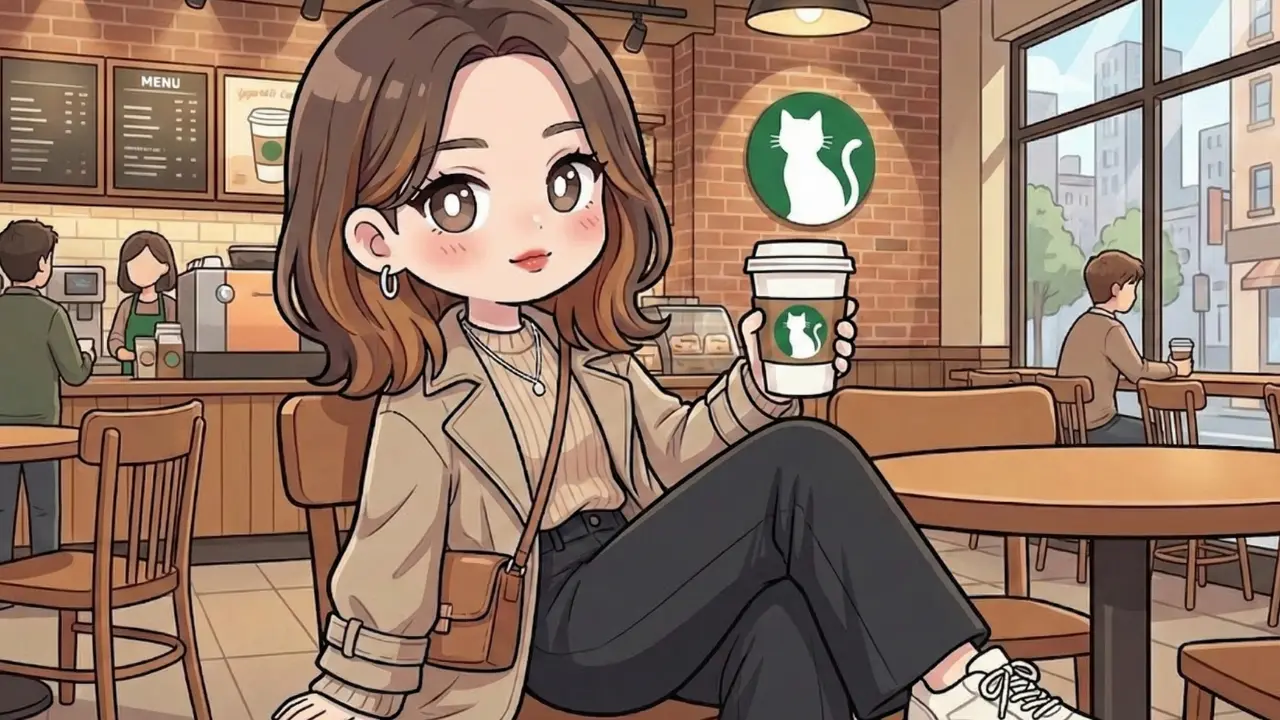
Perhaps the most common among otaku girls. They take normal care of their appearance, making it difficult to identify them as otaku at first glance. They might choose to wear items with their favorite character or idol’s signature colors, or other conceptual items.
Even if they do not necessarily want a personal connection, a wish to feel “on par” with the person they admire can motivate them to put great effort into their appearance when going to events.
“Plain” Girls

Rather than seeking attention for themselves, this type is driven by deep affection for the works they love. Many are introverted and self-effacing, but when communicating through text—or once they feel comfortable—their originality and sense of humor often make interactions surprisingly fun.
Subculture Girls

Common among young women. They might be similar to the "goth" style in the US. They often have flashy hair colors, wear large headphones when going out, or are particular about their makeup. Their personalities can be either downbeat or upbeat, but they often have standout fashion.
Jirai-kei (“Landmine”) Girls
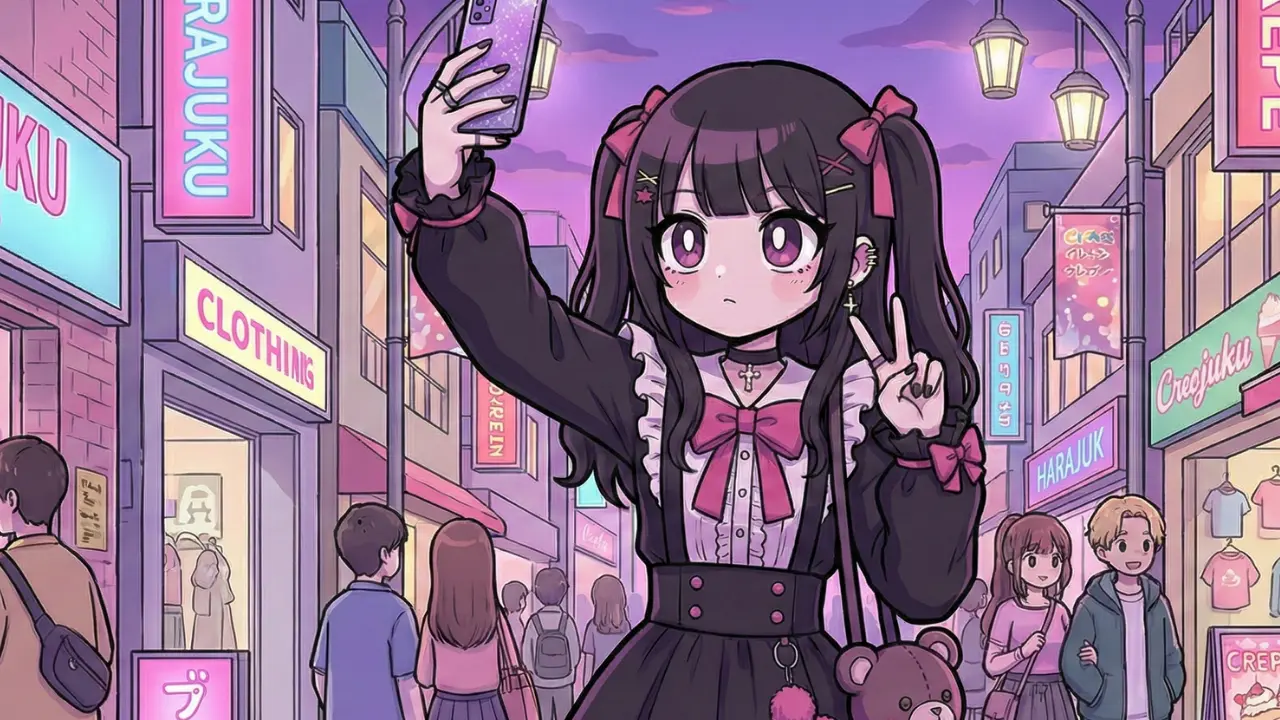
This is a category that has even begun to gain recognition overseas under the name “jirai-kei.” Many girls associated with this style are devoted fans of a particular character or public figure. While most simply enjoy the fashion and aesthetic itself, some openly identify as “true jirai-kei”, a term they use to express that they struggle with mental or emotional challenges.
Related Terms for Otaku Girls
Here, we’ll introduce Japanese terms that describe women involved in otaku culture, though they don't necessarily apply to all otaku girls.
Cosplayer
This refers to people who cosplay. While the hobby has a higher proportion of women, the term "cosplayer" is used regardless of gender. The majority do cosplay because they love the works and characters and want to embody those characters, but some simply do cosplay for attention.
People who cosplay out of love for the work often pay attention to facial expressions and mannerisms. With the rise of social media, cosplayers themselves have gained influence, and it's no longer uncommon for them to appear at events as official cosplayers.
Kameko: Photographing Cosplayers
Incidentally, people who enthusiastically take photos of cosplayers are called "kameko." Originally an abbreviation of "camera-kozo," it referred to men carrying SLR cameras for photography, but now it's used regardless of gender.
Otasa no Hime (Princess of an Otaku Circle)
The term mainly refers to a woman who is the sole female member surrounded by many men, most commonly within university-based otaku hobby circles. It is generally used to describe an “unpolished woman who struggles to build friendships with other women and instead joins a group of socially inexperienced men, where she is doted on like a ‘princess.’” At the same time, it also serves as internet slang that pokes fun at the male group itself—men who, simply because she is a woman close to them, develop feelings and excessively idolize her.
In the past in Japan, women tended to hide their otaku interests. Most cases probably involved women who bravely joined otaku circles and ended up becoming the "princess" of the circle… an unavoidable situation. However, many cases resulted in the breakdown of friendships due to romantic complications, making them objects of ridicule online.
Otaku ni Yasashi Gyaru (Gal Who Are Kind to Otaku)
This is an attribute that remains persistently popular in anime and manga. While they must exist, it's rare to encounter them in real life because they operate in different spheres. However, there are plenty of otaku women who love fashion and are dedicated to self-improvement, and cases of fashionable otaku women becoming friends with each other are very common.
In fan fiction, there are types who have no interest in otaku culture (e.g., Momo from Dandadan) and types who are otaku themselves (e.g., Marin from My Dress-Up Darling).