Kimono Basics: What You Need and How to Wear Them Well
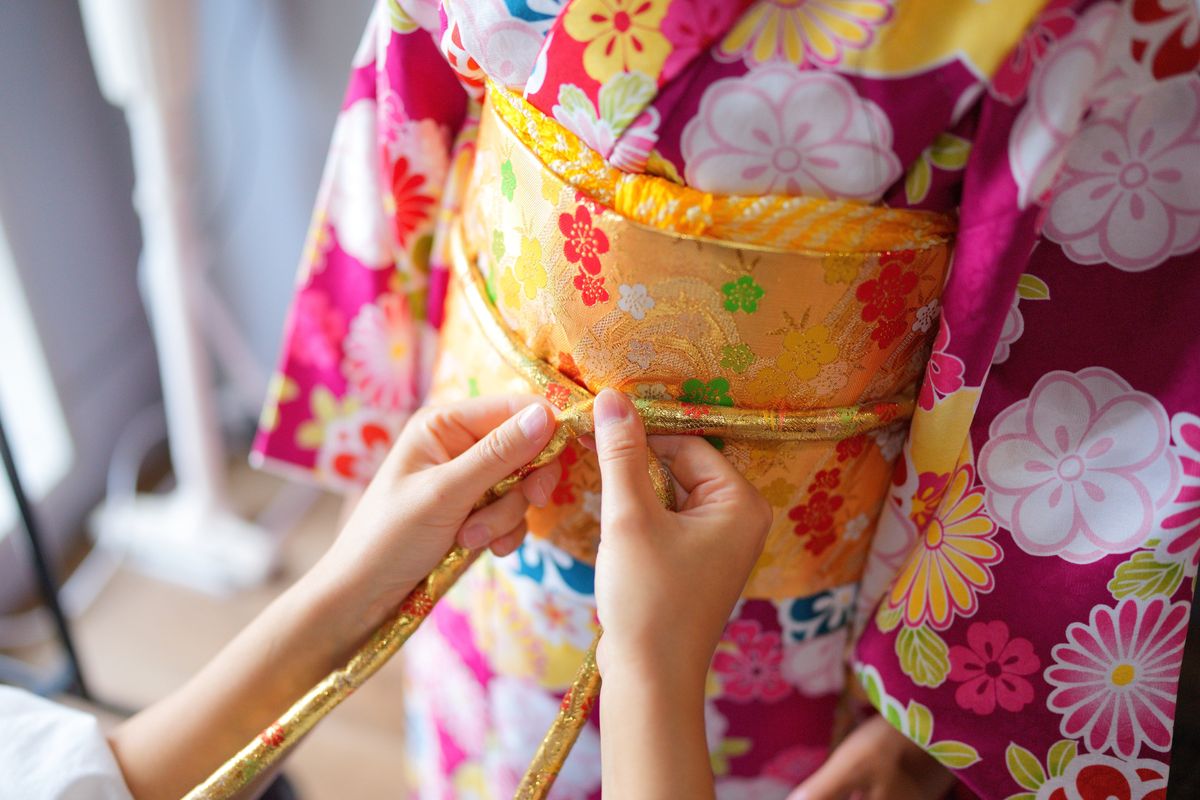
Kimono, Japan’s traditional attire, are crafted from a single length of fabric called tanmono. Their flexible design allows them to be adapted to different body types, which is one of the reasons they are considered easy and comfortable to wear.
Items Required for Wearing a Kimono
First, let's start with what kind of things you need when wearing a kimono.
Kimono
Obviously, the most important item is the kimono itself. There are various types ranging from formal ceremonial wear to everyday casual clothes, and you select one according to the situation and the season.
Obi
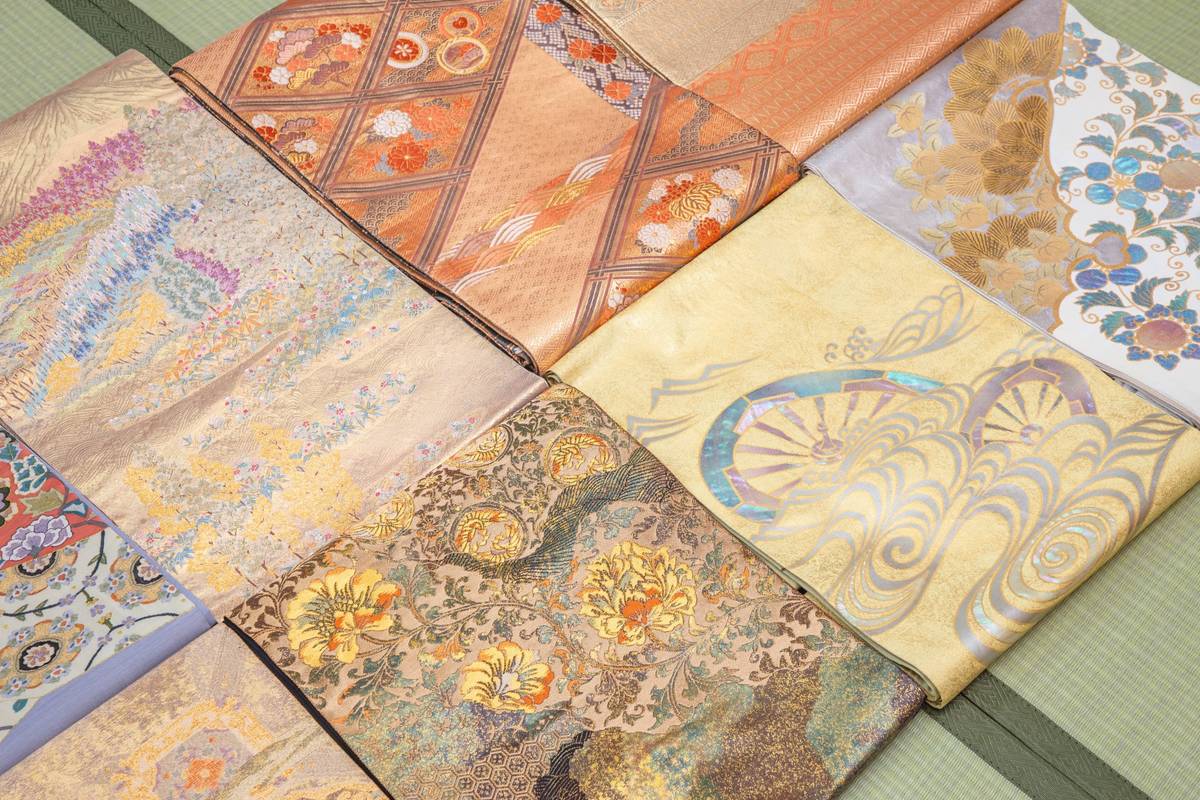
High Class Obi / Photo AC
Next is the obi (sash), which is wrapped around the torso. Like the kimono, there are various types and ranks for this as well, and you choose one to match the scene. It is also important to match the rank of the kimono with the rank of the obi.
Nagajuban
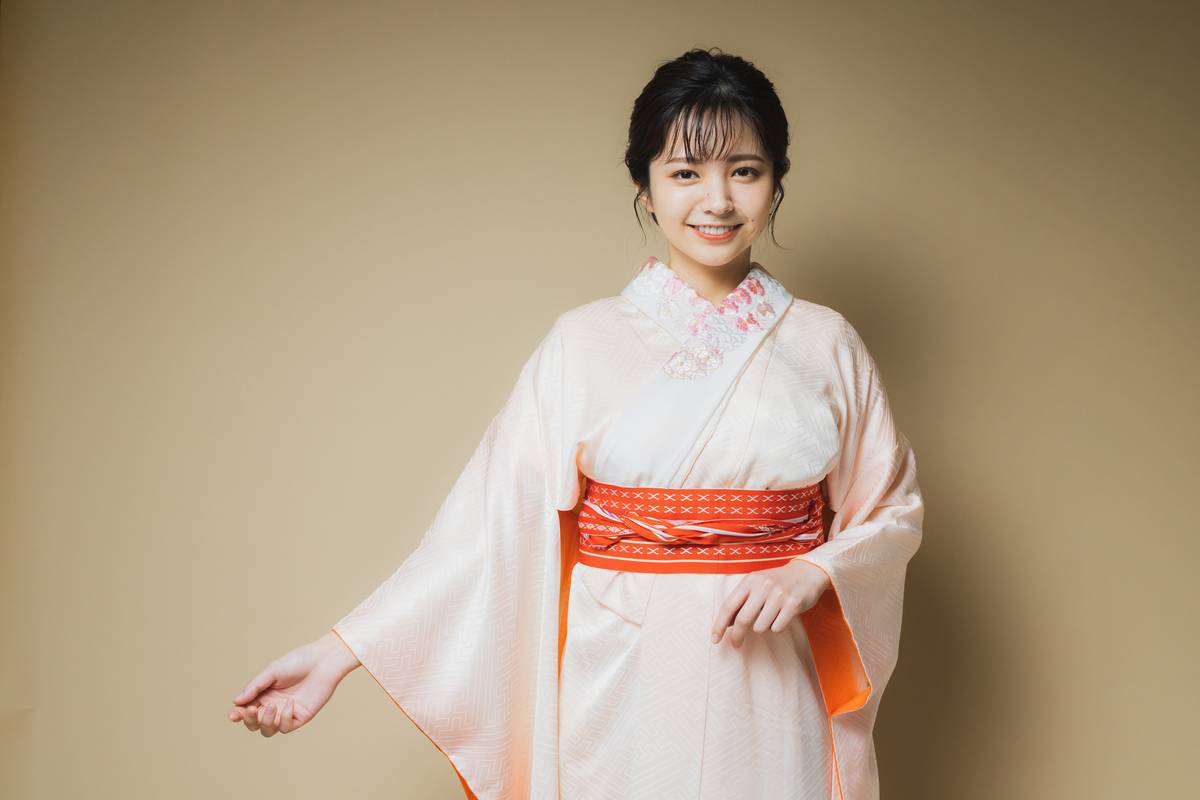
Wearing Nagajuban / PIXTA
Nagajuban is a thin kimono worn between the kimono and the undergarments. It can be described as a stylish inner layer that peeks out slightly from the collar, sleeves, and feet.
Tools to Support Kimono Dressing
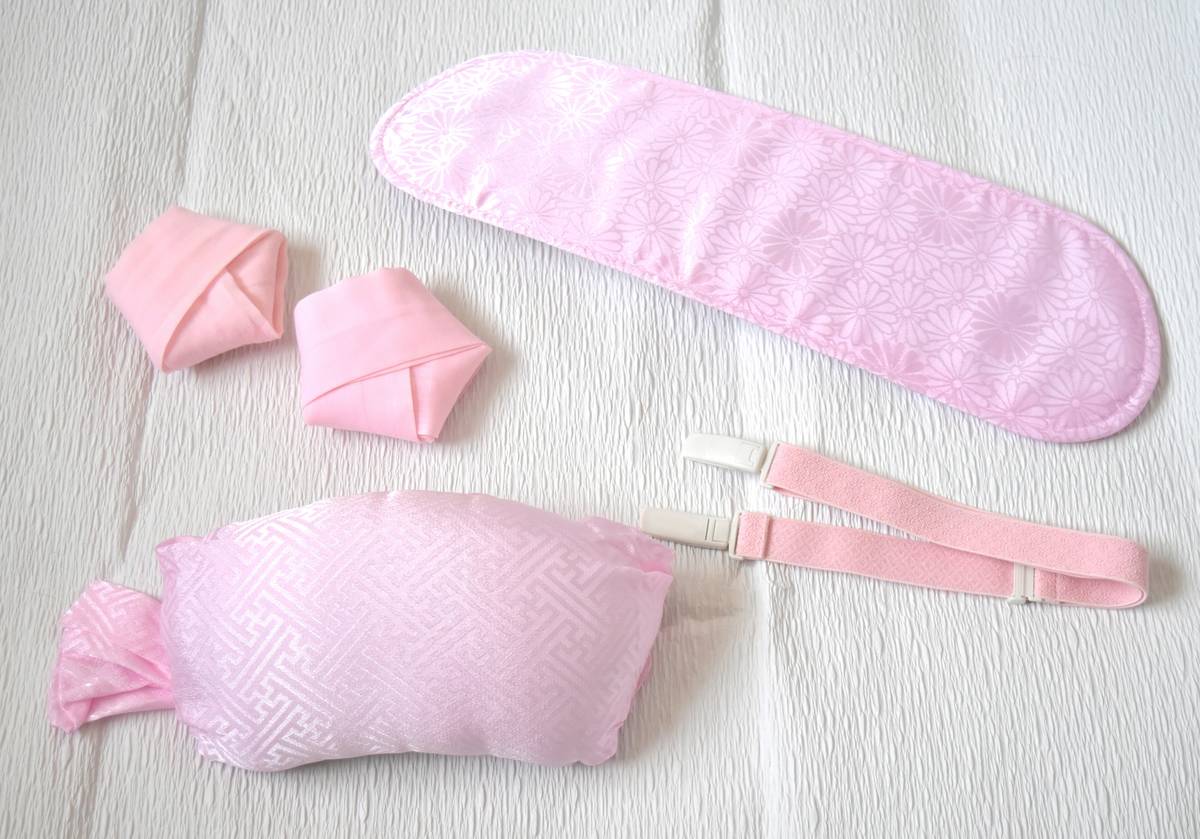
Some items for wearing kimono / Photo AC
There are items such as hadajuban (undergarment) which plays the role of an inner layer, koshihimo (waist cords) tied when determining the length of the kimono, datejime used to secure the koshihimo, a kitsuke belt (dressing belt) to prevent the collar from becoming disheveled, an eri-shin (collar stiffener) passed through the half-collar to maintain its shape, an obi-ita (obi board) to prevent wrinkles in the obi, and an obi-makura (obi pillow) which serves as the foundation when tying the obi in the "otaiko" (drum) knot.
Additionally, since a kimono looks more beautiful when the body shape has fewer contours, women sometimes use a wafuku bra (Japanese-style bra) to flatten the chest and padding towels to make areas like the waistline flat.
Summary of Items Needed for Wearing a Kimono
Based on the above, here is a brief summary of the necessary items and their purposes:
- Kimono
- Obi
- Nagajuban: Worn over the innerwear to prevent friction between the kimono and the skin.
- Hadajuban: Worn as an inner layer.
- Koshihimo: Wrapped around the waist to adjust the length of the kimono.
- Datejime: Secures the Koshihimo.
- Kitsuke Belt: Pulls the left and right collars together and secures them.
- Eri-shin: Shapes the collar.
- [For Women] Obi-ita /Obi-makura: Shapes the obi.
- [For Women] Padding undergarments/towels: Shapes the overall form of the kimono.
Although there are slight differences between men and women, these items are necessary when dressing yourself. If you want to wear a kimono outside of Japan, you may find ways to substitute them with similar items. When experiencing a kimono dressing at a rental shop within Japan, it is easier to choose a shop where you can rent the entire set.
Accessories (Komono)
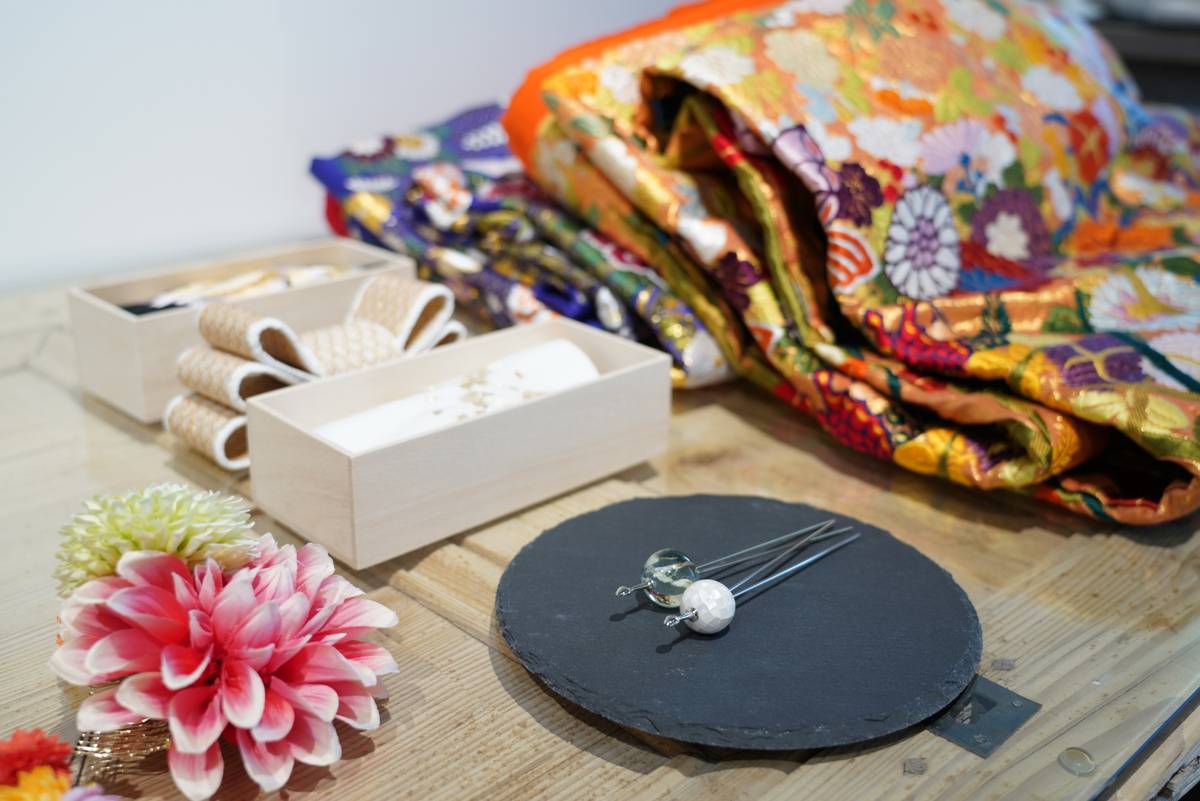
Accessory with Kimono / Photo AC
While not mandatory, there are various accessories that you may wear depending on the season or adopt based on your preference. Representative examples are listed below.
There is the han-eri (half-collar) sewn onto the collar of the nagajuban, the obijime (obi cord) used to decorate the obi, the obiage used to hide the obi-makura used for the otaiko knot, and tabi (traditional socks) worn instead of Western socks, along with the zori sandals, which are traditional Japanese footwear.
Also, during chilly seasons, it is okay to wear a shawl designed for either kimono or Western clothing. Arm warmers can also be used to protect against the summer sun or the winds of early spring and late autumn.
Furthermore, in the even colder winter, outer garments such as haori, douchugi, and doko coats are worn over the kimono as protection against the cold.
Tips for Wearing a Kimono Beautifully
Now, we have learned what is necessary for wearing a kimono. Next, let's focus on tips and tricks to wear kimono even more beautifully/neatly.
Select a Size That Fits You
As is important when choosing a Western suit, the first thing that matters with a kimono is choosing a size that fits you.
Because it is made from a single piece of cloth, it is easy to adjust the waist and other areas; however, if the sleeve length (sodetake) or the body length (mitake) is too short, it will look ungraceful. First, measure your height, arm length, and the length from the center of your neck to the ankle of your hand (wrist), and choose a kimono of the appropriate size. Also, a proper rental shop should be able to estimate a suitable size for you.
In the case of historical kimonos, the length may sometimes be insufficient for young people or those from overseas. When having a kimono dressing experience at a shop, it is reassuring to check whether they have larger sizes available.
Lightweight Innerwear Is Recommended
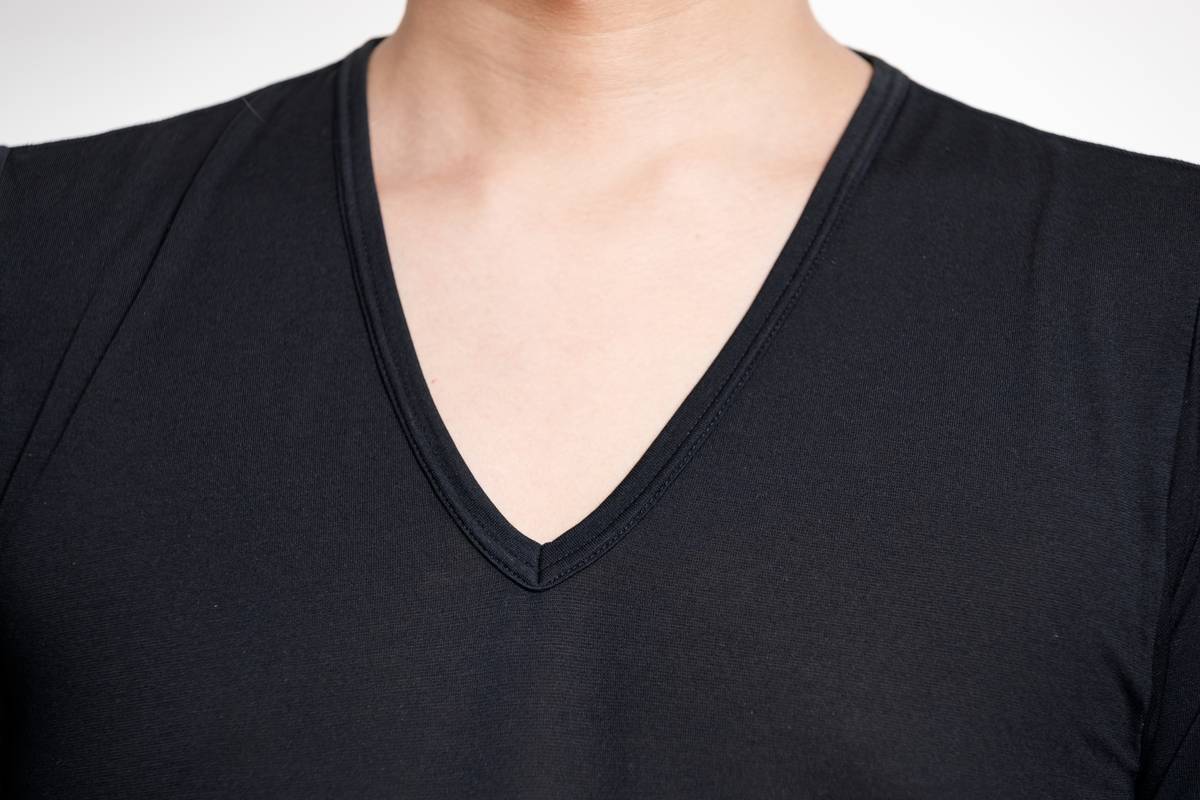
V-neck shirt / Photo AC
Instead of the hadajuban introduced above, you can use your own T-shirts or other items as substitutes. Since these items touch the skin directly, those who are uncomfortable with rentals may bring their own, or depending on the shop, they may request that you prepare your own innerwear.
- Thin items that are comfortable to wear
- Tops with short sleeves, such as T-shirts
- V-neck style that is not visible from the opening of the kimono
- Bottoms with a length reaching or slightly below the knees
In such cases, keeping the above points in mind should help you wear it stylishly.
For both tops and bottoms, they often stick due to sweat and become ungraceful, so tank tops or very short bottoms are not recommended. Also, since underwear lines may stand out, it is safer for both men and women to choose thin underwear.
Select Shoes That Are Comfortable for Walking
Most people will likely go around tourist spots or explore the surroundings after changing into a kimono.
While it is good to place importance on tradition and wear geta or zori, these are types of footwear that can cause blisters even for Japanese people if they are not used to them.
It is recommended to choose shoes prioritizing ease of walking. Among young people who enjoy kimono casually, there is even a culture of wearing sneakers or sandals with a kimono to look fashionable.
Some People Even Match NIKE Sneakers With Kimono
For example, the following is an example of someone who wears kimono often pairing them with NIKE sneakers.
The design is very similar to the tabi, traditional Japanese socks worn when wearing geta, and it matches the kimono well.
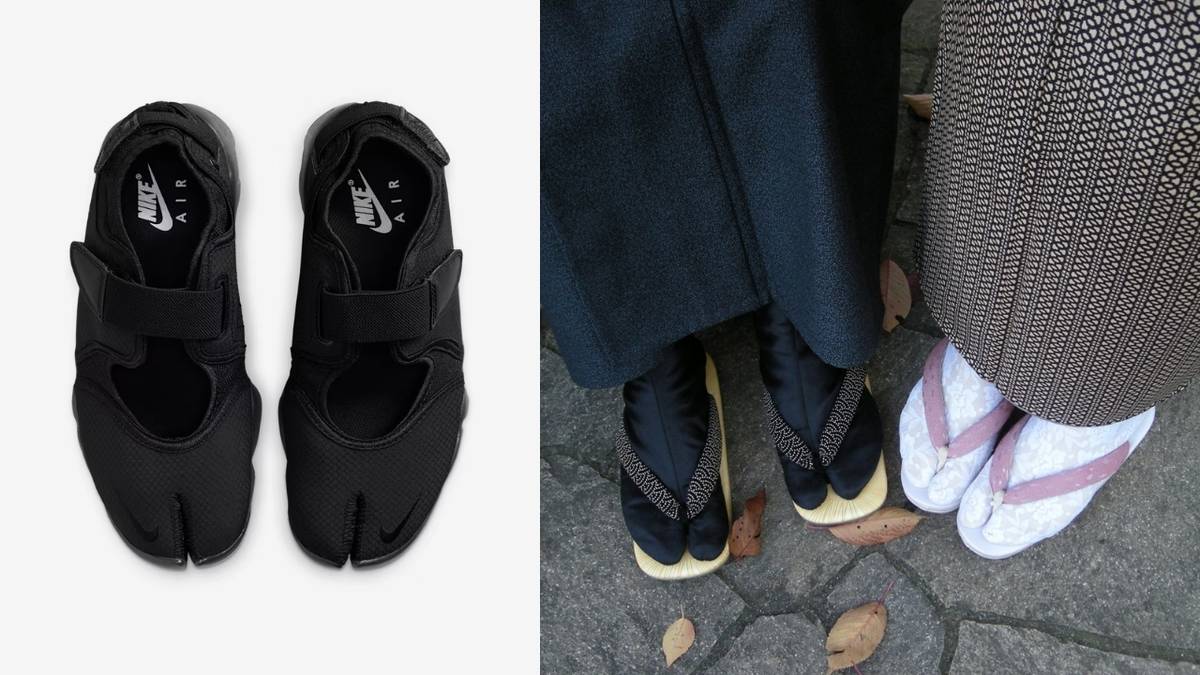
Left: Nike Air Rift, Right: Tabi
Matching such designs is stylish, and pairing bright-colored sneakers with a plain, dark-colored kimono should also create a wonderful outfit with a striking accent. Matching them with leather boots is also good. While respecting Japanese culture, fashion should be enjoyed freely.
Caution When Walking
When wearing a kimono, you must also be careful with how you walk. This is because walking with large strides and swinging your arms will quickly cause the kimono to lose its shape. Especially since women's kimonos have many parts and adjusted areas, it is important to keep your strides small and walk with short steps.
Wear Your Hair Up
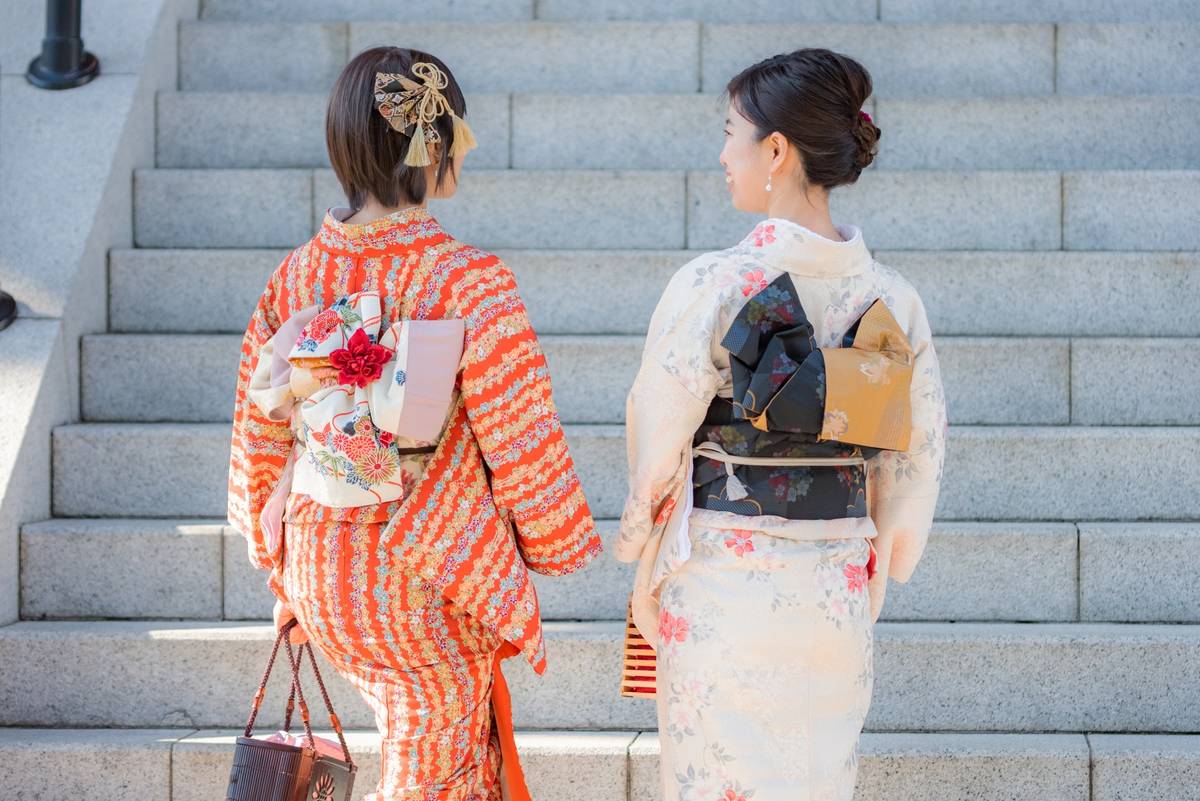
Photo AC
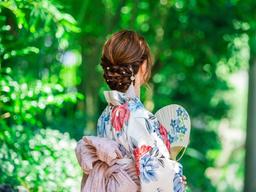
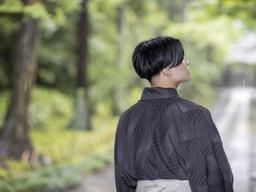
The kimono will look more beautiful if you keep your hair off your shoulders or tie it up. Those with short hair can keep it as is and add hair ornaments, and those with medium to long hair should tie their hair up. However, some people leave their hair down when wearing a casual and modern kimono style.
Depending on the kimono rental shop, hair styling may be included in the experience package fee, allowing you to have your hair done in an updo or braids. In some cases, you can rent Japanese-style hair ornaments, or they can attach accessories you have brought with you.
How to Choose an Obi
Interestingly, not only kimono but also obi are chosen according to the level of formality. As for tying styles, there is a wide range of options depending on personal preference, so they are beyond the scope of this article.
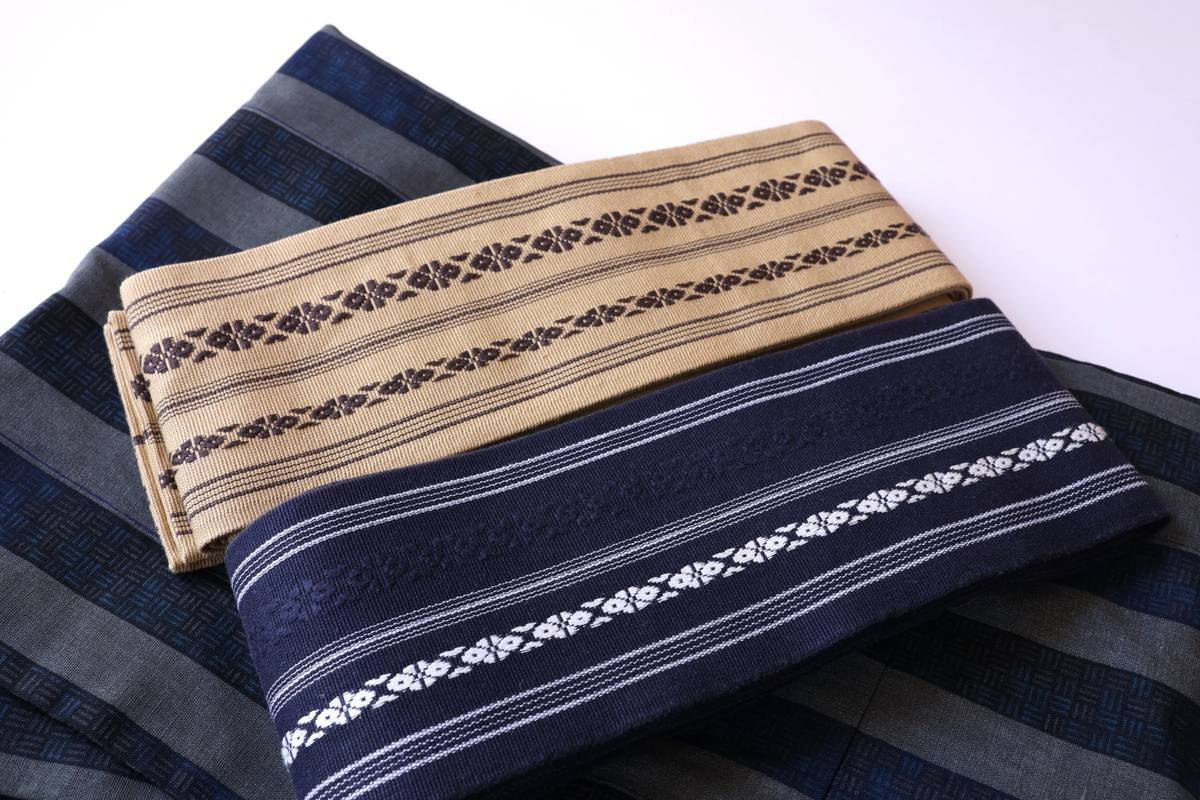
Men's Kimono Belt / Photo AC
Men's obi are generally the kaku-obi and the heko-obi. The Kaku-obi is a versatile obi that can fit formal wear to everyday clothes. The Heko-obi is very soft compared to the kaku-obi, and the tying method is easy as it is a butterfly knot. Both can be used for both kimono and yukata.
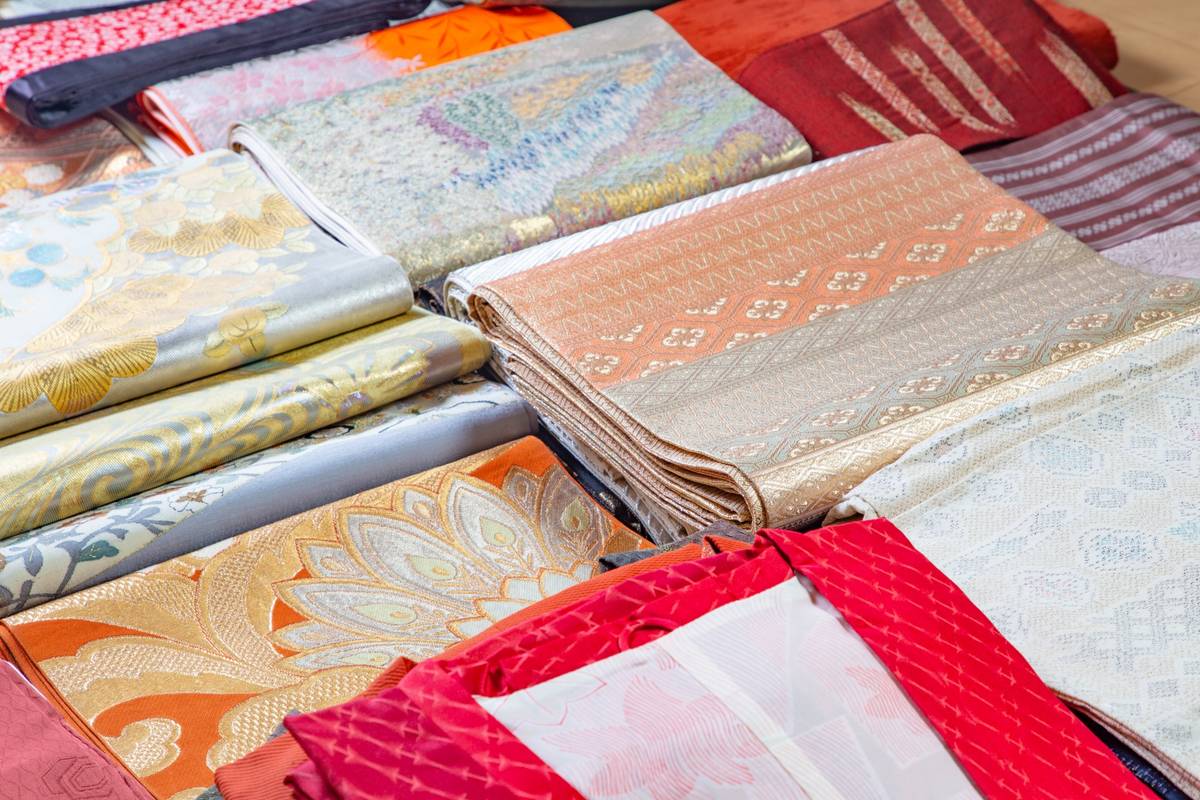
Women's Kimono Belt / Photo AC
Women's obi include the maru-obi, fukuro-obi, nagoya-obi, and hanhaba-obi.
The maru-obi is a formal obi used for the highest level of ceremonial dress; it has patterns on both sides and is very glamorous. The fukuro-obi, which is half the width of a maru-obi, is also used in formal settings. The Nagoya-obi is a relatively casual obi that is suited for stylish wear or outings, and the hanhaba-obi is also a casual obi worn with everyday clothes or yukata.
Since it is common to choose an obi according to where you are going and the kimono you have selected, the rental shop may provide suggestions when you have a dressing experience there.
How to Choose Accessories
Once you have dressed in your kimono stylishly and beautifully, let's also turn our eyes to accessories. Depending on the items you match it with, you should be able to discover various possible combinations, such as an old-fashioned Japanese style, a retro-style blend of Japanese and Western, or stylish wear that looks novel even today.
For Men
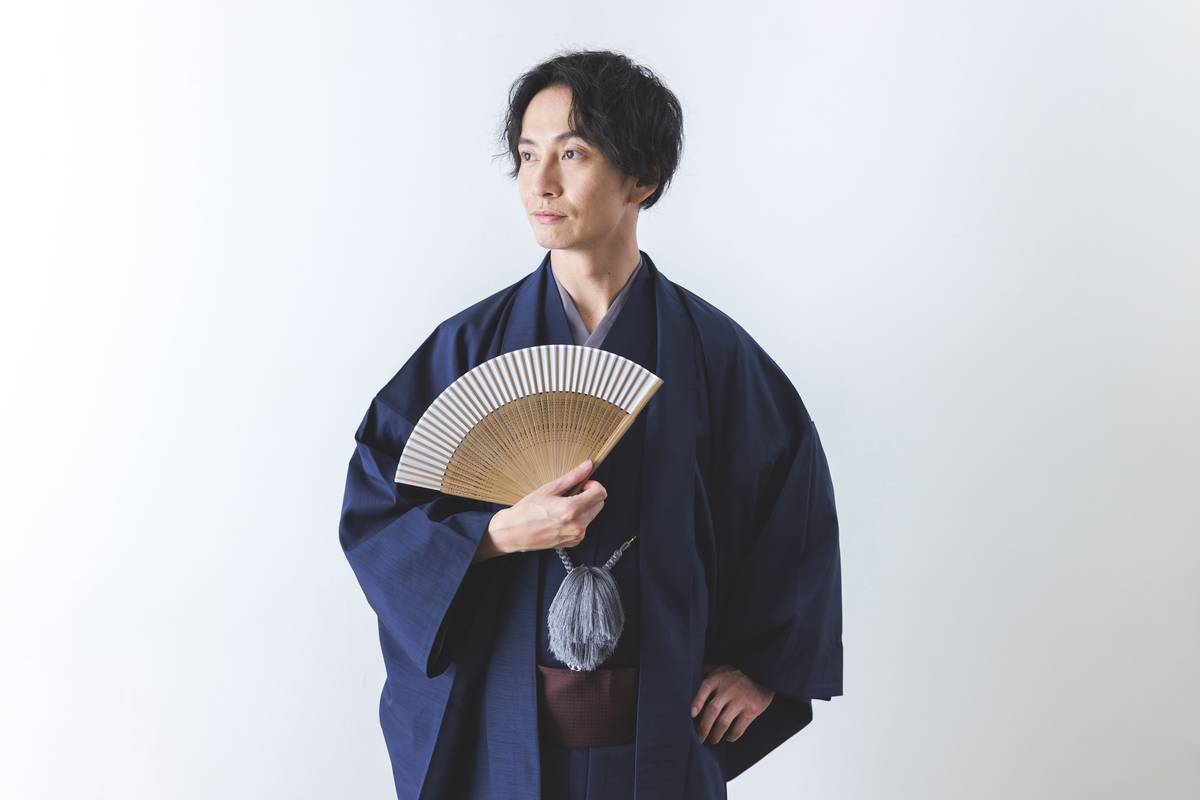
Haorihimo and Sensu / PIXTA
Men's kimonos have more subdued colors and designs compared to women's and do not become that flashy. Instead, you can produce a subtle sense of style through items such as a colored han-eri matching the kimono, a gorgeous patterned lining peeking from a plain haori, haori-himo (cords) with decorations, or a folding fan matching the color and material of the kimono.
For Women
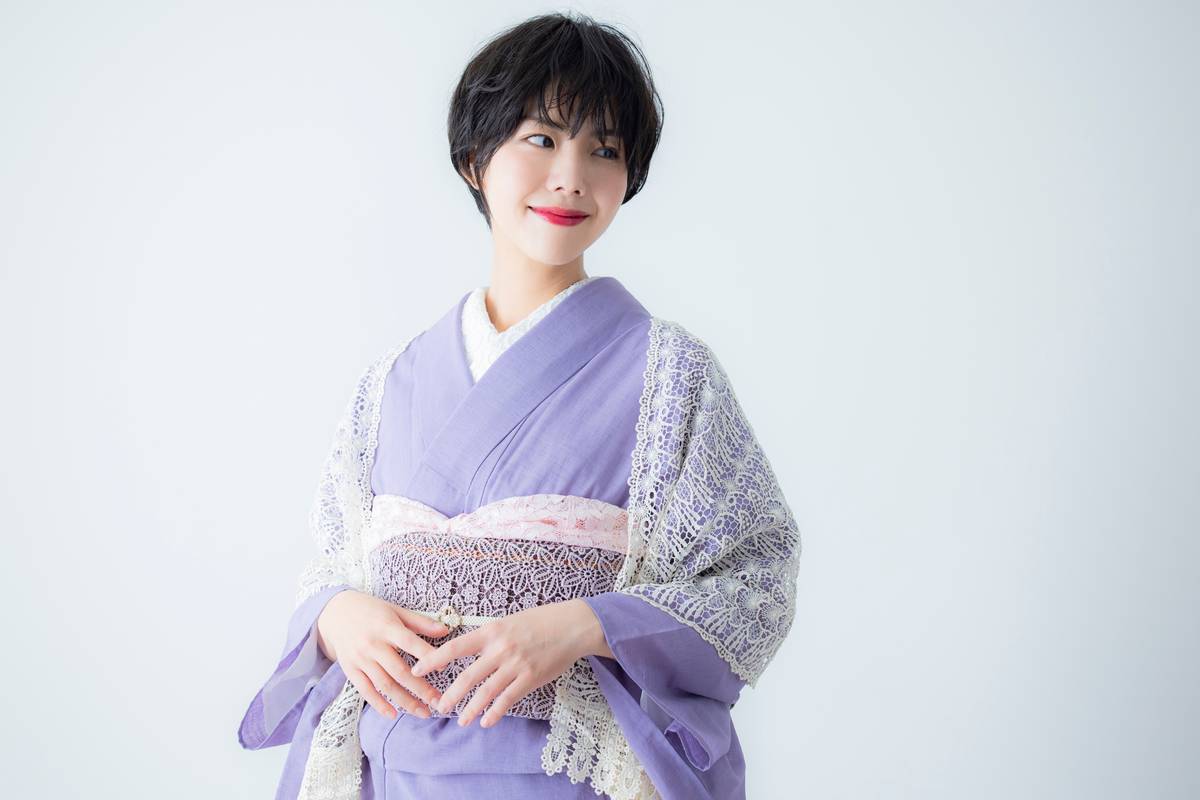
Modern Style Kimono / PIXTA
For a classic look, it is effective to create a sharp appearance with purely Japanese-style items like kanzashi (hairpins) or obidome (obi decorations).
To create a modern style, try incorporating delicate, feminine elements such as lace innerwear, stoles, or obi-age adorned with tulle or frills. Also, matching it with a beret, boots, or a basket bag that creates a retro Taisho Romantic–style look. Bold combinations of colors and patterns, or coordinating Western clothes with a kimono, are also popular as free ways of dressing.
Kimono Rental Shops Where You Can Come Empty-Handed (English Support Available)
Kyoto
Waraku
For women, there is a "Kyoto Kimono Full Set & Hair Set Included Package" that comes as a set with undergarments, hair ornaments, and a Japanese-style bag. Another pleasing point is that you can leave your luggage at the shop. Furthermore, you can fully enjoy Japanese culture by using a Japanese umbrella as an option or by using a rickshaw.
There are also Couples Package and Mens Package, which also include hadajuban, tabi, haori, and Japanese-style bags.
Nishiki Orizuruya
A wide variety of kimono are prepared for men, women, and children. Since there are various sizes and patterns, you can enjoy dressing according to your own preference. All accessories, such as hair ornaments and bags, are available for rental.
Also, you can participate in a tea ceremony experience where you can learn manners and how to prepare tea under professional guidance, or a calligraphy experience where you can create original works. It is popular to write your own name in kanji and take it home as a souvenir.
Asakusa
VASARA
A wide range of items for women, men, and children is available, making it a shop suitable for families. In addition to hair styling and luggage storage, you can also receive support for rainy days for free.
You can also opt for a professional location photo shoot, where a photographer will capture memorable moments from your walk around Asakusa.
Rika Wafuku
Located in a great spot just a 1-minute walk from Kaminarimon, it is convenient for exploring Asakusa in a kimono. Since the standard plan includes hair styling and accessories, you can easily have a kimono dressing experience.
Also, large sizes for both kimono and yukata are prepared at the same price as regular kimonos. For both men and women, the service accommodates bust, waist, and hip measurements of up to 150 cm. Height limits are up to 185 cm (approx. 6 ft 1 in) for women and up to 205 cm (approx. 6 ft 9 in) for men.
Kanazawa
Kaga Yuzen
This is a plan where you can experience Kaga Yuzen, a traditional craft of Kanazawa. After learning about the history and production process, you can choose one kimono you like, receive professional dressing, and take photos. In addition to the special studio, it is possible to look great in the Japanese garden of the Kaga Yuzen Kaikan or at the Kanazawa Port Cruise Terminal. You can also experience stencil dyeing on handkerchiefs or making mizuhiki straps in your spare time, which can be taken home as souvenirs along with the photo data.
Kimono Rental Ayaka
This kimono rental shop is operated by a kimono dressing school and is known for its focus on “comfortable, non-restrictive dressing.” With a professional eye, the staff help select kimono that suit each individual, making it especially recommended for those who want to wear a kimono that truly fits them rather than simply trying one for the occasion.
For travelers from overseas, a variety of immersive plans are available, from wearing kimono while trying classic Japanese games like ayatori, kendama, and origami, to learning how to dress in kimono yourself, or enjoying a walk through Kanazawa’s historic samurai district dressed in kimono.
FAQ
Published Last Updated
Related Articles
Explore more articles on similar topics and deepen your knowledge of Japan.