A Guide to Kimono Patterns and Their Symbolism
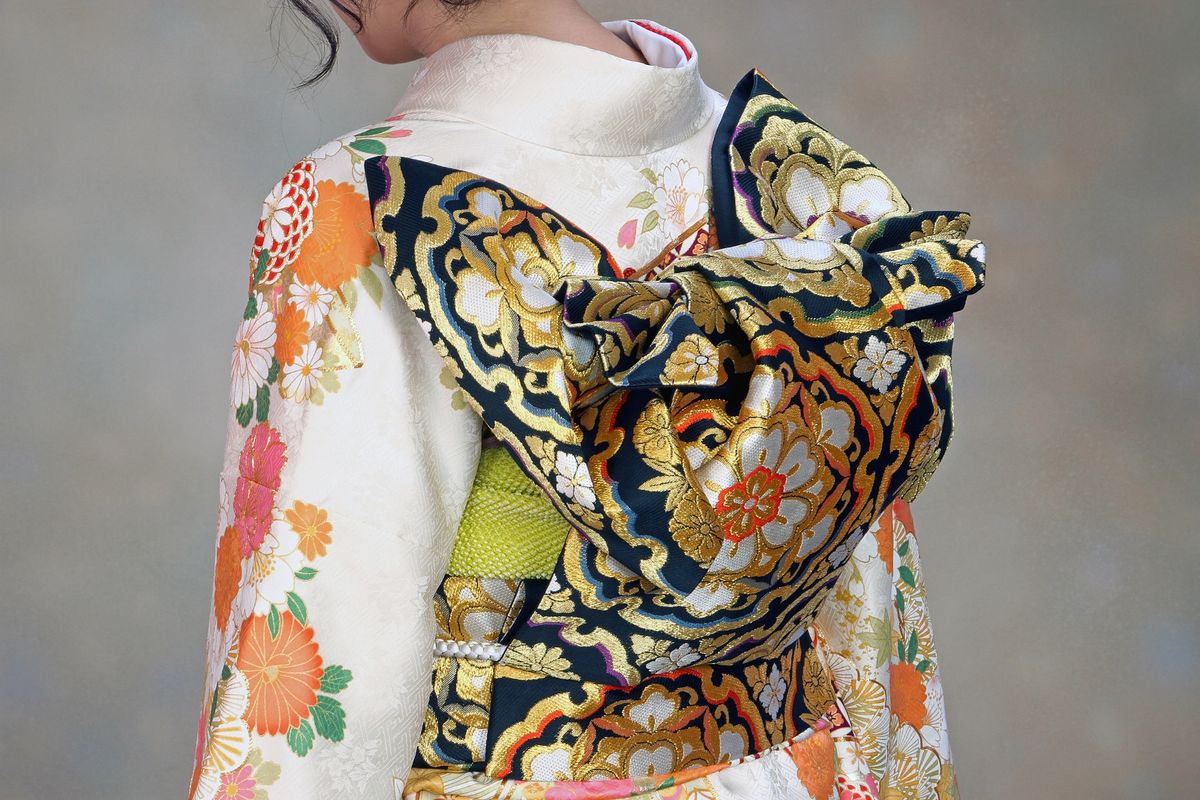
One of the pleasures of wearing kimono is choosing the colors and patterns. However, each pattern has its own meaning, and by learning those meanings, you can pick designs that suit the occasion and enjoy coordinating your outfit even more. Let’s take a look at some of the traditional Japanese patterns commonly used for kimono, along with their names and meanings.
In this article, we’ll introduce the main motifs by grouping them into five categories: geometric patterns, animals, flowers and plants, landscapes, and other designs.
Geometric Patterns
These patterns are used in many contexts, ranging from relatively subdued designs to more glamorous ones combined with motifs like flowers and plants. Stripes, checkerboard (ichimatsu), and tortoiseshell (kikko) patterns are considered standard designs for men’s kimono.
Stripes
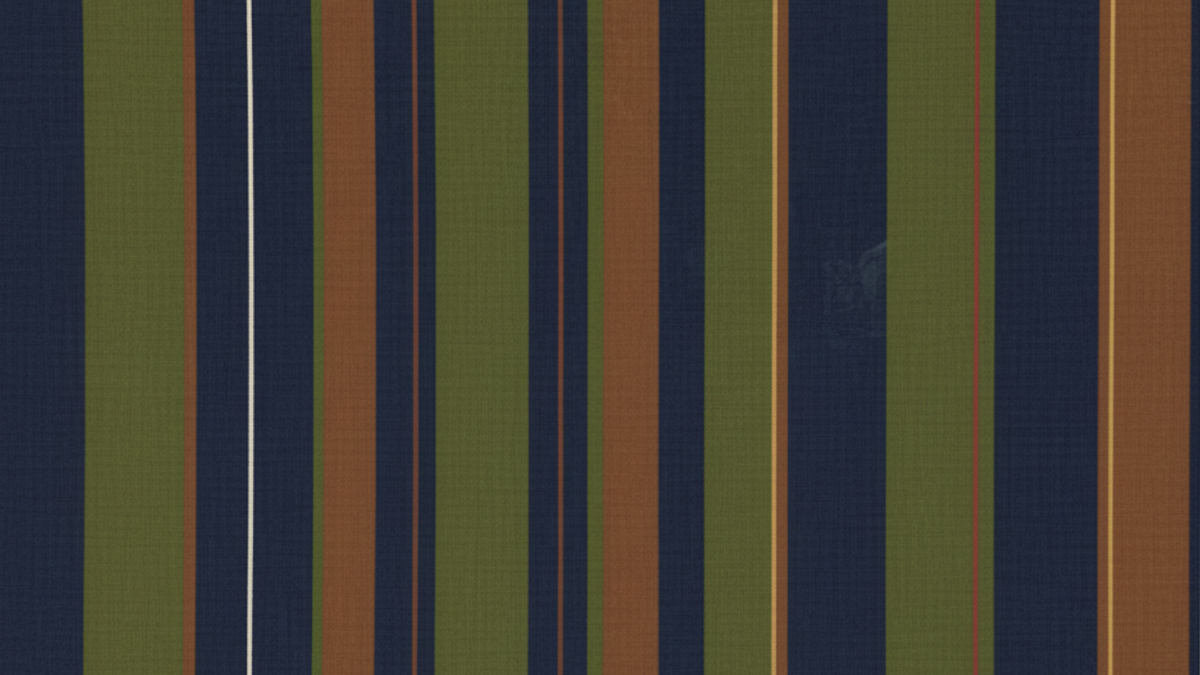
Stripe patterns embodies qualities such as uprightness, purity, and sincerity. The repeated lines symbolize continuity of prosperity and a sense of order. Though it is one of the most minimalistic motifs, its overall impression can vary greatly depending on factors such as line thickness, spacing, and color.
It is a motif commonly used in men’s kimono designs.
Yagasuri (Arrow Fletching)
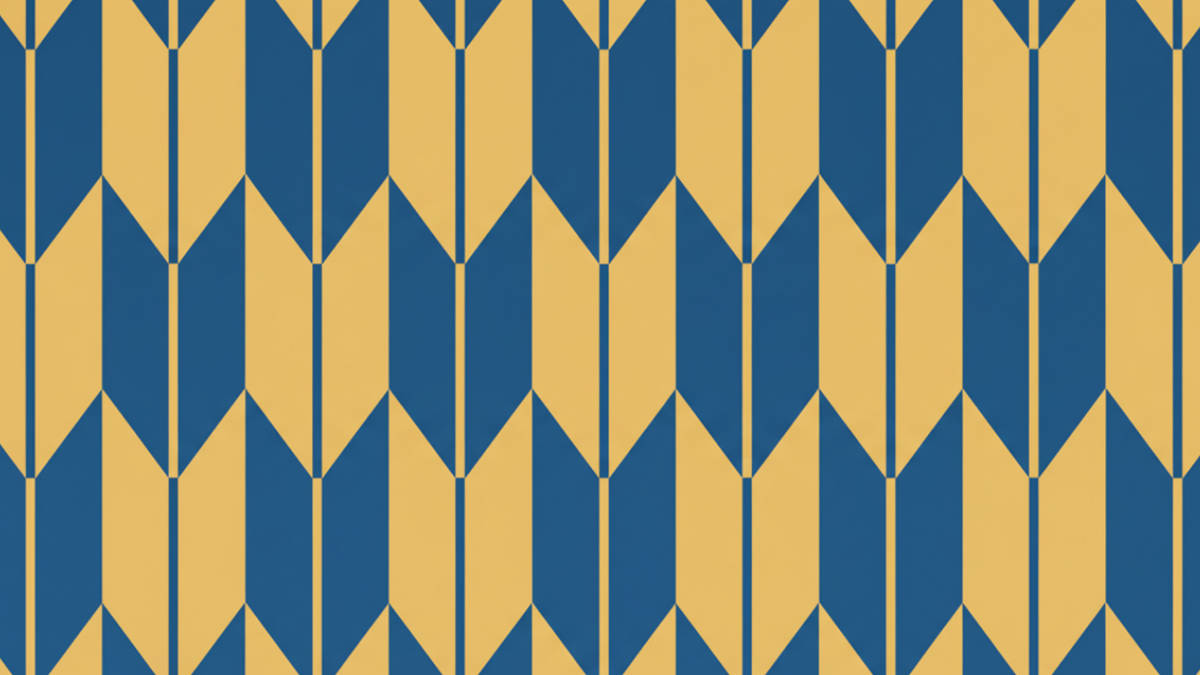
This motif was used on samurai garments during the Azuchi–Momoyama period. Because it depicts hamaya (ritual arrows said to ‘ward off misfortune and strike true at good fortune’) it came to be regarded as an auspicious design from the Edo period onward.
*Note: Hama/破魔 means ‘to break or repel evil,’ and ya/矢 means ‘arrow.’
In addition, because an arrow flies straight and never returns once shot, the motif also carries the wish that a bride will not ‘return home’ after marriage. It was also used in girls’ school uniforms during the Taisho era, which contributes to its nostalgic, retro appeal today.
Ichimatsu Pattern
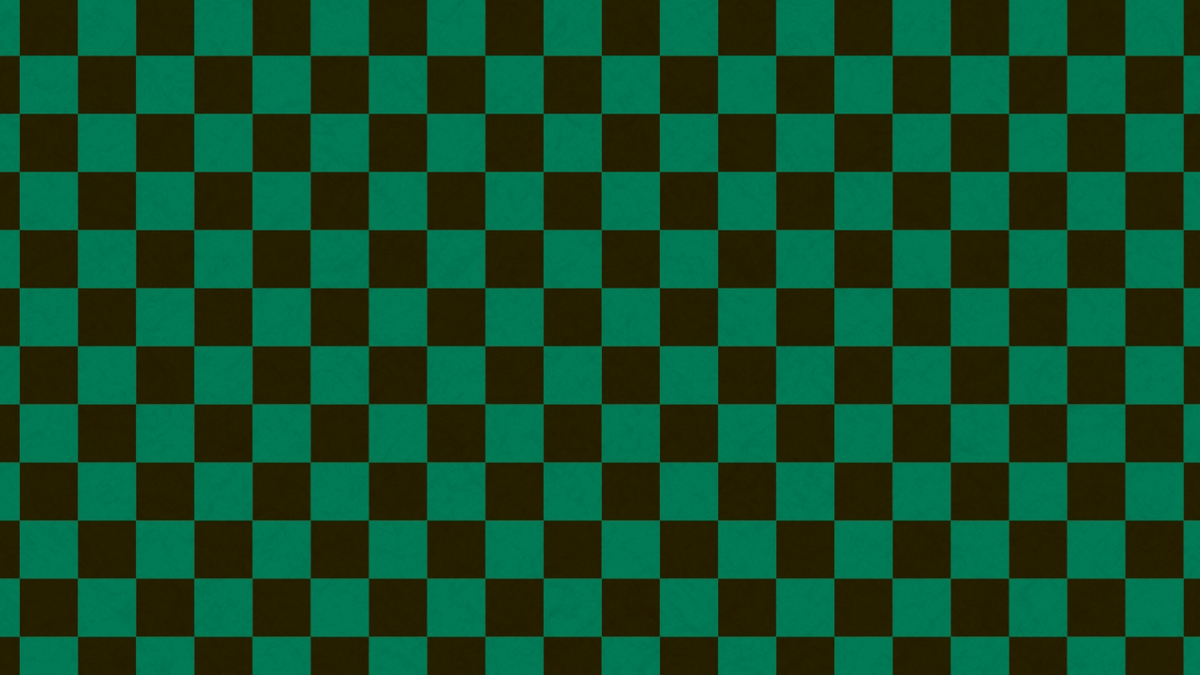
This is a checkered pattern composed of alternating colored squares. It was named after the kabuki actor Sanogawa Ichimatsu, who popularized it by using the design in his stage costumes. Because the pattern appears to continue endlessly without interruption, it is associated with the idea of prosperity.
It is also the pattern used for the kimono worn by Tanjiro Kamado, the protagonist of the hugely popular manga Demon Slayer, which was serialized in Weekly Shonen Jump.
Asanoha (Hemp Leaf)
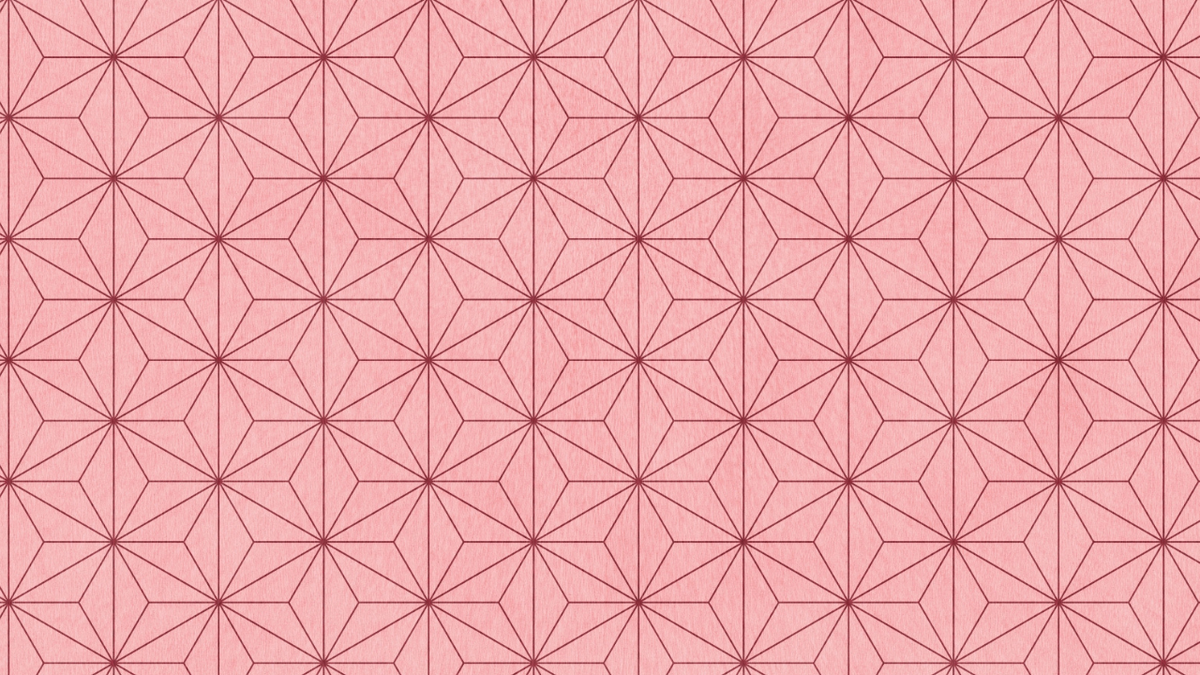
The motif carries wishes for a child’s healthy growth and protection from misfortune, inspired by the rapid growth of the Asano bamboo. It is also well known today as the pattern on the kimono worn by Nezuko, Tanjiro’s younger sister in Demon Slayer.
Seigaiha (Blue Ocean Waves)

This motif is composed of layered semicircles representing the swell of waves. The endlessly repeating waves symbolize harmony and continuity, embodying wishes for a peaceful life, family unity, and prosperity.
Sayagata
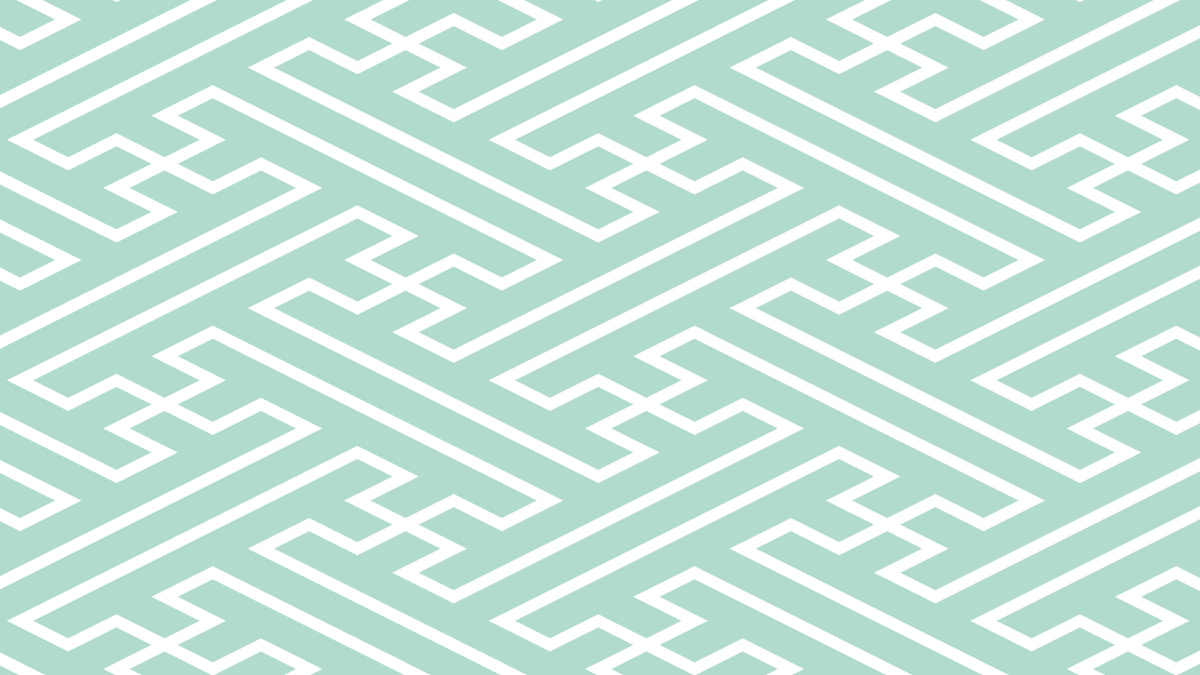
This pattern is based on the manji (卍), a symbol of auspiciousness in Buddhism and were once used in Japan by hidden Christians in place of the cross. Because the manji shapes are connected without interruption, the motif is regarded as an auspicious one that expresses wishes for longevity and the prosperity of the household.
Hishi (Diamond)

This motif is based on a diamond shape and originates from the fruit of an aquatic plant, symbolizing vitality and prosperity. It has many variations, such as Takeda-bishi, Matsukawa-bishi, and Hanabishi and is widely used in everything from kimono fabrics to obi designs.
Shippo (Seven Treasures)
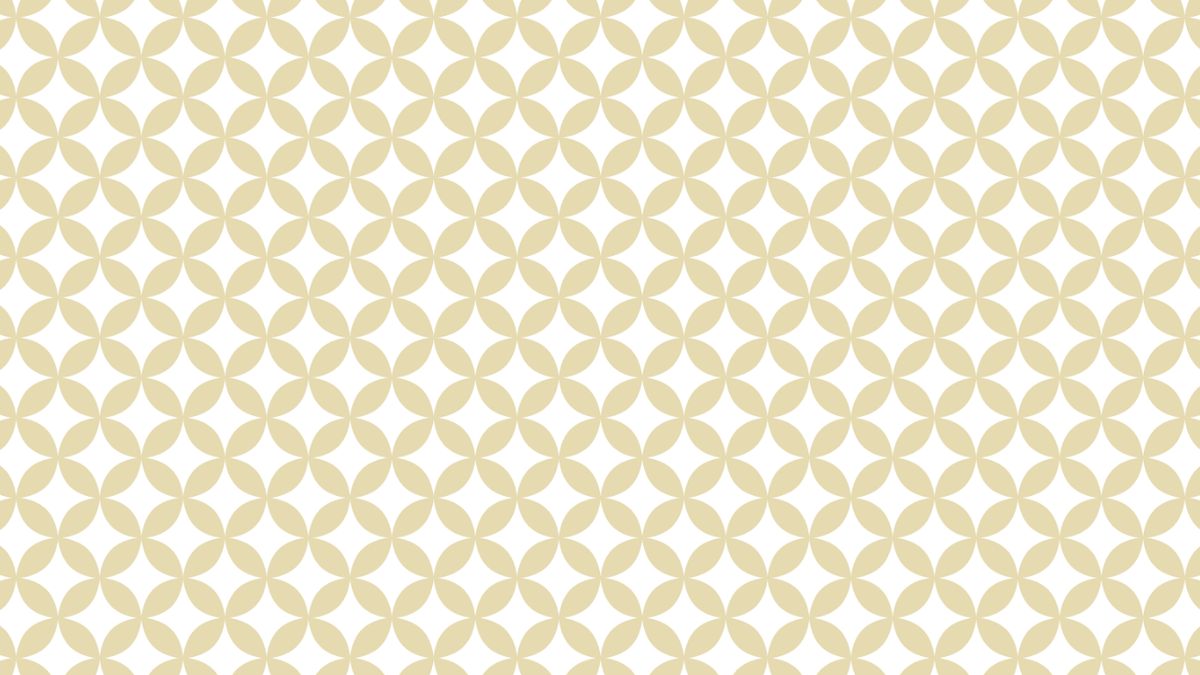
Shippo (‘Seven Treasures’) is a Buddhist term referring to precious substances such as gold, silver, lapis lazuli, crystal, coral, agate, and giant clam shell. The pattern consists of interlocking circles, suggesting a continuous chain of connections. This unbroken linking of circles is said to be as valuable as the Seven Treasures themselves. It is a motif that symbolizes harmony and the bonds that bring people together.
Animals
In addition to traditional motifs featuring birds and fish, recent years have seen the creation of kimono designs with charming illustrations of cats, dogs, giraffes, and other animals. There are even patterns incorporating popular characters, offering many options for playful, pop-style coordination.
Crane
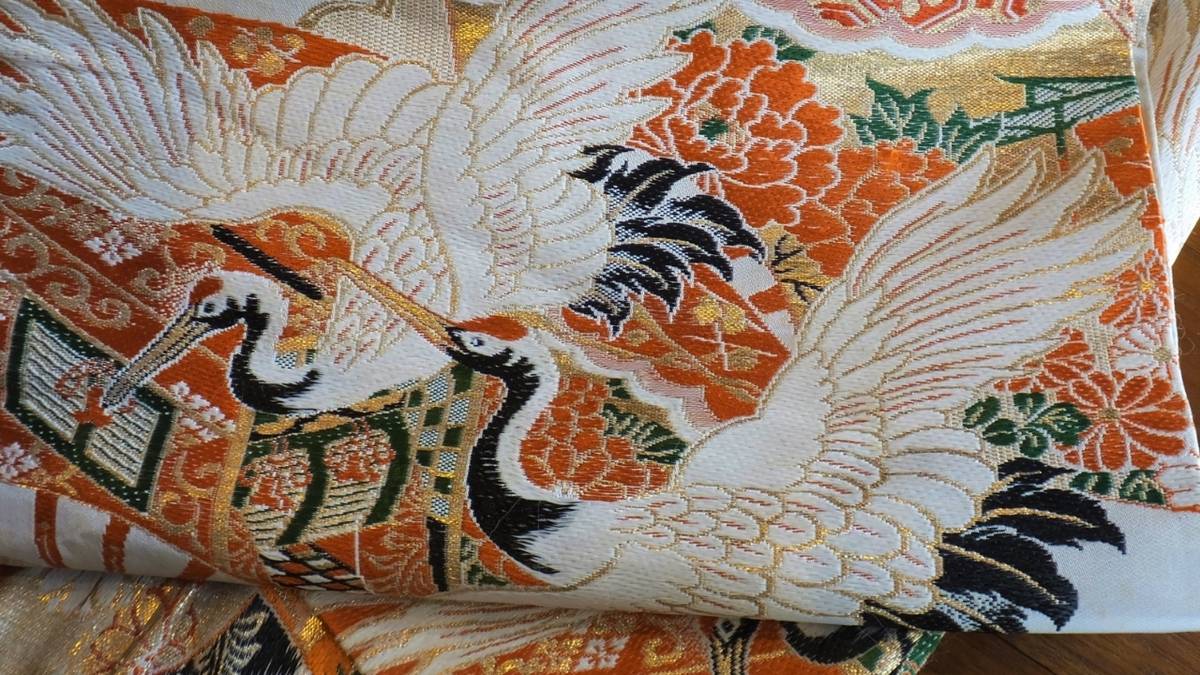
Red-Crowned Crane / Photo AC
In Japan, there is a saying, "Cranes live a thousand years; turtles live ten thousand," and both have long been regarded as symbols of longevity. Cranes are also known to spend their life with their mate, which is why they are seen as emblems of marital harmony. For these reasons, crane motifs have become a classic design for iro-uchikake, the ornate outer kimono worn by brides at weddings.
Kikkou (Tortoise Shell)

This hexagonal pattern, inspired by tortoise shells, symbolizes longevity and health, similar to the crane.
Houou / Chinese Phoenix
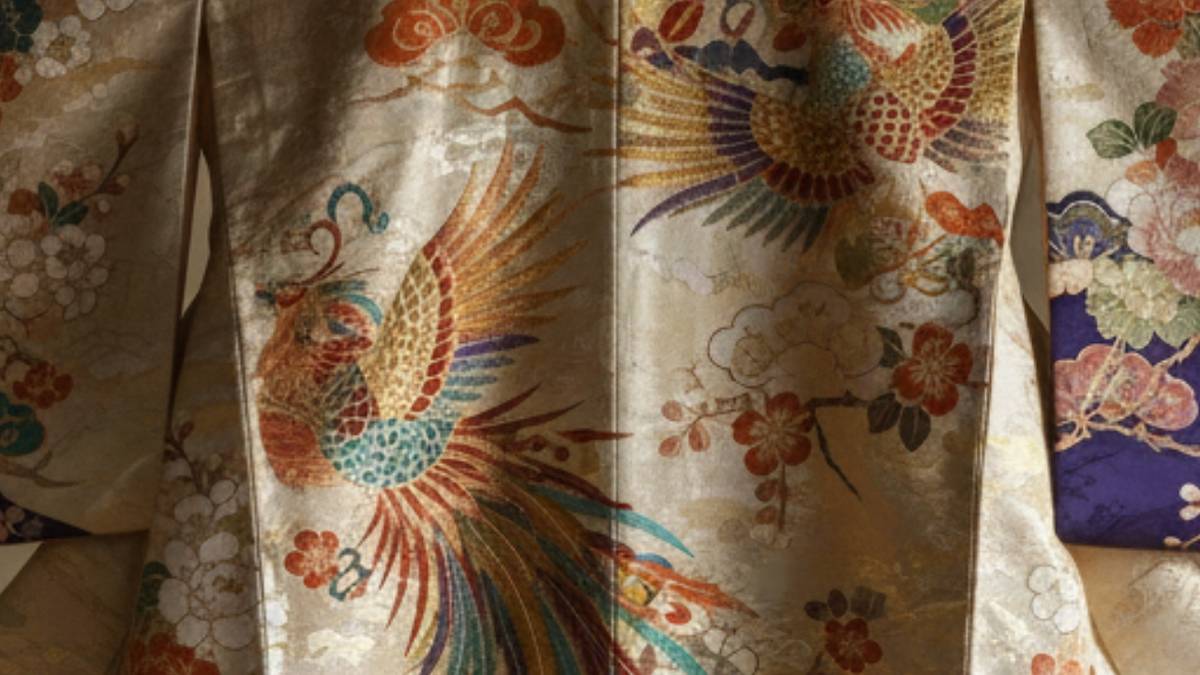
In China, there is a legend that the phoenix appears when a peaceful and blessed world is about to arrive. For this reason, the motif is also cherished in Japan as a symbol of peace and good fortune.
Rabbit
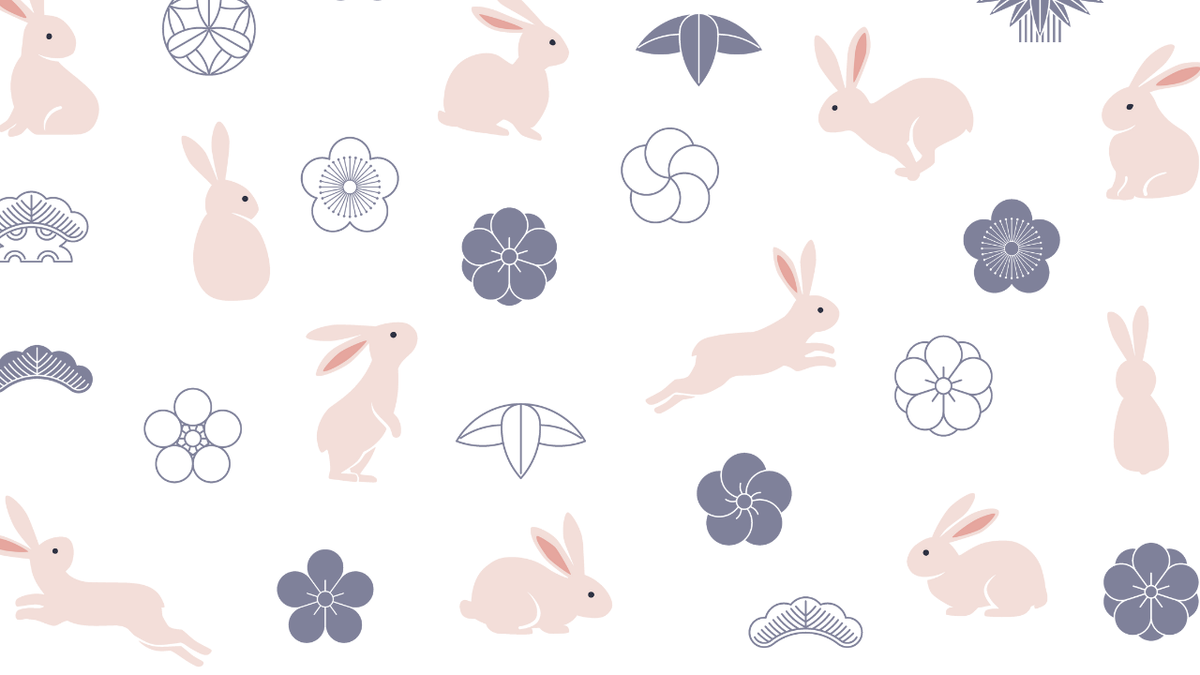
Because of the rabbit’s speed and jumping ability, it symbolizes great leaps forward in life; because a rabbit is said to appear on the moon, it is also associated with inviting good fortune; and because of its high fertility, it also represents prosperity of offspring. For these reasons, it is considered a highly auspicious motif with many layered meanings.
Butterfly
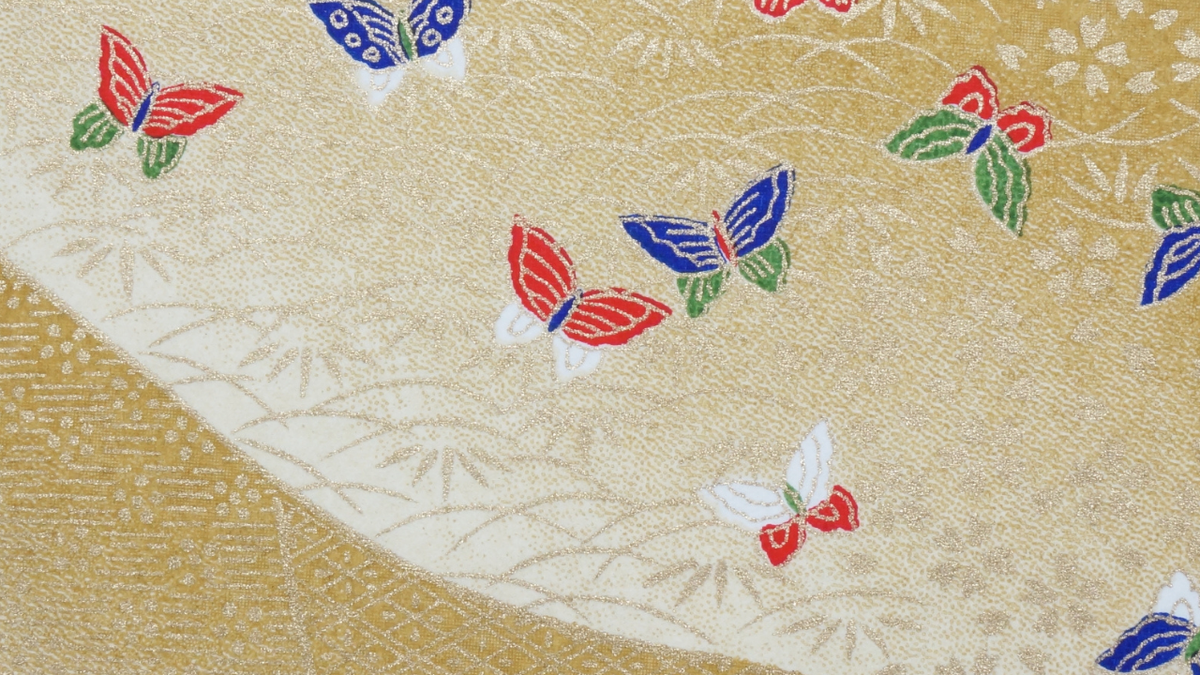
Butterfly Patterns Washi / Photo AC
This motif expresses wishes for growth and marital harmony. The transformation from caterpillar to chrysalis to butterfly is likened to healthy, flourishing development. In addition, because butterflies remain close as a pair during their egg-laying season, they are also used as an auspicious motif symbolizing harmony and good fortune.
Uroko (Scale)
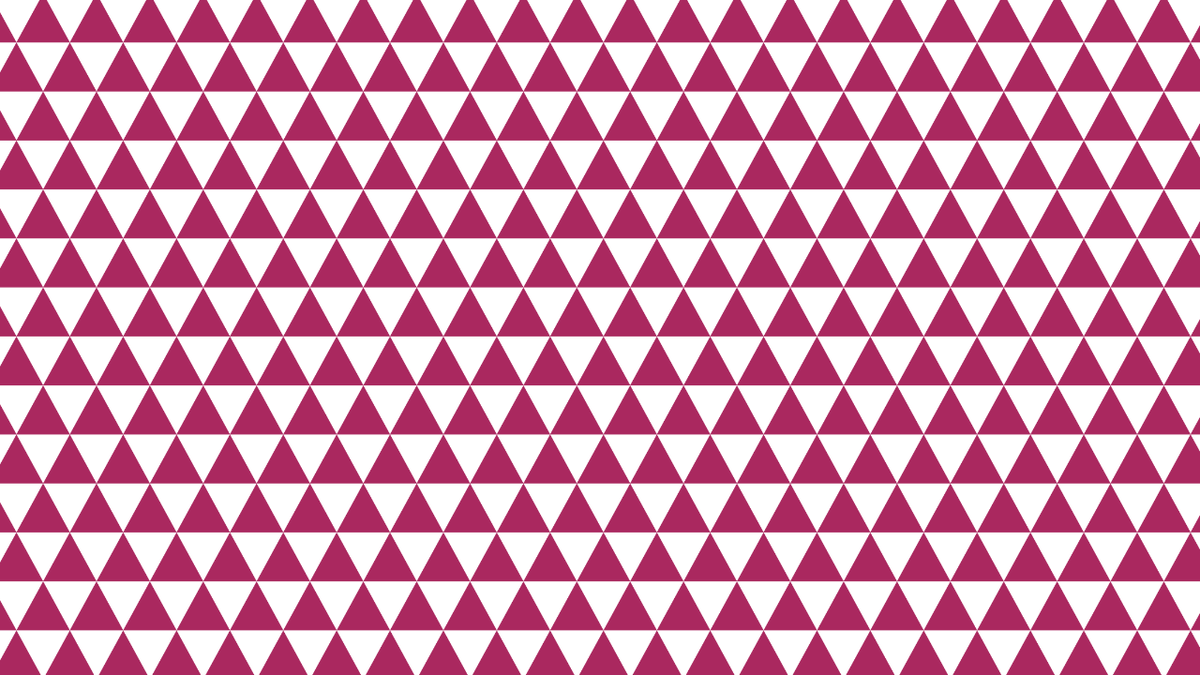
This pattern arranges equilateral triangles to symbolize the scales of fish or snakes. Scales are regarded as symbols of protection against evil and misfortune, and because snakes grow by repeatedly shedding their skin, the motif also carries meanings of rebirth and growth.
Plants and Flowers
In Japan, where the four seasons are cherished, floral motifs are often worn slightly ahead of the coming season. Cherry blossoms and peonies for spring; irises and wisteria for early summer; morning glories and hydrangeas for summer; maple leaves and chrysanthemums for autumn; and camellias and plum blossoms for winter. Enjoy coordinating your attire in harmony with the seasons.
Sho-chiku-bai (Pine, Bamboo, Plum)
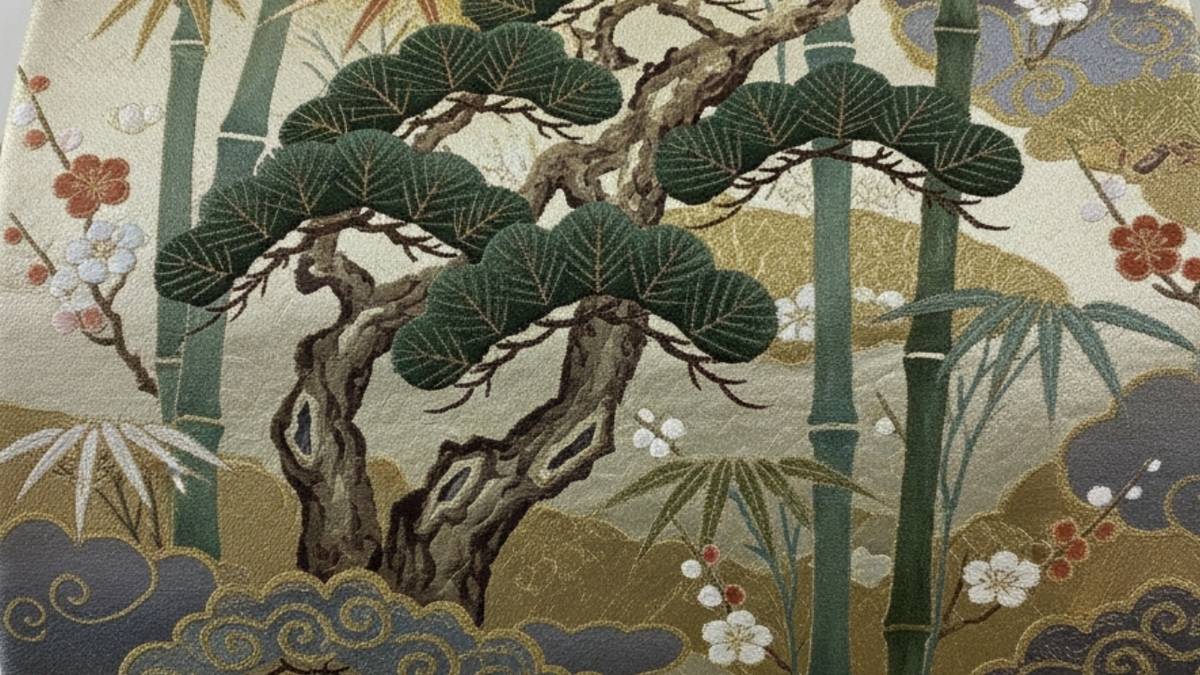
This motif combines pine, which remains vibrantly green even in harsh environments such as sandy soil or the depths of winter; bamboo, which grows quickly and stays green throughout the year; and plum blossoms, which form buds early and release their fragrance at the end of winter. Together, they symbolize vitality and resilience.
In Japan, these motifs are symbols of celebration and are also familiar as markers for ranking items such as bento meals. Side note, the order from highest to lowest rank is pine, bamboo, then plum.
Cherry Blossom
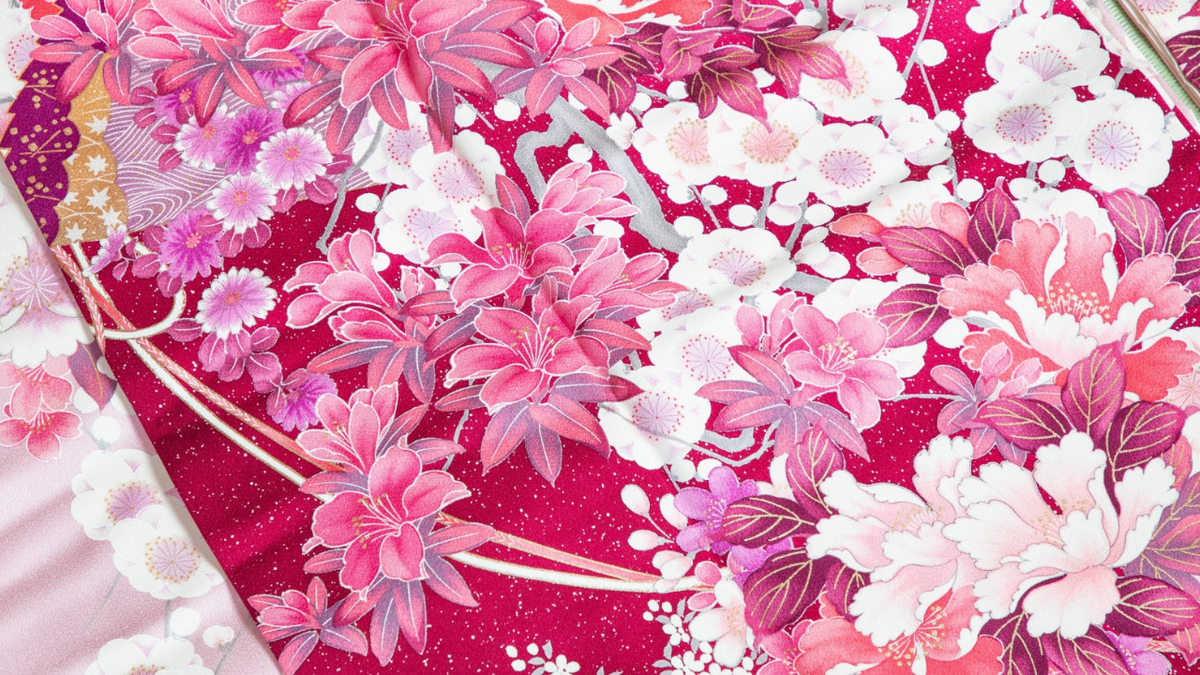
Sakura Patterns Kimono / Photo AC
Cherry blossoms, Japan’s national flower and the quintessential symbol of spring, represent beauty and new beginnings. They were once regarded as a sign of bountiful harvests, which is why they are considered an auspicious motif.
Peony
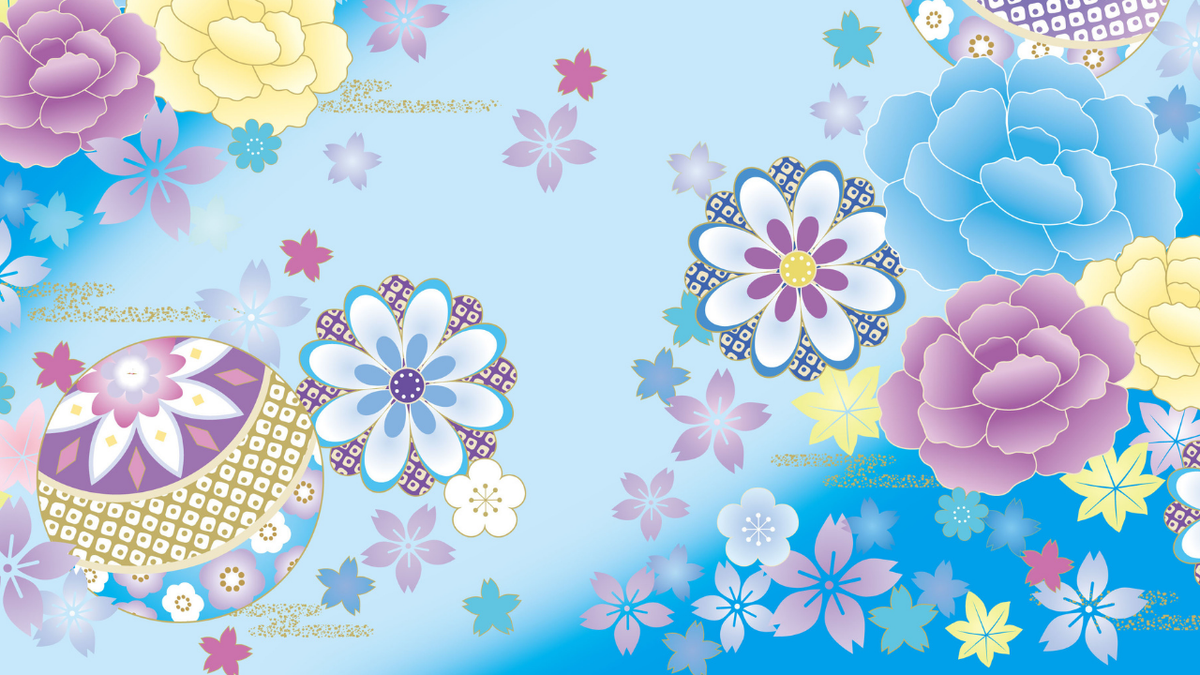
Botan Patterns / Illust AC
In Japan, there is a saying that praises feminine beauty: ‘Standing, she is a peony (shakuyaku); seated, a tree peony (botan); walking, a lily (yuri-no-hana).’ Because of its large, majestic blossoms, the peony has long been used as a motif representing dignity, prosperity, and beauty.
Camellia
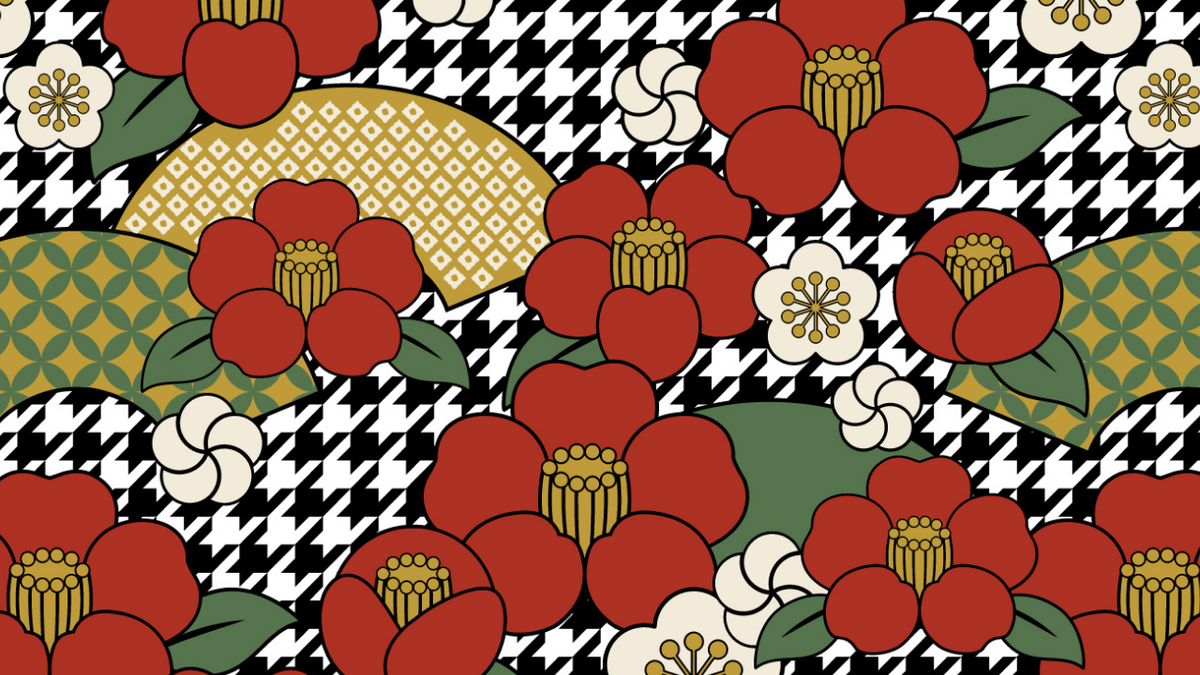
Tsubaki Patterns / Illust AC
Since the Heian period, camellias have been treasured as ingredients for medicines and cosmetics believed to promote longevity. They are known as flowers that symbolize nobility and sacredness.
Hanamarumon (Flower Circle Pattern)
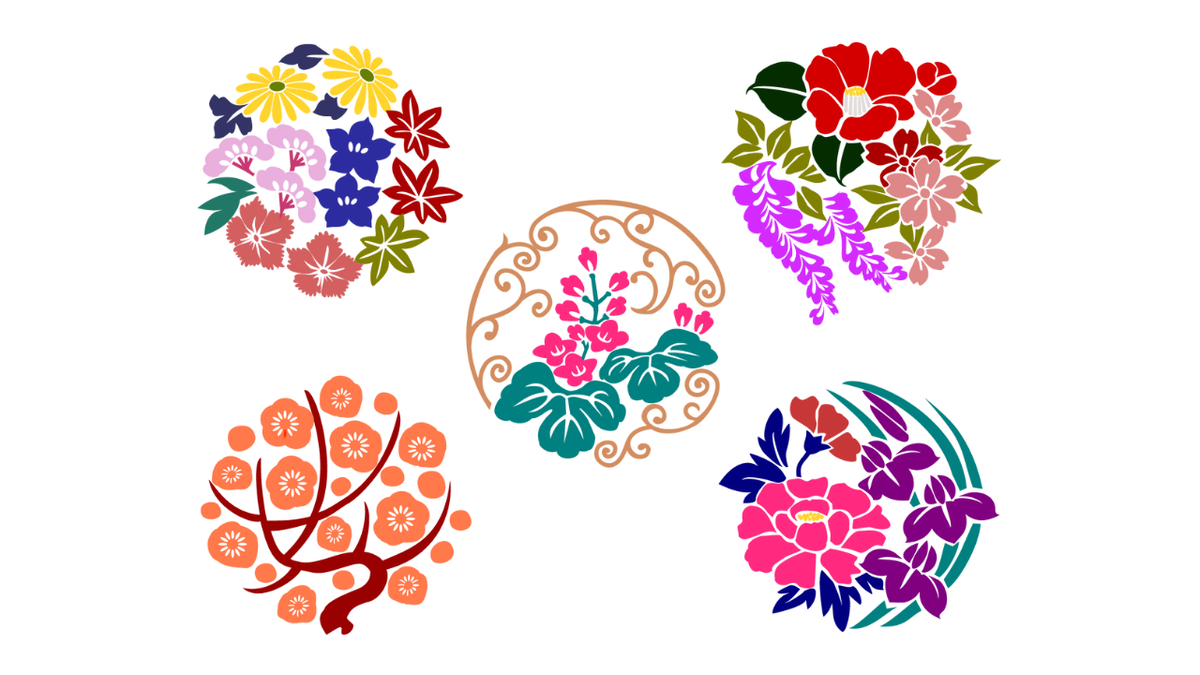
Hanamarumon / Illust AC
This motif arranges flowers and plants in a circular composition, and it appears in many forms, from realistic depictions to stylized or geometric designs. Because the circle holds deep significance in Japanese culture, this pattern is widely used for weddings and other celebratory occasions.
Scenery and Nature
Egasumi
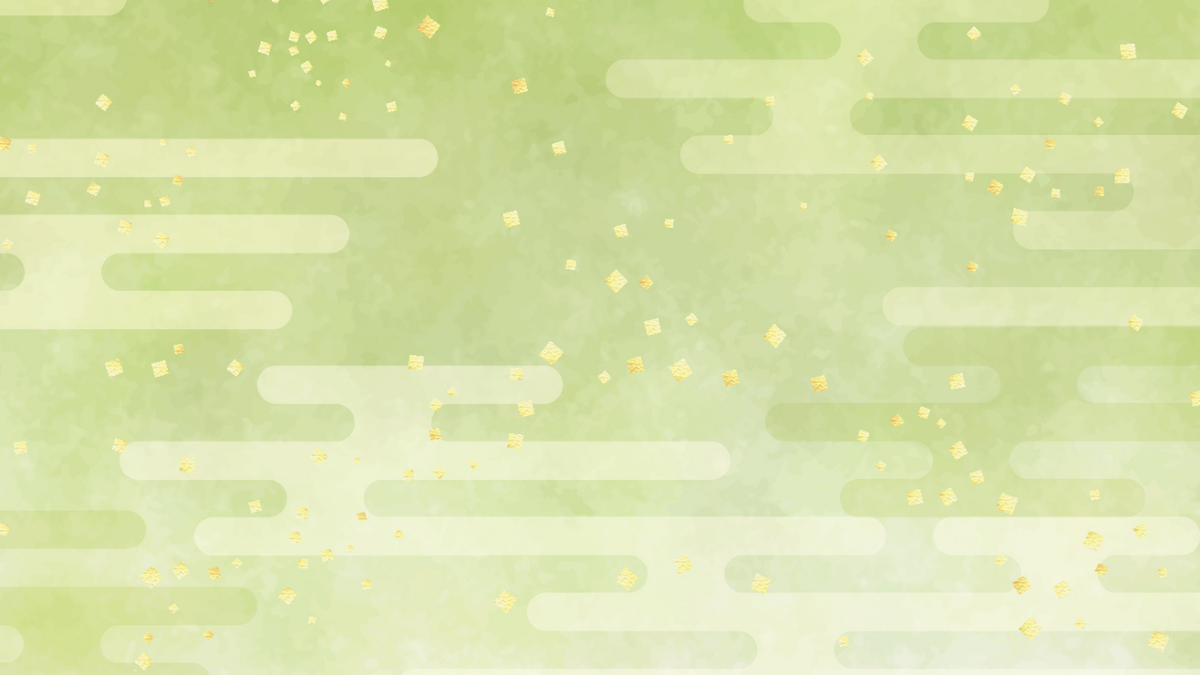
Egasumi Patterns / Illust AC
This motif arranges shapes resembling the Japanese katakana character e (エ) to evoke the shimmering movement of mist. Because mist appears and disappears, the pattern carries the meaning of eternity.
Yukiwa (Snow Ring)
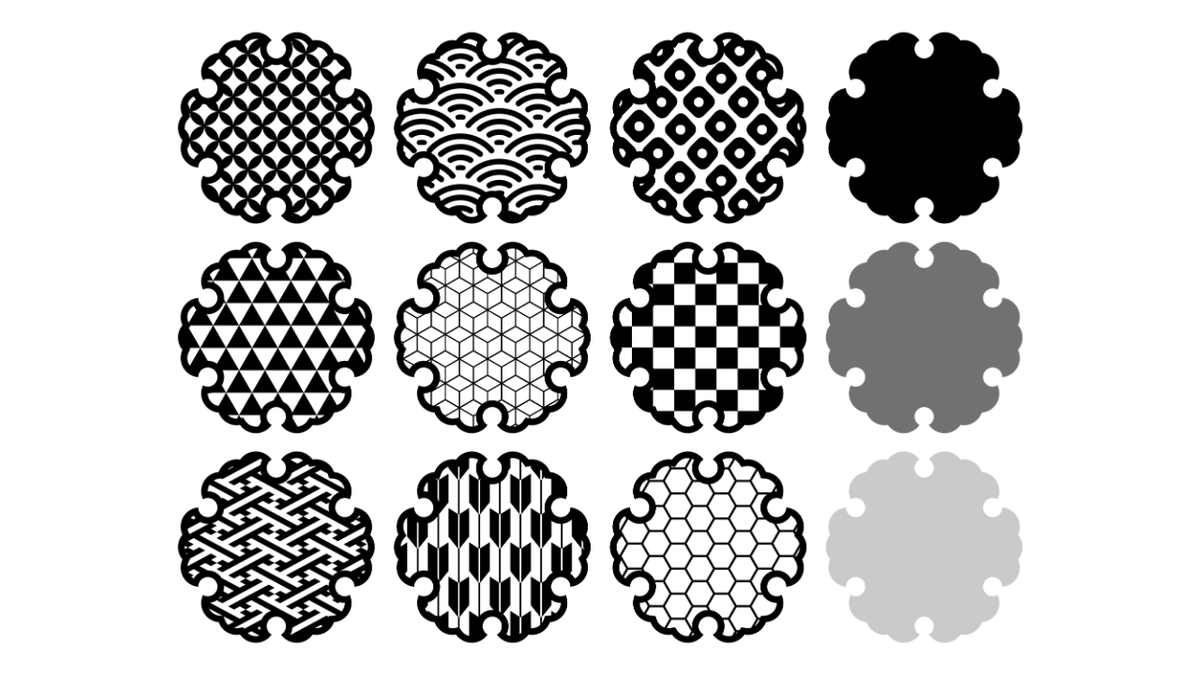
Yukiwa Patterns / Illust AC
This motif is based on the form of snow crystals. Because the snow that accumulates in winter melts in spring and nourishes the land, the pattern symbolizes abundance and a bountiful harvest.
Tatewakumon (Rising Steam)
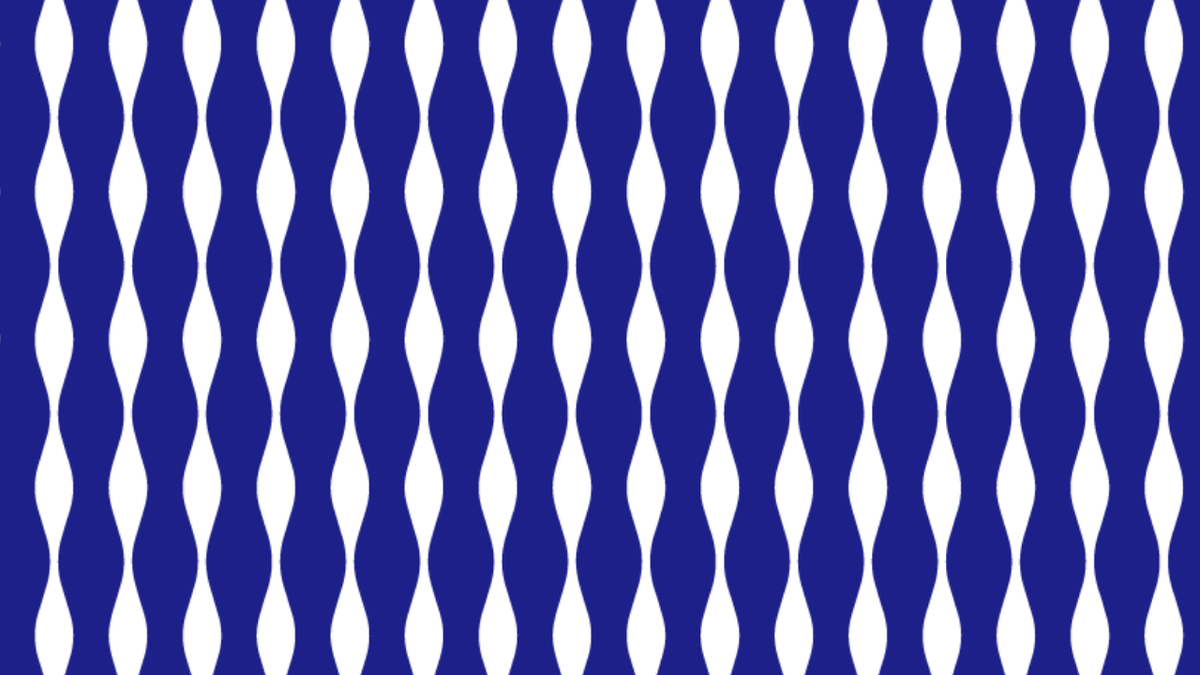
This pattern features wave-like vertical lines, with pairs of lines representing rising clouds or vapor. As its appearance suggests, it carries the meaning of ascension and is also regarded as a symbol of improving fortune, since the motif moves upward.
Kanzemizu

This motif depicts the flow of water. It is said to have been used by Kanze Dayu of the Kanze school of Noh, as well as by Ogata Korin of the Rinpa school, and appears not only on kimono but also in art and crafts. The ever-changing nature of water, constantly shifting in form, is thought to embody an ideal of eternity.
Goshodoki
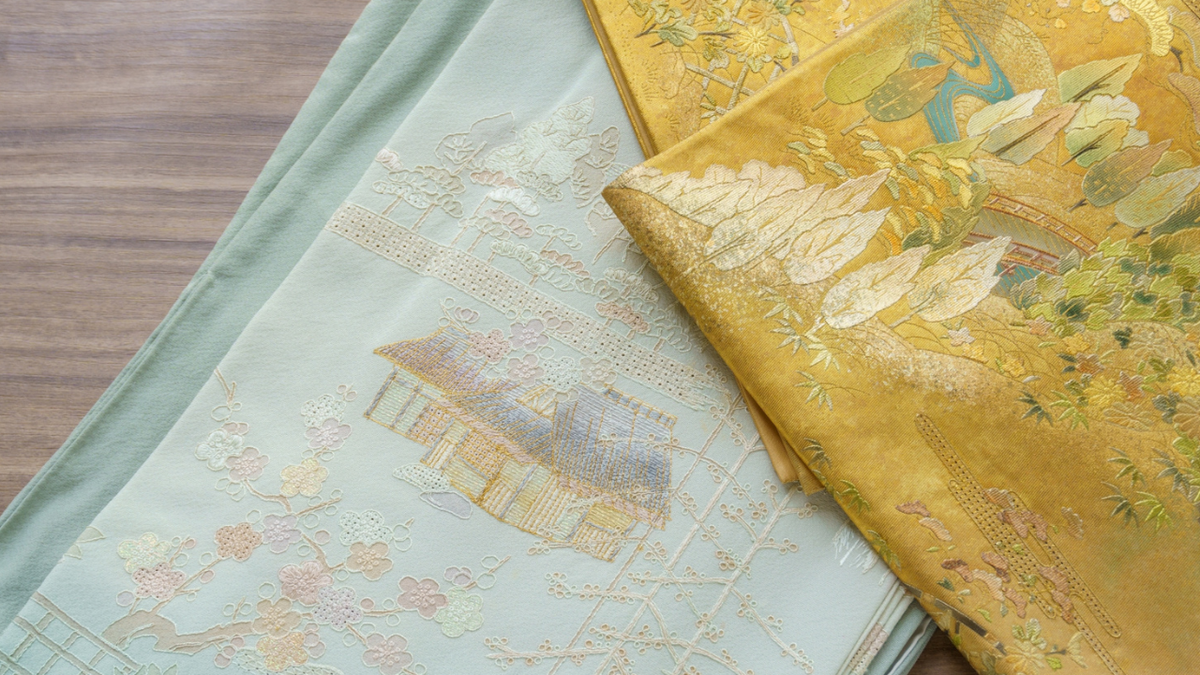
Goshodoki Patterns / Photo AC
This category has no strict definition or fixed style; the motifs may depict scenic landscapes, various flowers, or scenes of courtly life such as those found in The Tale of Genji. When the design portrays the interior or surroundings of a palace, it often includes elements such as ox-drawn court carriages used by aristocrats, decorative curtains used to shield nobles from view, and brushwood fences that marked the boundary between a residence and the outside world.
Others
Ougi (Fan)
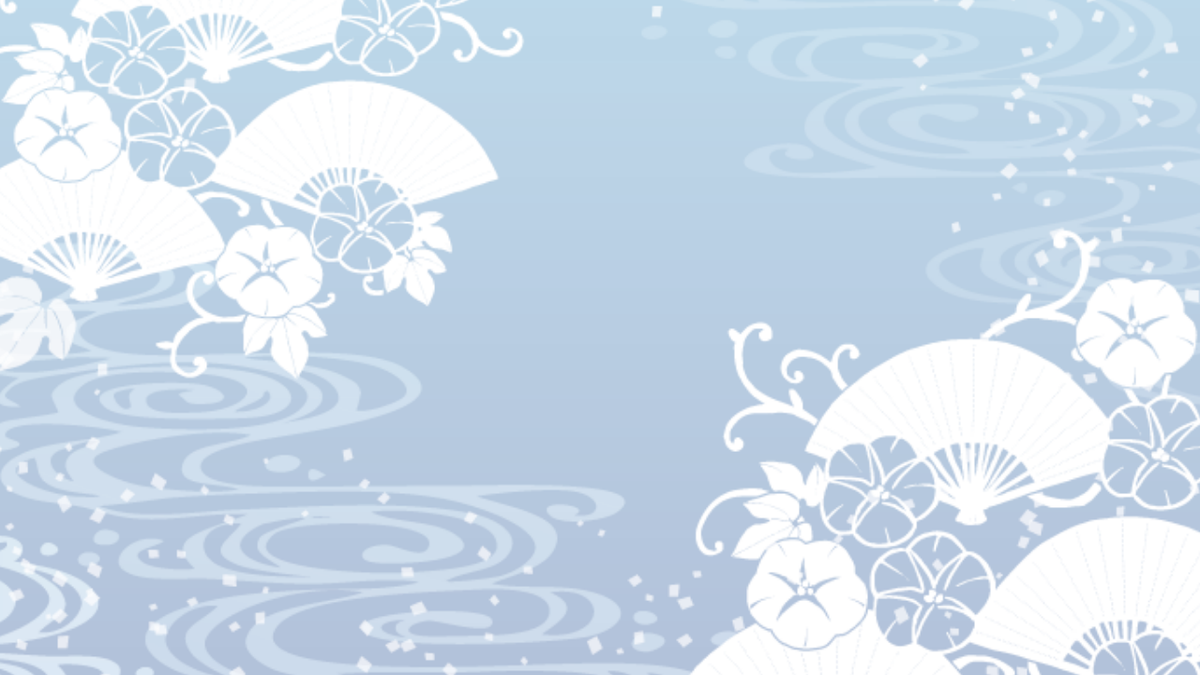
Ogi Patterns / Illust AC
Because the shape spreads outward toward the end, suggesting expansion in a positive direction, this motif symbolizes prosperity, growth, and good fortune. In Japan, the custom of giving fans as celebratory gifts dates back to the Muromachi period, and even today they are often carried as part of formal attire.
Noshi
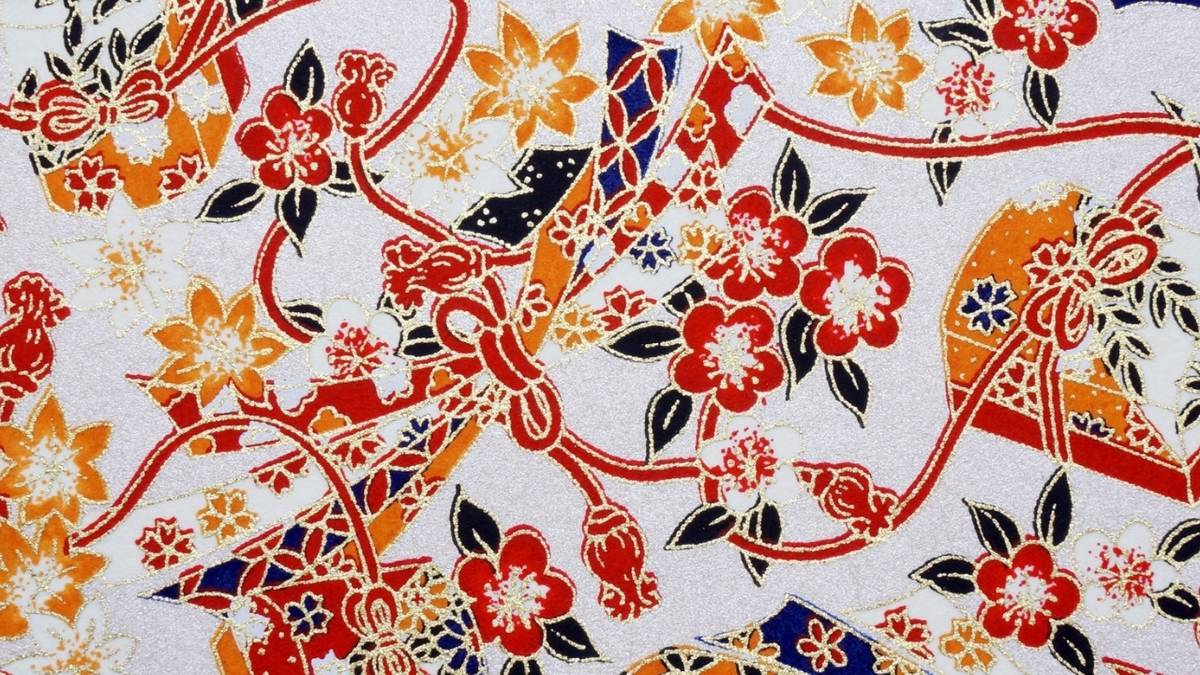
Noshi Patterns / Photo AC
This motif originates from noshi-awabi, abalone that was stretched thin and dried. Because noshi-awabi was traditionally attached to gifts, its motif is still used today on ceremonial envelopes. With its elegant curved silhouette and striking, bold appearance, it is often featured on furisode kimono and other formal garments.
Takarazukushi
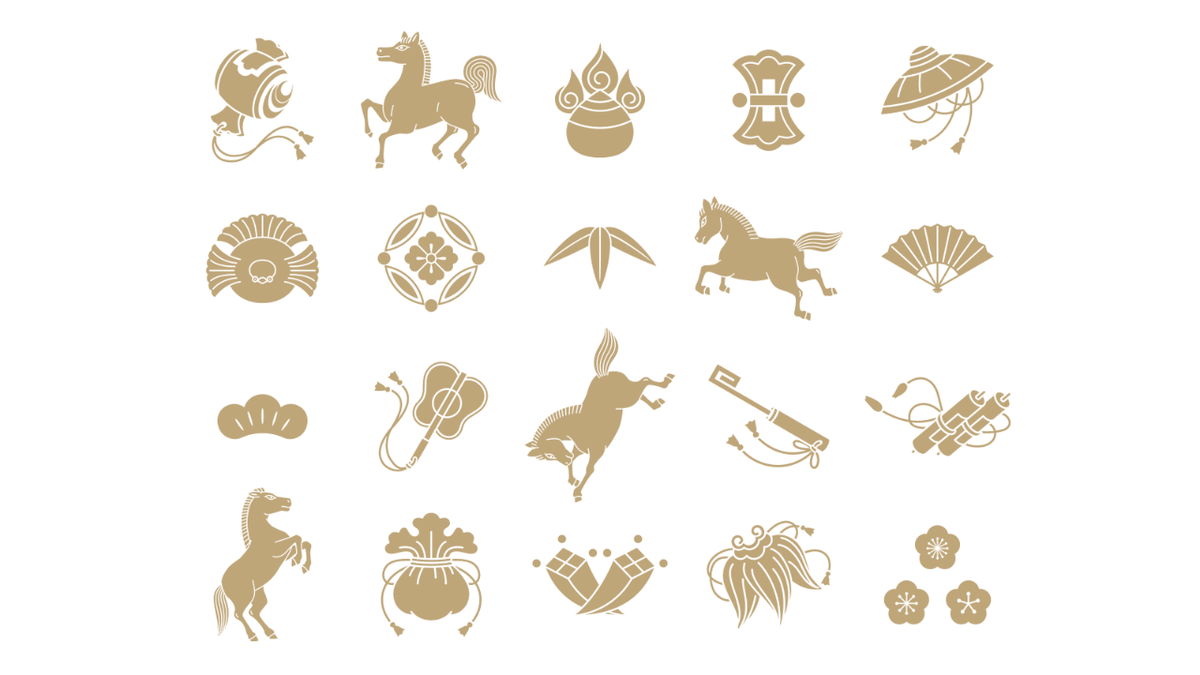
Takarazukushi Patterns / Illust AC
This motif is adorned with auspicious items such as the lucky mallet, wish-fulfilling jewel, counterweights, scrolls, and money pouches. It is a Japanized adaptation of Chinese patterns that gather treasures together, and the specific objects featured can vary by region. Similar designs that group themed motifs in a decorative arrangement include patterns like Gakkizukushi (for musical instruments), Kaizukushi (for shellfish/clam shells).
Patterns to Avoid at Celebratory Occasions
In general, you are free to choose any pattern you like, but there are certain motifs that are best avoided at weddings, formal receptions, or when meeting someone who places great importance on tradition and propriety. That said, in modern times far fewer people are concerned about such matters, so there is no need to be overly anxious about it.
For those living overseas, opportunities to wear kimono to weddings may be rare, but this knowledge can be useful in creative work such as original illustrations or fan art. By intentionally incorporating certain motifs into a kimono design, you may be able to convey an additional layer of meaning.
Butterfly
Because they flutter away so easily, they carry associations of fickleness and unfaithfulness.
Cherry Blossom
Although it is a classic spring motif, its fleeting nature (how they only last a short time in spring) makes it considered unsuitable for weddings.
Wisteria
Wisteria blossoms cascade beautifully as they hang down, but this downward growth can give the impression of a declining future.
Plum
Because the petals fall in a way that seems to spill downward, the motif can evoke a sense of parting. However, when used as part of the pine–bamboo–plum trio (sho-chiku-bai), it becomes an auspicious design well suited for celebratory occasions.
Camellia
This too is a classic winter motif, but because the flower itself falls to the ground when wilting, it is associated with death and is therefore often avoided.
Incomplete Patterns and Broken Shapes
As we’ve seen, many traditional motifs are characterized by patterns that continue without interruption. For this reason, designs that appear to break off midway are best avoided in settings where formality and auspicious symbolism are important. On the other hand, for casual wear, such as when aiming for a more edgy or unconventional style, they are perfectly acceptable.
Skull
Although skull motifs are popular today in punk and rock fashion, they evoke death and are therefore best avoided in settings where formality and auspicious symbolism are valued. However, the design actually originates from Buddhist ideas of reincarnation. It carries meanings of protection from evil, warding off misfortune, and rebirth, making it an unexpectedly auspicious motif.
Pick Them For Their Aesthetic, or For Their Symbolism
In modern times, the visual impact of a design often matters more than the symbolism behind it, so there is no need to be overly concerned about auspicious meanings. Floral motifs, in particular, can become auspicious depending on how they are depicted or combined with other elements. If you are unsure, consulting a kimono dressing professional can be helpful.
We’ve now explored various kimono motifs and the meanings they carry. Choosing a kimono based on its immediate visual appeal or how well it pairs with an obi and other accessories is perfectly fine, but knowing the symbolism behind the patterns makes the experience even more enjoyable. The next time you look at or choose a kimono, take a moment to notice the motifs and designs woven into it.
Published Last Updated
Related Articles
Explore more articles on similar topics and deepen your knowledge of Japan.