Kabuki Performances for Beginners
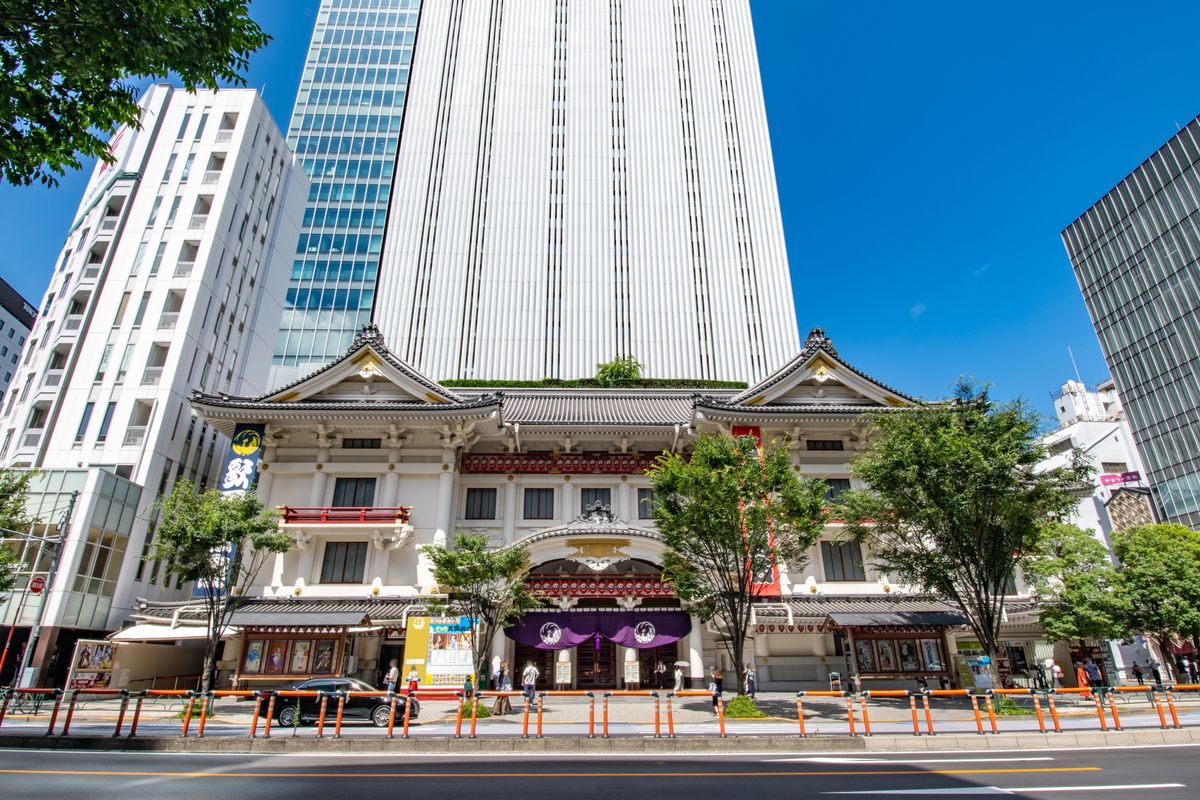
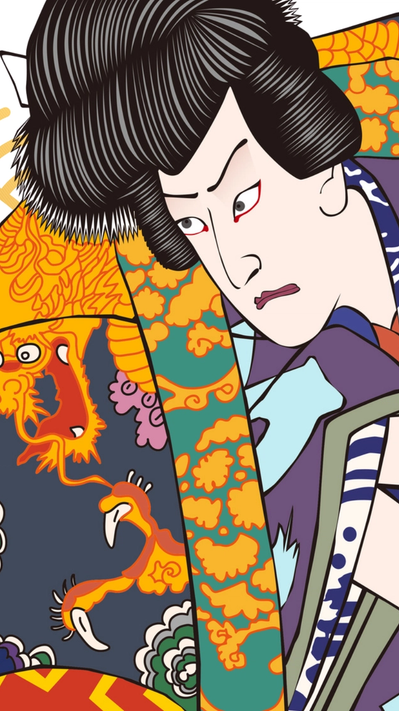
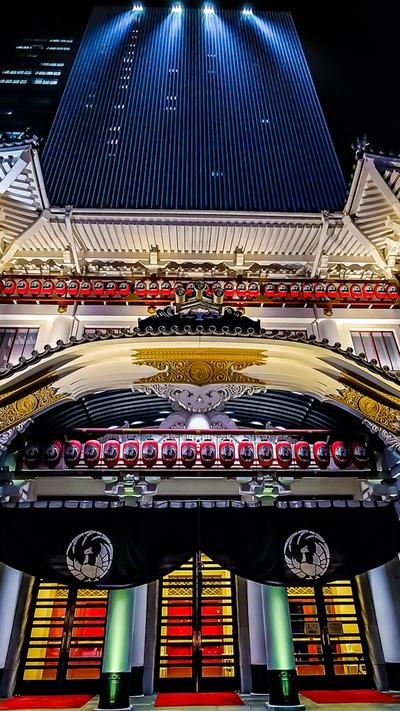
Kabuki is a traditional Japanese performing art. It is a form of theater that developed during the Edo period, based on dances started by Izumo no Okuni in 1603. Kabuki performances range from grand historical epics to relatable stories about love and everyday life, beautiful dance performances, and even modern themes and 2.5D stage productions.
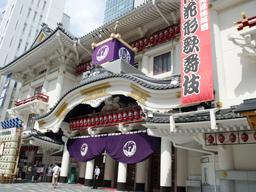
Currently, the Kabuki repertoire consists of approximately 300 major works. From these, we will introduce several classic masterpieces that are highly regarded. When official videos are available, we will include them as references to help you find your favorite works.
Three Great Kabuki Masterpieces
First, let's look at the three greatest masterpieces that represent Kabuki.
Kanadehon Chushingura
The story is based on a real historical incident in which Asano Naganori, who attacked Kira Yoshinaka in the Matsu no Ōrōka corridor of Edo Castle, was ordered to commit seppuku and had his domain confiscated. In response, his loyal retainers, led by Ōishi Kuranosuke, defied the ruling and carried out an act of vengeance to restore their lord’s honor.
The Incident Behind the Story
At that time, drawing a blade within the shogun's residence was punishable by death. Additionally, since the incident occurred during the shogunate's reception for imperial envoys, Asano was ordered to commit seppuku on the same day.
Typically, conflicts between samurai were resolved with "kenka ryoseibai" (punishing both parties in a quarrel), and Asano's violent act was said to be due to a grudge against Kira. However, Kira received no punishment, and the wounds he sustained from Asano's attack were reportedly minor.
In response, Oishi Kuranosuke, the chief retainer of the Asano family, worked to avoid chaos in Asano's domain of Ako before recruiting volunteers to raid Kira's residence and take revenge. Many people sympathized with the Ako ronin, treating them like tragic heroes.
Samurai Who Fulfilled Their Loyalty
As a story of samurai who fulfilled their duty of loyalty, it has become a motif for various works including Kabuki, theater, literature, music, paintings, films, and television dramas.
Kanadehon Chushingura was created during the Edo period, but because it contained criticism of the shogunate, the story was set during the time of Ashikaga Takauji, the Muromachi shogunate's general. It remains an extremely popular program with almost all acts still being performed today.
Yoshitsune Senbon Zakura
This is a story depicting the life of Yoshitsune, who showed great achievements in the Genpei War but was estranged by his brother Yoritomo and forced to flee the capital, along with the people surrounding him. Despite "Yoshitsune" being in the title, he doesn't appear very often; rather, the spotlight is on the Heike clan members seeking revenge against him.
Taira no Tomomori
The first notable character in this work is Taira no Tomomori, who was thought to have died in the Genpei War. The scene where he, having learned that his ambitions for the Heike clan's revival have been crushed, sinks into the sea with anchor ropes wrapped around his body, is a must-see.
Igami no Gonta
The second is a young man named "Igami no Gonta" who lives in Yamato Province. This popular act comically portrays the schemes of a man who lives by extortion and other misdeeds despite having a wife and children, showing family love and a sad ending.
Kitsune Tadanobu
The third is Kitsune Tadanobu, a fox who disguises himself as Yoshitsune's retainer to accompany Lady Shizuka. He is the child of a fox couple whose skin was used for the Hatsune Drum given to Yoshitsune by Retired Emperor Go-Shirakawa. Out of longing for his parents, he transformed into a human to protect and follow Lady Shizuka. The humorous and charming performance, showing him acting as a retainer while being entranced by the drum's sound and displaying fox-like gestures, is a highlight.
Moved by the fox cub's longing for its parents, Yoshitsune gives the Hatsune Drum to Kitsune Tadanobu. In return, Kitsune Tadanobu informs him that a monk named Yokawa Kakuhan is planning a night attack. This Kakuhan turns out to be Noto no Kami Noritsune, a Heike warrior who was thought to be dead.
Sugawara Denju Tenarai Kagami
This work depicts the tragedy of Sugawara no Michizane, who was respected by Emperor Uda and many people but was exiled due to Fujiwara no Tokihira and died in Dazaifu. It is a tearjerker that portrays the separations of father Sugawara no Michizane/Kan Shojo and his triplet sons—Umeo Maru, Matsuwo Maru, and Sakura Maru—each in different ways.
Exile Resulting from Good Intentions
First depicted is Sakura Maru and his wife Yae, who help the love between Prince Tokiyo (the emperor's brother) and Kariya Hime (Kan Shojo's adopted daughter). Fujiwara no Tokihira tells the emperor that Kan Shojo wants to seize power, leading to the announcement of exile, which becomes the starting point of the story.
A Tense Scene Escaping from Assassins
Next, Kan Shojo, who is ordered to transmit his calligraphy techniques, passes his skills to his beloved disciple Takebe Genzo, who had been disowned. Also, on his way to Dazaifu, Kan Shojo stops at his aunt's house. A highlight is how he escapes from assassins sent by Fujiwara no Tokihira to kill him.
Brothers Caught in Political Strife
From here, the story focuses on the triplet brothers. Umeo Maru served Kan Shojo, Matsuwo Maru served Fujiwara no Tokihira, and Sakura Maru served Prince Tokiyo, but due to Tokihira's schemes, both Kan Shojo and Prince Tokiyo fell from grace. This creates a grudge between the brothers.
Jidaimono (Historical Plays)
Works based on historical events are called Jidaimono. Some depict events from before the Edo period, while others fictionalize Edo period incidents as past events to appease the shogunate. Some works containing satire or criticism of the rulers of the time were also very popular.
Kanjincho
This work depicts Minamoto no Yoshitsune, who is wanted nationwide by his brother Yoritomo, being interrogated by the checkpoint guard Togashi Saemon at the Ataka checkpoint while on the run.
The Beginning of the Story
To escape pursuers, Yoshitsune disguises himself as a yamabushi (mountain ascetic), with his retainer Benkei taking the lead while Yoshitsune pretends to be a porter. However, the sharp official Togashi doesn't let them pass the checkpoint easily. He orders them to read the "Kanjincho," a document soliciting donations for temple construction that serves as a passport for passing through checkpoints. A major highlight of this performance is the scene where Benkei takes out a blank scroll and reads a fictional Kanjincho.
Loyalty Saves a Desperate Situation
Just as they finally receive permission to pass, one of Togashi's subordinates points out that the porter resembles Yoshitsune. In this critical moment, Benkei deliberately strikes his lord Yoshitsune with his staff and hurls abuse at him to help him.
This clears the suspicion, and Yoshitsune's group passes through the checkpoint. A little distance from the checkpoint, Benkei tearfully apologizes for his rudeness, and Yoshitsune expresses gratitude for his loyalty. Togashi follows them but offers sake instead of interrogating Yoshitsune. In fact, Togashi had recognized that the yamabushi group was actually Yoshitsune and his men, but decided to let them go, impressed by Benkei's loyalty and quick thinking. Realizing Togashi's consideration, Benkei drinks the sake with gratitude in his heart and performs an elegant dance.
The story pulls on heartstrings with Benkei's determination and loyalty in helping Yoshitsune by steeling his heart, and Togashi's spirit in allowing them to pass the checkpoint despite recognizing their true identities.
Sewamono (Domestic Drama)
These works depict the lives and culture of people at that time. Compared to historical plays, the dialogue and stories are easier to understand, with many programs that can be watched casually. Another characteristic is that many works have sensual themes focusing on romance between men and women.
Aoto Zoshi Hana no Nishikie (Shiranami Gonin Otoko)
This is the famous play with the line "If you don't know, let me tell you!" It's also known for the scene where five thieves—Nippon Daemon, Benten Kozo Kikunosuke, Nango Rikimaru, Akaboshi Juzaburo, and Tadanobu Rihei—each make their appearance and rhythmically introduce themselves in sequence, which is said to be the origin of the roll call in Japanese superhero team shows.
While the exploits and grand fighting scenes of the Shiranami Gonin Otoko (Five Men of the White Waves) vigilante group are exhilarating, it's also a work that depicts family troubles and parent-child stories.
Ninjo Banashi Bunshichi Mottoi
This is a story about a miracle that happens to Chobei, a skilled fighter who loves gambling and is in debt.
Chobei's daughter Okyu sells herself to a brothel in Yoshiwara called Tsunaebira to make money for her father and mother. The madam who lends fifty ryo to Chobei, impressed by his dutiful daughter, strictly tells him, "If you don't return the money by the next New Year's Eve, Okyu will be put to work in the brothel."
The reformed Chobei meets a young man trying to commit suicide on his way home. The young man, who was robbed of fifty ryo on his way back from an errand to a mansion, wants to die to apologize. Chobei gives him all the money that Okyu earned by selling herself.
This play features many characters and allows viewers to learn about the culture and atmosphere of townspeople at that time.
Sonezaki Shinju
This is a play written by the joruri author Chikamatsu Monzaemon, based on an actual double suicide incident that occurred in the 16th year of Genroku.
The story of popular courtesan Ohatsu and her lover Tokubei, who commit double suicide wishing to be together in the next life due to their impossible love, became a big hit and led to the popularity of "shinju mono" (double suicide plays). However, as actual double suicide incidents increased, the shogunate banned their performance.
Sakura Hime Azuma Bunko
This is a story about the unusual fate of Sakura Hime, a beautiful girl born with a disability making her unable to open her left hand. In addition to scenes of quick costume changes, love scenes, ghost stories, and killings, the story includes a high priest obsessed with Sakura Hime (who is the reincarnation of his former lover), a former fiancé and retainer who caused Sakura Hime's family to be abolished, and a thief who rapes Sakura Hime, marries her, and then sells her to a brothel—all depicting human karma in a scandalous story that caused a sensation.
Another highlight of this performance is seeing the princess, daughter of a noble family and unfamiliar with the world, fall to become a brothel courtesan, speaking with both the refined language of a princess and the language of a courtesan.
Shosagoto/Buyō (Dance Performances)
These are programs that last about an hour and focus on dance. They range from dances based on Noh and Kyogen to story-based performances.
Renjishi
This is a program known for actors wearing flashy costumes and red and white wigs, vigorously shaking their manes. In the first half, a parent lion gives its cub a harsh trial by dropping it into a valley bottom, then rejoices and dances with the cub when it climbs back up. After an intermission featuring the humorous kyogen Shūron, where monks of different sects talk about the greatness of their respective gods, the second half features a dynamic dance by the spirit of a lion. With its visual accessibility and splendor, it has become one of the icons of Kabuki.
The mane-shaking represents both the power of the lion, the king of beasts, and a state of trance (possession by spirits). Due to the roles of parent and child lions and the scene where the parent lion strictly educates its cub, parent-child performances are common, making this a popular program among Kabuki fans.
Sagi Musume
This is a dance that dramatically expresses a girl suffering from sad love through the imagery of a white heron. The snowy landscape, the white kimono worn by the girl, the splendid costume changes based on the scene, and the music with many variations and listening points make this a program filled with the charm and technique of onnagata (female role) actors.
It is also famous as a signature role of Bando Tamasaburo, who is known as the highest peak of modern onnagata and is designated as a Living National Treasure.
Shin Kabuki (New Kabuki)
Programs created after World War II are called "Shin Kabuki" (New Kabuki). These include original works by writers, modern reinterpretations of classics, and Super Kabuki conceived by Ichikawa En'o II, among a wide range of programs.
Super Kabuki: Yamato Takeru
This is a spectacular work based on the legend of Yamato Takeru from Japanese mythology, featuring flashy fighting scenes, stage sets, gorgeous costumes, and stories adorned with contemporary musical elements.
By incorporating elements from a wide range of genres into the charm of traditional Kabuki to create a more accessible and glamorous form entertainment, it attracted attention from people who previously had no connection to Kabuki.
Super Kabuki II: One Piece
This is a stage adaptation of the popular manga One Piece by Eiichiro Oda. It mainly depicts the "Summit War Arc," including Sabaody Archipelago, Amazon Lily, Impel Down, and Marineford. The world of One Piece is formed with Kabuki-like costumes and makeup, and superhuman abilities and battle scenes are expressed through flying techniques and real water, with large volumes incorporated into the choreography to heighten the intensity of the action.
Shin Kabuki: Nausicaä of the Valley of the Wind
Nausicaä of the Valley of the Wind, which Hayao Miyazaki drew over the span of 13 years and was also made into a film by Studio Ghibli also is adapted into a Kabuki performance. While the film adapted only part of the manga, the Kabuki performance presented the entire story as a two-part work, with a total running time of 6 hours. The work, which is like a double heroine story centered on two princesses, Nausicaä and Kushana, is rare among Kabuki works, and the joint performance between onnagata actors is also a highlight.
Performances Featured in the Film Kokuho
The film Kokuho (National Treasure), released on June 6, 2025 in Japan.
Here, we introduce three performances that appeared in this film that which have been highly praised by kabuki actors other than Renjishi, Sonezaki Shinju, and Sagi Musume that were covered in the sections above.
Seki no To (The Gate at the Barrier)
This is a dance piece from Tsumoru Koi Yuki no Seki no To (Love Accumulated at the Snowy Barrier Gate). It tells a story of love and conspiracy involving Yoshisada Ryomine, a loyal retainer to the former emperor; his former lover Princess Ono no Komachi; the gatekeeper Sekibei; and a woman claiming to be a courtesan named Sumizome. It is known as a major piece in the Tokiwazu dance drama tradition.
The first part depicts the reunion of Yoshisada and Princess Komachi, and how the princess, suspicious of the gatekeeper's identity, rushes back to the capital. In the second part, it is revealed that the gatekeeper is actually Daihankokunushi, who aims to usurp the throne. Furthermore, the courtesan Sumizome turns out to be the spirit of the Komachi cherry tree that blooms in the snow. The performance beautifully portrays the battle between Kokunushi's ambition and the cherry blossom spirit's attempt to thwart it.
Ninin Fuji Musume (Two Wisteria Maidens)
This is a performance where two onnagata (male actors playing female roles) perform Fuji Musume, a popular piece in which the spirit of a wisteria transforms into a beautiful maiden and dances gracefully. First performed by Bando Tamasaburo and Nakamura Shichinosuke, this relatively new production from 2014 has gained tremendous popularity for its competitive display of elegant female impersonation.
The highlights of Fuji Musume lie in its dance and costume changes, which delicately and charmingly express the innocent emotions of a young woman longing for the man she loves. Richly incorporating the fundamentals of classical Japanese dance, this piece lasts only about 20 minutes, yet it is a demanding performance that puts the actor’s technical skill and expressive ability to the test.
Ninin Dojoji (Two at Dojoji Temple)
This is a performance of Kyoganoko Musume Dojoji (The Maiden at Dojoji Temple), considered the pinnacle of onnagata dance. Musume Dojoji is based on the legend of Anchin and Kiyohime, in which Kiyohime falls in love with a monk named Anchin at first sight, goes mad with love, transforms into a giant serpent, kills Anchin, and then drowns herself.
Besides Ninin Dojoji, where two female-role actors compete in dance, there are variations such as Yakkodojoji, featuring a male-role lead, and Danjo Dojoji, performed by both male and female-role actors—all of which enjoy great popularity.
- External resources
The Movie "Kokuho" Official Website
Published Last Updated
Related Articles
Explore more articles on similar topics and deepen your knowledge of Japan.