Meet Punch the Monkey, the Social Media Sensation: Key Information From Japan
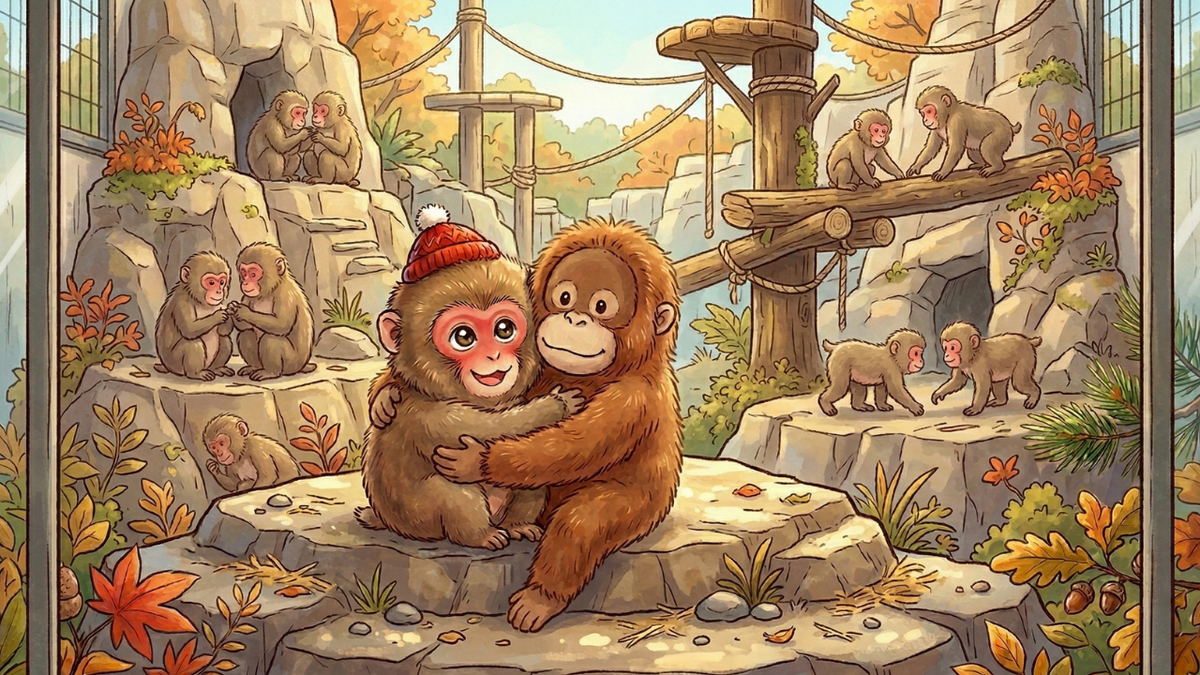
In February 2026, a video of a baby monkey from a small zoo in Chiba Prefecture spread across the world. His name is Punch, a baby Japanese macaque tightly hugging his stuffed orangutan toy. The explosive spread on social media brought record-breaking crowds to the zoo, sold out IKEA's stuffed orangutans in multiple countries, and drew coverage from international media outlets one after another.
At the same time, clips circulated without context, leading to misinformation/misinterpretation regarding Punch's conditions. Accusations of animal abuse, a flood of inquiries directed at the wrong zoo, and a barrage of low ratings on Google Reviews. On English-language social media in particular, sensationalized clips designed to chase impressions quickly circulated, making it difficult to see the full picture of Punch's story.
This article pieces together what has happened around Punch based on the zoo’s official statements and local news coverage. At the end, we also introduce ways you can support Punch and Ichikawa Zoo.
Who Is Punch? The Story Behind His Name and His Stuffed Surrogate Mother
First, a look at the little Japanese macaque at the center of the buzz, from his birth before the social media fame to joining the monkey hill.
A Midsummer Birth and Maternal Abandonment
On July 26, 2025, a baby Japanese macaque was born on the monkey hill at Ichikawa Zoological and Botanical Garden. He weighed just 500 grams. It was his mother's first birth, and the extreme summer heat had drained her so severely that she showed no interest in caring for her newborn.
According to Yasunaga, the zoo's section chief, a certain percentage of macaque mothers in any troop simply don't take to parenting. The very next day, the zookeepers began hand-rearing the baby.
A Name Inspired by the Creator of Lupin the Third
Punch's name comes from the pen name of the manga artist Monkey Punch, known worldwide as the author of the anime Lupin the Third. Naming a baby born on the monkey hill after Monkey Punch is a bit of wordplay that carries a distinctly Japanese sense of humor.
Oran-Mama: The Orangutan Stuffed Toy
Baby macaques normally cling to their mother's body from the moment they're born. This behavior provides a sense of security and also helps develop their grip strength and muscles. Without a mother to raise him, Punch had no one to cling to.
The keepers' solution was DJUNGELSKOG, an orangutan stuffed toy sold by IKEA. Punch took to it immediately. He brings it everywhere, hugs it while sleeping, and even grooms it. Fans gave the toy the nickname "Oran-Mama" (Orangutan Mama).
On February 17, IKEA Japan donated 33 stuffed toys along with 7 storage bags and boxes, for a total of 40 items. The stuffed toys are washed every morning for hygiene and used on a rotation.
Joining the Monkey Hill, January 19, 2026
The keepers primarily responsible for Punch's care were Shunpei Miyakoshi and Kosuke Kano. They continued looking after him on their days off, taking turns.
Reintroducing a hand-reared monkey to the troop requires a gradual process. Punch was first raised in a location where he could hear the sounds and smell the scents of other macaques, and his time on the monkey hill was extended little by little.
On January 19, 2026, Punch officially joined the troop on monkey hill. At first, adult macaques would sometimes intimidate him, and when he got scared, he'd run straight to Oran-Mama.
How Punch Became an Overnight Star
From late January, visitors began posting photos and videos on social media of a tiny monkey hugging a stuffed toy on the monkey hill. Then one user's post of Punch caught the attention of X users.
On February 5, the zoo's official X account @ichikawa_zoo posted photos of Punch for the first time, and the spread accelerated instantly.
Within Japan, the hashtag #がんばれパンチ (#Hang in there, punch) spread far and wide, and TV stations aired special features. Visitors surged. Internationally, NBC Today, Japan Times, Reuters, AFP, and others covered the story, and it became a major topic on English-language social media as well.
Visitor numbers reached record levels. Over the weekend of February 14–15, roughly 8,000 people visited across the two days, and during the three-day weekend of February 22–24, some days exceeded 6,000 visitors. According to the zoo, they kept breaking their all-time attendance records.
The Punch phenomenon rippled beyond the zoo's gates. The IKEA stuffed orangutan known by fans as Oran-Mama sold out across Japan, and stockouts were reported overseas as well. On Mercari, a Japanese marketplace app, resellers began listing them at inflated prices.
The Controversial Dragging Video and What Actually Happened
On the morning of February 19, a video of Punch being dragged by an adult macaque was posted on social media and spread rapidly. Reactions, primarily from overseas, included accusations of bullying and questions about whether it constituted abuse.
The zoo issued an official statement the following day, February 20, explaining the situation.
Punch had tried to interact with another young macaque, but was rejected. He sat down on the spot, and a nearby adult macaque (likely the other young macaque's mother) scolded him. It was a natural interaction that occurs as young macaques learn the social rules of their troop.
Punch recovered quickly and resumed interacting with the other macaques. The zoo also appealed to the public: "rather than feeling sorry for him, please cheer Punch on as he does his best."
Controversy and Misinformation Overseas
The desire to protect little, fragile Punch has sparked numerous controversies both in Japan and abroad. Relative to the attention the story has drawn, the sources of friction are few, but for Ichikawa Zoo, a small organization, they've created a significant burden. Communicating in English, in particular, is no easy task for most Japanese people.
With some self-reflection and as a note of caution, what follows is the kinds of issues and concerns that have arisen.
Confusion with Ishikawa Zoo
Punch's home is Ichikawa Zoological and Botanical Garden in Chiba Prefecture, but the English spelling "Ichikawa" was confused with "Ishikawa," the name associated with Ishikawa Zoo in Ishikawa Prefecture. Ishikawa Zoo was flooded with inquiries from overseas. Around 40 emails arrived from the United States, Canada, France, Singapore, and elsewhere.
On February 21, Ishikawa Zoo posted a notice in both Japanese and English stating that Punch is not at their facility.
The Exotic Pet Problem
As Punch's popularity surged, people even emerged offering large sums of money to take him in.
The American animal welfare organization Born Free USA has raised the alarm about this pattern of behavior. Every time a cute animal video goes viral, it creates demand for people wanting to keep that animal as a pet. Private ownership of Japanese macaques is regulated or banned in many countries, and international import and export is not legally permitted.
Even if keeping one were possible, as they grow they become unmanageable by human hands, and countless former pets have ended up spending their lives confined to cages inside cramped homes.
To spare Punch from that kind of suffering, the zoo is quietly watching over his progress.
Criticism from PETA and Born Free USA
As Punch's videos spread further, criticism emerged from overseas animal rights organizations.
PETA, the animal rights organization, issued a statement claiming that clinging to a stuffed toy is a sign of stress and calling for Punch to be transferred to a sanctuary (an animal protection facility). Born Free USA also mounted criticism of the facility's conditions. Their statement, however, contained a factual error, referring to Japanese macaques as "Java macaques," indicating inaccuracies in the basic facts underlying their critique.
The zoo has responded to these criticisms earnestly, explaining that the socialization process is a necessary step for integration into the troop, and that improvements to the living environment are being considered. They have also turned down requests from visitors to extend viewing hours, prioritizing the animals' well-being.
The zoo continues to implement admission limits through crowd control measures and to establish viewing rules based on real-time conditions, keeping the animals at the forefront of their priorities.
Google Review Bombing
This wave of criticism also reached Ichikawa Zoo's Google Maps listing. A surge of low-rating reviews in English appeared in a short period.
The reviews have since been removed by Google as illegitimate, but the peak in negative ratings coincided with the moment when the video of Punch being scolded by another macaque was circulating on social media.
Even when motivated by genuine concern for Punch's welfare, such actions risk harming the zoo's operations and, indirectly, the care provided to all its animals, Punch included.
What Ichikawa Zoo Is Doing for Punch
The zoo has built a dedicated care system around Punch.
Miyakoshi and Kano, the two primary keepers, have continued his care even on their days off, taking turns. They give him milk at 7 a.m. and 7 p.m. every day without fail. These are the staff who have watched Punch grow up close since the beginning.
Occasionally, voices criticize the keepers for pulling Punch away from themselves and leaving him on the monkey hill. But it's clear to anyone watching that they're steeling their hearts, doing what's necessary so he can bond with his troop as quickly and smoothly as possible.
Punch's integration into the monkey hill was not done abruptly. It followed a planned, gradual process. It began with short visits, the duration was extended over time, and full integration came on January 19, 2026.
Managing the Surge in Visitors
Once visitor numbers began soaring, the zoo rapidly introduced measures to minimize stress on the animals.
- On February 22, they implemented admission restrictions, stopping new entries at 3:00 p.m.
- Restricted areas were set up around the monkey hill.
- Front-row viewing was limited to 10-minute rotations.
- Requests to extend viewing hours were declined, with the animals' welfare taking priority.
- Selfie sticks were banned.
The selfie stick rule was among the most recent additions. Seeing the zoo adapt flexibly to changing conditions while consistently putting the animals first should give those watching from afar some reassurance.
Updates on Punch's Progress
Punch is steadily growing up on the monkey hill. He's been observed jumping onto the backs of other macaques, being groomed by adults, and playing with the other young ones.
The zoo's official X account reported that "Punch hasn't been scolded and is actively playing with the young macaques." Section chief Yasunaga commented that "he has an energetic, fearless personality. He actively tries to initiate communication on his own."
Ichikawa Zoo is a small facility. It has no large animals, being a community-oriented, local zoo. Within the constraints of limited staff and budget, they're pouring everything into Punch's care. People following their updates on social media will likely get a sense of this from their posts.
The zoo has also successfully reintroduced hand-reared baby macaques into the troop in the past. Predicting what lies ahead is impossible, but quietly watching over Punch and cheering him on as he does his best feels like the right thing to do.
Getting to Ichikawa Zoological and Botanical Garden
Ichikawa Zoological and Botanical Garden is located at 284-1 Omachi, Ichikawa City, Chiba Prefecture, roughly 32 kilometers from central Tokyo.
- From JR Musashino Line, Ichikawa-Ono Station, it's about 15 minutes by bus. On weekends and holidays, Keisei Bus operates a direct service. On weekdays, a community bus is available.
- The zoo is also accessible by Keisei Bus from JR Sobu Line, Motoyawata Station.
Hours and Admission
- Open 9:30–16:30 (last entry at 16:00)
- Closed every Monday (or the following day if Monday is a holiday), and during the New Year period
- Admission: 440 yen for adults, 110 yen for children (elementary and junior high school students), free for infants/preschoolers
Tips for Visiting During the Punch Craze
As long as Punch's popularity continues, expect lines even on weekdays.
- Arrive first thing in the morning — aim to get there by the 9:30 opening time.
- Avoid driving — the parking lot holds 240 cars, but it fills up fast on weekends and holidays. Public transportation is the safer bet.
- Monkey hill has a 10-minute rotation — front-row viewing is time-limited.
- Check the official X account — @ichikawa_zoo posts real-time crowd updates. Check before you head out.
Other Highlights Beyond Punch
Ichikawa Zoo is home to plenty of other wonderful animals beyond Punch.
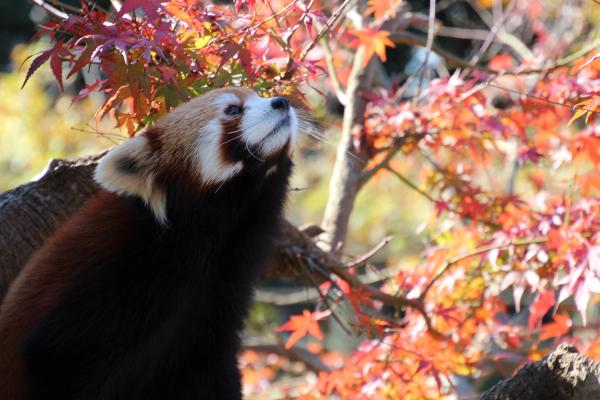
- Red pandas and Sumatran orangutans — popular and rare species.
- Asian small-clawed otters and the signature Nagashi Kawauso (Otter Slide) — otters swimming through a pipe, a unique exhibit found only at this zoo.
- Tokara goats on an aerial walkway — goats crossing a bridge suspended in the air.
- The recently added alpacas.
- A petting area and a mini railway.
The video above shows the Nagashi Kawauso, otters sliding through a pipe. It's an enrichment activity inspired by nagashi somen, a Japanese summer tradition of sending somen noodles flowing through water to cool down and enjoy.
Ways to Support Punch and Ichikawa City Zoo
On February 23, 2026, the zoo's official X account announced that they would share details on how to accept donations "in the near future," and on March 16, the official donation channels were formally announced.
One important note: you may spot support activities on social media from third parties that the zoo hasn’t officially endorsed. As of March 17, 2026, Ichikawa City Zoo has only publicly announced support methods in Japanese yen. Be careful not to share your personal information carelessly or give money to unauthorized sources.
Bank Transfer Donations
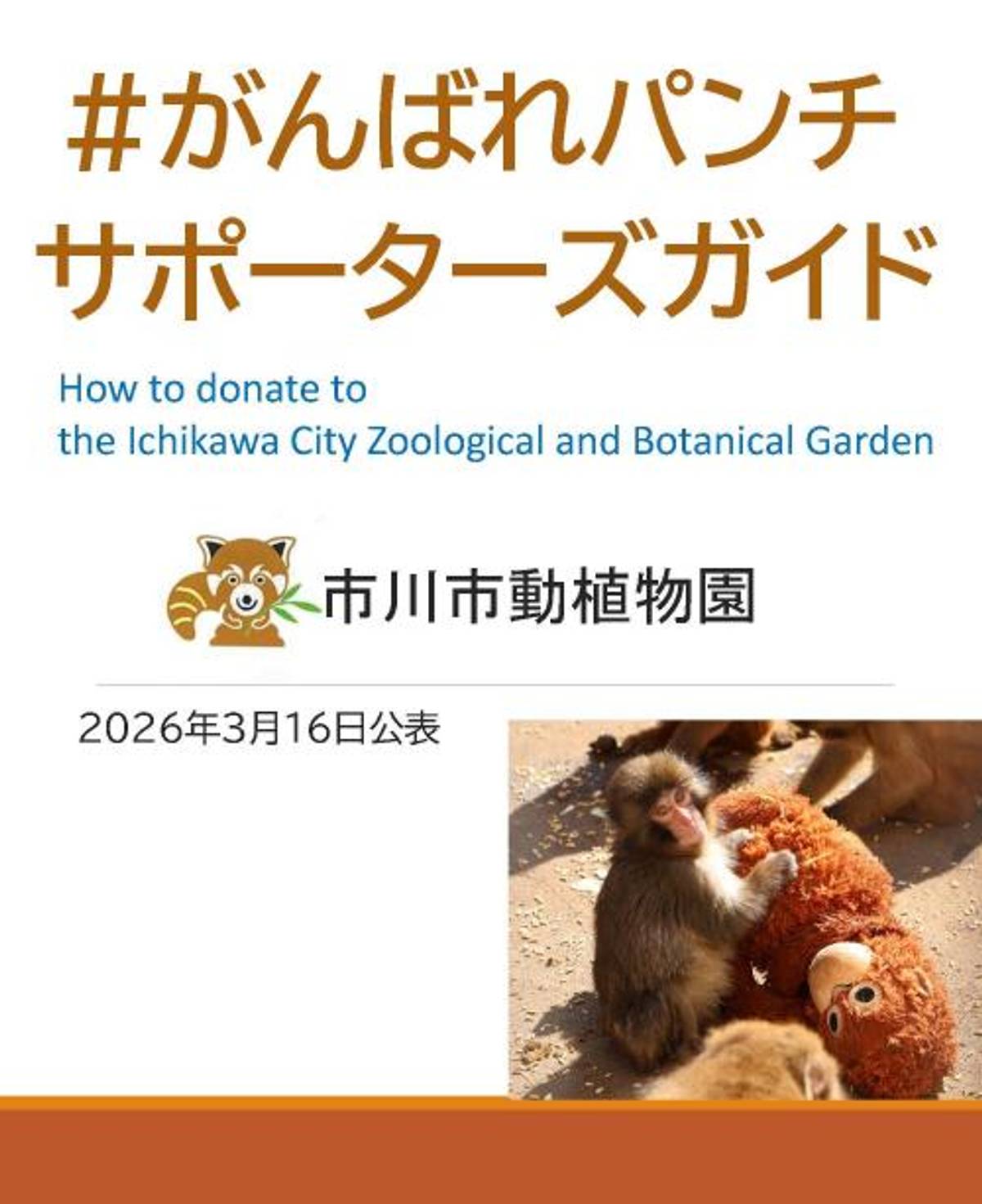
(c) Ichikawa City Zoological and Botanical Garden
On March 16, 2026, the zoo finally announced an official donation channel.
According to the official guide, donations are accepted through May 31, 2026. For information beyond that date, check the official website.
The donations support “environmental improvements for animals at Ichikawa City Zoo, including Punch, and operational activities such as facility management.”
Important Points
Below are key things to know about donations and related matters. Some details are omitted, so be sure to review the zoo’s official guidelines for complete information.
- Only Japanese yen is accepted.
- Physical items cannot be donated.
As mentioned earlier, the zoo is not currently accepting support through channels not listed in their guide. Similarly, they haven’t entered into any contracts for merchandise sales with companies. Anything not officially introduced by Ichikawa City Zoo is outside their purview.
Sales from such merchandise don’t support Punch or the zoo, so we don’t recommend buying them for support purposes.
Official LINE Stickers
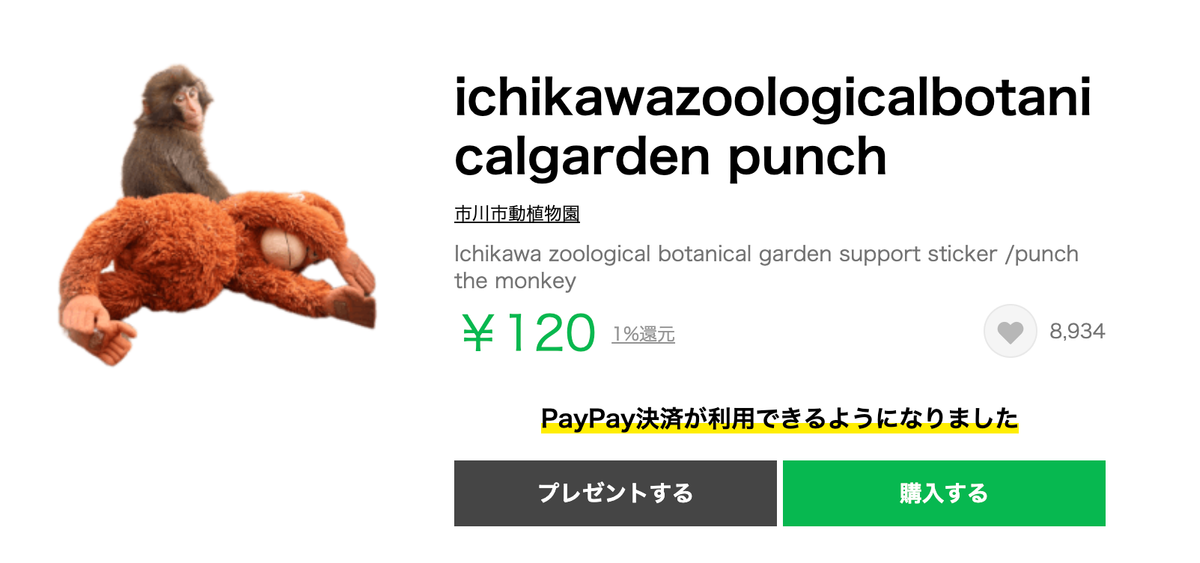
(c) Ichikawa City Zoological and Botanical Garden
For a more casual way to show support, Ichikawa City Zoo has released official LINE stickers.
- ichikawazoologicalbotanicalgarden punch (LINE Sticker)
- ichikawazoologicalbotanicalgarden4 punch (LINE Sticker)
Note: LINE is the dominant messaging app in Japan. These stickers can be sent between users.
Visiting the Zoo
Adult admission is 440 yen. Visiting is the simplest way to support the zoo’s operations. Just remember to check the rules and confirm whether it’s open on the day you wish to visit.
There are also donation boxes inside the zoo where you can contribute Japanese yen. Since currency exchange involves fees, avoid putting foreign currency in the boxes.
Furusato Nozei
You can also support through Japan’s furusato nozei (hometown tax donation) system. However, this system is primarily for Japanese residents paying local taxes. Foreign residents living in Japan who pay local taxes can donate through platforms like Furusato Choice.
On the page where you select how donations will be used, choose “Support Japanese macaque Punch and other animals and facilities at Ichikawa City Zoo” to direct your donation to the zoo.
Since this is a method of support for Japanese residents , those living overseas should consider the bank transfer option or purchasing LINE stickers instead.
※ From Ichikawa City Zoo Supporters Guide
In Closing
What Punch has set in motion proves that a single baby macaque can move hearts across borders. At the same time, it has shed light on the problems inherent in how information spreads in the age of social media. Fragmented clips, stripped of context and shared far and wide, turning goodwill into misunderstanding and hostility. That is genuinely sad.
Ichikawa Zoo is caring for Punch sincerely, within limited resources. The zoo has kept its message simple. "Don't feel sorry for him. Cheer Punch on as he does his best."
You can follow Punch’s latest updates on the zoo’s official X account @ichikawa_zoo. On social media, the hashtag #がんばれパンチ has become a rallying cry of support.
Recently, the hashtag #がんばれ市川市動植物園 has also been filling up with warm messages of encouragement for the zoo itself. Overseas, too, attention is beginning to turn toward the keepers’ wellbeing and the tender interactions they share with Punch.
We hope that the warm connections now spreading across Japan and around the world will not be merely fleeting, but will continue to endure into the future.
- External resources
Ichikawa City Zoo - Ichikawa City Official Website
「涙が出てくる」「応援したい」 千葉・市川市動植物園の"けなげな子ザル"《パンチくん》に、日本中の人々が夢中になっているワケ
Published Last Updated
Related Articles
Explore more articles on similar topics and deepen your knowledge of Japan.